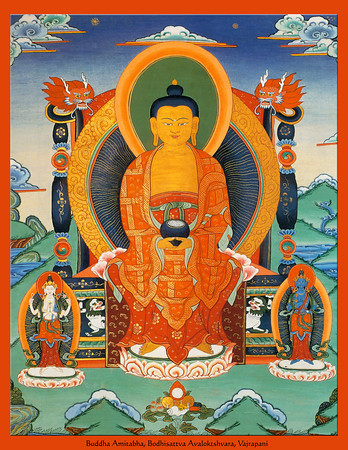
Relative Bodhicitta: HH Dilgo Khyentse Rinpoche

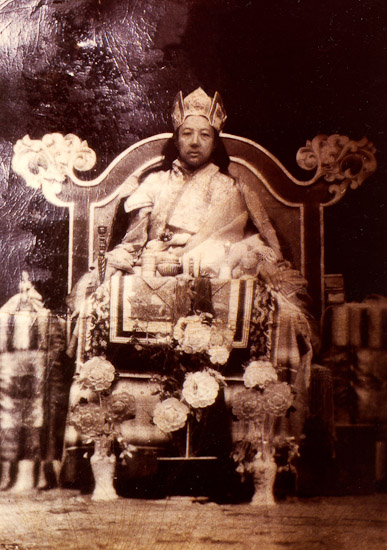
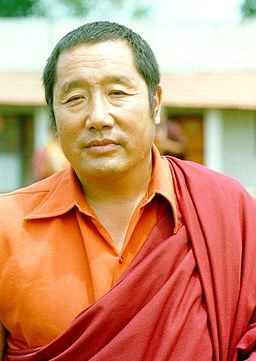
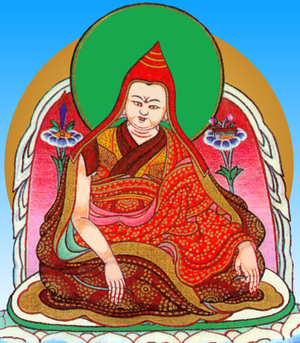
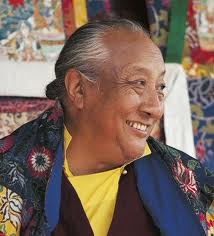
His Holiness Dilgo Khyentse

The following is respectfully quoted from “Enlightened Courage” by His Holiness Dilgo Khyentse Rinpoche:

If I do not give away
My happiness for others’ pain,
Buddhahood will never be attained.
And even in samsara, joy will fly from me.

Enlightenment will be ours when we are able to care for others as much as we now care for ourselves, and ignore ourselves to the same extent we now ignore others. Even if we had to remain in samsara, we should be free from sorrow. For as I have said, when the great Bodhisattvas gave away their heads and limbs, they felt no sadness at the loss of them.

Once, in one of his previous lifetimes, the Buddha was a universal monarch whose custom it was to give away his wealth without regret. He refused nothing to those who came to beg from him, and his fame spread far and wide. One day, a wicked brahmin beggar came before the king and addressed him, saying, “Great king, I am ugly to look upon, while you are very handsome; please give me your head.” And the king agreed. Now his queens and ministers had been afraid that he might do this, and making hundreds of heads out of gold, silver, and precious stones, they offered them to the beggar.

“Take these heads,” they pleaded. “Do not ask the king for his.”

“Heads made of jewels are of no use to me,” the beggar replied. “I want a human head.” And he refused to take them.

Eventually they could no longer deter him from seeing the king.

The king said to him, “I have sons and daughters, queens, and a kingdom, but no attachment do I have for any of them. I will give you my head at the foot of the tsambaka tree in the garden. If I can give you my head today, I shall have completed the Bodhisattva act of giving my head for the thousandth time.”

And so, at the foot of the tree, the king took off his clothes, tied his hair to a branch, and cut off his head. At that moment, darkness covered the earth, and from the sky came the sound of the gods weeping and lamenting so loudly that even human beings could hear them. The queens, princes, and ministers all fell speechless to the ground. Then Indra, the lord of the gods, appeared and said, “O king, you are a Bodhisattva and have even given away your head, but here I have the life restoring ambrosia of the gods. Let me anoint you with it and bring you back to life.”

Now, the king was indeed a Bodhisattva, and even though his head had been cut off and sent away, his mind was still present, and he replied that he had no need of Indra’s life-restoring ambrosia, for he could replace his head simply by the force of his own prayers.

Indra begged him to do so, and the king said: “If in all those thousand acts of giving my head away beneath the tsambaka tree there was nothing but the aim of benefiting others, unstained by any trace of self seeking–if I was without resentment or regret, then may my head be once again restored. But if regrets there were, or evil thoughts, or intentions not purely for the sake of others, then may my head remain cut off.” No sooner had the king said this than there appeared on his shoulders a new head identical to the first, which had been taken away by the brahmin. Then all the queens, princes, and ministers rejoiced and administered the kingdom in accordance with the Dharma.

For those who can practice generosity like this, there is no suffering at all. Enlightened teachers, Bodhisattvas, come into the world to accomplish the welfare of beings, and even when they are ignored by people in the grip of desire, anger, and ignorance, who stir up obstacles and difficulties, the thought of giving up never occurs to them and they are totally without anger or resentment. As it is said:

To free yourself from harm
And others from their sufferings,
Give away yourself for others;
Guard others as you would protect yourself.

His Holiness Dilgo Khyentse Rinpoche: Revealed Treasures

The following is respectfully quoted from “Journey to Enlightenment” by His Holiness Dilgo Khyentse Rinpoche:

Khyentse Chökyi Lodrö asked Khyentse Rinpoche to go to Amdo province and give the Treasury of Rediscovered Teachings. Here is Rinpoche’s wife’s account of the journey:

Rinpoche traveled to Rekong, in Amdo, near Lake Kokonor. One very cold day, some herdsmen invited Rinpoche to their tent and offered them and his party a large quantity of butter, dried meat, and sweet cheese for the journey. Rinpoche usually warned one of his attendants to look after the horses carefully. When the time came to leave, the attendant rushed in exclaiming that the horses had disappeared; he had left them for a while and they must have been stolen. Fortunately, the herdsmen had many yaks and gave some to Rinpoche, who reached Rekong after a month’s journey.

In Rekong, Rinpoche gave the empowerments of the Treasury of Rediscovered Teachings over four months to 1,900 yogis. When Rinpoche’s hosts heard from his monks about the theft of his horses, they were quite upset; but Rinpoche told them that he had arrived safely and so it was now of no concern. However, some of the Rekong yogis, known for their magic power, said they could not just leave the matter like that. Two weeks after Rinpoche started teaching, the robbers arrived with all the stolen horses and begged Rinpoche to take them back. Rinpoche replied that he no longer needed the horses and they could keep them, but the robbers refused to listen. After the theft of the horses, they said, everything had gone wrong for them. When they milked their cows, they got not milk but blood. One boy had been attacked by vultures–something quite unheard of–and many of the clan had fallen ill. Finally, they just left the horses near the monastery and rode away.

Rinpoche stayed at Rekong monastery for a year, and gave teachings at a beautiful hilltop site where the famous nineteenth-century yogi Shabkar Tsogdruk Rangdrol had lived. There was a large rock, with a tree behind it, on which Shabkar use to sit and sing his famous spiritual songs. The local people offered this seat to Rinpoche, and when he improvised songs there, rainbows appeared and snowflakes fell gently, like flowers. Everyone said that he must be a reincarnation of Shabkar.

Rinpoche had an attendant, a ritual master called Achog, whom he often had to reprimand. One night Achog ran away, leaving a piece of cloth as an offering and a note saying that he felt unable to serve Rinpoche properly and had therefore decided to leave. After walking for a month, he reached a herdsmen’s camp in Golok, and in one of the black yak-hair tents a mother and daughter asked him to perform some ceremonies in exchange for food and lodging. It was freezing cold and he had nowhere else to go, so he agreed. By then he had fallen quite ill.

One day the mother called out to Achog that a stranger, a tall lama on a big horse, was approaching the tent. Achog looked through the door and saw Khyentse Rinpoche with an attendant riding straight up to the tent. Rinpoche dismounted, came in, and asked: “Achog, how are you?” Achog was so astounded that he began to cry. Rinpoche told him there was no need to cry and that he had better come back with them. The old mother offered Rinpoche tea, milk, and curd. In answer to Achog’s questions, Rinpoche’s attendant said that no one had told them where to find him; nor had they met anyone in the snow-covered landscape to give them directions to the camp. Rinpoche said it was time to go, and all three came back home together. In those days, people use to say Rinpoche had incredible clairvoyance.

On their travels they stopped at many pilgrimage sites and monasteries. Khyentse Rinpoche writes of one such occasion when he revealed one of his main spiritual treasures (terma), the  Pema’s Heart Essence of Longevity cycle, which encompasses the whole spiritual path:

Stopping at Ladrö Monastery along the way, we went to the Gyamgyal Crystal Lotus Mountain, a pacifying holy site of the vajra family and one of the twenty-five important sacred places in Dokham. There we went to the Infant Milk Lake in front of Dothi Gangkar, where I made offerings to the local deities and performed the feast offering of Dharmakaya Master Amitayus from The Heart Practice Dispelling All Obstacles for a few days and even wrote a guidebook to the sacred place. There were many pilgrims at the light blue lake, and as the waves were stirred by the wind, a vivid pattern of a peaceful mandala complete with doors appeared on the lake, along with other auspicious signs. I also saw the Black Lake at Gyam and performed a feast offering. That night in a dream, I saw a text of The Nine Deities of Infinite Life in Jamyang Khyentse Wangpo’s handwriting. This appeared to me as a mind treasure, Pema’s Heart Essence of Longevity, which I wrote down.

His spouse, Khandro Lhamo, added to this:

Once, at the monastery called Karma Monastery, the seat of the first eight Karmapas, there was a very precious dharmaphala temple, which contained an image of Palden Lhamo and the protector Bernakchen in union. When the door of the room was opened, Khyentse Rinpoche saw Mahakala as if in reality and was given a yellow scroll–many people saw the scroll emerging from Palden Lhamo’s sleeve. The scroll contained dakini script for the Kilaya cycle according to Nyak Jnana Kumara’s tradition, which is one of Khyentse Rinpoche’s main spiritual treasures. Another time, Rinpoche went to Crystal Lotus Mountain, where he had a vision of Guru Padmasambhava in the form of Amitayus, the Buddha of Eternal Life, and received the mind treasure of Pema’s Heart Essence of Longevity. He received many termas in similar ways.

When recognizing a tulku, generally more than one Lama recognizes the tulku. In the case of Jetsunma Ahkon Lhamo, His Holiness Penor Rinpoche confirmed her recognition with Dilgo Khyentse Rinpoche, who was, at that time the Supreme Head of the Nyingma Tradition, and Second Dzongnang Jampal Lodro Rinpoche. Jetsunma received teachings from Dilgo Khyentse Rinpoche when visiting Nepal in 1987.

Beginning Spiritual Training

The following is respectfully quoted from “Reborn in the West” by Vicki Mackenzie:

‘There was no one to put me in touch with Buddhism. Not at all. The only thing that could have connected me, but didn’t, was that my mother took me to Coney Island and a palm-reader there told me I was an old Tibetan. That was all. I had no idea about Tibet. Not a clue. When I thought about Tibetans I thought of smelly old men on rugs!’

When she ran away from home on the advice of the police she headed for Florida, where she met a man, and married him. She had a baby and they moved on to an isolated farm in North Carolina. That was when Jetsunma’s spiritual story began. Finally away from the hubbub of city life and the distress of her own family situation, the greatness that was lying within her began to evolve. Without any particular emotion or even interest in her voice, she explained the extraordinary series of events that followed.

‘I started to have a series of dreams–I’ve had odd dreams all my life. And in these dreams I would be told what to do. A succession of very strange things happened.

‘Most of these dreams told me to look for a sign. The first involved meeting a an old woman, she was like a witch in a turreted castle. This woman placed a circle on my forehead and said, “This is who you are, now you have to commence.” Three days later a friend of mine asked me to go with her to this woman who did astrological charts, which interestingly are drawn in a circle. We thought it would be a bit of a lark, and so we went. This woman opened the door and, as surely as I’m sitting here, she was exactly the same as the woman in my dream. She had the same face and was wearing the same clothes. I remember breaking out in a sweat!

‘She was really old, but somehow I was very attracted to her. I remember looking at her and thinking she was beautiful. Anyway, she said she wanted to do my chart. After a while she came back and said, ‘My dear, I have nothing to say to you. Your whole life is laid out, you don’t need any advice from anybody.’ I think she was very skillful because she didn’t crystalize anything–she let it stay fluid.

‘Three days later I had another dream which showed me the farm where I was living, but there were extra cars outside the porch. A thunderstorm blew in, and the sky was unusually green. Well, three days after this dream–it all seemed to be happening in three-day-periods–I’d gone out shopping and come home with some friends in their cars and the thunderstorm happened. In the dream the voice had said, “When you see this, it is time to begin your meditation.”‘

To say Jetsunma was taken aback would be an understatement. She was just nineteen years old at the time, and wondered why these things were happening to a poor ‘girl from Brooklyn’. Furthermore, she had no knowledge of or training in meditation.

‘I went out to the front porch and looked at the scene to make sure it was exactly like my dream. It was. Then I went back into my bedroom and lay down! I knew that if I prayed for guidance I would get to learn how to meditate, as the dream had instructed. That was the start of my real spiritual training.” she said. It was to be highly individual and quite unorthodox.

‘The first thing I was “told” was that I had to make a very deep commitment that everything I did from here on would be a channel for blessings. So I use to do this meditation where I would say things almost as if I were chanting a mantra: “I commit myself to benefitting all beings, my life has no meaning other than the benefit of all beings.” Unbeknown to her at the time, she was uttering stock Tibetan Buddhist concepts in stock Tibetan Buddhist jargon. Every day she diligently continued feeling her way along her meditations.

‘The picture I had was of being a faucet–the water was in there, and I just had to turn the faucet on, kind of thing. I tried to align myself with the principle of broad-spectrum compassion.”

Meeting Her Teacher

The following is respectfully quoted from “Reborn in the West” by Vicki Mackenzie:

I spent a couple of days at KPC admiring the grounds and meeting some of Jetsunma’s followers. One of them was Wib Middleton, a friendly, open man who was one of Jetsunma’s earliest students and is now the chief administrator. I asked him for his impressions of this first female Western tulku as she ventured out on her mission.

‘When we met her it was 1981 and she and her family had moved to Washington. We were really drawn to her. We were a group of seekers, about ten of us, New Age-type people who felt there was a lot more to life and who had an innate sense of wanting to contribute to society. But we didn’t have a vehicle for that. We looked around, but a lot of the New Age stuff seemed to be so self-focused and self-centered. When we met her she had a very expanded way of talking about things. She talked about “planetary consciousness and planetary quickness” and the “vibrational zero” which was her word for emptiness. It was really amazing stuff,’ he said.

‘We went and asked her to teach us, and said said “Sure.” So we began meeting in living rooms about once a week. She started teaching us meditational practices and we’d have discussions which she would lead. Looking back, I can see that she was addressing the specific needs of people around her,’ he said.

‘Although she taught confidently, as though from an inner authority, she never made claims for herself in terms of what her abilities were,’ he continued. ‘She has never done that. In fact, she has always publicly refuted the idea that she has any special qualities at all. She was always very humble. She says things like she is not a very good teacher, that she has no particular abilities. Still, we could see that she had developed certain inner qualities and crossed certain lines of consciousness,” Wib said.

If Jetsunma’s spiritual life was accelerating, her material life was deteriorating quickly. Money and physical comfort were in extremely short supply. She and her family were living in a one-roomed place with crates for furniture. She had steadfastly refused all payment for her meditation classes and was working in the clothing department of a big store while her husband was trying to find a teaching job. When things got really right, Jetsunma announced that she was thinking of returning to North Carolina where her husband had the chance of a teaching position.

‘When we heard that, we went crazy,’ said Wib. ‘We thought, “This is our teacher, we need to keep her around.” The group had grown to about a dozen or more. Late one night we dashed over to her place, knocked on the door and said, “Look, here’s the deal. We’d like to start formal classes. We’ll pay. We’ll start an organization, and the organization pays you.” She replied, emphatically, that she didn’t want to be paid to teach. We said we’d worked it out so that it wasn’t like that. We’d have an organization with a board of directors and we’d take care of it. And that’s what we did. We started formal classes and an organization called the Centre for Discovery and New Life. We had a little logo and a board of directors,’ he recalled.

After that the organization grew organically. Soon there were two classes a week, then three. And all the time the teachings that Jetsunma was giving were becoming deeper and deeper.

‘Every week it would be more mind-stretching, more amazing than the week before. We would walk in and think, “There is no possible way that the information she is going to give us could get more profound”, but it was. She was teaching about the nature of mind, the void, different subtle bodies. At that stage we were between Western metaphysical language and Eastern concepts. We certainly weren’t calling ourselves Buddhists.’

The teachings continued pouring forth out of Jetsunma–week after week. Little did the group know it then, but they were all being prepared for what was to follow. “When it happened, they didn’t notice it at all.”

‘One of our friends introduced us to a Tibetan called Kunzang Lama from a monastery in south India,’ continued Wib. ‘He came to our centre on a rainy night with a lot of carpets he was trying to sell to raise money for the monastery. He also had a book of pictures of small Tibetan kids–mostly young monks who needed clothing, books and food. At the meeting we decided to take them on as a project. None of us knew anything about Tibet and we knew very little about Buddhism. Our knowledge was restricted to Vietnamese monks burning themselves–and there was some confusion with the Hare Krishna movement! It was the typical American response to somebody else’s culture and religion,’ he said, laughing.

Entranced by the pictures of the little monks, they realized there was an excellent opportunity to put Jetsunma’s teachings into practice. ‘Right from the beginning she had emphasized compassion, seeing suffering and doing something about it. She said that suffering came about because thought of ourselves as “separate”. She talked about “union consciousness”–recognizing that there’s one operating principle–and that the one way to understand our own and everybody else’s nature was through love and kindness. She talked a lot about “stewardship” and “caretakership” of the earth and all the creatures on it.’

Within two or three weeks of the carpet-seller’s visit they had managed to sponsor seventy-five children back in south India, and a rewarding correspondence followed. They learned what the little monks were doing and discovered it wasn’t so different from what they were doing in Washington. They also learned that the abbot of the monastery was called His Holiness Penor Rinpoche, who was the head and 11th throneholder of the Palyul lineage of the Nyingma school of Tibetan Buddhism.”

The tale fast-forwards a year to when the group received a letter from the carpet-seller saying that Penor Rinpoche was making his first-ever teaching tour of the United States. He wanted to visit Washington to meet and thank the people who had generously sponsored so many of his young monks.

The group was delighted, but had no notion of who or what Penor Rinpoche was nor how to treat him. By this time Jetsunma had moved to a bigger house because they could no longer fit into her living room, but she was still doing everything herself, including all the cleaning, setting out chairs, organizing the coffee and snacks, and of course looking after her family.

Penor Rinpoche arrived in spring 1985. When the group went to Washington Airport to meet him they found a large crowd of Chinese students already waiting to greet their guru. Unknown to the members of the Centre for Discovery and New Life, Penor Rinpoche was an extremely eminent lama with several established centres in Asia. Later they learned that back in Tibet he had been responsible for a hundred thousand monks and nuns situated in over a thousand monasteries. Like most of the great Tibetan lamas he had left his homeland in 1959 after the Chinese invasion. Starting with three hundred followers, he arrived in southern India fourteen months later with only 26: the rest had died on the perilous journey. Undeterred, he took the five acres of land and the elephant that the Indian government offered and, against what seemed insurmountable odds, proceeded to build a monastery that could hold five hundred. When Jetsunma and Wib met him his monastery was crammed to overflowing with 650 monks, many of whom had fled from the continuing persecution in Tibetn.

“Penor Rinpoche had a burning life.” Since he was young he had prayed to meet, in this lifetime, the reincarnation of Genyenma Ahkön Lhamo, the female Tibetan yogini who with her brother had founded his lineage, the Palyul sect, back in 1665. Penor Rinpoche was sure she was living on this earth somewhere. He had already met Ahkön Lhamo’s brother, a Tibetan who was also teaching in America in Ashland, Oregon. But he knew female reincarnates were immeasurably harder to track down. Tibetan yoginis, although reaching the same exalted peaks of consciousness as their male counterparts, were generally free spirits who did their meditations alone in caves. There was no system set up for finding them.

None of this was known to the small group of Americans who turned out to meet Penor Rinpoche’s plane on that spring day in 1985. What followed next was a scene befitting a Hollywood movie. Jetsunma described it to me in detail.

‘We arrived at the airport and there was this huge group of Chinese people who had got wind that he was coming and had arrived with a limousine. They knew who he was. We didn’t have a clue. They were all grouped around something or someone I couldn’t see, clicking their cameras and carrying on. Now Penor Rinpoche is short, about five foot three inches, and fat. I tower over him. I thought, “Well, I guess he’s in there somewhere, but what’s happening?” Somehow the sea of Chinese people parted, I saw him, and burst into tears!

‘Now I’m not the sort of person who usually does this kind of thing, you understand. I’m a hard-headed lady. I’m from Brooklyn, for heaven’s sake!’ she joked. ‘But I just could not pull myself together. I felt like such a ninny. I cried and cried, I just looked at him and thought, “That’s my heart…That’s my mind…That’s everything.” ‘ Her voice was soft. “How do you feel when you have just seen everything? I just knew that was it. That was what I’d been looking for my whole life. And the tears poured down my face.’

I asked her precisely what that meant.

‘Padmasambhava, the founder of Buddhism in Tibet, actually said, and I’ll paraphrase “I will reappear as your root teacher, the one with whom you have such a relationship that you understand the nature of your own mind. When you meet your teacher you will in some way see your own face, and it will be the face that turns around and moves you. It is the beginning of your awakening.” ‘


Transforming Appearances Into Dharma

Longchen_Rabjam

The following is respectfully quoted from “Drops of Nectar” as translated by Rigzod Editorial Committee of the Ngagyur Nyingma Institute:

Chapter II
Transforming Appearances into the Dharma

Again at this time, having brought forth strong renunciation and disenchantment with my own and other’s perceptions and the activities of this present life, I sing this song of the points of training.

On the great plane of the ground of all experience, which has no beginning and end,
An ignorant person wanders about with the feet of grasping and fixation,
Oppressed by the suffering of boundless samsara.
Mistaken one, to you I now offer this advice!

Without contemplating the suffering of cyclic existence,
Renunciation and disenchantment with it will have no time to develop;
Without contemplating the difficulty of achieving the freedoms and favors,
There will be no time for joy and inspiration in the sacred Dharma to come forth.

If you do not constantly contemplate death,
Heartfelt Dharma practice will never occur.
If you do not regard the benefits of liberation,
There will be no time of achieving unsurpassed enlightenment.

Without contemplating the causes and effects of virtue and evil,
the white and the black,
You’ll have no time to grasp what to adopt and what to abandon, what is Dharma and what is not.
Without casting off the activities of this life,
You’ll have no time to accomplish the sacred Dharma for the life to come.

If heartfelt renunciation is not born within your mind-stream
There will never be time to give up distractions and diversions.
Without toppling, down to its foundation stone, the wall of amicable relationships,
There will be no time for the mind that is too attached to others to end.

Without leaving behind all deluded activities at one go,
Although you’re busy day and night, you’ll never have time to recognize.
If you don’t always keep humbly a low position,
You’ll never have time to tame your unwholesome mindstream.

Please pursue this excellent permanent aim from today!

The first virtue is to develop the mind of renunciation and weariness,
The second virtue is to abandon concerns for this present life,
The third virtue is to maintain the examples of the holy masters.
This is upholding the permanent domain of Dharmakaya, the permanent domain of the Victorious Ones!

From the Vajra Song of Instructions for Rousing Myself (Longchen Rabjam), this completes the second chapter of transforming appearances into the Dharma. 

Phowa

OM AMI DEWA HRI

Throughout all lifetimes

Wherever I am born

May I obtain the qualities of birth in a higher realm

May I met Dharma swiftly after taking birth

And have the freedom to practice well

May I please Guru Rinpoche

And practice Dharma day and night

Understand Dharma, drink its pure nectar

May I traverse the ocean of worldly existence in this life

In the world, may I expound highest sacred doctrine

And never become bored or weary of helping others

By my loving and dedicated service

May all beings attain Buddhahood together

Together, oh together

I see the Buddha that you are

I will return, I will come back

I won’t abandon you

Never, never leave you

Never in this world

AH, AH, AH, AH

I will return, I will for you

HRI, HRI, HRI, HRI, HRI, HRI PHAT

HRI, HRI, HRI, HRI, HRI, HRI PHAT

I will never abandon you

©Jetsunma Ahkön Lhamo 2009

What is a “Good Death”

dying

The following is an excerpt from a teaching by Jetsunma Ahkon Lhamo offered during a Phowa retreat:

While there are individual experiences in the bardo of dying, let’s talk about the general ones so that we can prepare. Since we are talking about the six bardos, in general, we want to be very clear on the bardo of the moment of death, and that’s the last subject that we will cover today. It is a very, very important one, because we are all, in our way, preparing for death and we will all definitely experience death.

So, first of all, the bardo of the moment of death. We have talked about the point preceding death. Preceding death there is a period of time during which—and a person may or may not know—one has met with the conditions that will bring about the death. Now for those people who have a disease, a heart disease, or AIDS, or some disease that is degenerative or progressive in some way, the moment that the disease occurred to them was the moment that they entered into another bardo. Although it is still contained within the bardo of living, it is the bardo that preceeds death. What we’re talking about now is the actual bardo of the moment of death. That is when death is marked; it can be seen from the outside, and it actually occurs.

Before I begin I want to make something very clear. We have funny ideas about death. We have some terrible ideas about death. First of all, we’re scared to death of death. That’s the truth. I really didn’t mean to make a pun, it sort of happened that way. But we are scared of death, we are terrified of death, and it’s because we are unprepared. That’s the only reason to be afraid of death. And preparation, as it happens, will dispel the fears of death. I even think that during this week some of your fears of death may be dispelled, because you will be better prepared. But, in truth, until that time, we are terrified of death, and that is the main feeling we have about it. We do not understand death.  We think that death is a horrible, sort of killing thing that we have to go through, and that the best way to go through it is unconscious. That’s the kind of idea we have. People often will actually pray, “Let me die in my sleep. Let me die unknowing that I’m going through the death experience.” And there are other people that say, “Let me die quickly.” Well, for my money, I would like to be one of the fortunate ones who know for some period of time before their death that they have caught the cause of their death or that they have the cause of their death. For my money, that’s what I wish would happen to me if I were an ordinary sentient being. If I were in that position where I was caught in samsara—and we all feel that way, we all are—I would wish to have preparation time. I would wish to know beforehand.

Those of us who are aging gradually and staying clear and in good health through the aging process, we are fortunate, because our minds are clear; and yet we can clearly see in the mirror that we are approaching this time. Clearly we are not the same person we were ten, twenty, thirty, forty, fifty years ago. Clearly that is true.  We have pictures to prove it. These people are fortunate. We are fortunate. Because seeing the evidence of death approaching, we have time to prepare. Yes, we have to experience the discomfort of knowing that death is approaching, but it’s like going into the room, turning on the light, and seeing exactly where the stuff is so you can get around it. Remember we used that analogy early today, of walking through a room with all kinds of furniture. You want to do it when the light is on; you want to know how not to stumble. So this is what we are experiencing if we can prepare for our death.

Particularly, think about the tremendous suffering of diseases like AIDS. We talk about the tremendous suffering of something like that; and the biggest and most horrible part of it is that we die younger than we would have died if we did not have the disease. And that’s how we think about it. And yet, a disease like that gives us an opportunity. In a way, it is half of a blessing. In a way, it is the quintessential suffering of cyclic existence, couldn’t be worse. It is, in a nutshell, what cyclic existence actually is when you take away the barbiturate effect that it has on us. Yet, in another way, it is a way to understand —you understand clearly as never before—that death is imminent. There is a way to understand that you could not have had any other way, and it gives us extraordinary time. It gives us an extraordinary clarity of time to be able to practice because we’re motivated. It’s just that clear. We are motivated. We know we have a date to keep. Those of us who don’t know what that date is, we’re a little more vague about this.  We don’t want to be bothered, frankly, and so we are at a disadvantage.

Less lucky is the stuff that most people pray for: a quick death. Instantaneous. “Hit me with a truck.” That kind of thing. That’s how people think, “Get it over with. Get me out of here.” And it’s because they don’t understand what death is. They do not understand that once the eyes are closed and the breath has stopped, it sounds like a pun, but basically life goes on in one form or another. One continues to continue. That is the nature of what we are. And so there is no true cessation other than the cessation of breath. To die a quick death may save a little bit of discomfort for the unprepared, but it gives us no time for preparation. Even the dissolution of the elements occurs in an untimely and hurried way so that we cannot cope with them well. So do not pray for an instant death.

Neither should you pray to die in your sleep, because it is too confusing. You are already in the sleeping bardo. The sleeping bardo has a heavier level of delusion in a way than the waking bardo, because you literally are not slowed down by the time it takes physicality to process itself. For instance, if I want to walk from here to that door it’s going to take me a certain amount of time and effort because of the physicality of the situation; but in the dream, I’m there, I’m out, I’m gone. I can go anywhere. So in a way there is even more delusion there. You do not want to die in the middle of the dream state unless your practice is so good that you would recognize the bardo even in the dream state; and that can only be hoped for if you are the kind of person who has complete control and direction over your dreams. Always. And that ain’t you. So instead, pray for a time of knowing and a time of preparation. Pray for the leisure to prepare for your death. That is the appropriate and best prayer.

Copyright © Jetsunma Ahkon Norbu Lhamo All rights reserved

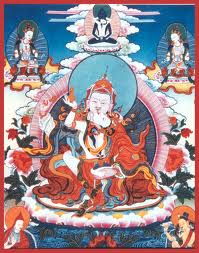
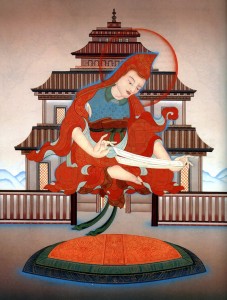
Who is Padmasambhava?

PadmasambhavaMandarava

The following is respectfully quoted from “The History of the Nyingma School of Tibetan Buddhism” by Dudjom Rinpoche:

He studied all the sūtras, tantras, and sciences under the many scholars and accomplished masters of India, of whom the foremost were: the eight great awareness-holders, from whom he received the Eight Classes of Means for Attainment; Buddhaguhya, from whom he received the Magical Net; and Śri Simha, from whom he received the Great Perfection. Training himself thus, he fully understood all doctrines after studying them only once. He could see the deities even without propitiating them. In this way, he became renowned as Loden Chokse (Intelligent Boon-seeker), and he demonstrated the ultimate attainment of a holder of the awareness of spiritual maturation.

Then he gained influence over Mandāravā, the daughter of King Ārsadhara of Sahor, who possessed marks of a dākinī. He took her to the Māratika Cave, to serve as the consort for his practice; and for three months they practised the means for attainment of longevity. Lord Amitāyus actually came there and empowered them, and he consecrated them to be no different than himself. He granted them one billion rites of longevity, whereby Padmasambhava attained the accomplishment of awareness-holder endowed with power over the duration of his life.

Having thus attained the body of indestructible reality that is beyond birth and death, Padmasambhava went to subdue the kingdom of Sahor. When the king and his ministers tried to immolate him, he performed the miracle [of transforming the pyre into] a lake of sesame oil, in the midst of which he remained seated on a lotus. Thus he secured them in faith and introduced them all to the doctrine, so that they reached the level of no-return.

Hells?

Hell realm z.about.com

The following is an excerpt from a teaching by Jetsunma Ahkon Lhamo called “Why P’howa?”

According to the Buddha’s teaching, there are six realms of cyclic existence, and I will begin with what is called the lowest of the realms.  Now generally, when Westerners hear about the different realms, oh, we love the high realms.  Those are our favorites.  But the lower realms scare us a bit.  Westerners don’t want to hear about the lower realms, because they are associated with something archaic that their mothers told them, or that their old preachers told them sometime in the past.  Every world religion has a story about a result that will occur if one engages in a lifelong non-virtue, or even in temporary periods of non-virtue, every single world religion that has the kind of strength to have lasted through fads and trends and teachers that say they have it, and then they drop dead just like everybody else and there is no good result.  Every world religion has a teaching about this result from non-virtuous behavior so for those of you that are uncomfortable about this, I’m sorry.  Here’s what you need to do.  Get out of it.  Get out of cyclic existence.  That’s the point.  That’s why we’re having this teaching.  If you don’t like the idea of the result of your non-virtue, don’t commit it.  If you don’t like the idea of sinking to a lower realm or experiencing any of those lower realms, create the causes for not sinking to a lower realm.  First let’s learn about the realms.

Again, we’re walking through a room with the lights turned on.  You want the lights on so that you can get around it.  The difference with the Buddha’s teaching is that we are taught a method to avoid this [experiencing a lower realm].  We are taught a method to purify the causes.  There is method.  There is long-term method that is geared for a certain result, like the ability to turn the light on.

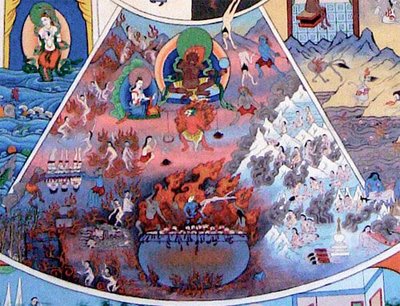
Of the six realms, the realm that we will speak of first is the rebirth in the hell realm.  There are many sentient beings that are now, even as we speak, revolving helplessly in the hell realms.  I guess the Christian idea of hell is a place under the earth where things are burning.  That is not the idea that we have here.  The hell realms are varied.  They are varied in their condition.  There are, in fact, extremely hot hell realms and there are Dharma texts in our bookstore [that tell about them]. I don’t feel the need to go into that at any great length at this time because that isn’t technically what we are about at this time; I’m going into this in a condensed form, but there are the hot hell realms, and the hot hell realms are all results that are associated with the cause of hatred, extreme hatred, the kind of virulent hatred and attitudinal hatred that many people allow to remain in their mind.

A perfect example of that kind of hatred would be the Ku Klux Klan kind of mentality you see, or the Hitler kind of mentality, the kind of mentality in which hatred simply pours out of the pores.  There is such a strong habitual tendency of hatred that simply is unconditional negative hatred instead of unconditional positive regard.  It is habitual.  It is constant.  It is simply an outpouring of hatred.  This is associated with the cause of truly torturing and hurting others. There have been many throughout time who have tortured and mutilated the bodies and lives of others in a horrible way that we, living  middle America lives, really can’t imagine except through what we’ve read.  There are, of course, other certain heinous sins that also result in the rebirth in the most difficult of the hells. Those heinous things are the murdering or killing of one’s mother and father, the murdering or killing or harming of one’s Guru, the murdering or killing or harming or drawing blood of a Bodhisattva.  That is not to say that if you were taking a blood sample for the health of the Bodhisattva, … Well, people would not exactly be standing in line for that job would they!  No, but that would not be intentional harm, like really harming a Bodhisattva, someone who could bring enlightenment to others. Harming or taking that one out of the world is considered to be a heinous crime because it actually literally changes the future of the world.  It changes the world in a negative way.  It prevents the world from moving forward in its evolution, in its continuum.

For extraordinary non-virtue, for those really extraordinary sins, there are the hell realms consisting of the extremely hot hell realms and the extremely cold hell realms. Characteristic of both the hot and cold hell realms is that there is no respite from the suffering.  There is no respite from the suffering.  Literally, when one takes rebirth in the cold realms, one will be reborn in inconceivable cold with no protective clothing.  What will happen to oneself will be the experience of what we think would happen to ourselves if we were to be suddenly now naked in an extremely cold realm.  That is to say, the skin would freeze, crack open.  Things would happen strangely to our bodies and you would think that that would be the end of it.  But in these very cold hell realms, until the non-virtuous karma is exhausted, one continues to reappear even after death from cold has occurred, and that is the same with the hot realms.  Continuously apparent, there is no respite.

There are other forms.  There are the individual hells; and I can tell you for a fact that I know, through my own perception, that this is true.  I have seen this sort of thing and this is the kind of thing that people mistake as being ghosts.  Often you go to a house and at a certain time of night you will hear footsteps or you’ll hear a door creaking or you’ll hear chains rattling, whatever it is that people hear, that sort of thing.  Probably what has happened there, although not exclusively, but probably what has happened there is that there is a sentient being stuck in an individual hell realm.  This is the hell realm that is individual to the person’s experience, whatever their expected experience is. It’s according to the content of the mindstream, their consciousness, their habitual tendency.  Write that word down somewhere in your notes, or remember it—habitual tendency. That will come up again and again during the course of your practice as a Buddhist. Due to the force of their habitual tendency, they will remain and this kind of hell realm is the result of again, extreme non-virtue, but it is also a non-virtue that is mixed with ignorance and a determination to remain ignorant.

Think about that, because you have done this.  Think about this now.  The determination to remain ignorant is the one where you make a decision to go away from pursuing wisdom and pursuing your method, your path.  And you just go, “It’s too hard.  I don’t like this.  It’s not easy for me, I don’t want it.  Hard.  And I’m just a little kid and I have to play some more.”  When you do that, you are actually turning your mind away from Dharma and you are committing a very strong non-virtue. The other one is, “I don’t have to learn that.  I know enough to get by.  I’ll just read…, Who was that one that wrote about death and dying?  A non-Buddhist.  They wrote that you see a tunnel and you see a white light.  Do you remember who that is?  I’ll just read Ross’ book and I’ll be fine.  Maybe I’ll read it, if I have time, but I really like to read other books better.”  And this kind of thing.  You have this kind of idea.

Sometimes, I’ll see a person in class with ‘attitude’ written all over their heads, and have no idea why they’re here.  Why did they come?  I don’t know, but they have attitude written all over their head; and the attitude is actually like putting yourself in chains because you are absolutely setting up that you are not going to have a positive rebirth, that you can sit in the presence of what could possibly be your own root guru, or at least a guru, a teacher, and just simply turn your mind away.  Literally, what you would be doing there is to make your mind like a bowl filled with poison so that the milk that pours in there is tainted, and then you are responsible for tainting the milk within your own mind.  So that kind of thing is the kind of thing that leads to rebirth in the individual hells.  That kind of ignorance.  That is an ignorant move to make.  It is born of ignorance.

The individual hells are very strange, very unusual.  I can describe a couple that I know of personally.  One good example would be of an individual who perceives themselves to be stuck in the opening and closing of the door. Of course this is all relative and it is all a deluded perception.    This is the kind of person that perhaps would remain stagnant within the course of their lives, locked themselves in, did not grow, wouldn’t grow, would not challenge themselves to go the extra mile and be kind towards others, remained extremely self-absorbed.  They literally shut their eyes during the course of life.  Again, that sounds pretty mild in terms of a sin.  You could commit worse sins, but we are talking about sins against one’s own nature and those are important.  Those are very important.   So this person would be stuck in the opening and closing of the door and would experience the door being closed on them and would experience the door being opened again. They would experience it as though their bodies were literally stuck in that, again and again.

I have also seen sentient beings that are literally stuck walking up and down a hall.  That’s it, walking up and down a hall.  They are stuck calling, calling, calling for someone.  Literally they go through bardo—and this will make sense for those of you that have taken the teachings. They will go through the bardo state: They will go through the experience of the white Bodhicitta, the experience of the red Bodhicitta.  They will go through the experience of the appearance of the Dharmadhatu that is experienced as blackness.  They will go through the re-awakening of the perception of the Buddhas and Bodhisattvas.  They will go through the reawakening of the perception of the wrathful deities. Then they will enter into the bardo of becoming, and in the bardo of becoming they will immediately experience rebirth. It will be very disconcerting because suddenly they will be walking up and down a hall, trying to reach the others that they were so attached to.  Those of you that have very strong attachments on a human level, try to imagine what this would feel like.  They will continually try to reach out for the others and they will sort of see them, but sort of not see them because they are not really there.  Try to imagine seeking the safety of a loved one, and it changes all the time.  You don’t understand.  That’s the kind of experience of someone in an individual bardo. They experience walking up and down the hall, literally, almost seeing safety and then feeling all of the feelings that would go with doing that endlessly.  So that is the kind of experience that one might experience if one were to engage in a non-virtuous life and not practice Dharma. And it happens.

Now what we’re talking about today, once again, is the antidote.  The purpose of talking about the disease is so that we can explore the antidote.  The antidote should not be taken without an understanding of the disease.  These kinds of life forms will also be registered.  From our point of view they will seem like repetitive ghosts doing the same kinds of things again and again and again.

There are many different kinds of hell.  There are hells of entrapment.  There are hells of destruction in which one is literally cut up and then reassembled and all kinds of things, and they go according to the level of non-virtue that one has committed.  Compared to the amount of sentient beings that are now physical as humans, the amount of sentient beings locked in those hells is inconceivably more.  We cannot understand how many more beings are locked there than are now approaching awakening on the physical human level listening to Dharma.  We cannot imagine how many of those there are.

Sometimes as one finishes the karma that has brought them to a lower hell realm, they will then go on to a higher hell realm which is less uncomfortable.  What we are talking about is a playing out the grosser and heavier non-virtue and then cleaning up the more subtle and more lightweight non-virtue.  One may graduate from one experience in the hells to another.

You may think, “Well this is inconceivable to me.  I can’t understand that.  Being stuck in a doorjamb? No way.  Hell no!  Frozen?  No.  Hell no!  Frozen, burned up?  Come on, that stuff doesn’t sound realistic to me.  I can’t believe in that.”  Well, let me ask you if you’ve ever had a nightmare?  Who has had a nightmare?  Will you raise your hand if you have ever in your life had a nightmare.  Just pretty much everybody.  That means that your mind has the capacity to manufacture a hell.  So for you to say that there is no such thing and you will never end up there, after you’ve had a nightmare, it goes to show that you’re not thinking. Because if you can manufacture a nightmare, that is not different from manufacturing a hell realm.  It is the same thing.  The seed, the content, the potential is within the mindstream and it is due to non-virtue.  That’s what it is.

So you know that that’s possible.  You have been there in a very small way.  When you have a nightmare you literally are, in a subtle way, reborn from the bardo of dreaming into this bardo of experience, which is also part of the bardo of dreaming. You are kind of reborn from one subtle element, one subtle level, to another.  And this is the very same thing that happens in a much grosser and denser level for that person who is unprepared for death, which fortunately is not going to be you.  Right?  Good.

Copyright © Jetsunma Ahkon Norbu Lhamo All rights reserved
 

The Benefits of the Awakening Mind

Here is another excerpt from the first chapter of A Guide to the Bodhisattva’s Way of Life called “The Benefits of the Awakening Mind.”  May these words written by Shantideva inspire all who encounter them.

 #26

How can I fathom the depths

Of the goodness of this jewel of the mind,

The panacea that relieves the world of pain

And is the source of all its joy?


#31

If whoever repays a kind deed

Is worthy of some praise,

Then what need to mention the Bodhisattvas

Who do good without it being asked of them?


#32

The world honors as virtuous

One who sometimes gives a little, plain food

Disrespectfully to a few beings,

Which satisfies them for only a half a day.


#33

What need be said then of one

Who eternally bestows the peerless bliss of the Sugatas

Upon limitless numbers of beings,

Thereby fulfilling all their hopes?


#34

The Buddha has said that whoever bears a harmful thought

Against a benefactor such as a Bodhisattva

Will remain in hell for as many aeons

As there were harmful thoughts.


#35

However, if a virtuous attitude should arise (in that regard),

Its fruits will multiply far more than that.

When Bodhisattvas greatly suffer they generate no negativity,

Instead their virtues naturally increase.


#36

I bow down to the body of those

In whom the sacred precious mind is born.

I seek refuge in that source of joy

Who brings happiness even to those who bring harm.

WP2Social Auto Publish Powered By : XYZScripts.com