The following is an excerpt from a teaching by Jetsunma Ahkon Lhamo called “Take Control of Your Life”
When we create a close relationship with our teacher on the path of Vajrayana—once we have examined the teacher’s qualities and have decided for ourselves that this is indeed the root guru—then we must follow. If the root guru can teach us Buddhism, they have to have something of that same capacity [as the Buddha]. Now maybe the root guru can see what it is that’s brought us here—the suffering that’s brought us here, and the accomplishment. The root guru looks at you and sees you are Buddha, and yet you suffer. So the root guru says, “I wish to teach you how to live, how to practice, so that your suffering ends and so that you can benefit others.” Nowhere else is one taught that way: understanding the true nature, one’s appearance and one’s nature that is empty. Therefore only the Buddha is the appropriate guide.
The Buddha teaches us that everything is about karma. It’s about choices; it’s about cause and effect; it’s about realizing one’s nature and remaining stable in the bliss of emptiness. If we remain stable in that, we are free to examine any part of our lives. And most of all, first and foremost, we should examine our minds.
The Buddha has taught us that first, and most importantly, we should establish our motivation,. And our motivation is based on the first teaching of Lord Buddha—that all beings are equal in their nature. All beings. That they are all suffering and yet what they all have in common is that they all equally wish to be happy. The smallest worm, anything with consciousness in its own way, in its own language, is striving to be happy. Then the Buddha teaches us the pristine message—the message of hope and the one that allows us to practice at last. The Buddha says, “All beings are suffering, but there is an end to suffering, and that end is called enlightenment.”
Beyond that, Lord Buddha says we must examine our minds, our intention. This is profound work; this is deep work. You can’t practice a little Dharma over here and commit a little adultery over here. You can’t practice a little Dharma over here and have someone in your life whom you know doesn’t have a bite to eat and not help them. You can’t practice a little Dharma over here and have no respect for the Sangha or the temple or the teacher. In other words, Dharma’s not like a pretty little high church package. Even though we have bunches of fancy things around here, it isn’t like you walk into a giant temple and go, “Oh, I’m moved emotionally, and it’s Sunday. I did it. I’m a good Buddhist.” No. That’s not Dharma. “I came on Sunday, I sang some songs and I’m impressed with the church. Now I’m going home.” No, that’s not Dharma.
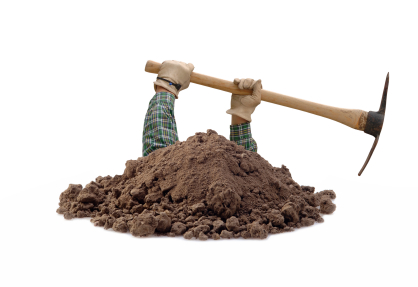
Dharma is different. When we see these objects that are beautiful and magical and we see the brocade and we see the statues, yes, it thrills our hearts and we recognize on some level that something very precious and beautiful is here. But the Buddha didn’t tell us to sit around and think about how things are precious and beautiful in the temple. The Buddha taught us that Dharma isn’t like a beautiful package of golden brocade. Dharma is a knife, and it’s meant to cut. It has a sharp edge, and it’s not always painless. Dharma teaches us that the honest truth is that non-virtuous activity and habitual patterns will only lead us to more unhappiness. That means we have to go in there with a shovel and a pick axe and start changing our minds.
Copyright © Jetsunma Ahkon Norbu Lhamo All rights reserved


THANK YOU THANK YOU THANK YOU Jetsunma for this teaching
Thank you Precious Teacher
As usual, words fail me! But, from my heart, thank you Precious Guru.