A video of the Compassionate Activities of His Holiness Pema Norbu Rinpoche with permission from Pathgate Institute of Buddhist Studies, and special thanks to Lama Dondrup Dorje
Jetsunma Ahkon Lhamo
Buddha in the Palm of Your Hand
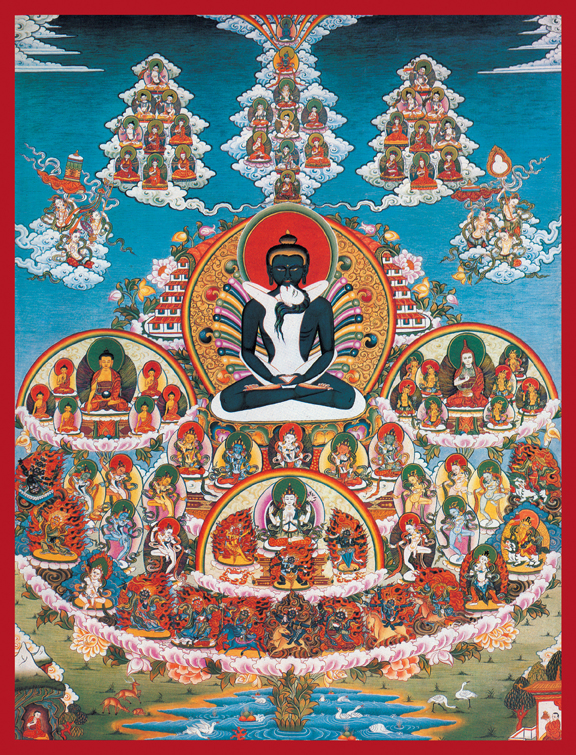
From a series of tweets on October 20, 2010 by Jetsunma Ahkon Lhamo
A few precious words taught by Kyabje His Holiness Penor Rinpoche.
The great master Buddha gave three main sermons to lead sentient beings onto the Path of Liberation from the suffering of samsara. Because beings have different levels of mind and interest, Buddha has given the teachings in nine Yanas or paths. These nine paths can be divided into the paths of Hinayana and Mahayana. Mahayana includes both Sutrayana, which emphasizes the practice of Bodhicitta and the six perfections, and Vajrayana, which utilized the techniques of deity meditation and skillful means of attaining Enlightenment.
The first eight Yanas are steps to the last and highest Yana called Atiyoga in Sanskrit. Ati means the best, top or essence. Yoga refers to the practitioner. Dzogchen, the practice of Atiyoga leads the practitioner directly to Enlightenment.
The Namcho (Space Treasure) Dzogchen preliminary practice is called “Buddha in the Palm of Your Hand.” By accomplishing this practice one can realize the nature of mind. An important and necessary foundation for higher Dzogchen practice, the preliminary practice consists of several steps.
Refuge or entering the gate of the three precious Jewels; Bodhicitta, the practice of the six perfections and the generation of the aspiration to realize Enlightenment; offering the Mandala, the accumulation of merit through skillful means; Vajrasattva, the purification of obscurations through Wisdom; and Guru Yoga, receiving the blessing through which one can attain Enlightenment in a single lifetime.
All components are necessary, as the Lama provides the maturation of the mind or there is little result. This Cycle of Revelation was revealed by Terton Migyur Dorje, who received it from Arya Avelokiteshvara and Guru Rinpoche.
This was from Kyabje Penor Rinpoche. With great longing, I bow down.
© Jetsunma Ahkon Lhamo
What Is Real?

From a series of tweets by Jetsunma Ahkon Lhamo
In science we have learned that objects, indeed, people are mostly space. We have atoms and molecules, and between them is empty space. So it is the case as Buddhism states. The primordial ground of being is the self-originating empty luminous state – space.
All appearances are due to the five senses, which are the five grasping skandas. We perceive by these senses all phenomena. The senses are themselves empty of self-nature.
So what is real? That empty, luminous uncompromised ground nature, and even THAT is empty if it is attached to conceptualization. It is natural vibrational attraction, magnetism so subtle that holds “view” together. We can also say that habitual tendencies, KARMA, cause and effect that rules view and condition; phenomenal display. In short we see what we are and according to habit from birth AND before. A cat is a born predator. A rabbit is born prey. Thus it is taught that every thought and action are important as they create every future, and result.
If we intentionally direct our minds toward harm, we ourselves will see the result. Cause and result. If not in this life, then soon. We are dancing in vibrationally-tuned luminosity. Every cause has result. And this is the Karma we bring into our future lives.
Try hard, indeed, accomplish virtue and view. And steer clear of harming others and causing suffering. This is what Lord Buddha taught. Eh Ma Ho.
In the end we will ALL suffer if we harm others. If we cultivate virtue (not just for show) we can benefit beings and know true bliss! Om Ah Hung Benzar Guru Pema Siddhi Hung
© Jetsunma Ahkon Lhamo
A Wish-Fulfilling Jewel
If you have ever walked into the Prayer Room at Kunzang Palyul Choling, you cannot have helped but notice the large collection of crystals. And perhaps you have wondered, “Why do they have all of these crystals? Is this typical of Buddhism? What is their purpose?”
The Mineral Kingdom on a Mission:
The world is filled with uncountable minerals – crystals, ores, and gems. Not only are they beautiful to behold, but they actually serve a vital function of maintaining the vibratory structure of the universe. Originally brought into manifestation by rays of tone and color and vibration originating from the Primordial State of Awareness (the Absolute), they assure true communication and transmission of divine energies. Crystals function to transmit peace, love, absolute oneness, absolute awakened consciousness. They help to remind human kind of our own true nature, which is not unlike the clearest crystal and not unlike the most beautiful and radiant gems.
Each mineral or family of minerals has a specific attunement with different aspects of the Primordial Wisdom State that is the nature of all things. If they were not present on our planet, many divine qualities would be lost to our memory. But no mineral creates energy of its own. They are transmitters, attuned to the cosmos. They tend to refract universal energies into specific qualities. If it seems that a crystal creates energy, it is because it has touched the Infinite and speaks of it, as though it had heard a song and continues to sing.
It is with this understanding that the crystals at KPC are utilized and upheld. Walking through the Temple you will see magnificent specimens of all types: clear and smokey quartz, rose quartz, amethyst, citrine, tourmaline, apophyllite, elestials, and so on. Each type of mineral has a specific attunement to the Primordial State of Awareness, and together they work to absorb and amplify prayer energy and the presence of this primordial awareness (Buddhanature or God-consciousness) into the world. Since 1985 KPC has maintained a 24-hour-a-day Prayer Vigil for the planet and all beings and the crystals are considered a vital part of our efforts.
How Do Crystals Fit Into Tibetan Buddhism?
While KPC is distinctive among Buddhist Centers in the number and unique use of crystals, they are indeed utilized within the Tibetan Buddhist Tradition. In Tibetan Buddhist empowerment, the Lama will confer a special ‘nature of mind” transmission, wherein he holds up and students gaze upon a perfectly clear quartz crystal, symbolic of our Primordial Wisdom Nature. Prayer beads (or malas) are also often made of semi-precious stones, from quartz to lapis lazuli, to amethyst. The mala is blessed and empowered by one’s teacher, and serves as an aid to one’s spiritual practice.
Crystals, whether individual stones or prayer beads, in conjunction with a tried and true spiritual path can act as catalysts – bringing forth and ripening latent karmic potentials within your mind. They may facilitate meditation and the breaking up of basic delusion. But ultimately no mineral can give you anything that you don’t already possess. They are supports to the spiritual path, not objects of refuge themselves. On the path to enlightenment we have to find a way to catalyze the things that are most helpful to us, and that’s what crystals do. That’s what they will do for a practitioner. They should be an aid in our remembering – a support to realizing our true nature.
Something Truly Special
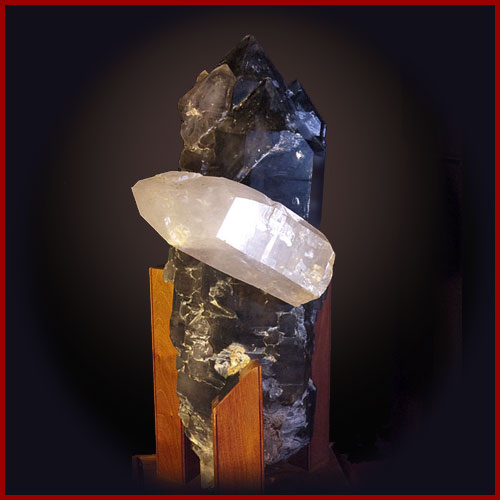
KPC’s crystals were chosen for their unique energies and strategically placed in order to facilitate the anchoring and transmission of prayer energy into the world. Our spiritual director, Jetsunma worked to merge the energy of the crystals with one another and with the compassionate Buddha Nature. Through twenty five years of continuous, unbroken prayer, the crystals have supported the mission of KPC and Jetsunma’s vision to bring benefit to countless sentient beings.
Vajrayana is for This Time
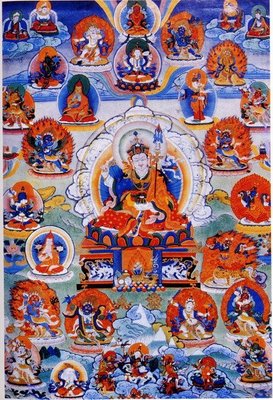
An excerpt from a teaching called Vajrayana’s Final Hour by Jetsunma Ahkon Lhamo
The tradition we practice here is called Vajrayana. This particular kind of teaching most greatly benefits people who are born in this degenerate aeon. There is something about Vajrayana that seems to burn the candle at both ends. When one practices generation stage practice for example, one does not suppress the compulsion to consider oneself a “self” or ego but rather uses that inclination. There is an energy associated with clinging to oneself as an ego that is a lot like a rubber band. You can try to think of something else, but however much you stretch it, it will always come back to its original shape. That compulsion to consider self-nature as being inherently real is similar to the energy-that causes a rubber band to reform; we have that energy instinctively within our minds.
Vajrayana actually uses that inclination in generation stage practice. There we meditate on Emptiness, on the natural uncontrived primordial state of Emptiness. We consider that all elements of perceptual phenomena are broken into their natural component: sheer luminosity. Meditating on emptiness or shunyata, we then generate the deity using that same energy that causes us to consider self-nature. Generating ourselves as the deity, we generate the pure display having all the pure qualities of the deity. Arising from emptiness, we generate the pristine Nature in such a way as to be a phenomenal thing, a display. It is visible to our eyes and our consciousness. We use the very energy that causes us to cling to self-nature to accomplish realization. Vajrayana has that unique quality. Can you see how it burns the candle at both ends? We use what we have — that fire, that passion, even desire, to accomplish the Primordial Wisdom Nature.
In this time of degeneration, I am taught that there will come a time when there is no teaching in the world that can bring us to enlightenment. There will be no path, no Bodhisattvas that incarnate, and the Buddha will not be present in the world. It will be a time of great darkness and wars. And finally there will be a time of night, of darkness. Immediately after that the next Buddha will appear again.
Now while things are becoming darker and more condensed, one still has a shot. Things are lining up so that if one were to sincerely practice a technology that can lead to enlightenment and that has brought others repeatedly to enlightenment, if one were to practice that with fervent regard, devotion, and faith in a pristine way, then one could achieve the auspicious result — realization during the course of this lifetime, or in the Bardo, or an auspicious rebirth in order to practice purely and perfectly.
© Jetsunma Ahkon Lhamo
What is Enlightenment?

An excerpt from a teaching called The Seed of Your Buddha Nature Within by Jetsunma Ahkon Lhamo
One understands that Enlightenment is actually the awakening to the Primordial Wisdom Nature, the awakening to the Buddha nature. The Buddha never said that he was different from anyone else. He said simply, “I am awake.” He is indicating that he has awakened to the fullness of his own Nature and is able to abide spontaneously in that awakened state without any interruption or impediment. So, from that perspective, the basis of practice, the basis of the path itself is exactly the same as the goal. They are indistinguishable from one another. The path that one uses in order to achieve the goal is also indistinguishable from the basis, which is the Buddha Nature, and is also indistinguishable from the goal, which is the Buddha Nature. So, these three things, the basis, the method and the goal are indistinguishable from one another.
For us, however, it does not appear to be so, simply because of the way our minds work, involved in discursive thought as they are. We distinguish between what is potential and movement. We distinguish between movement and the goal. But in truth, you cannot distinguish between these three. If the basis for practice is the same as the goal, then anything in which you engage in order to achieve that awakening to your own Nature, must also be indistinguishable from your own Nature. The path, then, or the method, is not separate from the Buddha Nature.
Now, where we run into trouble is when we make our Dharma practice an outward movement that goes somewhere. When we do our practice, we project that there is going to be a certain result. That very subtle concept prevents the practice from doing all that it can do to remove obstacles from our own perception, because we cling to the idea of here-ness and there-ness, of such-ness and thus-ness, and in doing so, we cling to the idea of self. It’s very hard to understand that subtle difference, but that subtle difference is very important. If we did not view our Dharma practice as a subject, object, thing or as a linear movement in some way, we would more easily understand that the goal is the un-moveable, unchangeable, fully complete and spontaneously realized Nature itself, which is already present. The potential for the realization of that Nature would be much stronger in our practice, in terms of taking responsibility for our situation and utilizing our practice to its fullest capacity.
In order for us to consider our Dharma practice, or even the ability to listen to teachings, as a movement that ‘goes somewhere’– we have to be considering it in a very superficial way. But if the practice is understood as a natural and spontaneous manifestation, arising from the Buddha Nature that is our Nature, then the practice becomes less materialistic and more meaningful in a very profound way. In the same way, if we are in an ordinary environment and an ordinary teacher comes before us, we don’t respond as we would if the Buddha himself, with all the signs and marks, were sitting in front of us. If the Buddha appeared, we would respond with, “Whoa! Whoa! This is important! Something is happening here. The Buddha is here!” In truth, we should respond that same way to our own simple practice because that practice is indistinguishable from the Buddha Nature itself. The Buddha is here. But the impact is different in the way that we consider and understand what we are doing.
© Jetsunma Ahkon Lhamo
The Big Picture

An excerpt from a teaching called True Motivation for Kindness by Jetsunma Ahkon Lhamo
The Buddha teaches us that everything a sentient being does has a little hook on the end of it. And the hook is: I…me…always about me. So you have to watch when you’re being kind that you’re not being kind just to be a certain way. What you really want to do is to alleviate the suffering of sentient beings. It’s about them, not about you. Get the big picture. All sentient beings are suffering. Get that they, like you, don’t wish to suffer.
You can help others understand the value of kindness. You can demonstrate it. You can begin to show people the value of being of benefit to others. You can help people to understand in some simple way that there is something better than the superficiality that they are revolving in. You can pray for their enlightenment. Make prayers for the end of hunger, prayers for the end of war, prayers for the end of suffering in all its forms. You can do that, and in doing that, you have actually entered onto the Path. It’s just a baby step, but a good one. It is one thing that you can do quietly in your heart. No one ever sees it. You can do it without expecting anyone to pay you back.
The upshot of all of this then is to consider compassion in a new way, in a sense to consider it in an ordinary way, in that you can truly practice it within the context of your life. But more than that, know yourself! See what your motivation is. On this path your motivation is everything. Examine the faults of cyclic existence so that when you accept the hard work of this path, even if it’s just simply acting in a compassionate way, accomplish it for the right reasons.
Take into yourself the fundamental truth that cyclic existence is faulted, but that the Buddha said there is an end to suffering, and it is attainable to you if you open your eyes and act appropriately. Don’t waste your time gathering unto yourself things that you cannot take with you. Don’t waste your time. Practice the Path.
© Jetsunma Ahkon Lhamo
Je Lama
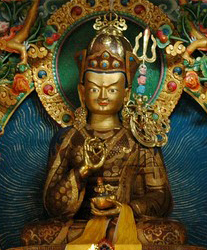
Je Lama
Why don’t you tell me
What to do
I been thinking it over
And this I know:
That there is suffering
Everywhere I go.
And so I’m ready
Nothing else to do
Now is my time
I give it all to you
So I offer my
Body, Speech and Mind
And all I have
In the three times
Cause I know it’s holy
What we are inside
In that nature
Liberation resides.
© Jetsunma Ahkon Lhamo, March 1992
To Be a Practitioner
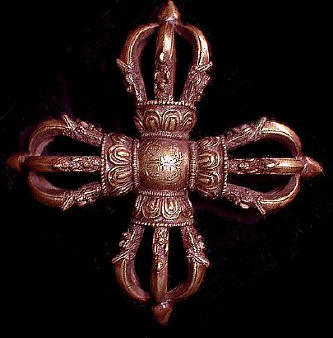
An excerpt from a teaching by Jetsunma Ahkon Lhamo from the Vow of Love series
If you realize that all sentient beings are suffering, and are then motivated to examine the other side of that law – that enlightenment is the cessation of suffering – and therefore commit yourself to attaining enlightenment in order to end the suffering of yourself and others, then you are a practitioner. Whether you call yourself a Buddhist or not, you are a practitioner.
If you realize the belief in self and in the ego configurations that surround self – the rigidity, the need for survival, the hardening of the mind – are the causes of suffering, and begin to eliminate them by living a compassionate life, purifying your clinging to ego, then whether you call yourself a Buddhist or not, you are a practitioner of the highest caliber.
As a practitioner, you should consider these things: the idea of compassion, of living selflessly, of living an extraordinary life solely to benefit beings, to end their suffering, to bring about a situation in which they can create the cause of happiness rather than the cause of non-virtue. If you can live an extraordinary life, not only are you purifying your mind – because that is the antidote for self-absorption, and self-absorption is the cause of suffering – but you are also a contributor to a very precious idea: the idea of a world, of all worlds, free of pain.
These things you can consider. You can consider them in accordance with Buddhist teaching, or you can consider them separate from Buddhist teaching, even though they are not. You can consider them from whatever angle you wish. But I hope from my heart that whoever you are, and whatever your game plan is, that you will consider these things to the extent that your mind will be softened, and that you can adopt the two ideas that are foundational in the Buddha’s path: renunciation and compassion.
Why We Die
An excerpt from a teaching by Jetsunma Ahkon Lhamo from the Vow of Love series
Did you ever watch yourself when you were young? Did you see what you did? Do you watch young people now? Look at the teenagers you know. They are invariably right. They know everything. I knew everything at that age, too, so I understand. They know beyond everything. If there is more than everything, they know it. They have all the answers.
We are also like that. We are locked within a time-and-space grid. When we drop something, it falls, immediately. What makes it so immediate? If it were to hang in the air for ten years, then fall, invariably we would convince ourselves it’s never going to fall. But since it falls immediately, since when we stick our hands in the fire, it hurts immediately, we believe that. Old age, sickness and death we don’t believe. We sort of get it, but it’s in the back of our minds somewhere.
Why is it we don’t fully believe in cause and effect, even though we take into account the passage of time? It’s because we are trying to be happy, so we convince ourselves that cause and effect is not absolute. Why is that? How is it that we can understand that we create the causes of suffering in our mind, and yet still convince ourselves it will not bear the fruit of suffering? It’s because karma appears to ripen in different ways. Karma can ripen immediately. If I drop something and it falls, this is karma ripening. I dropped it; it fell. Karma can also ripen in a different way.
Because of your belief that self-nature is inherently real, you have created the delusion of a self. Self has a beginning and it has an end, and that is the cause for death. The cause for death is the belief in self-nature as being real; that is why people die. Yet you will convince yourself it is okay to believe in self-nature, that there is no problem as long as you can find a way to make self happy. You think it’s going to be okay. But you are still going to die. We are doing this to ourselves, and we don’t even realize it. The self is a finite thing. It had a beginning, a time when it was conceived. There was a time when the thought of self-nature as being inherently real first manifested. Since that is so, then it also must end. If there is a beginning, there is an end.
In the same way, we are constantly engaged in creating things that are the karmic causes of our own suffering, but we don’t make a connection. The reason we don’t make a connection is due to the other kind of karmic ripening, the one that you don’t see in this life. The karma that ripens after a long time, an intermediate time, or even a short time, are karmic ripenings that you actually do not see in this lifetime.
Here then is a problem. Here is one of the reasons why it becomes very difficult to realize the unchangeable truth that all sentient beings wish to be happy, and yet not realizing how to create the causes of happiness, create instead the causes of suffering.
Many of the things that we have suffered in this lifetime seem to have been put upon us in an innocent way. We were innocent. Why is someone born with a cleft palate? Why are some of us born with a crippling condition, some handicap? Why do some of us become ill or die when we have tried to live a good life, when we have done everything we can to be kind to other human beings and have never killed anyone? It is because many of the causes that we see in this lifetime have come from a time before.
© Jetsunma Ahkon Lhamo