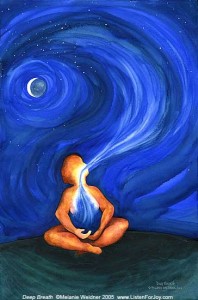
Don’t Remain Trapped by Habitual Tendency

From http://www.polyvore.com/best_2009/collection?id=41015

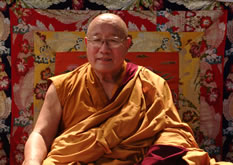
From a series of tweets by Jetsunma Ahkon Lhamo:

Looking forward to Khenpo Tenzin Norgay’s visit and teaching. I admire and like him so much! He is not into politics and is pure. He seems to have no ego issues and is not one to climb on other’s backs. He is very kind, much Bodhicitta, respectful, never rude. I don’t like rudeness at all. I never have. And if I myself am rude (mostly accidental) I really take myself to task, examine my view. It is best to do that quickly before habit sets in. Anyway, why waste one’s time yammering if one has nothing useful to say? Shut the old pie-hole and practice kindness, and do no harm.

There are so many versions of Dharma now. We have tasters, who sample and take only what they like to heart. Thus they make up their own religion. There are those who talk day and night about how enlightened they are, thus demonstrating they are ordinary. Then the ones who collect Dharma as one collects stuff. Mainly to strut and fluff up their resume, showing they have a very shallow understanding of the point of Dharma.

And there are those who in a sociopathic way like to destroy; people, lineages, Sangha, method and result. No reason, other than they enjoy the power and the drama, the calamity, the pain – it makes one feel potent, important. Sad to say they will have an awful bardo and rebirth experience. One then continues wandering through the realms and suffering of samsara endlessly, as crazed as a bee in a jar.

Why smash your head on the jar over and over again? Better to work the path with character, purity, kind intention devoid of pride and anger. Then there will be actual progress, and depth.

© Jetsunma Ahkon Lhamo

Guru – Condensed Essence of the Path

From a series of tweets by Jetsunma Ahkon Lhamo (@jalpalyul) on November 21, 2010

In Tibetan Vajrayana one absolutely needs a Guru. It is the Guru that ripens and turns the mind. One cannot learn Tantra from books.  If the mind is not matured, purified through empowerment, there is no chance for ultimate benefit. Empowerment empowers the student to practice. Without these blessings one’s understanding of Dharma is shallow and there is not much faith. Not much benefit.

Without a Guru, one can talk Dharma only in a shallow way, and the result is merely intellectual.  There is no view. If you practice without a qualified Guru you will do exactly as you want, and end up with exactly what you have – obscured mind.

In Empowerment the student connects with a Lineage of ripening, unbroken from the source. If the ripening has no past, it has no future

The Guru in Vajrayana is the main source of refuge, as Guru is the condensed essence of the Three Precious Jewels.  The three jewels are Buddha, Dharma and Sangha (spiritual community). The Lama represents all three.  All are needed.

To hang out and simply discuss Dharma, to endlessly pontificate from no source is useless. The mind becomes hard, and ego grows. This is not to say that one should not read and study; this is essential. Still, the Guru is the actual guide, and again, if enlightenment is the goal, Guru is the source.  The Tulku system is based on that. It is based on an unbroken Lineage of accomplishment beginning with the source of the cycle being taught.

© Jetsunma Ahkon Lhamo

Pearls of Wisdom

From a series of tweets by Jetsunma Ahkon Lhamo:

I’ve found if there is bitter enmity that all suffer. The best thing to do is just walk away, agree to disagree.

For one’s physical and emotional health abandon conflict. If the other parties do not follow suit protect oneself. And walk away.

The best way to have happiness that is stable is to spend your life in Compassionate activity, helping others with no thought of reward.

Prayer every day is absolutely essential for mental relaxation. As is meditation, contemplation, making offerings.

Suffering in part is due to dualistic perception. In the view all is the Celestial Mandala of the yidam. Separation makes hope and fear.

All material things are illusory, impermanent. We cannot even take even one grain of rice at death. Put your practice as your true wealth.

Gratitude is the bread and water for one’s spirit! One must try to see the good in all. Or one’s spirit grows dark.

© Jetsunma Ahkon Lhamo

Dharma in the West

From a series of tweets by Jetsunma Ahkon Lhamo (@jalpalyul)

We must reach for a planet with no violence and no hate. We must learn to respect.  We are the western Tibetan Buddhist community. If we cannot display love and compassion, tolerance and understanding, who will?

From the first time the Buddha sat, he taught not to harm others.  The first turning of the dharma wheel – purify. Do no harm. The second turning – the Bodhicitta, both relative and ultimate.  The third turning of the dharma wheel – establish view – emptiness of phenomena, the nature of mind.

At any moment on earth there are always 80 great Mahasiddhas. Always pray and make offerings to Buddhas and Bodhisattvas!

In Mahayana the two “eyes” of method are relative bodhicitta and ultimate bodhicitta. Both are necessary and essential. One is like giving what is essentially built from samsara. The other, ultimate, arises from Buddhanature. If you could feed poor folks and care for them for the rest of their lives; if you were that rich; it would still be relative and ordinary, although fabulous! To attain supreme enlightenment and return to teach others how to exit samsara, that is the ultimate bodhicitta and the ultimate enlightenment. To return until all are liberated, this is the ultimate aspiration and result!

© Jetsunma Ahkon Lhamo

Let Me Go

I live a life where I am speaking
And I’m trying SO HARD to speak the truth
Every day they say I’m lying
Oh no oh no LET ME GO

Oh sista I see you trying
But they will never let you show your light
Every day we see you dying
Oh no oh no LET ME GO

(Chorus)
Let me go into the fire
Let me dance into the Light
I am here, my Love my Father
Let me come to Your Sight

Wisdom Well that I carry
You my sisters bear as well
All the scars we have married
Oh no oh no LET ME GO

Wasted time and sullied promise
Will we ever push on through?
Sometimes don’t know why I bother
Oh no Oh no LET ME GO

Chorus (again)

Half the world is screaming War and
Half the world cries out for Peace
Don’t you dream of worlds of gentle wisdom?
Oh, oh no, LET ME GO.

Let me go to fields of ripening jewels
Let me go to where I can  be me
Let me see the light’s Mandala
Brother, Sister, LET IT BE

I was born in wisdom fire
Must return so I can breathe free
I am here, but can you find me
Oh no oh no let me BE!

Oh no no no Let me go.

© Jetsunma Ahkon Lhamo

Step by Step in Vajrayana

From a series of tweets by Jetsunma Ahkon Lhamo (@jalpalyul) on November 11, 2010

The Lama is used as a mirror-mind in Guru Yoga. If our view is clear without stain, we see the “face” of the Guru, and awaken to primordial wisdom.  If the mind is defiled, like with hatred and pride, there is no way to view the Guru’s nature and we are unable to awaken in Vajrayana.  If these statements bother you, examine what you may have missed. Guru Yoga? Prostrations? Mandala offerings? Vajrasattva? These are all meant to purify one’s mind.  Most every true Vajrayana practitioner will advise that one cannot miss even one step. The path is not easy.  One cannot just decide they are enlightened!

© Jetsunma Ahkön Lhamo

How Far Will You Go?

From a series of tweets by Jetsunma Ahkon Lhamo (@jalpalyul) on November 11, 2010

In my experience anything can be used to propagate the Dharma – TV, radio, magazines, books, Internet blogs and Twitter. Ways to introduce Dharma are as plentiful as leaves on a tree. It depends on view, of course. The one with dirty glasses will never see well. The one who has dirty ears will not hear as well. The one who is ignorant will not accomplish well. The one with an oversized ego will not assimilate well and will lose their way due to pride and arrogance. Grasping will ensure there is nothing in the bank. The next life will be worse.

How can one’s mind not matter?  If it is view, relative mind will not be stable. If there is poverty of respect and love for all beings there is no result in Dharma.

You can tell a great deal by seeing someone’s past. A criminal always remains dangerous. A blow-hard tends to blow! No kindness there.

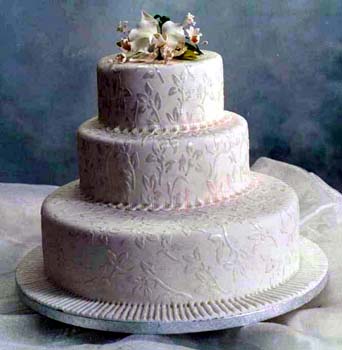
Buddhism is like a wedding cake, many levels. First level is purification of gross karma, the mindstream. Second level is intellectual and scholarly pursuit.  The top level is realization, awakening, result, and accomplishment.  The Bodhisattva or awakening being – this cannot be attained without Bodhicitta, and view of emptiness.

One may take exception, thinking they are unique and special, and have no ethics.  Buddhism is a philosophy of ethics. We build on ethics.  Personally I feel without ethics and compassion there is no realization. I myself practice self-honesty every day. I wish to face all poisons!  I feel that if one is unwilling to purify the poisons, and the karma of body, speech and mind, do not become Buddhist! We are change! And you must grow!

I wish you a life of joy, health and wealth!  I wish you a life of goals attained!  May you have long life and love!  Get it now as you accomplish method!  For all sentient beings.

© Jetsunma Ahkön Lhamo

Each Moment Like a Kiss

An excerpt from a teaching called Intimacy with the Path by Jetsunma Ahkon Lhamo

If you are living a sacred life, which is a life truly connected with meaning, nature, cause, and result, then each moment becomes like a kiss.  Every moment is something that you have a sacred relationship with because you move into the awareness that there is nothing that you can do that is separate from your own nature.  And nothing that you can do, unless you will it to be so and close your eyes and turn away, that is separate from the result of awakening.  In order to establish this truth as being real and relevant in your life, you need to understand the path as being inseparable from your nature.

We run into all kinds of traps when we practice the BuddhaDharma.  One of them is that we feel like we’re doing somebody a favor when we practice.  We feel like we’re doing our teacher a favor.  We feel like we’re doing the people around us a favor and our compassion becomes tainted with that.  We feel like we’re doing everybody a favor by praying for the world.

When we move through the vehicle of our lives, we adapt a posture, which is very much like putting on clothing or a false crown.  We put on an appearance as though it were not ours.  We think of practicing the path as a constraint or something that we do that isn’t naturally part of us and so the path eventually becomes like a burden to carry, something that isn’t you that you have to pull with you and that becomes weighted.  It becomes too heavy.  It becomes unnatural.  It becomes an issue in your life.

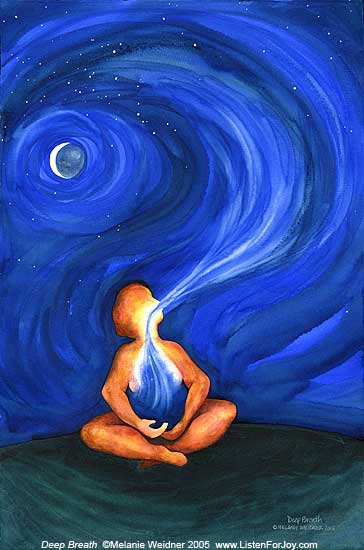
What if we understood the path as something that we were unable to walk away from, so natural like our own breath?  In the same way that life is displayed as movement, breath, activity and its result is that we live.  That natural process of understanding ourselves to be that kind of creature makes it pretty easy for us to breathe, doesn’t it?  If you understand the basis of our life, and you understand cause and effect, you’re not likely to say, “Oh God, I’m so tired of breathing all the time.  I’m just sick of it.  I mean it’s really a pain.  You have to do it from the moment you’re born to the moment you die.  It’s just not fair.  Why does everybody have to do that?”  We would never think like that, of course, because your breath, your movement, is an expression of the fact that you live.

It is possible for the path to be the same kind of living reality to you.  I know that in my own practice (and I’m certainly not holding myself up as the best practitioner in the world.  There are times when I don’t have time to practice at all), I have never for a moment felt separate from the path.  That seems to me impossible.  It seems to me my entire life is an expression of the path and it is.  It seems to me that everything that I know for sure is something that the Buddha brought to the world.   I don’t know anything else for sure.  I may know something about the nature of mind, but I really couldn’t get you into D.C.  I can’t find the place.  It’s the truth.

And yet, I wouldn’t know how to take action, no matter what it looks like, that is separate from what I know as sacred.  I wouldn’t know how to remove myself from the path.  The path for me is inborn, connected, married, and I’m convinced that there would be no reason for me to live if there were no path to be displayed.  I don’t think I’d be here.  Why is that?  Is it because I’m such a great practitioner?  No, I don’t think so.  I think that somehow perhaps, it has been my good fortune, as my teachers have said, to have practiced many, many lifetimes and it has become natural and habitual for me by this time.  Perhaps that’s what it is.  But the one thing that I know for sure that I don’t see is anything that is separate from the Buddha nature.

We, as practitioners who are trying to mature in our own spirituality, have to learn how to do that, how to live a truly sacred life. There are many different ways to put that thought into practice.  I know that with native Americans, for instance, everything that they do in a ceremonial way they offer to the four directions, they offer to the spirits and powers associated with the transcendent and with earth.  Everything first is offered to the creator.  Everything is done in a ritual and ceremonial way so that it is in alignment with what we know to be our nature.

How does a Buddhist practice that kind of sacred life?  A large part of it would be to understand that the path should never be viewed as a thing that is composed of ordinary elements as we know them.  It should be understood as being inseparable from everything you see, everything that is precious to you, and which someday will be even more precious as your understanding increases.  Most importantly, the path cannot be and is not separate from that which is your primordial wisdom nature.  The voice that is the path, the method that is the path, the direction, the confidence of the path, this is all a miraculous display of Buddha nature.  Each and every aspect of the path is a means by which one can develop or awaken to that natural, innate potency that is your potency and that you cannot walk away from, that you cannot abandon or destroy.

© Jetsunma Ahkön Lhamo
Make a Choice

Save yourself —–  Save yourself

Don’t rely on false appearance

Make a choice to see the truth

See the end of all your demons

Wake up to the call

Of your mind

Take the pulse —- Feel the heat

Make the best of this confusion

Love and passion have their day

Make a choice of higher purpose

Sing a song to show

The way

Look around you there’s no question

Lots of suffering you can see

Hunger, war, and prejudice

Exist in a world that should

Be free

What to do?  What would you

Do if you knew there was hope

And you had never done your best?

I think that’s what I’ve been feeling

I will hold the world

In my caress

What’s the plan?  Where do we stand?

Many tasks that we can do

You can try what you do best

Prayer, compassion, kindness, healing

Put your vow of love

To the test

See the nations, See the people

Hear their voices, feel their flames

Tapestry of life around you

Try to hear them call your name

All they want is to be happy

Only ignorance to blame

Do we have the heart to know

In our nature we are all the same?

© Jetsunma Ahkon Lhamo, April 20, 1991

WP2Social Auto Publish Powered By : XYZScripts.com