Prayer to the Guru

The following prayer is from the Nam Cho Daily Practice from Palyul Ling International:

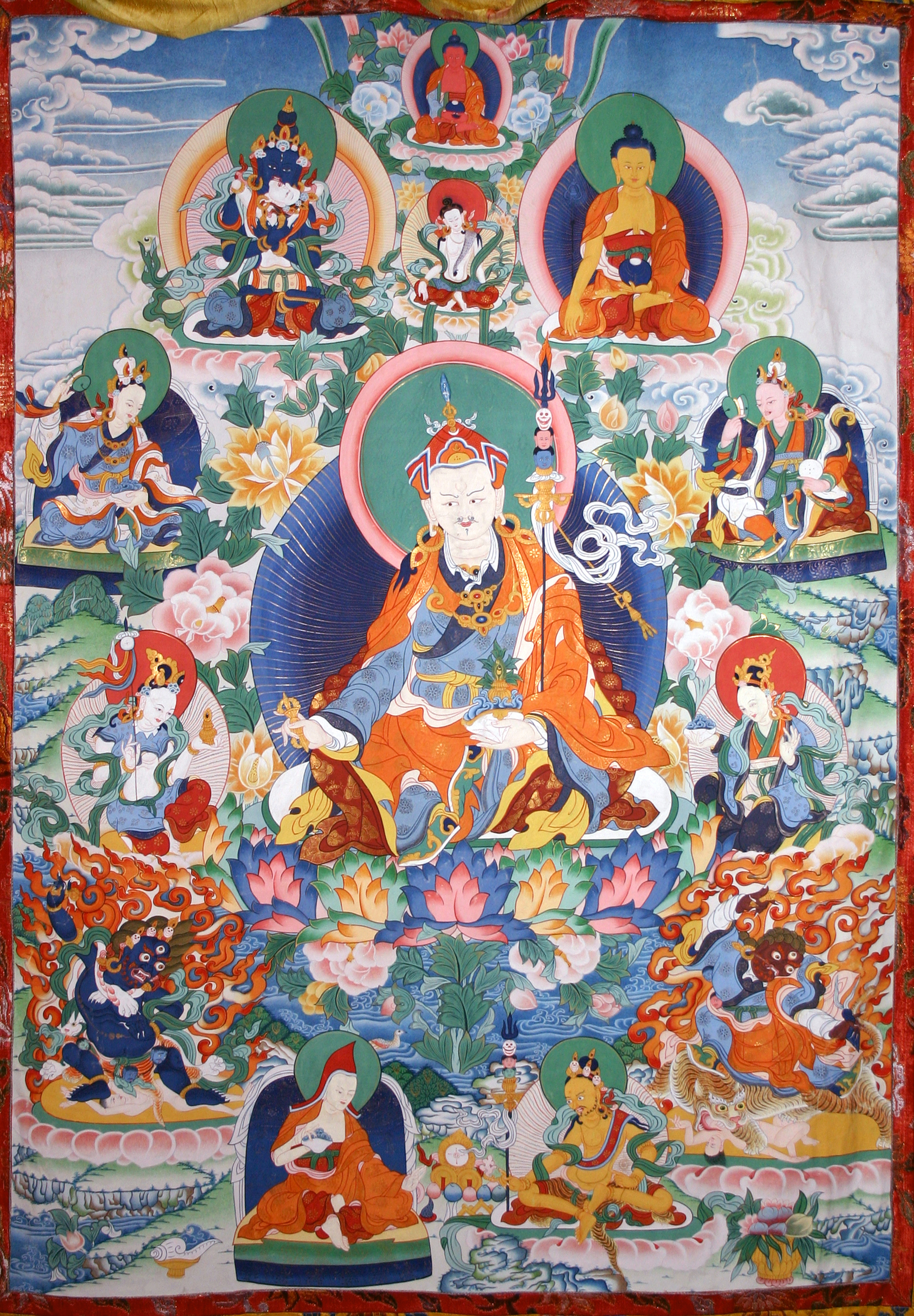
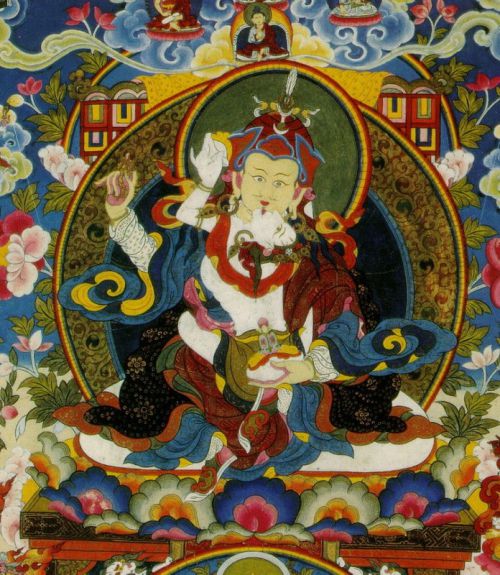
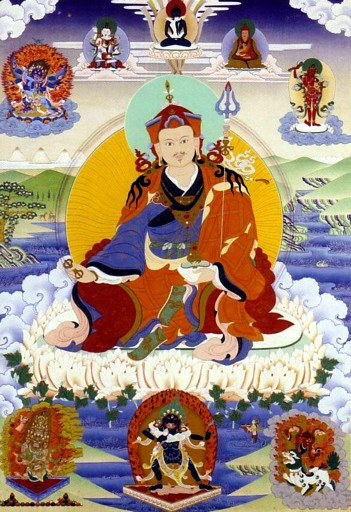
Glorious, precious Root Guru,
Upon the pollen heart of the lotus in my heart,
Without ever separating, always remaining,
Hold me fast with your great kindness.

Pray, bestow the spiritual attainments of body, speech and mind.

To the activities of the glorious Guru,
Not generating any wrong view even for a single instant,
With the faith and inclination of seeing every action in accordance with Dharma,
May the blessing of the Guru flow down to my mind stream.
In this birth and all future births,
May I attain a high birth, a clear mind without any ego,
A compassionate heart and devotion to the Guru,
And may I abide within the commitment of the glorious Guru.

In all lifetimes, may I never be separated from the perfectly pure Guru.
Utilizing the glorious Dharma to its utmost,
And by excellently pefecting all pure qualities on the stages and paths,
May I swiftly achieve the state of Vajradharahood!

The Verses of Prayer to the Eight Noble Auspicious Ones

The following translation of this prayer is from the Nam Cho Daily Practice from Palyul Ling International:

OM To all who dwell in natural, spontaneously present, perfectly pure phenomenal existence,
To all who dwell in the auspicious realms of the ten direcitons,
To the Buddhas, Dharma and assemblies of Noble Sangha,
I prostrate and pray that all may be auspicious for myself and others.
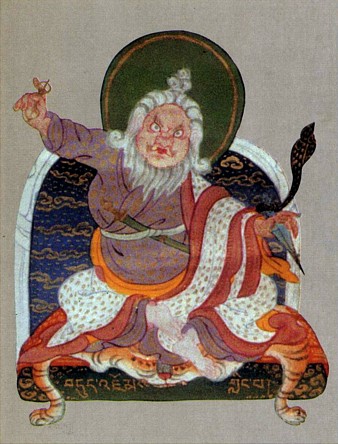
To Drönmè Gyalpo, Tsalten Dondrup Gong,
Jampè Gyenpal, Gedrak Paldampa,
Kunla Gongpa, Gyacher Drakpa-Chen,
Lynpo Tar Pak, and Tsal Drak Pal,
Noble Ones, known for your consideration of all sentient beings,
Noble Ones, known for your superior display of enlightened activities that grant mental satisfaction,
Merely hearing your names increases all glory and auspiciousness.
I prostrate to the eight Sugatas,
The youthful Manjushri, the glorious Vajrapani,
The powerful Avalokiteshvara, the noble protector Maitreya,
Sayi Nyingpo, Dribpa Namparsel,
Namkhè Nyingpo, the supreme Noble Samantabhadra,
Utpala flower, vajra, white lotus, naga tree,
Wish-fulfilling jewel, moon, sword, and sun,
Holders of the excellent hand emblems of supreme noble good fortune,
I prostrate to the eight Bodhisattvas,
The supreme jeweled umbrella, the auspicious golden fishes,
The wish-fulfilling vase, the exquisite kamala flower,
The conch of fame and glory, the fully endowed endless knot,
The eternal victory banner, the all-powerful wheel,
You who hold these eight supreme precious signs,
Offered to the Conquerers of all directions and times,
Attractive maidens of pleasure, to recall your nature increases all that is noble,
I prostrate to the eight goddesses of good fortune.
Maha Brama, Maheswara, Visnu,
Thousand-eyed Indra, and guardian king Dhritarastra,
Virudhaka, Virupaksa and
Vaishravana, the holders of celestial articles,
Wheel, trident, short spear, vajra,
Vina, sword, stupa and victory banner,
Who make auspiciousness and positivity grow in the three realms,
I prostrate to the eight guardians of the world.
Through the activity that myself and others are about to begin,
By pacifying all obstructions and harms,
May the glory and endowments increase and all wishes be accomplished!
May good fortune, happiness and prosperity be fully endowed!

Guide Your Life With Right Thought: Part 1

The following is a full length video teaching offered by Jetsunma Ahkon Lhamo at Kunzang Palyul Choling:


Right thought is part of the 8-fold Path first taught by the Buddha as he described the method for exiting suffering. Jetsunma explores the concept of right thought and how it weaves with your karma to affect your experiences now and in the future.

© Jetsunma Ahkön Lhamo All Rights Reserved


Seeking Safety and Peace

The following is from a series of tweets by Jetsunma Ahkon Lhamo 


Finally, some coverage here, I can check in with my twitter buddies. I miss connecting. Seems we’ve been moving forever. Unsettling. If you aren’t used to it. And to be safe we’ve been learning to be hyper-alert, stay packed, be willing to eat from McDonalds (AAAAK!) 
 

I feel like I’m in China with the constant minders minding me. Or North Korea. Ah, I guess it could be worse. My stalker could have found and killed me already. I’m still alive so far. Just running. And staying safe. 
 

If and when I reach a safe place to stay I want to go into deep practice and stay there. My mind is affected by the trauma and danger, so I need to heal. Deeply. I’ve no strength at all, and must get my strength back. 
 

I have an RV which would have made all this so much easier! But it is a big target. 
 

As you know by now I’m not safe as the judge dismissed the case, US vs Cassidy. Even though he has a felony record and is known to be violent, especially with women. He’s an arsonist too.Therefore I have turned to victim’s advocates and others for help. There is help for women. But it is hard to find. 
 

I pray for a successful appeal and outcome. What a beautiful day for women. One more step toward respect and safety, toward being heard. Successful women should not be punished for what we do. We should be commended for our contributions, and be allowed the safe passage through our lives in peace!I want to say as well, that I believe in a Woman’s power to change the world. We can do it.


His Holiness Kyabje Dungsey Thinley Norbu Rinpoche


With the passing of Thinley Norbu Rinpoche, the world has lost another great Lama. Thinley Norbu Rinpoche was considered one of the greatest mahasiddhas of our time.  Rinpoche was very close to my own root teacher, His Holiness Kyabje Drubwang Penor Rinpoche.  In fact, His Holiness Penor Rinpoche respected Thinley Norbu Rinpoche so much that he was one of the very few Lamas for whom His Holiness would stand up to greet when Rinpoche entered the room. 

I had the tremendous blessing to visit Rinpoche a number of times, and each time he had very beautiful advice for me.   Thinley Norbu Rinpoche  told me that I could always come and practice with him, particularly if my life force was weak.  I had always intended to go, and wish I had.  But in 1991 Rinpoche came to pay a surprise visit to my center, Kunzang Palyul Choling in Maryland, and gave a spontaneous teaching to the students that were there, and we were able to meet again. Rinpoche was a sublime  writer.  Every book he has written is pure nectar.  

Yesterday morning, I woke thinking of Rinpoche, and then learned of his passing. I am full of grief on behalf of sentient beings for the loss of Rinpoche.  

 
                                                                                                           Ahkon Lhamo
 
Thinley Norbu Rinpoche wrote a number of books, all of which are sublime. They include:
 
The Small Golden Key –  To the Treasure of the Various Essential Necessities of General and Extraordinary Buddhist Dharma
Magic Dance – the Display of the Self-nature of the Five Wisdom Dakinis
White Sail – Crossing the Waves of Ocean Mind to the Serene Continent of the Triple Gems
Practice of the Essence of the Sublime Heart Jewel, the Propitious Speech from the Beginning, Middle and End by Patrul Rinpoche (Translation)
Welcoming Flowers From Across The Cleansed Threshold Of Hope
A Cascading Waterfall of Nectar
The Great Image – The Life Story of Vairochana the Translator
Gypsy GossiP
A Brief History of a Himalayan
Echoes
Sunlight Speech that Dispels the Darkness of Doubt
To read more about Thinley Norbu Rinpoche, please visit Thinley Norbu – Wikipedia, the free encyclopedia
 

Bring the Love

Thousand Arm Avalokiteshvara Mandala

From The Spiritual Path:  A Compilation of Teachings by Jetsunma Ahkon Lhamo

All Dharma, your practice, your teachers, and everything you have ever encountered that has brought you closer to enlightenment—is only one thing: a manifestation or an emanation of the enlightened, compassionate intention of the Buddha. That is why this path appears and why we are able to practice Dharma. If you wish to follow this path, abandon your drunken, compulsive need to be right, approved of, admired. You must rely on the Buddha’s great intention. And after you finally arise in the awareness of your own primordial-wisdom nature, you will of necessity appear again and again to benefit beings. For it is the nature of that state to do so. That pristine state appears in an emanation phase—a spontaneous, natural movement that we may call love.

Who stops the love? You do. Every moment you believe that you are inherently real, you stop loving. Every moment you focus on your “self” and its needs, you stop loving. As your churning desire compulsively creates a deluge of thoughts, you stop loving. As long as you hold on to a “self” and the idea of its eternal existence, you will never be anything but a cheap imitation of the supremely awakened mind. I asked a wonderful yogini in Nepal, “What would you say to women in America who are practicing?” She said, “Well, this applies to everyone, but especially to women. Have courage.” Your practice is meaningless—it amounts to nothing—unless you have courage. You must be strong. You must not let anything stop you. With that fearlessness, you can break through the lethargy in your life; you can break through the barriers that keep you from practicing sincerely; you can even break through the old ideas that keep you mired in garbage. You can understand that by believing in a surviving, eternal ego, you are following a fool off a cliff.

© Jetsunma Ahkön Lhamo

Western Baggage and Eastern Philosophy

From The Spiritual Path:  A Compilation of Teachings by Jetsunma Ahkon Lhamo

As human beings, we avoid looking deeply at our ingrained habits and beliefs. We avoid testing them for the qualities needed to develop properly on the Vajrayana path. It’s easier to “go with the flow.” We dislike challenging ourselves. Most of all, we dislike change. We are somehow more comfortable with remnants of our old beliefs, translated into Dharma terminology.

Eastern philosophy is difficult for Westerners to understand. There are so many major differences, including the basic premise and the value system. Though the various motivations for practice set forth by the Buddha are universally true, people tend to select what resonates most with what they learned while growing up. Your culture strongly influences your reasons for practicing Dharma—and how you under-stand it. Those whose needs are generally satisfied react very differently from people who have seen war, suffering, and famine. The latter tend to hang on to Dharma for dear life. But many Dharma-practicing Westerners complacently think: “If I can just get another precious human rebirth, I’ll be okay.”

Not so for those who have seen intense suffering. They are apt to think: “I want out. I want my mind to be free of the causes of suffering. I am sick of revolving helplessly on this wheel. I’m tired of watching my loved ones go hungry and die young.” When you have seen war, you know that death could be just a moment away. But we Westerners rely on medical marvels. We have faith that if someone can just get us to the hospital in time, we will be saved.

The great blessing here in the United States is that many people have a strong karmic relationship with compassion. Thus, I talk more about compassion than about suffering. But it may not be enough to practice Dharma because you feel a sense of mission and purpose—however pure your intention might be. That is not the same as hanging on to Dharma for dear life. If you have not understood in the depths of your being how impermanent this life is, if you have not really understood the terrible prospect of revolving endlessly in cyclic existence—you tend to be much more casual in your attitude toward practice. You may not challenge yourself to do your best.

Westerners need a constant shot of inspiration. We seek it out. We eat it like candy, and we love it! But just like candy, it soon lets us down. And even if we practice with the intention to help sentient beings, there is still a catch: our practice gives us a sense of identity. Right now, your sense of identity determines why you live, what you do, what is important to you. But it also makes you a traveler who is standing still. We can move very fast in our practice and yet remain quite stiff inside. If we practice because we want to be a good person who helps others, we become comfortable with that identity. We do not feel the urgency of someone living with the constant threat of being bombed—or someone who has known hopeless hunger.

We may adopt some new ideas, but our beliefs are basically unchanged. And so is our predicament. We still believe that we will exist as we are forever, if not in the same body, then with the same consciousness. We hope to attain the goal of realization as ourselves. We believe we can keep ourselves intact, and then, we will somehow appear in a celestial form in order to benefit beings. As to what we will actually do, we vaguely envision bringing love and light to the world, the bounty of our great wisdom. And to do that, we will continue to exist in some way that is recognizable to us.

We have now come to a delicate but crucial distinction, and we must tread carefully. We pray to retain awareness throughout the process of death—so that during the bardo transference we can achieve realization or, at least, rebirth in a most fortunate way. We also want to come back in an emanation form in order to benefit beings. However, we may not yet have really challenged our ideas of foreverness and sameness. That is, we haven’t given up on ego, on surviving. This is a product of our culture. Christians aspire to survive death and go to heaven. A Buddhist, however, hopes to remain awake and not faint during the time of transference in the bardo state, but understands that what remains is not the self or the ego: it is awareness itself, the pure, essential mind-nature, unobscured, un-hindered by dirty winds and channels. It is not the natural state of you, the person you are right now. If you are hoping that this “you” will remain intact, you have a different religion programmed into your brain. The correct goal is not to survive in an eternalistic way, reaching a heaven-like Dewachen and then returning as a Buddhist angel to help people.

When you pray for others, do you wish for all sentient beings to know love and light? As Buddhists, we can no longer have this as our prayer. Why? When you do that, you are wishing for sentient beings to remain intact forever, revolving in a state of impermanence. This is very different from praying that the causes for suffering will be erased from their minds, that they will realize the primordial-wisdom state.

What should you as a Buddhist hope for? That when you enter into the bardo, or into your prayers, or even into the next moment, you will instantly come to know the emptiness of all phenomena, the emptiness of self-nature. Self-nature is like a puffball. You should pray to see it for what it is: poof! Just like that. You should pray with all your heart to realize the primordial, natural, pure view—the Nature which is free of all concepts, all mind-chatter. That Nature miraculously survives beneath all the garbage we pile on top of it. That Nature is pure, all pervasive, with neither beginning nor end. When you attain that view, form and formless are seen to be the same, and self is only luminosity.

© Jetsunma Ahkön Lhamo

Ngondro is the Antidote to the Mantra of Samsara: Full Length Video Teaching

The following is a full length video teaching offered by Jetsunma Ahkon Lhamo at Kunzang Palyul Choling:


Since time out of mind, we have accumulated karmic causes – both good and not-so-good. To antidote these, we practice the purification practices of Ngondro. Through these we can find clarity of mind a space to deepen. This we do for those who have hopes of us.

Copyright © Jetsunma Ahkon Norbu Lhamo.  All rights reserved

WP2Social Auto Publish Powered By : XYZScripts.com