Prisoner of Mind

An excerpt from a teaching called Bodhicitta by Jetsunma Ahkon Lhamo

Some of you here are not young anymore. I’m not young anymore and some of you are older than me.  I don’t know where you are going to be, because you have not renounced samsaric existence.  I cannot guarantee that in your next incarnation you won’t be reborn as a cow because you are so ignorant.  And believe me, cows in India and Nepal do not have a good life.  I cannot guarantee you that you won’t be reborn as a hungry ghost because even in the presence of the Lama, even in the presence of the Buddha, the Dharma and the Sangha, even with this absolutely precious human rebirth, you are still grasping, having not renounced samsaric existence thoroughly.  I cannot guarantee that you will not be reborn a hungry ghost.

Sometimes I think about those of you that are not getting any younger.  That’s all of us, of course. I tend to think of the older members of the group with great love.  Sometimes I lose sleep thinking about you all.  That’s the truth.   And I wonder, “What can we do?  Maybe I’ll get them to practice Phowa really consistently, so even if they really screw up in this lifetime, at least in the bardo state there is a chance for liberation.”  I think about this.  Well, why aren’t you thinking about this?

You people that have the leisure to practice, where the heck are you?   It doesn’t make any sense. Here is a beautiful and comfortable place to practice.  You can make time to practice, and you have your teacher with you, and you have the direct empowerment of the Nam Cho lineage.  Why in the world haven’t you renounced cyclic existence?  Why haven’t you taken the teachings that you have now to purify your mind of grasping?  You have everything.  In the Ngondro practice, you have everything you need to purify your mind of grasping and need.

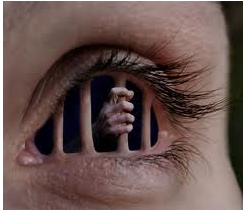
Now the shallowness that I hear is people doing their practice and saying, “OK, I’m going to visualize this milk coming down.  Oh I feel so good that this milk is coming down.” They’re having a wonderful experience.  But are they saying, “I know that my life is impermanent and I’m going to die soon.  When?   Ten years, 20 years, 30 years?   That’s soon.  And in the meantime I still have this greed in my mind.  I am going to visualize that non-dual nature of Vajrasattva completely purifying me of that greed, of that grasping so that I can fully renounce cyclic existence, so that I will be safe and not imprisoned in my own dualistic mind.”

You are imprisoned in your own dualistic mind.  You are not safe.  I can take a running guess at how many of you will achieve liberation, if not in this lifetime, then soon, but I don’t know, because you can change that.  You can break samaya with me or with any of your Vajra teachers tomorrow and that’s it.  You’re a goner.  Unless you fix it somehow, there’s nothing I can do for you.  Then you are in the same position as everybody else.  You surfaced here in this beautiful place, but where are you going to be the next time?

Death is not a beautiful experience and a release like some of the New Age metaphysicians like to pretend it is.  You enter into the bardo and all the demons of your mind are there with you and unless you have enough wisdom to understand what is in front of you, you’ll throw yourself into a rebirth that’s horrible out of fear and compulsion.   And you don’t know where, I don’t know where you will be next incarnation.

Now we have this wonderful manduk.  Manduk is precious stuff because it absolutely ensures that you will not take a lower rebirth.  Of course if you don’t have faith in it, maybe it won’t work.  Your faith is everything.  Do you know what makes people not have faith?  Bad karma.  And do you know what makes bad karma?   Broken samaya.  Do you see what I am saying?  You’re not safe until you’re safe.  A deep practitioner is one that looks at the situation and says, “Holy cow.  I’ve got to do something about this and I am going to ensure that in this lifetime I am removed from cyclic existence and I am safe so that I can benefit beings and myself.”

Copyright © Jetsunma Ahkon Lhamo.  All rights reserved
The Heart of Dharma

An excerpt from a teaching called Dharma of Technology by Jetsunma Ahkon Lhamo

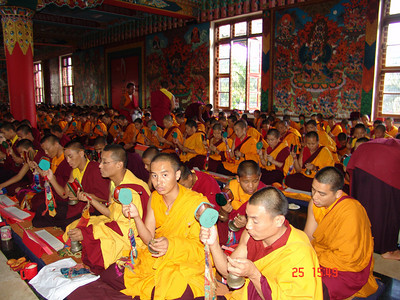
I really hope from the depth of my heart that all of you really fully intend to accomplish Dharma. What comes to your mind when you think, “accomplish Dharma?”  One of the dangers, I think, when you see monks practice in the traditional way, especially if they are really polished in their practice is that we think that must be accomplishing Dharma.  We think that what accomplishing dharma is getting the hand movements right and looking very disciplined and very ordered and in sync.  And it’s part of it.  That is the mechanical part, the skill that is necessary.  Pujas and practices, all the different kinds of practices, whether they are recitations of different kinds, the making of tormas to all of the different kinds of offerings that you would make, to accomplishing tsog properly, to doing the mudras properly.  These things are all the technical side of practice and they’re all important.

There is a reason why they are in the practices that we do.  They all have a specific role to play in ripening the mind.  And one of the things that makes tantra tantra, is that there is this outer, inner and secret level of meaning and that there is actually a physical thing that you do in order to accomplish what you’re doing, such as making a torma or making a certain kind of food offering at the same time that you’re accomplishing on the inside.  And they’re done together, hand in glove and one is meaningless without the other.  Not completely in the sense that you can make an offering in your heart and if you don’t have anything physical to give, it’s still a valid offering, but still, it’s universal in the Vajrayana path that you do all these different things together.  So it’s a great skill and it’s really good to learn these things and that’s part of accomplishing Dharma.

Don’t be overwhelmed by watching people play bells and damarus in sync.  Don’t be overwhelmed by watching the different technical things that you can do in Dharma and think that if you could just learn to make your hands go smoothly and do all this stuff at one time or if you could learn all the different parts of puja and do them absolutely correctly, then you will automatically have accomplished Dharma.  If you have any understanding of Dharma by now, you’ll understand that Dharma is in the heart.

If you have the heart of Dharma, then to accomplish the technical side of Dharma is extraordinary.  If you could have both of these components, it’s extraordinary.  It’s a tremendous blessing.  It’s a blessing beyond description.  On the other hand, if you have the heart of Dharma without the technical side, you still have the heart of Dharma and that heart remains with you.   It’s not something that dies at this lifetime.  It’s something that remains with you and it changes you and it brings about the results that you want.  But if you only have the mechanical part of Dharma, if you only have that without the meaning, without the heart of it, then you come away unchanged, and there again you’re in danger of collecting these skills in a material way.  And if you collect them in a material way, it will be like any other form of materialism.  It has the danger of pride, it has the danger of greed, it has the danger of lots of different things.

Now hear me.  I am not saying that you should not become proficient in accomplishing these physical parts of Dharma, but I’m saying that if you do, be certain that you don’t lose an inch, a centimeter of your understanding of what Dharma is and in fact, be sure that your understanding of the heart of Dharma increases accordingly.

I’m not saying don’t bother to learn the technical side.  I hope from the depth of my heart that we can learn the technical side.  I really encourage all the monks and nuns to learn the technical side of Dharma, but I warn you not to do it without the heart.

In truth I have to tell you there have been one or two of you doing the offering mudras every chance you get and I see that there is no concentration and no real fixation or stabilization of your mind so that as you do the mudras you remember that you’re actually making an offering to the Buddhas and the bodhisattvas or an offering to the specific deity.  I think that’s sad.  I think it’s sad if you pay a lot of attention to what your hands are doing and very little attention to what your heart is doing.  I think that’s kind of like a shell.  Do you see what I am saying?  So I think it is very important for you to accomplish Dharma from the heart.

When I say “from the heart,” I don’t mean in an emotional way.  I don’t mean that you should think about Dharma in such a way that you make it into a vast, blissful experience.  It isn’t like that at all. The real heart of Dharma is compassion and it’s the very hardest part.  If you had a teacher that sat there beside you, you could learn all the different parts of Dharma practice and you could learn them very well.  Relatively speaking, even though there is a lot to learn and even though we’re actually technically too old to start now and learn it all.  But even if we could, we could accomplish it sufficiently to be pretty good at it or to look pretty good at it.

From that point of view, that kind of accomplishment is relatively easy.  It’s doable.  It’s doable to anyone of normal intelligence or perhaps a little bit above.  But the heart of Dharma – if you sat with a teacher and yet you were not receptive or you had any of the karmic obscurations that I have described in previous teachings, it may be that you could sit with an excellent teacher for many years and never accomplish the heart of Dharma, which is compassion.  Of all of the things that you can practice in Dharma, compassion is the very hardest.  As a monk or nun, you can keep your vows exactly.  You could read them every day and you can measure your bed and you can never clean a toilet again in your life.  You could do all these things that would keep your vows exactly.  But I bet anything if you examined your heart, you have not kept the bodhisattva vow for one hour.

Copyright © Jetsunma Ahkon Lhamo.  All rights reserved
Did the Buddha Get Thirsty?

An excerpt from a teaching called Perception and Karma by Jetsunma Ahkon Lhamo, July 19, 1989

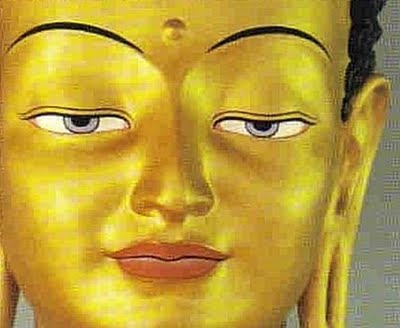
In a previous teaching we talked about the six realms of cyclic existence and how they would see a cup of water.  How would the Buddha see a cup of water?  The Buddha would know it’s innate nature. The Buddha would know innate nature.  In that awareness there is no thirst, there is no need. There is relaxation, space, and freedom from desire.  Even though the Buddha might live in a life where he drinks water, there is spaciousness in that experience, because he knows the nature.  He knows the nature of desire and of thirst. He knows the nature of the experience itself.  He knows the nature of the thought, “I should drink now.” In the heart of every piece of phenomena, and every single experience of any kind, is that profound nature, completely unified, completely inseparable, the same.   Even to say that in the heart of that experience is that nature isn’t true.  It implies that you might think of it as being like one of those chocolate covered cherries.  In the heart is the nature, and the rest of it is something else.  It’s not.  That’s the only way we have to describe it. This that I call a cup of water is emptiness.  It is emptiness. The water, the glass, the color, the taste, the desire, the need, the experience, everything is emptiness.  Knowing that nature, experiencing the relaxation and spaciousness as the Buddha experiences each experience has as its core unlimited supreme bliss, bliss that is united with compassionate activity.

I am not a Buddha therefore I cannot speak as one, but a hypothetical difference may be this: I’m going to drink this because my mouth is getting dry.  My mouth is getting dry because I believe in self-nature as being inherently real.  My mouth can be satisfied by this water because I believe this water is other. I’m taking a drink.  The Buddha experiences the nature as a result of that awakening because the very nature of that awakening is perfect compassion.  The Buddha appears in the world and takes a drink of water.  Within the experience of this cup, within the experience of this water, in this experience of the movement, in the experience of the decision to take the water, within the experience of being here, is the heart of emptiness and at the core, each experience is bliss. The Buddha experiences that because he knows the nature and has awakened to that nature to the extent that there is no self-craving.  Therefore each experience is potentially, though it may look ordinary to you and I, potentially the experience of the primordial view, as pure, as blissful, as luminous, as inseparable from that nature in ways that we cannot understand. Yet the Buddha did come to the earth and did drink water.  I assume, I wasn’t there, but I assume he did.

We, however, continue to suffer because we don’t have that space.  Our minds are not relaxed.  We are constantly engaged in the rigidity of reinforcing self and other and constantly at the mercy of the compulsion of our karma and constantly at the mercy of our own automatic habitual tendency to exaggerate and continue to build more suffering.

The moral of the story is, be a Buddha now.  Ask me how.  That is a joke, of course, but if you follow the Buddha’s teachings you are changing.  You are constantly changing in the only way change is meaningful.  If you really use the techniques deeply, in a contemplative way, really thinking about this, then there is hope. If you sincerely think in the ways that I’ve instructed and do the practices that you are given, you will begin to transform your awareness into the pristine, primordial experience, which is your true nature.  You will have a taste of that nature and that taste will surely grow.

Copyright © Jetsunma Ahkon Lhamo.  All rights reserved
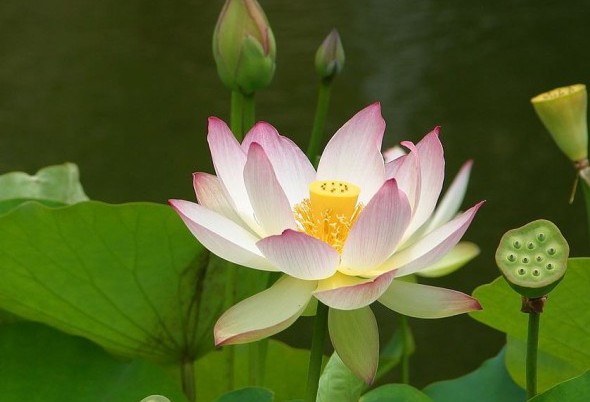
Experience the “Lotus” of Dharma

From a series of tweets by Jetsunma Ahkon Lhamo:

The thing about Dharma is how expansive it can be; and is. So many different levels, almost like a wedding cake. To trivialize one in favor of another only indicates one’s propensity toward grasping and clinging. Ego must identify itself by its “containers” of concepts and often the “structure” of Dharma is understood much better than the nectar or essence of it.

Dharma is more like a lotus. Many petals and secret, fragrant parts, the root is in the mud of samsara. Yet the nature of every atom and molecule are Buddha rising from primordial clarity. The Lotus is pure, beautiful, and fragrant; it can be understood in many ways. Many compute the facts of the image. Some feel the soft insinuation of the image. Others will want and taste the fragrance. Feel the essence of it. Touch. Hold. Meld.

We are a community of Buddhists who cannot allow each other to be one of those lotus petals while letting one be pristine, another rusted; one shiny and new, and another nearly gone. But if we could…imagine the fragrance, the mystery, the color, the goodness, the texture and perfume the Buddha Dharma could be in the West! We could all have our different little rules but the perfume of Bodhicitta, compassion, the very display of loving kindness on all levels…we can bond into a great worldwide Dharma community if we looked out for each other. Displayed the beauty, connected, not argued.

We are taught by our Lamas that all phenomena even at the most subtle levels occur on outer, inner, and secret levels. Even in traditional empowerments and pujas it is so – those three levels.

So, will we argue about the grossest outer forms? Or give rise to Bodhicitta without which no one can awaken. Will we cling to form, or will we drink deeply of the nectar that Lord Buddha and later Padmasambhava brought?

The question is like asking if you wanna go out to chow down at a restaurant? Or humbly, gratefully, at the table of the Buddhas, their daughters, and their sons?

As for me and mine, we pray and intend to feast on love.

Copyright © Jetsunma Ahkon Lhamo.  All rights reserved
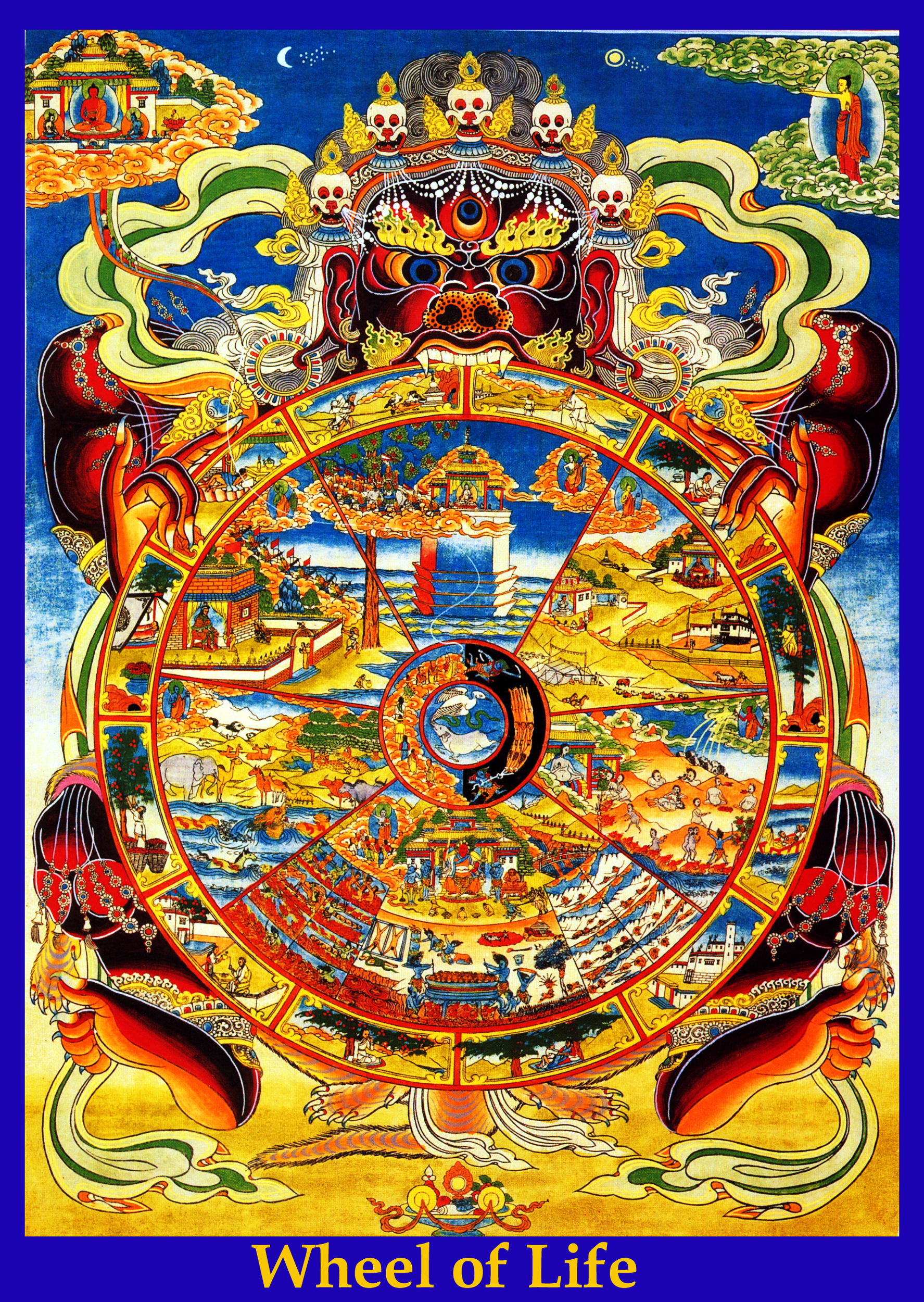
On The Suffering of Beings

A slideshow compiled by a student of dharma who was inspired by the compassion retreats of Jetsunma Ahkon Lhamo, founder of Kunzang Palyul Choling:

The music accompanying this video is a prayer offered by Jetsunma Ahkon Lhamo for the benefit of any being who is suffering (human or non), especially those suffering from illness or death. More information on this prayer and a download link can be found here: https://www.tibetanbuddhistaltar.org/prayer-to-be-reborn-in-dewachen/

True Refuge

The Buddha is the Master who reveals the true Refuge, and the Sangha is like a true friend on the path to Enlightenment. The actual refuge is the Dharma, because it is the Dharma that will free us and pacify suffering. The absence of or freedom from delusion is cessation. If we do not apply the antidote to our faults and delusions they continue to arise. But after the remedy, if the delusion is totally uprooted, it will never rise again. That state, free from delusion and the stains of the mind is a cessation. Bottom line- anything we wish to abandon like suffering and its causes, can be eliminated by applying the opposite forces. The final cessation is called Nirvana, or Liberation.

The Buddhas, fully enlightened ones are inconceivable, as is the Dharma, their teaching. The Sangha is also inconceivable so if you develop inconceivable faith there is no doubt the result will be inconceivable. It is said in our scriptures that if the benefit of sincerely taking refuge in the Three Jewels could be measured in relative, physical terms, the entire Universe would not be able to contain its value just as a great ocean cannot be measured in a tea cup.

Having learned the value and benefit we should rejoice in the opportunity to make offerings to and take Refuge in the Three Precious Jewels of Liberation. Here in this way we will be able to alleviate the influences of our negative actions as well as karmic obstructions. All these can and will be eliminated, and we all will be counted as sublime beings, which will surely please the Buddhas, Bodhisattvas, and our own kind Gurus and Lineage Masters!

It is this we should focus on, not the ego or our pridefulness for results. The consequences of karma are definite. Negative actions bring suffering, always. And positive actions bring happiness and freedom, always even a small action can bring a large consequence; so mindfulness is required. And the ability to examine ourselves honestly is essential to all spiritual progress!

To all spiritual progress!

OM MANI PEDME HUNG!

OM AH MI DEWA HRI!

Copyright © Jetsunma Ahkon Lhamo.  All rights reserved
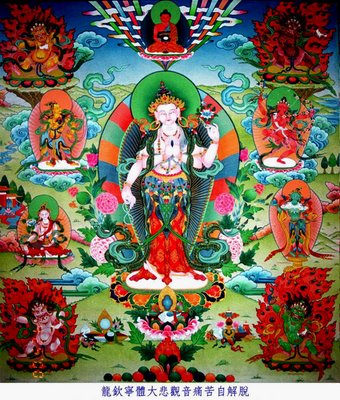
Pure Form – Deity Generation

We are involved in Vajrayana.  We go much further in our practice than this thinking about nature and this going around in circles and this logic and this theory and this philosophy.  We go further than that.  We actually engage in practices in which one generates oneself as a pure consciousness form, which is the deity or the particular Buddha that you generate yourself as when you do your practice.

Let’s say that you generate yourself as Chenrezig.  Chenrezig is a pure consciousness form.  He displays and demonstrates all the pure qualities and activities associated with the deity.  The emphasis associated with Chenrezig is indicated by his posture, his color and the things that he’s holding in his hands.  In generating ourselves as this pure deity form, we have in our hearts the seed syllable surrounded by the mantra.  The seed syllable, the mantra and the deity all emerge spontaneously out of shunyata, or the void.

We do this in Vajrayana to indicate something that is a very important aspect of this teaching and of our practice.  First, it is important to understand the philosophy and the logic associated with the Buddha’s teaching because [then] one can knock down the dependency on the perception that defines self and other.  One can break up a good deal of the rigidity associated with the automatic involvement in these extensions and exaggerations of perception.  One can break up the experience of perception itself through meditating and contemplating on the illusory quality of self-nature.  One can meditate on emptiness and try to find self in every object in the world and, perhaps when one is finished, one can lay down the game in a sense.  After doing all this, one would have attained a certain degree of awareness of emptiness and also an awareness of the emptiness of self-nature, and an awareness of the emptiness of the nature of phenomena. Then one’s mind could become stable in that it would not be so automatically involved in the processes that are functions of the assumption of self.  Yet, is that the same as supreme realization?  Is that as far as it goes?  Do you break down things, and after you’ve broken them down, sort of sit there with them?

Perhaps we can come to understand that, in Vajrayana, we are given something else, and that something else is very hard to describe.  It is recommended that we do the above process, but it’s also recommended that we meditate on shunyata.  It’s recommended that from that meditation on shunyata we arise spontaneously as this pure form.  What is a pure form?   A pure form is actually a form that is an illusory image of a self, an entity, which is based on the assumption of emptiness.  It is not based on the assumption of self.  You are based on the assumption of self.  Everything about you is based on the assumption of self.  All your karma is based on the assumption of self. Everything you see, everything you feel is based on the assumption of self.  But this pure deity form arises from shunyata and arises as the seed syllable, as the mantra and as the form itself, bearing all the pure qualities, all the pure attributes and all the pure activities of an illusory, gossamer-thin form that arises based on the assumption of emptiness.

So we do not stop with the assumption of emptiness or with breaking up the ordinary view and perceptions; but rather, we, in generating ourselves as the deity, have an even more profound experience of emptiness.  Because the deity arises from the voidness, shunyata, you should meditate on emptiness before you generate yourself as the deity.  The seed syllable that is the first birth is the condensation of the body, speech and mind of such a pure form. It is based on the assumption of emptiness. It has in it all the qualities that arise spontaneously from that awakened state, condensed into the seed syllable.  The mantra is the same, having all the activities and qualities that arise spontaneously from this empty state, from shunyata.  So from that, we are led to believe that one should not stop merely at breaking things down so that the game no longer computes, but that there is a more profound state. There is a more profound awareness that allows for miraculous birth.  It allows for a miraculous birth in order to bring about miraculous activity, in order to demonstrate miraculous qualities such as compassion, which is completely consistent with emptiness, the same as emptiness, united with emptiness, inseparable from emptiness.  Through this practice, through this miraculous birth, we actually purify our perception. Not through breaking down the game alone, but through actually utilizing these condensed manifestations of emptiness, one’s perception is purified to realize the illusory quality of all phenomena, to realize the union, the sameness of formless and form, to realize the spontaneity of experience and to realize also the infallibility of pure view.

You should then practice every single practice that you do, and examine for yourself and contemplate and meditate as you have been instructed, with the understanding that in every generation, in every accumulation of any kind, you should try to realize the profound, incredible opportunity, if you will, to go beyond that into the astonishing pure view and to realize for yourself that the generation of the deity is the same as emptiness.The deity arises from emptiness, it indicates the assumption of emptiness and that you also arise from emptiness.  Yet the mistake that you make is the assumption of self.  Every compulsion comes from that.  Every perception comes from that.  Every experience that you have and all experiences that you have had are artificial constructions that come from that.  Every piece of your lives, your experience, your consciousness, even the senses, if you think this way, cannot be trusted, because they are based on a false assumption.

This is why you have the opportunity to generate yourself as the deity and to practice this profound method.  It is so you can view the sameness, the suchness, the purity, the pristine luminosity that is the nature of all phenomena, as well as of the self.  It is so you can view the indistinguishability between the two based on the assumption of emptiness.

An excerpt from a teaching by Jetsunma Ahkon Lhamo called “Perception”

Copyright © Jetsunma Ahkon Lhamo.  All rights reserved
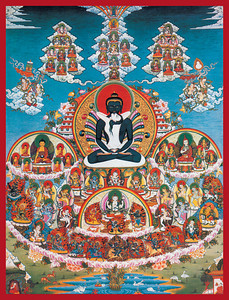
Hidden Right in Front of You

In this excerpt from a teaching called Bodhicitta, Jetsunma speaks to her students about her recognition by His Holiness Penor Rinpoche.

The person who is practicing needs to be able to distinguish between a diamond and a rhinestone. You have to know the miraculous really exists and you have to have faith in it.  Sentient beings are helpless if they’re lost in cyclic existence; they can’t make any breakthroughs.  They can’t really break out by themselves.  Somehow they have to receive a direct mind empowerment from someone that has made certain progress. One way that you can do that in the Vajrayana system is to take wangs and another way that you can do that is to have a kind of mind-to-mind relationship with your teacher.  There is a transmission that goes on, but you have to have faith for that to happen.

His Holiness said, “I could sit there and hit you with the bumpa all day long until you are flat on your head.  If you don’t have faith in the teacher, you don’t have faith in the wang, if you don’t know what’s happening, you can’t work with the wang. Your head could be flat, but nothing is going to happen.”  He said you have to have to faith.

Realizing that, he and I began to talk about that, and after a while it became necessary for the recognition [editor’s note:  Refers to Jetsunma’s recognition].  What does the recognition mean?  I don’t know.  It means nothing has changed.  What’s changed?  Michael, my husband, said he had an interesting kind of perception.  He’s married.  All of a sudden he’s married to a tulku. And I said, “All of a sudden you are married to a tulku?  What were you married to before, a bran muffin?  Dear friend, you were always married to a tulku.”  And he said, “I think about how we used to be together before,” and I said, “We’re still doing it.  I get better that now you know it?”  I don’t mean to be crass.  But you have to understand what is going on here.  In one way, nothing has changed.  The event, the real thing between us hasn’t changed.  If I was your friend before, I’m your friend now, you see?  If I was your teacher before, I’m your teacher now.  If I was the biggest pain in the neck in your life, I’m still that now.  That hasn’t changed. But now you have taken off the blinders.

What the recognition means is that you have a handle or a way to take off your blinders and to have real faith.  That’s what has got to happen.  This path doesn’t work without faith. It’s awful that I have to teach this to you. Somebody else should teach this to you, like a Khenpo.   But this is Kaliyuga and this is the West and we’re in it together so you are just going to have to put up with it.

You have to realize that all this time the miraculous has been right in front of you and it’s part of your life.  You weren’t able to realize before what an opportunity you had, but now you can realize that.  It doesn’t mean that now there is a big change in your life because your teacher has been recognized as a tulku.  You might think, “That means now I have to drop everything and do three prostrations first time I see her.”  Well, OK, that’s what they do.  That’s customary.  That’s good Guru Yoga.  But it’s not about what you do with your arms and legs.  It’s good that you practice that because it helps you to remember.  It’s not that, “Now I have to give her a cup that’s covered all the time.”  These are the stupid things that people are fearful about – forgetting to give me the right kind of cup. You think that’s what it is all about.  Or you think, “What if I walk into the room first and she walks behind me and I didn’t see her?”  Do you know how many times that’s happened me?  In India, I didn’t even know which ones were the tulkus and which ones weren’t, because I hadn’t learned them all yet.  You don’t always look where you are going. I didn’t care.   I was just right in there.

You make mistakes like that.  That’s not what it’s all about.  You shouldn’t be fearful like that.  You shouldn’t be.  The relationship hasn’t changed in that way.   The love is still there.  Everything is still the same.  Now you get to realize that the miraculous activity of Guru Rinpoche is happening in your life, that you have this precious opportunity and that this is a really good time to take advantage of it.

You have the opportunity. To paraphrase, Guru Rinpoche said, “Maybe you won’t see my body, but I will come as your teachers.” When Guru Rinpoche says something like that, I believe it out of hand.  When I see my teachers, I know that Guru Rinpoche is with me.  That same miraculous activity is right with you.  The stuff that saves is right there. What has changed is that now you have to realize and you have to practice Guru Yoga with such faith.  That’s what your job is.  All the great teachers have said it is so, therefore I believe it.  Not only that, but I’ve seen it.  That’s what it means.  I haven’t changed from a caterpillar to a butterfly.   I’m exactly the same as I was before.  Have you noticed that?

What has changed is that you have now a way to take some blinders off and you can realize for the first time that who you thought was your best friend, is still your best friend, but in a different way.  You thought you had to cling to some kind of humanity – a best friend, a sister, and comrade, somebody you could go drinking with.  That’s what you thought you had to have.  But that was only temporary.  It was a masquerade.  You still have your best friend.  But now you find out your best friend is the Three Precious Jewels and it’s always been that way, except that you didn’t know it before.  Now you know it.  So the only thing that has changed is you.  You get to take your blinders off.

You get to see that in your life right now is spontaneous, miraculous activity and that this is your time, this is your time and you can do it. Nothing’s changed except now you get to practice properly.  What’s there in front of you has always been there in front of you.  I didn’t become a tulku a month ago.  That’s the stupidest thing you ever heard of it, isn’t it?

Try to practice Guru Yoga properly.  Realize that right now, miraculous activity is in your life.  The reality of non-dual mind is in your life, and it’s your best friend.  It’s right in front of you.  The whole visualization of Kuntuzangpo and Kuntuzangmo and what it means, it’s not just a visualization.  It’s the truth.     It’s really there. You have this.  We have His Holiness and we have Gyatrul Rinpoche, and you have your root teacher.  That means it’s for real.   It’s the truth. It’s right there with you.

Sometimes I look at His Holiness and I think, “My gosh, what do I need with a visualization.  I’ve got you.”  It’s there, it’s right in front of me.  It’s nothing that I made up.  And it’s the same for you.   Now you know it.   That’s the only difference.  Don’t be scared.  You try to get it right; sure you should try to get it right.  I try to get it right.  But just try to realize that right now you have every reason and cause and expectation to deepen properly.  You have everything you need if you just do it.  What are you so distracted about?   Just do what you have to do and do it now before it’s too late.

They say a door can’t chase people around the room, but I swear, I remember chasing a lot of people around the room.  This may be the time you get that opportunity, so you better walk through the door really soon into deeper practice.

Copyright © Jetsunma Ahkon Lhamo.  All rights reserved
Where There Is Love

248172496_Nhwk9-S

From a series of tweets from Jetsunma Ahkon Lhamo, December 2009

I’ve recently had the great joy of seeing Dharma students return after time away. I rejoice and welcome you home with open arms and heart!

No bridge is burned, no river damned, no journey wasted, no song unsung where there is LOVE.

No obstacles, no taint, no bitterness, no blame, no darkness where there is faith.

No sorrow, no crime, no endings, no loss, no grief, no separation when one is awake.

No fear, no hate, no confusion, no winning, no losing, no past, no future, no contrivance where there is Wisdom.

No going, no coming, no abandonment, no holding, no resentment, no attachment, no loss with Bodhicitta.

©  Jetsunma Ahkön Lhamo

The Four Thoughts

From a series of tweets by @jalpalyul on December 2, 2010

Homage to the Buddhas and Bodhisattvas! Gathering all virtue and merit from the three times, this I offer in a beautifully arranged Mandala; a splendid array of jewels, nectar, medicines, and song. Please allow me to speak in such a way as to bring benefit to all beings!

This precious human rebirth is extremely difficult to obtain. Whoever is born, must die, and all things are impermanent. If one is determined in virtuous Dharma, this is the cause for becoming Buddha – awake! When negativity is produced, it will cause endless wandering in the six realms of samsara.

Grasping, needy, lusting spirits will wander in the realm of hungry ghosts. Hate and anger cause a hellish rebirth and great suffering from heat, cold, violence, etc. Humans suffer from old age sickness and death. Those who love war and pride themselves in power, and bullying will wander in the realm of jealous gods. They suffer endless warring! Devas also suffer continually from pride and so forth. How sad!

These produce the states of non-freedom. Birth in these aforementioned realms, or with incorrect view, in a dark aeon; or in an incapacitated state, these are the essence of non-freedom! These are some faults of cyclic existence.

Birth in a land where Dharma is taught correctly and with all faculties complete, without reversed karma, with correct view and with great faith in the Three Precious Jewels, these are the endowments,which I possess.

Birth during the presence of the Buddha, and the Buddha’s teaching (Dharma), the presence of the doctrine, and pure followers, and in the presence of those who lovingly care for others from their hearts, these are the circumstantial endowments.

If one’s moral discipline is broken, even with these precious endowments, and material wealth as well, one will fall to lower realms. This is why it is so essential to use one’s life to create merit, as well as good qualities, and the purification of the five senses and perception (skandas). We must try to take this opportunity to be sure we may remain stable on the path and produce good result.

I am 61 and for me the urgency or this life is quite evident! May I and my students practice well and purely and be reborn in the realms of accomplishment! May we benefit all beings equally and always respect the Dharma just as it is.

© Jetsunma Ahkon Lhamo

WP2Social Auto Publish Powered By : XYZScripts.com