When one begins to understand some of the ideas that are presented in Dharma, one realizes that the goal that we are engaged in “moving toward”, if you’ll forgive that bad choice of words, is actually Buddha Nature itself. We tend to consider that the path is like a thing that goes from here to there, like a movement toward, and it’s very hard not to conceptualize it in that way. But, in fact, when one practices Dharma, the ability to practice Dharma is actually based on the understanding of the innate Nature. If we did not have within us right now the seed of Enlightenment, if we did not have within us the potential to actualize ourselves as the Buddha, there would be no point of practice. The very basis for practice is that understanding.
This is what the Buddha himself taught – that all sentient beings have within them the seed of Buddha Nature, that that Nature is their true Nature, in fact. However, they have not awakened to that Nature and so, in order awaken to that Nature, one engages in the path. The path should not be considered a ‘thing’, a straight line that connects from here to there. The path should be understood as a method that one uses in order to awaken to that Nature which is already our Nature; which is complete, unchanging, and will never get any bigger or any smaller. One should understand that Dharma is actually an activity that is meant to awaken that potential. But the ultimate goal that one wishes for when one engages in Dharma is, of course, Enlightenment itself. Now, what is Enlightenment? One understands that Enlightenment is actually the awakening to the Primordial Wisdom Nature, the awakening to the Buddha nature.
The Buddha never said that he was different from anyone else. He said simply, “I am awake”. He is indicating that he has awakened to the fullness of his own Nature and is able to abide spontaneously in that awakened state without any interruption or impediment. So, from that perspective, the basis of practice, the basis of the path itself is exactly the same as the goal. They are indistinguishable from one another. The path that one uses in order to achieve the goal is also indistinguishable from the basis, which is the Buddha Nature, and is also indistinguishable from the goal, which is the Buddha Nature. So, these three things, the basis, the method and the goal are indistinguishable from one another.
For us, however, it does not appear to be so, simply because of the way our minds work, involved in discursive thought as they are. We distinguish between what is potential and movement. We distinguish between movement and the goal. But in truth, you cannot distinguish between these three. If the basis for practice is the same as the goal, then anything, in which you engage in order to achieve that awakening to your own Nature, must also be indistinguishable from your own Nature. The path, then, or the method, is not separate from the Buddha Nature.
Now, where we run into trouble is when we make our Dharma practice an outward movement that goes somewhere. When we do our practice, we project that there is going to be a certain result. That very subtle concept prevents the practice from doing all that it can do to remove obstacles from our own perception, because we cling to the idea of here-ness and there-ness, of such-ness and thus-ness, and in doing so, we cling to the idea of self. It’s very hard to understand that subtle difference, but that subtle difference is very important. If we did not view our Dharma practice as a subject, object, thing or as a linear movement in some way, we would more easily understand that the goal is the un-moveable, unchangeable, fully complete and spontaneously realized Nature itself, which is already present. The potential for the realization of that Nature would be much stronger in our practice, in terms of taking responsibility for our situation and utilizing our practice to its fullest capacity.
In order for us to consider our Dharma practice, or even the ability to listen to teachings, as a movement that ‘goes somewhere’– we have to be considering it in a very superficial way. But if the practice is understood as a natural and spontaneous manifestation, arising from the Buddha Nature that is our Nature, then the practice becomes less materialistic and more meaningful in a very profound way. In the same way, if we are in an ordinary environment and an ordinary teacher comes before us, we don’t respond as we would if the Buddha himself, with all the signs and marks, were sitting in front of us. If the Buddha appeared, we would respond with, “Whoa! Whoa! This is important! Something is happening here. The Buddha is here!” In truth, we should respond that same way to our own simple practice because that practice is indistinguishable from the Buddha Nature itself. The Buddha is here. But you see, the impact is different. Why the impact is different is in the way that we consider and the way we have our understanding about what we’re doing.
An excerpt from a teaching by Jetsunma Ahkon Lhamo from the Dakini Workshop
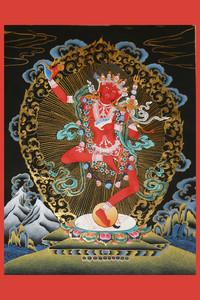
When we taste the nature of the dakini through our practice, through whatever realization we achieve, when we taste that nature, when we taste the purity of that event through being exposed to, in a natural way, our own poison, our own fixation, our own determination to continue to absorb and be absorbed in and to remain fixated in a certain kind of view, a view of clean and dirty, a view of this and that, a view of high and low, a view of here and there, we can eventually come around to seeing through that absorption.
To the degree that we understand that by stabilizing our mind, by remaining unattached to the distinction between dirty and clean and up and down and here and there and you and me, we can begin to view the play or movement of emptiness. However, we think very superficially, we think we will achieve enlightenment and that is what is going to happen and we think we will have some kind of blissful experience – I think we have the idea of evolution. We think that we are going to evolve into something quite different. That is the kind of idea that we have.
What we do not attempt and what we should attempt by meditating on the nature of the dakini and by utilizing this particular phenomena, this particular movement of the Buddha nature, is to understand that the point is to pierce the veil of our own confusion, to see through this mistaken belief that things continue, to see the primordial empty nature that is inherent in all display, to see that all phenomena is instantly complete, to hold to our nature, to practice that view.
Unfortunately, however, we insist on breaking samaya. We break the commitment. We hold so much more importance in our own value judgments, our own distinctions, our own understanding of the way things ought to be and the way they are and therefore we see what our minds are filled with. We see the appearance of this enlightened activity as being ordinary, having certain qualities. We brand it with mental qualities that are our own. We see physical, emotional qualities that we ourselves are hooked on and we do not taste the appearance of that nature. So, we miss the entire point.
The following is from a series of tweets by Jetsunma Ahkon Lhamo:
Death comes to us all, often sooner than we know. Prepare for death. If you have accomplished Phowa then death is not frightening, and can be noble and of benefit. Leave with no debt unpaid, and practice. Death will be in the heart of the Primordial Mother.
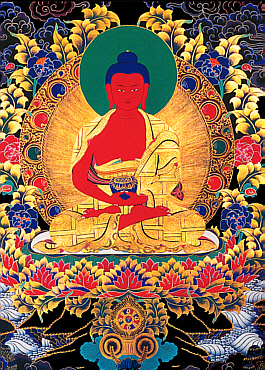
One can practice Amitaba Buddha, and at the time of passing to Dharmakaya Buddha, the practice will be the connection. OM AH MI DEWA HRI!
Either way, if dying, renounce all, for not one grain of rice will go with you. This is not a time to pick apart the world, or hurt anyone.
These are the teachings as given by my Lineage, Palyul.
If death is chaotic and fearful, unprepared or cruelly, there is unimaginable suffering in the Bardo of death. Always attend your mind. Leave some worthy act of compassion, keep the mind loving and peaceful. Life is as short as a cup of water travelling down a waterfall, and as fast.
The following is a message from Gyaltrul Rinpoche to Jetsunma Ahkon Lhamo and her sangha given on November 11, 2011:
VGR to JAL 11.11.11
In November 2011 Venerable Gyaltrul Rinpoche offered the following spontaneous teaching about Jetsunma at a sangha gathering at Tashi Choling in Oregon.
Gyaltrul Rinpoche began by asking Jetsunma’s student who was in attendance at the gathering to stand and to convey this message to Jetsunma.
“You opened your center. Then you bought a house, and then you invited Holiness Penor Rinpoche. Then you sponsored the whole Rinchen Terzod, and invited so many high lamas.
You got really sick, but still you are upholding that center. Right now you miss Holiness, but it doesn’t matter. I heard that you offered your center to two tulkus who are His Holiness’ successors. You are the servant. You have merit. In that way you succeeded in growing your center. Now you have the merit to offer it to Holiness’ successors – two tulkus and the whole lineage. You gave everything to them purely, cleanly, and without attachment. You don’t make claims. You dedicated that merit to sentient beings to cleanse obscurations. Thank you so much. This is the way of dharma, not just the way of “mine.” The way of “mine” is, “We need to practice.” Mine is “We need to generate merit and cleanse obscurations.” That’s mine. You took a big step that is opposite of the American brain. You didn’t say “mine.” You said that according to Buddha it belongs to sentient beings. It is the Buddha’s offering for sentient beings. You dedicated it. Thank you so much.
Speaking to the student, Gyaltrul Rinpoche continued.
Students at the center need to maintain it for sentient beings. Note what your teacher His Holiness did. At the same time follow what Jetsunma did. She offered the center and everything back to the lineage for your benefit. Now you have to maintain it. Don’t crack. Don’t damage it. How do you crack it? How do you damage it? By the breaking of samaya. By fighting. This is “my” way, your way, this way, that way. Whose way? His Holiness’ way. Your way as a human being is Holiness’ way. Penor Rinpoche is Holiness. As non human beings it is Shakyamuni Buddha’s Way, Guru Rinpoche’s Way.
Through the whole Rinchen Terzod you got the whole lineage. You guys need to maintain that benefit for all the sentient beings that are connected with you. You have to open up for them, as much as you can for sentient beings. Not only for him that you like or her that you like or not, but for all sentient beings, even bugs. Do according to Shakyamuni, according to Guru Rinpoche and according to your root lama, Penor. We don’t have anything to be ashamed of with the wonderful way of our root lama, the Dalai Lama. Follow that example. I pray for you guys.
Right now we have the amazing fortune in this life and next life to offer some benefit for others. Almost nobody has that kind of merit. Therefore don’t forget how fortunate, how lucky we are. This is our luck, all of our fortune. Therefore don’t throw away your luck. Don’t throw away your merit. Continue. There are lots of obstacles up and down, but try. Be patient. Be more compassionate for sentient beings. We have this opportunity only one time – this time. If we lose this one, we won’t get another. Recognize this. Try that. Tell all the centers that this is my request. Thank you. Tashi Deleg.
I’m so happy she [Jetsunma] offered it, you know? It is amazing that way. She has freedom. So you have heard this example. You guys are working for the sentient beings. Don’t be proud working for yourself. Everybody is working hard.
Some of you guys came here today. Some didn’t come. One way – snow. One way -laziness. One way – excuse. One way is saving next life’s merit, and cleansing obscurations. We need to keep that savings. We don’t want to clear it out. We don’t want to save the merit too much. Therefore we need to save space.
Everybody is working so hard but I’m not embarrassed. I don’t have any regrets about it. I’m happy. The reason is not that I am happy using you guys in ten directions. I’m not satisfied that you guys are tortured. Look at Philip, how old his body is. And Ani here is an old lady. Everyone says these guys torture themselves from working so hard. The reason is to generate merit – purification. Anytime you have an opportunity, don’t ignore that opportunity. We don’t know how short our life is. You may think, “I’m not like that ugly old man. I’m quite handsome.” Anyway one day you are going to be cranky like me, ugly like me, a bozo like me. You will look like that. It’s not only me. I’m not the only one being punished from old age.
The nature of samsara is like that. We trust. You think samsara is trustable, even more than your boyfriend, more than your husband, more than your wife or girlfriend. You guys trust so much. I love you. This is the real reason for our shorter life that we have that idea. The bottom line is reaching another life. Everybody try. Help each other practice. Dedicate. Nothing is more useful or better. It all is temporary, but we have a chance, an opportunity.
You need to go. You guys need to go because there is snow, but try in the future. You have an opportunity. You have amazing good fortune. I’m not saying you are pretty or handsome or smarter. I’m not saying you’re richer. Being rich means nothing. Look at how rich Qadaffi was. All sentient beings are going to die, even Shakyamuni’s father and mother. When we read the history of Shakyamuni, do we think of Shakyamuni as a poor guy? No. Did he get drunk or crazy? No. Read that history carefully. I’m not asking you guys to become a nun or monk. Nun means nothing. Monk means nothing. If you follow Shakyamuni’s footsteps then yes, but lots of monks are about ritual. Lots of monks are samsara leaders. This is more cheating of Shakyamuni. Actually we are cheating ourselves.
It’s the same thing with Guru Rinpoche. Guru Rinpoche is not a poor guy. G. Rinpoche is not a poor guy. I’m not asking you to give up your position, or money or anything. But recognize first what is of benefit and what that means. What is good or bad? Check everything. Don’t jump over this.
Look at how many countries are fighting and for what? Power, money, and that kind of thing. You guys are smart. Look carefully. Don’t think its all Funky Rinpoche. “He’s dying. He’s losing his life.” Yeah. You are right. But it’s not only me. You too. I don’t have preparation so don’t follow me. Wake up. Stand up. You have an opportunity and you have the blessing of Holiness Dalai Lama, Dudjom Rinpoche, Penor Rinpoche, and the Karmapa. Sunshine shows your hand or behind or friend or whatever. You are not in the darkness. All dharmas – Hinayana, Mahayana, Vajrayana – everything is there blazing on you. At that time don’t go Qadaffi style. Don’t go down dark tunnels. Still your “bad” is showing. Therefore, everybody try. Don’t be smart. You want to be smart? Understand cause and effect. You need someone smart who can benefit you? Know who can help or harm you. That’s smart. You don’t need the scholar going blah, blah, blah. A hundred thousand pages you do for one second, but everything is blah blah blah. You don’t follow that meaning or result, or you don’t care. It’s just blah blah blah. Therefore everybody try.
Goodnight. We have snow, so I’m not going to blah no meaning. I don’t want to make obstacles for you.”
The following is an excerpt from a teaching by Jetsunma Ahkon Lhamo called “Bringing Virtue Into Life”
We can live our lives as the walking dead, and then die, unprepared, like going to a continent filled with precious jewels and coming back empty-handed. Or, we can switch on the lights, face facts and do what it takes to negotiate the shoals of samsara, as painlessly as possible.
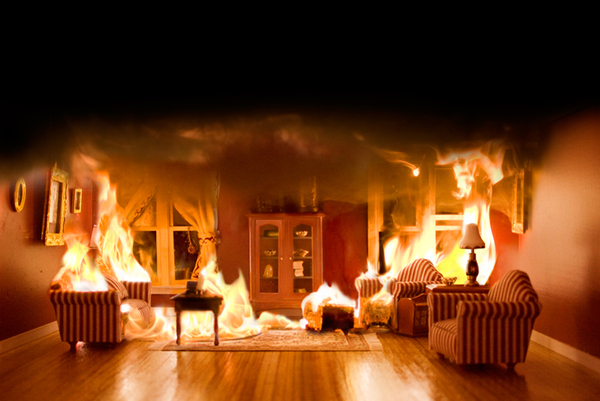
The Buddha teaches us that we should think of our lives as like a burning room and that the smoke is beginning to choke us, fill us up. And you know, if you’re in a burning room, eventually you’re going to get burned. It’s going to consume you, right? So think of ourselves as being in a burning room, and think that there is one door. That door is wide open to you. Do you get that? It is wide open to you. That door is the door of Dharma. There is one door by which to escape and you can walk out that door. You should think of the very doorway of that door as being your own root teacher. That is the implement, the tool, that you should use to get out of that room—your teacher, your practice, Dharma.
If you were in a burning room right now, and your skin was beginning to crackle and the smoke was beginning to overcome you, how would you think about that door? With fervent regard, the way we are instructed to think about our practice. That door would look pretty much like God to you! That door would look like the best thing you ever saw! Every breath of air that came through that door would be sweeter than anything you have ever known because that door is freedom.
You should think about your practice that way, because that is the way it is. That is the way it is. In samsara here, we are locked in a burning room and there is a door. And we have the great good fortune of not only seeing that door, but having the capacity to exit through that door. Not only that, but that door has a door sill that is friendly and helpful and appropriate for the size and shape of our bodies that will help us to exit that room comfortably. And that’s how we should think about our practice. Number one, wake up. Number two, get the big picture. Number three, act as though you were a sane and reasonable person, which most of us don’t. We don’t act like sane and reasonable people.
I’m not telling you anything you didn’t know. You know that life is impermanent. You know that you have suffered, and you know that you feel unable to really face all these things because it seems so hard to simply live a virtuous life. But I can tell you that it’s like anything else that you do as a friend for yourself that’s good for you, such as changing your diet to really nutritious food. At first when you do that, you know how it is. When you’re young, you can eat anything. You have a cast iron stomach. I mean the things I ate when I was young I can’t even look at now. Now I’m 45 years old and I have to eat right. If I don’t eat right, I don’t feel good.
But do you remember what it took to change into learning how to live well in that regard? To go from eating the food that I liked to eating the food that I have learned to like was hard, and I didn’t want to do it. I didn’t think I was up to it. And to go from the kind of activity that I engaged in when I was younger… Oh I could stay up all night if I wanted to, every night if I wanted to. I was blazing. I was a crazy girl. But now, if I don’t get a certain amount of sleep, the next day I’ve got bags down to my knees. You know, it’s horrible what life does to you! You look terrible and your whole face shows it. You feel awful. You feel like a dog. You feel worse than a dog.
So how did you feel when you had to change from those old habits to these new habits? At first it was painful. You didn’t want to do that. You didn’t want to change. When you learned that your body was going to fall down if you didn’t exercise, you started to exercise. At first, you hated it. You hated it. Nobody likes it when they first start to exercise. It’s painful. Your body doesn’t want to do that. But then when you finally do start to exercise, your body likes it and loves it and it feels good.
Living a virtuous life is like that. The decision to live a virtuous life is painful at first because you have to face the facts, and the facts are you’re dying. You’re dying on the hoof, right now. The second fact is that if you engage in virtuous activity you’ll be happy, and if you engage in nonvirtuous activity, you will be unhappy. That is not something we want to face. We want to do what we do, effortlessly, la la la la la, like little children. We don’t want to examine ourselves. We don’t want to look at what we do, but once we have done that,I’ve found, and many of us who are practicing for some time now have found, that we come to love our practice. We come to deepen in it and truly love it. We come to love the life of Dharma. We come to love a life that is engaged in bringing benefit and happiness to others. We come to find out at last that we never, not for a moment, liked ourselves when we were living the other way, the nonvirtuous way, the no-brainer. We never liked ourselves. There was no self-esteem happening there at all.
So then my suggestion is that we get started. Go through it. Buck up little soldier! Do what it takes to stand up tall and open your heart and get the big picture. Once you do that and you start to engage in a virtuous life, your mind will be smoother, you will be happier. You will be happier. This I promise you.
In the meantime, because our minds work the way they do and because we can’t see the direct relationship between cause and effect, we have to listen to our teachers. There is no other choice. Our teachers have crossed the ocean of suffering, just as the Buddha has done. Crossed the ocean of suffering, and returned for our sake. Our teachers, having seen the further shore and having seen the journey there and back, have come back to bring us this understanding. Live this way. Bring your life to the pinnacle of what it can be, and hold it steady and grow up, because that’s what it takes to be happy.
The following is an excerpt from a teaching by Jetsunma Ahkon Lhamo called “Bringing Virtue Into Life”
Here are some thoughts that we do not accomplish because initially they are uncomfortable. They are painful. We do not want to know this. We have this idea when we’re young, that by the time we get to be an adult we’re going to have all the answers. And in fact you do have all the answers, until you’re about 25. Before that you’re omnipotent you see, and then when you’re 25 you’re no longer omnipotent. Do you know why that is? Because you have a brain that has finally started to grow in your cranium. Before that it was only brain buds. So now that you’re about 25 you’re beginning to realize that you don’t have all the answers and the omniscience, the supreme omniscience that you were afflicted with earlier, is dissipating.
That happened to me too. When I was little I used to think when I grow up, I’m going to be completely comfortable. I thought when I have children I’m going to raise them just this way; and I will never do this and I will always do this. Who has had good luck with that I want to know? Have you ever heard yourself yelling at your kid and you find out you are your mother? You have turned into your mother for real! Well, that kind of thing has happened. Also, you grow up and you think, when I grow up I’m going to have all of the answers. When I grow up I’m going to be secure. When I grow up I’ll have financial things worked out. It’s all going to come together for me. When you’re young you think like that. And when you’re older you realize almost none of it is going to come together for you, almost none of it. Some, yeah. There are good things in life. There are good things in samsara, but you realize that it’s not what it seems to be.
As practitioners this is really what you have to take away with you. As a practitioner, you cannot fall into the trap that we as younger people fall into. You can’t stay there very long. And you that are younger, you need to create the habit of thinking about this: Samsara is a deluded experience. It’s like a narcotic. It fools you. It creates a way for you to look in the mirror at 45 with dyed hair and think “I’m not dead yet!” Instead of pinching your cheeks for a little blush, putting on your lipstick and bouncing out of the house like you did when you were 18 or 20, after 45 minutes with the makeup, you look at yourself, blink twice, hope that the eyelashes don’t stick together, and go “I’m not dead yet!” again. You can’t stay like that. You cannot keep yourself in that childlike, ridiculous idea. You must, at some point in your life, realize that life is going by very quickly and that you are going by with it, and there is not a moment to be wasted.
When it comes to who should practice and who should not practice, it is not for you to practice to impress your friends. It is not for you to practice because I want you to practice and it would please me. Certainly not. It is not for you to practice because you’ll be cheek by jowl with the other people who are practicing. It is for you to practice because this is the nature of your situation. You are involved in the cycle of death and rebirth. Life passes quickly and if you do not prepare for your next life, your next life will not be what you want it to be. There is a very good chance that you will end up with a lower rebirth or a rebirth of extreme suffering. So, when you think about why you should embrace spirituality, particularly when you think why you should embrace the path of Dharma, don’t do it for me. Don’t do it for the temple. Don’t do it because it’s cool. Do it because you must.
An excerpt from a teaching by Jetsunma Ahkon Lhamo from the Vow of Love series
Somehow you have found yourself in this fortunate, amazing position where this feast of possibility is laid before you. How did you come to this point? How is it possible that you have this option? You must have done something right in the past, and I suggest that you now build on it. If you don’t cultivate the mind of extraordinary compassion and such a burning love that compassion is the most important force in your life, then the natural inclinations of a mind filled with desire will overcome you. This is Kaliyuga, the age of degeneration, and that’s how it is. You must practice and cultivate that mind of compassion, of love, so thoroughly that you are moved to the core by even the faint possibility that you might achieve liberation in order to benefit beings. You think of nothing else. You must cultivate that until you burn with it. Don’t be afraid of that kind of love.
In the West we are taught, “Be cool. Hey, I’m an intellectual, I don’t think like that. I’m kind of special.” That’s what we’re taught, that’s our value system. That is the same value system we will take to our graves, and only the selfishness of that kind of idea will survive, not the intelligence. There is one thing that will survive this life, and will create the karma for your next life. It is the purity of your mind and the degree of love that you have accomplished. This will be the determining factor for how you will return time and time again in a form that will benefit beings until someday there is no more suffering.
The following is an excerpt from a teaching by Jetsunma Ahkon Lhamo called “Bringing Virtue Into Life”
When you give money to the temple, do it because you need to, not because we need you to. Do it because you understand that you are the one that needs to practice the generosity. That’s your medicine.
Do not make the mistake of thinking that your root guru or your lama is the one that needs the temple. It’s completely false. It is not the lama that needs the temple. It’s the students that practice there. This is not my temple in Poolesville, Maryland. This is your temple in Poolesville, Maryland. You should take pride in its cleanliness. You should take pride in its prosperity. It should embarrass you when the bills are not paid here. It should embarrass you when things are not going well at the temple—when there is not enough participation, when we can’t find someone to cut the grass—because this is your temple. This is your house. Spiritually, you live here. This is for you. If you could just get that one small truth and take responsibility for your practice whether it’s the karma yoga of engaging in protecting your temple, propagating the teachings, making this place firm, pure and safe for others to come and practice, or whether it’s the meditational yoga of actually engaging in sit-down practice in order to benefit sentient beings, or both. Hopefully you’re doing both, because that’s what is needed.
The following is from a series of tweets by Jetsunma Ahkon Lhamo:
New science theory wonders if space and time might be the same stuff. I don’t think that is exactly right, but close. So many theories being toyed with right now, that when “membranes” bump together that bump is a “big bang,” that there are infinite “bubble” universes all in the same place. That probable realities spin off with each choice we make. (Karma?) That where we sit is empty space, mostly, with atoms, and other nearly impossible to see particles. The rest of everything we see is mostly space with particles.
Another theory: what if when we space out, sleep, or forget where we are sometimes (just daydreaming) we may actually be focused on another reality. Hmm. Of course, that would mean brain is not consciousness, which is more. They are finding particles move in and out this dimension, and that black holes exist everywhere! Tiny and massive ones. So when we look at the stars and see galaxies, suns etc, we mostly see energy, same vibe as our eyes pick up. They look like what we think we know. But science always comes up needing a new theory. What if it all looks as it does because our own five senses came up with the very tools and measurements to prove themselves right? What if perception and consciousness became part of the equation? Like, all the empty space and speeding particles were exactly in the space we think we occupy? What if the macrocosm is the microcosm? What if looking “out” is delusion? What if all we see is our own perception? And what if that conscious/awareness perception is warped by thinking habitually, that it is all “out there” due to the scientific tools we created to see exactly that?
Okay, now, what if all consciousness could suddenly blink off. And there was no perception happening? Like a tree falling down with nothing and no one to perceive it would not make a sound. If there were no consciousness or perception, it would be unborn space, empty- but perfectly complete when there is perception and awareness.
We are one nature; that nature displays as we see it. We cannot be separated, but we can be duped by our own learned awareness, and so we have been, all this time. We are space. Our “vibration” is light, all-pervasive love. In Buddhism we call that Bodhicitta, the display of emptiness, the wisdom of Empty nature and its display. Bodhicitta, the great Mother of us all. We are that also. Buddha. But we are dreaming, and will someday awaken to view the primordial ground of being without the many gorgeous veils she dances with! Pure view. EH MA HO!