Undefiled Awareness

An excerpt from a teaching called How Buddhists Think by Jetsunma Ahkon Lhamo

As Buddhists, we are not as infatuated with the idea of gods and goddesses as people in some other religions.  Why not?  Because we think of them as part of cyclic existence.  Long-life gods can grant blessings.  But can they get anybody enlightened?  No!  They don’t have Enlightenment.  You can wait around for someone to give you a blessing––or you can practice Dharma.

Neither are Buddhists impressed by talk about going to heaven or going to God.  For us, all this is just part of perceptual experience––just phenomena.  I’m not saying that phenomena don’t exist, but the goal of a Buddhist is beyond all phenomena, beyond the fixation of being caught up in cyclic existence.  It is not a goal that can be externalized.  It is pure, awakened Awarenes.  We talk about being reborn in Dewachen (which can sound similar to “being reborn in heaven,” and in one sense it is), but what is actually meant by that is to be reborn in the Dharmakaya state––to be born in a state of pure, undefiled Awareness.  To shed ignorance and to be reborn in undefiled Awareness is the only goal of a Buddhist.  It is not a conceptual process.  It is liberation from all the components of suffering.

© Jetsunma Ahkön Lhamo

To download the complete teaching, click here and scroll down to How Buddhists Think

Life is Fleeting

An excerpt from a teaching called How Buddhists Think by Jetsunma Ahkon Lhamo

Have you ever seen someone made completely  miserable by neediness?  Some people are like a big gaping hole,   and all the love you could pour in there would not be enough.  Haven’t you ever gone through a phase like that yourself?  We’ve all had extremely needy, hungry-ghost-like phases.

Have you ever been prideful, arrogant?  Deludedly thinking that you’re better than other people?  Have you ever felt yourself so attractive that you thought you were hot stuff?  Do you ever think you smell better than other people?  I do.  I wear Estee Lauder.  Many people have that kind of pridefulness.  Haven’t you seen people being arrogant––while you wondered why they considered themselves so special?  It’s a kind of dream-like delusion from which they’re not able to wake up.

We have seed-like causes planted within our mindstream that we may be unaware of, among them our jealousy and competitiveness.  Have you ever been so angry that you were hell-bent to get someone’s goat?  That was all you could think about until you realized that you had put yourself in a kind of hell.  Have you ever seen other people living that way, continually frothing at the mouth and hell-bent on being right?  We can detect these things in our own mind––the impressions of them, like footprints in the sand.

The Buddha taught that these six realms exist and that we all have the karma to be reborn in any one of them.  He also taught that we have the right, the power, and the responsibility to produce the causes to ripen auspicious karma––to be reborn in an auspicious way.  In other words, there is no predestination.  No one is doomed.  No one is jinxed.  We all have both beneficial and unfortunate karmic potential in our mindstreams.  To the degree that we decide, we can engage in the ten virtuous activities which produce an auspicious rebirth.  No one is special, no one is flawed, no one is damaged, no one is brain-dead.  While you’re human, you have many options.

Having understood that rebirth in any of these realms is possible for each of us, we must make the best use of our time now.  There is an urgency in Buddhist thinking: you are asked, please, to make use of this fortunate human rebirth.  Don’t waste your time.  If you feel pushed to do as much as you can, the purpose isn’t to entrap you or to tell you that “there is only one right way.”  It is only to urge you to use your time effectively and courageously––because there is so little of it.

Buddhist teachings describe this human life as a waterfall.  Now, where is the drop of water that even a moment ago was at the top?  That’s how our lives are.  They appear stable, but they go by in a flash.  We need to use our opportunity.


© Jetsunma Ahkön Lhamo

To download the complete teaching, click here and scroll down to How Buddhists Think

We Made It Up

An excerpt from a teaching by Jetsunma Ahkon Lhamo from the Vow of Love Series

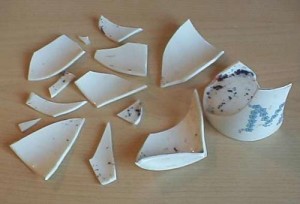
Look at a cup. Find cup in there. Take it apart. Grind it up, find cup. Cup is the idea of cup. And you can continue with everything – your house, your family. Let’s take your house and examine it. Let’s take your house apart. We’ll put it all under the microscope. Then find family. We’ll examine the people that you are calling family. Which one of them is family? We’re going take them all apart, just the way we took you apart. Where are we going to find family? Family is a concept. Who made it up? You did. Where are you? I haven’t found me yet!

It’s crazy, but it’s a good way to start practicing, because we’re going to find that everything we live by – the things that make us suffer, the things that we bust our tails trying to do, everything that we do – is based upon an idea that we made up. We did! We made it up, and it has affected us for all this time. We can begin there. It’s true that it would take some time to achieve realization by meditating in that way, but it’s a good place to start. Meditating on the emptiness of self and phenomena can give us the foundation and the strength to live the extraordinary life of compassion that I have been talking about. It’s that kind of extraordinary life of compassion, coupled with profound prayers, which will allow us to return in whatever form necessary in order to benefit beings. Even now, we will be able to benefit beings if we consider this is the most important thing in our entire lives, and we yearn for it.

Peters cup3

We will have a little side benefit if we do this. The side benefit is that, in the process, we will be purifying our mind of the garbage associated with self and desire we have gathered around it. We will move closer to successfully meditating on and knowing that profound, uncontrived, natural state of mind, just through the virtue of considering ourselves to be only important in as much as we can benefit beings, and beginning to function in that way.

But, I tell you, the more we get on an ego trip about this, the more we are creating the causes of suffering and the further away we get from perceiving the natural state. Because the natural state is, as it is – unpolluted, untarnished, untainted. The only thing that makes us perceive something else is that we have stuck blue in the back of the crystal, and the blue, symbolically, is conceptualization. The way to liberate the mind from the belief in the phenomena of blueness as being inherently real is to meditate on the emptiness of phenomena, the emptiness of self-nature, and to live a life that causes the purification of the mind and actually cleanses discursive thought. That is the ticket.

No matter who your teacher is, if you really could talk heart to heart with any profoundly realized teacher of any religion – and I’m willing to say this publicly, any teacher, any time if they are profoundly realized, no matter what religion they started – will tell you that the answer is the end of ego, all of its desire, and the conceptual proliferations that come with it. The realization of the natural state is the answer. That state is uncontrived, unchanging, unborn and infinite.

That’s your Kellogg’s cereal box-top, nature of mind teaching for today.  Whether you go the traditional Buddhist route, or whether you want to continue in a more general, yet profound route, I hope you will consider the tremendous opportunity and rewards of an extraordinary life. For you to even have the karma to come to this point where you might consider such a thing is tremendous. I urge you not waste this precious human rebirth. It’s an extraordinary opportunity. You have the opportunity to see things and to hear teachings that will change your mind forever, so that in some future time, you will surely be able to benefit beings in some extraordinary way.

I urge you to continue, and don’t waste your time. The expression, ‘don’t throw your pearls before swine,’ really does apply here. This is an extraordinary life, and if you were to spend it on ordinary things, it would be a shame. I hope that you will cultivate your excellent qualities and let them grow so that they will nurture all beings.

Copyright ©  Jetsunma Ahkon Lhamo.  All rights reserved

The Search for I

An excerpt from a teaching by Jetsunma Ahkon Lhamo from the Vow of Love Series

All conceptualization, all phenomena arise from the belief in self-nature and from the compulsion, at that point, to make self appear separate from other, making a reactive relationship necessary. Your entire mind consists of the phenomena of hope and fear, of discrimination in a subtle and dense way. But the nature of mind itself remains steadfast, clear, uncontrived. When there is no concept of self.  It is pure, perfect.  It is only suchness. Only that. It cannot be altered. It remains unchanged. And the weird thing about it is, the minute that you start talking about it, you’ve removed yourself from the potential to understand it.

When you look at a crystal, it might be understood as a symbol of suchness. Now, if you were wearing a blue shirt and you put your arm behind the crystal, you would then see blue. Has the crystal become blue? Well, you have to look at it on two levels. With your arm behind it, the crystal looks blue. So, in that sense, the crystal appears to have become blue. But if you move your arm away does the crystal change? Is it still blue? So what is blue? Who perceives blue? The crystal is the same. It is the same. It is completely unaltered. What is this appearance of blue? What is this appearance of phenomena in general? This appearance of phenomena, in general, is merely conceptualization. Who perceives it?

Here is a very crude example, but then I told you I was born in Brooklyn. I’m not making any apologies. That’s it. Let’s take two objects: we have chocolate, and we have shit. Yes, shit, you heard it right! We have chocolate and we have shit. Okay, they’re both brown. I’m sorry, but we have to do this. They’re both brown, right? They both have a creamy consistency. So sorry! They both have a strong aroma. What makes one chocolate and the other one shit? Who determines the difference? Who is the taster? Who sees this? Who sees that? What is happening here?

How do you get free then of distinction between shit and chocolate? How do you stop seeing the blue in the crystal? How do you perceive that true nature? Little by little, you have to disengage the idea of self, and you have to meditate on that. I recommend that you begin in this way, whether you are a dyed-in-the-wool Buddhist, or whether you are a person that has never even heard of any of this before. I don’t recommend that you taste both shit and chocolate, but you can try, let’s say, honey and lemon juice. Look for yourself and ask, “Who is the taster?” You say, “I taste.” Then, “Where am ‘I’?” Well, “I’m right here.” Okay, where are you here? Let’s take you apart. Let’s find out where ‘I’ is. We’ll look first in the feet. We’ll start low and work up. Did you find ‘I’ in your feet? Take them apart. Really, you have to make slides of everything. You have to buy yourself a microscope and make slides and see if you can find ‘I,’ okay? Go all the way up. Look everywhere that you can, examine every single molecule. Go all the way up to the heart. Everybody thinks hearts are big these days. Let’s look in the heart and see if we can find ‘I.’ Then, we’ll look in the throat. What part do you identify with the most? Do you have great legs? We’ll look at your legs. Do you have a beautiful figure? We’ll look at every part of it. Look at everything! Let’s look in the brain. Everybody thinks they come from their head, right? So we’ll look in the brain. Where is ‘I’? You can even look in your eye, in your eyeball. See if you can find ‘I’ there.

No matter how hard you look, even if you make microscopic slides of every single part, you will not find ‘I’ in this body. You will not find it! Well, you say there must exist an ‘I,’ because how else can I go from lifetime to lifetime? And, I’m telling you that the idea of ‘I’ is only that. It is a conceptualization that has built around it so much karmic flatulence that the profundity of it has managed to exist for lo these many eons. At that point, you can begin to understand that, essentially, nothing has happened. In truth, nothing has happened. And you can begin to meditate on the emptiness of all phenomena.

Copyright ©  Jetsunma Ahkon Lhamo.  All rights reserved

Crystal Clear

An excerpt from a teaching by Jetsunma Ahkon Lhamo from the Vow of Love Series

Do you remember the innocent sense of longing you felt when you first started to seek the spiritual path? You must have felt it at one point or another, or you could not receive this teaching. You could not. You must have longed to purify suffering. You must have longed to be of benefit to someone, sometime. You must have longed to attain the end of suffering, and there must have been the desire to do that in order to help others. It has to be.

Remember how happy you were when you felt that innocence, that beautiful longing? There was a time when you were really happy when you thought that. Now, of course, we’re too sophisticated. We’re on the path, and we’re already practitioners. So we tend not to continue with that thought in our minds, but we should. We should constantly, with great longing, make prayers in that direction. That’s how you begin aspirational Bodhicitta. You begin to make prayers of longing: “I long to benefit beings. I pray with all my heart that I can take whatever form necessary in order to bring peace to the world, in order to benefit beings, in order to end the suffering of beings.” You should cultivate that longing, really and truly. You should do that until tears are in your eyes. You will find when you begin to develop that ability those tears are not sad tears. They are the happiest tears you’ll ever cry, and they are a heck of a lot more happy than going to the shopping mall and buying something new. I mean, really, that sounds like a superficial comparison, and it is. But we spend much more time at the shopping mall than we do longing to be of benefit; we should long constantly to end suffering.

You begin in that way. Then you start to think of the emptiness of self-nature, even if you don’t know how to meditate. If you haven’t the technique, then you might contemplate upon the emptiness of self-nature. This goes hand in hand with living the extraordinary life of compassion. They are inseparable, because along with the emptiness of self-nature is the understanding that all suffering is born of delusion. The antidote to that suffering is the annihilation of delusion. It’s the same as the meditation on emptiness.

For instance, let’s take a crystal. It looks really, really clear. A crystal is exactly like your mind. It is exactly like the nature of your own mind in its clarity. In its natural state, it is free of any form. There is no form in there. It is said that the nature of mind is clear, self-luminous, that it exists in such a form that once any distinction is made, it is not understood. It is free of any contrivance, in the same way that a crystal is free. When you look inside a crystal, you see only clarity. A better example, of course, is a crystal that is perfectly clear without any flaw, because that crystal is exactly like your mind, perfectly clear, without any flaw. You, in the natural state, are that. You are pure suchness. The moment you began to appear as you do now, was the moment you began to make distinction. In the natural state it is not so. The mind is clear, self-luminous, free of contrivance, completely relaxed. It is not gathered around itself, because it has no conceptualization of self. It’s completely relaxed. It is suchness.

Copyright ©  Jetsunma Ahkon Lhamo.  All rights reserved

With Prayers of Longing

An excerpt from a teaching by Jetsunma Ahkon Lhamo from the Vow of Love Series

Let’s say you’re not up to following a qualified teacher. Let’s say you don’t go that route. You can still meditate. You can still follow those basic precepts that are brought to us through the enlightened mind of the Buddha without going that route, if you wish. You may wish to bite off a small piece, and then see if you want another piece. There’s no problem with that. You might realize some of the basic teachings, such as all sentient beings are suffering; there is an antidote to that suffering, which is supreme enlightenment. When we reach enlightenment there is no conceptualization of self, therefore there is no desire. Therefore, there is no discursive thought. Therefore, there is not the cause that creates the effect of suffering.

You must also realize that all sentient beings desire happiness, no matter what they are doing. Even if they are robbers, rapists and murderers, and they are doing things that look to you like all they’re trying to do is hurt people. They are confused. They have the karma of murder in their minds. They are completely deluded. They are whatever you want to call them. But in their deluded way, in their feverous way, they too desire happiness. All sentient beings desire happiness. Yet, all of us, whether we are murderers, rapists and robbers, or if we are the nicest little New Age flower children you have ever seen in all your bliss-ninny days – we are just so sweet and we walk around with flowers in our hair and only eat vegetables and tofu – even if we are like that, we are still creating the causes for unhappiness. I’m giving it to New Age people, but I’m just making fun. It’s no big deal. I’ve been known to eat tofu on occasions also! Anyway, even if you’re that kind of person, you are still creating the causes for more suffering. You know that’s true, because while you may not be murdering anybody, if you look at your life and look at the probability of the continuation of your life, you will at some time be sick, you will certainly age, and you will certainly die. There will certainly be circumstances you cannot avoid describing as suffering.

In order to get to the depth of this awareness we can begin to practice as the Buddha practiced. We can begin to take the antidote for desire. We can begin to take the antidote for the belief in self-nature as being inherently real. Therefore, the antidote will also be applied to the clinging and the reactive relationship of hope and fear, the attraction and repulsion syndrome, which is the mother of karma and circumstance. These are what cause circumstance and they will become eliminated.

How should we apply the antidotes? First of all, by living a life that is as selfless as possible and by beginning to purify our minds in such a way that we really honestly examine ourselves. Just how much of an ego do we have, anyway? If we can sit there and think, “Oh God, such an ego, you can’t believe it!” If we can do that, then we’re on our way, and we probably have less of an ego than the next person. If we’re truthful with ourselves, we’ll discover that any one of us has an ego that is so enormous; we’re surprised we can fit in a room. We have to begin to examine ourselves as carefully, diligently and purely as we possibly can.

How do we do that? Do we just sort of go through our stuff and process it? No, I don’t think so. I don’t think the thing to do is to process it and be sorry that we have a big ego. What we want to do, actually, is to begin to practice in such as way that we say, “Okay, I have this ego. I want to apply the antidote. What is the antidote? The antidote is to strive to constantly live a life in which my welfare becomes less important – because I am only one – than the welfare of others, who are many.” Again, it doesn’t mean you roll your eyes heavenward, become extremely thin and become a martyr. I don’t think that is the answer. The answer is that you live a life in which you consider how you can best benefit beings. You can start by aspiration, the aspiration to be truly compassionate. If you don’t have the technique, if you don’t know what to do first, begin through prayers of longing.

The Vow of Love is available on Amazon in both kindle and paperback formats

Copyright ©  Jetsunma Ahkon Lhamo.  All rights reserved

Offer It Up


An excerpt from a teaching by Jetsunma Ahkön Lhamo from The Spiritual Path

We never lose sight of how we feel. We are always monitoring ourselves. We want to feel free of suffering, free of stress. Sentient beings strive endlessly to be happy, so it is very difficult to achieve a sustained, sincere practice of generosity. Think what you have done over the last 24 hours. Work? Practice? Television? Family time? Social obligations? Was your first and foremost thought to benefit sentient beings? Or were you doing things to strengthen your ego in some way, to make you feel better? Mostly the latter, I think. Even our Dharma activity is often done to make us feel better about ourselves—to make us feel busy, wanted, necessary, energetic. Or, perhaps, spiritual, holy, and pure. We always have our selfish purposes, so it is difficult to be generous.

How should one be generous? How should we think about generosity? To begin with, we should not consider phenomena something we can have or not have, something that attracts or repels us. We should view all phenomena as a pure celestial offering that we can actually make to the Three Precious Jewels. We should view our entire world as an exquisite, vast celestial mandala. We should think of phenomena as Mt. Meru, surrounded by its beautiful continents. We should think of all sights, smells, sounds, sensations as precious jewels that we offer to the Three Precious Jewels themselves. It is a more profound version of what we do in our Ngöndro as mandala offering. The deepest way to engage in the practice of generosity is to offer one’s environment continually. But how many of us do that?

Think, for instance, about the way we react to food. We eat food with desire. We taste it with lust, more lust than we think. Shopping for food, we want the best apples, don’t we? The purest, the finest. We want the best carrot cake, the best vegetables. We even lust after color. Our eyes, our feelings are drawn to it. We think we look good or bad in a certain color. We perceive color with attraction or repulsion. All our senses function like that. Actually, generosity should be practiced in such a way that we offer the very senses that we have. But do we offer our taste? Our hearing? Well, we might say that. But we can’t wait for the next sound, the next taste. We cling to our existence as a sentient being, a feeling being.  We long for the next touch, the next sight. When you go for a walk, what do you do? You look at the flowers and trees. You sniff the air, smelling everything. The senses are yours. And you have no idea of offering, no intention of offering them to the Three Precious Jewels. And yet, that would be true generosity.

What is the basis of that generosity? How can such an offering be of benefit? You may think: “If the Buddha wanted my taste, my sight, my hearing, my touch, he’d get his own! A truly enlightened being can manifest all kinds of incredible siddhis, or powers. So why do I have to offer this phenomenal existence to the Buddhas and Bodhisattvas?”

Well, why do you have to do that? There’s a real logic behind it. How long are you going to have your senses? You’re going to have sight until your eyes go. Even if your eyes last until the end of your life, they will die when your head dies. You will only have touch as long as you have skin to touch with. Your perceptual experiences will not outlast your body. So what are you holding on to? The traditional teaching says that at the time of death, we cannot take with us so much as a sesame seed. You take only your cause-and-effect relationships and habitual tendencies. So if you have clung to your experiences, establishing your particular neuroses at every moment, that is what you will continue to do in the bardo. If it has been your habit to look for approval and to gather things, situations, people around you for that purpose, you will not be able to take any of that into the bardo. All you will have is the habit of that longing, that desire—and the karma you have engendered from reacting to that need.

How much better to practice generosity—to offer your five senses and all phenomenal existence to the Three Precious Jewels. Why? You create a stream of merit. Offering is one of the major ways to accumulate merit, and that merit can be dedicated to benefit sentient beings. In fact, you can visualize yourself and all sentient beings offering the five senses, offering consciousness itself as we know it. You can think of all sentient beings gathered together with you making offerings of the three thousand myriads of universes purified into a precious jeweled mandala.

What is the value of such an offering? It cuts to the bone. It is so profound that it transforms the entire perceptual process. This deep level of offering pacifies our habit of clinging to cyclic existence. It purifies our self-absorption and selfishness, and we can offer the merit to the countless beings who are themselves constantly involved in selfishness and self-absorption, unaware that they can make any offering at all.

Unfortunately, we are afraid. If we offer something, the Buddha might take us up on it. If I offer the experience of being the mother of my beautiful daughter, maybe they’ll take her away. If I offer all my clothing to the Three Precious Jewels, they might take that away. We fear that something will be lost to us. But you can see that this is a product of our delusion. Our experience of phenomena depends entirely upon karma. As our karma becomes more purified, more virtuous, as our minds become more spacious, more relaxed—our experience can only be better. Suffering only happens due to clinging and desire. In our delusion, we continue to lust after experience, and that lust continues to cause our suffering.

The practice of generosity is an antidote to all that. There is literally nothing to hold on to and no one to do the holding.    Everything you have ever experienced—all you will ever experience—is the result of the condition of your mind. Why not then practice this deep level of generosity? Why not view phenomenal existence for what it is? You will in the end, anyway. You’ll see it disappear before your eyes. At the time of your death, you will see the elements disappear, dissolve. Whether or not you will recognize what is happening is another story. (You may merely pass into unawareness, and that would be for one reason only: you lived in unawareness.)

© Jetsunma Ahkön Lhamo

Go Deeper

An excerpt from a teaching by Jetsunma Ahkon Lhamo from the The Vow of Love series

In Buddhism, we explore the idea of suffering first. In that regard, Buddhism has been given a bad rap here in America. Many of the New Age philosophies support the idea that one should think only positive thoughts, and use affirmations. “Just resolve your conflict in a very loving way.” “Live a life that is free of conflict.” “Try to keep your mood elevated.” “Be happy all the time.” The idea, according to many of these systems, is that if you have happy thoughts and meditate on happiness all the time, you somehow will be happy all the time.

Buddhism has a different approach. We shouldn’t think that because it has a different approach, it has a different goal. Basically, according to the Buddha’s teaching, all sentient beings want to be happy. That is something that you have to understand before you do anything in the Buddhadharma. Before you do any kind of studying, you have to meditate on the fact that all sentient beings desire happiness. Because we don’t realize that. We forget. We tend to blame and judge and hate, because we forget that all sentient beings desire happiness, but they don’t know how to be happy. They don’t know how to create the causes for happiness.

This is not different from what New Age people think. They think that everyone has the right to be happy, and that we should try to be happy. But the Buddha’s approach is slightly different, and it goes something like this: all sentient beings desire happiness, but are constantly creating the causes of unhappiness. Witness this is so by the fact that everybody you know has periods of unhappiness, if not constant unhappiness. That being the case, we must be creating the causes of unhappiness. Unhappiness doesn’t come out of the clouds. It doesn’t manifest out of nowhere. It has a cause. There is a cause and effect for everything.

The approach, then, is to study suffering and how suffering comes about, as well as how all sentient beings essentially are suffering. We can’t understand how we create the causes of suffering, and we can’t understand what the antidote to suffering might be, if we don’t accept the fact that sentient beings are suffering. If we gloss over it, it gets away from us. The Buddhist approach to happiness is to study suffering in order to understand what the antidote might be. A Buddhist would say that if you go around saying affirmations and thinking positive thoughts all the time, perhaps it won’t work as well as you would like.

A New Age thinker believes the superficial level of conscious thought, and the resultant underlying thoughts, cause unhappiness. The Buddha, however, says what causes suffering and discomfort is something far beyond the level of thought, and therefore cannot be excised simply through moderating your thoughts. It can be modified by thought, but the root of the causes of suffering cannot be removed. One has to go much, much deeper than that. What actually causes suffering is the belief in self-nature as being inherently real. The belief in self-nature as being inherently real leads to clinging and desire, and it is desire that causes suffering.

Now, let’s say the New Age thinker might agree with this. He might say, “Yes, if you get attached to things, if you grasp onto things, they’ll cause suffering. I get that.” The difference is that the Buddha says you have to go really deeply into understanding the nature of mind, into realizing the nature of the emptiness of all phenomena, and the emptiness of self-nature, in order to excise that desire. You have to go much deeper than just ordinary thinking.

The reason I am inclined to believe what the Buddha taught is, first of all, he beat the game. That’s a really good sign, as far as I’m concerned. He beat the game and he attained supreme realization. Secondly, I know people who have adhered strictly, diligently, faithfully and loyally to New Age philosophy. If they get hit by a car, they will tell you it was fortunate, and they learned a great deal from it. That’s fine. I’m not going to argue. But two broken legs is not a good way to learn. Whatever happens to them, they just tend to gloss over it, and the problem is, they’re still suffering. They’re still suffering! My personal feeling is they’re in worse shape than they were before, because they have no means by which to get hold of the causes of their suffering. Whether they merely gloss things over, or force themselves to think in a certain way, they still get old, get sick and die. They are still helpless in the face of circumstances. I feel that it’s necessary to go deeper and to think in the way that the Buddha thinks.

What then is the cause of suffering? Why do circumstances appear as they do? Why are there old age, sickness and death? Why are there six realms of cyclic existence? All forms of life are impermanent. All of them experience some form of suffering. Animals certainly do. Animals grow old, get sick and they die. They get run over by cars. They get worms. They get mistreated. They get hooked up to yokes and made to pull carts and things like that. If you think that teaching animals to think positive is going to be the answer, good luck! I hope that you can do that, and I hope that you reincarnate again and again as a great Bodhisattva who can teach animals to think positive so that they won’t suffer anymore. But, it may not be possible. Like the suffering in the animal realm, we must think that there are other realms of existence where beings are also suffering.

Copyright ©  Jetsunma Ahkon Lhamo.  All rights reserved

Do the Math

An excerpt from a teaching by Jetsunma Ahkon Lhamo from the Vow of Love Series

If we wish to enter onto the path of a Bodhisattva and become that which benefits beings, we must have a heart that yearns for compassionate activity. We must want to help, or we wouldn’t be able to receive teachings like this. This being the case, the first thing we have to do is let go of the concepts we have about how cool we are going to be when this process is finished. We cannot hold on to the rigid kind of thinking that honors only self. We must think of others.

How many of you are there? One, right? Look down, how many do you count? It’s easy. So far as you know, there is only one of you. Now look around at the human beings in your immediate environment. Then think about all the human beings on this earth: 5.9 billion, at least. If your mind is really that of a Bodhisattva, you couldn’t think for a moment of going around telling others how great you are. You couldn’t think for a moment that it could be in any way important that you do the dance, or sing the song, or appear in some certain way that satisfies you, because there’s only one of you, and there are 5.9 billion of them. If you have a mind that’s free of the attachment to self, free of the burden of believing strongly in self-nature, then you must realize that weighed against 5.9 billion human beings, you simply don’t weigh very much.

If you really wish to fulfill the idea of a Bodhisattva that is free of attachment to ego, free of the delusion that self-nature is relevant and important, and if you really wish to consider living a life of compassion, then serving others must become more important than even your own life. It is not that you become like a martyr. We’re not talking about the Christian concept of a martyr. It’s really different than that. It’s just mechanics. It’s just logic. It’s just math. There are more of them than there are of you, so they matter more. With that idea, you seek only to benefit others.  That being the case, as an aspiring Bodhisattva, you must begin to examine what the mind of Bodhicitta really is.

Copyright ©  Jetsunma Ahkon Lhamo.  All rights reserved

The Nature of the Guru

The following is an excerpt from a teaching by Jetsunma Ahkon Lhamo called “The Guru is Your Diamond”

The Lama gives us not only a way to have single-pointed concentration, but the Lama also offers their own accomplishment.  When one practices the Guru Yoga really deeply, whether it be in the Guru Yoga in Ngndro, or Shower of Blessings, or in any of the pujas that have Guru Rinpoche as the main focal point or Guru Rinpoche and consort as the main focal point, we should think thatthis is the way to practice Guru Yoga.  And in each one of those practices, whichever it is, we understand nondual nature.  That’s what we’re working on.

We see the arising from the nature of emptiness appearing in a real, but insubstantial gossamer-like light form, first as the seed syllable, and then as the Guru.  We are telling ourselves our own story, because it is we also who have arisen from emptiness.  It is our nature that is indeed also the seed syllable. Ultimately we are the same nature as the Guru.  By the power of the Guru’s accomplishment, through their many lifetimes of amazing practice, many lifetimes of looking out after sentient beings and accomplishing the needs of sentient beings and liberating sentient beings, they offer themselves and their accomplishment in that way to be the very door to liberation.  And so we should think of our teachers in that way—that we are in a burning house, no other way to get out except that one door.  Boy, would you ever be devoted to that door.  That door would be on your mind if your house were burning, and there were no other way to get out, wouldn’t it?  And that’s how we should think. We should think that here we are in samsara. This is indeed the time of Kaliyuga.  We have, at best, as many habitual tendencies guaranteed to bring us suffering as we do to bring us happiness.  At best.  50/50.  And that is so unusual.  We tend to make ourselves more unhappy than we do happy.  So we are in this burning house and we look to the teacher to provide the door to liberation.

So when we give rise to that devotion, it’s not to the person Guru.  It’s not to that person.  It doesn’t matter if you like what they’re wearing or how they smell or what they look like or how they walk or anything like that.  It doesn’t matter.  That’s just the stuff you do in regular life.  So you can just sweep it over. Instead you think, “This one has appeared and will appear throughout time out of mind until all suffering has ended, until samsara is emptied, as the door to liberation.  What kind of dope am I that I wouldn’t walk through it?”  It’s that kind of fervent regard.  Think of it that way—more than like-dislike, that kind of judgment, but rather, fervent regard.

We rely on the accomplishment of our teachers. If our teachers had not accomplished any Dharma, how would they be of any use to us?  So we expect it of them and we rely on them to guide us in the way of Dharma.  Sometimes it pisses us off.  We’d rather go on vacation.  We’d rather have a little more fun.  I mean, it’s Sunday afternoon, isn’t it?  And we have all kinds of reasons why we should maybe do something else.  But we come back.  There is my friend.

If this teacher can bother to appear again and again for no reason other than to liberate sentient beings as my Guru has, then I can at least be here. I can at least come half way, come full with devotion.  When we are in the presence of our own Root Guru and we have that connection and we have the history and karma of the Guru having ripened our mind in some way in the past, that ripening will surely come again.  With faith and devotion and practice, it will surely come again.  And so we have that kind of faith.  We know in our hearts and our minds that we can rely on this one for that kind of help.

Copyright © Jetsunma Ahkon Norbu Lhamo All rights reserved

WP2Social Auto Publish Powered By : XYZScripts.com