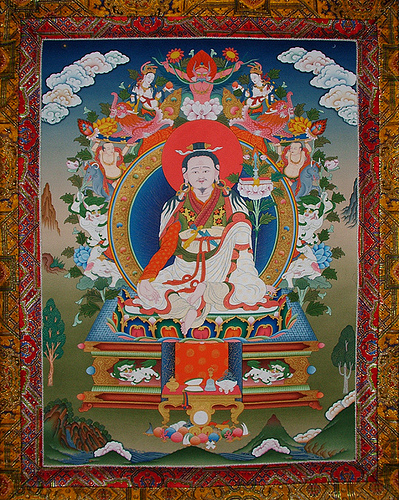
The Essence of the Path: by Dudjom Rinpoche

The following is respectfully quoted from “Counsels from My Heart” by Dudjom Rinpoche as translated by the Padmakara Translation Group: 

To my Lord of Dharma, peerless, kind
My glorious Lama, homage!
His lotus feet I place
Upon my chakra of great bliss.

Here is my advice,
Some counsel useful for your mind.

Not to keep yourself from evil actions
Is to have no pratimoksha,
Not to work for others’ welfare
Is to have no bodhicitta.
Not to master pure perception
Is to have no Secret Mantra.
If illusions don’t collapse,
There is no realization.
If you opt for one side or the other,
That is not the View.
If you have a goal in mind,
That is not the Meditation.
If your conduct is a contrivance,
That is not the Action.
If you hope and wish,
You’ll have no Fruit.

Those with faith will go for refuge;
Those who have compassion will have bodhicitta;
Those with wisdom will gain realization;
Those who have devotion harvest blessings.

Those who have a sense of shame are careful how they act;
Careful in their actions, they are self-possessed;
Self-possessed, they keep their vows and pledges;
Keeping vows and pledges, they will have accomplishment.

Peaceful self-control: the sign of one who’s heard the teachings!
Few defiled emotions are the mark of one who meditates.
Harmony with others is the sign of one who practices.
A blissful heart is witness to accomplishment.
The root of Dharma is your very mind.
Tame it and you’re practicing the Dharma.
To practice Dharma is to tame your mind–
And when you tame it, then you will be free!

Contempt Toward the Vajra Family: The Third Root Downfall

The following is respectfully quoted from “Perfect Conduct” with commentary by Dudjom Rinpoche:

4.b.3.(b.3) Expressing contempt toward the vajra family:

The third is becoming angry toward general, distant, close and immediate relatives; holding a grudge; and showing jealousy, disrespect and so forth.

In general, all sentient beings are considered to be our relatives. Even closer are those who have entered the path of Dharma. Closer still are those who have entered Vajrayana, since those who have the same lama are considered to be children of the same father. Those who have received empowerment together at the same time are children of the same parents. Those who received empowerment first are the elders, and those who received it at the same time are likened to twins born into the mandala simultaneously. To express or to hold anger in one’s mind toward any of these near or distant vajra relatives, or out of jealousy to harm them with body and speech, to speak harshly to them, or to argue with them and express their faults, constitutes the third root downfall. It is especially important to be careful toward the innermost vajra family, because to fight with or abuse them in any way accrues extremely negative karma that is difficult to remove.

Contradicting the Buddha’s Words: The Second Root Downfall

The following is respectfully quoted from “Perfect Conduct” with commentary by Dudjom Rinpoche:

4.b.3(b.2) Contradicting the Buddha’s words:

The second concerns the utterance of the sugatas, who reveal what to accept and what to reject. This includes the lama’s speech. To knowingly contradict it by engaging in unwholesome conduct is the second downfall.

The words of the sugatas clearly reveal the path of what to accept and what to reject in accordance with the advice given by one’s lama. The Tripitaka and the four tantras all qualify as the sugata’s utterance. Ignoring these teachings, acting in opposition to the three trainings (prātimoksa, bodhisattva, and Vajrayana), and displaying such conduct in front of others transgresses the Buddha’s speech. This downfall is second in weight to directly disrespecting the vajra master.


Disrespecting the Vajra Master: From “Perfect Conduct”

The following is respectfully quoted from “Perfect Conduct” with commentary by Dudjom Rinpoche:

The fourteen root downfalls are explained as follows:

The fourteen root downfalls are likened to the trunk of a fruit-bearing tree. In dependence upon the trunk, all the branches and leaves develop. If the trunk deteriorates, the entire tree will tumble down. Likewise, the root vows are like the trunk, and if they are guarded it is through them that all noble qualities of the path develop. Otherwise, if the trunk is damaged, this becomes the root cause for falling to the lowest hell realm, where there is no chance for liberation and where unbearable suffering is endured. To avoid this, it is necessary to carefully guard against these fourteen.

4.b.3(b) An extensive explanation of the fourteen:

4.b.3(b.1) Disrespecting the vajra master:

The first concerns heartfelt disrespect for the vajra master who has been kind in the three ways. To belittle him or disturb his mind is the first downfall because of its weight.

The vajra master is one who has bestowed empowerment, transmissions, and pointing-out instructions. These are the three expressions of kindness because they make transmission complete according to inner tantric practice. In addition, the vajra master is one who has given a direct introduction to the nature of the mind. Being disrespectful to such a master, either directly through body and speech or indirectly through one’s mind, or opposing the advice given by him or harming or disturbing those who are in the lama’s immediate retinue, qualifies as the first and heaviest downfall. This is the first of the fourteen root downfalls because of the strength of the weight of negative karma it carries.

The vajra master should be cherished as the essential nature of all buddhas and should, therefore, be the principle object of one’s devotion, admiration, and respect. Moreover, in dependence upon one’s relationship with the vajra master, all noble qualities of the path, as well as the resultant qualities, are developed. If one allows the precious relationship between oneself, as the disciple, and the irreplaceable vajra master deteriorate in the ways described above, then whatever meditation one aspires to accomplish will only be the cause for birth as a rudra. One must therefore be extremely careful.

The second root downfall will be posted tomorrow…


The Feast

The following is from a series of tweets by Jetsunma Ahkon Lhamo:

I have a true Thanksgiving spirit this year, thankful for all those who made it through the storms and who WILL get their lives back.

I’m grateful for our President Obama and our democratic election with no confusion.

There has never been a better time for all Americans to bond in love and caring – we need each other and our country is NOT divided in half but  equal in heart.

Maybe now we’ll be kind and rebuild what’s broken in a loving spirit, joyful again. This is the true American spirit – hidden for so long. If we don’t send jobs and money overseas we can thrive once again!

Here at KPC we will gather for the traditional feast and dream of the day when we can feed all people without exception, and be truly grateful for the opportunity we now have.

The great Bodhicitta – the power and wonder of it is more than we can understand. The lack of Bodhicitta is more than we can bear.

The gift of Bodhicitta is more than we can comprehend…uninterrupted Bodhicitta is bliss.

Come to the KPC Food Bank if you can’t afford a Thanksgiving. We are cooking and eating together, or we can try to give you what you need for your family.

You are loved. Happy Holidays!

Copyright © Jetsunma Ahkon Norbu Lhamo All rights reserved

Samantabhadra Sings: From “The Magic Dance” by Thinley Norbu

The following is respectfully quoted from “The Magic Dance” by Thinley Norbu Rinpoche:

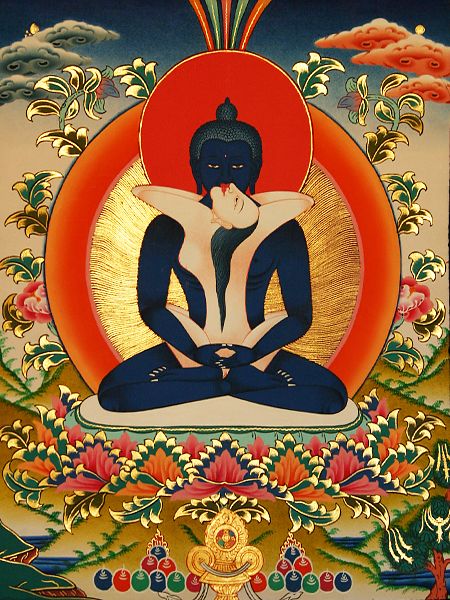
This is why Samantabhadra sings:
Oh wonderful Dharma, the exquisite secret essence of all perfect Buddhas,
All born from unborn, and in being born there is no more born.

Oh wonderful Dharma, the exquisite secret essence of all perfect Buddhas,
All ceasing from unceasing, and in ceasing there is no more ceasing.

Oh wonderful Dharma, the exquisite secret essence of all perfect Buddhas,
All existing from not existing, and in existing there is no more existing.

Oh wonderful Dharma, the exquisite secret essence of all perfect Buddhas,
All coming and going from not coming and going,
and in coming and going there is not more coming and going.

My Best Wisdom Teacher: from “The Magic Dance” by Thinley Norbu Rinpoche

The following is respectfully quoted from “The Magic Dance” by Thinley Norbu Rinpoche:
I bow to my own Wisdom Mind,
which is my best wisdom teacher,
the source of all visible and invisible qualities.
Sentient beings are always in time and place.
If sentient beings are in time,
my wisdom teacher dances magically in time.
If sentient beings are in place,
my wisdom teacher dances magically in place.
If really examined, you never remain anywhere.
You are only display.
To whatever never remains,
to you, my best wisdom teacher, I bow.

Homage to the Three Jewels: From “The Jewel Ornament of Liberation”

The following is respectfully quoted from “The Jewel Ornament of Liberation” by Gampopa as translated by Khenpo Konchog Gyaltsen Rinpoche:

Homage to the Three Jewels

The Three jewels of Buddha, Dharma, and Sangha are the rarest and most sublime objects in the universe. Therefore, from now until he attains enlightenment, the author of the treatise pays heartfelt respect to them in thought, word, and deed, his aim being to protect beings who wander in samsara, afflicted by many evils.

The Three Jewels may be explained according to their essential characteristics, the etymology of the Tibetan term, their various subsidiary aspects, and an explanation of the Sanskrit term. Essentially, buddhahood is the perfection of all the qualities of “elimination” and ‘realization.” According to the Tibetan expression snags rgyas, a Buddha is one who has awoken (sangs) from the deep sleep of ignorance and whose mind has blossomed (rgyas) like a lotus flower with the knowledge of all things. Buddhahood in turn has three aspects: (a) the kayas, which act like containers for (b) the wisdom contained therein, together with (c) the enlightened activities that flow from these. Finally, the Sanskrit word Buddha means “one who perfectly comprehends,” one whose mind encompasses all objects of cognition and thoroughly understands them.

Essentially, the Dharma is characterized by the elimination of one or both of the twin veils of defiled emotion and cognitive obscurations, or the means to this elimination. The Tibetan word chos is so used because the Dharma purges (‘chos) the mind of negative emotion in the same way that medicine cures someone who is sick. As to its aspects, the Dharma may be classified in two ways: one the one hand, as the Dharma of transmission and the Dharma of realization, and on the other, as the third and forth of the four noble truths, the truth of cessation and the truth of the path. In Sanskrit, the word dharma means “to hold.” in other words, the Dharma is what holds beings to the perfect path and keeps them from the ways of samsara and the lower realms.

Essentially, the Jewel of the Sangha is characterized by the possession of two qualities: knowledge of the truth and freedom from defilements. The Tibetan term dge ‘dun refers to those who have a keen interest (‘dun) in the path of perfect virtue (dge). Such practitioners may be divided into those belonging to the Hinayana Sangha of Shravakas and Pratyekabuddhas, and those belonging to the Mahayana Sangha of Bodhisattvas. The Sanskrit word has the meaning of “assembly” and refers to the community of those who are not distracted from the path by anyone, even gods.

The words “I prostrate” express a perfect salutation to the Three Jewels. This may be made on three levels: first, by realizing the view; then, by proficiency in meditation; and finally, by an act of devout veneration.

The “Precious Three” of the root verse is a reference to the Three Jewels and indicates that the Body, Speech, Mind, Qualities, and Activities of the Buddha are renowned throughout the three worlds. Jigme Lingpa gives an elegant illustration of this by referring to the story of how the Buddha once sent a message to the princess Vine-of-Pearls in the form of a picture of himself together with some verses, printed on a piece of white cloth. When the girl saw the image, the joy she experienced was so intense that it was like a samadhi devoid of even the subtlest kind of discursive thought. And as she reflected on the meaning of the message, the one hundred and twelve obscurations that are hinderances to liberation, and which are discarded on the path of seeing, fell away. The root text compares these obscurations to the deceitful faces of Mara’s daughters, which are like lilies of the night, opening in darkness and blasted by the sun of wisdom cultivated on the path of seeing. As a result, Vine-of-Pearls was prepared for the dissipation of what is to be eliminated on the path of meditation. And all this came about through the power of the Buddha’s compassion. All such religious stories that tell of the effects of the Three Jewels are worthy of universal consideration, for they powerfully counteract the mental distraction and defiled emotions that are the very nature of samsaric existence.

Commitment to Compose the Text

The boundless collections of sutra and tantra teachings were propounded by the Buddha, master of the supreme wisdom of omniscience, who set them forth by means of the five excellences. His followers, the noble Bodhisattvas, composed commentaries beautiful in word and meaning, on the basis of the system of five major elements, compiling them according to the “fourfold interrelated purpose.” These scriptures and commentaries are vast and profound as a great ocean; they are a veritable treasure of purifying waters. Thanks to them the Doctrine of the Conqueror has remained for a long time. Maitreya has said:

All Dharma is contained in Word and Commentary,
The perfectly expressed and its interpretation.
These two ensure that Shakyamuni’s Doctrine
Will remain for long within the world.

WP2Social Auto Publish Powered By : XYZScripts.com