The Practice of Loving

An excerpt from a teaching by Jetsunma Ahkon Lhamo from the Vow of Love series

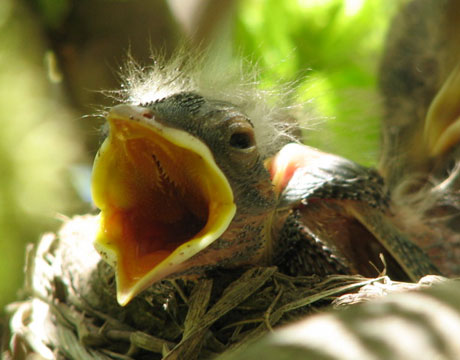
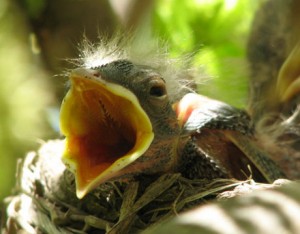
Compassion is a subject that should be of interest to everyone.  There isn’t one person that should consider themselves exempt from the practice of loving.  We know from our own lives, I’m sure, that the times we have been the happiest are the times that we have loved.  And the times that we have been the most useful are the times that we have been loving.

Compassion is one of the foundational teachings of Mahayana Buddhism, but it is more extensive than the kind of loving we find in our lives. From the Mahayana view, we should seek to love all sentient beings equally.  It is a very interesting point of view, because you would think it more natural to love your husband or your wife, your parents and your children, more than you would love others. Buddhists are taught to honor our parents and to maintain the integrity of family, to not have divorces and go from family to family.  Yet the Buddhist perspective is that all sentient beings are essentially equal, that their needs are equal and that all sentient beings equally desire happiness.  It is useful and beneficial to love everyone and to experience compassion for all beings equally.

We are taught the very reason we love certain people more than others is because in our minds we have the karma of attachment and aversion.  We have hope and fear within our minds, and these things are based on the belief in our own ego structure, the belief that self-nature is inherently real.  Our relationships with others are shadowed by that and take on the flavor of whatever particular energy suits our particular ego.  Because of our ego, we think that we love one person more than we love another.

If we existed somehow miraculously in an egoless state, we would find that all sentient beings are equal and the same nature.  They are that same primordial, natural suchness. Seeing each sentient being as that would help us understand that there is essentially no difference. We are all exactly the same, we all desire happiness and haven’t yet developed the skills to get that happiness.  We are all deserving of love and caring and nurturing and being taught the skills of happiness.

© Jetsunma Ahkön Lhamo

Astrology for 04/07/2018

04/07/2018 Saturday by Jampal & Wangmo

Theme: Restucturing – again!

It’s a day of realism and restructuring on different fronts : emotional, material and physical structures are potential points of transformation. Watch your mind for the arising of anger and frustration and apply antidotes that work for you. Helpful people are important today in stabilizing your mind and calming frayed tempers. And it’s wonderful if you can do that for others. ‘I sing to the realists; people who accept it like it is.’~Aretha Franklin


Booboos and the Guru’s Blessing

An excerpt from a teaching called Viewing the Guru:  The Seven Limb Puja by Jetsunma Ahkon Norbu Lhamo on October 18, 1995

Since we are in the face of the Guru constantly the next posture we should keep ourselves in is beseeching the Buddhas and Bodhisattvas and the Lamas to remain.  Where would you be now if suddenly your root Guru disappeared?  You should ask that question of someone who has experienced the horrible, horrible occurrence of knowing the death of their Guru.  There are many students who have actually experienced the death of the Guru.  If you think practice is hard now, you should think what it must be like to go through the pain of knowing that your Guru is no longer in the world.  Then one has to reach even more deeply, and if you think that we are weak now, try to imagine how it would be if we have to reach even more deeply, in a more profound way, into our practice: knowing that the Guru is no longer in the world, knowing that there will not be physical teachings forthcoming.  How can we find the Guru?  It’s very frightening; it’s very scary, to think that there might be a time like that.

On one level we think how awful it would be not to be in the physical presence, the here and now presence, with constant teachings occurring from the Guru in a physical way. But now we should think in a broader sense.  What would it be like if our Gurus had simply attained realization, and then gone on and remained in nirvana?  What if they had attained realization and then never appeared in samsara again?  What would that be like?  Well, that would mean that in samsara there would be no teaching.  There would be no method.  There would be no means by which to accomplish Dharma.  There would only be the means to accomplish non-virtue.  There would be endless suffering that would be constantly compounded every single moment as though it were like a geometric progression — constantly increasing, with no leveling off, with no cessation, with no chance, no opportunity, no change.  Life would be constantly miserable.  All of the poisons: hatred, greed, ignorance, jealousy, pride, war, suffering, all of the results of those would only be ripened.  And there would be no relief, no method by which to accomplish relief.  We can’t even imagine that: no means by which to accomplish virtue.  We can’t even imagine that.  It is so unthinkable that we can’t even imagine that.

And yet, we can’t even give a moment to think how miraculous it is that our Guru has returned to face us in the world in our confusion.  Because we can’t see the Guru in our mind, because we can’t see the Guru in our inner channels, winds and fluids, because we can’t see the Guru in our nature, the Guru then appears to us through the shit and thickness of our stinking delusions and in this face, with this skin, this flesh, appears as the miraculous.  And we don’t even have a minute to request that this never be any different; that it is always the case that the Gurus, the Buddhas, the Bodhisattvas will return for the sake of sentient beings.  We never think how miraculous it is, how marvelous it is, how unequalled by any other gift or any other miracle. So concerned with our own superficial lives we have not even a moment to spare to thank the teacher for returning to us.  To thank them.  Think what they did!  They did not pass into nirvana. But it doesn’t mean that they haven’t accomplished their practice.  It doesn’t mean that, in truth, they do not actually spontaneously abide in nirvana now.  But it also means that they appear in the world, under samsaric conditions, for our sake.  And we don’t even have a minute a day to rejoice in that, and request them to remain.  We should contemplate on what it would be like to remain in the world without any source of liberation.  We should constantly be thinking what it would be like if the Buddhas and Bodhisattvas did not enter into samsara for us, did not enter into the world for our sake, did not appear among us, as us, in a form that we could understand, and digest, and empathize with.

We should think what that would be like, and having contemplated on that, realize it would be unthinkably, horribly, worse than any suffering we have ever experienced or could ever imagine experiencing.  Try to imagine what it would be like with no help.  Having thought about that, with that kind of energy, the energy that comes from that, every time we see our teacher, we should think in our mind, “Please remain in the world.  Oh, please, remain in the world.  Oh, please remain in the world.”  We should be thinking like that when we say our teachers long life prayers.  We should think like that constantly, be in the posture of constantly requesting the Buddhas and Bodhisattvas, those who have attained realization, to remain within the world; constantly requesting that.

Now, how would you be constantly requesting that?  By expressing, knowing and facing with purity and honesty your dependence upon the Guru for liberation.  A little child lets its need of the mother be known.  A little child has a booboo and brings it to the mother to be kissed, and the mother knows– the mother knows even if the child doesn’t say, “I love you” how much the child needs the mother.  The mother knows; it’s a natural communication that they have.  And when the child says to the mother with total confidence, “I am hungry,” the mother knows.  There are no spoken words of love there, there’s no effusiveness, but the mother knows that the child is utterly and completely dependent.  The mother knows that the child is confident, that the child sees the mother as a fountain of blessing.  The mother knows that the child’s life would be lost without the support of the mother.  And so the mother knows that love.  And when the child is cold, the child goes to the mother and asks to be held, warmed up.  When the child is lonely and afraid, the child goes to the mother and asks to be rocked and loved and sung to.  And even though the child may not say, “I love you, Mother,” still, the mother sees the child’s need and understands the relationship.

If that is so with ordinary mothers and ordinary children, then if we express our need for the Guru, without shame, without pride, without fear of being humble, if we constantly express our need and our appreciation and our confidence in the Guru, then in that way we are also expressing that we wish the Guru to remain.  But if our hearts are hard and we say, “Oh, nice teaching.  Now I’ll go and do what I need to do,” and there is no relationship of that intimate nature, like a mother and a child, then there is no practice.  And there’s the question:  is the love so strong in your heart, is the understanding so profound and so wise, that, in fact, you really do wish the Buddhas to remain in the world?  We don’t know.  There is the question.  And the practice I’ve just given you, the way I’ve just given you to hold your mind and hold yourself, this would be the answer to that.  Think of yourself like a child and the Guru is like your dear, dear mother who gives you everything.  We bring all our booboos, our coldness, our loneliness, our fear, our hunger, our hurt, everything.  These things we bring, because in the face of the primordial empty nature, in the face of luminosity, in the face of the great miraculous Bodhicitta, these things disappear, and all our booboos are kissed.

© Jetsunma Ahkön Lhamo
Astrology for 04/06/2018

04/06/2018 Friday by Jampal & Wangmo

Theme: Receptivity

With the moon in its disseminating phase it’s time to communicate results and share resources. On a personal level it’s a time to go within and undertake solitary retreat or meditation. By contrast it’s also a day of craving emotional excitement which can run counter to solitude. It can be a good time of making changes to your domestic environment. There is an opportunity to heal past hurts today. ‘Your assumptions are your windows on the world. Scrub them off every once in a while, or the light won’t come in.’ ~Isaac Asimov

The Graceful Movement of Offering

An excerpt from a teaching called The Seven Limb Puja:  Viewing the Guru by Jetsunma Ahkon Norbu Lhamo on October 18, 1995

In the face of the Guru, which is always, we should always be making offerings.  Do you make offerings when you come to temple?  Nice, but not enough.  Do you make offerings when you put water into the little bowls on your altars in the morning?  Nice, but not enough.  Do you make offerings of the first portions of your food?  Great, but not enough.  We should be making offerings constantly.  But how can we do that?  You think,  “Oh, my hands are busy. I can’t always be making offerings.”  Well, of course, most of the offerings, therefore, are going to be mental offerings.  If we are making mental offerings appropriate to the information that I have just given you, which is that the Guru’s face is indistinguishable from our own nature, and that we are always in the presence of the Guru, then there should never be a moment that we do not make offerings.  Now, what would that look like?  How could you practice that way?


In the face of the Guru you must not grasp or cling to anything.

That means, if you smell something and it’s a delicious smell, you offer it immediately, rather than keeping it for yourself. You know how, when we smell food, we go (sniff sound) “Mmm Delicious!  I’m keeping that; that’s mine!  I get that!”   So instead of that, you smell it, you enjoy it, and you offer the nectar of that to the Lama; every smell that you take in that is beautiful;  even the smells that you take in that are not beautiful,  you think of them as being instantly transformed into the very essence of bliss and offer that to the Guru.  Offer everything that you see.

You know how we see things and say, “How beautiful!  Good, I’ll take that!” We walk outside like we own the day.  “Beautiful day!  My eyes are drinking it in! I’m getting this!”  That’s how we enjoy the day.  We eat it, eat it, eat it.  The habit of greed is so strong.  Instead of doing that, remember that you are in the presence of the Guru constantly; that the Guru literally abides within your channels, winds and fluids, within your psychic spiritual inner structure.  That nature which is your nature IS the Guru. So whenever you see something with your eyes that is beautiful, instantly offer your eyes, offer the vision, offer the feeling, offer the pleasure to the Lama, to the holy one who has crossed the ocean of suffering for your sake.  Instantly offer it up.

Eventually, you get into a habit.  At first it’s like,  “I saw that!”  Quick, “Okay, I saw that!  Okay!”   In the beginning we get a little spastic and a little nuts.  But, later on, it becomes a natural, graceful, spontaneous movement.  You actually change the way your perception works. It takes a little time, it takes some practice, but there will come a day when naturally you do not cling to your sight.  Yes, you see; yes, it registers in your brain; yes, your pupils and your irises and all those things work just right, but the difference is that there is a kind of graceful offering up that naturally occurs.  It’s as though you didn’t grab onto everything in front of you.  Eventually it becomes a natural, graceful movement of offering.

Do you remember when you first started practicing Bodhicitta and you didn’t feel like it?   It was like, “Yeah, I’m grateful to all motherly sentient beings.  May they all rest in peace.” in the same tone of voice that you would say, “Rot in hell!”   That’s the kind of thing we did when we first started practicing Bodhicitta and we didn’t have the habit of it. I watched; I saw it.  And then, after a time it became more natural, didn’t it?  It becomes more natural to think kindly, to think of compassion regarding other sentient beings.  It’s like that now with your perception.  You make offerings constantly to the Buddhas and Bodhisattvas, and to the Lama who embodies all the objects of refuge.  Anything that you receive, consistently offer.  It doesn’t mean that you don’t get to keep it.  I mean if it disappears in front of you, I would take that as a sign that somebody wanted it!  Please understand that we are not looking at this in a limited, superficial way!  We know that the Buddhas and Bodhisattvas don’t actually need our offerings.  They are content and complete.  They are perfect.  So when we offer to the objects of refuge we are doing so for our sake, not for their sake.  Isn’t that true?  So, of course, you think in that way.  Obviously then, if you make an offering, it probably won’t disappear!  But you never know!

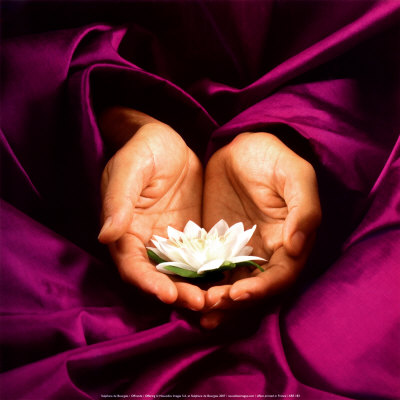
You get in the habit of thinking that whatever you have, “Ultimately belongs to the Buddhas and the Bodhisattvas.  Ultimately, everything that I own I have given.”  There is this posture that naturally occurs over time of peacefulness and lack of tension regarding personal possessions.  We begin to think that it’s already been offered and therefore, there’s nothing to cling to.  And so, slowly, slowly, over time, we develop that habit and the habit becomes very real.  Our minds become very smooth and more joyful.  It isn’t having that makes us joyful, it’s freedom from the need to have that makes us happy.

Therefore, we make constant offerings because we are constantly in the presence of the Guru and we should think like that.  We should actually think that here, in the presence of the primordial empty nature, non-dual as the display of luminosity, here in the presence of the fundamental Bodhicitta, the miraculous Bodhicitta, the unbelievably potent, pure uncontrived Bodhicitta, it is simply not appropriate to cling and grasp. It becomes filthy and disgusting.

Suppose Guru Rinpoche were sitting right in front of you, and there was some tea or some food put in front of you.  Would you say, “Gimme, gimme?”  I mean, how could you even think of eating with Guru Rinpoche in front of you?  You would offer, “Please take, please, take everything.  Please take everything that I have!  Please eat.  Please let me offer this to you!” You must think that, in fact, that is the case.  That the precious Bodhicitta is always with us, that the Lama is always with us, and so it is never appropriate to grasp; it is never appropriate to keep for ourselves what should naturally be offered.   In this way, we get ourselves into the habit and the grace of constant offering.

© Jetsunma Ahkön Lhamo

Astrology for 04/05/2018

04/05/2018 Thursday by Jampal & Wangmo

Theme: Spiritual illumination in relationship

Spiritual insight and upliftment can occur in close relationships today but be aware of the potential for idealization and escapism either in others or substances. There is psychological harmony within yourself and relationships between genders are improved today. With Venus, the planet of relationship, in harmonious aspect to Mars and Saturn for the next week it’s a good time to work with others in achieving goals. ‘Relationships are built upon inner worth. When we feel “inwardly united with the fundamental principles” our inner power expands. That is, we feel confident and good about ourselves.’ Commentary on the I Ching.


Precious Nectar of Enlightenment

An excerpt from a teaching by Jetsunma Ahkon Norbu Lhamo on October 18, 1995

When we meditate on Buddhahood or contemplate on what it would be like to achieve realization, what do we think we are after?  What do we think the result will be?  Eventually, through the force of our practice, we are hoping, (and if we practice well, this will surely be the result), that someday we will awaken as the Buddha has awakened.  So we are actually looking to give rise to the very same thing that we are looking at when we see the Guru. We are looking to give rise to the primordial empty nature. We are looking to give rise to this nature which is free of contrivance, free of distinction; this primordial empty nature that is the innate nature, the Buddha nature.  We are trying to give rise to that in such a way that it appears, even within samsara.  We wish to attain realization now.  So it is that very union of emptiness and display, of emptiness and luminosity, of wisdom and method that we wish to give rise to in our practice.  This is the very ultimate object of refuge.

From the Vajrayana point of view we are told that realization will never happen without the necessary ripening that is provided by the root Guru.  We are told that in our practice we are dependent upon the root Guru to transmit this blessing and to lead us through the door of liberation.  But we must understand that it is more than that.  Practicing devotion in the way that we do opens the door, creates the connection, creates the habit, creates the karma, creates the cause by which we will awaken to our own primordial wisdom nature in the future.  And that nature will appear in samsara as the enlightened appearance.  This is the goal.  This is the very wish.  Understood in that way, the Lama then becomes even more the center of our mandala – the mandala of our practice, of our hope, of our prayers, of our devotion, of our lives.  The Lama, then, becomes the very core of our lives.

You must understand that there is never a time that you are not in the presence of the Lama. Not for a moment is there a time that you are not in the presence of the Lama.  If you refuse, if through ignorance you doubt, if through habit you ignore, if through slothfulness you simply put no effort into accomplishing that view, then you are not actually turning away from the Guru “out there.”  This is not an act that is happening between you and somebody else.  You are not slighting the person that is sitting on the throne.  That is not what is happening.  What is happening is that you are turning your own mind away from the very face of your Enlightenment, away from your nature. You are splitting yourself away from salvation. You are wrenching yourself away from the very hope that will bring future happiness and realization.  You are cutting yourself away from the root of your accomplishment.

Now that I have told you this, you cannot in good faith and good conscience remain superficial in your practice any longer.  You must understand that every moment that you say, “Oh, well, I can do this,” or every time you push away the Lama in order to live in your ordinary samsaric mental posture; every time you do that, you are spitting in the face of your own Buddha seed.  You are turning yourself away from primordial emptiness, from the Buddha nature, from the pure luminosity that is the very display of that nature, that luminosity that we also know as the Bodhicitta.  So then you have abandoned the root of your accomplishment.  You have abandoned the very milk of your nature, and you have shut the door to the great Bodhicitta. That is what we do when we forget and deny that we are always sitting at the feet of the Guru.  We are always looking into the eyes of the Guru. And so, we have to train ourselves to keep the Guru above the crown of the head, on the throne within our hearts, in our eyes, in our ears, in our hands.  We have to train ourselves as though we were some kind of precious vessel that was carrying around this most precious nectar of Enlightenment.  We can’t spill a drop; neither can we turn away from it.  And we’ve spilled so many drops already.

But now we know what we have in our hands, and like practitioners that have perhaps moved from childhood to adulthood, we can now expect ourselves not to drop the ball, not to drop our practice, whereas before, we were like children.  You know, when you teach children to prostrate, you do not worry whether their form is perfect.  When you teach them to say mantra, you know they are going to make mistakes.  But now we’re moving past that regarding our devotional yoga.  We can no longer allow ourselves to be the children that we once were.

© Jetsunma Ahkön Lhamo

Astrology for 04/04/2018

04/04/2018 Wednesday by Jampal & Wangmo

Theme: Expressive writing

Creativity is linked to writing today. Consider exploring how words can express your wishes and dreams – and as a healing modality. Explore religion, philosophy, long-distance travel and the outdoors today.  If you’re into gardening it’s time to start planning for planting. There is more emotional confidence today available to you to express yourself. There is also harmony between emotional and individual expression today and opportunities to show your love and care for others.’It’s of great importance to continuously generate faith and devotion and develop loving kindness to all beings, not just superficially but feeling intense care for them until tears start to flow down your cheeks.’~ H.H. Penor Norbu Rinpoche

Rest in Wakefulness

An excerpt from a teaching by Jetsunma Ahkon Norbu Lhamo on October 18, 1995

What is it that we actually see when we see the Guru?  First of all, the Guru is perfection.  The Guru is perfect. The Guru arises very naturally, is spontaneously liberated; there is nothing about this appearance that has become tainted or impure.  There is no conceptualization.  There is no contrivance at all.  We are seeing a natural display of the Primordial Wisdom State.  We are literally seeing, in a non-dual way, the union of emptiness and luminosity. Now, of course, because of the way our samsaric minds work, we are not able to understand the non-duality of emptiness and luminosity.  We are simply not able to understand that.  To us they appear as two nouns.  Emptiness is emptiness.  We can describe that.  Luminosity is luminosity.  We can maybe describe that, and so: emptiness-and-luminosity-are-non-dual.  The best way to come to that is maybe to say it real quick! That’s about as well as we can do!

What is this non-dual display, this non-duality called emptiness and luminosity?  Well, first of all, we must understand that the Lama represents the primordial empty nature, that nature which is completely free of any kind of distinction or contrivance, any kind of ideation, any color, any form, anything that becomes something.  The Lama is the display of that which is without beginning and without end, of that which is primordially pure with no change, no movement, no contrivance or distinguishing factors whatsoever.  The Lama represents that pure emptiness.  When we talk about emptiness in that way, Americans have a difficult time with that; that’s why I’m trying to explain it in common ways, rather than using the traditional buzzwords.

When we think of emptiness, we think of a minus in a sense; like, an empty room is a room without things in it.  We think of an empty glass as a glass without liquid in it.  That’s the way that we understand emptiness, but in this case, you should understand that emptiness doesn’t mean an “absence of.” Emptiness, in this case, is more like freedom, more like liberation: liberation from conceptualization, liberation from contrivance.  The mind does not catch on, the mind does not hook, the mind does not hold in a package – anything.  You see?  Here, emptiness is liberation. Suppose you were capable at this moment of losing all the fetters, allowing the mind to abide spontaneously, allowing the mind to simply rest in wakefulness.  Rest in wakefulness.  That is perhaps the closest to how we might understand emptiness.

Luminosity is something we think about as a plus, like a light being on.  A light is on or it’s off.  Luminosity, we think of as something luminous, so it must be glowing. Of course, that’s not what we’re talking about here either.  Let’s say you could attain in your practice that true understanding of emptiness: if one could rest in innate wakefulness, free of contrivance, without any kind of distinction or super-structuring or building or grasping or clinging. Try to imagine a mind such as that.  Try to imagine a posture such as that, in a sense, even free of the condition of mind.  Try to imagine a posture such as that: innate wakefulness.  Then suppose that nature, free of contrivance, were to show itself:  gossamer, free, buoyant.  There are no words in English to describe it.


From the profound, innate wakefulness that is empty of contrivance, should a display show itself that was like that nature, inseparable from that nature in every single sense;  that display was not leaving the state of emptiness in order to show itself; completely indistinguishable from emptiness in the same way that the sun’s rays are completely indistinguishable from the sun itself; that there is no way to tell what is actually the tight hard ball of the sun, and what is the light and heat that comes out of it; that there is no way to tell the difference really: if we could imagine such display, we might call that luminosity.  We might say that this profound view of emptiness, this spontaneous, innate wakefulness that is complete and yet unbegun, could somehow show its face in a gossamer, uncontrived inseparable display that you can’t call light, you can’t call movement, you can’t call anything because it has not moved out of that nature. Because we need to use a word we say luminosity, but you must understand that this emptiness and luminosity are indistinguishable from one another.  We must also understand that this is what the Lama actually represents.

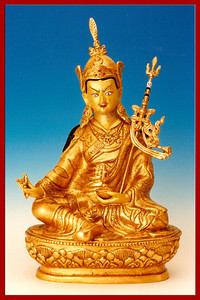
The Lama represents, therefore, the Primordial Wisdom State: that which is the wakefulness of Buddhahood in dance, in display, in radiance; not separate from the innate nature, yet arising in a completely pure display that is the primordial nature.  You have to say “indistinguishable from.”  That is what the Lama actually is. You could say that the Lama represents the union of emptiness and movement, or display.  You could say that the Lama represents the union of wisdom and method.  Guru Rinpoche appears to us always with the dakini.  He is always in union with the dakini.  Even when we see him in the pictures that we have of him or statues that we have of him, we may see him seeming alone; still, he has in the cleft of his left arm the symbol of the dakini.  So in his nature he is never without the dakini.  That is a teaching, a very profound teaching for us, as to how to understand the Lama.  The Lama, then, is understood as the appearance of the primordial nature, and the display of that nature appearing in our world, in our eyes, in our samsaric existence.  The Lama, then, represents the union of emptiness and luminosity.

© Jetsunma Ahkön Lhamo

Astrology for 04/03/2018

04/03/2018  Tuesday by Jampal & Wangmo

Theme:  Deepening generosity

There is opportunity to deepen in your giving today through whatever medium works – whether it be food, finances, time or simply listening.  As HH Dilgo Khyentse Rinpoche  said: “Love and non-attachment are the basis of true generosity.” Shared resources are emphasized. It’s also a day when you could have too much of a good thing! Subjectivity continues to be a theme. A person can give you another perspective on a viewpoint you’re tightly wedded to. With the element of air absent for the next week it’s easier to act rather than connect with others which can be especially challenging for those of us who are particularly social.

Today the Moon is Void of Course from 7.17pm EST USA until 1.47am the next day. If you’re in another country check what that means for you time-wise. It’s best to avoid making major decisions or signing contracts during this time.

WP2Social Auto Publish Powered By : XYZScripts.com