What You Can Do

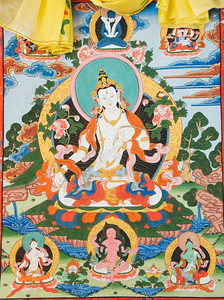
White Tara
From The Spiritual Path:  A Collection of Teachings by Jetsunma Ahkon Lhamo
There are no sugar daddies in this world. You cannot be the conquering hero, the savior, because you cannot conquer someone else’s mind. Each of us must purify and conquer the hatred, greed, and ignorance we hold in our own minds. No one can do it for anyone else. You can however, liberate your own mind from all egocentricity. You can follow the Buddha’s teaching and take a vow as a Bodhisattva to eliminate all poisons from your mind until the very idea of self-nature is abandoned. You can decide to liberate yourself from all desire. And you can promise to return again and again in any form necessary to help sentient beings pull themselves out of endless suffering. As part of every practice you will say: “May I attain liberation in order to benefit beings.” The compassionate motivation to be of true benefit provides us with the strength to persevere until we ourselves are awake, until we have completely transformed or purged even the tiniest seeds of poison from our minds. The motivation to be a savior has no lasting value. It requires feedback, or “warm fuzzies.” You must get beyond that need. Your love should not depend on feedback.

How can you develop love which sustains itself? How can you cultivate a fire that burns self-sustaining wood? That fire is based on the courage to understand. If your mind has deepened to the extent that you can no longer bear to be idle, knowing the profound despair of all those beings who revolve in endless cycles of suffering—you can become truly committed. Then you can begin to renounce your own causes of suffering.

Until you reach supreme Buddhahood, you must continue courageously to develop the mind of compassion at every moment. You must aspire to be of true and lasting benefit. You must offer yourself again and again. The prayer of St. Francis, “Lord, make me an instrument of thy peace,” is a good example of the aspiration of a Western Bodhisattva. Eventually, your commitment may take the form of saying: “Let me be reborn in whatever form necessary, under whatever conditions, so that beings might not suffer. If there is a need for food, let me return as food. If there is a need for shade, let me return as a tree. If there is a need for a path, let me return as a teacher. If there is a need for love, let me return as arms.”

Your job then is to purify your mind through strenuous activity. The path of Dharma is difficult. Any path that leads to enlightenment will be strenuous because enlightenment is a long way from here. You are not after a psychological “Aha!” You are aspiring to the state of Buddhahood. Your first thought should be that suffering must end. Your only concern should be that sentient beings achieve liberation.

There is a profound and simple practice that anyone can do to develop this great compassion. It turns ordinary activity into vehicles for extraordinary love. When you awake in the morning, think: “May all beings rise from the state of ignorance and be liberated until there is no more suffering.” As you brush your teeth and bathe, think: “May the suffering and seeds of suffering be washed from the minds of all beings.” Or: “May all beings be showered with the blessings of a virtuous path.” As you enter a door: “May all beings enter the door to a supreme vehicle and finally walk through the door of liberation.” Everything you do should have meaning in this way. Your entire life should be understood as a vehicle for practice.

You should dedicate all your virtuous activity, no matter how small, to the liberation of all beings. Learn to dedicate everything you do, everything. Train yourself to the point that this aspiration is constant. Once your motivation is firm, you can begin training in actual practices, in practical compassion. If you have decided to accept and follow the Buddha’s teachings, you will begin the actual practice of Dharma. If you choose not to be a Buddhist, you must still find a way to purify hatred, greed, and ignorance from your mind and the minds of others. Free of these poisons, you can become awakened; in other words, you can position yourself to be of true benefit to others.

A word of caution: some practitioners take solemn vows and make vast aspirational prayers, but then they turn around and act unkindly to others. As His Holiness Dudjom Rinpoche has suggested, practicing Dharma without kindness is like trying to get light from the painting of a lamp.

Beware also of what I call “idiot compassion.” Do you know a needy or troubled person, someone who is psychologically or emotionally disrupted? We often try to give such people what they say they need. This only increases their dependency. It gives them an opportunity to increase the garbage in their minds and lives. Sometimes compassion must be harsh. In Vajrayana, there are at least as many wrathful forms of the Buddhas as peaceful ones. Sometimes compassion must take a wrathful form. If you are pure in your motivation, you will know what to do. You will not get hooked on idiot compassion. It feels good to make others feel good. But feeling good does not always help.

If you can do anything to ease or end the suffering of beings, do it. But understand that these remedies are only temporary. Consider that your power is limited by the condition of your mind. Even though you have the karma to practice—which is very fortunate—you are still an ordinary sentient being. The Buddha, however, embodies the fully awakened mind. He does not experience the confusion or delusion arising from the belief in self. His enlightened intention is powerful in a way that yours cannot be. Despite your good intentions and efforts, if you constantly experience confusion and desire within your mindstream, you can be of little help. The best way to end the suffering of sentient beings is to liberate your mind from the causes of suffering. For if you become a realized Buddha and are then incarnated or experience rebirth in an emanation form, you can offer the means to accomplish Dharma by offering the blessing of a complete path leading to liberation. To follow the Buddha’s path requires a vast amount of merit and virtue, as well as a great deal of compassion, discipline, courage, and unselfishness. The path is arduous. To achieve the great result of Buddhahood requires great effort. But truly, there is no end to suffering except the cessation of desire. The only ultimately useful way to spend this precious human life is to attain enlightenment. You must consider from the depth of your heart that the aim of attaining enlightenment is not only to accomplish one’s own purpose, but also the purpose of others. When you have seen that all sentient beings endure needless suffering, when you cannot bear even the thought of their condition and are determined to bring about its end, you are ready for Dharma.

© Jetsunma Ahkön Lhamo
What You Can Do

White Tara
White Tara
From The Spiritual Path:  A Collection of Teachings by Jetsunma Ahkon Lhamo

There are no sugar daddies in this world. You cannot be the conquering hero, the savior, because you cannot conquer someone else’s mind. Each of us must purify and conquer the hatred, greed, and ignorance we hold in our own minds. No one can do it for anyone else. You can however, liberate your own mind from all egocentricity. You can follow the Buddha’s teaching and take a vow as a Bodhisattva to eliminate all poisons from your mind until the very idea of self-nature is abandoned. You can decide to liberate yourself from all desire. And you can promise to return again and again in any form necessary to help sentient beings pull themselves out of endless suffering. As part of every practice you will say: “May I attain liberation in order to benefit beings.” The compassionate motivation to be of true benefit provides us with the strength to persevere until we ourselves are awake, until we have completely transformed or purged even the tiniest seeds of poison from our minds. The motivation to be a savior has no lasting value. It requires feedback, or “warm fuzzies.” You must get beyond that need. Your love should not depend on feedback.

How can you develop love which sustains itself? How can you cultivate a fire that burns self-sustaining wood? That fire is based on the courage to understand. If your mind has deepened to the extent that you can no longer bear to be idle, knowing the profound despair of all those beings who revolve in endless cycles of suffering—you can become truly committed. Then you can begin to renounce your own causes of suffering.

Until you reach supreme Buddhahood, you must continue courageously to develop the mind of compassion at every moment. You must aspire to be of true and lasting benefit. You must offer yourself again and again. The prayer of St. Francis, “Lord, make me an instrument of thy peace,” is a good example of the aspiration of a Western Bodhisattva. Eventually, your commitment may take the form of saying: “Let me be reborn in whatever form necessary, under whatever conditions, so that beings might not suffer. If there is a need for food, let me return as food. If there is a need for shade, let me return as a tree. If there is a need for a path, let me return as a teacher. If there is a need for love, let me return as arms.”

Your job then is to purify your mind through strenuous activity. The path of Dharma is difficult. Any path that leads to enlightenment will be strenuous because enlightenment is a long way from here. You are not after a psychological “Aha!” You are aspiring to the state of Buddhahood. Your first thought should be that suffering must end. Your only concern should be that sentient beings achieve liberation.

There is a profound and simple practice that anyone can do to develop this great compassion. It turns ordinary activity into vehicles for extraordinary love. When you awake in the morning, think: “May all beings rise from the state of ignorance and be liberated until there is no more suffering.” As you brush your teeth and bathe, think: “May the suffering and seeds of suffering be washed from the minds of all beings.” Or: “May all beings be showered with the blessings of a virtuous path.” As you enter a door: “May all beings enter the door to a supreme vehicle and finally walk through the door of liberation.” Everything you do should have meaning in this way. Your entire life should be understood as a vehicle for practice.

You should dedicate all your virtuous activity, no matter how small, to the liberation of all beings. Learn to dedicate everything you do, everything. Train yourself to the point that this aspiration is constant. Once your motivation is firm, you can begin training in actual practices, in practical compassion. If you have decided to accept and follow the Buddha’s teachings, you will begin the actual practice of Dharma. If you choose not to be a Buddhist, you must still find a way to purify hatred, greed, and ignorance from your mind and the minds of others. Free of these poisons, you can become awakened; in other words, you can position yourself to be of true benefit to others.

A word of caution: some practitioners take solemn vows and make vast aspirational prayers, but then they turn around and act unkindly to others. As His Holiness Dudjom Rinpoche has suggested, practicing Dharma without kindness is like trying to get light from the painting of a lamp.

Beware also of what I call “idiot compassion.” Do you know a needy or troubled person, someone who is psychologically or emotionally disrupted? We often try to give such people what they say they need. This only increases their dependency. It gives them an opportunity to increase the garbage in their minds and lives. Sometimes compassion must be harsh. In Vajrayana, there are at least as many wrathful forms of the Buddhas as peaceful ones. Sometimes compassion must take a wrathful form. If you are pure in your motivation, you will know what to do. You will not get hooked on idiot compassion. It feels good to make others feel good. But feeling good does not always help.

If you can do anything to ease or end the suffering of beings, do it. But understand that these remedies are only temporary. Consider that your power is limited by the condition of your mind. Even though you have the karma to practice—which is very fortunate—you are still an ordinary sentient being. The Buddha, however, embodies the fully awakened mind. He does not experience the confusion or delusion arising from the belief in self. His enlightened intention is powerful in a way that yours cannot be. Despite your good intentions and efforts, if you constantly experience confusion and desire within your mindstream, you can be of little help. The best way to end the suffering of sentient beings is to liberate your mind from the causes of suffering. For if you become a realized Buddha and are then incarnated or experience rebirth in an emanation form, you can offer the means to accomplish Dharma by offering the blessing of a complete path leading to liberation. To follow the Buddha’s path requires a vast amount of merit and virtue, as well as a great deal of compassion, discipline, courage, and unselfishness. The path is arduous. To achieve the great result of Buddhahood requires great effort. But truly, there is no end to suffering except the cessation of desire. The only ultimately useful way to spend this precious human life is to attain enlightenment. You must consider from the depth of your heart that the aim of attaining enlightenment is not only to accomplish one’s own purpose, but also the purpose of others. When you have seen that all sentient beings endure needless suffering, when you cannot bear even the thought of their condition and are determined to bring about its end, you are ready for Dharma.

© Jetsunma Ahkön Lhamo

Astrology for 01/01/2018

01/01/2018 Monday by Jampal & Wangmo

Theme : Intuition and Inspiration 

May you find benefit in the activities you undertake in the coming year. Spirituality is heightened today. You may find yourself day dreaming, especially in the second half of the day. The challenge maybe to bring your mind back to the present. With the nurturing energy of the moon in Cancer, cook some nourishing soup and share it with others. You are still focusing on the big picture in your planning and decisions and open to new innovative ideas.  With four planets in Capricorn, emphasizing the results of our actions remember, “As you sow, you shall reap.”


Astrology for 12/31/2017

12/31/2017 Sunday by Jampal & Wangmo

Theme: Create, Love and Empathize 

Venus approaches exact conjunction with the Sun now till January 1. Creativity and Love are enhanced for the next 10 days (Venus conjunct Sun) and so there is good energy for entertaining, and for relationships with both sexes. You seek beautiful surroundings and create this kind of art if you are a creative person.  As Eric Jerome Dickey said,“It is impossible to explain creativity. It is like asking a bird ‘How do you fly’. You just do.” With the moon opposing Mercury today, beware of your judgement tendencies in your interactions, yet you can learn about your own emotions through nonjudgmental introspection, perhaps in a close relationship.

Astrology for 12/30/2017

12/30/2017 Saturday by Jampal & Wangmo

Theme: Lightness, but not superficiality.

The moon enters Gemini today, so keep it light, tell some jokes or imitate your favorite or least favorite celebrity. The danger today is not picking up on the subtle undercurrents in relationships, and responding superficially to others. There is a lot of energy to continue on with projects especially if you can harness and focus your energy. “Work hard, be kind, and amazing things will happen.”– Conan O’Brien 


Karma: Virtual Reality

The following is an excerpt from a teaching by Jetsunma Ahkon Lhamo called “Neurotic Interaction to Guru Yoga”

When you’re practicing to accomplish pure view, you realize that for you, the teacher is the appearance in the world of a method or a path, a means by which one can enter the door of liberation. This is what makes the teacher precious.  The teacher can connect you with the path, can explain the path, can ripen and deepen the mind so that one can practice on the path, and is a spiritual facilitator of a very high caliber.  Their activity is extraordinary, or beyond what is normally found in samsara.  So you begin, in pure view, to recognize the teacher as being representative of your own true face, the ground of being that is your inherent primordial wisdom nature—that nature which is free of contrivance, free of distinction, completely empty yet completely fulfilled and spontaneously complete.  You begin to understand that this teacher is a representation of that nature in the world. The teacher provides the path, the means, the method, the ability to practice, and connects you with that in a very extraordinary way.

Once you’ve determined that, the teacher becomes for you the appearance of the Buddha nature in the world, the appearance of the method or the path in the world, the appearance of the fruition or the accomplishment in the world, the appearance of your own true face in the world.  Once the teacher becomes that for you, then to take an opposite viewpoint and to determine a difference of opinion is not a sin or a nonvirtue.  It simply argues with what you have already determined for yourself.  It’s almost like walking three steps forward and two steps back in your Dharma practice.  It’s not that you should become brain dead and that you’re not supposed to have an opinion, but there’s a fine line there that has to be travelled, and it’s pretty difficult to understand what that line is.  Now on the one hand you are, and have been raised to be, a person who has a mind that thinks, and you have the ability to connect cause and effect yourself. Hopefully on the path you are developing that clarity of mind more and more and more.  Yet here you find a situation where you have also stated clearly “I have found my teacher.  Here is this vajra master that I have taken teachings from. That vajra master has facilitated me on the path of Dharma. So how is it that I feel like I have a different opinion at the same time that I have said this is the ultimate, this is the face of the Buddha, this is the Buddhas’ wisdom?  How do I negotiate that?  What’s that look like for me?  I mean, how do I do that?”

Well, let’s stop and think for a moment in a way that might be beneficial.  Don’t answer that question right now, but keep it simmering.  We’re cooking up some Thanksgiving dinner here.  We’re keeping it simmering.  Here’s the gravy. It’s simmering on low boil.  So now we’re back with the turkey in the oven.  But don’t forget, the gravy is still on the boil.  You’ve got to keep watching that one!  O.K., now, withdraw from that, but still think about answering that question.

Now think about this:  You’ve noticed haven’t you, I’m sure you have, that throughout our lives we tend to repeat certain habitual tendencies again and again and again.  Can we all agree on that?  We have seen certain habitual tendencies.  We have seen certain patterns, certain habits. It really depends on how old you are, how convinced you are of this.  The older you are, the more time you’ve had to see these things repeat again and again and again.  While you’re still young, you think, “Well I’ve only done this two or three times!  Who says there’s going to be a fourth, fifth and seventy-fourth!”  But by the time you get to be maybe midlife where I am, you’re going, “I’ve seen this movie before!!  I have seen this movie before!”  And you realize that these habitual tendencies kind of repeat themselves again and again and again, deeply ingrained.

And then if you’re the kind of person who is really insightful, you realize that you project these habitual tendencies onto the circumstances of your life, and without realizing it, will very much control situations and people in your life according to your preconceived notions and according to your habitual tendencies. A difficult situation where you may recognize this is, let’s say, a child that grows up in a house where the child is not given any dignity or any respect and the child feels not loved or abused in some way. So the child develops a certain understanding about that —I am not worthy or I am not lovable—and then goes out into their lives and tends to project some of the same information on others. Others might be perfectly willing to love, be perfectly willing to just do the best they can, not always perfect of course, but to do the best they can, loving them.  And yet this person is unable to accept that love and sees the same outcome pretty much all the time and actually is engaged in that outcome.  So that’s one situation.

Another situation is, for instance, that of a cat.  A cat is actually so strongly habituated towards killing it seems instinctive. From the Dharma point of view, we understand this to be habitual tendency reinforced many many times, life after life, a karmic kind of situation.  The cat will be reborn, and even if there is nothing to kill, if you throw a ball of yarn across the room, the cat will go after it. You know what happens when a cat sees flies against the window.  If a fly is bumping against the window, the cat will go after that.  Anything that scuttles, the cat is after it and their eyes get really big.  Have you ever seen a cat look out the window at a bird feeder?  Have you ever seen that?  The cat makes these horribles noises like “I want those hamburgers!  Give me those hamburgers!!”  For them it’s like McDonalds in the sky.  These animals are so strongly habituated towards killing, that even though they come into this life as a cute little fluffy kitty, those little ears and the little tail and those little feet, still and all, they are killers.  They are habituated towards that and the first chance they get, any stimulation, any stimulation, such as the rolling of the ball of yarn across the floor, they will interpret as the hunter and hunted scenario.

Did you know that we do the same thing?  We do exactly the same thing.  We are so deeply habituated in our own particular tendencies, whatever they are, that we project in the same way onto external stimulation.  If we have deeply habituated ideas, sometimes they are bordering on the obsessive and compulsive. Maybe not even bordering, maybe all the way in that country!  Pay the toll, we’re in!  What happens is once we are strongly habituated into habit, we interpret all stimulation outside as something that keys us into our habitual tendency.  So what I find as a teacher and a female, for instance, is that many people interpret me as their mother.  They think of me as being the authority figure, someone they have to answer to in that way.  They can’t be bad around me.  A lot of times the students will… I mean it’s one thing to have your Dharma manners going when you see the teacher—you hold that in respect, and that’s a really good thing—but what I found is that I can walk into a party and kill it, just like that!  Because my students suddenly stop functioning.  It reminds me of when I was a kid and my mother said ‘dust the living room.’  So I’d be dusting the living room, having fun, thinking about other things, like boys or whatever, and dusting and carrying on.  My mother came into the room and I’d suddenly start moving fast! It reminds me a little bit of that.

And sometimes some of my students are habituated towards authority figures in a certain way, and since I must exude some kind of authority, they look at me and interact in the same way with me that they do with other authority figures. So there is this “has to be good girl, good boy or whatever, routine” and the blaming of the teacher and making all of those “I’m mad at you authority figures” kind of scenarios going on.  There are all kinds of different gigs, You know what your gig is with authority.  Everybody has one.  And so they project that onto the teacher. But you see, what’s really happening there is you’re looking at your own habitual tendency—the way that your mind works, the way that it intersects with the time and space grid in front of you, and how you play with your own habitual tendency.  What you’re really seeing there is kind of like a bounce-back phenomena that’s actually taking place within your own mindstream.

There is nothing external happening.  There is nothing beyond you that is happening.  There’s just nothing out there that determines your fate.  You’re looking at a kind of almost internal bubble, or a virtual situation in a certain way.  You can learn a lot from that kind of virtual reality situation.  It’s almost a virtual internal situation that’s happening there.

Copyright © Jetsunma Ahkon Norbu Lhamo.  All rights reserved

Astrology for 12/29/2017

12/29/2017 Friday by Jampal & Wangmo

Theme: Forward thinking can be forward motion

Communication is a touchstone for connecting with a broader group of people and agenda today – even if it’s a social stretch for you. Change comes from working in unison with group energy and navigating the challenges between our individual needs versus being in harmony with group enterprises. Right now is an opportunity for our eyes to be opened to the larger patterns at work in the universe. It could concern returning something that has been taken from the environment. It’s a restoration themed day. The grand fire trine with Mercury will be there until about the 8th of January bringing creative, inspirational thinking and communication. The heart of all matters remains compassion. As HH Dilgo Khyentse Rinpoche said: ‘Compassion is the awakened heart itself.’

Astrology for 12/28/2017

12/28/2017 Thursday by Jampal & Wangmo

Theme: When in doubt serve good food 

With the moon trine the sun there is inner harmony and emotions flow well with what you want to do. Bringing people together over food is one direction to consider today. A good soup goes a long way – all the way from the soup of good soup kitchens all the way to a cup of soup with a friend. Environmental goals are favored today and for much of the week. There are many endangered species in the world today and one of them is our shared humanity. Reach out in any way you can to those in need and be inspired. In the Sikh Golden Temple in Amritsa, India they offer food to 100,000 people daily from all walks of life.

Incalculable Blessings for All

The following is from a series of tweets by Jetsunma Ahkon Lhamo:

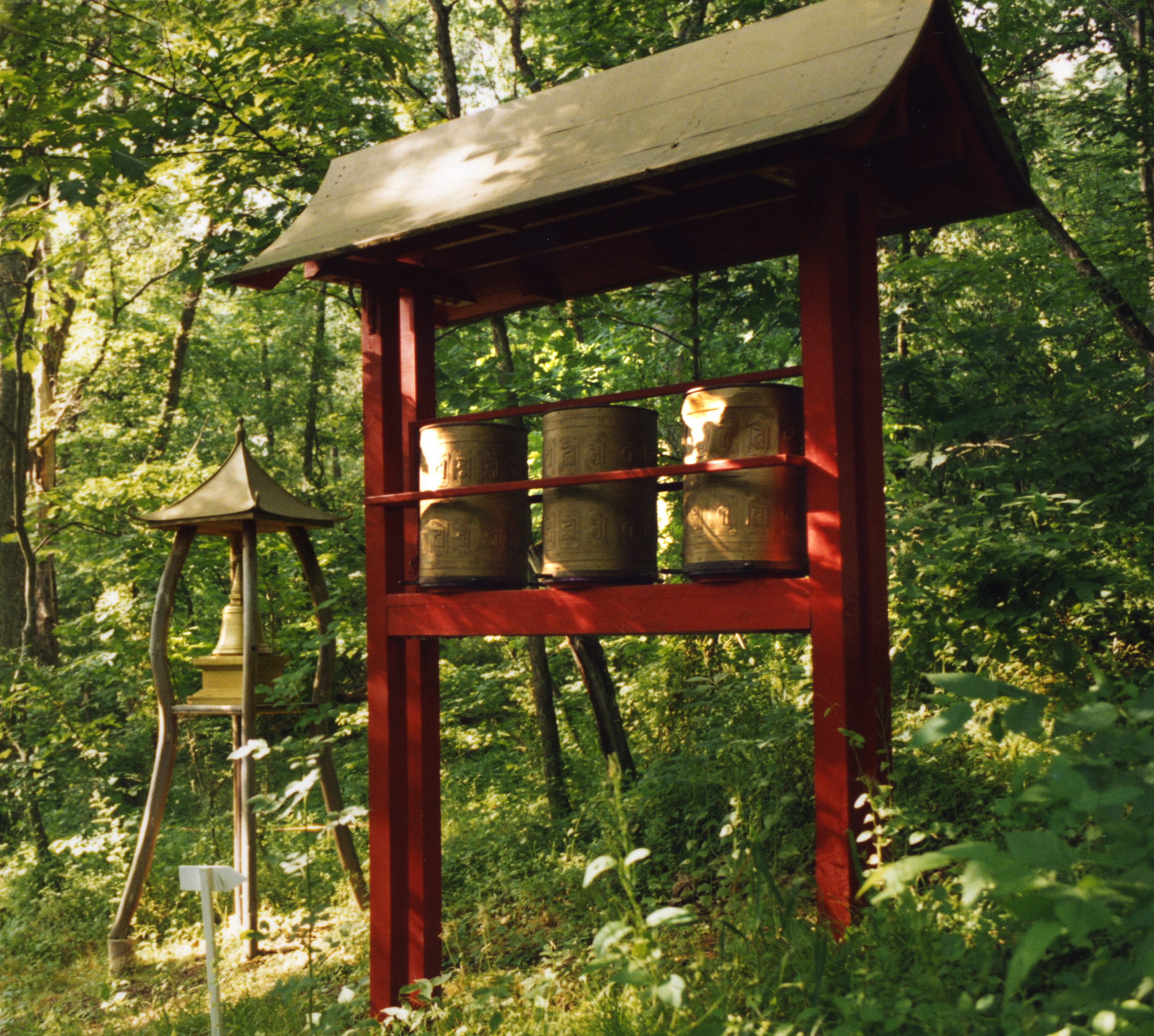
Today I thought to share with you the Prayer Wheels of KPC. Having seen them in India I fell in love with Stupas and Prayer Wheels and determined to contact a Lama who is a specialist in the necessary steps. My students became well trained in compiling and stuffing them.

These Prayer Wheels are well kept, and filled with every conceivable Vajrayana mantra. All Lamas there blessed and sealed them. Hooray!

Here they are! Glorious.

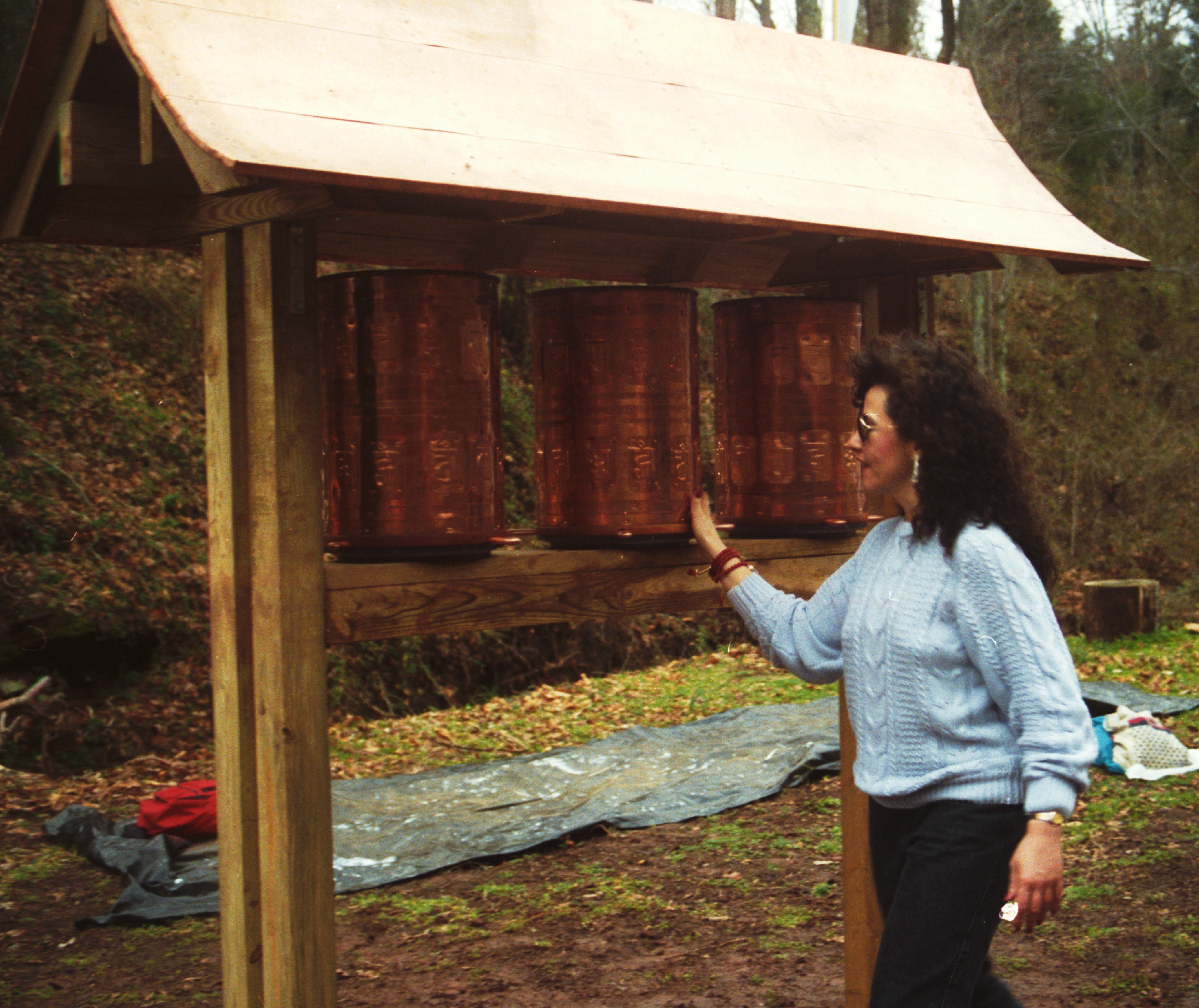
There is method here, no ordinary artist can make one. They are to spin clockwise, and circumambulated clockwise (this is me demonstrating.) As many thousands have done over the years:

We have many testimonies that the Prayer Wheels and Stupas have healed so many. Many blessings. I invite all people suffering from illness, including cancer, mental illness, HIV-Aids to make a pilgrimage here to heal and receive blessings, as well as joining our 27 year, unbroken Prayer Vigil.

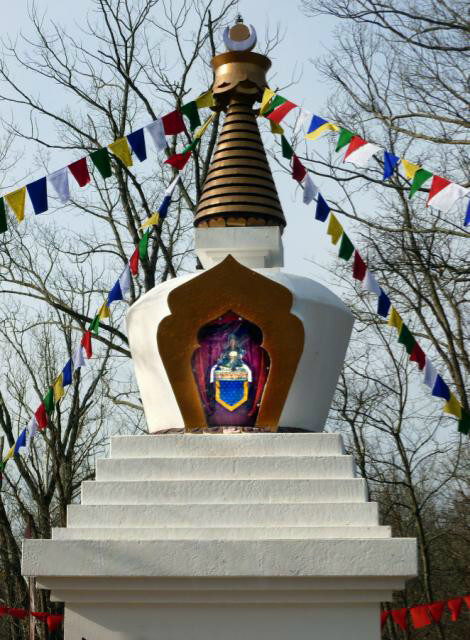
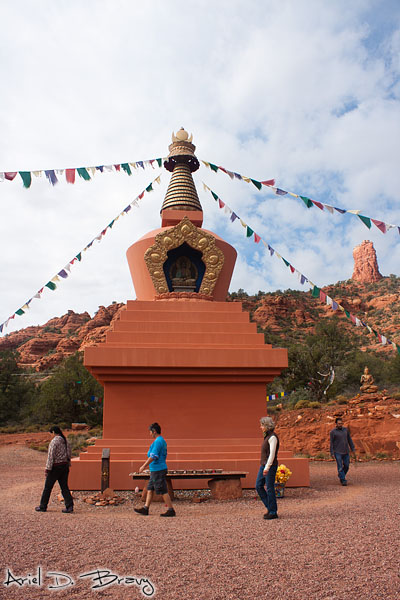
Here is the main Stupa, we have several here in Poolesville, Maryland and two in Sedona which are much loved by the community:


I am happy to have offered this blessing to the people of the world, and all worlds.

© copyright Jetsunma Ahkon Lhamo All rights reserved.

WP2Social Auto Publish Powered By : XYZScripts.com