
Freedom Isn’t Free: Understanding Merit and the Path

The following is an excerpt from a teaching by Jetsunma Ahkon Lhamo called “Entering the Path”

It is important to remember that when you enter the path you have earned the right to be here. This is absolutely the case. I can swear to it because you are here. You have absolutely accumulated the necessary virtue and merit within your mindstream in order to be able to hear these teachings and to do these practices, and even to prepare for your own death.

Yet, there is a Catch-22 situation that’s very difficult with Dharma. You have absolutely earned this opportunity and it is your right and your responsibility to take advantage of it. Now think about this: You could not be hearing these teachings from me if you had not made extensive prayers in some way at some time. It has to be so or you would not be here. You must have made prayers to Tara. You must have made prayers to Guru Rinpoche. You must have made prayers to meet your teacher and to be with your teacher and to hear these words. This must be so, or you could not have created the causes by which you are enjoying this opportunity.

So what does that mean then? That means that you’re here. Simply that, only that. That means that you’re here, and you’re ready to rock and roll. Now think about this. This is something else that’s important and something to think:  our Dharma, and particularly the Vajrayana path, is the singular most potent and powerful method that exists on this planet. That is to say that one can achieve true enlightenment, not what New Age people call enlightenment, but the real thing, like the Buddha, like great Bodhisattvas. One can achieve enlightenment within the context of one lifetime or immediately following this lifetime in the bardo state – that’s what the practice of Phowa is about – or within three lifetimes or within seven lifetimes. But surely, if one were to practice Vajrayana, and one were to practice it faithfully, one would achieve the ultimate result relatively quickly. That makes this the most potent path on the planet at this time, the most potent. We know this because we have seen that there are those who have achieved enlightenment in one lifetime. This is not true of other systems.

Now, that being the case, if it has that kind of weight, what kind of virtue or merit would be needed to keep that coming in, to keep that blessing flowing? An enormous amount. That sounds reasonable, doesn’t it? It’s like the you-get-what-you-pay-for kind of philosophy. If we were to think in materialistic terms, if you want the best, the absolute best, you have to pay the highest price. It’s expensive. Good quality costs money. In material terms you think like that. Doesn’t it follow then, logically, that that which is potent and of highest quality spiritually would also require the highest spiritual investment?

On the path, there is the necessity to accumulate merit and virtue in an extensive and responsible way because when we first come to the path is we immediately expend our accumulated merit. Here’s the picture: What has come forward to us, what has ripened in our mindstream, is the accumulation of some meritorious virtuous activity we’ve done in the past that allows us to hook into the path in this lifetime.

Upon using up that tremendous amount of merit that fortunately has risen to the surface in order to bring us to the path, an obstacle may arise. It takes such an enormous amount of merit in order to travel on the path, particularly to begin the path, that we may not have at the surface of our mind, or at the surface of our expressive continuum, enough merit to sustain us. So immediately upon coming to the path, the teacher gives instruction. The teacher says accumulate many repetitions of the Seven-Line Prayer. That is a merit-making machine. It is a way to accumulate the most merit. Then immediately after that, we are told to practice Ngöndro, preliminary practice. In Ngöndro, you are given five different ways to accumulate merit, and they are extremely potent. It is actually meant to guide you through the shoals of beginning practice until the mind becomes sufficiently purified and deepened to the degree that it will sustain itself through the shining qualities of its own virtue and merit.

Copyright © Jetsunma Ahkon Lhamo.  All rights reserved

Astrology for 2/2/2017

2/2/2017 Thursday by Norma

A surprise is in store for you early in the day: a phone call when you’re asleep, an urgent message, something disrupts your plans but be flexible, this is more important. A different perspective
guides you out of a perplexing situation where you’re uncertain how to respond. Leo J. Carrillo said, “In difficult times I wonder what the Lone Ranger would have done.” If everyone is lined up against you, let go of your opinion and go with the group today. Friends are helpful, public figures seem to be withdrawing and becoming more distant and your partner has never been happier.

How Do You Respond to the Path?

The following is an excerpt from a teaching by Jetsunma Ahkon Lhamo called “Entering the Path”

Upon first meeting with the path there can be all sorts of emotional responses. This isn’t always the case. Again, everything I say is modified by the kind of person you are, that is, your own habitual tendency. When I say, the kind of person you are, actually, according to Buddha’s doctrine that doesn’t really mean that there are many different kinds of persons. According to the Buddha’s teaching, there is, if we understand our nature, actually no place where I end and you begin, or you end and I begin. There is only one nature. There is simply that–suchness, thusness. But in our relative world we do see individualization. So what are we talking about when we say how a person is? When we’re talking about how a person is, we’re actually talking about the sum total of that person’s habitual tendencies because that is the only thing that appears to differentiate us. In our nature we are the same. In our needs we are the same. In our hopes and fears we are the same. In our problems we are the same, really. Old age, sickness and death, who is going to escape that? It’s one of the problems of the human realm, and we all share it, you see.
So here we are experiencing all things together but we appear very, very different, and that’s due to our habitual tendency. It is our habit to think in a certain way; it is our habit to act in a certain way; it is our habit to respond in a certain way. Some people habitually respond very emotionally. It’s their nature to be emotional. It’s their habit to be emotional, and it has no meaning other than the fact that it’s the way that they habitually act. Other people habitually act without emotion, or they habitually think things through in a more logical or mental way. That has no meaning either other than to say that that is their habitual tendency. These wonderful characteristics that we hold so personal and so dear actually aren’t anything. They’re like speaking into the wind. The words are simply carried where they are, and it means nothing. It isn’t heard, it isn’t loud, it isn’t quiet, it’s just what it is, speaking into the wind.

Each of us seems to have different ways of coping with things. In terms of coming to the path for the first time, we are stimulated. That’s for sure! That’s one thing that’s universal. It’s across the board. We are stimulated! How are we stimulated? Again, it’s according to our habitual tendency. For many of us, when we first come to the path we are simply so happy to be finding something that appears to us like a rock of solidity and depth and perceptiveness, of purity, something that appears to be like a shining light in a very dark place. So we feel joy and relief and gratitude that this is happening. Then for other people, when they first come to the path, they are impressed with its exoticness. It does seem very exotic. They have strong feelings about that. They always feel that they are drawn to the exotic, and they always feel that they are special or different or unique in some way. To be in something exotic when everybody else isn’t doing something exotic feels very satisfying in some way.

Then other people, when they come to the path, come to the path with a great deal of fear. They are almost drawn despite themselves. They’re drawn because they know they need to be here. They know they want to be here. In some way they are pulled toward being here, and yet in another way it’s almost as though they’re walking in the door backwards because they’re so afraid of confronting it in a true and honest way. They almost wait for circumstances to drag them in by the throat. I’ve seen that pattern many times. Students will wait until their lives are literally falling apart before they will try to come to Dharma and understand cause and effect relationships.

Copyright © Jetsunma Ahkon Lhamo.  All rights reserved

Upon first meeting with the path there can be all sorts of emotional responses. This isn’t always the case. Again, everything I say is modified by the kind of person you are, that is, your own habitual tendency. When I say, the kind of person you are, actually, according to Buddha’s doctrine that doesn’t really mean that there are many different kinds of persons. According to the Buddha’s teaching, there is, if we understand our nature, actually no place where I end and you begin, or you end and I begin. There is only one nature. There is simply that–suchness, thusness. But in our relative world we do see individualization. So what are we talking about when we say how a person is? When we’re talking about how a person is, we’re actually talking about the sum total of that person’s habitual tendencies because that is the only thing that appears to differentiate us. In our nature we are the same. In our needs we are the same. In our hopes and fears we are the same. In our problems we are the same, really. Old age, sickness and death, who is going to escape that? It’s one of the problems of the human realm, and we all share it, you see.

So here we are experiencing all things together but we appear very, very different, and that’s due to our habitual tendency. It is our habit to think in a certain way; it is our habit to act in a certain way; it is our habit to respond in a certain way. Some people habitually respond very emotionally. It’s their nature to be emotional. It’s their habit to be emotional, and it has no meaning other than the fact that it’s the way that they habitually act. Other people habitually act without emotion, or they habitually think things through in a more logical or mental way. That has no meaning either other than to say that that is their habitual tendency. These wonderful characteristics that we hold so personal and so dear actually aren’t anything. They’re like speaking into the wind. The words are simply carried where they are, and it means nothing. It isn’t heard, it isn’t loud, it isn’t quiet, it’s just what it is, speaking into the wind.

Each of us seems to have different ways of coping with things. In terms of coming to the path for the first time, we are stimulated. That’s for sure! That’s one thing that’s universal. It’s across the board. We are stimulated! How are we stimulated? Again, it’s according to our habitual tendency. For many of us, when we first come to the path we are simply so happy to be finding something that appears to us like a rock of solidity and depth and perceptiveness, of purity, something that appears to be like a shining light in a very dark place. So we feel joy and relief and gratitude that this is happening. Then for other people, when they first come to the path, they are impressed with its exoticness. It does seem very exotic. They have strong feelings about that. They always feel that they are drawn to the exotic, and they always feel that they are special or different or unique in some way. To be in something exotic when everybody else isn’t doing something exotic feels very satisfying in some way.

Then other people, when they come to the path, come to the path with a great deal of fear. They are almost drawn despite themselves. They’re drawn because they know they need to be here. They know they want to be here. In some way they are pulled toward being here, and yet in another way it’s almost as though they’re walking in the door backwards because they’re so afraid of confronting it in a true and honest way. They almost wait for circumstances to drag them in by the throat. I’ve seen that pattern many times. Students will wait until their lives are literally falling apart before they will try to come to Dharma and understand cause and effect relationships.

Astrology for 2/1/2017

2/1/2017 Wednesday by Norma

Aries planets are strong, and power predominates today. Athletes, soldiers, police and anyone who uses physical strength on a routine basis is called into action, particularly in the service of the status quo. If you are timid, shy or weak travel with an imposing person or else be prepared to act forcefully. Be aware that not everyone supports your agenda and plan accordingly. It’s an energetic, fun time, and when you’re finished, home life has never been better. People walk, talk and drive fast and you should be prepared for this. Sir William Osler said, “To know what has to be done, then do it, comprises the whole philosophy of practical life.” This is a great day for speed, activity, accomplishment and self confidence.

Experimenting

The following is an excerpt from a teaching by Jetsunma Ahkon Lhamo called “Entering the Path”

When we first come to the path, there are some events that characteristically happen for which new practitioners are not necessarily prepared. Remember, we’re just starting, so we’re still thinking in a superficial way. One of the most difficult aspects is that when we first come to the path we hear a few ideas. We hear karma, we hear cause and effect, we hear hope and fear, we hear ego and grasping, but as a new practitioner we really don’t understand. We’ve got the words and can probably repeat a few sentences about them by rote, but we really don’t understand them. That’s easily seen when we actually talk to new practitioners.

When little babies first play with toys, the first thing they do is to pick them up and throw them down so they can understand what the toy is and what reality actually is. Then they begin to build with blocks, and then crash them down. They’re experimenting. Just like that, new practitioners will begin to experiment with Dharma ideas and Dharma terms, but they won’t yet have the depth to really understand what they’re saying. I’ve even had the experience of Dharma practitioners that are here for a very short time come and talk to me and try to razzle-dazzle me with their Dharma vocabulary. Actually, if you listen to it, it makes absolutely no sense at all. It’s not that the person is stupid and unable to understand Dharma. It’s just that they’re being exactly like that child who is trying out the new toy, building it up and knocking it down. They’re just kind of working the kinks out of the system, and that’s OK in the beginning.

At the beginning, we’re struggling to hold on to, to really compute, to compile deeper concepts than we ordinarily do. Having heard the teaching, however, we are truly responsible for going deeper. As a beginning student there are certain things that we need to understand with some depth. As new students, we don’t have all that depth just yet in terms of our understanding of the Buddhadharma, so we have to rely on our teachers. Actually we always have to rely on our teachers, but in this case specifically, we really have to put aside the “game playing” of our own mind in order to understand something a little bit deeper so that we can be prepared. As though we were a good king or queen of our country, we have to always be in charge. Even if it’s just the beginning of our reign, we still have to be on top of it and in charge.

Copyright © Jetsunma Ahkon Lhamo.  All rights reserved
Astrology for 1/31/2017

1/312017 Tuesday by Norma

Something sad leads to something happy today, watch for both and be aware that one leads to the other. A shocking bit of news changes your agenda, and a new way of doing things is necessary. Road to your destination washed out? Take an alternative route. Friends and groups are fun but don’t connect specifically with the rest of your life now. Direct action is very effective in every situation you meet, so don’t dawdle with things or take too long making up your mind. Thomas Huxley said, “Act decidedly and take the consequences. No good is ever done by hesitation.” Home is fun, family is great and film, water and music make a powerful impression today.

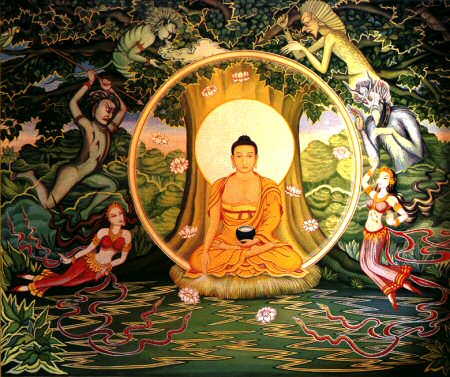
The Four Noble Truths – An Introduction

The following is an excerpt from a teaching by Jetsunma Ahkon Lhamo called “Keeping Heart Samaya”

One of the things that I have learned since I met with my teacher is to follow the fundamental thoughts as taught by the Buddha very carefully, starting with the thought that all sentient beings are suffering, and that suffering is all pervasive.  According to the Buddha’s teachings, we are all suffering from desire.  It seems as though we are suffering from external circumstances, but, in fact, we are suffering from desire.  In fact, we are suffering from our response to desire as well.  So we have a complicated, dualistic, or I should say double-edged, kind of suffering.  We have the suffering that comes from desire, and we also have the suffering that is invoked when desire is not met.  So it is two-edged and more complicated than one would think.

All sentient beings are suffering. They are suffering from desire, but there is an end to suffering.  This is the news that is so good it is almost hard to take in.  This is the news that is so magnificent that it is actually hard to understand when we have had an entire life, and we have noticed that there is always something. There is always something.  Everything that comes together separates.  Everything that is really good and has brought a lot of joy and a lot of benefit, gone.  Even if we find ourselves in the most joyous, gorgeous, fabulous mood, it lasts about, oh, ten minutes.  So we have noticed that happiness is ephemeral.  It comes and goes. It sort of burns away and returns, and in between there is that suffering.

So when we hear that there is an end to suffering, a cessation to suffering, we wonder, how can this be?  How can this possibly be?

The Buddha teaches us the next thought then, that the end or cessation of suffering is called enlightenment.  Yes, that is true because none of us, being ordinary sentient beings, have experienced enlightenment yet.  Sentient beings simply have not experienced that, so they do not know what the cessation of suffering actually feels like.

Then after introducing these thoughts, Lord Buddha teaches us how to accomplish the cessation of suffering, or enlightenment.  In many forms of Buddhism, this is called the Eightfold Path.  In our system of Buddhism, this is condensed into the accomplishment of two things: wisdom and knowledge. We are taught that in order to accomplish the cessation of suffering we must exit samsara and enter into that precious awakened state called enlightenment.

Copyright © Jetsunma Ahkon Lhamo.  All rights reserved
Astrology for 1/30/2017

1/30/2017 Monday by Norma

Sensitive conversations and interactions with others characterize this day. Listen attentively, someone can reveal a long held secret and it’s a statement about your trustworthiness that you are the hearer. Respect confidences and treat others with care. Dreams, hunches, music and water all have messages for you, if you’re paying attention. Look at the trees, the leaves and the sky, and you’ll learn something directly relevant to your life. Jodie Foster said, “I hope your experience will take you out these doors, out into the open air.You will breathe it in and say, “From now on, this life will be what I stand for.” Friendship is great, partnership is excellent and vigorous activity is energizing.

The Mystical Bond

The following is an excerpt from a teaching by Jetsunma Ahkon Lhamo called “Keeping Heart Samaya”

The Lama, being the condensed essence of all three objects of refuge, is also considered to be inseparable from the Dharma.  The Buddha is like the Lama’s mind in this case.  The Dharma is like the Lama’s speech.  So as a student, together with one’s Lama, one takes on the responsibility of learning Dharma.  It really isn’t enough to go around and say, “I have a Buddhist teacher!  Oh, I have a Buddhist teacher!  This is very good!”  And feel really happy about that.  That is great.  I hope you do feel happy about it, but it is not enough to do that and no more because it really isn’t that valuable to have met with your teacher, which is really very precious, if you do not follow the Buddha’s teaching, which is the Dharma.  Otherwise, what you are doing is coming to the temple to be entertained once a week for roughly an hour and a half, or longer, if you engage in other activities.  So a relationship where only entertainment occurs is really not that valuable.  You can get that from Blockbuster.  You don’t need a Buddhist teacher for that.

What you need a Buddhist teacher for is to connect you to the method, the Dharma, which is the Buddha’s speech.  You need a teacher so that you can travel on this path in order to accomplish the supreme result of liberation.  So the second commitment that the student must make to the teacher is to practice and learn Dharma, to maintain a healthy spiritual interest in Dharma and that means, once again, reflecting on the Buddha’s foundational teachings–realizing the faults or flaws of cyclic existence.  Then we practice a kind of renunciation that makes us eager to drink the nectar of the Buddha’s teaching for our self and for all sentient beings.  We begin to develop the mind of compassion.  For our self and for all sentient beings this Dharma practice represents the end of suffering, so we are eager and pleased to learn Dharma, to learn to think like a Dharma practitioner.  That is the second commitment.

The Lama, as the condensed essence of all three objects of refuge, is also considered to be the Sangha.  The mystical relationship between the Lama and the Sangha is quite profound, quite beautiful.  The Sangha is like the Lama’s body in that the Sangha has the samaya, or the responsibility, of holding or anchoring the Buddha’s teachings in the world in the same way that the Lama’s body, or appearance or presence, establishes the Buddha’s teachings right here, in the world.  Teachings are here in the world, being conferred here in the world.  The Sangha becomes an extension of that appearance.

Here in this Sangha for instance, primarily the ordained, but other Sangha members as well are trained as umdzes, or chant leaders.  We have the chopön, who handles ritual objects during the puja.  The Sangha are all well-trained, and all of them have different jobs.  We have archivists who keep our books in good, healthy order and keep them in a respectable and clean place.  There are many, many different functions, and these are all considered extensions of the Lama’s body.  This is the Lama’s wheel of activity.  The entire Dharma community then is the Lama’s extended body or wheel of Dharma activity.  So the mystical bond between the Lama and the student is closer than one’s own breath, more essential than one’s own essence, more relevant than one’s own mind, speech, body, anything.

As the Lama’s body, the Sangha also has a certain responsibility to one another, and this responsibility is a very important part of the samaya or commitment to the Lama,.  Remember, there is the responsibility to uphold and propagate the Buddha’s teachings, to follow and learn more about Dharma, the responsibility to uphold and protect the Sangha, and the responsibility of the Sangha to be the extension of the Lama’s activity.

Copyright © Jetsunma Ahkon Lhamo.  All rights reserved

Astrology for 1/29/2017

1/29/2017 Saturday by Norma

Spend time with friends today, you’ll have a ball, and make it something energetic. Snowshoe around the mall, run relay races, stay active! Mars in Aries needs something to do, and if you don’t get busy your excess energy will cause trouble. Think of housebound kids bouncing off the wall: take them roller skating, bowling, anything! Will Rogers said, “Even if you’re on the right track, you’ll get run over if you just sit there.” Absolutely avoid reviewing a past disappointment, you’ll bring it back and blame the wrong person. What’s good today? The energy to do whatever you want, the fire of enthusiasm, good friends and a partner willing to join you.

WP2Social Auto Publish Powered By : XYZScripts.com