Right Concentration

An excerpt from a teaching called the Eightfold Path by Jetsunma Ahkon Lhamo

The eighth principal on the path is right concentration. Right, concentration occurs in all of us.  Have you ever gone without a meal?  You get really hungry, and suddenly you visualize cake.  It’s stronger than any deity visualization you’ve ever had.   I’ve always told people that if you say you can’t visualize, the best thing to do is go on a fast.  You will visualize night and day!  You’ll not be happy about it, but you’ll see hotdogs.  You’ll see chicken, and it will be right there!  So, I don’t buy that you can’t visualize.  That kind of concentration is very strong.  If you’re really hungry, and you’re about to sit down to a big meal, don’t let anybody get between you and that meal because there’s going to be trouble. That kind of concentration is very powerful.  That is our natural capacity.  We use it all the time.  The problem is we use it wrongfully.  We don’t use it in a way that is beneficial at all.  If your concentration is going into visualizing food, or new cars or sexy women or men, then you are wasting and using wrongfully a talent, a capacity that is uniquely human.  Even when a dog is starving and it runs for its food, its not concentrating in the way that we concentrate.  For a dog, it is more of a knee jerk reaction.  It knows to go to the food.  We do use concentration and visualization all the time.  If we didn’t, we wouldn’t be able to think or act.

The point of right concentration is to begin to dismantle the reaction, the heavy reactionism, the construct of our own perception, and to create a mind that is firm and strong and not out of control.  Our minds get out of control when we habitually are very emotional.  So we learn to do that.  And one of the wonderful techniques that’s given is to concentrate.  Its called single-pointed concentration or one-pointed concentration.

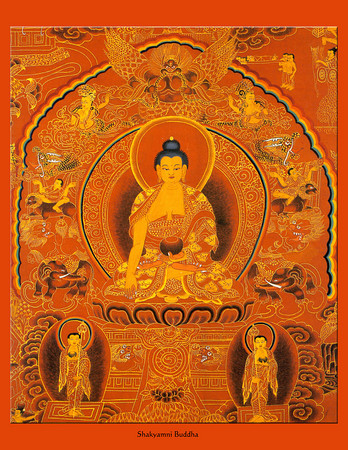
One of the first techniques that you learn in Buddhism for instance, is to take say an image of the Buddha and to concentrate on that, and let everything else go.  Let your perception go completely. You sit there in meditation and you just watch the image, are filled with the image and take note of the image.  You look at the finest parts of the image, and when the “I left the toaster on or I left the iron on” thoughts start to come, then you simply use a technique of just dismissing them and going back to the concentration.  For people that really have trouble dismissing the thoughts, you can even use a visualization of cutting them with scissors and throwing them away.  But you always return to your single-pointed concentration.  It’s extremely relaxing.  Extremely healing.  I don’t know why it isn’t done more.

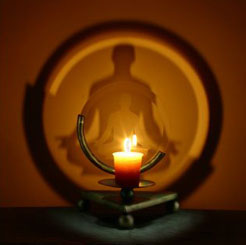
Another thing that you can do is focus on a candle.  Just simply see the nature of that flame.  See what it is. Perceive only that.  Let the mind rest on it.  Let the mind rest on the image of the Buddha; rest on the image of a flower or on the image of a candle.  Just let it rest.  When something comes to interrupt you, you simply toss it away, cut it out, move it, and come back to rest. Come back to that.

You can also watch your breath.  One way to do that is to take very uniform relaxing breaths, such as four beats in, the hold one, then four beats out.  Like that.  A real relaxed kind of breathing, and just let your mind rest on the rhythm and the feel of your own breath. For a person whose mind is too active and too angry, it’s very restful, very peaceful, and lovely to do that. It’s completely different from watching TV, which actually gets your mind stirred up.  I know when I watch the news, I get stirred up.  I’ll tell you that.   I start talking back to the TV.  “Hey!”  I get really stirred up.  Then I go look at my candle.

It’s that single-pointed concentration, that right concentration.  It’s wholesome concentration.  Your mind is not filled with scattered B.S.  We review all the stuff that happened to us, and ruminate on it.  We fight battles that we had last week.  Two weeks later I thought of a smart come back in the middle of my meditation.  You know?  So you fight that by using single-pointed concentration and even if you do that, just laugh at yourself and come back.  Always drop it, come back.  Drop it.  Come back.  Pretty soon you’ll be able to do it for longer and longer.

Once you learn to apply single-pointed concentration on a candle or an image, the mind then has more control.  You have more muscle.  And really the mind is almost like a muscle.  You have to build it.  It’s flabby.  In the same way that you work out to keep your body strong, it’s the same with your mind.  Your mind has to be kept in shape.  It isn’t just there, and you just deal with it however it is, because in that case your mind tends to act like a monkey.  It’s all over you.  It rides you rather than you riding it.  Its like the master is not riding the donkey, the donkey is riding the master.  And that’s what happens when the mind is too agitated and too wild and too out of control.

Single-pointed concentration that kind of meditation is beautiful.  Lord Buddha, who was born a prince, he was a noble being but still he was a prince – had a life that said that ran the gamut of the very best most sensual almost hedonistic life to asceticism.  And Lord Buddha said that from his whole life what he really loved, his favorite practice was just the gentle watching of his breath.  You might want to try it yourself.  It’s a beautiful, healing practice.  If you’re sick or depressed or manic then you may not be able to do it without some sort of treatment or medication but it behooves us to try.  To calm the mind, to center the mind, to develop single-pointed concentration to the degree that eventually when you die and pass into the bardo, you actually meditate in the bardo without any distraction.  And that’s the fundamental, underlying truth of the bardo.  The bardo is as busy as our lives are or more so with loud noise, bright lights, and stuff you are not used to.  And stuff you will interpret according to your mind.  You will see your own mind in the bardo.  Doesn’t that scare you a little bit?  It should.  Rather than that, you learn the single-pointed concentration.

Eventually you can learn Phowa, but the single-pointed concentration if one can do that at the time of death and not let the experiences of death take you this way and that way, if you are already so strong in your concentration that you can meditate like that to the moment of your death or to the moment of losing consciousness, the bardo will be so easy for you.  Comparatively speaking, very easy.

© Jetsunma Ahkon Lhamo
Astrology for 11/5/2016

11/5/2016 Saturday by Norma

Energy of a magnetic and electric nature generates a buzz that is invigorating and fun! Keep your eye on the cheerleader, the one who says you’re great and encourages you to keep moving. If you’ve fallen into a rut, been consumed by drudgery or worry, listen to the call of something different. Charles Kuralt said, “The everyday kindness of the back roads more than makes up for the acts of greed in the headlines.” Take time for renewal and time for your energy to soar. The only way to avoid this is to say, “I can’t do it, I’m too busy.” A renovation is happening and something lost or gone is here for the taking. It’s up to you.

The astrology post affects everyone differently, depending on individual horoscopes. Look to see how this message reflects your life today!

Right Mindfulness

An excerpt from a teaching called the Eightfold Path by Jetsunma Ahkon Lhamo

Right mindfulness has to do with cognition.  Everybody perceives.  We all have perception.  If you took any two people and asked them what their perception of a certain situation was, or even to describe a certain situation, it would be radically different.  And it’s not that they remember differently, it’s that they saw differently.  That’s the interesting thing.  The cognitive process begins with the impact of phenomena and how it meets our habitual tendencies.  It’s that meeting which is our perception.  If we were able to perceive something, such as a person, without moving forward in cognition and having opinions, and concepts and ideas about that person, life would be beautiful.  If we could just meet each other metaphysically naked and accept one another and let it go at that without hatred, greed or ignorance. Oh mani pedma hung.  What a wonderful world that would be.

But that’s not our habit.  Our habit is that when we see a person, we decide, “I don’t like what he’s wearing.  That’s not my color.  I don’t like that haircut.  I don’t like him.  I don’t like the way you wear your robes.”  You know?  We have all these opinions.  And of course we keep them to ourselves and smile but it’s those opinions rattling around in our brains that are causing us so much trouble.  We never stay with a mere impression and leave it wholesome.  It never happens unless we are practicing right mindfulness.  It takes a supreme effort to practice like that.  We conceptualize.  We write our own inner script for instance.  We have an original perception and we react toward it.  Reaction is the name of the game of the five senses.  Whatever that reaction is we build a story about it.  And then you have a whole house of conceptualization wrapped around that person.  And it has nothing to do with them.  But you projected your whole brain onto them.

What we do is we interpret according to our own thoughts and experiences.  And here’s where the conundrum is.  If we haven’t practiced proper view for instance or engaged in proper effort, then when we come down to mindfulness, its going to be really hard to unscramble things, and what we are going to have left is our usual habit.  And that is conceptual proliferation.  Two people can have exactly the same experience and react 180 degrees different.  And it’s all because of our previous habits, our previous judgments.  Judgments don’t go away.  They pile on top of each other.  And pretty soon, you have a formula, and once you have a formula, it’s over.  So, the mind then posits concepts.  Joins concepts into constructs and weaves those constructs into complex interpretive schemes. Its what we do.  We can get all turned around and wrapped up in our little mental conflagrations, and somebody can come up and say, “Well, I saw it this way, boom, boom, boom.”  And suddenly your whole game is down.  What do you do now?  Another person has a completely different view about it.  But you’re still circling around the path.

That’s how sentient beings do.  And on the path the job is to bust that game.  Really bust that game.  Very difficult to do but its possible.  And does it take a short time?  Can you do it in a weekend?  No!  It will take the rest of your life and then some more lives, if you don’t go to Vajrayana, and then achieve liberation in the bardo.  If not, you have to practice the Eightfold Path for lifetime after lifetime after lifetime.  That’s how long it takes.  Nobody is being mean to you.  That’s how long it takes.

We make up all these complex constructions.  Most of it happens only half consciously and for some people it is completely unconscious, but for some of us, its only semi conscious.  I’ve come to understand that sometimes a person acts oblivious.  They act like they do not know the effect that they’re having on another person, and you corner them.  You break it down with them.  You find out that they actually know.  But they don’t want to deal with it.

You know on some level.  It can be a very subtle level, and maybe somebody like a friend or a therapist has to help you bring it out or point it out for you, because it may be so subtle that you didn’t catch it.  It’s not that you don’t see it, it’s that you don’t catch it.  That’s why it helps to work with your Vajra brothers and sisters and be willing to receive their thoughts about you.  For instance, the ordained practice sojong, and sojong is wonderful because you really open up in front of the other ordained and you become metaphorically naked in front of your brothers and sisters.

Sometimes it helps when someone points it out, but really if you sat down and honestly little by little practiced self-honesty and looked at yourself, you could get a long way ahead.  Be willing to love yourself through seeing how naughty you can be.  What an absolute jerk you can be from time to time. “Oh God, I can’t stand that I did that!”  But you have to see it. It helps.

So, when we practice right mindfulness, we become aware of the conceptualization part because in order to practice right mindfulness, you have to study your own reaction.  Play this game with a friend.  Have somebody brought over that you’ve never met before.  Bring them into the room when everybody’s eyes are closed, and then open your eyes and look at the person.  And watch what your mind does.  Don’t obsess about the person.  Watch what your mind does.   Your mind is going to run all over that person from the shoelaces to the hair barrettes.  You’re going to notice how they dress, how they smell, how they look, what their expression is.  And all of these things are going to form into a pattern for you that means something for you, and probably is your projection on that person that has nothing to do with that person.  It’s really interesting.  I think one of the most fascinating parts of the path is when you really get to know your own perception and you can see how it works, and then you can move on.  You can forgive yourself for it, and move on.

What we are trying to do is practice mindfulness, which is a clear perception.  A perception, which is free of all these constructs.  A perception that’s more naked.  Where you just behold a person.  If you could manage not to engage in all that impression stuff, and construct stuff and story making and all of that, you could actually see that person’s true face.  You could actually behold their capacity, their Buddha nature.  Nothing would stop you from loving them.  What’s not to love in the primordial wisdom nature?  The fact that we don’t have that kind of love is because we are stuck in wrong mindfulness.  We are literally wrong-headed because we let our minds run away with these concepts and ideas, even to the degree that we say, “This person’s really got it in for me.” Even your own child, you think, “God, this is a plot.  This kid is plotting to drive me nuts.”  What parent hasn’t thought that? Of course we all have, but that’s crazy thinking.  That’s your human projection.  So, when you catch yourself with that, back up. Ask yourself, “What do we have here?  We have a child.  A child that does what children do.”  Or if it’s an adult human, “What do you really here?  Well, you have a human being with all that amazing potential and that capacity to be Buddha.”  Wow!  What if you could look at everyone and perceive that?  What a joyful state to be in.

If we give rise to right mindfulness, we become aware of our process of conceptualization and the way that we can construct it into scenarios and stories and use that as the foundation for mindfulness.  Just as I’ve been saying.  You use it to examine every reaction that you have.  You look at it from a distance.  You say, “Oh, that’s me having that reaction again.  Oh.  Interesting.  Where does that come from?  Wonder about that?”  The very act of stepping back from an instant reaction gives you something that’s called spaciousness in the mind.  The very act of just stepping back.

Most creatures have no space in their mind at all.  I don’t mean literal space.  I mean metaphorically there’s no relaxation.  Everything is automatic reaction.  Take for instance, a snake. A snake is like a reaction machine.  If you stick a rat in front of it, it’s going to act predictably.  And if a snake in the wild is frightened, it’s going to act predictably.  Species wide, you can predict how a snake is going to act.  There’s no space in that’s animal’s mind. It doesn’t even have enough space in its mind to say, “I’m hungry.  I’m going to catch me a rat.”  It doesn’t do that.  It just goes.  It goes and does what it does as a response to feelings.  And the response is bam, bam bam!  It’s like a nerve firing.  Almost plant like in the sense that a plant will react to stimulus.  Too much sun, it will go down.  Too much cold, it will go down, but it is an automatic thing, like a Venus Flytrap.  Did you ever see one of those when you were a kid? Do you think the Venus Fly Trap says, “I’m hungry.  I want a fly!”  It doesn’t.  It doesn’t even have that capacity.  If anything touches it, it could be a toothpick, and it will grab it.  So, that’s having no space in the mind.  Plants don’t have any mind, but a snake is a being that has a brain but has no space.  When you are able to practice being able to step back and say, “Oh.  Look at that reaction.  Wow.  Well, that’s a whole load of horseshit I had connected to that.  My goodness.  Well let’s back that up and unpack it, shall we? “  When you start thinking like that, you start to develop some spaciousness in your mind, and you have a little bit of time between perception and reaction.  That’s when you start to practice!  That’s it!  Once you have that going, and not every practitioner does, that’s when you’ve got it.  Stepping back from reaction is a real milestone in practice, and it comes by right mindfulness.  By perceiving, and catching your perception.  What’s your perception?  What’s the trigger?  What’s going on here?  What do you perceive?  What’s the story that you are living?  Step back and see what’s really happening.

© Jetsunma Ahkon Lhamo

Astrology for 11/4/2016

11/4/2016 Friday by Norma

If you’ve been distracted, you’ll be back on the job today! Following a schedule is satisfying, productive and free from the uncertainty of the recent past. Watch out! You are about to become enchanted, and happiness rides the next wave heading your way. An unexpected occurrence lifts spirits and brings joy. Longchenpa said, “Since everything is but an apparition, perfect in being what it is, having nothing to do with acceptance or rejection, one may well burst out in laughter.” Have a giggle, you deserve it. Work is good today, partnership takes a back seat, and over the top reactions are par for the course.

The astrology post affects everyone differently, depending on individual horoscopes. Look to see how this message reflects your life today!

———————————————————————————–

Right Action

An excerpt from a teaching called the Eightfold Path by Jetsunma Ahkon Lhamo

Right action involves your physical body as a vehicle of expression, and it refers to deeds that we do with our body – our physical conduct.  The Buddha taught that unwholesome actions lead to an unstable, unwholesome, and unhealthy state of mind.  The principal is explained in terms of abstinence.

Right action means to abstain from harming sentient beings and especially to abstain from taking life, including one’s own – suicide, and doing harm intentionally or delinquently with your body to others.  In other words, if you hit somebody or cause harm, if you get so angry at somebody that you punch them in the face, that’s not going to bring happiness, and definitely harms sentient beings. If we harm other beings or bring about their death by hitting them or smashing them with something, then we have brought about a cause that will result in our own death in the future.  We have harmed our own life as well, as you have harmed someone that you professed to uphold on the previous steps on the Eightfold Path.   You must never do that.

When we engage in the Eightfold Path, we don’t allow anything to be killed in our presence. If we can stop people from killing bugs, and never kill bugs ourselves, that’s the right way to go, because all of them are sentient beings, and they are all equal to us in their nature.  We do not kill dogs.  We do not kill cats.  We do not kill people.  We do not kill animals.

Regarding the consumption of meat, the way the Buddha taught it, is if somebody is going to kill an animal for you to eat, don’t do it.  If the animal is already dead, as you would find meat in a supermarket, then that is acceptable to eat it because it is already dead.  It is not going to come back because you didn’t eat it.  But if you can prevent the death by not accepting anything that has been killed for you, never getting involved in slaughter, then that is the basis of it.  Slaughtering animals in a slaughterhouse, or raising animals for slaughter for butchering would be wrong livelihood.   Wrong action and wrong livelihood merge together and sometimes it’s hard to tell whether you are talking about one or the other.  The point is it doesn’t matter.  It’s the whole picture like a lotus.

You abstain from harming sentient beings, and especially from taking life.  You abstain from taking what is not given to you, which includes stealing, robbery, fraud, deceitfulness, and dishonesty.  Regarding what is not yours to give, rather than to steal it, you should practice the rest of the Eightfold Path, and purify yourself of the desire.  Work with the desire, work with the phenomena, work with the root of it, and the way of it, and the result of it.  Having done those things, there should be no desire to take from someone else or to have what somebody else has.

Here is an example of one way to cultivate that.  Lets say you are practicing the path, and your friend gets a new car, and it’s just the kind of car you wanted.  You just wished you could have had it.  And you regret that it wasn’t you.  You just think, “Boy, I wish I could have that car.”  Now, you’re not going to steal the car probably if you are practicing the path, at least I hope not, but you have to examine the basis of not being happy for your friend, and wanting the car to be yours. That very idea of desire is the problem there.

Never take what is not given to you.  Never steal.  Never rob.  Never commit fraud.  All of this will bring great suffering.  It basically destroys one’s mind.  If one engages in deceitfulness and fraud, the mind becomes sick.  You can’t think straight anymore.  And it actually results in mental illness.  There is so much confusion.  You know how it is when you start telling lies.  You have to keep on top of it, because pretty soon you’ll be telling different stories to everybody and you forget what you lied about.  Have you ever seen kids do that or you?

Yeah, you should respect the belongings of others, and be happy for them in the sense that, “Oh my friend got a car.  I’m so happy for her.  I can see her joy.  I rejoice in her joy.”  Even if at first you have to say, “I rejoice in her joy” through gritted teeth.  Keep doing it enough, and go deeper each time, eventually you will be joyful about the happiness of others.  It really works.

Right action also has to do with abstaining from sexual misconduct.  Positively formulated, Right action means to act kindly and compassionately, to be honest, to respect the belongings of others, and to keep sexual relationships harmless to others.  It doesn’t mean you can’t do it.

Regarding sexuality it depends on your level of ordination.  For a monk or a nun, any sexual activity is improper sexual activity because they have taken vows of celibacy.  For householders it’s different.  But still in all, one should never try to get with another person’s spouse, or to get with someone who is an improper age, or to get with somebody who would be harmed by getting with you in some way.  Lets say there is a person that doesn’t have proper mental capacity and they don’t know better, and yet you get with them and it really harms them.  That would be absolutely wrong action.  So, sexual relationships should be wholesome, healthy, and not harmful.  You should never harm another with that.  You will suffer.

© Jetsunma Ahkon Lhamo

Astrology for 11/3/2016

11/3/2016 Thursday by Norma

If today’s your birthday, congratulations! A buoyant spirit is all pervasive, lifting you above the downward slog of the times. A jubilant attitude generates fun. Artur Rubenstein said, “If you love life, life will love you back.” People are whip-smart today, coming up with new inventions, scientific exploration that reveals new information, and offering up new insights…provided your mind is open. The task of the time is to set aside your preconceived notions and accept brand new ideas. Galileo, anyone? Cheerfully drop any viewpoint that no longer applies to reality, and it’ll be a great day.

The astrology post affects each person differently, depending on individual horoscopes. Look to see how this message reflects your life today!

Right Intention

An excerpt from a teaching called The Eight-Fold Path by Jetsunma Ahkon Lhamo

All of us have intention, and intention refers to mental energy.  We have intention now, but we are not really conscious of our intention.  We don’t think of it that way other than when we say, “I intend to go to the movies tonight.  I intend to wear my new dress tomorrow.  I intend to eat broccoli for dinner.” We have that kind of understanding.  But what we don’t understand is that intention goes with mind power.  They are the same.  And mind power when it is expressed, has intention.  Whether we like it or not, if we have mind, we have intention.  So, the mental energy that controls our actions is our intention, and that intention.  Maybe we have a nihilist point of view.  We don’t really think that life is cause and effect.  We don’t have any understanding of that.  “Wherever life takes me; I’m going to go there.”  That’s kind of neutral.  And of course, with that kind of neutrality, life will take you anywhere it wants to.  You have no control.  You are like a doughnut on the ocean. You are going to take on water and sink.

Right intention is about formulating an appropriate intention, and it has to do with ethics.  Ethics in the Buddha dharma are absolutely foundational.  Once we get into the higher practices, we neglect, I think too much, to talk about it.  Right intention is absolutely important to cultivate.  Otherwise the mind is simply wild.  It wants what it wants.  It just does what it does.  There is nothing to think about.  If we have bad intention, of course that gives rise to great suffering.  Like if we wish to be higher than everybody else, or we wish to be more powerful than everybody else, or we wish to be richer than everybody else.  That’s kind of a negative intention.  It is okay to have wealth, it is okay if you have some power, and it is okay if you’re pretty, but to have that wish to be prettier or more powerful or wealthier than everybody else, that’s not good intention.  And that will cause you to suffer because someone’s always going to be prettier than you.  Someone’s always going to be richer than you.  Someone’s always going to be smarter.  And so you’ll suffer.  It brings about suffering.  Negative intention should not be tolerated.  Not only does it bring about suffering for oneself, but also it brings about suffering for sentient beings because if we have poor ethics or if we have bad intention, we tend to harm others, as well as ourselves.

So we are supposed to train ourselves with good intention, for instance, the intention of renunciation.  To have the intention of renunciation again is so important and foundational on the path.  What are we renouncing?  Well, you could go and renounce things piece by piece, and get absolutely nowhere.  “I renounce bottle tops.  I renounce red drinks.” And then get totally neurotic about it, “But I want it.” That obviously is not the right approach.  The intention of renunciation actually refers to resistance to the pull of desire and attachment.  You begin to practice that resistance.  I promise you that when you just start to practice it, you won’t be good at it, if you have no experience with it.  It takes time.  You have to examine desire.

Now, you understand that desire is all-pervasive.  I’m not talking about what happens in people’s bedrooms.  I’m talking about all-pervasive desire.  Desire for everything that we want. And we want a lot.  We want good days, we want good experiences, we want good friends, and we want good times.   None of which are bad, but if you’re addicted and attached to them, then you will suffer.  And again the Eight-Fold Path is about liberating from suffering.  So, it is the renunciation to the pull of desire and the poison of attachment.

Right intention also is the intention of good will.  Meaning resistance to the feelings of anger and aversion.  We all have that.  It starts in the morning.  “God, who made this coffee?  It tastes awful.”  “I’m having a really terrible hair day.  I’m averse to my hair.”   We have this aversion, and then we just don’t like things. Don’t like people.  Don’t care.  Just don’t give the big hoop.  I would call that wrong intention.  If someone were to approach you and say to you, “I think it would be healthy for you to practice more compassion.”  Of course, our natural thing is to react with “Shut up!” and to react with anger. But that is the exact instinct we need to fight.  That is the exact thing we need to fight.  Now, if somebody comes up to you even if they are somebody you may feel doesn’t have that much compassion, and they give you the piece of advice, “I think you should have more compassion.”  You cultivate patience and right intention.  You think, “Well, it is good that person is talking about compassion, even if it is a left-handed gift.  Still there is something there, and you can have some good intention, good attitude about it.

Basically you develop good will towards all sentient beings.  You don’t think that animals should be killed or harmed. You don’t think that dogs should be put to death.  You don’t think that people should be at war.  You don’t think that suffering should occur.  You don’t think that poverty should exist.  These are right intentions.  These are right thoughts.  Right thoughts that can be cultivated even on a very personal level while the path you’re traveling is still very personal.  You think like that.

You start to pacify anger and rage.  So many of us have so much rage stored up.  Some of it is from childhood.  Some of it is from the stress of everyday living. Were we really meant to go 60 million miles everyday?  You know that kind of stress.  We hold rage inside.  And so part of the Eight-Fold Path is to begin not to suppress the rage, but to contemplate it, be aware of it, and look through it.  Suppression equals neuroses.  We are looking for you to be awake to perceive more correctly what the nature of attraction and repulsion actually is, how they are not conducive to happiness and are the antithesis of the path.

The last part of right intention is the intention of harmlessness, meaning not to think or act cruelly, violently, or aggressively, and to develop compassion.  We forget that.  Again a foundational truth on the path, and we forget it.  We walk around with our malas and our robes, and we think, “I’m so cool.  I’m a Tibetan Buddhist.”  Well, you are not Tibetan.  And if you act like that, you’re not much of a Buddhist either.  So, forget it. And of course cruelty, if we have any cruelty in our mind, it may be a reflection of past habit or past incidences.  We have the power to examine that cruelty, to see its root, to see its fruit, to push it away, to see through it in other words, into the true nature of the Eight-Fold Path and of the Buddha dharma.  We have that power.  We shouldn’t think, “Oh, I’ve got this rage, and I’m stuck with it.  It’s just there.”  We have the power to change that by practicing this right intention.

We give up the thoughts of violence, of aggressiveness, and we begin to develop compassion.  And again what is it based on?  It’s based on the Four Noble Truths.  The compassion comes from the realization that all sentient beings are suffering.  That suffering is all-pervasive, and that it is not necessary because there is an Eight-Fold Path.  That is our way to contemplate and to bring ourselves up to snuff with right intention.

© copyright Jetsunma Ahkon Lhamo All rights reserved

Astrology for 11/2/2016

11/2/2016 Wednesday by Norma

Listen carefully to a partner, this person’s thinking is based on reality and affirms a connection that is supportive and stabilizing. As the day passes, a difficult conversation or bit of information comes. Pay attention, what you learn is true and represents a solid base for your thinking. A source of information that you did not know existed has news for you. You’ll be both sad and happy today, in that order. Take what comes today and don’t worry about the rest. Josh Billings said, “There are people who are always anticipating trouble, and in this way, they manage to enjoy many sorrows that never really happen to them.” Be as kind and diplomatic with others as possible and notice how your field of knowledge is expanding and deepening.

The astrology post affects each person differently, depending on individual horoscopes. Look to see how this message reflects your life today!

Right View – The Essential Nectar Drop

An excerpt from a teaching called The Eight-Fold Path by Jetsunma Ahkon Lhamo

Right view should be understood as the underpinning, the beginning and the ending, and everything in between on the path.  It is in some ways the essence, the essential nectar drop of the path.  In right view through meditation, through contemplation, and through receiving teachings, we come to understand the nature of samsara. We meditate on samsara and understand its flaws, its faults, and how it is so confusing to all of us.  By understanding the nature of samsara, we know what to avoid and what to pick up.  But without contemplating on and understanding the nature of samsara by remaining constantly in a reactive stage, there will be no accomplishment. We grasp what is impermanent, what is imperfect.  We begin to contemplate and study the empty nature of phenomena.  That phenomena is what it seems to be, yet even now we know from the scientific world that it isn’t what it seems to be.  It seems to be this way, but we know that it isn’t.  We know that for instance that on the surface, the nature of glass, the nature of wood, the nature of material, all of it is basically molecules with a bunch of space in them.  And so while they appear solid, its all really energy, electromagnetic energy that binds molecules together.  It is not the way it appears to be.  We have the habit of seeing what we see.  But when one is awake, phenomena is basically empty of self-nature.  And subtle energies, the very display that is samsara is understood in its nature.

In order to attain right view, you don’t have to be smart.  Even though the people that are teaching it often use these wonderful big words, “all pervasive this,” and “foundational whatever.”  And you think, “Wow, this sounds like you have to have a PhD to understand this.”  And it’s not true.  Correct view or right view isn’t about smart.  It’s about wisdom.  It’s about experience through contemplation and meditation.  Even if you don’t have the big words, you can have a direct experience through contemplation. It begins with the insight that is brought to bear by having meditated on the Four Noble Truths in that we understand that all sentient beings are suffering.  We begin to realize that desire is the problem, to understand the nature of reaction and attachment, and to understand the nature of phenomena and the truth that the Buddhas and the bodhisattvas prevail and are indeed omniscient and powerful.  They have brought us the path and they remain.  In other words it is the awareness and belief in the Three Precious Jewels – Buddha, Dharma and Sangha.

We all have view.  We have view right now.  We are viewing each other.  I’m viewing this lady’s pretty necklace, and I’m viewing my daughter, and I’m viewing you.  We have it.  Whatever we think in our mind, when we are viewing, this is our view.

To practice Right View, one trains the view. One trains so that when you look at somebody you don’t say, “I like him or I don’t like him.”  You don’t react with attachment or repulsion.  Right View means that you train yourself to see differently what is.  For instance, say I am Caucasian and you are a black man.  I look at you.  If I say to myself, “Oh, I’m Caucasian, and he’s a black man.”  That’s my view.  That’s what I’m seeing.  And in the Buddha dharma, it is not correct view.  Not correct at all.  Because we are to understand that within each of us, we are equal and we have the Buddha nature and that view is so completely superficial.   If we look at someone else from another culture or family or another planet, and see only the differences, right view would be to correct that.  It would be to see the sameness, to wake up to the fact that all sentient beings are inherently equal and that we share the same nature.  I may be one color and you may be another but we share the same nature, and there is no color on that nature.  So, this is where you begin.  You see how this is a foundation where you become mindful and thoughtful?  It’s not a generation stage practice where you are actually doing a puja, but it’s where you contemplate the fundamental meaning of the path.  Having trained oneself in Right View, its so much easier later on when you begin to approach the bodhisattva vow and the compassion that we learn in Mahayana Buddhism, because with Right View as the foundation, we are half way there.  We can have compassion for others.  We can uphold others as the same as ourselves.  And we can do for others what is kind and good to do.  If we understand Right View properly and we have done the preliminary contemplations, then in Vajrayana it is much easier to have proper view with Vajrayana meaning.

In Vajrayana meaning we should see every female as the goddess, and every male as a god. We see each being in their truer nature.  And we respect the women as being dakinis.  We respect the men as being dakas.  We respect, that is the View in Vajrayana.  And nobody’s higher than anybody else except in the practice of Guru Yoga where we actually use the Guru as a focus to understand our own nature.  But we’re not there yet.  We’re still on Right View.

So it behooves us to contemplate the meaning of this, and how to approach viewing others, viewing your life, viewing your potential, and viewing the world at large.  This is mind training.  This is where you train your mind.  If you don’t train your mind here, when you get to the higher levels of practice, you are too wobbly and unstable.  You can practice real well for a while, but then you are gone.  You must have this underlying stability, this understanding in order to really practice the path well and keep flourishing on it.

© Jetsunma Ahkon Lhamo

Astrology for 11/1/2016

11/1/2016 Tuesday by Norma

Nothing much happens early in the day thanks to the void of course moon, but you’ll know when the moon changes signs-everyone has an opinion about everything! Prognostications about the future (all bad!), alarmist musings (all bad!), sweeping generalizations (ditto) are everywhere. Fortunately, these can be sidestepped by a foray into creative projects, imaginative ventures, visualization, anything related to water and medical interventions. Listen to people who dish up the truth today and ignore alarmist speculation. Elbert Hubbard said, “The thing we fear we bring to pass.” What’s good today? A renewed joie de vivre ( if you ignore the doomsayers), happy partnerships, underground discoveries and investing!

The daily astrology post affects everyone differently, depending on individual horoscopes. Look to see how this message reflects your life today!

WP2Social Auto Publish Powered By : XYZScripts.com