
Moods, Bodhicitta and Mental Discipline

The following is an excerpt from a teaching called “Your Treasure is Heart”

In order to understand how mental discipline will help you feel more compassionate, you need to understand that compassion is not an emotion.  Bodhichitta is not an emotion.  It doesn’t exist on that dense a level.  It’s not as dense as an emotion.  Emotions are actually reactions.  If you take perception, delusion, duality, confusion, hatred, greed and ignorance, all of those things that are characteristic of samsara, and you shake them up in a jar, the bubbles that you would get, like the bubbles from soap, are roughly the equivalent of emotions.  Emotions are the result of conceptual proliferation, whipped up into a very exaggerated state.  They are reactive. Bodhichitta really has nothing to do with that.

When we begin to give rise to the Bodhichitta, we do so, first of all, through mental discipline.  As we begin to practice, we have some understanding of the suffering of sentient beings and why we should engage in loving concern for them.  When we examine the thoughts that turn the mind, we really tune into the sufferings of samsara.  We tune in, as well, to the fact that we have lived so many lifetimes that literally anyone that we can see, or see a picture of, or hear or think of has been our own kind parent in some previous life.  Yet these beings are wandering in samsara just like a bee that’s caught in a jar, absolutely clueless as to how to create the causes by which their terrible suffering might end.

Once you learn that, you discipline your mind not to ignore it.  We like to surf on the sensual pleasure of the moment.  We like to enjoy, and try to get as high in our daily routine as possible, so we can just surf on the moment of experience.  We don’t want to think about the condition of sentient beings.  So this mental discipline is required in order to be a serious practitioner. You can’t cut corners here. If you don’t put in the time, your practice will never be up to snuff.

Many students come to me saying “Well, I just don’t feel this compassion.”  My answer is, so what!  Compassion is not an emotion.  Nobody is going to benefit by how you feel.  They’re going to benefit by what you do.  So do the practice.  Discipline yourself to contemplate the causes and conditions of both happiness and suffering; and particularly contemplate the suffering of sentient beings,  These contemplations cannot be short-circuited. They must be delved into with everything you have. Once you do that you begin to feel a certain kind of determination and motivation, and it begins to make sense.

When I was 20, I had not met with the path of Dharma yet, but I was actually given these contemplations directly in my own meditation and in the dream state. So I began to practice them.  What happened to me was I realized that compassion is the only thing that makes sense.  Think about the logic of it. Here you are, one sentient being on our planet where in the human realm alone, there are roughly six billion of us.  On our planet there are also uncountable animal forms.  You can’t even count the number of ants in an ant hill.  Each one of them is a sentient being with the Buddha nature within them, just as surely as you are, yet they appear in this form due to their own habitual tendency and the way that their consciousness is functioning. How many uncountable sentient beings can be seen with the eye on this planet alone!

If this absolute Buddha nature, this ground of being, is my nature, and you are that also, and yet we appear in these multitudinous forms, wandering and suffering in samsara, it made perfect sense to me to dedicate my life to the liberation and salvation of all sentient beings.  Nothing else seemed logical or reasonable.  And from that, gradually, this determination grew.  For about ten months,  I went through the mental discipline. I practiced for eight to ten hours a day only on those contemplations until I could see clearly for myself that this is the only game in town that made sense.  With that knowledge, living any other kind of life seemed like whoring or prostitution to me, and it didn’t seem reasonable.  So my discrimination was born.

In the Buddha’s teachings we are told that there are three thousand myriads of universes, three thousand myriads of universes.  That’s just one number that gives us some understanding that we’re talking big!  The Buddha also teaches us that there are formless realms, and there are uncountable sentient beings in these formless realms.  So logically, if my nature is this Buddha nature, completely inseparable from the very Lord that I call Buddha, completely inseparable and indistinguishable from all these sentient beings, it is logical and reasonable that I would do everything that I can to bring benefit to others instead of spending my entire life in ego-gratification and self-cherishing.  It is logical and reasonable also to me, that I will never be happy until every sentient being is free.  That’s what seems reasonable to me.

Once you have that kind of understanding, you have to go through the process of reminding yourself, keeping it alive every step of the way.  If any of you have been married, you know that taking the vow is not the end of the issue.  If you want to remain in that situation, you really have to work at it.  Giving rise to the Bodhichitta is like that .  The effort doesn’t stop once you come to the great conclusion.  You have to remind yourself every day.  It’s part of the discipline of practice so that you remain mindful.  On the path of Dharma these contemplations are crucial.

So this is how it starts.  It starts in mental discipline which gives rise to determination.  Where’s the emotion in all that?  Emotions become inconsequential.  Once you realize that there are six billion humans, that you know of, wandering in samsara, not understanding how to create the causes of happiness, whether you have gas at that moment or are in a good or a bad mood, those kinds of things become a moot point.  You learn that it’s OK to be a Bodhisattva in a bad mood.  But you don’t get to stop, you see, because you’ve learned something.

Copyright © Jetsunma Ahkon Lhamo.  All rights reserved

Willingness and Bodhicitta

The following is an excerpt from a teaching by Jetsunma Ahkon Lhamo called “Your Treasure is Heart”

How do you practice this Bodhichitta?  In the beginning, the most important posture is to start from where you are.  That is your time and space grid,   That’s your place, your posture, your “now.”  You have to start there.  Now that may seem like restating the obvious.  “Of course you’re going to start from where you are, oh queen of the department of redundancy.” But most people never start exactly where they are, with that kind of self-honesty, being genuine on their path. No baloney.  No games.  You look and see what your habit patterns are and what your practice has been.  You really look inside yourself and see what your qualities are and face them honestly. It’s not necessarily going to be good news.  Some of it will be good, but not all of it.  Trust me on this.  You look at it the way a child looks at a world it doesn’t have the capacity to conceptualize.

When we look at something, we judge it immediately.  We don’t know how to look at something without judgement. When a child looks at the world, it looks at the world with a sense of wonder.  In a way, it has no idea what it’s looking at.  I read about a perfect example of this in a book.  For instance, a one-year-old child, playing in their yard  might stop dead in their tracks because they can feel a vibration, but they have no idea where it’s coming from. They don’t even know where to look.  And suddenly they just look up and see this thing. They don’t know it’s a plane.  They point, go “uh uh uh” you know. It’s shining and it’s moving; and they remain completely absorbed in it until it reaches the end of the sky.  And then it’s gone and they just go “wow!” in baby talk of course, whatever their particular way of describing that is. Just two years later, by the time the child is three-years-old, they are going to hear the noise, know where to look, look up at the sky and go “airplane,”  and then go back to whatever they were doing.  That wonder, that freedom to reinterpret, to actually see everything, is gone.  Literally, from that point on, they never see another airplane.  It’s like that with all of our ideas and concepts, particularly these subtle concepts about ourselves and about love.

We have very little understanding about how to look at ourselves and to see ourselves fresh and new, so that we can determine how to give rise to the Bodhichitta within our lives.  That takes a great degree of self-honesty.  If you are not willing to see yourself, whatever poop you have produced, and whatever negative habitual tendencies you have, as well as, and equally with your good qualities, there is no way to actually know yourself.  You’ll be like the three-year-old who says, “Oh, airplane.” From the moment that unwillingness occurs, you never see yourself again, not ever.

So here’s the trick.  Be willing, in an honest way, to really look at yourself and see where you are, and from that point, you can freely and honestly begin to practice the Bodhichitta.  That is a very important first step.

Copyright © Jetsunma Ahkon Lhamo.  All rights reserved

Letting Go of Concepts

The following is an excerpt from a teaching by Jetsunma Ahkon Lhamo called “Your Treasure is Heart”

How are you going to practice Bodhichitta?  That’s the question.  What’s it going to look like for you?  Do not make the mistake that so many people make by trying to adapt a saintly demeanor where everything is love and light and there are no real feelings, only fabricated ones.  As if all of those neurotic little ulcers in our personality are neatly covered with bandaids and we’re not seething underneath them at all!  That’s not the mistake that you want to make.  That’s not even what compassion looks like.  Why should it?  What difference could it possibly make to any other person, really and truly, that you look saintly?  How is that going to help someone else, unless that’s exactly what that person needs to see? Then, as a Bodhisattva, that’s what will happen.

I have to say, for the most part, my experience has been that love is not neatly tied up in little bundles or appearances.  It doesn’t necessarily fit in a box.  Love, we should all know by now (unless we’re just stupid) is not convenient.  It is just not convenient.  Love is messy.. It doesn’t have any particular appearance, because it appears exactly as it needs to appear.  So don’t make that terrible mistake of doing something that’s the equivalent of playing dress-up, putting on your mommy and dad’s clothing and walking around like “Oh I’m a Bodhisattva now.”  That’s not it.  Adapting a certain demeanor that you feel is some sort of compassionate ideal has nothing to do with love.  It brings no real benefit.  All it does is stroke your ego. In one way, the most self-absorbed thing that you can do is to selfishly use Bodhichitta as a costume for yourself. Instead toss all those images out the window.

Do you think that Bodhichitta should always appear as sweet words and sugary kindness?  No. No, if sweet words and sugary kindness always worked, if that’s all that it took, you could go to Dale Carnegie or something like that modified to fit this particular need. You could learn how to speak words of love and light, and how to be so sweet that everybody loved you.  If that’s all it took, how easy it would be.  I mean, really, it would be a no-brainer.  Somebody could write a list of statements and responses that you could have all typed up on a laptop computer. Whenever you got hit with a situation and didn’t know how to practice Bodhichitta, you could just key it in and come up with a response—see the blue aura, give the blue speech.  It could work, but that’s not how love is.  Love is messy.  Love has to reinvent itself every single moment, because it’s constantly looking to see what is needed.  The moment love becomes a concept, it is not love.  The moment you have a concept about what love should look like, you are not loving.  Love is not the way you think.

Copyright © Jetsunma Ahkon Lhamo.  All rights reserved

Compassion in Real Life

The following is an excerpt from a teaching by Jetsunma Ahkon Lhamo called “Your Treasure is Heart”

When we begin to practice the Bodhichitta, we become more in tune with the idea that the great Bodhisattvas are willing to do whatever it takes regarding the suffering of sentient beings,. We, in our practice, should follow accordingly, and use them as our example.  When we look at the world today, and when we study in the texts, we see that sentient beings, as numberless as grains of sand on the earth, are revolving in the six realms of cyclic existence. And we are suffering horribly— horribly and needlessly.  Needlessly because, other than our own habitual tendency, our desire and our own distorted perception, there are no chains that bind us here.  And so the Bodhisattva is moved to tears watching the suffering of sentient beings and seeing that even here in the human realm where things are pretty terrific and we have the capacity to practice, we are still suffering from old age, sickness and death. And there is nothing we can do about it.

When the Bodhisattvas see that, they consider that enough is enough and they feel a heartfelt courage or concern come up within them. Therefore, their determination to be of benefit to sentient beings and to do, literally, whatever it takes is born.  So now we are on the path of the Bodhisattva. How should we engage on that path?  We really don’t know how the mechanical appearance of it should look in our lives,.  This is a big dilemma for westerners.  I’ve noticed this myself.  Once we vibe with the idea of compassion, we seem to understand it.  When so many of the ideas of Dharma seem foreign, why is it that the idea of compassion is somehow more palatable and more understandable?  Well, probably because we’ve seen the idea before, in other religious systems in our culture with which we are better acquainted.  So we have the idea in our minds already.  I think also, for those of us who are American, we have this national identity of being a great country, or a prosperous country, and therefore we feel that we are in a position to minister to others.  It’s almost like a subtle national identity that we all seem to have.  We know we’ve got more food , more clothes , and better conditions than a lot of the other guys. So, in a national or group way, we are aware of our capacity to be an elder brother or sister in the world. I really think that that’s part of us.  Our national identity is definitely a factor here..

Where the terrible confusion comes in is that we don’t know what Bodhichitta should look like.  When we actually get down to the nuts and bolts of our practice, something is missing.  Something just flies the coop.  It really doesn’t quite connect in our mind.  So we try to draw on these archetypal pictures that we have in our culture. One of the pictures that we have is a saintly archetype.  Does it come from medieval time?  Probably, I would think so.  I would say that we are very slow to change some of our ideas.  We’re pretty quick to change our fashion sense, our idea of how to get educated and how to remain current in certain things in the world, but subtle archetypal ideas take a long time to change.  We have the idea that that we would look saintly practicing compassion, the idea that a Bodhisattva has to be something that… Well I don’t know. What did medieval saints look like?  Maybe a little anemic, you know? Like if you were too robust, or maybe had a pint too much blood, you wouldn’t look very saintly. I don’t think I’d pass for a saint either.  You know I think I look like a make-up expert or something else, a beautician.

So we have these pictures and our saintly image is somewhat anemic.  We have this idea that saintly people should never really let out a good guffaw, and have absolutely zero capacity to find anything truly amusing, most especially not themselves.  Lord knows that saintly types have no capacity to laugh at themselves.  In fact, all they are able to do for the most part is to roll those eyes ever skyward and look pure.  So we have some kind of ridiculous idea of what sainthood or compassion actually ought to look like.

Well, I don’t think compassion looks like that at all.  I think compassion can look like a banana, if that’s what sentient beings need.  I think compassion can look like a puppy if it brings comfort to sentient beings.  I think compassion can look exactly like whatever it takes.  Actually all the teachings about the great Bodhisattvas say that they literally appear in any form in order to bring benefit to sentient beings.  In The Guide to the Bodhisattva’s Way of Life, which I hope each and every one of you will buy a copy of at some point, there are many beautiful and heart-wrenching prayers, like, “Let me return as a bridge so that sentient beings may cross over.  Let me return as food so that sentient beings will be nourished.  Let me return as shelter so that sentient beings will be protected,”  this heartfelt cry to return in whatever form necessary in order to be of benefit to sentient beings.

I don’t think that a bridge or a banana or whatever it takes will necessarily look like some anemic saintly thing.  Instead, I think compassion can be pretty exotic and meaty stuff.  I think it can look like meat and potatoes.  I think it can look like whatever it damn well pleases, so long as it gets the job done.

Copyright © Jetsunma Ahkon Lhamo.  All rights reserved

Compassion Like the Rays of the Sun

From a series of tweets by Jetsunma Ahkon Lhamo:

One of the saddest things to see is an ordinary Buddhist student, having read many books, presuming to correct a Lineage Lama. The arrogance is extraordinary when we consider these Rinpoches who were in monastery since childhood, trained well by Lineage Masters, and have benefitted all sentient beings for so many lifetimes. American pridefulness is a disease among Buddhists here. One can surely not understand the teachings and question. One can surely disagree and say so respectfully. No true Lama has a problem with that. At monastery young Lamas are taught to debate as a way to truly internalize and absorb the teachings, so debate is an excellent learning tool. But there is a difference between such debate and insisting one is more correct than the Lama, which is a real downfall, and a sure way to lose the path.

When we have an argument with our root Guru we are fighting with our own true face. Our own awakening. Being ignorant most westerners think, with their ego and pride, along with a dash (or a bucket) of amazing self cherishing, that my concept is the right one because I said it! So ridiculous, to think that because we have heard Lamas and done some practice (and can pronounce those funny foreign words) we then become experts. It is sad and funny.

Any Lama will tell you one must first have good intention (hurt no one, help everyone) and give rise to Bodhicitta. Most westerners forget that. It is better to learn from a kind Saint than a rude, curmudgeon of a “scholar.” You will never taste the sweetness of Dharma from a mean spirited, ridged thinking person like that. No one needs more of that.

We do need, however, to learn kindness, tolerance, view, how to put the needs of other beings before one’s own, generosity, willingness to walk in another’s shoes to understand them better. Before every teaching or Puja we are asked to do as we do for all beings. We are asked to gather pure intention. And we are always told that giving rise to Bodhicitta is the method to awaken as it is the very display of our own Buddhahood, like the sun’s rays are of the sun. So, pride or no pride, arrogance or not – Bodhicitta or compassion must be accomplished in the beginning, at the end (especially with Dzogchen) and everywhere in between. This is, essentially, the path, and it does not need changing. Sure, the dress may change, the words may change, but the nectar of Bodhicitta never does, as it is our nature, always was and will be. Our face.

Copyright © Jetsunma Ahkon Lhamo.  All rights reserved

Contemplations on Love and Compassion

From a series of tweets by Jetsunma Ahkon Lhamo:

Imagine! The iron in our blood and planet both came from a dying star. A sun! We consist of that.

Imagine! The light in our eyes, the Bodhicitta, the sweetness of love, this is the essence of Primordial Nature; Buddhahood!

Just suppose we were fully awake – would we see that we are the seed, the path and the fruit? We are the gift to be given.

If we could abandon pride and ego would we finally be the light of the world? What stops us from turning it over?

If we knew the future Buddha to be in the far future would we follow the Buddha Dharma without snark, do our best?

If we for some reason experienced hatred and judgment can we still keep the commitment? Can we still love?

As His Holiness the Dalai Lama says, can we see those who make war with us as a blessing? If we contemplate Karma we can. All arises within mind.

If we treat animals and sentient beings as inferior we demonstrate that we are dull in our practice and have poor qualities.

Today I saw Jada, my sweet Queen Pekinese has cataracts and is nearly deaf. Impermanence is happening now. Commit virtue!

I respect, love, cherish and would do anything for those who love and respect those less fortunate than us!

Copyright © Jetsunma Ahkon Lhamo.  All rights reserved
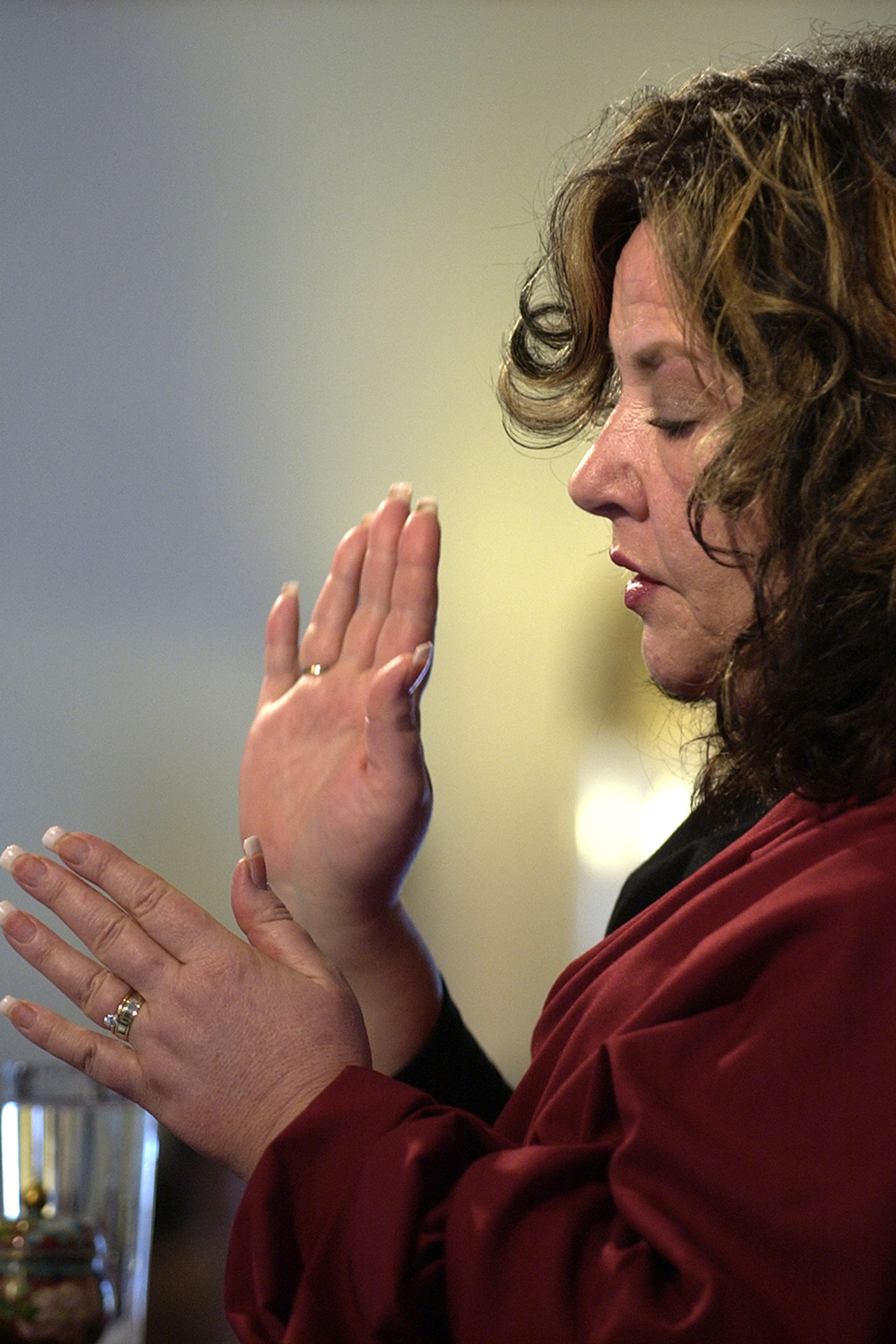
Start with Kindness: Cultivating Faith

From a series of tweets by Jetsunma Ahkon Lhamo:

When we see His Holiness the Dalai Lama’s teachings, I cannot help seeing how His Holiness loves all, respects all religions and faith, and gently insists our true responsibility and work is kindness, tolerance, loving spirit, ethics, compassion, etc. His Holiness also states that dogma is less important. Oddly, although I so love lineage for its unbroken method, I also teach exactly that. What I am truly adamant about is Bodhicitta, or compassion.

I am sad to see there are so many in every in every faith that don’t appreciate the value of starting the path with kindness. I’ve found if there is no compassion, no Bodhicitta, there is no progress to make. It is pride that stops us, allows us to claim progress when there clearly is none. Progress is indicated by change and developing good qualities. Yet we see blustering haters with huge egos insist their way is the only way, and having graced the praying world with their sermons for 30 years! 40! Sat at the feet of Who-ha and Ding-dong and found the religion they can live with. It suits their agenda. I can only imagine how much ego and pride it takes to do that. In faith, no one should ever have an agenda. What, you want to wear gold lame’ and your choice of the women or men? Or wear robes and be as ordinary as you please. Or dress like a farmer and insist that is your claim to correct view. Is this the “Kabuki Theatre” of faith? We show our progress by demonstrating our loving qualities and truthful method. Claiming you are the real deal while being the judge, jury and executioner does not qualify. That is hatred and ignorance. Opinions are only opinions and should never be considered truth. We must never rigidly adhere to that, particularly when there is no kindness and love.

I feel, for instance for Waylon at Elephant Journal and a former blogger. Here is a war that is so petty it would be funny if not true. $1.00 – a dollar- to keep the journal afloat. The ex-blogger takes up wars and takes this one as a cause. Like Waylon is not supposed to pay bills and keep it going. Ridiculous. Small minds love small things, my mom said. She was actually quite correct. What do you sleep in? Your own poo-poo? The leakage of your neurotic notions? Why not gain a good heart and healthy mind and altruism to benefit all sentient beings?

See, faith and love are not about you. You don’t own truth. And you are not entitled to spew your false view or nastiness all over others. We can see, if you do, how flawed your practice must be. No good results! Yet here the grand proselytizer continues to offer others their lack of wisdom – while whining and strutting. We call this the “king baby” syndrome. Baby needs his milk, and must be coddled. Oh, don’t argue. “King baby” is ruthless as he feels he is a “king” above all. In my heart it seems to me that when I bow it is to the Three Precious Jewels, my Root Lama, Lord Buddha, Guru Padmasambhava. Not to needy ordinary people with way too much to say, and no love to back it up. I will not bend my knee to judgment and hate. I do not honor the needs of “king baby.” He is ordinary and he is a useless fool. All about actual pride in the pain inflicted. But he doesn’t matter. You do! You have the Buddha seed, and still have the time to grow it well. How can I help? All my life is about helping. Tell me what I can do to guide your path.

Copyright © Jetsunma Ahkon Lhamo.  All rights reserved
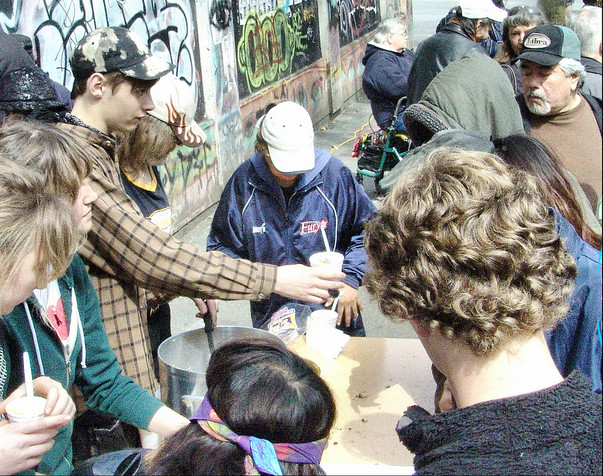
Practical Advice on Giving Rise to Love

From a series of tweets by Jetsunma Ahkon Lhamo:

I feel as Buddhists we should not waste time making judgments about others. No grudges, no hate, no excuses.

As Dharma practitioners we should deepen in Bodhicitta and wisdom and abandon self-absorption and hatred. Or quit whining about your life.

As Buddhists, we must endeavor to help and love others, not just ourselves. Serve so others don’t suffer. Just love.

If we give nothing to anyone, do not respect others, need attention, are uncaring about other’s feelings and hearts, we are not Buddhists.

Never ruminate or whine if you are judged and slandered. Apply the antidote as the Buddha taught! Empathy and compassion for all!

As His Holiness the Dalai Lama teaches: one needn’t be Buddhist to practice ordinary human kindness for a better world.

Americans love to eat out, go out to movies, and then eat more. Fix a healthy meal at home and play chess. Take the money saved and feed the poor.

We must abandon the ivory tower of preening ourselves with big words and pride. Climb down and do anything to help all beings!

Bodhicitta arises when we contemplate the conditions and sufferings of all beings! In private, in our inner space, love is born!

On our way to a lovely meal and evening out, we pass the homeless, a mangy, starving dog, a bully beating a child. We don’t even slow down.

Humility is hard. We start by allowing others their dignity. We continue when we see it was never ours to allow. Ice the cake with generosity.

Humility is hard. First we lift all others above our own heads. Then we recognize the Buddha in them. The icing on the cake is love.

To all of you who earnestly seek awakening and the birth of Bodhicitta I love you! Weak or strong I raise you up. I am your servant!

Copyright © Jetsunma Ahkon Lhamo.  All rights reserved

Building Bridges

From a series of tweets by Jetsunma Ahkon Lhamo:

I would like to mention my students calling me this or that holy title. I am used to Jetsunma, have had that for several lifetimes. But I am not puffed up. And not interested in “moving up.” I am also not looking for approval, or ego “hits.”

I love “love” though. I want to speak as western people do. That is my way and why I was born in Brooklyn and recognized at 38 years old. I’m supposed to be familiar, and western. That is why I am here, to make a bridge. True, many dharma people do think the intellectual approach is the only way. I feel if the essence, the nectar of Dharma, can be explained in any way, it is a great and noble thing. So many, like parrots, can say all kinds of foreign and unnecessary words, but it is like spitting out candy. No value when coming from an ordinary mind.

If one does not feel happy with my way that is ok. I still love you and respect your way. Please allow me that same grace in the name of Bodhicitta, as I will with you. There are many appetites. We can feed them all if we can forget the BS, join hands and leave the world better for having loved and cared for each other and all sentient beings. Shall we try? Can we do this? Accept each other? Yes, we can.

Copyright © Jetsunma Ahkon Lhamo.  All rights reserved
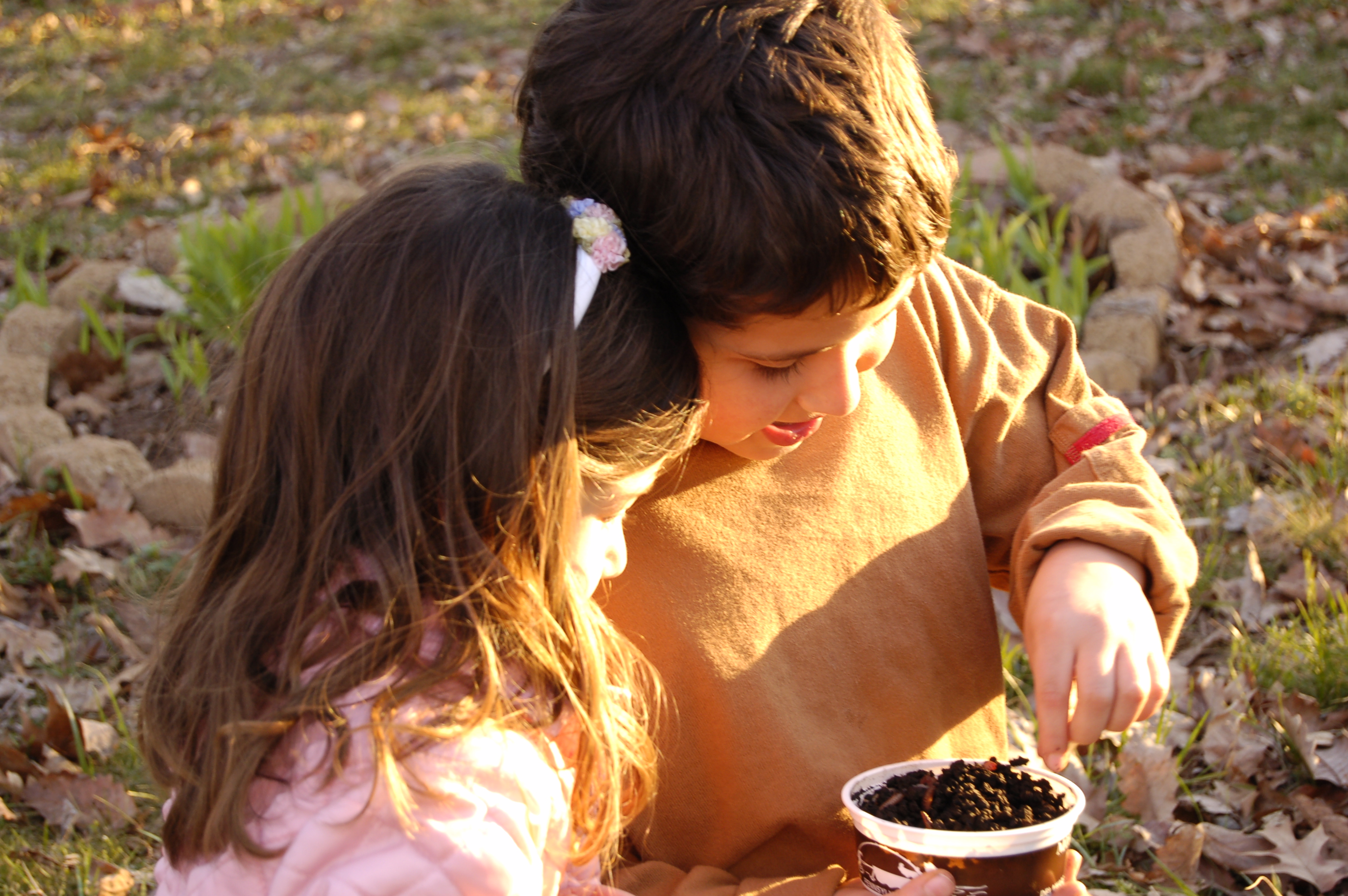
Renunciation and Compassion

From a series of tweets by Jetsunma Ahkon Lhamo:

Two years before the parinirvana, Kyabje His Holiness Penor Rinpoche, my Guru told me he was no longer useful to sentient beings, that he would go. Shocked to my core I begged “please Holiness, we need you. We are not ready. Palyul is not ready; and you are our Father.” The heart sons came, and I know they must have begged also. To a living Buddha like His Holiness Penor Rinpoche, there is no reason to live if not liberating beings.

Actually I feel the same way. When I know my work is done, my usefulness is over, I too will want to go, and return swiftly to benefit sentient beings again. So it is with the way of the Bodhisattva. There is no attachment to the world per se. The world is beautiful, but also temporary, filled with cruelty and selfishness. Unkind. So it is like a costume party gone very wrong. There is no point in staying. The music stops, the balloons deflate, the food turns, there is nothing left, nothing but the dancing dead, dreaming. Renunciation is seeing this clearly and losing affection for the narcotic quality of samsara. Just that – seeing through the hallucination.

When the view is understood we recognize the empty nature of all phenomena, and of all beings. Each being, while lost in this dream, has within them the seed of Buddhahood. We have the seed, but have not awakened. So it is still a seed. When anyone tells you we are inherently awakened, they are deluded or fooling themselves. We have the seed but it is dormant. We have to grow it, ripen and mature it. When you see a worm on the ground, can you point at it and say “awaken! Now! Do it! It’s simple! No effort, all magic!” No, and you will look like a lunatic as well. The worm is, however equal in nature to every Buddha. The difference? The worm is still asleep, ignorant. No recognition. No ripening. No method no path. Someday, the worm in a different form will meet someone who has a connection to Dharma and will lead the way. Then Wormie will find the Guru and the path; method. And hopefully at that time will be in a form with a full array of faculties and the inclination to practice. There is no instant “Aha!” in recognition. In Dharma it is step by step, practice and accomplishment. For now, we must pray for them – the wormies. We must have the kindness to help them on their way…

We spend so much time in pride and arrogance pretending to be Guru or convincing others we are so accomplished. How does that help? It doesn’t. We need to awaken, feed the hungry, benefit beings. Then we have the power and heart to lay down the ego trip, stop explaining how enlightened and great we are, and show the great concern of the Buddhas and Bodhisattvas for all beings of all shapes, colors, species – all. It is this great compassion, this awakened Bodhicitta that is the difference between wormies and Buddhas. Secretly there is no difference. It is the outer relative reality that is different. But wormie is still a worm; and we the elders of his great “cosmic” family. They are our children, brothers, sisters. Just as we walk the path we must do so by bringing every being with us.

Copyright © Jetsunma Ahkon Lhamo.  All rights reserved

WP2Social Auto Publish Powered By : XYZScripts.com