Upholding the Extraordinary


An excerpt from the Mindfulness workshop given by Jetsunma Ahkon Lhamo in 1999

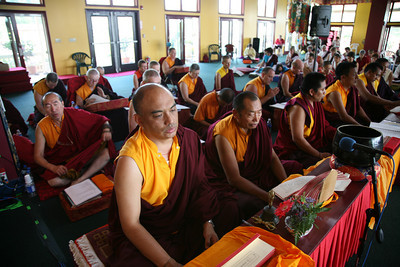
When we view one another, if we have taken teachings together or empowerments under the same teacher, we are Vajra brothers and sisters.  We are family.  When we see each other, we should be willing to lay down our lives for each other because there is nothing more precious than someone who is holding empowerment, holding the blessings of the Buddha in the world.  That doesn’t mean you have to make a big display about it.  You still have that one vertebra bow trick you could do.  We hold our Vajra family as being most precious.  We should think very, very carefully how we deal with our Vajra brothers and sisters.  If we’re ill-tempered, hateful, scornful towards them; if we are not holding them in pure View, holding them as gods and goddesses, as deities and consorts, if we are not looking at them in that way, we are committing a non-virtue.  If we speak with hatred or ugliness to a monk or nun, we are committing a heinous non-virtue.  I don’t think it’s written “heinous” in the book, but I’m telling you, it is.  It is a serious non-virtue because monks and nuns are the providers, the holders, of the doctrine that make it possible for us to practice.  So if we were to speak with disrespect to a monk or nun, the one who suffers from that is us.  The monk or nun, they’re going to react or not react.  That’s their business.  Whatever they do, that’s their practice.  You’re only responsible for your own practice.  And whether that’s a good monk or a good nun, that’s also not your problem.  That they are holding the Buddha’s teachings invites you to accomplish pure View regarding them.  So we should not think of monks and nuns as being equal to us.  I think of monks and nuns as being higher.  They hold the Doctrine, and I hold the view about them.  So even though I am required, to sit higher than the monks and nuns, if I didn’t have this job, I would never willingly do it, never.  I would never willingly do it.  I know you guys on chairs, you’re thinking, “Oh God!”  But in general, I will tell you that when you have the opportunity to sit lower than a monk or nun, you should try to do so, always.  If you have the opportunity to receive a cup of tea from a monk or nun,  receive it properly.  This is from a monk or a nun!  This is really important to hold the View.  These nuns are goddesses.  They are Tara, none other.  These monks are the appearance of Avalokiteshvara in the world, Chenrezig.  Their compassion establishes the Lineage on this Earth.  It’s because of their efforts that we are able to keep ourselves together.  It’s about raising up what is extraordinary, raising the Dharma up higher.

For monks and nuns, there is a particular hierarchy that we think of when we honor one another. For instance, the younger – I don’t mean younger in terms of age but younger in terms of ordination – the more recently ordained monks and nuns are supposed to hold the elders in higher respect, and you should because they have held the robes longer.  Even if you’re better at your practice, if there is a monk or a nun that has held their robes longer than you, you hold them up.  You practice that View.  You monks and nuns that have had your robes for a long time, however, you don’t hold yourselves up.  You don’t think, “Well, you know, I’m an older monk, I’m an older nun.” In fact, your job should be a little bit like the tactic I take.  Perhaps you can allow younger monks and nuns to show some respect if that is their practice and they are willing to do so, but in your mind, you should be thinking, “These are the most precious ones, the babies, the newly ordained, fresh, moist with longing.”  You should think that they are still fresh from that devotion, from that opening, from that pouring out and the gathering of merit that it took for them to become monks and nuns.  You should think, “These are the jewels.  I, as an older monk or nun, am responsible for bringing these along because they are so precious.” not because they are younger in their ordination.  Do you understand that?

In a way, each of us is looking for ways to not have our own ego in the center of our own mandala.  We are looking for a way to practice View so that we really begin to awaken to the sense of all phenomena, all appearance, as being none other than the celestial palace mandala, and that doesn’t mean thinking it.  It means practicing like I said, not just saying, “Oh, everything is love and light, everything is celestial palace mandala.” That’s not how it’s done.  That will produce absolutely zero result.  Positive thinking is not the same thing as practicing View.  Positive thinking is nice, it’s lovely, I hope you do it, but that ain’t what the Buddha taught.  Practicing View is much firmer than that, and yet more subtle.

Practicing View is instituting the habit in your mind to see things differently than you did before.  Practicing View is using every opportunity to get yourself, your ego, off that throne, and using every opportunity to flush out that obsessive-compulsive desire syndrome.  You know that syndrome: the one that says if you have something sweet, now you have to balance it with something salty and then you have to have something sour and then you have to something wet and then you’re thirsty and then you’re hungry.  That is never ending.  Those are the attributes of your ego.  That is what your ego does, that obsessive-compulsive nature, that constantly going around in circles with what we want.  That is absolutely the nature of the ego.  That is all it does.  That’s all it does, and your five senses help you do it.  You smell what you want, you see what you want, you touch what you want, you grab what you want.  The five senses help us to do that.  Any opportunity that we have to move away from that is an excellent opportunity.

When we have those opportunities, and we search them out, you will find those opportunities everywhere, because there is no place where it’s impossible to practice the sacred.  So that being the case, once you move into that posture of really practicing View and beginning to give rise to that recognition and beginning to see all extraordinary, compassionate, sacred objects as being something different — once you begin to see opportunities in every part of your life, you will begin as well to recognize Guru Rinpoche’s blessing.  Once you recognize those opportunities and practice like that, Guru Rinpoche’s blessing will be everywhere.

© Jetsunma Ahkön Lhamo

Karmic Ripenings

From The Spiritual Path:  A Compilation of Teachings by Jetsunma Ahkon Lhamo

We tend to externalize our experiences: everything happens “to us.” We externalize all cause-and-effect relationships as somehow separate and distinct from our own minds. To some degree, we even externalize our thoughts and feelings as if they were solid things that can overpower us. If we base our happiness on a new car or a personal relationship, we are powerless when they break down. We may even warily watch for signs of the next unhappiness.

In our practice, if we are unable to concentrate, we have no real understanding of why that would be. Perhaps someone in the next room has a TV playing; that is why we can’t concentrate. Or it’s because we’re here in the West, where everything is materialistic and fast-moving. Or perhaps our parents brought us up wrong. There are causes aplenty, and they’re all out there. Similarly, if we manage to practice properly, the environment is somehow responsible for our happiness. “I like to pray in my own little room.” Or: “I like to practice sitting on a cliff somewhere.” Sometimes we feel dull, lethargic, helpless, lonely, or all of those wrapped into one. Yet we don’t know why. Insidiously, we become resigned to it. “That’s just the way I am,” we say—and we take this as a validation, or permission to feel disabled emotionally. That is how crippled we become when we fail to understand the causes of our own unhappiness. So we concentrate still more on our suffering. Since we believe in the reality of self-nature, we create in our minds a separation between self and other. Then we react with attraction, repulsion, or neutrality. This is where desire enters. Also hope and fear. And karma.

How does karma function? Please picture a black vertical line on a white marking board. This line is the present, where you are right now. To the left is the past; on the right, the future. If all of this can be seen to represent your own mindstream, if that could be done, your self-nature is located on the line in this time and space grid. In the here-and-now. To the left, in your mindstream’s past, karmic seeds are ripening and coming forward like light and dark bubbles. As they come forward, they are experienced in the present. As they pass the present line, they actually work as catalysts or causes for future events—depending on how you react in the present moment.

You have a vast number of bubbles surfacing from countless lives. The dark bubbles are negative seeds, negative causes: you were selfish or you killed someone; you were greedy or hateful. But you also have light bubbles, meritorious seeds: you helped feed starving children, you practiced Dharma, you were kind; you did many wonderful things. In everyone’s mindstream there are mixed causes (like partly overlapping light and dark bubbles) that are ripening and coming to the surface, to the present moment. How they ripen depends on what events and attitudes are at the surface, interacting with these ripenings.

© Jetsunma Ahkön Lhamo

Your Life: A Vehicle of Blessings

An excerpt from a teaching by Jetsunma Ahkon Lhamo called Turning Adversity Into Felicity

There is happiness in watching one’s mind change from that which was tightly constricted, self-absorbed and contracted into that which is spacious, lifted, calm, receptive, generous, and has a strong degree of clarity!  Watching oneself grow in that way, haven’t you ever noticed that there are so many things that bring us joy?  Like I said, we can have love, we can have money, we can have good food, we can have a great car, there are so many things that make us happy for a little while.  But my experience has been—and maybe this is the same for you as well—that nothing makes me feel more joy and more happiness than watching my own practice mature, watching my mind transform into something it wasn’t before, watching the mind grow into something which is relaxed, which has a kind of sophistication to it.  A sophistication that’s based not on closing the eyes, but engaging in a purposeful way, to watch myself develop new habits, to watch myself grow through things that I could not grow through before and suddenly I have mastered.

These are the real joys in my life.  These are the things that sustain me, and I think if you think about it, you’ll notice that every time you’ve gone through a period of spiritual development and growth, you will find that you have become much more satisfied with yourself than anything else could have made you.  Happier.  Oh, it may not be the jump-up-and-down kind of happy we get when we get that new car, but it’s a quiet, supportive, dignified, noble kind of happiness.

And what else brings us the motivation to practice that way, brings us the necessary components that unfortunately do what we need, gives us that old kick in the butt, other than adversity?  It’s adversity that ultimately comes to be the greatest blessing in our lives.  Not that you want it.  You don’t go, “Hey!  Bring on the adversity!  Bring it on!”  That’s not what you want to do.  Of course, we’re not going to think like that.  Nobody wants adversity, but the trick here–and the point of this teaching–is that we can transform adversity into extraordinary benefit through utilizing the gifts that were given to us by the Guru, through using all the objects of refuge as our ultimate support and our true refuge, through not relying on the unpredictable, temporary, mixed events of samsara and grasping at them as though they were our object of refuge, but instead relying on the Guru as the supreme object of refuge, and engaging in the Guru’s teachings, following in the Guru’s example, using that method that was given.  If we do that and transform adversity into great benefit, the benefit is extraordinary.

It’s extraordinary.  It has a depth to it that can’t be gotten any other way.  That’s all I can say about it.  If, let’s say, in Never-Never Land—we’re back to our Peter Pan thinking—it is possible to experience poverty, to wish upon a star and suddenly a million dollar check is in our hand, the superficiality of that kind of happiness would be evident from that point on through the rest of your life because all you have there is a million dollars, and a million dollars in a mind that is completely dissatisfied, untrained, unhappy, not relaxed, and does not make happiness.  And the first people who will tell you that are people with a million dollars who are not happy.

But if, on the other hand, you experience impoverishment and begin to create through your practice, in a disciplined, compassionate and honest way, the causes for prosperity, the causes for riches of all kinds to enter into your life through the practice of generosity, through the practice of offering, through the practice of the discipline of engaging in Dharma practice, through all of the many means that have been prescribed by the teacher, then not only will the impoverishment cease, but there are layers and layers and dimensions and dimensions of supportive change that intertwine and are part of and are inseparable from the feeling of opulence and wealth.  And they all become a part of you.  You develop new habits that are a part of your awareness, a part of your perception, a part of the cause and effect relationships that are the karma of your experience of continuum.  And these are the blessings that when you actually die and enter into the bardo remain with you, not the million dollar check.  You can’t take that with you.  But the practice that you have engaged in, that has created the cause for happiness and prosperity, the habit of that, the merit of that, the virtue of that, the karma of that, the causes, these seeds go with you into the bardo experience and ripen there.  They go with you into your next incarnation and ripen there.  This is the method.

And I’ll tell you that if you, with faith and confidence and patience, engage in that kind of practice, not making up your own religion, not having bliss-ninny thinking or being forever Peter Pan,  if with faith and confidence and fervent regard you actually engage in what the Guru has taught you, then it’s as though you have accomplished the most extraordinary spiritual practice.  You are actually at that point a Dharma practitioner, an intelligent one, creating cause and effect relationships that are beneficial.  When you have accomplished in that way and you have done so with the idea that with faith and fervent regard you are entering that door of liberation, out of that burning room and into happiness, then at that point it’s as though you have the very thumbprint of the guru on the fabric of your mind and on the fabric of your heart.  You have become like one of the Buddha’s sons and daughters.  You have become disciples of the Lamas who have accomplished, who have achieved all of the necessary components of enlightenment and have returned for the sake of sentient beings.  You have accomplished what the Guru has come to the world to invest in you, and it’s the only way to do it.

Simply repeating phrases, simply blinding yourself to reality, simply warping your own mind and denying what you see, simply skating through life on the surface as though there were no cause and effect relationships, as though you were basically a complete idiot, this is not receiving the blessing of the Guru.  This is not transforming adversity into felicity.

To open the eyes, to open the heart with confidence and patience, to accomplish the teachings that were actually given to us with courage, the courage of accepting responsibility, the responsibility of your own life, of your own reality, and holding that responsibility like a treasure, because once it is in your hand, it is yours.  No one can take that away from you.  Guru Rinpoche himself, if he was inclined to do so, could not take away from you the potency of how you can transform your life through practice.  No one can take that away from you.  It is the one thing that you have now in your hand that you will never be parted from unless you yourself give it up, and even then, although you’ve denied it, it’s still there.  In that way you are practicing this teaching that is so often spoken of, “turning and transforming adversity into felicity”.  Having practiced in that way, you come out of the experience of lack (or whatever it was that you had), deeper, more relaxed, more spacious, more sophisticated, more developed and happier.

You know in your heart when you have achieved that kind of success, when you have practiced in that way, and you also know when you’re faking.  My advice to you, therefore, is to look within with honesty and clarity and practice what you have been taught, and in this way your life will be transformed into a vehicle of blessings.  And it will always be that way.  And it is the one wealth that you have that you can actually take with you.

© Jetsunma Ahkön Lhamo

A Becoming Experience

An excerpt from a teaching by Jetsunma Ahkon Lhamo called Turning Adversity Into Felicity

How many times have we seen people expect love, kindness, support, financial prosperity, happiness to be their birthright, to be just given to them, that the world owes them a living?  You should give this to me.  Well, but you should, really!  You should, you know.  You should give this to me.  That’s how we think. Hopefully, as practitioners with some maturity, we can come to understand that what we are growing here is like a garden.  According to the seeds that we plant, according to the way that we cultivate our garden, so, too, will be our lives. That will be the fruit that comes up in our garden.

While we live, while we are engaged in Dharma practice, this is not the time to put on blindfolds and pretend that there are no causes and effects, to think that sort of a blissful kind of nonsensical, magical thinking is in order.  We shouldn’t mistake the Guru for a magician.  There’s a difference.  We shouldn’t think that the Lama is simply an idea, a magic formula.  If you smile and are nice to the Guru and make prayers, then you will be happy.  No, that’s not the formula that you were taught in Dharma class.  That’s the one that you made up.  Try to see the difference.  In Dharma, you are taught by the Lama that the ball is in your court, that you must create the conditions by which your suffering will end, that literally no one else can do that for you.  Even if the Lama were to stay by your side and walk with you, hold your hand, spoon feed you, constantly hold arms around you and make sure you’re warm and help you across the intersection so you don’t get hit by a bus, or whatever—even if that were possible—still it would not be possible for your suffering to be terminated by such a ridiculous relationship.  That isn’t how it works.

We are taught in our Dharma teaching that the ball is in our court, that we and only we can create the causes and circumstances necessary for happiness.  Method is necessary here.  Intelligence is necessary here.  Clearsightedness is necessary here.  Honesty is necessary here.  What is not necessary here is idiot thinking, magical thinking, Peter Pan thinking, stupid thinking.  That’s what’s not needed.

Of course, the first thing we do when our magical thinking doesn’t work out is we blame the Lama.  Isn’t that great?  It’s wonderful to have a religion because you can always blame somebody, but actually in Buddhism that’s not allowed either.  You can’t do that because if you do that, then you give your power away.  What have you got?  If the fault is outside of you, then the cure is outside of you, and you’re in tough shape.

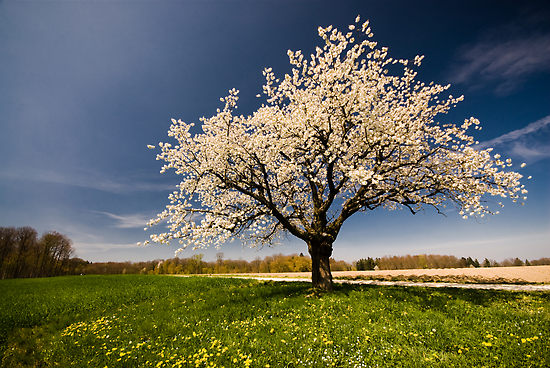
So in our faith and our religion we take responsibility.  We try to understand that cause and effect arise together.  How do we create the perfect causes by which to bring about happiness?  Well, slowly, slowly, a bit at a time, as we learn.  It’s a growing thing, and the first thing we have to have is confidence and the second thing is patience, and I’m not even sure if they’re separable.  They have to come together.  It takes time to create causes.  It takes time and it takes growth, and like anything that begins as a little seedling and ends up as a beautiful, blossoming tree, it’s not only the ultimate result of the blossoming tree that is a joy; every step along the way is also a joy.  It’s a becoming and growing experience.

© Jetsunma Ahkön Lhamo

Path of the Bodhisattva

Being grateful for the many gifts I have been endowed with in this very lifetime, I now wish to offer a prayer usually associated with vows:

Today I have picked the fruit of this lifetime. The meaning of this human existence is now realized. Today I am born into the family of buddhas and have become an heir of the enlightened ones!

Now, no matter what occurs hereafter, my activities will be in conscientious accord with the family, and I shall never engage in conduct that could possibly sully this faultless family! Like a blind man in a heap of refuse, suddenly by chance finding a precious jewel, similarly this occasion is such that today I have given rise to the awakened mind!

Today, before all of my objects of refuge, the sugatas as well as all beings, I call to bear witness where the guests of this occasion- the devas, Titans and others- all join together to rejoice! The precious Bodhicitta, if unborn, may it arise; when generated may it never diminish and may it always remain ever-increasing!

Never apart from Bodhicitta, engaged in the conduct of the awakened ones, being held fast by all of the buddhas, may all demonic activities be fully abandoned!

May all the bodhisattvas accomplish the welfare of others, according to their wisdom mind’s intentions.

Whatever wisdom intention these protectors may have, may it come to pass for all sentient beings.

May all sentient beings be endowed with bliss, may the lower realms be permanently emptied! May all the bodhisattvas, on whatever bhumi they remain, fully accomplish all of their aspirations!

From “THE PATH of the Bodhisattva: A Collection of the Thirty-Seven Practices of a Bodhisattva and Related Prayers” With a commentary by Kyabje Pema Norbu Rinpoche on the Prayer for Excellent Conduct

Compiled under the direction of Venerable Gyatrul Rinpoche Vimala Publishing 2008

I find that prayer soothing, comforting, and dedicate it to all who are suffering in any way. May all beings benefit!

Religion of Cause and Effect

An excerpt from a teaching by Jetsunma Ahkon Lhamo called Turning Adversity Into Felicity

We try very hard as practitioners to practice Guru Yoga clearly and purely, the practice of fervent regard toward the Guru, utilizing the Guru as a tool of benefit in one’s life.  One thing that we should be perfectly clear about when we are trying to practice in this way, is which religion we’re actually practicing.  Our tendency as Westerners is to repeat the patterns and ideas that we have seen before in the religions that have been in our culture far longer than Buddhism has been.  In the religions that our parents practiced and their parents before them, that are native to our Western culture, the idea of looking at the object of refuge, might be, perhaps, if one is a Christian, Jesus, or if one were a Muslim, Mohammed.  I don’t know enough about the other religions to really say clearly.  If I’m making a mistake, please pardon me.  But I will say that generally the pattern that we have been taught is that you have faith, and the declaration of faith is simply enough, that you embrace this idea of faith, and the faith itself– there’s an element of magic to it, in a sense.  It seems as though the faith itself will simply carry us through.

In Buddhism we don’t feel like that, although faith is certainly an element, and it certainly has the capacity to carry us.  Buddhism is, uniquely, a religion of cause and effect relationships.  When we go into life situations, we do so with our brains intact and our eyes open.  We clearly are aware that without creating the causes for happiness there will not be the condition of happiness, that you cannot create an apple tree through a grape seed.  It simply doesn’t happen.  Cause and result seemingly arise one after the other, but in fact we are taught in Buddhist teaching that they arise at the same time, interdependently.  And we are a religion of realizing that we must create the auspicious causes in order to receive the appropriate results.  So while we want to adopt the idea of faith, we wouldn’t do a practice or hold an inner mind posture that would be what I call “idiot faith.”  We would not engage in a practice that, well, quite frankly, makes us look a bit like a bliss-ninny.  We would not engage in a practice that was mindless and not thought through.

Faith is definitely a component, but the way that it is used when we are using the practice of Guru Yoga, is like this.  All conditions have within them a mixture.  Even the best conditions, the most wonderful conditions, have within them, because they arise in samsara, the seed or inherent causes by which equal amounts of unhappiness as well as happiness will arise.  And so, when unhappiness comes to us, we absolutely should engage in curative measures.

Primarily we would engage in curative measures through establishing faith and confidence in the Guru, but it doesn’t stop there.  It isn’t simply holding the idea of faith and confidence in the Guru.  At that point, with faith and confidence in the Guru, we actually have to rely on the teachings that the Guru has given us.  That’s how you have faith and confidence in the teacher.  You don’t just say it and proclaim it and go back into some deluded “oh-don’t-worry-everything’s-going-to-be-fine” kind of idea.  You would, with faith and confidence in the Guru, begin to use what the Guru has taught.

The Guru teaches us first of all, of course, that in order to create the result of happiness and freedom, we must create the causes of happiness and freedom.  The causes of happiness and freedom are given to us in our Dharma practice.  They’re not a secret.  You can come here; you can learn; you can begin today, this very moment, to engage in creating the causes that will create your future happiness.

© Jetsunma Ahkön Lhamo

In a Nutshell

From a series of tweets from @ahkonlhamo

If one cannot practice even ordinary human kindness, how can one EVER hope to give rise to Bodhicitta?

If one has no strength to keep even one moral precept, how will that one EVER awaken to Buddhahood?

If one cares not one bit for the welfare of sentient beings, how will that one EVER attain Buddhahood?

If one knows no discrimination, knows not what to accept and what to reject, that being will revolve in cyclic existence endlessly.

Whoever seduces someone away from their sacred vows, that one is reborn in Vajra Hell, as well as the vow breaker.

If one does not offer food to the hungry, that one will be endlessly hungry. Their food will do no good. Or cause homelessness, no shelter

These are quotes from me, Jetsunma Ahkon Lhamo, based on years of study, practice, and inborn wisdom. My life bears witness, and I offer this to you.

© Jetsunma Ahkön Lhamo

With Fervent Regard

An excerpt from a teaching by Jetsunma Ahkon Lhamo from the Vow of Love Series

One of the problems that we Westerners have is that we’ve grown up with religions that say God is external.  That is not what the Buddha teaches.  The Buddha teaches us not that our supreme object of refuge is an external God, but that ultimately, in the deepest sense, our supreme refuge is enlightenment, the uncontrived natural state free of desire.  According to the Buddha’s teaching, it is possible to achieve realization; that desire-free state, that natural uncontrived wisdom state is attainable. According to which path you take, it is attainable in many lifetimes, it is attainable in some lifetimes, it is attainable in a few lifetimes, or according to the Vajrayana, with sincere practice it is attainable in one lifetime.

You have to decide for yourself what you’re going to do.  It’s a difficult job, because we are so filled with ideas from our upbringing.  People say, “I’m moved by what you say, but I just don’t know if I can renounce everything.  I just don’t know if I can give everything up.”  That’s not what’s being talked about here.  What’s being talked about is that you have to determine your objects of refuge.  You have to determine what your refuge is, and from that you should make your own decisions.  There are many different levels at which you can practice.  You can become a full renunciate, taking vows, taking robes.  You can also practice in a more casual way, laying the pathway for eventual deeper practice.  Nobody’s making a rule for you.  The point is that you should think for yourself and you should think past the ways in which you were brought up.  You should look courageously at suffering, at the causes for suffering, and at the end of suffering.

According to the Buddha’s teaching, there is nothing on this Earth that can end suffering for all sentient beings.  If we found the cure for cancer, AIDS, for everything, something else would happen, because the karma of sickness is there.  If we found the cure for poverty, something else would happen.  If we found the cure for war…. and all these ifs are mighty big. The karma of suffering is desire.  It is the root cause for all suffering.  Having determined that, we have to think that to get rid of it from our mindstreams will take something more profound than manipulating our external environment.  The problem cannot be solved in that way.

I think it behooves us as Westerners to think deeply about these things. From my point of view, I have seen Westerners adapt the Buddhist religion, and I am not satisfied in the way that they are doing it.  They’re practicing Buddhists, they know the mudras, they know the mantras, and they know how to ring the bells. They know how to do all the ceremonial things that come with the Buddhadharma; and I am not happy with their minds.  Because maybe they didn’t take long enough to decide for themselves what the object of refuge is and what the cause of suffering is.

You can collect Dharma in a materialistic way just as well as you can collect cars and TVs.  You can collect Lamas and the blessings of Lamas in a materialistic way just as easily as you can do anything else.  You can collect new thoughts and new ideas and spiritual truths and books and all kinds of things, and never change.  Or you can come from a really pure place and examine these things with courage and with pure intention. You can be determined to awaken the seed and the fire of compassion in your mind by examining the suffering of all sentient beings. You can encourage that flame, that fire, fanning it into life so that it burns away all obstacles to your practice. And you’ll find for yourself your object of refuge, and you’ll go…just go.  You can do that.  It takes courage and it takes pure intention and it takes determination to really think about these things, in a logical and real way.  That’s what I hope you will do.

I am a Buddhist, and I always will be. But I’m not trying to sell Buddhism.  What I would like to see is a world without suffering.  That is the point, hopefully, of all religions; certainly of mine.  I wish to talk about the same thing Lord Buddha himself talked about: the causes of suffering and the end of suffering. If we start there, thinking of these things and thinking of them with what Buddhists call fervent regard, we can make a lot of progress.

Contemplating these things creates a great deal of virtue and merit. After you think about these things, please dedicate the time that you spent and the effort that you took, to benefit all sentient beings.  In other words, offer the virtue or the merit that you have accomplished by even just wanting to love.  There’s a tremendous amount of virtue in that.  Offer that as food and drink to all sentient beings so that the karma of that can be shared with a world that is suffering.

Copyright ©  Jetsunma Ahkon Lhamo.  All rights reserved

Determine How You Will Spend Your Life

An excerpt from a teaching by Jetsunma Ahkon Lhamo from the Vow of Love Series

I wish from my heart that it would be okay to be a renunciate.  Because to be a renunciate is to renounce the things that one has desire for, the objects that one grasps, and instead seek only a true source of refuge.  To renounce the sources of suffering.  There ought to be a place for that in our society.  It ought to be okay for anyone to do what they want. It ought to be okay if they want to remain as they are and continue to function in the ordinary ways that we are used to in our society.  But it ought to be okay if a person sincerely becomes discontented and wants to seek a supreme refuge that is the end of suffering, which is enlightenment.

You don’t necessarily have to be a Buddhist to adopt these kinds of ideas, although I found for myself that the Buddha’s teaching was the best way to do it.  But not only Buddhists can do this kind of thing.  In order to do this successfully you have to determine what your supreme refuge is.  You have to really review that.  This is why I like what the Buddha said, because in the foundational teachings you are never asked to buy something with blind faith.  You’re asked to think things out logically.

This is what I suggest you should do.  Think to yourself, “Really, how do people suffer? How do sentient beings suffer?”  Sentient beings of all kinds, not only people. If you can learn anything about non-physical sentient beings, do that.  The Buddha has many teachings on non-physical realms.  But, even about just the ones that you know, human beings and animals.  Check books out from the library on different life forms and different conditions around the world.  Check out books about India.  Check out books about Ethiopia.  Check out books about different cultures and different ways in which people live.  Check out books about different animals and different life forms.  How they grow, how they evolve, from insects to lions.  Study them all carefully.

You will see that animals are consumed: that they are eaten, and that they eat.  That human beings grow sick, grow old, and that they die.  That so far, no one has definitely proven they can keep from doing that.  Even within that, there are sub-sufferings and different kinds of sufferings.  While you are studying all of those things, develop a deep sense of compassion for the endlessness of it. Compassion for the lack of resolution and that everything around you will have its moment of intense suffering; everything and everyone.  Develop a deep sense of compassion, that their suffering is endless.  That it is unbearable at times.  And that there is yet no solution.  Think for yourself, what could be the possible solution; try to think one up.  Really work that through, down to the place where you’re into the planning stages. You will find it will never work, because we are all filled with the karma of desire.  Every one of us.

Having decided for yourself that all sentient beings are suffering so greatly that you can no longer bear it, and having understood that there is nothing else but to end this suffering, then maybe you might also think there’s no other way to spend your life other than to accomplish that for yourself and other sentient beings.  Because the only way you can truly benefit beings is if you yourself have achieved some realization and understanding of the causes of their suffering.

Having understood all these things, then you must determine for yourself how you will spend the rest of your life.  You must determine this, and it will take every day of your life, because we’ve been trained to do the opposite.  You must think for yourself again and again and again, of what use is this life?  If I am constantly filled with more suffering, if I am constantly participating in a scenario that always ends up with suffering, how will this life be of any value?  And if you come to the solution that this life has value if it is a vehicle for enlightenment, then you should think for yourself, how should I do this?  You should examine what you do now; how you spend your day.  Then you should think, how have I spent my years? Then you should think, what should I do?

Copyright ©  Jetsunma Ahkon Lhamo.  All rights reserved

Red-blooded Buddhist

An excerpt from a teaching by Jetsunma Ahkon Lhamo from the Vow of Love Series

Now, I’m a red-blooded American.  You can’t get any more American than born in Brooklyn to an Italian father and a Jewish mother.  That’s as American as they come in this world.  So I understand our culture. I don’t claim to have any special powers or abilities; in fact I could study Lord Buddha’s teachings for the next twenty thousand lives. It’s the same for everyone: until you reach supreme enlightenment, you don’t understand the Buddha’s teaching, because to do that you must understand the Buddha’s mind.  I feel that I am a beginner.  But one thing I do understand is that as Westerners we have not yet come to understand what our objects of refuge are.  One of our main sufferings, and the cause of more suffering, is that we take refuge in the wrong things.

As a culture we have not come to understand the value of using this life as a vehicle to achieve supreme realization.  Even for those of us practicing Dharma, it takes a long time to understand that the only value of this precious human rebirth is to achieve enlightenment.  Here in America we have the most precious jewel of all: the leisure to practice.  If we don’t have the time, we can make the time.  You can.  Try it.  You can.   We have the leisure to practice.  We have the ability to study.  We have within our grasp a true path that has proven again and again and again it can produce enlightenment.  We have these precious things, and yet we don’t understand that the only point of this life is to end suffering, not only for ourselves but for all sentient beings.  Because once we ourselves achieve realization, we can contribute to the end of suffering in a real way for all sentient beings.  For all others.

We tend to think of our lives in a very different way, because we don’t understand what our objects of refuge are.  We try to live our lives with immediate gratification. We think, “Well, I have to be busy because I have to have this and this and this and this and this and this.  I have to buy this, and I have to have this and I have to attain this.”  We don’t accept that maybe it is possible to live a completely successful life under a completely different set of rules.

Copyright ©  Jetsunma Ahkon Lhamo.  All rights reserved

WP2Social Auto Publish Powered By : XYZScripts.com