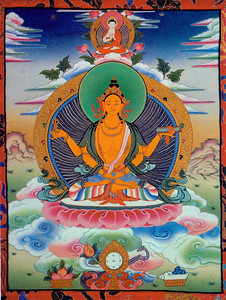
The Only Purpose

An excerpt from a teaching by Jetsunma Ahkon Lhamo from the Vow of Love series

If we studied Bodhicitta, or the mind of compassion, every single day for the rest of our lives, we wouldn’t even scratch its surface because it is so profound. There are many different levels at which we might come to understand its meaning.  The word Bodhicitta can’t really be translated into English very well. It means enlightenment. It also means compassion. Compassion to us means something quite ordinary. We might think that we already understand compassion. We may think, “I don’t eat meat anymore, and I try not to kill things. I try not to hurt anybody, and I feel sorry for most everybody, you know. Therefore I fully understand compassion.” Unfortunately, if we think like that, we’re probably missing a lot, and we fail to understand the real meaning of enlightenment. If we think we understand enlightenment the way most Americans do, I’m afraid we don’t have a clear view of it, because we haven’t had teachings on what that mind, which is free of conceptualization as well as discursive thought, is really like. We just haven’t had that kind of teaching.

When we think of an enlightened being, we think of someone who dresses up a certain way. He or she wears robes and almost always has their eyes turned skyward. We have many different ideas about enlightenment and, unfortunately, none of them are true. The Buddhas and Bodhisattvas who are reported to appear in the world, for instance, take many different forms. They don’t have to be a Buddhist to be a Bodhisattva; they just have to have realization. They take whatever form is necessary in order to benefit beings, because that is how the mind of compassion works. That is how the mind of enlightenment functions. It does not cling to the idea of self. It does not cling to egocentricity. Literally, a Bodhisattva might appear in the world as food or drink, offering its body in that way to benefit beings. It might appear in the world as a teacher. It certainly might do that. It might appear in the world as an ordinary, funky-style person. I mean funky beyond belief! Unless you have traveled in India and Nepal, you don’t know what funky means yet! A Buddha or a Bodhisattva might appear in such a way that is funky beyond belief, and yet within the context of that life, has an incredible impact on many people, or on just two or three people who themselves go on to achieve realization and have an incredible impact on beings.

You see, the mind of the Bodhisattva is such that it doesn’t cling to the idea of greatness. There is no thought of greatness. The moment we think we have to be great, or have to wear a certain kind of robe, or look a certain way, or do a certain dance, we have lost the entire idea and the main reason why a Bodhisattva would wish to incarnate in the world. A Bodhisattva’s only purpose is to benefit beings, and that is done without attachment to form and content. It is done in whatever way is necessary.

Copyright ©  Jetsunma Ahkon Lhamo.  All rights reserved

Cars, Sunrays, and Choicelessness

An excerpt from a teaching called Intimacy with the Path by Jetsunma Ahkon Lhamo

The path of Buddhadharma can only bring about the result that is consistent with and the same as, the seed or its essence.  We’re looking at essence, we’re looking at movement and we’re looking at result.  Try to imagine how we see things ordinarily.  When we are doing what seems right, moving through linear time, isn’t it the case where if something happens to you—let’s say, your car breaks down—that’s it.  The car broke down.  It’s out there. It’s isolated.  It has no connection with anything else.  Did the car break down because you forgot to put oil into it?  No, no.  It just broke down.  Did the car break down because you never gave it a checkup or a tune up?  No, no, no.  It just broke down.  It just happened that way.  Did the car stop because it had no gas in it?  No, no.  It just stopped.  It’s that kind of thing.  When we see events in our lives, we see them like that.  They happen out there.

Now as time passes, often there are these connecting things that happen to the events in our lives.  Maybe a year after the car broke down, several things might have happened.  You might have learned something about how to take care of a car.  Let’s say your husband or wife yelled at you for not taking care of the car and you learned because they yelled real, real loud!  Or, let’s say a year after the car broke down, a series of events happened in which you were challenged, and you put in some overtime so that you could make some more money so you could get a new car.  And so, a couple of years down the road, when you think about the day that car broke down, it’s no longer an isolated situation.  The car didn’t just break down!  It didn’t just happen.  There is meaning and importance that is somehow connected with all of that.

You can see a movement from even before the car broke down, because by that time you have enough distance from the chaos of your mind to be willing to look at things that you weren’t looking at before.  You can see that the car broke down, but you also know, in hindsight that in fact you didn’t take care of the car very well.  But now you see this as a total learning process.  It isn’t just that the car broke and you’re living with that horrible reality.  You’re not seeing this isolated, neurotic situation.  You’re seeing a trend, a movement.  You didn’t know how to take care of the car.  You didn’t do such a good job.  The car broke down.  Certain events happened by which you became naturally empowered to get another car, but that natural empowerment only happened because your first car disappeared.  It broke.

So now, in retrospect, you’re seeing this slow, beautiful movement, which started with your incompetence and led to your empowerment.  In retrospect, you can see the wholeness of it.  Doesn’t that give you a clue as to how we think?

We have this kind of an ignorance that plagues us, a kind of short-sightedness.  It’s not being able to understand whole pictures or abstract conceptualizations or how to see around things.  I don’t know how better to describe it.  So we only see something right in front of us and this is a kind of manic little posture we put ourselves in.

The path is like that also.  From the point of view of Buddhahood, one can see the primordial basis, the ground, which is uncontrived, beginningless, endless, unfounded and perfectly complete – Buddha nature, the primordial wisdom state.  We see that.  We see a dance or a movement, which is very much like having the same relationship with the ground as the rays of the sun have with the sun.  You can’t really say where the sun ends and the rays begin.  There’s no real way to say that.  There’s only a matter of opinion as to where one ends and the other begins.  And so we understand that sun’s rays are the same reality as the sun itself.

In the same way, the BuddhaDharma is understood as this radiance or display, which is inseparable from the source.  You can’t have sunlight without the sun.  It doesn’t exist.  They are married in the most intimate fashion.  There’s no separation.  This is seen from the point of view of Buddhahood.  We see the primordial wisdom state.  We see display as being inseparable from the natural resting state and we see this from the point of view of result, which is completely dependent on and based on the ground, the primordial wisdom state.  In other words, if we did not have this primordial wisdom state, which is Buddhahood, there could be no result of Buddhahood.  How would you accomplish it?  You couldn’t build it out of sticks and stones.  There would be no result.

So from the point of view of Buddhahood, this is seen as a three-legged stool or something that has three facets that are completely inseparable from one another.  The idea of whether or not one should practice, of whether one should be spiritual today or not, the idea of becoming stagnant on the path would not be possible if we didn’t see the path as being something separate from us in such an essential way that it becomes something we either walk on or put on.  Should one approach this particular problem in a spiritual way or do we simply let ourselves get away with it?

If we were to understand something of our own primordial nature, if we were to understand that the method is not separate from the result, then the hunger that we feel that brings us to the path would also sustain us.  There is a hunger that brings us to the path.  Something that makes us reach out, throughout the course of our lives. There is some kind of urging towards a natural, open, awakened state of wisdom and poise, a state that is free of the components of suffering.  We know that there is something.  We can feel it.  There is a natural urge and yet, even with all that urging and all that crying out in our hearts which we all do in some way or another, why is it that we are not able to sustain ourselves on the path?

What I’m describing is a very strong and powerful need to have our understanding of our spiritual life be so natural, so connected, so married, with every primal impulse that we have towards spiritual growth that we move past the point of making a choice.  That’s where you want to go on the spiritual path.  You want to get past the point of needing to make that choice again and again, because so long as you have to re-choose and reaffirm your path, you’re going somewhere that isn’t you.  You’re doing something you feel is separate from your nature.  You’re doing something still that is unnatural and so all these dilemmas come into play.

We become impotent upon the path then and we get to the point where we need to be inspired on a regular basis, because when you’re traveling a journey that is separate from you, inspiration is necessary.  On the other hand, do you need to be inspired to continue living, generally speaking?  Do you need to be inspired to take your next breath?  It’s true that sometimes we can fall into a confusion that is so thick and so deep that we don’t even understand whether we want to live anymore.  That happens.  There are people that commit suicide, but generally speaking most of us understand intuitively that life itself is simply a display of our nature.  On some level we’re beginning to understand that in order to continue living we’ve got to engage in the method of breathing and moving through our lives.

If we could only do that with the path, if it could be seen as natural for us and as inseparable from us as our own breath, then practicing the Dharma would be much more potent, much more natural for us, much easier.  Not easier in that you’d practice it in a schlocky way, or you would practice it without really caring how well you do.   Easy in the sense that it becomes as natural as scratching an itch or as natural as the intuitive knowledge that if you want to get out of bed in the morning you’ve got to swing your legs over the edge. It’s such a natural movement.

But that’s not how we practice Dharma.  We practice Dharma like it’s a big issue, something we have to do that is not us, a girdle that we have to put on, a thing that we have to suffer through, a ritual that we have to impress somebody with, something we have to set aside time for.  And ultimately, we lose touch with and have no sense of what it actually is to to live in spirit, to live a sacred life.

© Jetsunma Ahkon Lhamo,

Eat the Feast

An excerpt from a teaching called Vajrayana’s Final Hour by Jetsunma Ahkon Lhamo

How amazing it is to have everything line up: to come to the path, to have a teacher that you can relate to, a teacher who can give you the path and provide the necessary components of the path and its blessings; to have a path that can bring the auspicious result.

We would all be fools not to take full advantage. In this time when it is almost too late, this is the time when we should take advantage. There is no better time than this, particularly to meet with this Vajrayana path which has some specific element that is meant for this time.

How many times have you found yourself during the course of your life being faced with some bountiful feast and you take the posture of being a peasant who takes only the crumbs of that feast? You missed out because you did not know how to take hold. You found yourself dancing on the sidelines, holding back.  Isn’t that what’s happening now? Aren’t we in the midst of a bountiful feast, holding a precious jewel that takes endless lifetimes to find, and we just don’t know what to do. We sort of look around. We can’t help ourselves.

So take hold of it, use it. You’re standing at the threshold of the door of liberation, looking at the very mind of liberation, the face of Guru Rinpoche. Every day Guru Rinpoche is touching your life; Lord Buddha is touching your life. That Nature is revealed to you, but you cannot see it because you have the habit of being a beggar at a feast. You have to stop that now. Sit at the table like the king or queen that you are and eat the feast. It doesn’t get any better than this, or any easier. Take advantage of it.

When I say something like this to you it is with concern for the well-being of sentient beings, and for you. Accomplish ultimate compassion by becoming Bodhisattvas or Buddhas so that you can return again and again for the others. I and other lamas cannot find the way to speak to the others that do not have the karma to hear about the Path. But someday you will. In some future life those that you have karma with will come to that moment and you will be their only hope. They will have hopes of you. Will you be ready, or will you have missed the brass ring? I’m trying to make you hear this for their sake. Begin now before it’s too late.

Do What Makes Sense

An excerpt from a teaching called True Motivation for Kindness by Jetsunma Ahkon Lhamo

Let’s take a look at compassion. The Buddha teaches us that in cyclic existence suffering is all-pervasive and that there is one thing we have in common: we all equally wish to be happy. We are all working so hard to be happy.

The Buddha teaches us as well, that in our nature we are the same. Every sentient being that you see has within them the Buddha seed or the potential to be Buddha. Many have attained Buddhahood. And when you consider that each one of us has that same innate potential, you must follow logically and understand that, at some point, each one of us will be a Buddha. And at that point, who is to say who or what is better than any other? How interesting!

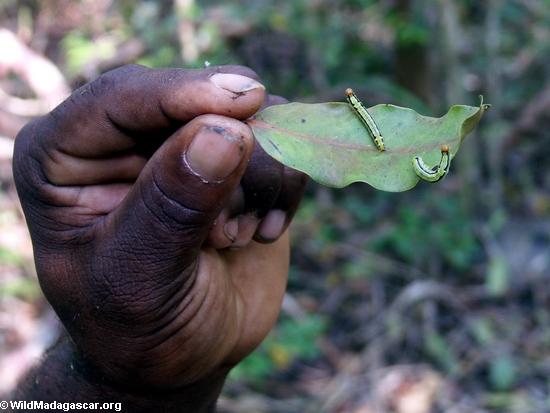
According to the Buddha, we all weigh the same in terms of importance, significance and value. That means men and women are the same, blacks and whites are the same, rich and poor are the same, people of different nationalities, different religions are the same, caterpillars and humans are the same. Yes! They all have the same nature. That’s a prejudice you don’t want to give up, isn’t it? But, according to the Buddha, all sentient beings are equal, and we are especially equal in that all wish to attain happiness.

Now, imagine what it would accomplish to think only of our own happiness. Not only are we the same, but we are, in our nature, indistinguishable from one another. If we were to look at each other from the enlightened perspective, we could not determine where it is that you end and I begin. These lines are drawn up by ignorant minds. In truth, Buddha nature is all-pervasive. So it doesn’t pay to think of my benefit and not yours. What would I accomplish? Only the reinforcement of my ego. I would tell myself that I am somebody important and separate. It would not accomplish enlightenment.

Logically, the Buddha tells us we should work endlessly for the benefit of all sentient beings until they are free of suffering. Logic tells me that there are many more of you than there are of me, that collectively you weigh more than I do. Therefore, I should dedicate my life to your well-being, not to my own. That’s logic. That’s the only thing that makes sense.

Kindness is not such that we’re doing anybody a favor by practicing it. Do you realize that? People will say, “You know, I understand this idea of practicing compassion, but I don’t feel particularly kind. I just don’t have it in me. I’m selfish a lot.” My answer is always the same: “Welcome to the world. Do you think you’re different from anyone else?” We’re all like that. It is this habitual tendency. Where you begin to change this habitual tendency is the intellectual examination of this information and the creation of a new activity pattern based upon it.  When you come to the realization that kindness isn’t a favor you’re doing anyone, or something you do when you want to be a good person, you will understand that kindness is the only thing that makes sense. At this point your habits will begin to change, and little by little you will begin to act in a compassionate manner.

You’ll know you have it when you don’t remember whether you’ve been compassionate or not, when someone says to you, “That was so nice of you, you were so kind” and you can only think, “What else would I have done? That was the only thing to do.”

© copyright Jetsunma Ahkon Lhamo all rights reserved


In the Posture of Honesty

An excerpt from a teaching called the Seven Limb Puja:  Viewing the Guru by Jetsunma Ahkon Norbu Lhamo on October 18, 1995

We should always be in the posture of confession.  We love confession, don’t we?  It’s so Catholic!  Well, no, we do it differently here.  In Buddhism confession need not be heard by any other person.  When we first got into the teachings about confession, there was a line of people waiting to come to confess to me.  I thought I was going to have to build one of those booths! Now you know that confession need not be done in front of anyone else.  We’re talking about spiritual confession. It need not be done in front of anyone else, but one should always be in the posture of confession.  Why is that so?

First of all, we know that since beginningless time until now when we have received the teachings, we have tried to be happy but we have not known how to be happy.  Isn’t that right?  That means there’s a pretty good chance we have blown it, big time.  And judging from the fact that we are still suffering in samsara, we know that it’s true.  We know that at least 50% of the time, we have committed non-virtuous acts: at least 50% of the time, just by the law of chance.

Suppose you came to see the Guru but you didn’t change your clothes.  And you had shit all over you, really stinky.  You walked through mud and you had mud all over you, and maybe you even shit in your pants.  That’s what we did until we got here.  We just shit in our pants.  We didn’t care.  We didn’t know.  So you=ve got a load, like a kid with a slung-low diaper.  We’re walking in like that!  And we stink and we’re nasty.  If you were going to see Guru Rinpoche, don’t you think you would clean up a bit?  Do you think you might clean up a bit?

Think of confession in the same, exact way.  Think that you’re always in the face of the Guru, that you are always in the presence of that primordial nature.  Yet you know that to simply fake it and put on a quasi-pseudo spiritual face is not going to cut it because you’re not looking at a being, you’re not looking at something samsaric that wouldn’t know the difference.  You are in the presence of the primordial wisdom nature.  All things are revealed.

Being in a posture of confession doesn’t mean that you’re constantly repeating verbal confessions in your head.  That would make you nuts, especially if you’re trying to offer and pay homage at the same time!  But the posture of confession is a little bit different, and here we’re talking about subtleties.  For those of you that love to be black and white, this is going to take some cooking on the back burner for a while.  We’re talking here about a subtleness, a posture of confession.  That means that for the first time in our samsaric lives we are not trying to hide our non-virtue, and play the game of acting spiritual on top of that.  There is a natural to-the-bone honesty of realizing that you are a being wandering lost in samsara, realizing what it took to get that wandering and that lost in samsara, and realizing that that’s what you’re holding here.  With that kind of awareness, there is the profound wish for all such causes of suffering, all such non-virtue, to be purified.  So that would be a posture of confession:  I know that I have engaged in non-virtuous conduct of all kinds.  I have no illusions and I do not try to pretend or shut it down or make nicey-nice with with my superficial face.  I do not pretend that none of this has happened.  I am truly, within the deepest part of my heart, a penitent person.  I am constantly in that posture.  I am realizing that I have performed non-virtue and in the face of the Guru I wish to hold that up as though dewdrops were being held up in the sun.  And that sun has the same capacity that the sun has naturally: that by the light of midday those dewdrops will all be gone — if we don’t hide them under a rock, pretend they don’t exist and put them away somewhere.  Instead, we hold them up in the act of penitence and compassion and honesty. With complete confidence that this non-dual emptiness and luminosity, like the sun, will burn away all such poison.

Rather than being somebody who is doing shuck and jive, trying to dance, trying to pretend that we’re all goody two-shoes, rather than committing that horrible non-virtue, instead, we are in a posture of honesty.  And in that posture of honesty, the heart is relaxed and the mind is opened.  The non-virtue, in that posture, begins to evaporate like the dewdrops do.

© Jetsunma Ahkön Lhamo

Observe the Equation


An excerpt from the Mindfulness workshop given by Jetsunma Ahkon Lhamo in 1999

Lamas and bodhisattvas have taught time and time again that one’s practice must be part of one’s life.  They have taught that it has to be an ongoing thing, and that you can’t separate it from whatever else it is that you do.  The opportunity to practice exists in our lives, and so therefore, to only utilize sit-down time and completely separate that from the rest of our lives without any effort toward recognition or mindfulness is really pretty useless.  It’s like trying to drive down the street with no air in your tires.  You’re not going to get that far. This mindfulness, like changing any habitual tendency, can be a little bit painful or tight at first – that happens – but you know that, and you’ve broken through things like that before when they were important to you.  For those of you that have quit smoking, when you first quit smoking, that was a raw and painful thing, but you pushed through it because you knew that established the new habit pattern was going to be the way to go.  That was the only way to get to that goal.

Why don’t we think the same way about our practice?  Why do we think that we just have to wait for the glory?  If you decide you’re going to exercise, you have a goal: you don’t want to be a blob anymore.  That’s your goal, and you’re fervent about it.  When you first exercise, you’re going to hurt.  It’s going to ache.  If you’re really committed and you’re really not into being a blob, you’re going to take two Tylenol, and you’re going to continue.  You’re going to push through it.  Why can’t we push through our own habitual tendencies?  Why can’t we push through into some kind of ritual of recognition?  If we can ritualize working out, if we can ritualize stopping smoking, if we can ritualize crossing the street safely, if we can ritualize occupational training, why can’t we ritualize the state of recognition so that we make it part and practice of our walking, waking lives?  We trained to become whatever we are now.  Are you a doctor?  Are you a nurse?  Are you trained for that?  Wasn’t it hard when you first started taking in all that information?  Sure it was.  Are you a professional in any way?  You trained for that.  It was hard when you made those new habits, but you saw a goal and you had to get there because everything in you told you you’re supposed to be successful at that.  Why won’t we accept this responsibility in our practice?  That’s what it takes.  It takes really accepting that responsibility in our practice.

If you want to play guitar, your fingers are going to hurt for a while.  You’ve got to build calluses, but ordinary human beings, perfectly ordinary human beings, can do that because they observe the equation.  They can see that if they want to get there, they have to go through this uncomfortable zone of practice.  Why can’t we do that in our spiritual practice?  Why is it up to our teacher to push us through to realization?  Why do we hang around like limp practitioners and say, “Well, after I do this practice, what practice should I do after that?” without really ever trying in the least little way to have any recognition of the nature of phenomena, of the nature of reality?  We’re perfectly able to do this.  We do this in other areas of our lives.  Why is this so hard?

© Jetsunma Ahkön Lhamo

What’s Your First Thought?

An excerpt from a teaching called How Buddhism Differs from Other Religions by Jetsunma Ahkon Lhamo

The way to become happy is somewhat counterintuitive, particularly when you’re first starting out on the path.  When we first start out on the path, we come because we are generally interested, but also because we have issues.  We have problems.  Our life does not make sense in some way.   Generally something is a little bit off, and what’s off is the old habit.  You know the old habit that says materialism makes you happy, and getting is what you need to do.  And it’s you first and nobody else.  That kind of materialism is what we walk in here with.   Whether we realize it or not, we are brought up with it.   Even your parents told you to go to school so you could make more money than the slob next door.   It’s that kind of idea.  I don’t know if your parents said that, but you get the idea.

When we start to break that habit, it’s a little bit difficult.  One of the things we do when we begin is to make aspirational prayers, and you should start that this very night.  You don’t have to have any particular training or empowerment, and yet it’s quite profound to start making aspirational prayers.  Everyone that enters onto the path of the Buddha Dharma begins that way, by making aspirational prayers for happiness and well-being for all that lives.  You can do that any way you want to.  There’s no instruction necessary.  You don’t have to read a prayer from a book.   You can simply speak what is on your heart.

For instance, you might begin by saying, “As I walk around the stupa, may all sentient beings know the opportunity of this blessing.”  Like that.  If you wake up sick, instead of saying, “Oh, I’m sick.”  Instead you say, “May all sentient beings experience radiant health.   May they not suffer the way I’m suffering now.”  And if you’re hungry, before you eat, you say your aspirational prayer, “May all sentient beings be nourished.  May they have the fullness of Dharma.  May they have plenty to eat and plenty to wear.”  If you find that you lose your job, and you’re poor and you just can’t pull it together, you make stronger and stronger prayers, “May no one go without good work, and good occupation.  May no one suffer as I am suffering now.”  If you break a leg, before you start cussing or crying, you say, “May no sentient being suffer this pain, ever.  May all sentient beings walk strong, and have full use of all their limbs.”

At first when you do it, you think, “This is kind of namby pamby.  I mean when do you get into the deep stuff?”  Oh, you’ll get into the deep stuff.  Trust me.  But it behooves us to start at the beginning.  That’s where you start.  You begin to break the old habits, and give rise to some new habits of generosity and mindfulness, thoughtfulness, and caring.   And we do this through aspirational prayers.

I know when I read the paper, that’s a great opportunity to make aspirational prayers.  “May this suffering end in Burma.  May this terrible situation give rise to new purpose, and may the people find their empowerment and rise up.”  That kind of thing.  Whatever comes to your mind.  In this way, you break the habit of selfishness, neediness, and the inability to connect the dots and see how your actions do create result and other people’s actions do create result.

I’ve had so many people come up to me and say, “I have been generous for two weeks!  And there’s no result. So what the hell is this?”  First of all, if you come to me and say that, I doubt that you were truly generous even for those two weeks.  Second of all, it’s just two weeks!  How many years did it take you to be as miserable as you are?  It’s going to take some time.  It does not happen overnight.

When people first try to make these aspirational prayers, they don’t have the feel for it yet.  It’s not really in their heart yet.   So, they basically say through gritted teeth, “May all sentient beings be happy.  I’m in a really bad mood.  May all sentient beings be really happy.”  If you do that it shows you how it is not your habit to care for others.   That right there is the proof in the pudding.  That’s the reason why we are suffering.   If we just persevere through the two-week mark, through the six-month mark, through the twenty-year mark, we become happy, and we do change.  And our lives do change.  But it takes persistence, and it takes getting to the point where you are not saying it through your teeth.  It’s really so natural to you that even if you wake up in a bad mood, you say, “Oh, I’m in a bad mood.  Boy, I hope nobody else feels like this.”  Now you know you’re getting somewhere.  If your first thought is, “I hope nobody else feels like this.  And your first thought is for the consideration of others.  That’s really one of the main beginning points in the Buddha Dharma – to give rise to compassion.

© Jetsunma Ahkön Lhamo

Let’s Be Honest

An excerpt from a teaching by Jetsunma Ahkon Norbu Lhamo on October 18, 1995

When one regards the Lama, we see that the causes or seeds for suffering are not there.  However, when we regard our own mind and our own perception, and the way that we think, the seeds for all suffering are within that.  Our normal waking consciousness, our ego, our samsaric nature, whatever it is that we think of ordinary ourselves as being right now, that does indeed arise from samsaric causes, from causes that we have actually created and which are, for the most part, non-virtuous.  We have not understood the view, nor have we understood any way to be happy.  So, when it comes to our state and our mind, there is the cause for suffering.  We need to distinguish between these, because when we look at the Guru we have to understand that there in that place, there is no cause for suffering.

This is an antidote to the tendency for practitioners who wish to completely open their minds to pure perception but are unable to do so. They wish to completely practice surrender to the devotional yoga.  They wish to open their hearts to the Guru, and receive the blessing without any obstacle or inhibition, but are unable to because they themselves have experienced trauma, hurt, and different kinds of suffering associated with samsaric life.  The antidote is to think and concentrate on the Guru as that which arises from the Mind of Enlightenment that does not have within it the causes for suffering.  It is our own ordinary mind, our samsaric personality ego structure that has within it all of the causes for suffering.

Because we are speaking about our perception, of course we can perceive anything any way that we want, and therefore, we are likely to experience suffering.  Even if it seems as though we experience suffering from an enlightened source, we know that this cannot be so.  Learning to distinguish, learning to understand what that actually means for us is the first step in learning how to practice spiritual surrender.  We have to give up our old habit of blame.  We have to really attain self-honesty.  We will depend on self-honesty in order to not exert the tendency of placing blame on something external.  If we have not attained any self-honesty, the pain that we suffer, the trauma that we live through, still comes from “out there.”  However, once we have learned self-honesty, we learn that what we are suffering from is our own inability to practice those causes, which create happiness.  So, we accept personal responsibility for that.

© Jetsunma Ahkön Lhamo

Pick Your Poison

An excerpt from a teaching by Jetsunma Ahkon Norbu Lhamo on October 18, 1995

We have made many offerings to the Guru.  Mostly what we have offered the Guru are five cups:  five cups of poison.  We have offered the Guru hatred, because there in the presence of the primordial nature, there in the presence of the display of the Bodhicitta, there in that non-dual pristine purity, we have shamelessly hated, abused, and neglected.  We have committed horrible sins against others who are innocent —  against motherly sentient beings — not only in this lifetime, but previously as well.  And we have done this bold-faced in the presence of that which is so holy as to be indescribable.

We have offered the cup of greed and grasping.  Every single day in the presence of our own mind, the face of the Guru, in the great silent sound of primordial emptiness, there in the great quiet light of the display of luminosity, right there in the place of Bodhicitta, from our mouth, we have offered the cup of greed instead of the speech of comfort.  This is what we have offered to the Guru.  This is the offering that we have made.  Without shame we grasp. We are filled with greed.  We do nothing but think about me, me, me, and “What I can have?” and “What I can do?” and “How great I am!” and “Don’t you want to give me some more approval?” “Don’t you want to give me some more?”  This is what we do in the face of the Guru.

And then the third cup that we offer to the face of the Guru is our ignorance.  Not only do we begin with ignorance —  which is forgivable, in the sense that we are born; we wake up; at five or six years old we come to consciousness.  Later on, we figure out that we’re as dumb as posts.  We just don’t know.  We are ignorant.  We don’t have the teaching yet.  But now we have come to the point where we have received the teaching.  We have received enough of the teaching where you could say that while we still abide in samsara, we are moving away from ignorance.  We are bringing down, or quelling, the poison of ignorance.  Yet, in the face of the Guru, in the face of the primordial empty nature that is our nature, in the face of the very display of Bodhicitta, we have willfully remained ignorant.  Willfully.  We have not accomplished our practice.  We have turned away from our practice.  We have not tried very hard.  We have not listened to the teachings.  We have not taken the advice of our Gurus.  We continue to listen to the teaching as though it was water rolling off of our back

Imagine that you had one chance to listen to Guru Rinpoche and that was the only contact with Dharma that you were ever going to have in your whole life, and Guru Rinpoche offered to give you the keys to liberation, everything that you need.  What would that listening look like?  Hopefully, if you are not dumber than a post, you would listen to the Guru as though it were your very breath.  You would listen with your whole heart and every word would be like food, like nectar to you.  You would take every bit of it home and work with it all the time.  If that were the only opportunity you would ever receive and you were receiving these teachings from Guru Rinpoche, maybe you might think like that.

But in the face of our root Guru that’s not what we do.  We report dutifully for class and we hear the teachings.  I used to walk around and ask students, “What was the teaching about that I taught the other night?”  But I stopped that because that used to break my heart, when there was no answer.

We are faulted in the way that we make offerings.  We cling to our ignorance.  We have heard the method, we have heard the teachings, and yet we do not practice accordingly, to the best of our abilities.  And so, we have offered the cup of ignorance to our Guru.  And that has been the best that we could do.

The next cup that we have offered to the Guru is jealousy.  Bold faced, in the face of our very nature, in the very display of Bodhicitta we have looked at the accomplishments of others, and we have said, I can do that.  We have competed and we have been jealous.  We have looked to other’s belongings and we have said, “I wish I had that instead of you.”  We try to make ourselves feel better, to practice self-aggrandizement, by lifting ourselves up and putting others down.  These things we have done in the very face of the Guru who is indistinguishable from us and from our nature, and indistinguishable from the nature of all beings.  There is only nature. It is not divided into pigeon holes.  Its not like an ice-cube tray where its all divided into sections.  So when we look into the face of any other sentient being, any motherly sentient being, and perform our usual ritual of jealousy and competitiveness, then this is the game that we are actually playing with the root Guru.  We have, therefore in truth, been jealous and competitive toward the root Guru, because there is no distinction.  And if we think that it’s okay to be that way in front of other sentient beings but not okay to be that way in front of the Guru, then we are holding up the cup of ignorance as well.  By now we should know better than that.  We have been taught more than that.  By now we know that all sentient beings have within them the Buddha nature, the Buddha seed, and that is inseparable from the Guru’s nature.  So, if we harm, or ignore, or treat badly or abuse others, this is what we have done to the Guru. We have held up the cup of jealousy.

And the last wonderful offering that we have made to the Guru is the cup of pride.  In front of the Guru, that nature which is all-pervasive, fundamentally undifferentiated, free of any kind of conjecture, or contrivance, or distinction; in front of that pure display, we have held ourselves up as great, special and superior.  We have held ourselves up as that which requires special attention.  We have held ourselves up as that which requires approval because we are so wonderful.  And we have not been ashamed, in front of the face of the Guru, to indicate that we are superior to others.  We have not been ashamed to do that.  Strangely, we feel shame and embarrassment at the idea of surrender in devotion, but we have no shame about showing our stinking nasty pride in front of the face of the Guru.  That doesn’t bother us at all.  Our thinking is completely backwards.

Now, this is not good news.  We like hear good inspiring things.  We like to be entertained.  This is not the kind of thing that we like to hear.  But you know, if you really are honest with yourself, if you really examine yourself, you know that what I am saying is true.

© Jetsunma Ahkön Lhamo

A Nontraditional Chod Practice to Establish a Sacred View

An excerpt from the Mindfulness workshop given by Jetsunma Ahkon Lhamo in 1999

Before I ever learned about the Buddha dharma, I actually used to do a practice that my teachers have told me was a natural kind of Chöd.  What I would do is contemplate on different body parts and it took me months and months and months to do this. I practiced it for months because I felt like the deeper I went into it, the more involved it became.  I would think about a certain body part, like my feet, and I would say, “Thinking of these feet in one way, here are their limitations,” and it’s easy to see what the limitations of feet are.  You can’t walk on fire with them.  Well, not most of us.  You can’t walk on water with them – not most of us either.  There are so many things you can’t do with your feet, but there are also many things that you can do with your feet.  So thinking of feet in those ways, I would see all of the limitations of feet, being used as they are presently being used, and then I would think about all the possible ways that feet could be of benefit to beings.  How could my feet be of use?  That’s what I want.  I want my feet to be of use.  So I would think, “How can my feet be of use?  Well, I can go to people that need me with my feet.  I can go to do some meditation.  I can make my body go and comfort someone that’s sick or feed someone that’s hungry through moving my feet.”

After I had examined both the down side and the opportunity associated with feet, I would then practice this kind of deep offering, and I would make many prayers.  I would say, “I offer my feet to (back then I didn’t say Buddhas and bodhisattvas), Absolute Nature. I offer my feet to the Buddhas and bodhisattvas in order that they might be used to benefit sentient beings.  Other than that, they have no meaning for me.”  I would practice that until I felt like I had given up my feet and they were no longer mine; they were offerings.  I went through my entire body.  Then I found that that wasn’t enough, so I went through all my emotions.  And then I found that wasn’t enough, so I went through all the different ways of thinking and attributes of mind.  I would see the potential of each and I would see the downfall of each and I would contemplate on that very, very carefully.  Then I would spend a great deal of time offering that particular quality or attribute or body part to be used for the benefit of sentient beings, to be used to accomplish some good.

It seemed to me that, generally speaking, the body is a marvelous thing, but if it’s not accomplishing any good, it’s kind of limited, so it seemed logical and reasonable to me to want to offer all of my limitations, all of my ordinary perceptions, all of my attachments in the hope that every part of me would be used to benefit sentient beings.

Think about your speech.  Speech is a wonderful thing; it’s an amazing thing.  It’s one of those human attributes that make it possible for us to teach and learn, so it makes it possible for us to practice Dharma.  So although speech is an amazing thing, what do we use our speech for?  For the most part, we use our speech to help us suffer.  For the most part, our speech is like vomit coming out of our mouths.  What I mean by that is, the stuff that comes out of our mouth often is not connected to any thought anywhere.  We use our speech for blah-blah-blah-blah-blah, and yet this precious thing could be used to teach Dharma.  This precious capability could be used to receive teachings of Dharma.  How amazing!

Practicing this kind of nontraditional Chöd was when I really learned about speech.  That was really important.  When I learned about speech, I found out that if I were really to offer my speech and be constantly mindful of its power, constantly mindful of this blessing, and if I really, ultimately offered my speech to the Buddhas and the bodhisattvas, that instead their holy speech might be here.  That makes the speech worth something.  That makes it powerful.

I used to spend a lot of time considering the pros and cons, the limitations and the attributes of different aspects of what I considered ‘myself,’ and eventually, after offering all my parts and all my qualities and all my different attributes, at that point I felt that something was changed.  I had done this so deeply that I got into the habit of thinking like this, to the point where, when it comes to benefiting sentient beings, I don’t have to make that choice because it’s already been made.  I don’t own this stuff.  It’s already given away.  I developed this habit of constantly offering, and I’m telling you about the way that I did this is not so that you can say, “Ooh, aah, wasn’t she a great practitioner!” I’m not a great practitioner by any means.  What I’m telling you is that as a Westerner, even if we don’t have perfect translations, even if we haven’t accumulated all the teachings, even if it seems to us strange to practice Chöd in a way where we boil stuff and offer it and all those things, even if we’ve never heard of that teaching, it is still possible for us to practice the same principles and to establish a sacred view. It’s still possible.

I feel like my main job is to speak to Westerners because Westerners have a particular outlook, a particular take on things, and I think one of the greatest blessings that I have is that I’m a Westerner and I think like you.  I really do think exactly like you, so maybe I can help you, not just to follow the books by rote, not just to repeat everything like a magpie, but maybe instead to practice more deeply.  Maybe I can help you practice in such a way that the practice becomes married with your life, with your body, with your speech, with your mind, with your consciousness, until they are so one that it’s like mixing milk with water.  That is how practice becomes potent.

© Jetsunma Ahkön Lhamo

WP2Social Auto Publish Powered By : XYZScripts.com