
Emptiness

The following is an excerpt from a teaching by Jetsunma Ahkon Lhamo called “Nature of Mind” given in 1988, one month after her enthronement by His Holiness Penor Rinpoche:

Do you remember when you first started to seek the spiritual path?  The innocent sense of longing that you felt.  You must have felt in at one point of another, or you could not be here.  You could not, you must have longed to purify suffering.  You must have longed to be of benefit to someone, sometime.  You must have longed to attain the end of suffering.  And there must have been somewhere in there, the desire to do that in order to help others.  There has to be.  So that innocence, beautiful longing.  Remember how happy you were at that time.  There was a time when you were really happy, when you thought that.  Now, of course we’re too sophisticated.  We’re on the path and we’re already practitioners.  So we tend not to continue that thought in our minds, but we should.  We should constantly, with great longing.  And we should make prayers in that direction.  And that’s how you begin aspiration Bodhicitta.  You begin to make prayers of longing.  I long to benefit beings.  I pray with all my heart than I can take whatever form necessary in order to bring peace to the world.  In order to benefit beings.  In order to end the suffering of beings.  You should cultivate that, really and truly, you should do that until there are tears in your eyes.  And you will find that when you begin to develop that ability, those tears are not sad tears.  They are the happiest tears you’ll ever cry and they are heck of a lot more happy than going to the shopping mall and buying something new.  I mean, really, that sounds like a superficial comparison, and it is.  But, we spend much more time at the shopping mall than we do longing.  And we should long constantly to end suffering.

So you begin in that way.  And then you begin to think of the emptiness of self nature.  Begin to, even if you don’t know how to meditate, if you haven’t the technique, then you might begin, or contemplate at least, think of the emptiness of self nature.  And it goes hand in hand with that living the extraordinary life with that idea of compassion.  They are inseparable.  Because along with the emptiness of self nature, is the understanding that all suffering is born of delusion.  And the antidote to that is the annihilation of that delusion.  It’s the same as the meditation on emptiness.  For instance, let’s see what do I need, we used to have a crystal ball up here, do we not have it anymore?  How can I make a demonstration that I really want to.  Well maybe I can come over here if my little wire goes far enough.

Look here, if you see this crystal, it looks really really clear and you may not, this may not be a good example.  Oh here, can you see my hand coming through this crystal, can you see that?  Okay, then can you see the blue.  okay.  Okay look at this crystal.  This crystal is exactly like your mind.  It is exactly like the nature of your own mind in this way.  It is clear.  It is in its natural state, it is free of any form.  There is no form in there.  It is said that the nature of mind is clear, self-luminous.  That it exists in such a form that once any distinction is made, it is not understood.  It is free of any contrivance.  In the same way that this crystal is free.  You look in there, and you see only clarity.  A better example, of course is a crystal that is perfectly clear without any flaw.  Because that is the crystal that is exactly like your mind.  Perfectly clear, without any flaw.  You in the natural state are that.  You are pure suchness.  And the moment you began to appear as you do now, was the moment you began to make distinction.  But, in the natural state it is not so.  The mind is clear, self-luminous, free of contrivance.  Completely relaxed.  It is not gathered around itself, because it has no conceptualization of self.  It’s completely relaxed.  It is suchness.

Now you look at the crystal and you think that the crystal is like that also, and that the crystal might be understood as a symbol of that suchness in this way.  Now you put your hand behind it, and look, you see blue.  Has the crystal become blue.  Well, you have to look at it on two levels.  Your looking right now, this crystal looks blue.  So, in that sense, the crystal appears to have become blue.  But, if I take it away, does the Crystal change?  Is it blue now?  So what is blue?  Who perceives blue?  Look at that, you can see this hand.  See the flesh tone in there.  It’s very, when you look at it, do you see flesh tone?  Do you see it?  So the crystal has become like that, hasn’t it.  But, then you take it away, and the flesh tone is gone.  The crystal is the same.  It is the same, it is completely unaltered.  Who perceives the flesh tone?  What is the flesh tone?  This appearance of blue.  This appearance of this tone.  This appearance of phenomena in general.  This appearance of phenomena in general is merely conceptualization.  Who is it perceived by?  Think for instance about this.

Here is a very crude example, but then I told you I was born in Brooklyn, I’m not making any apologies, that’s it.  Okay, let’s take two objects, we have two objects here, we have chocolate, and we have shit, yes shit, you heard it right.  We have chocolate and we have shit, okay, there both brown, I mean, I’m sorry but we have to do this, there both brown right?  They both have a creamy consistency.  So sorry.  They both have a strong aroma.  What make one chocolate, and the other one shit?  Who determines the difference.  Who is the taster?  Who sees this?  Who sees that?  What is happening here?  All conceptualization, all phenomena arises from the belief in self nature and from the compulsion at that point to make self appear separate from other and to make a reactive relationship necessary.  All of your mind consists of the phenomena of hope and fear.  Of discrimination in a subtle and dense way.  But, the nature of mind itself remains steadfast, clear, uncontrived and when there is no concept of self it is just like that, pure, perfect, it is only suchness.  Only that.  And it cannot be altered, it remains unchanged.  And the weird thing about is the minute you that start talking about it, you’ve removed yourself from the potential to understand it.

How do you get free then of distinction between shit and chocolate.  How do you stop seeing the hand?  How do you stop seeing the blue?  How do you perceive that true nature?  Little by little you have to dis-engage the idea of self and you have to meditate on that.  And you can begin in this way, and I recommend that you do this.  Whether you are a dyed in the wool, or dyed in the cotton, I don’t know which fabric is, dyed in the cotton Buddhist, or whether you are person that has never even heard of any of this before.  You can begin to do in this way.  I don’t recommend that you taste both shit and chocolate, but you can try, let’s say, honey and lemon juice.  And you can look for yourself, who is the taster?  You say, I taste.  Where am “I”?  Well I’m right here.  Okay, where here?  Okay, let’s take you apart.  Let’s take you apart.  Let’s find out where “I” is.  We’ll look first in the feet, we’ll start low and work high.  Did you find “I” in there?  Take it apart.  Really, you have to make slides of everything.  You have to buy yourself a microscope and make slides and see if you can find “I”, okay?  Go all the way up, look everywhere that you can, examine every single molecule.  Go all the way up to the heart.  Everybody thinks hearts are big these days.  Let’s look in the heart, see if we can find “I”.  Then we’ll look in the throat.  What part do you identify with the most.  You have great legs?  We’ll look at your legs.  You have beautiful figure, we’ll look at every part of it.  Look at everything.  Let’s look in the brain.  Everybody thinks they come from their head right?  So we’ll look in the brain.  Where is “I”?  You can even look in your eye, eyeball.  See if you can find “I” there.  No matter how hard you look, if you make microscopic slides of every single part of it, you will not find “I” in this body.  You will not find it.  Well you say, there must exist an “I”, because how can I go from lifetime to lifetime?  And, I’m telling you that the idea of “I” is only that.  It is a conceptualization that has built around it so much karmic flagellants that the profundity of it has managed to exists for lo these many eons.  And at that point you can begin to understand that essentially, nothing has happened.  In truth, nothing has happened.  You can begin to mediate on the emptiness of all phenomena.

You want to look at cup, look at cup.  Find cup in there.  Take it apart.  Grind it up, find cup.  Cup is the idea of cup.  And you can continue with everything, your house, family.  You can’t practice Dharma because you have a family.  Ok, let’s take your house.  We’re going to take your house.  We’re going to examine your house.  Let’s take it apart, we’ll put it all under the microscope.  Find family.  Then we’ll examine the people that you are calling family.  Which one of them is family.  We’re going take them all apart, just the way we took you apart.  Where are we going to find family.  Family is a concept.  Who made it up?  You did.  Where are you?  I haven’t found me yet.

It’s crazy, but it’s a good way to start practicing.  It’s a good way to start practicing because your going to find that everything you live by, the things that make you suffer, the things that you bust your tail trying to do, everything that you do is based around an idea that you made up.  You did, you made it up.  And it has effected you for all this time.  So you can begin there.  It’s true that it would take sometime to achieve realization by meditating in that way.  But, it’s a really good place to start.  And meditating on the emptiness of self and on the emptiness of phenomena as well can give you the foundation and the strength to live the extraordinary life of compassion that I’m talking about.  And it’s that kind of extraordinary life of compassion and with the profound prayers that you will return in whatever form necessary in order to benefit beings and that even now you will able to benefit beings if you consider that that is the utmost important thing in your entire life and you yearn for that.

You actually have a little side benefit there that I’d like to tell you about.  And the side benefit is that you are purifying your mind of the garbage that we have gathered around it associated with self and desire in such a way that you will be able to actually move closer meditating on successfully and knowing that profound nature of mind.  That uncontrived natural state.  Just through the virtue of considering things in this way.  Considering yourself to be only important in as much as you can benefit beings.  And to begin to function in that way.  But, I tell you, the more that you get on an ego trip about this, or anything else.  I’ve done this, and I was ? in my last life, you know that kind of thing, the kind of thing.  The kind of thing that we do, and your ? is doing it.  The more that you do that kind of thing, the more you are creating the causes of suffering and the further and further away you get from perceiving the natural state.  Because the natural state, is as it is.  Remains unpolluted.  Untarnished.  Untainted.  And the only thing that makes us perceive something else, is that we have stuck the blue in the back of the crystal basically and that blue symbolically is conceptualization.  The way to liberate the mind from the belief in that phenomena of blueness as being inherently real is to meditate on the emptiness of phenomena.  The emptiness of self nature and to live a life that causes the purification of the mind.  And actually cleanses of discursive thought.  That is the ticket.  And no matter who your teacher is, if you really could talk heart to heart with any profound, profoundly realized teacher of any religion.  I believe and I’m willing to say this publicly, any teacher, any time if they are profoundly realized, no matter what religion they started, if they are profoundly realized, will tell you that the answer is the end of ego and all of it’s desire.  And the conceptual proliferation’s that come with it.  That the realization of the natural state is the answer, and that that state is uncontrived, unchanging, unborn and infinite.

So, that’s your Kellogg’s cereal boxtop nature of mind teaching for today.  Complete with Brooklynese language and I’m afraid that that happens to be on a regular basis.  I sort of slip back into Brooklyn, Jewish, Italian mode.  But, anyway, I hope that you enjoyed that.

Copyright © Jetsunma Ahkon Norbu Lhamo.  All rights reserved
Nang-jang from “Buddhahood Without Meditation” by His Holiness Dudjom Rinpoche

The following is respectfully quoted from “Buddhahood Without Meditation” by Dudjom Lingpa:

First, to reach a definitive conclusion (tan la wab-pa) regarding view, the sacred key point is to come to a definitive understanding through four topics — ineffability (med-pa), oneness (chig-pu), openness (khyal-wa), and spontaneous presence (lhun-drub) — and realize these just as they are.

In the first of these topics, the process of reaching a definitive conclusion regarding ineffability has two divisions: coming to a definitive conclusion about personal identity (gang zag gi dag) and a definitive conclusion about the identity of phenomena (chho kyi dag).

Let us begin by defining “personal identity.” The impression that an identity (dag) exists, whether in waking experience, dream states, the bardo–the intermediate state of conditioned existence between death and rebirth–or the next lifetime, is termed “personal identity.” Immediately following this first impression, there is an underlying consciousness that takes this impression to be an “I” and that is termed “subsequent consciousness” or “conceptualization.” As attention is given to this, it comes to seem stable and solid. For these reasons, by trying to locate the source from which this so-called I first occurs, you will arrive at the conclusion that it has no authentic source.

In searching for a place where this identity might dwell between its origination and its cessation, you should examine in the following way to determine whether, for this so-called I, a location and something located there exist as anything that can be individually identified and characterized.

The head is called “head”; it is not called I. Similarly, the skin of the head is called “skin”; it is not I. Likewise the eyes, in being only eyes, are not I. The ears, in being only ears, are not I. The nose, in being only the nose, is not I. The tongue, in being only the tongue, is not I. The teeth, in being only the teeth, are not I. The brains are also not I. As for the muscles, blood, lymph, nerves. blood vessels, and tendons, in being referred to only by their own names, they are not labeled “I.” From this you will gain understanding.

Furthermore, the arms, in being only arms, are not I. The shoulders are likewise not I, nor are the upper arms, the forearms, or the fingers. Moreover, the spine, in being only the spine, is not I. The ribs are not I, the chest is not I, the liver and spleen are not I, the intestines and kidneys are not I, and urine and feces are not I.

As well, this label “I” is not applied to the legs. The label “thighs,” is applied to the thighs. Similarly, the hips are not I. The shins are not I, nor are the insteps of the feet or toes.

To summarize, the outer skin is not labeled “I”; the intermediate layers of muscle and fat, in being referred to as “muscle” and “fat,” are not labeled “I”; the bones within, in being referred to as “bones,” are not labeled “I”; the innermost marrow, in being referred to as “marrow,” is not labeled “I.” Therefore, you can be certain of emptiness in the absence of any location or something located between origination and cessation.

Similarly, you should come to the decision that all final destinations and anything going there are transcended. In actuality, as with impaired vision, there is the appearance that things are what they are not. Moreover, using all these labels is like speaking of the horns of a rabbit.

Second, to reach a definitive conclusion that phenomena lack any identity, you must search for some basis on which labels can be applied, abolish your concepts of the seeming permanence of things, confront the hidden flaws of benefit and harm, and collapse the false cave of hope and fear.

To begin with, if you search for something with ultimate meaning that underlies the application of all names, you will find that this amounts to nothing more than labels being applied to what, in being ineffable, is simply the natural glow (rang-dang) that underlies thought. This is because it is impossible for any phenomenon whatsoever to have ever existed as self-sustaining in terms of being a basis for labeling. For example, what does “head” refer to and why? Is the label applied because the head constitutes the first stage in the growth of the body, because it is round, or because it appears uppermost? In fact, the head is not the first stage in growth of the body, the label “head” is not applied to everything that is round, and when you examine the concepts of “upper” and “lower” there are no absolutes of upper or lower in space. Similarly, the hair of the head is not the head. The skin, in being skin, is not labeled “head.” The bones, in being called “bones,” are not labeled head, and the nose and tongue are not the head.

You might suggest that, if we isolate these parts individually, they do not constitute the head but that their collective mass is called “head.” But if you were to cut off a creature’s head, pulverize it into molecules and subatomic particles, and then show it to anyone in the world, no one would say that it was a “head.” Even if the particles were reconstituted with water, this mass would not be labeled “head.” So you should understand the situation–that there is no object that is the basis for the expression “head,” which is merely a figure of speech.

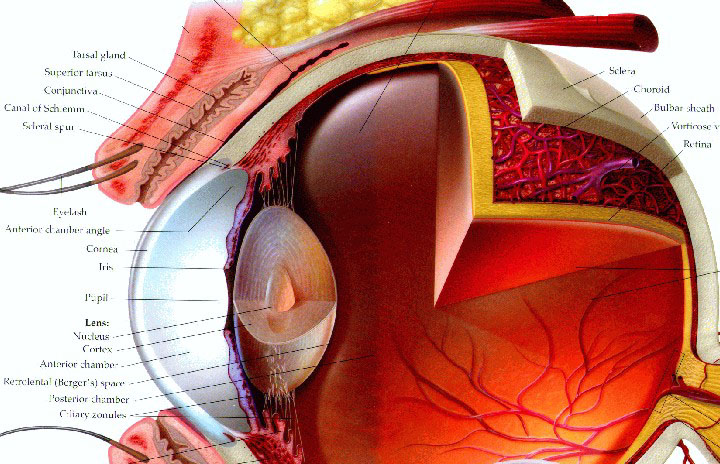
Let us take a similar case, that of the eyes. The label “eyes” does not apply to spheres that exist in pairs. The sclera is not the eyes. The fluids, nerves, vessels, and blood are likewise not the eyes. If you analyze these components individually, you will see that none of them is the eyes. Nor are the particles of their collective mass or the mass that would be obtained by reconstituting these particles with water. That which sees forms, in being a state of consciousness, is not the eyeballs, as is evidenced by the fact that it causes seeing to take place during dreams and the bardo.

Likewise in the case of the ears, the auditory canals are not the ears. The skin is not the ears. The cartilage, nerves, vessels, blood, lymph, in being referred to by their own names, are not the ears. The powder that would result from pulverizing them would not be the ears. The mass that would be obtained by reconstituting them would not be the ears. If you think that label “ears” applies to that which hears sounds, just observe what hears sounds during dreams, the waking state, and the bardo. It is ordinary mind as timelessly present consciousness, not the ears.

Similarly, all the component parts of the nose–nostrils, skin, cartilage, nerves and blood vessels–in being referred to by their own names, are not labeled “nose.” Since that which smells odors is a state of consciousness, you should examine what smells odors during dreams and the bardo.

In the same way, if you analyze the tongue’s individual components–the muscle, skin, blood, nerves, and vessels–in being referred to by their own names, they are not called “tongue.” The powder that would result from pulverizing them would not be called “tongue.” Even the mass obtained by reconstituting them with water would not be labeled “tongue.”

The same reasoning applies in all of the following cases: In the case of arms, the shoulders are not arms, the upper arms are not arms, nor are the forearms, the fingers and knuckles, the flesh, skin, bones or marrow. Likewise regarding the shoulders, the skin is not the shoulders, nor are the flesh and bones. Neither is the collective mass of molecules or the mass that would be obtained by reconstituting them water. Any basis on which the label “shoulder” could be applied is empty in that it does not exist as an object. When you likewise examine the upper arms and forearms, in being referred to by their respective names–“muscle” for muscle, “bone” for bone, “skin” for skin, and “marrow” for marrow–none of these has ever existed as a basis on which labels could be applied.

By examining the fundamental basis of the expressions “body” and “physical mass,” you can see that the spine and ribs are not called “body.” The heart, lungs, liver, diaphragm, spleen, kidneys, and intestines, in being described by their own names, nevertheless constitute emptiness, in that any basis on which the labels “body” and “physical mass” could be applied is empty since it does not exist as an object.

When you examine the legs in a similar way, you will find that the hips are not the legs, nor are the thighs, shins, or feet. The muscles are not called “hips,” nor are the skin, bones, nerves, vessels, or tendons. Moreover, the skin, muscle, bones, nerves, vessels, or tendons are not called “thighs.” The same is true for shins. Such terms cannot be found to apply to the powder that would result from pulverizing these tissues, nor are they used to refer to the mass that would be obtained by reconstituting the particles with water.

If you search for some basis on which the label “mountain” could be applied in the outer world, you will see that earth is not a mountain, nor are the grasses or trees, the rocks, cliff faces, or water. If you search for some basis on which the labels “building” or “house” could be applied, just as the earth-works are not the house, neither is the stone or the wood. Moreover, as for the walls, in being called “walls,” they are not labeled as “house.” Thus, “house” has never existed anywhere, externally or internally.

You might search for some basis on which such labels as “human being,” “horse,” “dog,” and so forth could be applied. Eyes, ears, nose, tongue, flesh, blood, bones, marrow, nerves, vessels, tendons, and attendant consciousnesses are referred to by their own names, but no object exists as a basis on which the label “human being,” “horse,” or “dog” could be applied.

To take another example, among material objects “drum” does not refer to the wood, the leather, the outside, or the inside. Similarly, “knife” does not refer to the steel. None of the component parts–the blade, the back of the blade, the point, or the haft–has ever existed as an object that could be so labeled. Moreover, names and functions change, as when a knife is used as an awl and its designation changes, or when an awl is used as a needle, and these previous labels all turn out to refer to what have no existence as sense objects.

Relying on what my guru, the noble and sublime Supremely Compassionate One [Avalokiteshvara], said to me in a dream, I came to a thorough realization concerning two points–that which is called “personal identity” and the search for some basis on which labels could be applied.


Sacred Home Coming

The following is from a series of tweets by Jetsunma Ahkon Lhamo:

Since I’ve come back to KPC I see the dramatic changes and hope they continue. The Stupas look terrific! And the feel of the place- Wow!  It feels like one is constantly in meditation and prayer. And that is the point, isn’t it? To awaken!

I’m glad I came home. Yes, my stalkers know where I am. It would be dishonest to say that doesn’t scare me; but I’m doing better with PTSD. I can see what is dangerous and what is not.

The blessing of being in my appointed place is healing. I’m stronger here. Also I’ve found that my life is less important than the temple, monastics, Stupas, pechas, images, relics. These are treasures that will last longer than I will, so – I’m home. Come what may.

Copyright © Jetsunma Ahkon Lhamo.  All rights reserved


Confidence

The following is from a series of tweets by Jetsunma Ahkon Lhamo:

Good afternoon all! It is gorgeous today, cool and sweet. I’m wishing all a great day.

My fall yesterday still is blue and sore but I am happy to be home. And otherwise feel well.

I am, oddly glad my stalkers are/were so cruel and insane, as I found I am very strong. And Am ready for their worst. I know who I am, what I am capable of, and that compassion is the strongest condition of all. Hate has no power. And I don’t intend to give it any. I’ll do whatever it takes to remain firm.

And as soon as the leg heals I’ll be teaching. Can’t climb the Throne, actually, not yet. Soon.

Copyright © Jetsunma Ahkon Lhamo.  All rights reserved

Coming Home

The following is from a series of tweets by Jetsunma Ahkon Lhamo:

I am now at KPC Maryland, thought I’d stop by before the stalkers knew about it. But the minute I got here I knew I would stay.

The sangha that prepared for me made everything so lovely, so elegant, I felt welcomed home. So I will stay.

I went to make an offering and prayers. It was so lovely and peaceful I felt healed and safe. The power of the Stupas is such – no one can harm me here.

Stupas are Living Buddhas and have a blessing range of about 100 miles, radius. And more. So, the peace and beauty, the prayer flags, offerings are not just superficial. They are true power and compassionand wisdom. This is my seat of power and I’m back to what matters. Benefiting sentient beings. I won’t leave, I will build KPC stronger, and will teach, only leaving to travel or teach.

If I hear the stalker is going off again I will go to the Stupa and pray just as I did today. And feel healed some more. I have faith. I see again what I’ve accomplished.

And it is sacred and gorgeous, therefore my work for Palyul is truly an act of love and grace.

And I did it with the Guru’s blessing. I’m in love with my sangha, my monastics, and temple again. Mama Lama is back! And no one will scare me off again.

Copyright © Jetsunma Ahkon Lhamo.  All rights reserved

Recognize What Is Sacred: A Message for Monks and Nuns

An excerpt from the Mindfulness workshop given by Jetsunma Ahkon Lhamo in 1999

I want to talk to the monks and nuns about how to keep mindfulness, the awareness of emptiness and bodhicitta as being the true meaning of one’s path, one’s practice: the two eyes.  Somehow, we have to embark more deeply on practicing a way to attain pure View.  What keeps us from attaining pure View?  It’s our constant need to recognize and reaffirm self-nature as being inherently real, and then the rest of it – our desire, our clinging, our egos.  And then there’s always the reaction going on.  We have to see that.  These are the reasons why we are asleep in this narcotic state.  As a monk or a nun, we should be constantly striving for a state of deeper recognition, for a better sense of View.  How can we do that?

We have all kinds of ideas about how we should relate with one another.  We have all kinds of ideas about how we should conduct ourselves, carry ourselves.  My suggestion is that we develop some new patterns, some new habitual tendencies so that we can develop something other than that strong sense of I-ness, of ego-clinging.  Remember that the point is to recognize what is sacred.  That may not coincide with what you think; it may not coincide with what you want; it may not coincide with the way you’re used to doing things. But that’s okay, because the point of practicing Dharma is to change.  It’s not to remain the same, right?

Now, all you feminists, calm down.  When the Buddha first taught, he taught men, right?  Those were the first aspirants. There are all kinds of traditions about nuns sitting in the back and monks sitting in the front, and because we’re all feminists and we’re all girls, we don’t like that very much.  But like it or not, the Buddha taught men first, and so the idea is not to worry about what body we’re wearing right now, what ego we’re stuck in right now.  In fact, to identify with being ordinary males and females and to think, “Oh, females have to be there and men have to be there,” is to stay stuck in ego.  So the reason for women to practice an honoring of monks is not because men are better, but because the Buddha taught men first.  They are our eldest practitioners.  They held the Lineage all this time and made it possible.  It is the ordained male sangha that held the full Lineage of ordination intact through all this time and made it possible for ordination to occur today in its fullness, both genyen and gelong.  So that has been held properly by men.  So as nuns, we should honor the monks.

The monks, however, should not honor themselves.  The monks should honor the women, the nuns, because in pure View, she is the Goddess.  She is Tara herself.  Her nature is indistinguishable from what is most precious to us, so as a Vajrayana practitioner, women are elevated.  She is the Goddess, she is Tara, she is the spiritual consort.  She is the one with whom we can practice in such a way as to overcome samsara, so she is extraordinarily elevated.

So the nuns get to lose their egos by honoring the monks as the primary practitioners who, through their generosity, morality and kindness, have kept the vows all this time and have made it possible for us to practice in the way that we are now.  That should be something you should think about every time you see a monk, good or bad.  Get out of the habit of saying, “Oh, that one’s a good monk, and that one’s a bad monk.”  When you see those robes and they’re on a monk, you should feel exactly the same.  The same thing applies for the monks.  You should not worry about feeling that way about yourself.  You’re here.  That’s good.  So the monks, when they look at women, they should not see a good nun or a bad nun or one that’s dressed one way or one that’s dressed another way.  They shouldn’t see that.  These women who are holding the robes of the Buddha, who are practicing in that way, are nothing less than Tara incarnate.  They are nothing less than the appearance of the Goddess.  The only hope any of us have is to practice in spiritual union, whether that’s on a spiritual level or on a physical level, and so when we look at the female principle, she is everything.  Every time a monk looks at a woman, particularly a nun, he should see the Goddess.  It should be like that, even if it’s a laywoman.  You’re not looking at the clothes, remember?  See the nature.  Behold the Goddess, and in that way, develop the habit of just doing that little bow.  Nobody has to see it, men!  It’s okay!  It could be like one vertebra, you know?  Pick a vertebra. I realize what a hard time men have with that – women, too.  It’s this battle between the sexes.  But that is ordinary phenomena, and we’re trying to get around that, past that, through that.

The point is to carry the View and recognize the nature of one another without holding ourselves in high regard because we are so “fancy.”  The point is to carry the View without getting the ‘rah-rah nuns’ or ‘rah-rah monks’ thing going:  I’ve heard the nuns say, “You know, the monks never support one another.  They’re not being nice to one another.  They don’t cook for each other. They don’t make each other’s beds.  They don’t do anything for each other.”  That’s what I hear from the nuns.  And the monks are saying, “You know, the nuns, they’re sloppy.  They just run around doing ooh-ooh, ah-ah stuff, all those hugs and squeezes and all that stupid stuff.  They’re not very together.”  We tend to think like that and we have these ideas.  It’s that kind of thing that creates not only dissension in the sangha, but it’s also ordinary view.  What do you have to do with that?  What is the point of practicing as you do without holding View?  There would be no point.

© Jetsunma Ahkön Lhamo

Limit the Obsessive Interaction: From “Surviving a Stalker” by Linden Gross

The following is respectfully quoted from “Surviving a Stalker” by Linden Gross:

Stalking is like a long rape. The stalker’s objective is to force you to surrender. Victims respond not with a single reaction, but with a progression of emotions akin to Elizabeth Kübler-Ross’s five stages of loss: denial, bargaining, guilt, anger, and then acceptance. But because you participate, however unwillingly, in the crime, you also experience depression, anxiety and fear.

Put yourself in the place of a stalking victim. Whether you’ve just split up with a mater who refuses to let you go, or attracted to the unwanted of a co-worker or stranger, what would your first reaction be? “This can’t be happening,” you’d say to yourself. “Things like this happen to other people. Not to me.” Then you’d assume that you must be imagining the whole affair. “I’m just overreacting. I’m paranoid.”

By doubting your own reality, you’ve begun to doubt yourself. In one quick step, you’ve put yourself at a disadvantage.

When you finally realize or accept the fact that you are being victimized, you try to bargain with your stalker. If you can just appease him by giving in to some of his wishes, then maybe he’ll leave you alone, you figure. “Okay, fine,” you tell him. “I’ll meet you for coffee.” But the demands escalate. And now that you’ve established a precedent, the stalker expects you to respond in similar fashion.

Anxiety sets in. Never knowing when or where he’s going to turn up or what he’s going to do next, you can think of little else. You don’t feel safe at home, at work, or anywhere else. The more frightened you become, the more debilitating your anxiety. In trying to cope with the situation and manage your emotions, you basically start to short-circuit. “You’re using so much mental energy that you begin to eat up your supply of neural transmitters,” explains Dan Coler, a Richmond, Virginia, psychotherapist. “At which point the synapses of your brain start shutting down and large parts of your brain just stop functioning. Suddenly you can’t concentrate. You feel like you’re an ant struggling to carry a matchstick. Little things that never bothered you before are major catastrophes. ”

Exhausted, you have no resources left.

That’s when the depression hits, so profound that you feel like you’re in a deep dark hole that you can never climb out of. Your self-esteem begins to disintegrate. You can’t function normally. Recurrent nightmares, sleep and eating disorders, and a growing sense of apprehension about everything afflict you.

You begin to wonder why this has happened to you, what you did to encourage it. Should you have said yes to him? Should you have said no more firmly? If you had just walked the other way, taken another job, or married someone more suitable, none of this would have happened, you reason.  Then, as if to cement those notions of culpability, the stalker goes after someone close to you. Maybe the person you’re dating. Or your mother. “You can’t control what he does,” says the therapist you’ve started to see. It doesn’t help.

With time you begin to realize you’re not to blame. As with the rapist, the stalker’s act is what counts. You just happened to be there. The more fully you acknowledge how little the situation actually has to do with you, the harder it is to countenance the impact the stalker has had on your life. You get angry–so angry that you’re ready to do almost anything to get him out of your life.

Finally, you accept what your life has become. And while you mourn the innocence, trust, and insouciance that you’ve lost, you can finally start to deal with your situation objectively. Which means that you can finally limit your ongoing role in the obsessive interaction.

If you’re a stalking victim, you certainly can’t be blamed for the harassment to which you’re subjected. But you may have inadvertently contributed to the problem. Most stalking cases–those that don’t involve public figures–aren’t lightening strikes or shark attacks. “There is something about who the stalker selects and where he finds his encouragement early on,” says Gavin de Becker. “Stalkers, like all predatory criminals, circle around the victim and test her a little bit. With a jab here and look there, they try to figure out whether their target is going to hurt them, or whether their target is going to play into their scenario.”

Once a stalker has selected someone he suspects won’t assert herself, he’ll most often manipulate his victim through fear. But guilt also serves as a valuable weapon for establishing a power base.

In the fall of 1988, entering freshmen Theresa Esquibel met Ted Miller, a resident in her college dorm. The two clicked well and soon started sharing the intimate details of their lives. He talked of the problems he’d had with his parents and of an early attempt at suicide. And he helped boost Theresa’s self-esteem, which a serious car accident and long recovery had shattered.

Midway through the fall quarter, Theresa began to realize that her new confidant might want to be better than her friend. A discussion just before the holidays relieved her concerns about his interest. “I love you as a sister, nothing more,” he told her. “But that means a lot to me because I’m an only child.” Later that night, after they’d spent hours talking, he began to hold her. Although the contact wasn’t sexual, the physical closeness made her uncomfortable. But she said nothing, hoping she was wrong. The Bible that Ted gave her for Christmas however, clearly betrayed his true feelings. On the inside cover, in tiny print, he’d carefully written the word I love you over and over again, line after line, covering a page and half. “That’s so you’ll always think of me,” he told her.

Theresa returned from the holiday break feeling stronger and more ready to deal with the mental and emotional rigors fitting into college life. Of course, investing more energy into her classes and reaching out to new people meant that she had less time for Ted. He took it personally. “You never come by my place. I always have to come find you,” he would say. Or, “I left two messages on your machine, and you’ve been back from class for five minutes.”

He began to monitor her arrival in the dorm, and show up at her door immediately upon her return. When she told him that she needed some time alone, he accused her of not being a true friend. T hostility increased when she began to date someone steadily. Theresa tried to maintain their friendship, but that was getting harder and harder. “It was like I was his wife and not treating him fairly.”

Unable to contain his jealousy, Ted would pepper Theresa with questions about her relationships with other men. Then he’d sit on the dorm landing and chronical her comings and goings. One night as she and Joe, her boyfriend, left for a dinner date, he heaved a book against the wall just as the elevator doors shut. When Theresa later questioned the violence of his reaction, he told her that he wanted to make a point to them before they went out, in a way that would give them no time to react to him.

Life had begun to close in on Ted. Upset about his father’s plans to remarry, devastated by the news that a close high school friend was fatally ill, he couldn’t bear the notion of losing his main source of emotional support. In an effort to hold onto Theresa, he became controlling and domineering. “Don’t you ever reveal anything I tell you,” he said to the increasingly intimidated young woman. “I’ll be able to tell you have just by looking at your face.”

As the weeks passed, Ted’s anger grew. He accused Theresa of betrayal, and tried to intimidate her with allusions to the kinds of violence of which he was capable. “I have so much anger, I could kill anyone who wrongs me, and I would if I ever lost control,” he told her at one point. Another time, he threatened to kill Joe.

One night he called her room. “Good-bye,” he said into the phone in a quivering voice. Afraid of the message’s implications, Theresa raced to his room. When he finally agreed to let her in, she found him sitting at his desk, his eyes expressionless, his lips pressed tightly together. Lined up before him were six bottles of prescription medications.

Theresa spent the night trying to dissuade him from killing himself. He responded by trying to get close physically. “You are responsible for my life, I have no one else to count on,” he told her while caressing her face. “Don’t leave me. You are the only one who can help me.”

As the weeks went by, Ted continued to monitor Theresa’s activities and try to control her actions, especially with regard to Joe. “Did you fuck him?” he asked upon the couple’s return from an impromptu trip to San Francisco. “I’ll find out anyway,” he said when she refused to answer. “Word will get out. I’ll know.”

By the time Ted dropped out of school later that year, he’d succeeded in making Theresa feel responsible for his decline. Four years later, she’s finally coming to terms with the idea that he was emotionally and mentally unstable. But his face still haunts her dreams.

Society encourages women to be soft and loving, and to use their sexuality–in the guise of smiles, flattering clothes, and gentility–to deal with the world in general and men in particular. To a potential stalker, those traits can be interpreted as receptiveness and malleability–usually, all the encouragement he needs.


When the Law Won’t Help

The following is from a series of tweets by Jetsunma Ahkon Lhamo:

I’m pretty much at a low point in recovery from PTSD. It’s not just feeling safe; it’s what it does to you. Like it’s hard to think and remember what is important. And I wish I could sleep all the time. I want to go home but it’s not safe. Am having difficulty concentrating, learning new things and studying. I have no ambition. In short, I have every symptom of a stalked person. Without exception.

I was doing well with the self defense, but the flu knocked me out. Now to start over seems like too much.

But I must get over this. I can’t find any stalker laws to protect us. There is no interest in providing safety for women. We have better luck with animal rights. Shameful.

Why would a judge or any man want to legislate safety for women? After all, they want to own us. Tell us how to be. Many women choose these days to be alone. It is better to take no chances. What a shame! Especially financially independent women choose lonely over bullying.

So how many women choose to make their own way financially? Not enough. How many men rule by keeping money from women? Many.

So why can’t we women wake up?

Well, no law protects us. And most is written by men. (Or not written) And we need their help. But they have no desire to help, as they might lose the opportunity to abuse and control. And that would be inconvenient.

Copyright © Jetsunma Ahkon Lhamo.  All rights reserved

Mirror that Illustrates the Crucial Points: From “Drops of Nectar”

The following is respectfully quoted from “Drops of Nectar” by Ngagyur Nyingma Institute:

The Ultimate and Meaningful Instruction: Longchen Rabjam

Supreme glorious master, all-pervasive lord of the hundred Buddha-families.
Who combines into one, the power of compassion and enlightened activity.
Of the limitless mandala of the infinite Victorious Ones,
I constantly pay homage at your feet.

Ema, fortunate yogins listen to me. We have all now obtained this perfect human body with the freedoms and endowments. We have been introduced to the precious teachings of the higher vehicle. We have the freedom to behave in accordance with the sublime dharma. At this time, we should make sure that our human life does not go to waste and pass without meaning. We must establish our ultimate goal correctly. The categories of teachings are innumerable, the doors to the teachings are countless, and the commentaries to the teachings are vast.

If you cannot practice the essential points of the teachings, then although one knows a hundred thousand volumes of scriptures by heart, certain benefit at the time of death is difficult to achieve. Although you may have acquired boundless qualities of knowledge through study and contemplation, if your mindstream does not accord with genuine dharma you will not be able to tame the enemy of delusions. Moreover, if you don’t commit to an attitude of not needing anything, even with control over the one billion world systems, contentment won’t arise.

Without preparing soon for the uncertain time of death, you will not accomplish the great essential objective when death occurs. If you don’t correct your own mistakes and train in unbiased pure perception, being motivated by attachment and aversion, you won’t fully enter t dharma of the greater vehicle.

Among the six realms of the three worlds, there is not even a single sentient being who has not been your parent. If you do not regularly and continually aspire and pray for their well-being and happiness with the compassionate mind of enlightenment, the treasure of benefiting others will not be revealed. If you do not cultivate the devotion to your root guru that regards him as even more kind than the actual Buddha, the power of blessings will not be great.

If genuine blessings do not enter into you, the sprout of experience and realization will not emerge. Without realization dawning from within, the fruit of enlightenment will not be obtained through mere intellectual understanding or empty talk. In short, if you do not mingle your mind with dharma, merely appearing like a practitioner will not bring about your purpose. Consider that you do not need more than is merely sufficient to support your life force and vital energy.

Pray single-pointedly to your guru and practice Guru Yoga. Whatever virtuous activities you do, always focus on the benefit for sentient beings, your parents. No matter what happiness or sorrow, good or bad might occur, always meditate on the compassion of your guru. Within the expanse of self manifesting non-grasping self-cognizing awareness, abide in non-fabricated and unforced naturalness. Whatever thought arises; know its nature and liberate everything as the play of the true nature of reality.

Without so much as a hair tip of something solid to meditate on, and without falling for even a moment under the power of perpetual ordinary delusion, maintain undistracted mindfulness in all your daily activities. By training in recognizing all sights and sounds — whatever arises of the six consciousnesses — as magical play lacking true existence, you will gain mastery over the experiences of the bardo.

In short, at all times and on all occasions ensure that whatever you do accords with the sacred dharma and dedicate all virtue for the attainment of enlightenment. Acting in that way, you will not only fulfill the intentions of your root guru but also be of service to the teachings. You will repay the kindness of your parents and spontaneously accomplish the two benefits, of self and others.

I request that you retain this in your hearts. Even if you meet me in person, other than these instructions, I have nothing more to say. Therefore, at all times and on all occasions, practice!

The powerful conqueror, the excellent Longchen Rabjam wrote this when he lived on the slope of Gangri Thodkar. May it be virtuous!


‘Til Death Do Us Part: From “To Have or To Harm” by Linden Gross

The following is respectfully quoted from “To Have or To Harm” by Linden Gross:

Unrelenting harassment consumes your life. Knowing you were once intimate with the person responsible for your misery makes it worse. You ask yourself again and again: How could I have married such a monster?

No matter what you do, the threats and abuse escalate. “The tell me [these obsessions] usually end in death for one or both parties,” said a victim in rural Tazewell County, Virginia. “I don’t like the solution. I think there should be another one.”

Since October 13, 1986, that notion of death has become all too real for Rebecca Watson. on Columbus Day, the thirty-one-year-old divorcée called her boyfriend and colleague–an ex-cop named Andrew Hill–to confirm plans to go in to work that afternoon after meeting for lunch and a video at her place. By 2:00 P.M., the idea of relaxing for the rest of the rainy afternoon sounded more appealing than catching up on paperwork. So she dropped Andrew off at his car, which, as usual, he’d parked in the nearby country-club lot in order to avoid antagonizing Rebecca’s jealous ex-husband. She watched him jump into his green 1979 Chrysler and turn over the ignition. Suddenly, a ball of flame exploded from under his seat, swept over his head with a deafening roar and blew out the rear window. Andrew dived out the door. “That son of a bitch tried to blow me up!” he yelled.

Rebecca, a former Boise, Idaho, probation and parole officer who still works in the criminal justice field, met Damian Crowell in 1976. The local boxing announcer left a definite impression on Rebecca that day. She thought he was obnoxious, “You will go out with me,” he told her after she declined his overtures. In the end, he was right.

Born overseas to Southern Baptist missionary parents, Rebecca spent her first thirteen years in Asia. By the time she returned to the United States, the overweight adolescent felt like an outcast. “I was a big nerd in high school. I knew four people maybe.” Her low self-esteem hung on long after the baby fat had dropped and her popularity had grown. Even at twenty-two, attention from an attractive older man–who could be quite charming once he put his ego aside–was hard to resist.

Within two days, Rebecca had capitulated. Within six months, the couple was discussing marriage. Although Rebecca didn’t admit it to herself at the time, she had been primed to rebel against–and to escape–her strict religious upbringing. Damian offered her a way out.

On January 15, 1977, eight months after their first meeting, she married him. But the relationship didn’t provide the companionship she’d hoped for. She worked during the day, then came home to domestic duties. Damian made little effort to include her in his life or to help her. “I was the little woman, and I sat at home feeling very much alone,” said Rebecca.

She tried to talk to him, but he didn’t want to hear that she was unhappy. “You’re the one who’s fucked up,” he told her when she suggested they try marriage counseling. “You get help.”

Feeling abandoned and miserable, with only her golden retriever to turn to at home, Rebecca fell into an affair during the summer of 1979. Suspicious, her husband borrowed her keys on the pretext of changing the oil in her car, entered her office in the state building, and found letters from Timothy Scott, her lover.

Returning home, he confronted his wife, then called Timothy and demanded that he come to their home to discuss Rebecca’s involvement with him. “Don’t come over!” He has a gun! He wants to kill you!” Rebecca screamed in the background.

Timothy came anyway. Damian greeted him at the door, then moved to stand by Rebecca. “Take this person,” he told him. “I don’t want her anymore.” He then accused Rebecca of sleeping around with colleagues in the probation and parole department. Timothy left after twenty minutes. Rebecca left after Damian belted her across the jaw.

She stayed away for several days, returning only when her husband agreed to counseling. Therapy didn’t help. Although he didn’t hit her again, Rebecca always knew he wouldn’t hesitate. In the meantime, he kept an eye on her twenty-four hours a day. He would call the office and grill Rebecca’s secretary if she wasn’t there. With whom had she left? When was she coming back? He didn’t hesitate to follow up with other parole officers if the answers didn’t satisfy him. His inquisitions raised questions and eyebrows at work.

In a turnabout, the former recluse now refused to leave her alone. If his work required him to leave town, he would force her to accompany him. He cut her down constantly. Whenever she complained about his actions, he flung her affair back in her face. In his eyes, her indiscretion had expunged his responsibility for the failure of their relationship. It was all her fault.

Evidence of her one affair proved that she obviously had had–and was currently having–others, according to Damian. During one of his rages, he accused her of having gotten pregnant by someone and aborting the fetus. When she denied the charges, he forced her to call her gynecologist while he listened on the other phone. Their lack of intimacy was her fault too, he railed. It seemed that no humiliation he could heap on her would suffice.

Rebecca had been unhappy and lonely before. Now she was miserable, and too scared to leave. Damian had a temper, and he had a gun collection. “I didn’t know what he’d do. And I was so insecure, I didn’t know if I could survive on my own. I was terrified that I wouldn’t know how to handle myself.” So she stayed, even though the relationship had deteriorated to the point where she hated coming home and being in the house with him.

When Damian lost his job in 1980, she supported both of them. That year he underwent three major surgeries. She’d been tempted to leave before, but she couldn’t justify abandoning him when he was critically ill. “Every time I got close to leaving, something would come up,” she recalled.

For the next five years, Damian made sure that Rebecca’s life revolved around him. Part of the strategy included isolating her from her friends and family. The latter wasn’t hard to do since Rebecca was too embarrassed to admit her close-knit family that her marriage hadn’t worked out. His goal? To make sure she was totally dependent on him and increasingly unable to function alone.

Finally, on July 10, 1985, after he’d called during the lunch hour with his routine questions concerning her whereabouts, Rebecca decided that she wasn’t going to put up with it anymore. After work, in the company of another woman parole officer with whom she’d become friends, she returned home, packed two suitcases, grabbed her golden retriever, and left. Her colleague let her stay rent-free in her apartment.

Taken by surprise, Damian reacted calmly. “We’ll talk soon,” he said. “I want to go to counseling and work this out.” But Rebecca knew she would never return.

Not that he didn’t try to make her, even after he’d started living with another woman three and a half months into the separation. Despite a barrage of flowers, cards, letters, obscene phone calls, and the charge in federal court that she was responsible for a recent burglary of his house, she held firm. In the meantime, Rebecca’s friendship with Andrew Hill turned to romance.

That October, she moved from the parole officer’s apartment to a house owned by some other friends. On moving day, the phone rang at 9:45 P.M., but the caller hung up as soon as she answered. “Bet you your bottom dollar it’s Damian,” she told Andrew. Fifteen minutes later, someone stood pounding on the front door. Rebecca tried to look through the peephole, but it was covered with a thumb.

“Police! There’s been a report of trouble at this address that we’re here to check out.”

Rebecca recognized Damian’s voice. “You’re not the police,” she countered, “I want you to leave.”

“I just want to give you an insurance check from the burglary,” Damian said.

Rebecca knew that she was still due her share of the insurance settlement. So, when he refused to slip it through the mail slot, she agreed to open the door but left the security chain attached. In a flash, Damian kicked the door in, knocking Rebecca against the wall.  He pulled a small automatic as his forced his way through the door and pointed it in the air.

“Where is he?” Damian demanded.

“Give me the gun, Damian,” she said loudly enough to alert Andrew that he estranged husband was armed. She tried to wrest the weapon from him, but he pushed her against the wall and ran into the bedroom, looking for Andrew. Instead he found the bed neatly made. He returned to the living room and knocked Rebecca to the ground. Andrew had just come out of the kitchen. Damian pointed the gun at his chest.

“Get out of my house!” Rebecca demanded. “This is my house. Get out!”

Amazingly, he did. But he didn’t go quietly. He screamed accusations from the porch. “How can you do this to me? We’re still married. You’re not suppose to be seeing anybody.” In an effort to calm him down, Rebecca offered to discuss the situation with him in the house as long as he was unarmed. Damian released the chamber and a bullet fell out. Then he handed Rebecca the gun and walked inside.

They talked for ten minutes. When Rebecca reasserted that she wasn’t coming back and it was time for him to go, he left. On the way out, she returned his gun to him. “I didn’t want him to come back,” she said.

Unwilling to let Damian get away with what he’d done, Rebecca filed a warrant against him for breaking and entering and for assault. Andrew filed a warrant for assault and brandishing a gun. Then, afraid that Damian would come after her once the warrants were served, Rebecca packed some clothes, put her dog in the car, and abandoned her new home in favor of a friend’s house.

The police didn’t take matters as seriously as Rebecca had. Because they knew that Andrew was an ex-cop, they found the incident hilarious. One detective, realizing that Rebecca really felt threatened, offered to have Damian “taken care of” for a hundred dollars. She refused.

In December, Damian attacked in a new way. Rebecca had been living in her new home for approximately three weeks, when tapes of conversations she’d had on her phone were circulated to various men she was dating. While the wording of the attached notes varied, the theme remained the same: “So you think you’re the only one.”

Rebecca called the phone company. An investigation revealed a tape recorder had been spliced into her phone lines under the house. The phone company advised her that wiretapping was a federal violation and recommended that she take action.

When she contacted the police about the wiretapping, they referred her to the FBI. The FBI, however, didn’t want anything to do with the case. “It’s a domestic,” they said, rolling their eyes. Apparently, that rendered it unworthy of attention.

That same month, Damian went to court on the breaking and entering and the assault charges. The judge gave him six months for one, twelve for the other, and suspended the sentence. As long as Damian didn’t contact Rebecca or go near her, he would do no time.

But Damian couldn’t–or would’t–stop. He traced obscene messages LUV269 in the dust on her car’s rear window. The deluge of letters, cards, and hang-ups and obscene phone calls to her unlisted phone number re-commenced. She’d see his car pass her house at least twice a night. “He’s out there. He’s watching me,” she realized.

Terrified of what his next move might be, Rebecca learned to look into her rearview mirror ten times a minute as she drove. Every time she walked out the door, she looked over her shoulder. She never knew what to expect when she checked mail or answered the phone. Fear made functioning normally at work and at home increasingly difficult. Yet no one, including the police, seemed concerned for her. Instead, people seemed to consider her a tramp.

Damian had been forbidden to contact Rebecca by the court. But shortly before their divorce became final in March 1986, he called her. “Well, would you like to go out to dinner to celebrate our anniversary, or would you like to go out to dinner to celebrate the divorce?” he asked. To a bystander, the words would have sounded downright friendly. But they, along with his tone of voice, chilled Rebecca more than his threats had. “It was like he was saying, ‘I’m letting you know that I’m aware that this is our anniversary, and I’m also aware that the divorce is almost final, bitch!” Rebecca recalled.

She packed her bags and that night got out of the house she’d lived in for less than four months. “You can identify a threat from the intonation as well as what’s said,” Rebecca asserted. “It doesn’t need to be I’m gonna kill you or I’m gonna hurt you to be scary.”

Two months later, another recording device materialized under her house. She’d gone out to pick up a prescription she’d phoned in. “A guy called to ask if it was ready,” the pharmacist told her. “Not again!” she thought as she raced back home. The only way anyone could have known that she’d ordered a refill was if he’d listened in to her conversation with the pharmacy. The tape recorder was right back where she’d expected it to be, just inside the crawl space beneath the house.

No fingerprints were found in the crawl space or on the tape recorder, wires, or the fence, so police couldn’t tie Damian to the wiretap. But they could nail him for violating the terms of his suspended sentence. Instead of being sent to jail, however, Damian was put on twelve months’ probation and told to report to the office where Rebecca and her boyfriend worked as probation and parole officers. “Stay away from her and get on with your life,” the judge told him.

Damian, however, had decided to go on the judicial offensive. He sued Rebecca for not paying the mortgage on the house they had shared. The judge dismissed the suit when she explained she no longer lived there. Damian also tried, unsuccessfully, to sue Andrew for making harassing phone calls.

The summer brought anonymous flowers, clipped articles about female sexual problems ranging from frigidity to nymphomania, letters slipped under the door delineating what an awful person Rebecca was, and a cassette recording of the song “Private Eyes are Watching You” taped to the door. Unknown to Rebecca, Damian had hired a private investigator to spy on her.

In addition, he began to harass those close to Rebecca: the men she dated, even her religious, seventy-one-year-old mother. She began to fear not for herself but for the lives of everyone who cared about her. “That’s how he’ll get to me,” she told herself. The guilt she felt–and the migraines that resulted–almost incapacitated her.

She’d already blamed herself for her own misery. Her self-esteem had plummeted. But this was too much. “I’m fair game because I was stupid enough to marry you. So come after me,” Rebecca wanted to say. “My mother didn’t marry you. The guys I’m dating didn’t marry you. None of these people had anything to do with you. Leave them alone.”

Rebecca developed new daily routines. Most evenings when she came home from work, she checked under the house to see if another tape recorder had been planted. She watched everything she said on the phone and in her house.

One day, Andrew needed to make a confidential call from her home in reference to a presentence report he had to file for work. As a procedural precaution, he double-checked the crawl space under the house before picking up the phone. There was yet another recording device. “Look what’s here,” he announced to Rebecca, who had walked outside with him. They checked the tape that evening, in the presence of a lieutenant from the police department. A conversation they’d shared about the case the night before had been recorded. Although the police dusted for finger prints, both tape and machine cape up clean.

Damian continued to send correspondence to a number of Rebecca’s friends and occasionally to their mates. He tampered with her car, affixing obscene fake tags to her license plate. But the number of episodes diminished.

If Rebecca took any comfort in the five weeks of relative calm, the events of October 13–Columbus Day–shattered that forever. She watched the fireball that Damian’s first bomb triggered with a sense of disbelief. “I felt like I was watching Miami Vice,” she said. Even after all the months of telling herself that she was just paranoid and then having her suspicions confirmed, she couldn’t believe what happened. If she had followed through with her original plan, she would have been in the car too.

The blast–which resulted in permanent hearing loss for Andrew–brought the police and the FBI to the scene. That’s when Rebecca found out that a second bomb filled with gunpowder, BBs, shot, finishing nails, and tacks had failed to detonate because it was wired to a painted surface. The lack of a ground, a prerequisite for current to flow, had prevented the bomb from exploding.

The mistake saved Andrew’s life.

During the investigation, Damian argued that Rebecca and Andrew had rigged the bomb themselves in order to set him up. Within two weeks, however, the list of suspects had narrowed to one. One year after Damian had broken in to her house, law enforcement had finally begun to take Rebecca seriously. The problem now was to put together a case that would stick.

At least that’s how law enforcement saw it. Things weren’t that clear-cut for Rebecca. She’d lived in fear of Damian, but she hadn’t reckoned with the sudden notoriety the fire-bombing brought her. The reactions of those around her just made matters worse. “If I sit here, will the seat blow up?” one prominent attorney joked. “If we’re lucky, it will,” she snapped.

After the bombing, Rebecca stayed with friends. Eventually, she returned to her place. Whenever the police thought they were ready to arrest Damian, they’d call to warn her, and she’d move out. Then they’d reconsider, wanting to gather more evidence before indicting him. And she’d return home, only to be uprooted the next time. Finally, after months of jumping back and forth, Rebecca just got tired. “I’m taking my house back. I’m taking my life back,” she announced. “If he’s going to get me, he’s going to get me no matter where I am.” So she moved back to her house, prepared to stay.

Despite her resolve, the bombing incident devastated her. Coping with the everyday occurrences of her life became increasingly difficult. Anxious, profoundly depressed, and feeling thoroughly guilty about the bruises and permanent hearing loss that Andrew had sustained, she tortured herself with questions about what Damian would do next, and with the knowledge that pure dumb luck had saved her and Andrew. She couldn’t escape the realization that she’d married the man who had tried to kill them. If she’d made such a radical mistake, how could she trust herself to make a reasonable decision about anything else?

People didn’t understand the depth of her pain. She couldn’t explain. Instead, she erected a wall to protect herself and withdrew even more. Finally, she began seeing a therapist. A psychological test rated her anxiety level at 100 percent.

Revealing the intimate details of her married life–and of her affair–to the police and prosecutors made her feel like a city tramp. Anticipating the exposure of her private life that Damian’s trial would bring added to her agony. She dreaded facing Damian in court.

Her therapist understood. He helped her turn the guilt she harbored into anger, and reminded her that the disclosures would strip away Damian’s power to blackmail her. “He doesn’t expect you to through with this because he thinks you don’t  have the courage,” the therapist said. As she walked out, he added a final note of encouragement: “Go in there and nail the son of a bitch!”

Damian’s prosecution taught Rebecca about her personal strength in a way that nothing else could have. “I knew when I walked into that courtroom, he was going to stare me down. That was part of the power he had over me. And I determined that no matter how hard it was, I was going to establish eye contact first thing, get it over with. And I was going to make him look away first. That was one of the hardest things I’ve ever done in my life. But I did it. And it worked.”

In an effort to discredit her, Damian’s lawyer brought up her affair at every turn, even though the prosecutor objected and the judge denied its relevance each time. Damian had illegally taped a conversation in which Rebecca and Andrew joked about enticing her former husband to violate his probation so they could have him arrested. That was used against her. “You tried to set him up, didn’t you?” railed the defense attorney. “Just like you set up the bomb. You did that yourself.”

Press accounts labeling Rebecca as Damian’s wife (instead of former wife) and Andrew as her lover added to the horror. Rebecca chose not to dignify the implications with a response. But she suffered, not just for herself but for her missionary parents and the reactions of their friends.

In the end, the prosecution prevailed. Damian was found guilty on nine counts, including the manufacturing and possession of a bomb and several counts of wiretapping. He was sentenced to fifteen years in a federal penitentiary, with another fifteen years suspended. Which means that he’ll be out by 1996 at the latest. Rebecca’s one hope is that the threat of going back to jail to serve out the suspended sentence will deter him from antagonizing her. Deterrents, however, never worked with him in the past.

Although Damian remarried while in jail, he has not forgotten. Notes to Rebecca’s sister, brother-in-law, and mother–the last after Rebecca’s brother died of a heart attack–are his way of saying that he’s continued to track her family and that he remains in jail because of her.

The reminders are superfluous. “People say, ‘Why worry? He’s married now,'” said Rebecca. “But it’s not love. It’s obsession. It’s: How dare you walk away from me? If you walk away from me, I’m going to ruin you, get yo to the lowest point of your life so that no one else will want you.”

He came close. Two years after Damian was taken off the streets, Rebecca still couldn’t concentrate enough to read a book, watch a television show, or carry on an extended conversation. She would sit and stare at the walls, even on the job. No matter how hard she tried, she couldn’t do her work. Finally, unable to function, she quit.

The insurance money she received upon her brother’s death allowed her to take an eight-month vacation. The time off helped. But when interviewed for a new position in the criminal justice system, her prospective employers insisted on speaking with Rebecca’s therapist to make sure she had put the incidents behind her.


The assurances must have convinced them, for Rebecca has been working as an investigator since 1991. But the emotional scars remain. Although currently she doesn’t have to wonder if Damian is going to drive by her house or place of employment when she leaves, she remains distrustful of people. She still checks over her shoulder and screens all her calls before picking up. She still can’t believe that all this ever happened to her.

But, after eight years, she’s coming around ever so slowly. When strangers ask about her ex-husband, she tells them what happened. “I’m past the shame of it,” she says. “It’s not my fault.”


WP2Social Auto Publish Powered By : XYZScripts.com