The “How To” of the Method

LeavingTibet

The following is an excerpt from a teaching by Jetsunma Ahkon Lhamo called “Art of Dispelling Anger”

There is no confusion regarding Dharma. It’s spelled out that conduct is everything, that working with one’s poisons is everything. And there are no modifications on not killing. Not killing is all pervasive. It means bugs. It means worms. It means enemies. In fact, we are the only ones that I know of who are taught to raise our enemies in loving concern higher than ourselves. Not that we do a personality cult thing, you know. We don’t do the wave every time we see our enemies. It’s not like that. But if our enemies are harming us, then they must be harming themselves also. So our compassion for them should be even greater. Tibetans were thrown out of their own country. They were killed; they saw their lamas abused; they saw their lamas murdered; they saw their texts being walked on by Chinese boots, their precious Dharma texts, and then many destroyed, as Palyul was destroyed. And yet because their culture is so different, rather than going to war or hating, from the Dalai Lama on down, they all say, “The Chinese are our gurus.  They taught us that we must have had some fault or we wouldn’t have been thrown out of Tibet, or there wouldn’t have been this huge problem.”  That’s the way Tibetans think. They think, “Oh, now maybe the problem is that we kept our faith to ourselves and we were happy just in our country, Shambala,.” And so the lamas said, “Go out and teach others. This is what we must do.”  And now they are grateful for that happening, although of course we want Tibet back. No doubt about that. But they are grateful for what happened there, for what they learned, for what they taught. It is no less a travesty. It is no less genocide than it was when it happened, yet this speaks to the quality of our faith. This speaks to the quality of our practitioners and our lamas. And so, now that we see it, we see that, in fact, it was the Chinese that sent Buddhist lamas around the world. And so we find out there are never any exceptions.

There were powerful practitioners at that time whose blessing was so strong (and I’ve heard stories about this from other lamas), whose powers were so strong that they would go out when the Chinese were shooting and they would stand in front of people with their robes held out to protect them. And then they would come inside and shake the bullets out because the blessing was so strong, their power was so strong; but they never fought. They died, but they never fought. There were many lamas who knew when the Chinese were coming, and it was hopeless. They simply did phowa and left. They didn’t wait. They knew the Chinese would kill them.  So rather than allow the Chinese to take on that non-virtue, they did phowa. And phat! they left their bodies. What was the year when the Chinese came into Tibet?  ’49?  I was born in ’49. So that’s what happened there. But there was never the thought of revenge. Never the thought of hatred or barbarism, because this is not our way. And what is great is that we can teach our children there are no exceptions. It’s black and white. That’s what is really great. Never kill. Each sentient being values its life just as much as you do. I really like that about our faith.

I see a problem in people who are trying to defeat their own poisons in this lifetime, even you guys whose faces and hearts I know so well. We tried this. We’ve given a lot to be Buddhists,  on the one hand. Yet we’ve gained a lot more by being Buddhists, on the other hand. And we’re very much involved; and each person is as committed as they can be to their path. So I know that the willingness is there. I think the caring is there, but there is so much confusion. How in the world are we supposed to defeat our poisons when it is not clear to us how we should live?

For instance, we are told in Buddhism that we must conquer hatred, greed and ignorance, and let’s see, lust and competitiveness, or warlike behavior. Let’s see. What else? Did I say sloth?  Well, that one, too.  So, we are supposed to conquer all of these things; and yet we’re not even clear what hatred is. We’re not even clear on that, because of how we were brought up.   If we acted out ,you know, few of us had parents that would sit down and say, ‘This is why this isn’t working.’  Most of us had a backhand or time out, or go away, or watch TV, or something like that; but there is never any clarity, because we ourselves don’t understand. So when we look at abolishing hatred in our mind stream, which we must do, which we’ve committed to do for the sake of sentient beings, where do we even start?  It’s so confusing. And not only where do we start? What are the perimeters?  . What does that mean, not hating?  Ok. I don’t hate you outright, but you know, if we mush with that a little bit and fool around and dance a little a bit, there’s a lot of leeway in there according to the way ordinary people think. But, in fact, that’s not true, because if you just look at the one poison, which is hatred, it’s much more widespread than you think, my poor little lambs. You know, when you go ballistic sometimes, because somebody let you down or somebody was rude to you or whatever the particular thing is?  That’s hatred. You can say it’s not because you don’t hate the person, but the rage, the thing that comes out of you is the same energy, just a little tweaked to fit our culture. It’s that same thing when you go off on somebody, . Or when you gossip. Like when you gossip to put another person down, you indicate that their qualities are down: They are not a good practitioner, they are not a good person, they are mean, they are mean to me, they are just bad. You have that kind of gossip, you know. Somebody looks at you cross-eyed and you’re going to hold a grudge for the rest of your life. That kind of thing. And every chance you get, you’re going to tell somebody how bad that person is. Or maybe you are a lightweight gossiper. You just do it with a smile on your face,  ‘She never practices.’

However you do it, whether you smile, or whether its grudge-oriented or whether you do it because there is nothing in your head but gossip, well, it’s still hatred. Now here’s where we get lost, because we think, ‘I’m not hating.’ But still, we are putting others down in order to raise ourselves up in our mind. Now there are a couple of unfortunate things that are happening there. First, the hatred. Any time that you need to raise yourself up at the expense of anyone else, that is about as far away from Buddhadharma as you can get. The instructions from Buddhadharma are that we should gain so much compassion from giving rise to the bodhicitta. And when is that going to happen?  When it feels right?   No. You have to practice. You have to make it happen, even if you’ve got to grit your teeth. One step at a time, you give rise to the bodhicitta. And eventually, hopefully, you lose the habit of putting someone else down in order to climb on top of them, because the bodhicitta requires that we understand this: We are one being. Out there is everybody else, so it seems, in relative phenomenal reality. That being the case, there are more of them than there is of me. They are therefore more important. That is what the Dharma teaches.

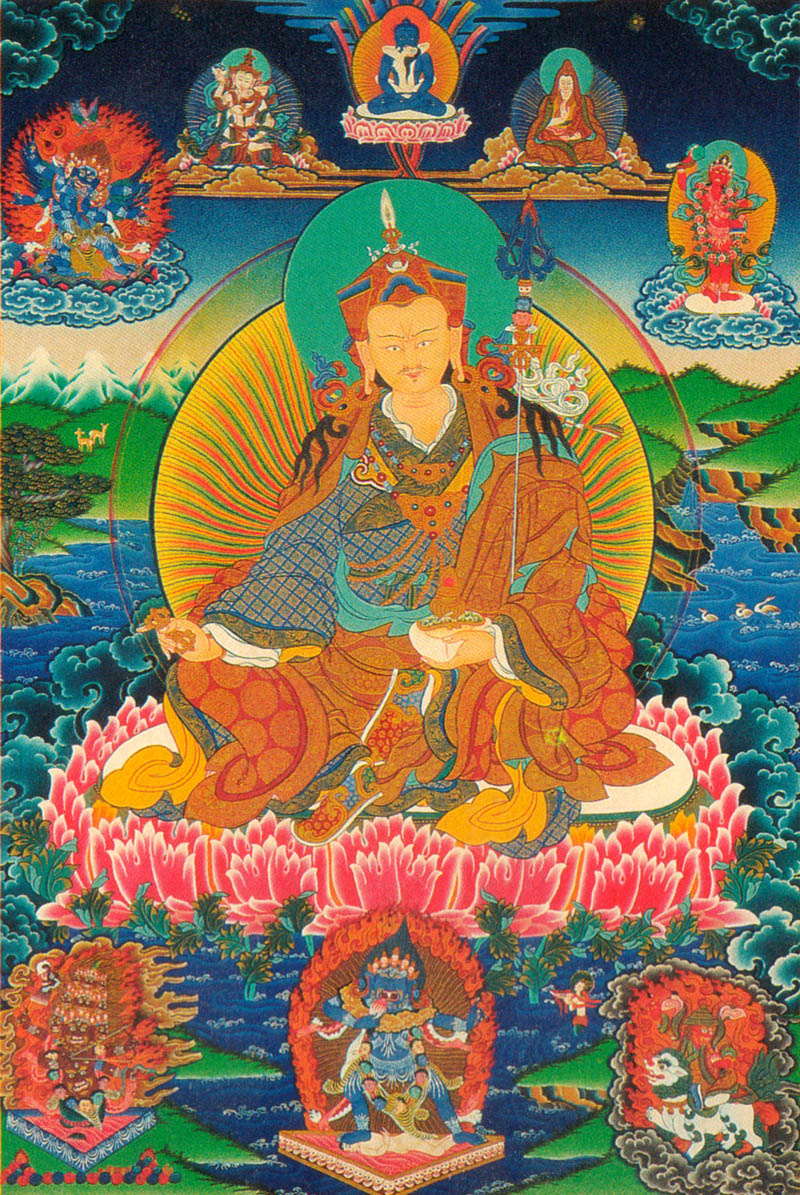
The basis for that is not martyrdom.  We’re not going to go to the heaven of 87 virgins or whatever. Not that I would be interested in that. Anyway, I think it was only for men. You know, that’s not going to happen to us. We don’t think of it in terms of martyrdom. We think of it in terms of view. According to what the Buddha teaches, the idea of duality, the idea that we are separate, the idea that time and space are separate, the idea that mind is separate from time and space, these are all the confusions that we live with. And so, because of that, it looks like there are so many of us out there and me over here. But in truth, if I were to meditate the way the Buddhas and bodhisattvas meditate, with pure Dzogchen view, I literally could not find a place where I end and you begin. And so I am you. I look into your eyes and I see Guru Rinpoche. How much do I love Guru Rinpoche?  That’s how much I love you. Like that.

And so sometimes, I have the occasion to speak very harshly to my students. On occasion, I’ve had to, figuratively speaking, slap them around. I mean really. Here is half of a piece of rice. You must know there there is not even that much hatred in that, none whatsoever. When I come to the point that I feel like a student needs a spanking, it’s because they are at a probability point. It could go this way or it could go that way, and I like to whap them over them that way. And that’s my job—to keep my eye on those probability points.

Copyright © Jetsunma Ahkon Norbu Lhamo All rights reserved


A Prayer by Which We Recognize Our Own Faults and Remember the Objects of Refuge by His Holiness Dudjom Rinpoche


The following is from “The Lamp of Liberation: A Collection of Prayers, Advice and Aspirations”

Homage to the Guru!

Conqueror Shakyamuni, supreme guide of the universe during this fortunate aeon,
Heirs of the Conqueror, assembly of noble Bodhisattvas who
educate beings,
Revered Guru, unsurpassed protector of creatures in this degenerate time,
Together with the Three Roots, the oath-bound, and the Dharma protectors,
With yearning devotion, one-pointedly remembering you from
the depths of our hearts,
We pray again and again to invoke your attention:
Hold us with loving kindness, and by the power of your compassion,
Please bless us to accomplish our thoughts and intentions in
accord with the Dharma.
Due to former actions, by no means weak, we obtained this precious human body,
Due to merit, by no means small, we met with holy Dharma;
Accepted by the Guru, we received empowerments, blessings
and pith instructions–
Such are the jewels we hold in our hands right now!
Yet our minds, like frivolous monkeys,
Succumb to negative, deceptive demons of distraction,
And we have no ability to utilize the wealth which is our very
own.
Thus, all the instructions about the freedoms and endowments
have simply been wasted.
We are now at a crucial turning-point:
Whatever we requested, whatever we received, has all become like some kind of story;
Though our bodies appear in the posture of Dharma and we
consider ourselves as Dharma practitioners,
Our minds have not actualized the truth of Dharma.
Not knowing even a whiff of human values, let alone the view of Buddhadharma,
Having only a vague notion of the sixteen rules of proper human
conduct,
We are without conscience when we observe our bad deeds,
And our dread of being ashamed is smaller than the rear of a tail-less mouse.
Really unable to understand the ten virtuous actions of
Buddhadharma,
Full of sectarian bias, though all the doctrines come from the one Teacher,
We criticize the teachings and the sages and so accumulate bad
karma;
Thus, though relying on Dharma, we carry a great weight of sin.
Hearing a lot of teachings, our pride increases
But our mental analysis does not fathom the depth of their meaning.
Even though we think we keep the discipline of the Pratimoksha,
The four dharmas of a practitioner have been lost without a
trace.
Even though we think we possess the precious training of the
Bodhisattva,
The Four Immeasurables are only like an image of a lamp.
Even though we think we keep the samayas of the secret
Mantrayana,
The first root downfall is not guarded against and (so the rest) are
eventually discarded.
Even though we know how to voice explanations about the Four
Reflections that Reverse the Mind,
Our attachment to the appearances of this life shows there has
been no actual renunciation.
Even though we rely on a guru, our respect and devotion
gradually diminish,
And instead of having pure perception, we consider ourselves as
his equal and thus develop wrong views.
Respect, love and kindness toward our vajra brothers and sisters
decline;
Unable to tolerate a few bad words from them, we shower them
with curses.
The love and compassion generated by recognizing all beings in the six realms as our parents
Vanishes like mist when we do not practices from the depths of
Bodhicitta.
We act as though we have experienced the Development and
Completion stages,
Yet we have found no alternative to being submerged in ordinary
confusion.
We recognize that Emptiness is the ultimate teaching of both
Sutra and Tantra,
But without a decisive understanding of it our mind-streams
become hard as horns.
We are not capable of abiding in the Original Nature,
But we pay lip service to that view and throw cause and effect to
the wind.
Outwardly, we appear disciplined and well behaved, yet
inwardly, attachment, craving, desire and greed burn like fire.
Even if we keep our bodies secluded in the mountains,
Our minds stray ceaselessly, day and night, to the cities.
Not having gained confidence in ourselves in our experience and
practice,
Trying to guide others to accomplishment is like a fairy tale.
It is impossible to be cheated by the compassion of the Three
Jewels,
Yet due to a failure of devotion, we are worried and cheat
ourselves.
In this way, towards the Guru and holy Dharma,
Although we are free from the wrong views that arise from a lack
of trust,
Yet due to these difficult times, sentient beings act negatively and
remain unfulfilled,
Understanding and realization having fallen under the power of
destructive impulses;
Not having protected mindfulness and introspection, we
suffered a great loss.
The time has come to examine ourselves!
All our actions have merely added to our confusion,
All our thoughts were tainted by emotional afflictions;
Without seeing that even our virtuous activities were always
adulterated by sin,
Where is there to end up ultimately but in the lower realms?
Recalling them now, we become despondent;
Looking towards others just increases our sadness
Since we can find no beneficial friends to assuage our distress.
If we do not look after ourselves now,
Then when caught by the messengers of the Lord of Death
No one will be able to help us, and all hope will be lost.
Waiting with such empty hopes, is this not cheating ourselves?
Whatever transgressions, faults, downfalls and degeneration of the Dharma have occurred,
We will not keep secret now nor conceal them in the future,
before those who possess the yes of wisdom.
We confess from the depths of our hearts: With your compassion,
please forgive us.
Protect us from the terror of the precipice of the wrong path,
Inspire us so that we may follow the utterly pure path of
liberation.
We spent a life busy doing this and accomplishing that,
Yet we are empty-handed, without so much as a single result.
Abandoning now the path of knowing many things but
experiencing just suffering,
Why shouldn’t we enter the path of knowing the one thing that liberates everything?
Unfailing true benefactor, our sole hope and reliance,
Root Guru, who encompasses all refuges,
Praying to you with one-pointed devotion,
Most kind and revered supreme refuge, please hold us with your compassion:
Bless us to see our own faults.
Bless us to have no desire to examine the faults of others.
Bless us to pacify all turbulent, cruel and disturbing thoughts.
Bless us to have good thoughts arise from deep within.
Bless us to reduce craving and to increase contentment.
Bless us to remember that the time of death is uncertain.
Bless us to have no concerns at the moment of death.
Bless us to generate great confidence in the Dharma.
Bless us to practice impartial pure perception.
Bless us to develop uncontrived respect and devotion.
Bless us to reduce mental activity about unobtainable things.
Bless us to establish the Dharma in the depths of our minds.
Bless us to go with diligence to the depths of Dharma practice.
Bless us to liberate our mind-streams, which is the ultimate goal
of practice.
Bless us to be free of obstacles in our practice.
Bless us to have the results of our practice ripen immediately.
Bless us so that our contacts with others may be meaningful and
beneficial.
Bless us to destroy the duality of hope and fear.
Bless us to see the non-dual primordial wisdom.
Bless us to recognize the self-face of our own primordial
wisdom.
Bless us to abide in the secure place within ourselves.
Bless us to gain the great certainty without effort.
With the vast vajra weapon of primordial wisdom, which has
been present from the very beginning,
May the hollow existence of samsara and nirvana be cut in one instant.
In the ceaseless great bliss of Nyema’s celebration,
May we always enjoy the activity which is beyond union and
separation.
In the expanse of the all pervading equalness even the name
of suffering does not exist,
So who could there be still searching for happiness?
Where happiness and suffering have the same taste and grasping
is self-liberated
Is the Kingdom of Samantabhadra: May we attain it in this very life!

The Challenge of Self Honesty

buddhists-prostrating-outside-the-temple

The following is an excerpt from a teaching by Jetsunma Ahkon Lhamo called “Art of Dispelling Anger”

We must take ourselves to task more. I don’t want to speak harshly because harshness doesn’t help, but I want to say succinctly and directly, we have to take ourselves to task regarding our faults and our poisons.   When I think of the Tibetan culture, that’s a lot easier because there isn’t that attachment to materialism.  Even in terms of the roots of the culture itself without religion, they were a nomadic people and they had things, but you couldn’t carry much.  You had your yaks and your yurts and that was it.There wasn’t that much variety in food; there wasn’t that much variety in clothing.  It’s true that the aristocratic Tibetans used to collect jewelry—some of the strangest looking jewelry.  It was intense jewelry, and that was considered a status thing. But for the most part, culturally, a Tibetan Buddhist would not have a hard time understanding that hatred, greed and ignorance and particularly desire, as the Buddha taught, keep us revolving endlessly in samsara.  We, unfortunately, are programmed quite differently.

I know in my household and in those of many people that I’ve talked to, there was confusion.  My mother was sort of a lox and bagel Jew and my father was a twice a year Catholic; and we were supposed to somehow dance in the middle. So when mama won we were going one way and when daddy won we were going the other way. I think that this happens with a lot of people.  They are raised with a lot of confusion around religion.  And even when they are taught that faith and religion should be a part of their life, and even when they are given the Western ten commandments, still there is so much confusion because we seem to find ways around that.

Thou shalt not kill.  But you can kill bugs, animals and enemies.  So who are you not supposed to kill?  I will not kill you.  That will do it.  So there is tremendous confusion around that.  How does one venerate these absolute laws that have to do with a moral and ethical human when there is so much confusion around them?  I mean, thou shall not kill but go to war.  How does that make sense to a child?   And so, as we grow up with religion, even though we have been founded in religion, or have some foundation in it, the information that we’re given is very confusing.  Thou shalt not commit adultery.  Whose family hasn’t had a little bit of that? You know, it’s just crazy.

And so, first of all, we’ve learned to be a little bit hypocritical; but most of all, we’ve learned that these laws don’t really matter, and that’s really sad.  So when we become Buddhist, we hear that there is a Vinaya and there are certain things that we must not do. And that if we take a life,  we understand that we will be giving our lives someday from having taken a life because karma works like that. Karma is exacting. When the cause arises, the results arise independently and simultaneously.  It’s our misjudgment through having the mind of duality that makes it seem like time stretches out. So even though you may not have the result of that bad karma until later on in life or even some future life, definitely we know from studying, at least. And every once in a while we get blessed with a little instant karma, so we have sometimes the opportunity to learn; but still that confusion is rampant, really rampant.

We want to practice Buddhism, so we take the teachings. We get to all the retreats; we see the right teachers; we try to do the practices. Yet we don’t really change ourselves.  It is an amazing thing to me that students can be on the path for so long and even try to go to the completion stage practices,  the tsa lung and the trekchod and togyal, and go to those levels and practice them with some part of their mind, and yet the rest of them is somehow remaining the same.  To me that is probably the worst tragedy on the path.  It’s the one that makes me not like to teach, but that’s the battle I fight with myself, you know. I’m just being honest.

Copyright © Jetsunma Ahkon Norbu Lhamo All rights reserved

Warriorship on the Path

mindfulness-istock-prv

The following is an excerpt from a teaching by Jetsunma Ahkon Lhamo called “Art of Dispelling Anger”

The theme that we will work on today is working through one’s five poisons. I think it’s an important one. And I think what we should do is take our time and pick through it.  That doesn’t mean working through one’s five poisons.  That means getting rid of them.  In a sense when we take to the path, we think that, ‘Oh, I am going to be like the picture of the Buddhist where I get to sit on top of the Himalayan Mountains somewhere all by myself, and eventually people will climb up and ask me profound questions.’  But it really doesn’t work out like that.  When we enter upon the path we want to go forward with the most exotic practices and wear the most exotic robes and collect all the implements and learn how to use them.  I know there is the tendency to want to get into the customs and trappings and surroundings of Dharma. But really the first thing that should be done when we enter onto the path is to take hold of and begin to think of ourselves as a warrior regarding our own poisons.

Now when we say “warrior” everybody thinks they can’t be very Buddhist, because Buddhists are peaceful.  Well, Buddhists are peaceful.  We’ve never had a war that I know of.  We’ve been attacked, but we’ve never had a war.  There is no other religion that can say that.  Every other religion has brought about war and that has never happened in Buddhism. Yet we are warriors. And we consider ourselves warriors in the sense that we must take to task that which prevents us from attaining liberation, because the goals here are very different.  In other religions, there are lots of materialistic ideas about possessions, like how much land a certain religion should have or how many pieces of gold they should collect.  There is a certain materialism in it.  But with Buddhism, there is really no materialism.  In truth, students will give their last dime to make an offering to the three precious jewels.  There are many stories of practitioners whose generosity and unthinking faith—no, not unthinking, more like spontaneous faith—is so strong that they would offer even their last garment at the altar to give to the three precious jewels knowing that it is so much more important to gather the merit of making that kind of offering. That it is important to have done it.

Copyright © Jetsunma Ahkon Norbu Lhamo All rights reserved
First, Study the Preliminaries: from “Enlightened Courage” by Dilgo Khyentse Rinpoche

The following is respectfully quoted from “Enlightened Courage” by Dilgo Khyentse Rinpoche:

First study the preliminaries.

Consider all phenomena as a dream.
Analyse the unborn nature of awareness.
The antidote will vanish of itself.
The nature of the path rests in the alaya.
In post-meditation, consider phenomena as illusory.
Train to give and take alternately;
Mount them both upon your breath.
Three objects, three poisons and three roots of virtue.
In all your actions, train yourself with maxims.
Begin the training sequence with yourself.
When all the world is filled with evils,
Place all setbacks on the path of liberation.
Lay the blame for everyone on one.
Reflect upon the kindness of beings.
Voidness is the unsurpassed protection;
Thereby illusory appearance is seen as the four kayas.
The best of methods is to have four practices.
To bring the unexpected to the path,
Begin to train immediately.
The pith instructions briefly summarized:
Put the five stages into practice.
On how to die, the Mahayana teaches
These five strengths. It matters how you act.

All Dharma has a single goal.
Rely upon the better of two witnesses.
Always be sustained by cheerfulness.
With experience you can practice even when distracted.

Always train in three common points.
Change your attitude and maintain it firmly.
Do not discuss infirmities.
Do not have opinions on other people’s actions.
Work on the strongest of your defilements first.
Give up hoping for results.
Give up poisoned food.
Do not be hidebound by a sense of duty.
Do not meet abuse with abuse.
Do not wait in ambush.
Do not strike at weaknesses.
Do not lay the dzo’s burden on the ox’s back.
Do not praise with hidden motives.
Do not misuse the remedy.
Do not bring a god down to the level of a demon.
Do not take advantage of suffering.

Do everything with one intention.
Apply one remedy in all adversity.
Two things to be done, at the start and at the finish.
Bear whichever of the two occurs.
Even if it costs you your life, defend the two.
Train yourself in three hard disciplines.
Have recourse to three essential factors.
Meditate on three things that must not deteriorate.
Three things maintain inseparably.
Train impartially in every field;
Your training must be deep and all-pervading.
Always meditate on what is unavoidable.
Do not be dependent on external factors.
This time, do what is important.
Do not make mistakes.
Be consistent in your practice.
Be zealous in your training.
Free yourself by analysis and testing.
Don’t take what you do too seriously.
Do not be bad tempered.
Do not be temperamental.
Do not expect to be rewarded.

This distilled essence of instruction,
Which transmutes the upsurge of the five degenerations
Into the path of enlightenment,
Was handed down by Serlingpa.
Having roused the karma of past training,
And feeling powerfully inspired,
I disregarded suffering and censure
And sought out the instructions to subdue my ego-clinging;
Though I may die, I shall now have no regret.

Step by Step

StepByStep

The following is an excerpt from a teaching by Jetsunma Ahkon Lhamo called “Reclaiming Our Merit”

Based on the eightfold path of the contemplations on the meditations, and so forth, that are prescribed, we start to build the wisdom, which is more than knowledge. Let’s say we find an ordinary person who is 70 years old. with general and average sensibilities, a person as honest as Woody Allen, who said that he never gained any wisdom his whole life.. I think that’s strange, but anyway, coming back to reality here. A 70 year old person is going to have to experience some of the cycles of life, the passages and changes that we negotiate through that change us, make grownups out of us. Somebody much younger may have the same capacity, but they have not had that repeated experience. So that’s the kind of wisdom: The way a 70 year old person would have calmer view, a better wisdom, a better grip, a bigger understanding, perhaps, of how the world works, than say, a 20 year old.

In the same way, we build our practice carefully, step by step in the way you have to live year by year. You can’t skip years if you want to do that with our practice. And don’t even dare to think to go on to the higher practices until you’ve accomplished what was before that. Really, back in the old days, that’s how it was. A teacher gave you a teaching. You climbed back down the mountain and didn’t go up again to visit your teacher until you accomplished it. And it was not, ‘I did this many mantras.’  You accomplished it. And back in those days, teachers weren’t worried about lawsuits. They would throw you down the mountain if you didn’t do it right. But nowadays we’re worried.

So these are dark times and there are reasons why we should get together more. There is a universe of reasons why we should get together and practice our art. We have the robes. We have the teachings. And I pray that we have the pure intentions, the willingness to experience a little bit of discomfort, inconvenience—oh, perish the thought—so we can actually contribute.

Copyright © Jetsunma Ahkon Norbu Lhamo All rights reserved

The Foundation

EightFoldPath

The following is an excerpt from a teaching by Jetsunma Ahkon Lhamo called “Reclaiming Our Merit”

Lord Buddha built the path sequentially.   First what did he teach?  That all sentient beings are suffering, that suffering is all pervasive,. that the cause of that suffering is desire and greed. None of which we, by the way, have bothered to get rid of. But he also taught that there was an end to suffering, and he taught that as the eightfold path. Unfortunately, we’ve gotten so ahead of ourselves, thinking that we are Dzogchen practitioners that we haven’t bothered to have right mind, right concentration, right meditation, right work, … (I have a list somewhere. I’ve forgotten them all.) But all of the eightfold path, all of those different qualities, they have to be looked at one at a time. Right speech: That means cut out the gossip; that means you cut out the bullshit and the bad words you have toward each other. Right contemplation:. Ok, what is wrong contemplation?   Wrong contemplation is watching phenomena dance around you and just buying in, dancing with it. Right contemplation would be taking the Buddha’s teachings one by one and studying them carefully. Have any of you practiced the eightfold path?  No. No. Then the Buddha came along, and he took the eightfold path and he sort of condensed it into the Mahayana view, which is wisdom and compassion.

The thing is, that when we have wisdom and compassion, we think, ‘Oh, that’s much easier.’ So we leave behind the eightfold path and we go right to the wisdom and compassion; and really we do ourselves a disservice by faking our way through it. Wisdom is something that arrives through practice, through service to fulfilling the ideas that Lord Buddha presented before. In other words, wisdom and compassion are not considered separate or different or above the eightfold path. You still have to accomplish the eightfold path, you see. And when you have fulfilled that, then you have the capacity to give rise to wisdom and compassion. And then you find out that the reason why the eightfold path was taught first, and Mahayana second, , is that it’s almost impossible to keep your commitment as a bodhisattva and to practice the way of the bodhisattvas for even one hour.

And so we have to rely on all that we’ve learned before this to build this house of Dharma. We have to make sure it’s all standing correctly, and we’re all here in line, and the foundation is good. Then you can start to build a house. That’s your wisdom and your compassion. And you have to ask yourself, has it come yet? We’re waiting for compassion to come likeHappy Birthday, you know, some sort of thing that is coming from a wave from the sky. Suddenly you’ll be good. But in order to really give rise to compassion like that, you have to have your foundation; and then as you begin to give rise to the bodhicitta, you have to base it on what you learned before.

What did you learn before?  All sentient beings are suffering. That in samsara, suffering is so pervasive that our perception is askew. We don’t know up and down. We’re running so fast to get away from discomfort and pain; we really don’t have ourselves in order. This is what the Buddha taught. And so you look at the situation of sentient beings.  If you did that right contemplation and you did it right, you really spent some time on it. And you open your eyes. You don’t close them and say, ‘I hate this stuff. I can’t look.’ You open your eyes and see it, and be willing to shoulder the burden of noticing that what Lord Buddha taught was right: That there is nothing but suffering, really, and we’re causing it ourselves through our being asleep and our lack of understanding.

Copyright © Jetsunma Ahkon Norbu Lhamo All rights reserved
You Get What of You Pay For

Jetsunma_3-23-13

The following is an excerpt from a teaching by Jetsunma Ahkon Lhamo called “Decision Time”

Who are you?  Is being busy your guru?  Good luck. Good luck. Is being fearful your guru?  Is keeping your heart in a place where it doesn’t have to mingle with the cry that I hear from samsara that says help me now, help me? You have to ask yourself because this is the time. Who am I?  How many people will suffer at my hand?  How many people will slip through my fingers that I did not offer Dharma?  These are the questions that you have to ask yourself.

You get what you pay for. That rule is as good in Dharma as it is anywhere else. And if you don’t do the work, the work does you. Each of us has karma and we will experience it. Karma is exacting. There is no way out of it, unless we rely completely and utterly upon the teachings and our teachers as the door of liberation. To delude yourself into thinking that you are practicing that you are Buddhist or that your life has meaning whatsoever, unless you are walking through the door of liberation, is a waste of time. My time and yours.

So I’m asking you, won’t you please let go of your habitual tendencies?  Won’t you please let this precious nectar of the Buddhas and bodhisattvas enter your heart and heal you?  Won’t you please respond in kind to the cries of sentient beings, because if you are not helping them onto the path of Dharma, not your make up stuff… You can’t have a bunch of people that sit there and talk Dharma to you and think you’ve done your job. Unfortunately, you haven’t practiced that well and you are not the Buddha yet, and you’re not awake. So when you talk about Dharma, it’s just you talking about Dharma. People learn by your practice. They don’t learn by your ego talking about Dharma and saying, ‘I’m so great, I have some Dharma.’ They learn by watching your humility, your qualities, your practice. What is your practice?  How do you change week by week, month by month. That’s what people learn  That’s when people can learn by your example. But if you yourself are lost in samsara, you have nothing for anybody. Nothing. Your little gifts that you give when you say, ‘Here’s a little Dharma. I know a little Dharma. Try that, I know a little Dharma.’ It’s nothing. It’s a little kabuki dance. You know, you’re playing your little ego thing and they’re playing their little ego thing and everybody’s doing their little ego thing. Real Dharma is not like that. Real Dharma is a method. It is method that must be practiced every day. If you do not rely 100 percent upon your guru, then you are not practicing that path—relying on the teachings, relying on the wisdom, and most of all, relying on the compassion.

Our teachers understand our minds without being inside of them. Did you know that?  Teachers can look a certain way, and we can see what you think you’re hiding. In fact, we see it so well that we find that what you’re hiding is running your life. It’s in charge. Whatever you are doing in your mind is in charge.

And I’ll tell you that the Buddhas and the bodhisattvas love you. You know in the East, they talk more about the bodhicitta and it sounds very intellectual. They talk about compassion, and that sounds good. They talk about respect and devotion, and these are all good things. But being a female I can tell you this, I know this from my own experience: You are loved, each and every one of you. Your egos and your stupid stuff, that’s not the part we love the best. We can be patient with that, but we see it killing you. Clinging to life is the very cause of death.

We see you scratching on top of that dirty field and we see the diamonds, and those diamonds are calling to you, ‘Go deeper, go deeper. You can’t see me, but I’m here; and you can’t see me because you are scratching.’ Like beggars under the table of a great feast, we pick up a little crumb, we think, ‘Oh, I got a crumb,’ while the Buddhas and bodhisattvas are saying to us, ‘Come to this feast, eat everything. Have enough for your whole life. Take it all. Take me.’ I’d take everything. And like beggars, we just have a little piece; and we’re so proud. Show it to everybody, got this little piece. And that’s the nature of human beings. Your teachers understand. There’s no question of forgiveness. It’s not like that. There’s no question of guilt. There’s no question at all, actually. It’s simple. The nectar is here and because your teacher has been recognized as the consort of Guru Rinpoche, we’re speaking of the nectar of immortality. That’s the offer. The feast is here, but you have to want to eat, and you have to be willing to chew.

And the love and respect is real. I don’t know of any teacher that purposely gives a student a hard lesson that is so unbearable that they cannot bear it. The teachers hold us as close as they can, like a bond, a bond that is a tether of love; but at the end of that tether of love, if we are not looking to our root gurus with faith and with good mind and proper thinking and proper view, then we will never receive the blessing. It will never come. And instead, what happens is we dance at the end of that tether. And that is what I see. From my heart, I tell you this. You’re dancing at the end of a tether of love, absolutely ensuring that you will never, never come to the feast. It’s decision time. You have to decide who is on the throne: your ego, your fear, your idiot mind, selfishness, delusional thinking. Whatever is on the throne, you’ve got to fix it. No one else can fix it but you. And no one else can come to this table and eat with me  this beautiful feast but you.

He who I love beyond all measure lives in you, my teacher, and you betray him every moment. You do not seat him on your throne. He is Guru Rinpoche, teacher of teachers, Buddha of Buddhas; and I tell you this because I have mixed my mind with his.

You are wandering in samsara, my darlings, and I’m asking you, please come back. Please practice the teachings. Please abandon the world. You will do so soon enough. Soon enough we will leave this world and then there will be no choices, only results.

I don’t think there is anybody more qualified than me, forgive me, to tell you that it’s not easy to be a true disciple, that it’s not easy to mix one’s mind with the mind of the guru; it’s not easy to learn. But I can tell you, and nobody is more qualified to tell you this, that when you give up, you win. When you let go, you have it all. And when you stop wiggling, the tether of love binds you so tight, there is nothing else. Please don’t forget the Buddha, the Dharma and the Sangha, and please invite the guru to be seated upon the throne of your heart. I can tell you that there is bliss and happiness in doing so and I can tell you that samsara will always, always be the whore she is and will continue to let you down.

So that’s my teaching for this evening and I’m really thrilled that I had the opportunity to give it to you. And I thank you for listening.

Copyright © Jetsunma Ahkon Norbu Lhamo All rights reserved


The Turning of the Wheel of Dharma

250px-King_Indrabhuti-0

The following is respectfully quoted from “The Small Golden Key” by Thinley Norbu Rinpoche

According to the teachings of the sūtras, the Buddha turned the Wheel of Dharma, teaching the “four truths” (Tib. bDenpa bash) to the “five noble ones” (Tib. lNga.sde bang.po). These four truths are: suffering, the causes of suffering, the cessation of suffering, and the path leading to cessation of suffering. These are the foundation of the Hinayāna teaching.

Later, at Vulture’s Peak in Rajgir, the Buddha taught the “Perfection of Wisdom” (Skt. Prajñā Pāramitā: Tib. Shes.rab.kyi pa role tu phyin.pa) which is the second turning of the Wheel of Dharma called “Characteristiclessness” (Tib. mutton.nyid med.pa) to the general gathering of the Sangha, including male and female Śramaneras, Bhiksus, and Bhiksuni, and to the special gathering of Bodhisattvas, such as Mañjúshri (Tib. hJam.dpal dByangs), Avalokitesśvara (Tib. sPyan.ras.gzigs), Vajrapāni (Tib. Phya.na rDo.rje) and Maitreya (Tib. Byams.pa).

Finally, at a place of supernatural beings unknown to ordinary beings, the Buddha taught the “Doctrine of Absolute Truth” (Tib. Don.dam rnam.par nges.pa) to various disciples such as Bodhisattvas, gods, nāgas, yachts, rākshas, and humans. At these times, the Buddha exhibited many miraculous powers of body, speech and mind.

The full meaning of Mahāyāna is contained in the Buddha’s last two turnings of the Wheel of Dharma where he taught the actual relative truth and absolute truth.

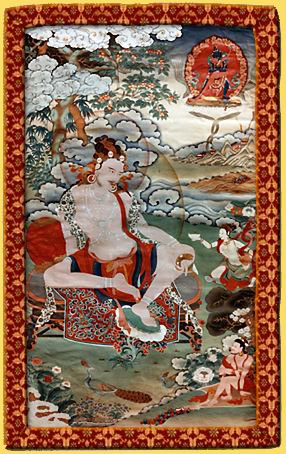
According to the teachings of the tantras, the higher Vajrayāna teachings were first taught by the Buddha at the request of King Indrabodhi of Uddiyāna (Tib. O.rgyan). In the Vajrayāna teachings, the Buddha taught disciples of superior faculties, who had accumulated great merit, how to transform impure phenomenal appearance into a pure mandala. In order to teach King Indrabodhi, the Buddha emanated the Guhyasamāja mandala (Tib. gSang.ba hDus.pa), then bestowed the empowerment of this mandala upon the king and gave him the tantric teachings.

What Do You Long For?

Guru Rinpoche

The following is an excerpt from a teaching by Jetsunma Ahkon Lhamo called “Decision Time”

JNT 14 Decision Time

How much time do we spend understanding the quality, the fabric, the substance of the Buddha’s teachings so that we can make good decisions?. Have we reasoned things out for ourselves?  Do we follow the Buddha’s logic?   If we don’t follow the Buddha’s logic that cause and effect arise interdependently and at the same moment, if we don’t follow the logic that what we are experiencing now is our own karma, if we have not taken that teaching to heart, are we Buddhists?  I wonder.

How much time do you spend mixing your mind like milk with water, mixing with the mindstream of your beloved teacher?  Maybe it’s not me. I’m not that impressive. How much time do you spend mixing your mindstream with the nectar of the teaching?  How much time have you spent in courageous determination, paring the mind down the way one works the wood of one’s craft, or the metal of one’s craft? How often have we made solid and good and sensible plans for our death?  How many of us have made plans and can count on the plans we’ve made for our next life?  Isn’t it funny that after all this time, we do relatively little, and some of us nothing, to add to our virtue?  We don’t plan for the next life. We act like people who don’t believe that rebirth will occur immediately. And it will. We act like people who think there is no relationship between cause and effect. Everything we do is for satisfaction in this life and we still dance with it. We still try to control it.

How much time a day do we spend beseeching the Guru to never abandon us? And how much time each day do we spend in longing for the nectar of bodhicitta? How much time every day do we spend longing for liberation?  Compare that to the time that we spend hanging out with our own minds, like a drunk in a bar, convincing himself the next one won’t hurt. Opening the cans, pop another one, pop another one. Maybe this one will be the magic one. Or, maybe this one. Pop another one. Maybe this will be the one that there is no result for, a freebie. Only a true, bona fide alcoholic, or somebody who was awake enough to know that they are bona fide samsaraholics, understands the depth and depravity of the thinking that I’m describing. That kind of thinking tells me one thing and one thing only: One has not become a Buddhist. You might think you are, might wear the right clothes, but you ain’t there yet, because you have made samsara your guru, because you have made fear your guru, because you have made doubt your guru, because you have made the noise in your head your guru. Because of these and many other things, we’re still suffering. And we’re so deluded that we still seek answers in samsara. Do you know that’s the definition of insanity–to repeat the behavior again and again, achieving the same result?  By this time, we should have made decisions like that. But I see you listening to your heads. I see you making up your own religion in your minds.

I mean, sure, maybe it looks like Buddhism, but it’s not. Because if it were the teachings of the great Guru of Gurus, Padmasambhava, it would say to you that you are drunk, that you are mistaken, that the things that you hold onto in samsara will only betray you. The very things that you are most afraid of will come back to harm you. Guru Rinpoche would have said to you, ‘Each and every one of you have the seed of Buddhahood, but without ripening that seed, it will never manifest.’ Without taking the time, without taking this lifetime to hone one’s skills, to develop the kind of discipline and good mind, relaxed, calm mind…. This will never happen under the conditions that we are thinking now.

Guru Rinpoche’s teachings have said that we should rely on our root guru; and woe unto us if we make up something different. That’s a different religion. Our root guru represents for us the very nature of our mind; not only represents, but in fact is the very door of liberation. And for most of you, if not all, that’s your chance. There is one door to liberation and that’s one’s root guru. And if one cannot align one’s heart, body, speech and mind with the milk or the nectar of the guru, then something else is going on entirely, because this is what our faith is. This is what Vajrayana is about. It is about quick liberation. Nobody said easy. Quick liberation, by virtue of the karma and the relationship between oneself and one’s guru, which one cultivates. The work is hard, because our own minds want to remain drunk. We like the stimulation. We like the 30-minute stories. We like to control the endings. But that’s delusional. Nobody controls the ending. No matter how healthy you are, you could die tomorrow.  Or your root guru could die tomorrow.

Ego, health, control has nothing to do it. Your karma is ripening right now and that’s your experience. That is your experience. It’s yours. And should it happen that the path is difficult and long—difficult, takes a lot of work, makes us nuts sometimes—that’s the very time that Guru Rinpoche reminds us that we are hanging by one string from falling into the depths of samsara and that string is the connection that we have with our teachers. Ignore that string or cut it at your peril. I would not want to be lost in samsara. I would not want to be unknowing of what my next rebirth will be and what I’ll have to endure because I followed the wrong path.

You’ve been given a gift without measure that you have not even opened yet.. I would say in this lifetime you haven’t earned it. And so you might think that by that, you can accept it freely and you can waste it. But I say to you, if we are together and if we speak and if we love one another, then this is the result of many, many efforts in the past. And our job is to, instead of acting like an idiot farmer who is plowing the ground for nothing, rocks and dirt —maybe I can plant a bean here, a little corn—when underneath there is a diamond field, a mine of gold… We’re like poor, starving idiot farmers scraping around when the jewels are ours.

Why do you want to be beggars?  You have been invited to the feast of the Buddhas. Why would you put your fear on a throne?  Why would you put your confusion on a throne? And most of all, why in the world would you take your flawed, crippled ego and put it on the throne? But we do it, day in and day out. We think that somehow if we talk about Buddhism and we look Buddhist and we act Buddhist that somehow the cards will count and it will be fine. It will work out in the end. And I beg to differ. Do you know how it works out in the end?  You die, and you take rebirth according to what you have accomplished in this lifetime. So what are you going to put your money on? Insanity?

Some of you, I think, are beginning to get renunciation and that means you stop making up your own bullshit, and you listen. Some of us are not so young and stupid anymore. Learning the hard way is tough, but we’re good at it. The question is, though, are we learning Dharma, or are we learning to dig ourselves into samsara deeper and deeper? And that’s the question.

Copyright © Jetsunma Ahkon Norbu Lhamo All rights reserved
WP2Social Auto Publish Powered By : XYZScripts.com