How to Pacify Hatred, Anger and Attachment

The following is from a twitter conversation between Jetsunma Ahkon Lhamo and one of her followers:

Questioner to Jetsunma: That’s very true. I have to work hard not to hate. It hurts the hater most of all.

Jetsunma: Here is a method to pacify hatred and too much attachment, which are often combined. This sounds gross but it works!

Okay, let’s find out about this person. First, imagine the eyeballs hanging on a branch. Head sliced thin. One arm near your feet the other about a mile away. Torso also sliced thin. Imagine legs dumped in ocean. Now, where is the one you hate or love? Are they in the hanging eyeballs? The arms here and there? The floating legs? The slices? Where is the person? The mind? What do you hate/love? Can you find them? This will loosen the attachment that causes the emotion by recognizing it’s all just phenomena and fundamentally void. Keep doing it until you feel better and see how odd it all is. You cannot harm the other person or yourself unless the motivation is malevolent. You are trying to learn and heal. That is an ethical and useful method, then dedicate the merit to the healing of you both, and the end of all hate and war.

Best wishes, sending Prayers.

OM MANI PEDME HUNG! OM TARE TUTTARE TURE SO HA! Peace.

Questioner: That’s a great method! Also reminds that all is fleeting except for eternity itself? Thanks I will remember.

Copyright © Jetsunma Ahkon Lhamo.  All rights reserved

The Beginning of Awakening

An excerpt from the Mindfulness workshop given by Jetsunma Ahkon Lhamo in 1999

One of the practices that we are taught as Buddhists is that always, always, Guru Rinpoche should be above the crown of our heads.  We should be mindful that Guru Rinpoche is always there, seated on his lotus throne.  Upon going to sleep, we should visualize that Guru Rinpoche becomes like light or liquid and then pours into the top chakra and through the central channel, and remains in the heart throughout the night.  We fall asleep with Guru Rinpoche in the heart.  This kind of mindfulness is the best part of practice.  No matter what else I do, even if I don’t sit down and practice formally, I practice like that all the time.  That’s the backbone that I rely on.

When I talk to any of my students, the way that I practice View is that, as a Lama, I consider that the students are higher than me.  (You should never do that!  But I can do that.)  I consider that the students are higher than me because there are many of them and I am only one and our nature is the same.  It’s a little bit like the posture of Jesus washing the feet of the disciples. There is an element of sacrifice, there is an element of viewing the propagation of Dharma and the display of Bodhicitta to be all there is, the highest.  There is nothing else higher.  So I practice in such a way that the students are higher.  I hold them in high regard.  They are more precious to me than the other stuff that I do. I hold the students much higher than I hold myself.

It is the student’s job to practice that discrimination constantly.  One thing that we should do is consider that every event, every moment, every hour, every day, every breath has as its core nature Guru Rinpoche, the blessing of Guru Rinpoche, the appearance of Guru Rinpoche.  How does one practice that?  It is the kind of thing that you have to grow into.  You can’t just think all of a sudden, “Well, I’m never going to think about anything else.  I’m just going to think about Guru Rinpoche from now on, and therefore that’ll be real easy.  He’ll just always be on my mind.” That would make you crazy, wouldn’t it?  Trying to force that little monkey in a cage to do what you want? You don’t have to do it that way.

We start by creating habitual patterns that include body, speech and mind.  We want to include these three elements.  One way to practice this kind of mindfulness is to have an altar in your home.  If you don’t have an altar in your bedroom, perhaps you can have a picture by your bedside of Guru Rinpoche or your Root Teacher, maybe both. That’s a good visualization. Then, when you first wake up in the morning, the first thing you do — even before you go to the bathroom, even before the coffee — the first thing you do is look at that picture and reorient yourself: that this day the Guru is above the crown of my head.  This hour, this day, right now, the Guru is above the crown of my head and you make three prostrations.  You have it in your mind that this day is therefore sacred and then you dedicate the sacredness of this day to the liberation and salvation of all sentient beings. No one can take that away from you no matter what happens during the day.  If you get hit by a car and both your legs come off, they still can’t take that away from you.  Even if you were to lose your life, the sacredness could not be taken away from you.

Any time you go into a specific event, whether it’s ordinary or whether it’s a spiritual event, hold the picture of Guru Rinpoche or the Root Guru in your mind, reestablish the picture above the top of your head, and know that this experience begins and ends with the Guru.  If you’re going to the grocery store to buy food for your children or your family, this is an excellent thing to do. Gradually, over time, even in ordinary experiences that had no flavor, that seemed to have no connection between this ordinary activity and spirituality, you will begin to establish more of a View and begin to see every experience as spiritual.  Whatever job you have, whatever activities you engage in, look for the Guru there.  If you look, you’ll find him.  If you don’t look, you’ll never find him.

With that kind of discrimination and Guru Yoga, I find that the amazing opportunities and blessings come through the most ordinary experiences.  To the degree that I see all phenomena as the mandala of the Guru, and I hold to be in union with the Guru constantly, then ordinary people, like gas station attendants, will say things that will blow your head off.  That has happened to me, where I’ve been in that frame of mind, looking for the Guru and constantly mindful, and then pull into a gas station, and the gas station attendant says something that just rocks your world.  And it’s about something weird, like renunciation or karma or something like that, and you say to yourself,  “I’m listening, OK!”  That happens.  That doesn’t make the gas station attendant your Guru.  You see the difference, don’t you?  But it does mean that you are beginning to discriminate that nature.  You’re beginning to awaken to that nature.  It’s just a little thread, but it’s something.  It is the beginning of awakening to that.

Somehow we have to think of incorporating this distinction of what is extraordinary into our lives.  It has to be an effort that we actually provide for and make substantial, that we actually create in our lives.  This opportunity to practice like that will never simply come to you.  You may simply meet your Guru, but that’s because you practiced in your last life.  That’s because you practiced before, that’s because you earned it, but once you meet the Guru, once you are on the path, this practice of Guru Yoga becomes your responsibility.  To the degree that you really address it in a very profound, deep and heartfelt way, to that degree, it will benefit and it will awaken the mind.

© Jetsunma Ahkön Lhamo

Get Real

Yeshe Tsogyal

From The Spiritual Path:  A Compilation of Teachings by Jetsunma Ahkon Lhamo


The Vajrayana path is a great gift. Your mind can be purified through the practice of allowing it to arise naturally with those qualities of perfect union and perfectly purified perception. “Well,” you may say. “That sounds good, but will it work?” Yes, it will work. It will work by the power of the transmissions, by the intensity of your effort and faith, and through the power of the mantra and through devotion. These mantras are not invented by ordinary people. They come from primordial wisdom itself.

Though your perception is still faulty, understand that within the center of this confused mandala you have found the perfect path. You have found your teacher and you have received initiation. Something is happening. Therefore the process is not as endless as you may think. This is your precious opportunity, and you should take advantage of it. Where will you find another like it? You have so much help and all the necessary tools and nourishments. Keep in mind the choice. Do you wish to be a practitioner seeking that one precious virtue, or are you just a person wearing a costume? If you are a serious Vajrayana practitioner, you will stop dancing around with rules and regulations and, pardon the slang, “get real about it.” Get real about this path. Understand that you must have the only thing of value—the perception of primordial mind, the realization of the natural state of all phenomena. This is true purity, true virtue.

© Jetsunma Ahkön Lhamo

Intention and Vows

An excerpt from a teaching called Bodhicitta by Jetsunma Ahkon Lhamo

From this very moment forward, I offer this life as a gift to the Three Precious Jewels.  My pure intention is to accomplish the purpose of self and others, supreme enlightenment, quickly and surely.  Thus I vow that all my life, every portion shall be used to accomplish that goal.  All my activities shall accomplish that goal.  All my thoughts and feelings are directed towards that goal.  All my possessions shall be strengthened to support that goal.  I shall seek all appropriate teachings, empowerments, and spiritual activities in order to secure that goal.  My own enlightenment is now considered to be equal to and non-dual with the enlightenment of others.  Therefore I vow to support fully and without hesitation the practicing spiritual community.  I vow to support fully with unconditional love the Three Precious Jewels, the recitations, the Sangha and the temple.  I will not kill; I will not lie to accomplish selfish purpose.  I will not steal.  I will not become intoxicated and therefore forget my purpose and vows.  I will not engage in adultery, promiscuous activity by which my intention will be compromised.

I fully intend to do all that I can to accomplish the liberation of all sentient beings.  I consider the realization of all beings to be equal with my own and of equal value.  I fully support the spiritual community and its purpose on Earth.  Should any activity, or possession or relationship be contrary to those purposes, I will systematically change them or eliminate them from my life.  This I promise so there will be an end to hatred, greed and ignorance in my mind stream and in the 3,000 myriads of universes so that all beings and I myself shall achieve the precious awakening.

The Refuge Vow

I take refuge in the Lama,

I take refuge in the Buddha,

I take refuge in the Dharma,

I take refuge in the Sangha.

The Bodhisattva Vow

I dedicate myself to the liberation and salvation of all sentient beings.  I offer my body, speech and mind in order to accomplish the purpose of all sentient beings.  I will return in whatever form necessary under extraordinary conditions to end suffering.  Let me be born in times unpredictable, in places unknown until all sentient beings are liberated from the cycle of death and rebirth.  Taking no thought for my comfort or safety, Precious Lama, make of me a pure and perfect instrument by which the end of suffering and death in all forms may be realized.  Let me achieve perfect enlightenment for the sake of all beings.  Then by my hand and heart alone, may all beings achieve full enlightenment and perfect liberation.

Copyright © Jetsunma Ahkon Lhamo.  All rights reserved

True Nature

The following is an excerpt from a teaching by Jetsunma Ahkon Lhamo called “Your Treasure is Heart”

Bodhichitta is, in fact, our nature, as much our nature as Buddhahood.  We are, in our nature, this fundamentally compassionate reality.  Buddhahood itself has no other capability, other than that of Bodhichitta.  Yet it has within itself all potential, unborn, and yet spontaneously complete.  This is the great mystery.  It cannot be understood in language.  Our language betrays us in this way.  Even as I speak these words there is probably a little voice in some of your heads that’s saying, “That’s not possible. How can that be so?  I haven’t seen it.  I haven’t smelled it.  I haven’t touched it.” And that’s true, because the five senses are extensions of our ego and they are meant to interpret and measure our egocentric experience about which we already have pre-constructed beliefs.

But Buddhahood has nothing to do with that.  Buddhahood is simply the “primordial wisdom ground of being.”  It contains all potency, all potential. It is unborn yet spontaneously complete.  How can one understand that?  Certainly not with the intellect.  Eventually, as one moves forward in one’s practice, one comes to understand experientially.  And the Bodhichitta is like that too.  Within the Bodhichitta is every potential.  The Bodhichitta is inseparable from Buddhahood in the same way as the sun’s rays are inseparable from the sun.  It is the same essence, the same nature.  So within the Bodhichitta that is also our nature, there is all potency, all potential and the Bodhichitta as well. While it is spontaneously accomplished and fully complete, it is as yet unborn.

At first when we begin to understand what Bodhichitta actually is, and put it into our practice, there is a kind of distance and a kind of confusion that naturally occurs.  This occurs because we ourselves have not had that experience yet.  We have not tasted our nature. We have not tasted what it’s like when the mind remains absorbed and stable in that nature. Yet this is how the Bodhichitta naturally arises.  If somehow you could magically remain absorbed in the fully awakened state the way the Buddha is, every activity that you would engage in, every interaction with any sentient being that you would have, would naturally be completely in accordance with the Bodhichitta.  So the teachings that we have from the path of Dharma, from the Buddha himself, tell us that, in fact, if (now this is the big if) one has attained enlightenment, if one has attained this precious awakening, then all of one’s activities from that time forward are naturally that of the Bodhichitta, no matter what they look like.

Copyright © Jetsunma Ahkon Lhamo.  All rights reserved

What Is Bodhicitta?

The following is an excerpt from a teaching by Jetsunma Ahkon Lhamo called “Your Treasure is Heart”

Bodhicitta is the one subject that is taught from the first moment that one enters onto the path until the last moment before one really engages in completion stage practice. It is a primary and necessary fundamental foundational meditation, an absorption that one should remain in from the first moment upon hearing the Dharma to the last moment before one actually enters into nirvana.  There should never be a moment when the the idea of Bodhicitta is not part of your life and part of your heart.

So what is Bodhicitta?  Bodhicitta means the “great awakening,” and it has to do with the awakening mind.  The Bodhisattva, one who is engaged in the practice of Bodhicitta, is one who is an awakening being. The Bodhisattvas take a vow by which they do not actually go into Buddhahood.  They move further and further along what are called the bhumis, or steps, further and further into this precious state of awakening. Upon taking the Bodhisattva Vow, remaining fully absorbed in that vow, and beginning to accomplish that vow, one then begins to enter the first bhumi which is a very major step, a very major accomplishment. Then from the first bhumi one goes to the second, third, fourth, fifth, and so on, and at the tenth bhumi one is then able to step very easily into full Buddhahood.  However, the Bodhisattva who is on the tenth bhumi holds back and does not take that final step in order to remain in the world for the sake of sentient beings: appearing in a form that is of benefit to sentient beings, and being able to teach and guide them.

So we are practicing and studying this Bodhicitta which is so precious and so important.  Many of the religions in the world have the idea of compassion.  That idea of compassion is stated in various ways, but in the Buddhadharma, it is not only one of the teachings, it is considered to be one of the two main legs of the path of the Buddhadharma.  There is the wisdom and the Bodhicitta, wisdom and compassion.  So these are the two legs of the path. It is considered that if one cannot accomplish compassion, if one cannot accomplish the Bodhicitta, then whatever else one is doing on the path amounts to very little.  Bodhicitta is the cornerstone, the key. It is the essence of development. The Bodhicitta  is the practice of compassion, when it is seen in a relative environment, such as this earth, filled with materialistic view and material phenomena.  In this world of duality and relativity, when we think of Bodhicitta, we think of it as a practice in order to attain.  But actually in truth, Bodhicitta is the very display or essence, the nature of the ground of our being.

Buddha is not just a historical man that lived a long time ago.  Buddhas are not just the little statues, some of them fat little guys and some of them fancy guys.  Buddha is our nature and can be considered the primordial ground of being.  It is that essence, suchness, which is very difficult to describe.  In fact, once one describes the nature of Buddhahood, then one has actually left the nature of Buddhahood.  It cannot be described in such a way that one remains stable in the view of Buddhahood because once conceptualization and discrimination actually occur, then the meaning of Buddhahood is changed.  So, ultimately, Buddhahood can only be understood in one’s meditation practice.

The closest we can come is to describe Buddhahood as being the fundamental ground of being.  It is neither empty nor full. It is both and it is neither.  It is neither silent nor filled with sound.  It is both and it is neither.  It is neither form nor formless. It is both, and yet neither.  Buddhahood is that ultimate mystery that cannot be described in terminology that we understand because our terminology requires duality. It requires us to separate ourselves from that which we describe as though we were an audience.  It requires us to discriminate and conceptualize.  Discrimination and conceptualization are not in accordance with a true view of Buddhahood, because when one realizes and gives rise to that precious awakened state called Buddhahood, one cannot detect any separation.  One cannot determine definition.  One cannot judge where one thing ends and another thing begins. If we were to view from the fully awakened state that the Buddha was in when he described himself as being awake, we would not be able to determine where one being ended and another being began.  That whole concept would be lost in the state of Buddhahood.

We think of Bodhicitta as the practice of compassion that we should attain to. We only have that idea because we are in a fundamentally deluded state, in a separated state, believing that self and other are in fact separate, believing that relative view and the view of Buddhahood are somehow separate.  So that’s how we view Bodhicitta, as some thing that we do, some thing that we practice, but in fact the Bodhicitta is the very breath, or first movement or display or dance of the Buddha nature.  If the Buddha nature is like the sun, radiant in every conceivable way, then the Bodhicitta can be considered like the rays of the sun.  The rays of the sun cannot occur without the sun in the same way that Bodhicitta cannot occur without Buddhahood.  In the same way, the sun does not occur without its rays; therefore Buddhahood does not occur without Bodhicitta.  These two are inseparable.  They cannot be determined as separate in any way, shape, manner or form other than through the dialogue of confusion, which is how we talk—language based on separation and delusion.

Copyright © Jetsunma Ahkon Lhamo.  All rights reserved

The River

The following is from a series of tweets by Jetsunma Ahkon Lhamo:

I went to the river. Once again dry, but for the tears in my eyes there was none for me to drink. I need to drink.

When water runs dry… We wait, the fish wait, the animals wait all of us wait. It cannot be found.

Later I saw the river again. Willows had grown, sucking up water. Since there was food for the Moose, I do not cry.

The Moose is so hungry, but the willows, they cry…will the water return by and by? The Raven sighs.

Once I brought three lotus to the river. Not one could stay. I cried, and walked away. Alone.

The scent lingers. The willows continue their thirsty way. Moose grows fat.

Someone must bring the rain. Soon we will all be gone. The feast of sweetness abandoned.

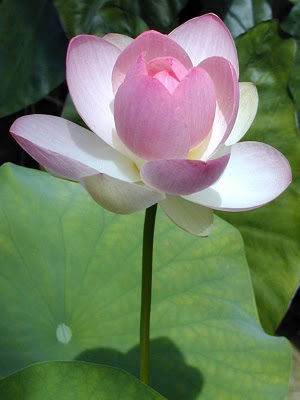
Here is a Lotus in my window. I pray the fragrance is pure. Here is a candle shining. Here is a hope.

Soon I must bring a Lotus to the river with joy. But I do not know if it will float downstream. They often do.

Copyright © Jetsunma Ahkon Lhamo.  All rights reserved

The Power of Speech

From a series of tweets by Jetsunma Ahkon Lhamo:

What is “Right Speech” in Buddha Dharma? Mostly as with the Eight Fold Path, we must do no harm. To understand right speech one must first understand what non virtuous speech is. That is where one speaks in a way as to be hurtful, offensive to another. Like name- calling and bullying others. Hate speech, in other words. Any speech that elevates oneself at the expense of others. Mean speech, speech without foundation, especially, which is gossip. Divisive speech. Speech that is not factual – lying. Telling tales to hurt a person’s livelihood. Lying speech causing one to prosper while others cannot as a result. Some think brutal honesty is right speech. Not so. Take the brutality out. Some think they are always right so brutality is necessary. Never the case!

We can always use right speech if we try. And to try we must be warm hearted and caring. Willing to take a back seat and applaud another’s efforts. At that point we can develop right speech, that is helpful. We can nurture, build confidence, benefit others with right speech. It is teaching, helpful and loving. When right speech is accomplished, in a future life one’s voice will be gifted and empowered. One will bring happiness and good result from teaching. One will be born with a beautiful voice, that is well loved and can transmit many blessings. That is the power of right speech, and one can see if they have spoken kindly in a previous life. The voice will be a beautiful thing, like a golden magical flute. All will benefit and Dharma will be spoken.

Copyright © Jetsunma Ahkon Lhamo.  All rights reserved

Our Guide in Difficult Times

From a series of tweets by Jetsunma Ahkon Lhamo:

Ngundro, or preliminary practice consists of several parts:

  • Refuge, or entering the gate of protection of the “three precious ones” – the Buddha, Dharma and Sangha.
  • Bodhicitta, the practice of the six perfections and the generation of the aspiration to realize Enlightenment.
  • The offering of the Mandala, the accumulation of merit through skill.
  • Vajrasattva, the purification of obscurations through wisdom.
  • And Guru Yoga, receiving the blessings through which one can attain enlightenment in a single lifetime.

Nothing is more precious than this. Even a cache of jewels, a palatial home, a beautiful and healthy body, nothing is more precious than Guru Yoga, the means to awaken. I have always been taught this: that in these deteriorating times Guru Yoga is the swiftest and most powerful method as it is so easy to be distracted, make mistakes, forget to be mindful. Our Spiritual Guide is the method to keep our path as straight as an arrow and as powerful as the mightiest sword. One should always keep samaya with the Tsawei Lama, even at the cost of one’s very life. If one cannot do even that, even after the precious Dharma has been offered, there is absolutely no way to accomplish the path.

One should remain within their Lineage as well, as there is the certainty of receiving pure unstained empowerment. If we cannot do even that, we are in delusion and ignorance. The fruit of Enlightenment will not come to your mouth. Body, speech and mind, the three doors will be corrupted. Speech will be ordinary, and without any benefit or virtue.

This teaching is a combination of Kyabje His His Penor Rinpoche and my humble self. Forgive me, Guru Padma for any mistakes, and for my presumption. Lama Kyen No! To the lotus feet of the Guru I make extensive offerings! Happy Losar to all! Kye HO!

Copyright © Jetsunma Ahkon Lhamo.  All rights reserved

Break Free

An excerpt from a teaching called Bodhicitta by Jetsunma Ahkon Lhamo

One thing I like about all of you is your great compassion.  You really want to help people.  I’ve always loved that about you.  There are some of you that are less interested than others, but everyone here really wants to help all sentient beings.   But you know what?   You can’t help anyone until you yourself are free of cyclic existence, because what you have there is the blind leading the blind.  While you have hatred, greed and ignorance in your mind stream, you cannot help anyone.  You can generate the deity all day long.  You can help little old ladies cross the street all you want. You can make them bliss out and have a beautiful experience and sing songs and play music, and rub their backs and wiggle their toes and everything, but you can’t help them, because you may give them a short experience of happiness, and sometimes that’s worse because you can give them hope where there is no hope.  The only hope is to break the cycle of cyclic existence and to be free of it.  Sometimes the worst thing you can do for people is to give them a lot of blissful experiences, because sometimes it causes them to be satisfied and complacent and they don’t try to grow spiritually.  Sometimes it can inspire them.  But very often it can do the opposite.

The most profoundly beautiful thing about you is that you really want to help people.  You really do.  Then doesn’t it seem logical, that you would therefore take complete responsibility for your realization?  If you can help somebody by achieving liberation in such a way that you can consciously reincarnate and come back in a form to teach others to achieve liberation, wouldn’t it seem rational that you would take profound responsibility for that and say, “I will do anything.  So I am going to eradicate this grasping from my mind.  I’m going to practice so hard and so sincerely.”  And still I see people mouthing prayers.  How do you do that?  Still I see you trying to have a powerful experience.  How can you do that?  So what if you have a powerful experience?  If you are going to be reborn as a cow, what’s the big deal? Is that what you want?

You have to have courage.  You have to say, “I’m finished.  I’m finished with all this junk that betrays me, with all of this stuff that ends up to be a bauble and nothing more with all this distraction that I’m wasting my life on.  I’ve got 20 or 30 or 40 years to live. Am I going to waste it on this kind of distraction?”  Just think about that.  Then what will you do?  You’ll have to realize the faults of cyclic existence.  You’ll have to realize how impermanent it is.  You’ll have to realize how fraught with pitfalls it is.  You’ll have to realize how completely unconscious you are.  You are tossed about. You have no control over where you are going to be born in the next incarnation.  You have no control over any of that stuff until you seriously practice Dharma in such a way that you are able to break free of dualistic mind and therefore break free of the prison of samara.  That’s what it takes.  It’s the only thing you can do.

Copyright © Jetsunma Ahkon Lhamo.  All rights reserved

WP2Social Auto Publish Powered By : XYZScripts.com