The following is a YouTube video prepared at the request of Jetsunma Ahkon Lhamo as a support for those who wish to offer prostrations but have physical challenges that make traditional prostrations too difficult:
A sacred space for everyone
The following is a YouTube video prepared at the request of Jetsunma Ahkon Lhamo as a support for those who wish to offer prostrations but have physical challenges that make traditional prostrations too difficult:
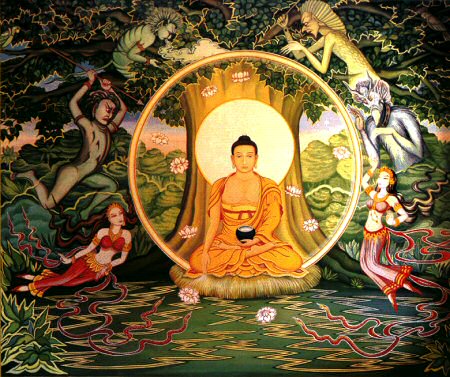
Excerpt from a teaching by Jetsunma Ahkon Lhamo from the Vow of Love series
You cannot be a ‘sugar daddy’ in this world; there are no ‘sugar daddies’ in this world. You cannot be the conqueror or the savior as you cannot conquer someone else’s mind. Each person has to relieve themselves of the hatred, greed and ignorance in their own minds. But you can be the savior, and you can be the conqueror, in the sense that you, yourself, can liberate your own mind from hatred, greed and ignorance. In so doing, you can be a way or a path or an instrument by which the hatred, greed and ignorance in the minds of others can also be liberated. Therefore, your prayers have to consist, at least in part, of liberating your own mind from the causes of suffering. At the end of every practice, at the end of every teaching, at the end of every empowerment or anything that you do as a Buddhist, the prayer is this: “May I attain liberation in order to benefit beings.”
It’s very difficult for Americans to hear this kind of thing. It is a real struggle. We don’t like to hear about suffering; it’s so hard for us to hear about suffering. Yet, if you go to different parts of the world, they know about suffering. They know it exists. There are lots of people in the world that can say, “Hey, I’ve heard about this. I know this song.” But we who live comfortably don’t like to talk about it. We think it’s beneath us somehow to speak of suffering. We’ve become hardened to the idea.
You might say, “Well, I don’t believe that it does any good to talk about suffering. I think it does good to think positive thoughts and to constantly create a positive world.” I don’t think that’s the answer. We have become hardened to the idea of suffering, and we must first cultivate within ourselves a willingness to understand the nature of suffering so deeply and profoundly that we can do something other than scratch the surface.
Copyright © Jetsunma Ahkon Lhamo. All rights reserved

Excerpt from a teaching by Jetsunma Ahkon Lhamo from the Vow of Love series
In order to cure the symptom of suffering you might decide to manipulate the circumstances, or the environment. If you see people who are hungry, you give them food. If you decide you want to feed them for the rest of their lives so that they are never hungry, then you have to feed them three times a day, every day, for the rest of their lives, or teach them how to feed themselves. What are you going to do when they get sick? They will get sick. What are you going to do when they get old? They will get old. What are you going to do when they get lonely? What are you going to do when all the different kinds of discomfort pop up? What does it matter if you help a few people? What about the other 5.9 billion on the planet? What about the animals? Where will you start? What will you do, if your intention is merely to manipulate the environment so that the discomfort that you see is finished? Even if you have worked every moment selflessly and have given away all your money, and then have gotten money from other people to help, doing everything that you could to make these things happen, you wouldn’t put a dent in it, not even the tiniest dent. Why? Because you are trying to manipulate something that is very superficial.
This apparent reality that we are viewing isn’t that deep. It’s nothing. It’s a ghost. It’s a puff-ball. We can’t move it, because wherever we move it, it will appear somewhere else. We cannot manipulate our environment. We cannot manipulate phenomena and achieve any real lasting success. We can achieve temporary success. We can have the satisfaction of seeing someone fed who has been hungry, and that person can feel the satisfaction of a meal. If we fed people on a grand scale, it might be a grand satisfaction. But it is not permanent, it is not a solution, and the reason, according to the Buddha’s teaching, is that hunger and poverty and loneliness are not the causes of suffering. They are the results or the symptoms of something else. According to the Buddha’s teaching, the root causes of suffering are hatred, greed and ignorance.
We might take issue with that statement. Say we think about a hungry Indian child, or a hungry American child, or a hungry Ethiopian child. Sure, all of them probably do hate because they’re hungry; and they probably are ignorant because they’ve never gone to school; and they probably are greedy. Boy, if you handed one a biscuit, he’d just grab it and run because he’s so hungry. But we have to probe more deeply. We are only looking at a set of symptoms. According to the Buddha’s teaching there is an underlying cause that makes phenomena appear as it does in any given situation, and that cause is karmic. The Buddha’s teaching is that all phenomena arises from a cause, and that everything that is seen, felt, and heard is actually the emanation or the result of one’s own mind. The mind itself produces all visible phenomena. I hope you can really hear that. To change suffering as it appears in the world can never be permanent. It can never do much good. What has to be done is to change the karmic background or cause and effect scenario of one’s own mind. In doing so, you can hopefully come to a place where you can also be of benefit to others.
Copyright © Jetsunma Ahkon Lhamo. All rights reserved

The following is an excerpt from a teaching by Jetsunma Ahkon Lhamo called “Your Treasure is Heart”
We are really happiest when we are completely surrendering—letting that love, that concern for the welfare of others, that Bodhichitta—be the captain of our ship, instead of that nasty little manipulative self-serving ego that’s running around trying to control everything and making everybody, including ourselves, crazy. We will find that the level of neuroses in our lives begins to go down. And we will find that, lo and behold, just like the Buddha taught, we have really begun to create the causes for happiness. It really works.
There are changes that you’ll go through, changes that I go through constantly, even still. You may find that happiness does not take the form you thought it was going to take, but let me tell you something. I’m forty-six years old. If you have come anywhere near my aged self and haven’t figured out that life is not going to do what you thought it was going to do anyway, then you have been asleep at the wheel! Why not make it work for you? Because nothing is going to take the form you thought it was going to, no matter what you do. Most particularly, if you spend your time trying to control and manipulate others, and if you live a life completely concerned with ego-cherishing, then life really won’t deliver. But hey, figuring that out is all part of growing up. We see that. Your five-year plans, your ten-year plans, forget it. I guess about some aspects of your life you can do that, but you will find that as the Bodhichitta begins to truly manifest in your life, it requires true surrender. And your life will not take the form that you thought it was going to, because this Bodhichitta cannot be controlled. It is not a toy for you to make only you happy. It is the display of that nature that is our ground of being and to which we are all equally entitled and ultimately responsible for. As you begin to taste that nectar, you realize that in all the world, sentient beings are suffering. And in worlds and worlds that we cannot see, sentient beings are suffering; and that we have in our hands, like a precious jewel or a golden key, the means by which some understanding or some help can come to them. So let us now commit our lives and remain absorbed in that kindness, and transform this present life and every future life into a vehicle by which the end of suffering will be brought about and all sentient beings will be liberated.
So this is the teaching, and this is our wish. And I hope from the depth of my heart that each one of you will consider it very carefully and then make the choice for transformation. We hate that word. Transformation is a scary key word. We sort of like it in theory—it sounds so dynamic and powerful. But when, let’s say for instance astrologically, someone says to you, “Well, you know you’re about to go through a major transformation,” we are terrified. Quick, batten down the hatches. Don’t let anything change. But, if you live long enough, you’ll find out that life is going to transform you one way or the other. You will go through transformations. You will go through things. So go through that which will benefit you and all sentient beings.
Do not leave this continent of precious jewels empty handed. When you go into your next life, I hope from the depth of my heart that you have somehow managed to take the nectar from this life and truly internalize it, and enter into your next life nurtured by the power of Bodhichitta.
Copyright © Jetsunma Ahkon Lhamo. All rights reserved
The following is from a series of tweets by Jetsunma Ahkon Lhamo in response to a question:
Questioner: What do you think dreams are? Are dreams a mirror of daily consciousness? Is there anything to do with them?
Jetsunma:
A great question! And more than one way to look at it. Physicists are beginning to recognize dreams as a glimpse into other probable realities that we are connected to. And that maybe these dimensions are all mind. They are getting close.
I say all realities are a Bardo in that we seem to be passing through them, and “Bardo” means passage. Dreams are as real as any other state, no more, no less. What you bring back from a dream may well be significant, in that on a subconscious level you want to remember it. That can be on the emotional level where we tend to sort out info and take what we need. Other dreams can be sorting info from the future, present and past. If we glimpse a future probability we might see it as prophetic. From the past? Some sort of processing. About the present, we puzzle and organize. And try to fill in the blank bits according to our preconceived notions. However, all concepts, waking or dreaming, are our fabrication of karma. We, the seer, the dreamer, the objects we “see,” the probable uncountable endless realities, the entire cosmos, inner and outer, are all empty of self nature! Like in quantum physics we are beginning to see that all is fundamental space, that even atoms and molecules are space! All inherently empty.
It is that trickster, the habitually confused ego, trying to run the show. So we cannot see the void ground of nature. The ego does not allow for that, as its purpose is opposed to the very idea. Ego argues with primordial emptiness. Yet without it there would be no dream. Just uncontrived unborn and yet spontaneously liberated space. It’s really not so scary. And quite relaxing to see all as impermanent and free.
Copyright © Jetsunma Ahkon Lhamo. All rights reserved
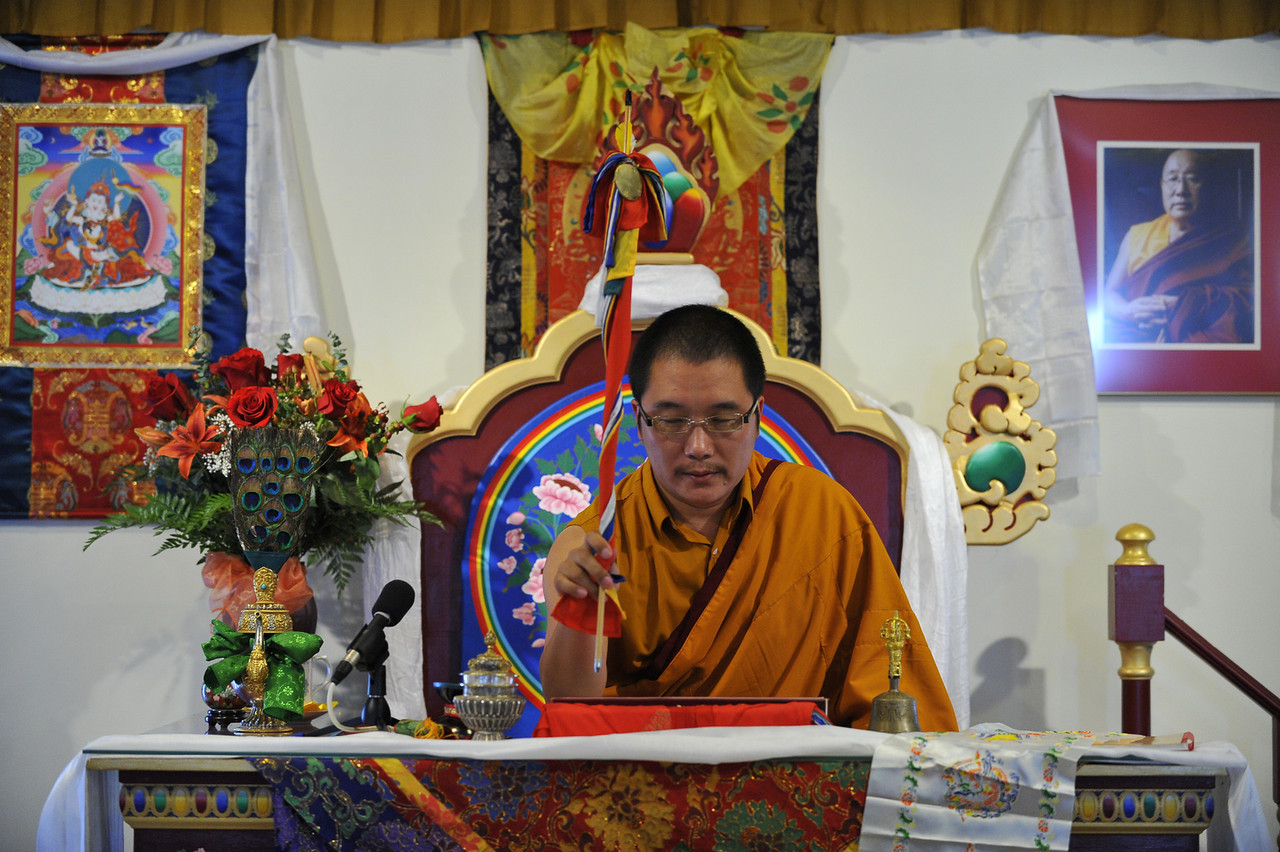
The following teaching is from a series of tweets by Jetsunma Ahkon Lhamo:
Many practitioners on the path of Buddhadharma do not realize that one must continually make progress. You don’t land, then sit.
Having realized we must make progress in Buddhism, Vajrayana requires empowerment, lung, and commentary. These are the blessings needed.
When students grow dull in their practice it is because they are not making further progress. If we don’t grow, we are stagnant which does no good. There are many stories in Tibet of ordinary people going to extraordinary trouble, and traveling great distances to receive one precious Empowerment and practicing that one deity and mantra their whole lives with great devotion, as it took so much effort to obtain. And because of that they made much progress with that one simple puja.
Here in the USA it isn’t that way. First, it is easy to go anywhere. Secondly, we, in our culture are not raised with such faith. And nothing in our culture supports it. So we must continually support ourselves by continual instruction, stage by stage progression, until the most advanced atiyoga, to dzogchen. We need the continual stimulation. We all must grow, or our hearts and minds become hard and stiff and we do not enhance our qualities, we do not give rise to bodhicitta. We do not increase in the concerned activity of the Buddhas and Bodhisattvas. Then anger, pride, jealousy and ignorance come creeping in.
So we must make a continually expanding effort. We should seek empowerment, and learn different practices. We should do retreat to go deeper and deeper until we both enjoy and feel happy in our practice. Then we will not be inclined toward poor qualities, judgment of others etc. We will be less inclined to be mean or cruel to any being. We will also, then have grown as human beings – kinder, more generous and loving. We will have grown up at last.
A little Dharma for your Monday evening!
OM TARE TUTTARE TURE SOHA!
Copyright © Jetsunma Ahkon Lhamo. All rights reserved

An excerpt from a teaching by Jetsunma Ahkon Lhamo from the Vow of Love series
When you develop the mind of compassion, you have to be careful how you develop that mind. If you examine yourself profoundly and honestly – and you have to be willing to be very honest with yourself – you may find that your goal is not really to benefit all sentient beings, but to be a kind person. There are worlds and universes of difference between these two goals. One is selfless: you truly wish to be of benefit to all sentient beings. The other is heading in the right direction, but ultimately it is not selfless because you wish that you could be a kind person. I hope that you can hear the difference between these two ideas. There are worlds of difference between them.
How does one cultivate the selfless goal and not fall unconsciously into the trap of ending up with the second goal? A good way to begin is to open our eyes and truly understand the nature of suffering. Why is there suffering in the world? Why is there suffering in the worlds unseen? If we don’t examine this idea, we might take what we see at face value. We might look at people in poor parts of town and say, “Oh they’re suffering because they’re poor.” We might look at people in different countries around the world and say, “Oh, they’re suffering because they’re hungry.” We might look at people in different situations and think we understand the nature of their suffering. But we’re looking at the symptom of their suffering. We’re looking at the fact that they are suffering, but we do still not understand why.
If we see that they are suffering – that some people are poor, some people are hungry, some people are old, some people are sick, and some people are dying — and do not probe to understand the reason for their suffering, we might fall into the trap of trying to do something about those apparent issues. There’s nothing wrong with doing something about those issues. In fact I hope you do, because human kindness – exemplary and virtuous human kindness – has to be part of this world, it has to be part of the activity that you, as Bodhisattvas, are involved in. But if you stop there, you will never succeed, because if you try to cure the symptom of suffering without going to the cause, it’s impossible. The suffering will simply pop up in new and different ways.
Copyright © Jetsunma Ahkon Lhamo. All rights reserved

The following is from a series of tweets by Jetsunma Ahkon Lhamo:
Often when people begin practicing Buddhism it feels fresh and wonderful. But our expectations may be unreasonable. Often I hear that folks can’t “feel” devotion or compassion. Neither of these are a “feeling.” They are both method. Same with Emptiness. If we could “feel” it, it would not be emptiness, but some sort of contrivance. We seem to want to imagine it all, think about what it must be, rather than to see primordial nature just as it is. No amount of talk or even study can make that happen. We can discuss Guru Devotion with hearts as cold as ice. We can want to be “good” without ever being generous and kind. We can want to be anything that sounds great without doing the work, and then we are lost. That is very much like reading fitness books and dreaming of a fabulous new body without ever leaving the sofa and eating like a pig.
There is no bodhicitta without human compassion, as that is the display of it. There is no Guru Devotion without respect and view. And Guru Devotion is not a “feeling” but is based on a clear comprehension that the mind of the Guru and our own must mix like milk with water. This precludes judgment and hate, or putting down other Vajra bros and sistas because the mind of the Guru is as vast and clear as space. If we are hateful we are dishonoring the Vajra Master, who teaches us differently than that. If we do not take the trouble to master the qualities of the Three Roots we have broken samaya. No numbers of mantra repetitions will ever make up for quality and depth. No vow ever taken will ever make up for the absence of actually fulfilling that vow. If you are mean spirited, selfish and filled with arrogance you are not what you profess to be. And that is raw truth. Silly rabbit! Tricks are for kids!!!
OM AH HUNG BENZAR GURU PEDMA SIDDHI HUNG!
Copyright © Jetsunma Ahkon Lhamo. All rights reserved

In a superficial way the idea of compassion can seem very simple, and we might make the mistake of thinking that we understand it. But if we study compassion deeply, eventually we will come to understand that the ultimate view of compassion is enlightenment itself. It is the natural, primordial wisdom state itself. That’s why compassion isn’t truly known until we reach supreme enlightenment.
Compassion is the foundation of the Buddhist path. Without it, like any house that does not have a firm foundation, the house will crumble. It will not stand. One’s motivation to practice must be compassion. If your motivation is not compassion, it will be very difficult to firmly stick to the commitment to practice and meditate every day. I feel for those who say, “I’d really like to practice. I would really like to have a time in my life everyday to meditate, and yet I don’t have the discipline. I don’t have the strength. I don’t have the commitment.” If you have the right motivation, if you want to do this solely and purely from the point of view of compassion, you will find the time and you will find the commitment and you will find a way to do it. For those who have tried to meditate everyday or be consistent in their practice, if they can’t do it, my feeling is somehow the foundation of compassion isn’t strong enough.
If we could make the idea of compassion so strong that it becomes a burning fire consuming our hearts, until we are nothing but a flame. If the need to benefit others becomes so strong that it’s irresistible. If the understanding that others are suffering so unbearably in realms that we cannot even see, let alone the realms we can, that we cannot rest until we find a way to be of some lasting benefit to them. If these things can truly become part of our minds, we will find the strength to practice.
How do you find the strength to breathe? “Well,” you say, “that’s easy. Breathing is a reflex. I have to breathe. If I don’t breathe, I die.” What if you could cultivate the understanding that all sentient beings are filled with suffering that is inconceivable in its magnitude and that there are non-physical realms of existence we are not even aware of, filled with suffering? What if you could cultivate this understanding so deeply that, because of your realization, compassion and profound generosity became as much a reflex as breathing? That is possible.
“Well,” you say, “I don’t have that kind of understanding. I’m just not like that. I can’t make myself really buy into that.” Let me comfort you with this awareness. Unless you are supremely enlightened you are not born with that perfect understanding. No one is. No one is born with enough understanding of the suffering of others, and an affinity with the idea of compassion, to create that perfect discipline naturally. That understanding comes only through its cultivation, and we must cultivate that understanding consistently every day.
Copyright © Jetsunma Ahkon Lhamo. All rights reserved

This is the final excerpt from a teaching on Compassion by Jetsunma Ahkon Lhamo.
I have listened to some of the teachings on Buddhist cosmology, and heard the prophecy that there will be a time when there is no Buddha in this world – no teaching, no help, and no light. When things will be so dark there will be nothing, no hope. As a Buddhist I am supposed to believe this teaching, and I try. But I refuse to accept it, I won’t accept it, and if that makes me a bad Buddhist, then I am. But rather than think in a prideful way that I refuse to accept this teaching, I hope instead to cultivate an endless amount of energy to continue to practice for the benefit of others, no matter what the odds are. To consider that it is worthwhile if even one person can be benefited.
I wish we would all think in this way – that nothing will stop us. I find it necessary to believe that compassion is the strongest power anywhere, that love is stronger than prophecy. Believing this, we must continue as we are. Every day we must be stronger and continue in a more determined way.
When I see those of you who have taken ordination, I think you are the hope of the world. If you can remain emanating in the world always, even after attaining supreme realization, if your love is that strong that you change the prophecies, we have hope.
I also think of those who are newly starting, and those of you who are intermediate, and those of you who are choosing whatever particular path you choose. If you use the Buddha’s understanding, and come to a point of profound commitment and practice – if you consider love is your life, so that it will increase throughout every future incarnation – then you, too, are the hope of the world.
We must take this vocation very seriously. I don’t mean we have to walk around like somber people, with a terrible, woeful expression on our faces, or that we never get to have any fun anymore. It’s not like that. But our sense of joy is the kind of joy that is born of the mind of compassion, the kind of joy that appears in the mind with the commitment to benefit beings at any cost, the kind of joy that knows there is an antidote to suffering. That kind of joy is stronger than human joy and human sadness, because those things come and go, day to day, up and down, in and out.
I suggest you choose to live a lasting life of love, rather than one that is impermanent and superficial. In doing so, come to know something that doesn’t vary. Know something that grows from a tiny seed into a profound sense of bliss, which, as it grows, produces the kind of realization that can let you at last be someone who can truly help sentient beings with the right medicine.
You are at a crossroads in time now. Tremendous opportunities are coming your way. They have come your way. You are at a point very rare in cyclic existence. It is now possible for you to make this choice. It was not possible before. You should take this time very seriously, and consider deeply whether you will cultivate the mind of compassion every moment from now on for the rest of your life, and in all future lives to come, knowing that this is the only end to suffering.
Copyright © Jetsunma Ahkon Lhamo. All rights reserved