Letting Go of Pride

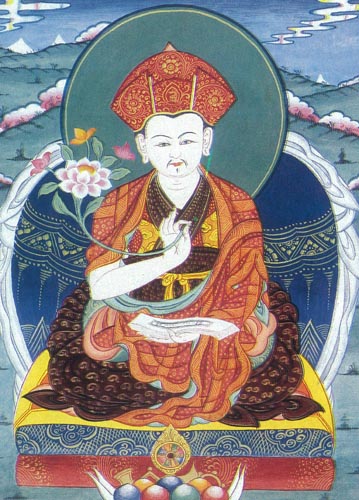
An excerpt from a teaching called How to Pray by Being by Jetsunma Ahkon Lhamo

In order to really pray we have to let go of our pride, of our clinging to self. We have to let go of our self-importance, of that part that says, “Look at me, I’m praying” or the one that says, “Maybe if I recite mantra, it will go over there to that person.”  That’s not awakened; that’s dualistic.  So pride is the main obstacle to our true prayer—pride and its twin, doubt.

There is a Christian teaching that explains why. Although I am not a Christian minister, I do very much value the teachings of Jesus and know that he was a great and realized bodhisattva.

Jesus once gave a teaching in which he said, “It is easier for a camel to go through the eye of a needle than for a rich man to enter the kingdom of heaven.”  What did he mean?  In ancient Jerusalem there was one gate that went into the city (it was known as “the eye of a needle”), and that gate was very low and very small. In order for a camel to get through it, it had to get down on its knees and crawl. But a rich person is often too proud to kneel.  So that teaching explains that pride is the obstacle. Pride is the enemy.

When we have prideful thoughts, we are clinging to self-nature as being inherently real, and we are always in a state of judgment. If we are high, others are low. So the most important element in learning to pray is to let go of pride—the idea that I am a practitioner, that I am praying, that I am doing some good. Instead of that pride, we need to develop an awareness that everyone is the same in their nature. All of us are expressions of the infinite possibility of the primordial uncontrived wisdom state—like white light going into a crystal and breaking into different colors, into beautiful reflections. Do we cling to the colors and no longer look at the light? Do we only look at the display and not look at the foundation? No. What would be the benefit of that?

So when we get ready to pray, we should do like the camel did in Jerusalem: we should get down on our knees. Our inner posture should be a heartfelt awareness of our interconnectedness. We should pray, “Here are my brothers and sisters, some of them swept off the face of the earth (by a giant wave, an earthquake, a plane crash, an act of war or some other tragedy…). Some of them are hungry. Many of them have died. Many have lost their families and loved ones.” We think with that kind of compassion and consider the situation of other sentient beings rather than just worrying so much about ourselves.

We simply consider their suffering. We keep our ears open to their calls, and we recognize that we are the same as they—not higher, not lower, but the same in our nature. We all have the seed of awakening. There is no difference. The haughtiness that we have, the games that we play, all have to go.

Instead, we adopt a posture of clear hearing. We have to hear the cries of sentient beings and then remember that they are the same as us. We have to think, “I hear you.  I am not separate from you.”  And we remember the Three Precious Jewels. It could easily be that in our next life, we are in their position and they are in ours.

By untangling our pride, we realize that it is our privilege to benefit them. Pride is like a constricting force around our heart.  It keeps us from opening up. It keeps us separate. It keeps us miserable, and it affirms samsara every day. When we are prideful, we are praying for suffering. We are praying to continue in the land of lost ones.

So we are taught to drop that prideful stance and to connect and wire up to the Three Precious Jewels. We take refuge because we realize that in samsara there is only samsara no matter what it looks like or how dynamic it appears. Samsara will dance and seduce. Samsara will say, “Drink me.” Samsara will say, “Eat me.”  Samsara will say, “Come and play. Be free.”  Samsara is a seductress who will make us suffer even more than we thought possible.

© Jetsunma Ahkon Lhamo

Astrology for 11/07/2017

11/07/2017 Tuesday by Jampal & Wangmo

Theme: Hug a furry friend

Nurturing self and others is the theme today but don’t argue about it. Remember to go gently and softly.  A sense of expansion and inter-connectedness is possible. We are are not separate. Some of us need to understand that space by hugging a bear – not a live one! Or your dog, or momentarily your cat. Love comes in many forms. From A. A. Milne: Piglet: “How do you spell love?” Pooh: “You don’t spell it, you feel it.”

The Method of the Path

Merry Go Round

The following is an excerpt from a teaching by Jetsunma Ahkon Lhamo called “Desire Blocks Happiness”

So we have a problem here.  We really have to get off the merry-go-round, and we have to look at things square in the eye. And there’s no getting away from it: One of the problems of cyclic existence is that we can’t see very clearly. Isn’t it true? Isn’t it true that even once we make the decision to lead a virtuous life, and to think as I’ve just described, then we sit there and we think hatefully in our minds. We think hateful thoughts in our minds; we think jealous thoughts in our minds; we think competitive thoughts in our minds; we think judgmental thoughts in our minds. We think “I want.” We think all of these things—angry, vengeful, whatever it is. And we think because no one else can hear it besides us, that it’s really okay as long as we can maintain a beatific exterior. You know, a sweet kind of exterior. As long as we do that, we’re okay. Isn’t that true? Don’t you think that’s true? Well, the difficulty is, you can’t even take your smile with you! Ha, ha, ha!  So when you go into the bardo, what will be there is what’s behind it—the habit of your mind, the habit of hatred or ignorance or grasping.

One of the great Bodhisattva prayers that I’ve read—and every time I hear it, it brings tears to my eyes, because it’s so true—translates to roughly like this, “If it is true that I cannot even take so much as one sesame seed with me when I die, why not offer all that I have to the liberation and salvation of all sentient beings?”  Why not do that? I’m going to lose it anyway. Reminds me a little bit of the old trick of knowing that pretty soon you’re going to have to pay this enormous amount of taxes because you sold this house, so you quick gotta buy another one. It’s kind of like that. You know you’re going to lose it anyway. Why not make it something useful?

On this Path there are many different ways to do that. One can become a renunciate, as these monks and nuns are renunciates. And believe me, once you have put on these robes, that does not mean that you have renounced cyclic existence. It means that you are trying. Sometimes I catch these guys not renouncing cyclic existence. Just every now and then, I catch them clinging to cyclic existence like you can’t believe. But you can try. You can really try to practice in that way where you actually renounce cyclic existence and you take a certain form. You take an outward appearance, and you practice inwardly according to that outward appearance. In other words, they wear only the Buddhist robes, most of the time, and they practice the Buddha’s teachings; and they don’t drink, and they remain celibate, and they don’t lie. And there are many different exterior vows that they take. They also try to practice within their heart in a very pure way. And then you can also practice as a layperson, who looks very ordinary, and who engages in the ordinary activities of life with the ordinary trappings that sentient beings engage in. But inside you would practice certain kinds of meditation. Particularly you might think of practicing stabilizing the mind through meditation. That is letting thoughts come to the mind—thoughts of grasping or thoughts of hatred—and allowing those thoughts to merely dissolve. And there are certain techniques and technologies that you can apply to actually do that. Or practicing in such a way as to generate oneself as the deity, as the Buddhas and Bodhisattvas, and in doing that, generate one’s environment as a celestial palace; and that being a celestial palace, it has only pure qualities. And therefore, having only pure qualities, there’s nothing to grasp onto. So that you might have or not have something; you might be married or not be married; you might have children or not have children. You might have objects or not have objects; but at any rate each one of these objects is seen as an emanation of the enlightened quality of the Buddha, and it’s nothing to grasp onto. It’s nothing to hold onto. It’s nothing that you would call mine. Do you see what I’m saying? So it’s an inner kind of more subtle practice.

There are many different ways to practice on this Path, as many different ways as there are people. But it starts with that little breakdown—getting off that merry-go-round. Looking at yourself, and seeing the faults of cyclic existence, and seeing that you have never yet been satisfied by it. And seeing that it’s time to pacify that inflammation within the mind. The inflammation is the problem.

This teaching is very difficult to understand unless you can apply some direct technology, unless you can really get into some substantial practice. And if you wish to do so, you should keep coming to the temple. And at some point you should ask about entering into deeper practice. This is just a practice meant to display some of the meaning of the Path to those who are not practicing so deeply at this point or who are not practicing Buddhism, actually; and also increasing the understanding of those who are practicing Buddhism.

But there is a technology that must be applied that would be beneficial. If one were to simply try to understand what I have said in this way… If one were to say, “Okay, I guess what she means is I can’t get excited about anything anymore. Or I can’t feel really happy, and really high. Or I should just make myself really passive,” then you would not be understanding what I’m saying. That’s not what I’m saying. I’m not saying that you should adopt a mask of stillness. I’m not saying that you should force yourself to roll your eyes ever skyward and appear beatific and holy from this point on. That would be a farce. That would be silly. In fact, that’s a very neurotic way to act, and I wouldn’t recommend it at all. You might think that what I’m saying that you should do is act very spiritual and very sweet and very kindly, when in your heart there’s a raging fire. And I’m not saying that. That’s a very neurotic way to do, and that will cause you to take valium very quickly. That is not the method. Valium is not the method on this Path.

© Jetsunma Ahkön Lhamo All Rights Reserved

Astrology for 11/06/2017

11/06/2017 Monday by Jampal & Wangmo

Theme: Big picture versus small picture

Mercury moves into Sagittarius today emphasizing an upbeat approach to communication. But be careful not to gloss over details. Sometimes the devil is in the details. There are opportunities for transformation in inter-personal relationships and how one sees oneself. Time alone and with others can be illuminating for very different reasons. ; ‘…joy in the happiness of others can only be attained when equanimity, loving kindness, and compassion are realized.’ Jetsunma Ahkon Norbu Lhamo

The Spiritual Mentor: From “A Spacious Path to Freedom”

RagaAsay

The following is respectfully quoted from “A Spacious Path to Freedom” by Karma Chagmed with commentary by Gyaltrul Rinpoche

The Twenty Precepts states:

Accept a spiritual mentor who abides by his precepts,
Who is knowledgeable and capable.

–In Tibet, occasionally people took novice of full monastic precepts without even knowing what they were, and some of them never did learn. Whatever precepts you take, whether lay vows, novice vows, or full ordination, it is important to know what they are, so that you truly arrive at their essence. Similarly, the cultivation of the spirit of aspiring for awakening leads to the spirit of venturing towards awakening. Moreover, tantric practice becomes meaningful only if you learn about the generation and completion stages. Engaging in such practices or taking precepts without understanding makes it difficult to penetrate their real significance–

The Ornament of Sutras states:

A teacher of supreme beings
Is one who is gentle, free of arrogance and depression,
Whose knowledge and understanding are lucid and broad-ranging,
Who goes everywhere without material compensation,
Who is endowed with the Spirit of Awakening and great learning,
Who sees the truth, is skillful in speaking, and is merciful.
Know the greatness of this sublime being,
Who is not despondent.
Expansive, having cast off doubts,
And revealing the two realities, he is worthy to be accepted.
This one is called a superb teacher of Bodhisattvas.
Devote yourself to a spiritual friend who is peaceful, subdued, and utterly calm,
With superior qualities, zeal, and a wealth of scriptural knowledge,
With realization of thatness and with skill in speaking,
a merciful being who has cast off depression.

Astrology for 11/05/2017

11/05/2017 Sunday by Jampal & Wangmo

Theme: Intellectual curiosity and event planning

Begin exploring different ways of doing and thinking today. That includes mental gym and body gym. Relationships of all sorts are more spontaneous and unexpected – even disruptive! Disruption helps re-set us if we allow it. Consider harnessing your natural generosity through good food gatherings which bring people together. Hopefully you have more time for this than the Road Runner escaping Wile E. Coyote!


Astrology for 11/04/2017

11/04/2017 Saturday by Jampal & Wangmo

Theme: Emotional well-being versus sense of purpose

The question for today is how to balance emotions with purpose in the outer world. Sometimes they can be the opposite side of the same coin – one aids the other. There is a measure of resilience and strength in the air. Unconscious drivers come to the surface which you can channel well.  As Shantideva advises: ‘Wherever, and whenever and whatever you are doing, for your sake or the sake of others, implement with diligence the teachings given for that siutation.’


Impact of Karma on the Experience of the Bardo

images

The following is an excerpt from a teaching by Jetsunma Ahkon Lhamo offered during a Phowa retreat:

Now listen to how this lama [Bokar Rinpoche] explains this—I think this is excellent. “Likewise the experience of death will be different for each one of you, although there are certain fundamental rules. Consider a house of rooms in which each wall is covered with mirrors. The man living in this house is dirty, has untidy hair, wears ragged clothing, and is always making faces. He goes from room to room, and the mirrors steadily reflect the faded image of an unkempt man with a grimacing face, untidy hair and ragged clothing. Similarly, when our mind is distorted by a lot of negative karma, each of the six bardos reflects suffering, just like the mirrored rooms in that house.” And they have a footnote here about negative karma. “Negative karma: All negative deeds, ones that deliberately make other people suffer, leave an imprint in our mind and will condition our experience and our vision of the world. And that is our suffering, that is what our suffering is.” That is the content of our suffering, that is our only suffering. That is the only suffering we will experience, but it is enough.

“The house occupant could also be clean, well-dressed and smiling. Everywhere he goes, from room to room, he sees a clear and smiling face. The house remains the same, you see, but there is no more ugliness nor appalling sights. Everything you see is pleasant and peaceful. When our mind is free of negative karma and the passions that disturb it, the six bardos reflect a picture that resembles us, full of peace and happiness. Whether pleasant or not, experiences do not depend on the six rooms. An individual fills the rooms with his or her own nature. Likewise, negative experience of the six bardos does not depend on the bardos, but they do depend on our own mind.”

Now, boys and girls, this is a very important point. It’s important because you are living the result of that right now. You are passing right now through the bardo of living. The experience that you have depends on and is resulting from the habitual tendency within your mind, the karma of your own mind, the causality that you have already brought into play. The experience of your present day life is due to that. All the suffering that you will ever experience during the course of your life, , including the cause of your death, and all of the happiness,  is due to the habitual tendency of your mind and the karmic patterns of your mind. Literally, think about it this way. If your experience was that of the kind of person who is only here to see what they can get, and upon meeting other people only sees a potential source of satisfaction… And how many of us in samsara are like that? Here is a potential source of satisfaction, and we wheedle and we whine, and we feel sorry for ourselves, and ‘please love me and do this for me.’ Or we do the opposite, which is manipulative: We try to manipulate people into a position where they have nothing else to do but benefit us. And we’re real good at it. In fact, so good we hardly see it ourselves, but that’s what we do.

And then we have another kind of situation where we spend all of our life trying to dominate the people in our environment, and our environment—trying to force it to be what we want so that we can have what we want. The experience of the life passage or the bardo of living for persons like that will be very different from the experience of the person who goes through life saying, “How can I help? How can I contribute more love to the world?” The kind of person that goes through life knowing that it matters much less how much love they get than it matters how much love they give will have a very different experience from the other kind of person. And that’s what this lama is talking about there. Not only during life, but also during death. Our death depends on the habit of our lives. If we are neurotic and frightened and whiney and complaining and weepy and emotional during the course of our lives, think  What will your death be like? What has your life been like? Think. This isn’t a great mystery. Everybody has this fantasy of climbing the Himalayas to get to the dirty guy on a rug at the top who knows everything, and he’s going to tell you the secret of life. This is the secret of life. Think. You know, think about this. If this is your passage through life, what will your passage through death be? You’ve got to fix it now.

On the other hand, if you are the other kind of person, if you have been a contributor, if you have been strong, if you have been loving, if you’ve tried to do your best, if you’ve tried to contribute love to the world, if you have tried to practice, if you have tried to calm your mind, if you have tried to make your mind an attractive and virtuous vessel, your death experience is going to be quite different. Absolutely different.

Copyright © Jetsunma Ahkon Norbu Lhamo All rights reserved

Astrology for 11/03/2017

11/03/2017 Friday by Jampal & Wangmo

Theme: The getting of wisdom

The theme of justice for all continues. Robin Hood was radical for his time in pursuing a form of income equality. Overdoing things is a risk today – whatever you like you tend to overdo! Jampal & Wangmo are thinking buffet today! The getting of wisdom comes in small bites well digested.  That includes emotional wisdom.  The Moon in Taurus invites a focus on creature comforts.

Start From the Beginning

leprosy-hands

The following is an excerpt from a teaching by Jetsunma Ahkon Lhamo called “Faults of Cyclic Existence”

Today then I will talk about something that is necessary as a foundational understanding in order to begin the Buddhist path. In order to understand what the Buddha is talking about, in order in fact to begin to meditate or accomplish anything spiritual, on any level, there has to be, of course, a motivation. This motivation varies from culture to culture and certainly it varies from individual to individual.

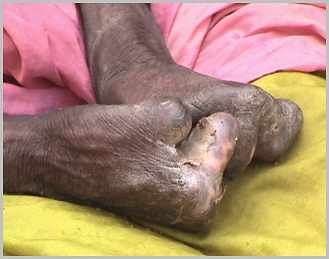
I have stated this before and I will state it again. In third world countries there is a tremendous amount of very visible suffering. Of course, we have suffering here too. And I believe in my heart that the suffering is actually equal, but it is a different kind of suffering. Our suffering is not as visible. We are sophisticated and therefore we hide certain aspects of our culture. There are certain particular, very obvious forms of suffering that we traditionally put away and hide in institutions, or hide in certain parts of town that we never go to. There are certain ways in which we deal with suffering that third world countries do not have. In third world countries, and it really isn’t fair but I don’t want to spend too much time naming a specific situation, suffering is often seen very visibly on the streets. I remember when I went to India, landing in Bombay, and never having seen a case of leprosy in my life, suddenly seeing hundreds of people on the street with different degrees of leprosy, different levels of advancement—some without arms and legs scooting around on little carts, because leprosy had done away with their limbs, and others with just the beginnings of leprosy and open sores and different extremities beginning to show decay. Poverty is unbelievably evident. I am a little on the hefty side, as you may have noticed, and I remember being unbelievably ashamed of that when I saw that on the streets of Bombay, you could count everyone’s ribs. It was completely unbelievable that hunger is so prevalent there and so much a part of society. The suffering of the lack of education, of ignorance, of hunger, of sickness, these are all very obvious and they are right there in front of us. People literally do lay down and die in the street. The suffering of the animals there, the bullocks that constantly have to, from dawn to night time, pull huge carts that are so much greater than their body weight. And seeing that is quite shocking because we don’t have that here.

So in a culture like that when we look at the motivation to accomplish Dharma, it is very simply that the people in that culture do not wish to suffer anymore. They are very much aware that they are suffering. They are very much aware that this suffering is constantly with them. They are very much aware that it is completely possible to be reborn as a human being and still experience terrible suffering. They are very much aware that they don’t have a sense of control; they feel that having been born into a certain situation there is really no way out. In America, we are taught from birth that there is a way out. We can take education or we can do one thing or another. If we really work hard, we can achieve the American dream. We can build a better mouse trap and sell it to the American public and become rich. And we can work for Amway or whatever it is that we do and have a geometrical progression into wealth. We always have that hope. But people in these cultures do not have that hope. They are trying to survive from day to day, and the tremendous amount of suffering that goes with that is very evident to them.

So when you bring to a culture such as that a philosophy such as the Buddha brought where he clearly taught that all sentient beings are trying to be happy. They wish to be happy, yet they do not have the means to accomplish happiness. In a culture like that, it is understood. When the Buddha teaches that all sentient beings are suffering and even if they feel temporary happiness, even if we are able to accomplish an entire life time of temporary happiness, that because we are involved in cyclic existence, and because it is cyclic that that happiness is impermanent. It is always coupled by the other side of the coin which is suffering; that, in cyclic existence, suffering is inescapable. In a culture like that it is clearly understood. It is very evident to them that there is always suffering. Even if we managed to get enough firewood, get enough food, and even store it for awhile and even have a little celebration and even if we lose ourselves temporarily in the phenomena of life, such as falling in love, getting married—all of the different things that bring us temporary joy—that still we are very much involved in suffering. That is evident there.

But here in our culture, I have found it personally very difficult to convince Westerners, Americans at least, that this is a good reason to practice. And I understand why this is. We are brought up with the idea that we don’t have to suffer. We are brought up with the idea that here in America one need not suffer. Here in America the streets are paved with gold. Literally, there is a wonderful and golden opportunity. And if you are willing to buy a book, there is a book about how to have that opportunity. There are all kinds of books about how to have those opportunities. The sufferings that we have are very hidden. What they don’t tell you in those books is that even if you get rich, even if you become popular with the opposite sex, even if you learn to make friends and influence people, even if you become politically powerful, even if you become well educated that these things do not bring ultimate happiness. Or what happiness that they do bring is very impermanent. That often the people who accomplish these things never feel a sense of fulfillment, never feel truly happy, never feel as though they had aced it, always feel a sense of longing and a kind of suffering that is very hard to describe. In fact there is another book that is written, the book that I know personally is Passages. It talks about different periods in one’s life during which one traditionally breaks down, and breaks down because all of your life they told you, in these other books, that you could be happy doing these various things; and you could be happy if you were popular with the opposite sex, and you could be happy if you made lots of money, and you could be happy if you did all these things. But right around 35 or 38, somewhere around there, you discover that in fact you have done all these things and you are not happy.

And so it becomes traditional to break down at that time. So that is another book that we write. But we do it in such a crafty way that we don’t even realize that this is a cyclic thing, that this is a constant event. That we constantly strive and work very hard and accomplish these things that seem as though they are going to be the answer; and then ultimately they are not the answer. Ultimately we continue to suffer, but the way that our society is structured these things are very hidden. So, for Americans, for Westerners, I have found that it is very hard to convince them of this. The expression that we use in the Buddhist tradition is hook, or hook of compassion. Sounds devious, I know. Americans are afraid of hooks. If you think of it as a hook of compassion, maybe you will be more comfortable. But the hook that seems to really work for Westerners is compassion.

Copyright © Jetsunma Ahkon Norbu Lhamo All rights reserved


WP2Social Auto Publish Powered By : XYZScripts.com