
Astrology for 7/2/2017

7/2/2017 Sunday by Norma

A surprise comes around lunch time, destabilizing a situation. Opposing forces are highlighted today: Every factor involves an opposing factor and balance is everything. Put all the kids on one side of the teeter totter and nothing’s going to happen. Winston Churchill said, “Everyone is in favor of free speech, but some people’s idea is that they are free to say what they like, but if anyone else says anything back, that is an outrage.” Listen to everyone, politely, and be aware that a person or opinion you dismiss will come back in full force. Elsewhere, this is a good time to donate blood, to pass out food to the hungry, and to spend time with vulnerable people. A group surrounding a person in trouble can offer protection. A small gesture makes a big difference in someone’s life today. Go ahead and be a hero if the need appears, and it might.

You Get What of You Pay For

Jetsunma_3-23-13

The following is an excerpt from a teaching by Jetsunma Ahkon Lhamo called “Decision Time”

Who are you?  Is being busy your guru?  Good luck. Good luck. Is being fearful your guru?  Is keeping your heart in a place where it doesn’t have to mingle with the cry that I hear from samsara that says help me now, help me? You have to ask yourself because this is the time. Who am I?  How many people will suffer at my hand?  How many people will slip through my fingers that I did not offer Dharma?  These are the questions that you have to ask yourself.

You get what you pay for. That rule is as good in Dharma as it is anywhere else. And if you don’t do the work, the work does you. Each of us has karma and we will experience it. Karma is exacting. There is no way out of it, unless we rely completely and utterly upon the teachings and our teachers as the door of liberation. To delude yourself into thinking that you are practicing that you are Buddhist or that your life has meaning whatsoever, unless you are walking through the door of liberation, is a waste of time. My time and yours.

So I’m asking you, won’t you please let go of your habitual tendencies?  Won’t you please let this precious nectar of the Buddhas and bodhisattvas enter your heart and heal you?  Won’t you please respond in kind to the cries of sentient beings, because if you are not helping them onto the path of Dharma, not your make up stuff… You can’t have a bunch of people that sit there and talk Dharma to you and think you’ve done your job. Unfortunately, you haven’t practiced that well and you are not the Buddha yet, and you’re not awake. So when you talk about Dharma, it’s just you talking about Dharma. People learn by your practice. They don’t learn by your ego talking about Dharma and saying, ‘I’m so great, I have some Dharma.’ They learn by watching your humility, your qualities, your practice. What is your practice?  How do you change week by week, month by month. That’s what people learn  That’s when people can learn by your example. But if you yourself are lost in samsara, you have nothing for anybody. Nothing. Your little gifts that you give when you say, ‘Here’s a little Dharma. I know a little Dharma. Try that, I know a little Dharma.’ It’s nothing. It’s a little kabuki dance. You know, you’re playing your little ego thing and they’re playing their little ego thing and everybody’s doing their little ego thing. Real Dharma is not like that. Real Dharma is a method. It is method that must be practiced every day. If you do not rely 100 percent upon your guru, then you are not practicing that path—relying on the teachings, relying on the wisdom, and most of all, relying on the compassion.

Our teachers understand our minds without being inside of them. Did you know that?  Teachers can look a certain way, and we can see what you think you’re hiding. In fact, we see it so well that we find that what you’re hiding is running your life. It’s in charge. Whatever you are doing in your mind is in charge.

And I’ll tell you that the Buddhas and the bodhisattvas love you. You know in the East, they talk more about the bodhicitta and it sounds very intellectual. They talk about compassion, and that sounds good. They talk about respect and devotion, and these are all good things. But being a female I can tell you this, I know this from my own experience: You are loved, each and every one of you. Your egos and your stupid stuff, that’s not the part we love the best. We can be patient with that, but we see it killing you. Clinging to life is the very cause of death.

We see you scratching on top of that dirty field and we see the diamonds, and those diamonds are calling to you, ‘Go deeper, go deeper. You can’t see me, but I’m here; and you can’t see me because you are scratching.’ Like beggars under the table of a great feast, we pick up a little crumb, we think, ‘Oh, I got a crumb,’ while the Buddhas and bodhisattvas are saying to us, ‘Come to this feast, eat everything. Have enough for your whole life. Take it all. Take me.’ I’d take everything. And like beggars, we just have a little piece; and we’re so proud. Show it to everybody, got this little piece. And that’s the nature of human beings. Your teachers understand. There’s no question of forgiveness. It’s not like that. There’s no question of guilt. There’s no question at all, actually. It’s simple. The nectar is here and because your teacher has been recognized as the consort of Guru Rinpoche, we’re speaking of the nectar of immortality. That’s the offer. The feast is here, but you have to want to eat, and you have to be willing to chew.

And the love and respect is real. I don’t know of any teacher that purposely gives a student a hard lesson that is so unbearable that they cannot bear it. The teachers hold us as close as they can, like a bond, a bond that is a tether of love; but at the end of that tether of love, if we are not looking to our root gurus with faith and with good mind and proper thinking and proper view, then we will never receive the blessing. It will never come. And instead, what happens is we dance at the end of that tether. And that is what I see. From my heart, I tell you this. You’re dancing at the end of a tether of love, absolutely ensuring that you will never, never come to the feast. It’s decision time. You have to decide who is on the throne: your ego, your fear, your idiot mind, selfishness, delusional thinking. Whatever is on the throne, you’ve got to fix it. No one else can fix it but you. And no one else can come to this table and eat with me  this beautiful feast but you.

He who I love beyond all measure lives in you, my teacher, and you betray him every moment. You do not seat him on your throne. He is Guru Rinpoche, teacher of teachers, Buddha of Buddhas; and I tell you this because I have mixed my mind with his.

You are wandering in samsara, my darlings, and I’m asking you, please come back. Please practice the teachings. Please abandon the world. You will do so soon enough. Soon enough we will leave this world and then there will be no choices, only results.

I don’t think there is anybody more qualified than me, forgive me, to tell you that it’s not easy to be a true disciple, that it’s not easy to mix one’s mind with the mind of the guru; it’s not easy to learn. But I can tell you, and nobody is more qualified to tell you this, that when you give up, you win. When you let go, you have it all. And when you stop wiggling, the tether of love binds you so tight, there is nothing else. Please don’t forget the Buddha, the Dharma and the Sangha, and please invite the guru to be seated upon the throne of your heart. I can tell you that there is bliss and happiness in doing so and I can tell you that samsara will always, always be the whore she is and will continue to let you down.

So that’s my teaching for this evening and I’m really thrilled that I had the opportunity to give it to you. And I thank you for listening.

Copyright © Jetsunma Ahkon Norbu Lhamo All rights reserved



Astrology for 7/1/2017

7/1/2017 Saturday by Norma

Give an indecisive person a push today and you will supply the missing ingredient that steadies an unstable situation. Listen carefully and impartially to everyone’s point of view, avoiding favoritism
or personal bias, and suggest action that is least offensive to everyone. Oddly, the biggest troublemaker is the person trying to “make nice” with everyone. Action, not diplomacy, solves the problem. Forget group hugs and everyone singing “Kumbaya.” A dangerous encounter is possible today, be prepared to run if you detect trouble. What’s good? Medical treatments, a clear call to action, and careful planning for the future. Winston Churchill said, “The empires of the future are the empires of the mind.”

The Turning of the Wheel of Dharma

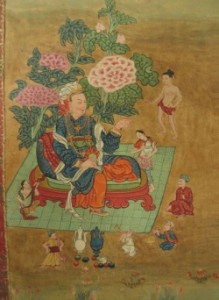
250px-King_Indrabhuti-0

The following is respectfully quoted from “The Small Golden Key” by Thinley Norbu Rinpoche

According to the teachings of the sūtras, the Buddha turned the Wheel of Dharma, teaching the “four truths” (Tib. bDenpa bash) to the “five noble ones” (Tib. lNga.sde bang.po). These four truths are: suffering, the causes of suffering, the cessation of suffering, and the path leading to cessation of suffering. These are the foundation of the Hinayāna teaching.

Later, at Vulture’s Peak in Rajgir, the Buddha taught the “Perfection of Wisdom” (Skt. Prajñā Pāramitā: Tib. Shes.rab.kyi pa role tu phyin.pa) which is the second turning of the Wheel of Dharma called “Characteristiclessness” (Tib. mutton.nyid med.pa) to the general gathering of the Sangha, including male and female Śramaneras, Bhiksus, and Bhiksuni, and to the special gathering of Bodhisattvas, such as Mañjúshri (Tib. hJam.dpal dByangs), Avalokitesśvara (Tib. sPyan.ras.gzigs), Vajrapāni (Tib. Phya.na rDo.rje) and Maitreya (Tib. Byams.pa).

Finally, at a place of supernatural beings unknown to ordinary beings, the Buddha taught the “Doctrine of Absolute Truth” (Tib. Don.dam rnam.par nges.pa) to various disciples such as Bodhisattvas, gods, nāgas, yachts, rākshas, and humans. At these times, the Buddha exhibited many miraculous powers of body, speech and mind.

The full meaning of Mahāyāna is contained in the Buddha’s last two turnings of the Wheel of Dharma where he taught the actual relative truth and absolute truth.

According to the teachings of the tantras, the higher Vajrayāna teachings were first taught by the Buddha at the request of King Indrabodhi of Uddiyāna (Tib. O.rgyan). In the Vajrayāna teachings, the Buddha taught disciples of superior faculties, who had accumulated great merit, how to transform impure phenomenal appearance into a pure mandala. In order to teach King Indrabodhi, the Buddha emanated the Guhyasamāja mandala (Tib. gSang.ba hDus.pa), then bestowed the empowerment of this mandala upon the king and gave him the tantric teachings.

Astrology for 6/30/2017

6/30/2017 Friday by Norma

An emotional or domestic issue is impervious to pacification, meaning the more you try to assuage someone’s feelings the stronger they grow. What to do? Listen, empathize and accept reality as it is. Offer a snack, mention how the same horrible thing happened to your friend, etc. Food and comfort make the greatest impact now and your attitude will be remembered in the future. The danger today lies in
assuming a Marie Antoinette-ish attitude, “Let them eat cake!” that worsens a difficult situation. Elsewhere, medical treatments are succeeding, whether or not you believe this to be true, a gift makes a favorable impact, and numerous candidates for partnership appear. Sadly, none fits the bill, but the attention is fun.

What Do You Long For?

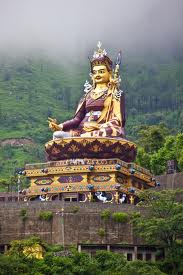
Guru Rinpoche

The following is an excerpt from a teaching by Jetsunma Ahkon Lhamo called “Decision Time”

JNT 14 Decision Time

How much time do we spend understanding the quality, the fabric, the substance of the Buddha’s teachings so that we can make good decisions?. Have we reasoned things out for ourselves?  Do we follow the Buddha’s logic?   If we don’t follow the Buddha’s logic that cause and effect arise interdependently and at the same moment, if we don’t follow the logic that what we are experiencing now is our own karma, if we have not taken that teaching to heart, are we Buddhists?  I wonder.

How much time do you spend mixing your mind like milk with water, mixing with the mindstream of your beloved teacher?  Maybe it’s not me. I’m not that impressive. How much time do you spend mixing your mindstream with the nectar of the teaching?  How much time have you spent in courageous determination, paring the mind down the way one works the wood of one’s craft, or the metal of one’s craft? How often have we made solid and good and sensible plans for our death?  How many of us have made plans and can count on the plans we’ve made for our next life?  Isn’t it funny that after all this time, we do relatively little, and some of us nothing, to add to our virtue?  We don’t plan for the next life. We act like people who don’t believe that rebirth will occur immediately. And it will. We act like people who think there is no relationship between cause and effect. Everything we do is for satisfaction in this life and we still dance with it. We still try to control it.

How much time a day do we spend beseeching the Guru to never abandon us? And how much time each day do we spend in longing for the nectar of bodhicitta? How much time every day do we spend longing for liberation?  Compare that to the time that we spend hanging out with our own minds, like a drunk in a bar, convincing himself the next one won’t hurt. Opening the cans, pop another one, pop another one. Maybe this one will be the magic one. Or, maybe this one. Pop another one. Maybe this will be the one that there is no result for, a freebie. Only a true, bona fide alcoholic, or somebody who was awake enough to know that they are bona fide samsaraholics, understands the depth and depravity of the thinking that I’m describing. That kind of thinking tells me one thing and one thing only: One has not become a Buddhist. You might think you are, might wear the right clothes, but you ain’t there yet, because you have made samsara your guru, because you have made fear your guru, because you have made doubt your guru, because you have made the noise in your head your guru. Because of these and many other things, we’re still suffering. And we’re so deluded that we still seek answers in samsara. Do you know that’s the definition of insanity–to repeat the behavior again and again, achieving the same result?  By this time, we should have made decisions like that. But I see you listening to your heads. I see you making up your own religion in your minds.

I mean, sure, maybe it looks like Buddhism, but it’s not. Because if it were the teachings of the great Guru of Gurus, Padmasambhava, it would say to you that you are drunk, that you are mistaken, that the things that you hold onto in samsara will only betray you. The very things that you are most afraid of will come back to harm you. Guru Rinpoche would have said to you, ‘Each and every one of you have the seed of Buddhahood, but without ripening that seed, it will never manifest.’ Without taking the time, without taking this lifetime to hone one’s skills, to develop the kind of discipline and good mind, relaxed, calm mind…. This will never happen under the conditions that we are thinking now.

Guru Rinpoche’s teachings have said that we should rely on our root guru; and woe unto us if we make up something different. That’s a different religion. Our root guru represents for us the very nature of our mind; not only represents, but in fact is the very door of liberation. And for most of you, if not all, that’s your chance. There is one door to liberation and that’s one’s root guru. And if one cannot align one’s heart, body, speech and mind with the milk or the nectar of the guru, then something else is going on entirely, because this is what our faith is. This is what Vajrayana is about. It is about quick liberation. Nobody said easy. Quick liberation, by virtue of the karma and the relationship between oneself and one’s guru, which one cultivates. The work is hard, because our own minds want to remain drunk. We like the stimulation. We like the 30-minute stories. We like to control the endings. But that’s delusional. Nobody controls the ending. No matter how healthy you are, you could die tomorrow.  Or your root guru could die tomorrow.

Ego, health, control has nothing to do it. Your karma is ripening right now and that’s your experience. That is your experience. It’s yours. And should it happen that the path is difficult and long—difficult, takes a lot of work, makes us nuts sometimes—that’s the very time that Guru Rinpoche reminds us that we are hanging by one string from falling into the depths of samsara and that string is the connection that we have with our teachers. Ignore that string or cut it at your peril. I would not want to be lost in samsara. I would not want to be unknowing of what my next rebirth will be and what I’ll have to endure because I followed the wrong path.

You’ve been given a gift without measure that you have not even opened yet.. I would say in this lifetime you haven’t earned it. And so you might think that by that, you can accept it freely and you can waste it. But I say to you, if we are together and if we speak and if we love one another, then this is the result of many, many efforts in the past. And our job is to, instead of acting like an idiot farmer who is plowing the ground for nothing, rocks and dirt —maybe I can plant a bean here, a little corn—when underneath there is a diamond field, a mine of gold… We’re like poor, starving idiot farmers scraping around when the jewels are ours.

Why do you want to be beggars?  You have been invited to the feast of the Buddhas. Why would you put your fear on a throne?  Why would you put your confusion on a throne? And most of all, why in the world would you take your flawed, crippled ego and put it on the throne? But we do it, day in and day out. We think that somehow if we talk about Buddhism and we look Buddhist and we act Buddhist that somehow the cards will count and it will be fine. It will work out in the end. And I beg to differ. Do you know how it works out in the end?  You die, and you take rebirth according to what you have accomplished in this lifetime. So what are you going to put your money on? Insanity?

Some of you, I think, are beginning to get renunciation and that means you stop making up your own bullshit, and you listen. Some of us are not so young and stupid anymore. Learning the hard way is tough, but we’re good at it. The question is, though, are we learning Dharma, or are we learning to dig ourselves into samsara deeper and deeper? And that’s the question.

Copyright © Jetsunma Ahkon Norbu Lhamo All rights reserved
Astrology for 6/29/2017

6/29/2017 Thursday by Norma

Avoid confronting authority figures or anyone you don’t understand, you won’t realize you are in the
weaker position until it is too late. A powerful entity is unswayed by emotional appeals and rules against them. It’s an odd time, where people believe that if they really, really want something it should be given – the two year old’s approach to life. The adult doesn’t agree and no tantrum changes that. Fortunately, a third party can mediate and explain things in such a way that everyone goes away if not happy, at least with a better understanding of the issues involved. Nadia Boulanger said, “Loving a child doesn’t mean giving in to all his whims.” Work goes well early in the day so jump right in and finish your tasks before the late afternoon slowdown. Home is important, spend as much time there as possible and you’ll be happy with Buddihist Tea Pet.

Compassion as Antidote

????????????????????????????????????????

The following is an excerpt from a teaching by Jetsunma Ahkon Lhamo called “The Habit of Bodhicitta”

There’s a funny thing about the human mind that we don’t realize. Do you know how in your mind you think you’re concentrating on a million things at once? Some of you can chew gum, watch TV, listen to the radio and write in a book at the same time. I’ve seen people do this. It’s amazing. I have a son, oh, my god, you can’t believe this son. It looks like he can watch TV, listen to the radio, talk and really carry on a conversation, dance while he’s talking, and if he knew how to fry an egg, he could probably do that at the same time. I mean, talk about a Mongolian juggler. Each of us feels likewe can do so many things at one time; but what we don’t realize about the human mind is that’s not true. It can only do one thing at a time. But what happens is that we do these things in such rapid succession, that if we think about ten things at once, it feels like what is actually happening is that we are thinking about this, switch to this, switch to this, switch to this, very quickly; and our minds actually become inflamed and agitated with the switching from one picture to the other. That’s why it becomes valuable and precious to meditate on bodhicitta and to practice bodhicitta. Because while you are practicing bodhicitta, putting your mind in this pile, while you are doing that, no matter how simplistic it is, even if it’s just opening the door for somebody, while you’re doing that, you aren’t doing the other thing. And the great thing about the human continuum is that if you aren’t continuing it, it doesn’t continue.

The funny thing about continuum is that it loses its definition, its essence, if it’s not being continued. So we are taught to practice kindness and to begin where we can and to increase it moment by moment. Because while you are doing that, you can’t be doing the other. But believe me, when you are not doing that, you are doing the other. You are doing the other. So the bodhicitta becomes now not a great mystical attribute that we all hope we are going to get, it becomes a remedy. It becomes a method. It becomes an antidote. And you should see compassion as an antidote. There is no excuse, none, for you not to start right now. And you can’t get into what is kind of like the diet syndrome with bodhicitta. I don’t know how many of you have actually been on a diet, but if you’re on a diet, you’re like this: You go through, ok, a thousand calories a day. So you’re making your little chart and you’re eating your boiled egg or whatever it is, celery and ice or, whatever horrible thing they are making you eat. And then at one point during the day, you just can’t stand it and you go back to the old habit and think, ‘Ok, I’ve eaten celery all day, now I’m going to eat a piece of chocolate cake.’ What happens in our minds is that we think, ‘Now I’m off my diet. And it doesn’t matter.’ Well, you can’t have that kind of diet mentality with your bodhicitta. For instance, if you practice bodhicitta for a good period of time and suddenly you blow it, not only blow it, blow it big time, you know, I mean, big time, you really blow it, then you think, ‘I’m not a compassionate person. I’m not good, I’m bad. It’s gone for today. I’ll try maybe next week sometime. I’m hopeless. I’m helpless. I’ve blown my bodhicitta diet.’ You begin to form all these exaggerated conclusions based on what has just happened.

If you could approach yourself in a relaxed way, moment by moment, and you did practice bodhicitta for a certain period of time, then when you really, really blow it, there would be no inner tension to prevent you from simply going back to the bodhicitta. What you’ve done is expressed both of your habits, your new one, which is difficult, and your old one, which is easy and you can fall into it any time you don’t practice your new one. It doesn’t mean anything. It only means that you’re expressing both habits and at every given moment you have a choice. You can practice bodhicitta the very next moment right after you’ve blown it. And you should, because the best way to prevent blowing it again is to climb right back on that horse and make restitution. That’s the best way, to get right back on it. If you don’t’ do that, you carry a tremendous burden as a spiritual person, the burden of hypocrisy. You feel like a hypocrite. You feel like you’ve really messed up. You have this idea that you’ve been kind and then this monster in you comes out and then you’re faking it again. You can’t think like that. You can’t think in terms of good and bad, high or low. Think in terms of habitual tendency. Give yourself a break. You have both. Accept it now. Accept it now. And this way, no matter what happens, you’re not going to have to think something vile about yourself. And you have the freedom to make a choice at any moment.

My recommendation is that should you begin to practice bodhicitta and find it extremely difficult, do not form conclusions about it. Only continue. The only conclusion you should form really is the one that I’m giving you: That’s my habit. I understand that about myself. I accept. And I accept that I can change it, little by little. And it’s hard. It’s all right if it’s hard. One day at a time, you know?

Copyright © Jetsunma Ahkon Norbu Lhamo All rights reserved
 

Understanding the Opportunity

candle

The following is an excerpt from a teaching by Jetsunma Ahkon Lhamo called “Decision Time”

I want to say a few words, if I may. How many of you, I wonder, feel that you have absorbed enough of the teachings over the years to have a good enough idea of the pointing out instructions that Lord Buddha and many teachers over time have given us?  How many of us, I wonder, have really taken the time to contemplate the teachings in such a way that they really become a part of our inner gyroscope?  How many of us have taken to heart teachings that were given generously and kindly over the years in order to help us to see our way through?

I think about, in the beginning, how many times I taught that life is like going through a dark room with lots of furniture. And, of course, you have free will, lucky you. You can choose to go through that room in the darkness with the furniture right there, taking your chances. And, of course, we know what happens if you are operating in perfect darkness with lots of furniture in your room, or obstacles or past karma ripening, which we all have, or being in samsara, which we all are. How many of us have even taken that first step, I wonder, to make that decision to say, ‘I will not go through this room in darkness, I will not go through this life in darkness’? Why would someone teach you that?  Why would someone say that life is like a dark room and there is so much furniture and so many things that, without being able to see or negotiate or understand without any wisdom, without a map, without any instruction,. you’re likely to have difficulty. Why would one’s teacher teach that? Because it’s true.  This is not a made up agenda. These are the teachings of the Buddhas and bodhisattvas and the gurus throughout time.

We have this incredible stubbornness though, a terrible inner stubbornness that for some reason doesn’t want to take that teaching to heart. For some reason, we want to risk it, having the idea that we are strong or that it will work out or that maybe the teaching wasn’t true. Or because we didn’t actually take it to heart or never even learned it in the first place. I don’t know what the reason is, but we still have this kind of stubbornness that says to us, ‘You can do it, kid. Find your own way.’ Well, nobody is arguing that we can do it, but find your own way you will not,. not across the ocean of samsara. Will you make it through that room in the dark not knowing what’s in there?  Not bloody likely, is it?  Well, it is bloody likely if you think about it. You’ll probably get awfully bloody doing it.

Since time out of mind, the Buddhas and bodhisattvas have been coming to us, and not through their own need to experience or to come for fun or to come for torture or whatever. Buddhas and bodhisattvas appear in the world. They come for us; and they come to give us these teachings. And yet we are somehow so continuing in our delusion and habitual in this stubborn clinging to the idea that my ego has the answers, we still feel that way after all these years.

That is a teaching that is taught to you out of kindness, not out of a wish to push you around. If one cannot take at face value a teaching of that merit, that you must rely on the root guru, that you must rely on the Buddha, the Dharma and the Sangha, have we somehow not put out the effort that it takes to come to terms with such a powerful truth as that?  It reminds me of alcoholism. It reminds me of the place where you say, ‘I can control my drinking.’ It reminds me of the place where you say, ‘I’m really on top of this. It hasn’t gotten me. Samsara hasn’t gotten me somehow.’ Or the idea that maybe the Buddha was lying or maybe he had his own agenda, or maybe Guru Rinpochewas just a phony. Maybe he was just on some sort of crazy power trip.

Why would somebody warn us of the suffering of samsara, of the danger of samsara? Because the Buddhas and the bodhisattvas are different than ordinary beings. They are different in one way: They have awakened. That’s the main difference—awakened to where the delusional phenomena of samara is simply that. Its dreamlike state is understood. Its seduction is also understood. To be human is to know that. But you have to decide once and for all, who is your guru? I’m asking you another question. How much time have you spent studying, reasoning out any of the teachings you have received so far? The Buddha’s teachings. Not that I am the Buddha, but my teachers have been saying all this time I’ve been teaching Dharma all these years. So I’m not making this up.

Copyright © Jetsunma Ahkon Norbu Lhamo All rights reserved

 

Astrology for 6/28/2017

6/28/2017 Wednesday by Norma

People who are working hard and struggling to keep things on an even keel receive major assistance from others today. An army of willing workers – or one – appears ready and able to solve every problem and wash the car to boot! Accept help and watch yourself relax. If you find yourself engaging in verbal sniping, consider the other demands you face and relax until you feel better. Edith Sitwell said,
“My person hobbies are reading, listening to music and silence.” This is a great day to wrap up leftover tasks, to engage in exercise or drive somewhere, and to plan and consume a special meal.’

WP2Social Auto Publish Powered By : XYZScripts.com