Astrology for 4/3/2016

4/3/2016 Sunday by Norma

A group can do pretty much anything today, so mingle! Garth Henrichs said, “One does not make friends. One recognizes them.” Conversation is meaningful and electrifying. It’s possible to make a discovery or find something that solves a problem and generates excitement. Domestic matters are favored: cooking, eating and milling around with relatives or people at home is excellent. Impulsive conversation is the norm, and speaking before thinking is everywhere. Don’t worry, people like you and you can always apologize later for foot-in-mouth comments.

The astrology post affects everyone differently, depending on individual horoscopes. Look to see how this message affects your life today!

The Door of the Heart

The following is from a series of tweets by Jetsunma Ahkon Lhamo:

It is difficult when we love one person especially. Might as well poison yourself, grief comes. Love all beings equally, you will never be alone. There is nothing outside your own heart that will make you truly happy. Without training our hearts to love altruistically we will never recognize love. The door of heart opens from within.

Why do I say this? Because I love you. You, you.

Why do people doubt the motivation and truth of love? Because they cannot feel it. They cannot imagine it. To some, love is the enemy; the proof that all sentient beings are equal. One ego is nothing.

In truth without altruistic love we are not truly alive. This is the mark of a human life! Our capacity. Oh, Father Sun, Sister Moon kindly bless us and our Mama Earth at this time of change, deciding and endurance. Prayer needed.

May wind come as a caress. May rain gently cleanse and nurture. May the sun show his wisdom. May all sentient beings be happy.

Copyright © Jetsunma Ahkon Lhamo.  All rights reserved

Astrology for 4/2/2016

4/2/2016 Saturday by Norma

A friendly person is at your disposal, ready and willing to spend time with you. Groups are fun and profitable today, join up! An inspiring idea is a winner and someone can tell you exactly how to accomplish your heart’s desire. Be patient with projects that need to be redone, this activity is moving you away from trouble. Stay in the center of the pack, it isn’t a good time to strike out on your own. Mahatma Gandhi said, “A body of determined spirits fired by an unquenchable faith in their mission can alter the course of history.” You’ll notice a quiet sense of happiness and peace about life if you’re paying attention. Use this feeling of satisfaction to offer kindness to everyone you encounter today. A small, compassionate gesture can change someone’s life.

The astrology post affects everyone differently, depending on individual horoscopes. Look to see how this message affects you today.

Living the Path

The following is an excerpt from a teaching by Jetsunma Ahkon Lhamo called “Marrying Spiritual Life with Western Culture”

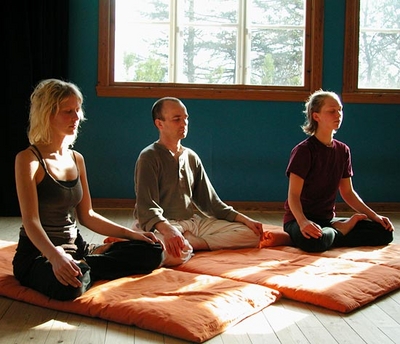
It’s interesting to realize that when we come to the temple, we’re already interested in Dharma. Why are we interested in Dharma?  There are lots of different reasons. We like the look of it: It’s interesting and exotic. The statues are really cool. The colors are nice. We have a feeling, a concept of what Buddhism looks like. It looks like people who are sitting very straight in those wonderful positions that I wish I could get myself into. And the Buddha’s eyes look out into space. We see ourselves doing this, and we think, “Wow that is so cool!”  We have no idea what’s going on inside, but from the outside we’re looking at this going, “Oh man, that is so cool.”

So when we come to this path, we already have an idea of what it’s supposed to look like, and we play into that. Then we hear the foundational thoughts about Buddhism and the thoughts that turn the mind. Here’s the important part, “Oh, yeah, those are good reasons to do what I wanted to do already, which is to sit there like this, or to be involved in this really exotic thing, or just to be the coolest kid on the block because I read all those Buddhist books.” We all have reasons. We feel a certain affinity to it, whatever it is. I’m making it goofy so that it’s fun, but you can see and adapt what I’m saying to your own personal situation.

This is not the way it is in other cultures. The thoughts that turn the mind have to do with understanding impermanence, understanding cause and effect relationships, understanding that virtuous conduct brings excellent results of happiness and prosperity, non-virtuous conduct brings bad results of either unhappiness or being reborn in lower realms and so forth. Once we come here we think, “These are things to learn, and they are good reasons to stay on this path. So I am going to memorize them.”

But in a society where people grow up seeing children born and their elders die before they are even able to understand the words of these teachings that turn the mind toward Dharma, where their movement through time occurs very naturally—(Nobody has a facelift in Tibet. The wrinkles just pile on, unbelievable amounts of them, because there’s no Estee Lauder. This is why I don’t live there!)—a person approaches Dharma because it does not seem reasonable to walk from birth to death with nothing in your heart, with nothing to work with. It doesn’t seem reasonable that this [movement through time] should be the main weight of your experience; that this is what you should take refuge in.  Why would you do that?  It’s like taking refuge in a car wreck. It’s going to hurt and it’s going to get worse.

But in our society, because we are technologically and intellectually advanced, we are not connected to the rhythms of life.  So when this person who is connected to the rhythms of life, and has seen it even as a child, is told everything is impermanent in their life, this is not a big piece of information. This is not a missing piece of the puzzle.  It simply organizes the thoughts for a person who has been exposed to a more natural environment, and puts words to a conceptual understanding that they already have about life. They can see there is some fun in life, some good in it, but they can also see its faults much more easily than we can in our society.

On the other hand, when we hear those thoughts that turn the mind, we have so much time invested in staying young, keeping it easy, keeping it light, making it pretty, collecting everything we’re supposed to collect, that we really have to keep that information outside of us.  We can’t really let it come into us. For instance, in our society identifying with and understanding the teachings on old age, sickness and death is terrifying, because in our society the loss of youth is the loss of love. We don’t even value the wisdom that is gained in maturity enough to have it even bear mentioning.

But in other cultures, people have gone through these incredible experiences in a very natural way. They have a maturity of wisdom at the end of their life because they have seen themselves age. They have seen the beginning—the promise, the beauty, the joy. They have seen how it matures, and they have seen that you can’t take anything with you.  In our society, that isn’t valued.  In fact, it’s recommended that we think forever young.

Now that I’m maturing I feel, “Why would you want to do that!  Young people don’t think. So to ‘think forever young,’ that’s like ‘military intelligence’!” In my experience of teaching students, I find that this is the single most dominating factor in their own dissatisfaction with their path. Why is that? Again, in our society, we learn a bunch of rules. These rules are connected to our fundamental material attitude, that collector’s attitude. In our society, we feel separated, alienated, isolated. There is a feeling of inner deadness. If you don’t know that inner deadness in yourself, then it’s deader than you think, because you can look in the eyes of anyone you know and you can see there is an inner deadness.

Now if we approach our spiritual life in the same way— by following these rules that are external because the Buddha said they’re out there, without ever viewing them in an intuitive and intimate way—we are going to go dead on our path. The path which is so precious and so unique—that amazing reality that does not arise in samsara but in fact arises from the mind of enlightenment and therefore results in the mind of enlightenment—this precious inimitable thing becomes only one more set of external rules, like a girdle that you have to wear in order to be successful, to be part of our environment.

When the path becomes bigger, which it has to do, it has to be part of your life. It isn’t something you do only twice a week. There are practices that you do every day. There are ethical situations, moral situations that you have to evaluate and look at for yourself. There is a coming to grips, a connecting with, that has to occur every minute of every day. It’s a way of life. It’s not really a church thing. Once the path becomes big like that, you find that it must influence everything about you—from offering your food before you eat it, to closing your altar before you go to bed at night, to doing your daily practice, to thinking about everything that you do and re-evaluating it. Should I kill bugs? Should I actively work towards benefitting others? Where is prejudice in my life? These are some of the issues that you have to re-evaluate.

At some point, if the path is external and you have not come into intimate touch with it, when these things start coming up, they are going to be “stuff” you have to do. They are not going to be the love of your life. They are not going to excite you. Let’s say as part of your path you have to examine one of the Buddha’s teachings, “All sentient beings are equal.” That means you have to get rid of cultural, racial, religious, gender, even species bias.  All sentient beings are equal. What could be a more exciting and dynamic process than that? Wow!! Think about it!  What if you really did it right, if you went inside yourself and found that place where all sentient beings are equal? What if you made it your job to really know that? What if it was something that became so moving and overwhelming that it changed every aspect of your life?  What an exciting and dynamic process! How changed you would be!  How much more luminous, beautiful, noble your life would be from just that one little thought.

But that’s not what we do with the Buddha’s teachings.  We say, “All sentient beings are equal.  Okay, I’ll memorize that.  I guess that means I can’t kill anything. I guess that means that I really have to try to consider all things as equal. I guess it means I’m supposed to think that cockroaches and human beings are fundamentally equal in their nature.  I really don’t think that way, but it means that I have to remember that as being one of the rules.” Rules that are outside, that you don’t take responsibility for, that you don’t connect with, are deadening. They will kill you. They are bad. Rules that you take in as pieces of information, explore deeply and know for yourself, are empowering. They give you a sense of living for the first time.

Copyright © Jetsunma Ahkon Lhamo.  All rights reserved
Astrology for 4/1/2016

4/1/2016 Friday by Norma

Everything’s moving ahead at the speed of light, and it’s important to tiptoe through conflicting scenarios to avoid trouble. Protective guidelines must be followed. Be patient: something you do now brings rewards in the future. William Penn said, “Justice is the insurance we have on our lives, and obedience is the premium we pay for it.” Look at the big picture of your life and make decisions accordingly. A behind-the-scenes conversation brings happiness and a sense of well being. Long distance travel is favorable, and it’s important to stay physically active to avoid irritability.
Pay attention to the outcome of work today to avoid having to re-do projects. Read instructions twice before starting anything and you’ll be fine!

The astrology post affects everyone differently, depending on individual horoscopes. Look to see how this message affects you today!

The Missing Link

The following is an excerpt from a teaching by Jetsunma Ahkon Lhamo called “Marrying a Spiritual Life with Western Culture”

What is the missing link?  What causes us to shunt ourselves off in that direction and create a scenario whereby we either don’t relate deeply to our path or it cannot nourish us, or we find ourselves feeling dead inside? How does that happen? One of the things that you have to remember—and it’s really important to think about—is that it is more and more prevalent in modern society to not see some of the natural currents of life. This is particularly true in our country with our level of technology and all the civilizing factors that have come together to make us what we are.

For instance, here we are so technologically advanced and removed from certain natural occurrences that we rarely have the opportunity to see the beginning of life carried all the way through to the end of life. Unless we ourselves have had a baby and daddy went into the birth-giving room and mommy had a mirror—unless we do that—birth to us is a mystery. We do not see what birth looks like. We have pictures of it. We may have seen a movie, but the direct sensual experience of seeing, hearing, touching, tasting and smelling, we have not experienced. Even those of us who are parents are somehow absent from this experience because many people do not have a real direct experience of their own birth-giving. They go to sleep during it or they’re drugged or something like that.

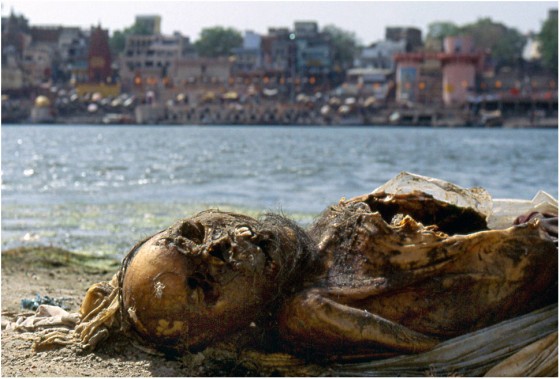
Neither do we have an experience of dying. When we die, we will have that experience; but until then, it’s hidden from us. We have no way to prepare ourselves for the reality of death in our society. We have no way to understand what is gained and what is lost during a life.  Watching someone die is an interesting experience because you can see that everything material is left behind. You have a sense, once that consciousness has left the body, has moved on, that there is a really distinct difference between what the body is like at the door of death—even if it was unconscious—and what it’s like after consciousness has actually left. It’s quite different. Any of us who have seen loved ones immediately after their death will know this. You know that there is nothing in there, unless you’re completely out to lunch, which I also have seen! But you can see that something essential has left and that everything material has been left behind. It’s such an eye-opener, particularly if the person who has died is not very old.  Perhaps they were still at the point in their life where they took a great deal of pride in their body or thought of themselves as being very vital. You might remember different things about the person. You might remember that the person didn’t like their figure, felt that they were too fat. Maybe you know that during the person’s life they obsessed about this. They felt really bad about being fat and they tried to do things about it without success. Then you see that person die. When the consciousness leaves, you realize that everything they struggled with doesn’t matter. Whether that body was fat or skinny, it didn’t go with them.

An understanding of how superficial such a struggle is occurs when you naturally see the rhythms of life and death. Do you see what I’m saying? There is a natural understanding that no one else can teach you. You have to see it yourself.

To understand what we are, it’s also good to see a number of babies being born. Babies are different when they are born. Hospital nurses who care for babies right after they’re born can tell you this for sure.  Babies are not blank slates.  Some babies are very aggressive and very active, and you can tell that they have tiny, little, confrontational personalities already. They’re just that way.  And then other babies are just wide-eyed and open. They’re like little jelly fish. My two sons have always been polar opposites—from the first moment they were born.  A mother who has had more than one child can tell you that’s how it is.

Many of us are completely separated from these natural events, yet they teach us very profound things about how to approach spirituality. Even the story about the Buddha indicates this. At first the Buddha was prevented by his father from seeing the suffering of old age, sickness and death. After having witnessed these sufferings, he found the strength to go on in his path because of compassion, because of the deeply felt recognition that occurred to him on some subtle level.  That’s a metaphor for the problem of our society. What a display Lord Buddha gave us when he showed us that, because on several different levels we are prevented from seeing suffering by our society.

We take dead bodies away and put make-up on them. (Can you believe  that? I want all my make-up on my body before I die. I do not want someone to put it on after I’m dead.  All of you can remember this? That is not the time for a face lift.) On an internal level, because of these subtle messages that we get, we do not come in contact easily with any real internal processes. We avoid them in the same way we are taught to avoid them externally. We’re told, “Don’t go there, it’s not safe. Just don’t go there!”

We are told not to approach things in a really intimate way.  Now in the story about Lord Buddha’s life, when he saw the suffering, it bothered him, hurt him, upset him, scared him and shocked him, and he had to—oh my—go through transformation, that “T” word that scares us so much.  Transformation is related to change, the other word that really scares us.  So, yes, he had to go through all of that, but what was the result?  The result was he became deeply empowered and was able to make some very difficult choices.

He decided not to live an ordinary life in which he was extremely happy. He was a prince with all the blessings. He loved his family. He had a beautiful and devoted wife, and they were very close, very intimate.  He had a beautiful newborn child and was not a distant or absent or unconnected parent. He loved his greater family as well, his father and mother—the king and queen. But for the first time he saw the suffering of old age, sickness and death, and it moved him to his core and enabled him to make choices that are very difficult. He came to the point of deep knowing within himself, that if he wanted to really love his wife and his baby, he had to find the way to liberation for their sake. The phrase “for their sake” became real to him.  It’s not real to us.


Astrology for 3/31/2016

3/31/2016 Thursday by Norma

Listen to the inner voice of inspiration today, not to a demanding person! You’ll know this is happening by the insistent tone and assertive manner. Politely plug your ears and excuse yourself from conversation: if pursued, power walk away or else run! Today offers conflicting scenarios, some successful and others not . Work is excellent if you follow specific guidelines and poor if you engage in creative thinking. Pioneering activity is excellent if you follow an inspiring strategy and poor if the outcome is concealed or hidden. Take another route if the way is blocked. Confusing ? Yes! Seneca said, “One should count each day a separate life.” What’s good today? Exciting thoughts, plenty of physical energy, creativity and good health!

The astrology post affects everyone differently, depending on individual horoscopes. Look to see how this message affects your life today!

Spirituality in the West

The following is an excerpt from a teaching by Jetsunma Ahkon Lhamo called “Marrying a Spiritual Life with Western Culture”

How does our culture affect our sense of personal practice, our sense of taking refuge?  How does it connect with all of that?  We find ourselves in a difficult situation. We are really limited, and we can’t see where the limitation is coming from. We don’t know how deep we can quest or search, and how profoundly we can make the connection between the external environment, between the ordinary view, and our deepest, most intimate spiritual nature. We feel somewhat limited in knowing how we can make that connection.

Let’s look again at some very important factors.  Think of how we follow religion in our country. For the most part, here in the West, we believe religion is one of the many things that you should have in order to live a moral life.  It’s part of the palette of a moral life, but it may not be the basis of a moral life. This is kind of interesting, isn’t it?  Many of the people who are deeply religious, according to our society’s capacity, have adapted their religion from their upbringing. Somehow they got the message that in order to be part of that big, successful, materialistic picture you have to maintain a certain status quo concerning moral, ethical and spiritual issues. It isn’t your heart.  No, you wouldn’t want that, because that’s that flaky stuff. It’s really hard to have all that you’re supposed to have if this religious thing is so in your heart that it is your heart, that it speaks to you every minute, that all of your decisions are based on what you know to be true spiritually. There’s not much chance that you’re going to be the big accumulator your parents hoped you would be if you go like that. So religion is tamed.  It becomes insipid.  It becomes a thing that we do as part of the whole picture of who we are, but it does not really nourish us in the way that we want it to.  And we end up blaming the religion or the minister or the teacher or the prayers or something. In America, our religious spiritual picture is not empowered. It is not deepened, not in the way that would set us on fire. I don’t mean this in a fanatical way. I mean this in a way where we are never very far from what feels like spiritual truth, from what we know to be good, from what we know to be deep and meaningful. It is very difficult for us to maintain that kind of spirituality in this culture.

We are told, for instance, that in order to be a good person you have to do a certain amount of church-going. That church-going idea is deadly.  It’s really the antithesis of a spiritual path. And I find that here as well. Our Sangha also plays church. Whenever I see one of us do church-going, I don’t know what to do. That church-going thing drives me nuts!  When we come here, on the proper days—Sunday, during retreats and maybe for a midweek class—we think, “Well I’m here.  It’s Sunday and I’m fulfilling my spiritual obligation.”  We have that church expression: We look all spiritual and fulfilled and we say the nice things. Going to church in that way is deadening and disempowering.  It’s a very destructive way to approach our spiritual life. Our spiritual life is something that requires no church. It requires no temple. It is an ongoing, internal, profound experience to which we have to marry. We shouldn’t marry simply because we’ve come of age, which many of us do, but because we are truly wed in our hearts and our minds with a deeper kind of friendship and understanding regarding our spiritual path than we’ve ever known before.

Copyright © Jetsunma Ahkon Lhamo.  All rights reserved
 

Astrology for 3/30/2016

3/30/2016 Wednesday by Norma

The void of course Moon means it’s better to avoid initiating new things early in the day. A sense of uncertainty and lassitude is your signal to do nothing out of the ordinary, for the time being. There’s plenty of other things to do, activity-wise. Keep up a brisk pace everywhere and you’ll feel great. Exercise, power walk, engage in physical exertion- you have the strength and the energy. Do not speak up or try to say “Just one more thing,” if you’ve been silenced. The Bible says, “I have learned, in whatsoever state I am in, therewith to be content.” What’s good today? A nice combination of energy and peace. Energetically go for a peaceful walk, or peacefully engage in activity!

The astrology post affects everyone differently, depending on individual horoscopes. Look to see how this message affects your life today!

Cultivating Courage on the Path: Advice from His Holiness Penor Rinpoche


The following is an excerpt from a teaching by His Holiness Penor Rinpoche on Mediation, reprinted here with permission from Palyul Ling International:

The Bodhicitta we can generate right now, however vast, is beneficial. In the future, when one attains Enlightenment, according to the vastness of that Bodhicitta, that many sentient beings can benefit and liberate themselves from the sufferings of Samsara. Right now we cannot really perceive all that fruition, but if we continue to practice, then in the future we will realize it as a direct perception.
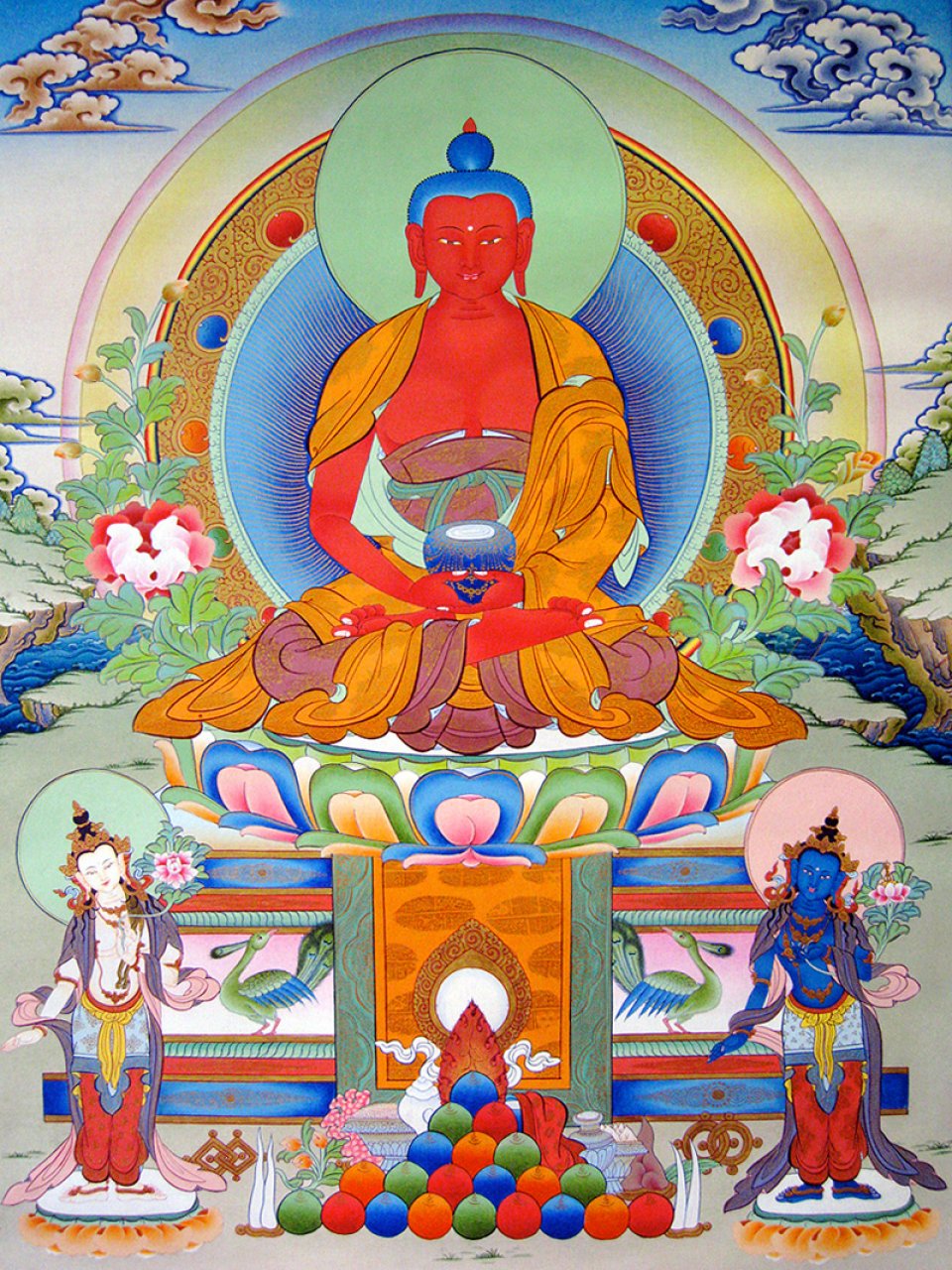
Buddha Amitabha, for example, ultimately achieved that kind of result from his generation of Bodhicitta and his accumulation over many countless years of practices of commitments and aspiration prayers. So even as the Amitabha Buddha achieved Enlightenment over a long time based on aspiration prayers and the commitment to benefit all sentient beings, so we as practitioners must constantly apply the practice of the six perfections to benefit all other beings.

The Buddha Amitabha did not just do these aspiration prayers once or twice, or make this kind of commitment just one or two times. It was over many aeons that he practiced these aspirations and commitments, such that whoever hears the Amitabha’s name and does supplication prayers to Amitabha, they will instantly be born in his pure land. If one has single-pointed devotion to Amitabha Buddha and one carries through all of these supplication prayers, then even oneself as an ordinary person with an afflicted mind can be reborn in his pure land. It is all because of Amitabha Buddha’s special aspiration prayers. So although there are countless Buddhafields, the Amitabha Buddha’s pure land is very special because of these reasons.

We all could also achieve that kind of completion when we attain Enlightenment if we continue on the path and carry through our practices, generating Bodhicitta in as vast a way as possible. So we should not lose courage, thinking, “Oh, I cannot do it. I could never attain that kind of Enlightenment.” It is not good to lose one’s courage like that. Think instead that all these past Enlightened Beings, all the Buddhas and Bodhisattvas, they also attained Enlightenment and ultimate realization by beginning the same as us, standard beings, and if they could attain Enlightenment, we can also attain that same kind of realization.

So today, though there is much that has been taught, if one can just try to keep in one’s mind to have one hundred percent devotion to Buddha, Dharma and Sangha, and if one will train one’s mind by generating Bodhicitta and carry though the practices, then one can definitely have this kind of fruition. We can all do aspiration prayers, that in the future we can all attain Enlightenment within one mandala through these Great Perfection (“Dzogchen”) meditations. Just as in the past such great Great Perfection (“Dzogchen”) realized masters like Garab Dorje and Shri Singha and so forth attained Enlightenment through these Great Perfection (“Dzogchen”) practices, similarly we can also have that aspiration prayer to attain Enlightenment.

For a short Amitabha Practice by Jetsunma Ahkon Lhamo click here.

WP2Social Auto Publish Powered By : XYZScripts.com