The Bodhisattva’s Logic

The following is an excerpt from a teaching by Jetsunma Ahkon Lhamo called “The Bodhisattva Ideal”

The posture of a Bodhisattva is misunderstood in our culture.  When a parent raises a child, the parent does not say to the child, “What I’d really like you to do, darling, is to be a great, generous mystic.  I want you to be so generous that you give your life up for others.  I want you to be so generous that you pay no attention to your own welfare or comfort, but instead I would like you to live and die for the benefit of sentient beings.”  Nobody’s mother told them that!  Due to the culture that we are raised in, we are told by our parents, their parents before them, and everything around us that there are certain things that one must do in order to be successful.  One must gain recognition, power, money, ease of living.  These are the things that one must do. But when one enters onto the path and becomes a Bodhisattva, one is faced with an entirely new set of ethics and morals and responsibilities.

This entire process must be understood as an intelligent, logical and reasonable process, simply by virtue of the fact that no matter what we accomplish during the course of this lifetime, other than the impact it has on our own bouquet of habitual tendencies, there is not one piece of what we collect that we can take with us, not one thing.  So here is the Bodhisattva’s intelligence. And it is an intelligence.  It is based on truth.  It is based on fact.  It is something like the intelligence of a person who receives a great deal of money, let’s say, or something precious and, if they’ve never had that before, if they haven’t thought it through, they might say, “Oh now I’ve got, let’s see, I’ve got $10,000 here so I’m going to go out and I’m going to spend that money and have a really good time.  I’ve never had $10,000 before, so I’m just going to go spend it, and I’m going to get all the things that I wanted to get.  Get some of my bills paid up, and I’m going to get a, let’s see, a down payment on a car, and I’ve got some clothes that I have in mind and all these different things. Maybe I’m going to buy a new TV. I’ve got all this laid out.”  A sentient being’s normal reaction to having blessings in their life, or to life itself, is a little bit like that.  I’ve got this thing.  How am I going to spend it?

The Bodhisattva thinks very differently.  The Bodhisattva realizes that, according to the Buddha’s teaching, life is like a precious jewel.  When one meets with Dharma, meets with the teacher, and meets with the method by which we can accomplish realization, this life is understood as wealth for sure.  We understand that there is a tremendous gift here.  But how is the gift utilized?  There comes in a completely different kind of logic.

The Bodhisattva realizes that, in the end, all will come to nothing.  If our only gain is on the material realm, in the end all of the effort that we put into self-cherishing and beautifying ourselves, and the ease and comfort of our lives, and the accomplishments on the mental and physical levels of our lives, even those greatly cherished social institutions like vast education,  even that will come to nothing, other than perhaps the discipline of studying.  That habit may be brought into the next rebirth. .But everything that we have learned to love and cherish will come to nothing.

And so the Bodhisattva thinks, therefore, if in samsara, all efforts come to nothing, if all that survives is one’s virtue or lack of virtue, if all that matters in samsara eventually breaks down, then why should I put much effort into these things?  Why should these things be precious to me? Because ultimately they will be lost, they will come to nothing.

The Bodhisattva then thinks more like a smart investor.  You want to invest in that which brings ultimate returns:  kindness, generosity, spiritual habits, habits associated towards travelling on the path of Dharma and developing oneself spiritually.  Making offerings, living with generosity, meditating, praying, contemplating, teaching—these virtuous acts are the things that will bring a result that one can carry over into the next life.  So the Bodhisattva is not so much a martyr as someone who has been trained through logic and reason to understand not to put all of one’s emphasis and hope in that which will ultimately disappoint.  The Bodhisattva has been trained well enough to know that ultimately all things in samsara are disappointing.  And so the Bodhisattva then makes the choice, based on training, to put one’s emphasis and one’s effort only in those things which will produce the excellent result of enlightenment and benefit to others.  This is how the Bodhisattva thinks.

Copyright © Jetsunma Ahkon Lhamo.  All rights reserved
Dissolving Constituents: Understanding Death

The following is an excerpt from a teaching by Jetsunma Ahkon Lhamo called “The Bodhisattva Ideal”

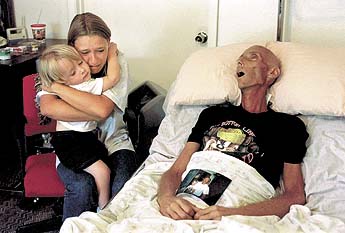
The Bodhisattva understands that everything we amass during the time of our lives—everything we strengthen around us, all of the protection we build, the superstructuring that we do when we meet up with other than self-nature and react with hope and fear and begin to do the dance of self-protection and of self-establishment—the entire structure of self and its relationship to other, the entire idea, the Bodhisattva knows that eventually this will come to nothing.  This is an intellectual response due to the Bodhisattva’s training, not a feeling response.  The Bodhisattva is trained to understand that no matter what we accumulate and gather together during the course of our lives, by the time of the end of our life, none of that will have any meaning.  At the end of our lives we experience the winding down of all of our energies. And as we die, even the physical, psychological, emotional constituents, particularly the physical elements, one by one, all begin to dissolve.

The fire element within our body begins to dissolve. The body cools.  The water element within the body begins to dissolve and break down.  The body becomes drier as we approach death.  The mouth, the mucous tissues within the body become drier and drier.  The earth elements within the body all dissolve.  The body itself begins to break down and even the wind element within the body begins to dissolve.  Mental process begins to slow and one’s activity level also begins to slow at the end of one’s life.

Then at the time of death, all of the constituents actually break down and separate.  As the consciousness abandons the body and the body becomes simply a heap of broken-down constituents, what remains is the consciousness, which has its habitual tendency fully established. It is not able to take with it any of the real or material objects that it has gathered in its drama during the course of its life. And so all that remains is the consciousness, that, like a basket, held these material things, these solid, impermanent realities associated with that particular life.

The consciousness, however, remains. And if the consciousness spent most of its lifetime in establishing material wealth or gathering substance to support the ego, then at the time of death the consciousness has only that habit of supporting the ego to take with it, only that habit.  On the other hand, if a life of generosity and caring have taken place, then that habit moves as consciousness into the next rebirth.  Now the Bodhisattva knows this and so the Bodhisattva’s prayer is not based on a feel-good emotion of “Gee I’d like to be a really cool person, be so kind and so neat, and so terrific that everybody loves me and calls me saint somebody.”  That’s not what the Bodhisattva thinks.

The Bodhisattva thinks instead in a very logical and precise way, according to the Buddha’s teaching: Everything will dissolve. All the efforts of my life together will come to nothing. All the efforts of my life to build up my treasure-house of material goods and keep them for myself will ultimately come to nothing.  All of my efforts to preserve my power will ultimately come to nothing because power dissolves at the time of death also, but the habit of grasping at power is reborn as consciousness.  So if gathering power will come to nothing, if gathering wealth will come to nothing, if preserving myself in this extraordinary way, thinking only in a self-cherishing and egocentric way, will ultimately come to nothing other than suffering in the next rebirth, why not give everything now?

Copyright © Jetsunma Ahkon Lhamo.  All rights reserved

The Futility of Habits

The following is an excerpt from a teaching by Jetsunma Ahkon Lhamo called “The Bodhisattva Ideal”

If you create the habit of compassion and generosity, then that habitual tendency will stay with you, and in some future life it will affect your rebirth and your circumstances.  There will be much more joy and happiness.  When one engages truly on the Bodhisattva’s path, one goes beyond that superficial kind of view.  One goes much deeper into the understanding of how to live one’s life. And so one’s morals and ethics and values are developed because of this Bodhisattva ideal.  The Bodhisattva understands these teachings that the Buddha has taught— that all things are impermanent.  The Bodhisattva understands that whatever material gain we can amass during the course of this life can only bring temporary happiness and, ultimately, if that’s all we do, it will bring suffering.  So this is what the Bodhisattva studies and the Bodhisattva comes to the point of realizing that.

Then there is another kind of amazing logic that enters into the mind of the Bodhisattva. It becomes part of our life experience, and becomes the most profound law that we can live by.  And that is this:  Think about this body of ours, this body that we cherish and hold onto. We decorate it, we love it, we keep it safe. We make sure that it’s happy.  We revolve much of our time and our effort around this body and its upkeep.  And then we think about this ego, this ego that is our mind and our consciousness and our awareness of self. But even beyond that, the extended effort to maintain ego is part of the egocentric structure that we call “me.”  We have developed our own habits and patterns over time in order to avoid the chaos of the idea that what we are as egocentric beings might change in any way, shape, manner or form.  We put amazing effort into perpetuating ourselves and our needs, into reacting with either hope or fear towards every other thing, so that we can determine whether we want it or whether we want to move away from it.  That kind of self-cherishing requires us to think of our own well-being and to look at other sentient beings as objects from which we can get what we need, like love, approval, romance, money, power, anything.

The Bodhisattva realizes these kinds of ideas and habits are futile. And this is the reason why:  During the course of our lives we spend much of our time amassing, structuring, creating support for ourselves, for our ego, because we fear annihilation. Once you have the belief in self-nature as being inherently real, that self has to be supported and continued, because the idea is that if self-nature were to dismantle or not be the same, that somehow chaos would result.  We have no knowledge of our true nature as being the primordial Buddha ground of being, no knowledge of that primordial wisdom nature that is our true nature.  We rely on this idea that self-nature must be perpetuated.

Copyright © Jetsunma Ahkon Lhamo.  All rights reserved
Impermanence

The following is an excerpt from a teaching by Jetsunma Ahkon Lhamo called “The Bodhisattva Ideal”

If you think about the food that we eat, you think, oh well, once you’ve eaten the food, it’s part of you and it’s nourishing.  You forgot the rest of the story.  Don’t you remember what happens to food after a few hours? Food changes. When you eat big chocolate cake… Or what would you like to eat?  Let’s see, what are we having today?  I would like to have chocolate mousse.  How about that?  So I’m going to eat my chocolate mousse and “yum yum yum” it’s so good. And you think, “Oh this chocolate mousse is really spectacular!  I don’t have to share it with anybody. There’s nobody in the room, and I can eat the whole mousse myself. Well, chocolate mousse!  I can eat the whole chocolate mousse myself and don’t have to share it with anybody.  Nobody is looking, I can even lick that [bowl]., You know, I can really enjoy this and I don’t have to give it away. And once I eat it, it is mine!  No one can demand it back.  Except that, after a few hours it seems to  exit the body.  And before it does, it creates some minor distresses on the way down.  That delicious experience with one’s food, even assuming the food was not chocolate mousse , but something nourishing from which you might receive benefit and energy,  ultimately is impermanent. Even the condition of taking in nourishment is impermanent because, after having taken in nourishment, then even the most delicious food results in waste.  And what is good in the food we use to make energy and the energy is expended.

So everything that we know and understand in our life experience is changing.  You are not the same person that you were seven years ago.  Everything about you has changed.  Literally the cells in your body have changed and been reborn with very few exceptions.  There are some cells in the human body that do not change that quickly, but the majority of cells change every seven years.  Quite remarkable! It’s really interesting to wonder, to ask ourselves, why is it then that we maintain physical scars from when you’re younger?  Isn’t that odd?  I mean, if we constantly create new cells and they are changed every seven years, what’s that [scar] doing there?  I fell on a piece of glass and wire when I was a little girl playing in a vacant lot and cut my arm right there.  Why is that still there?  I was a little girl when it happened.  I’ve changed many times over. It’s because we do not understand impermanence.

Copyright © Jetsunma Ahkon Lhamo.  All rights reserved

Can You Take It With You?

The following is an excerpt from a teaching by Jetsunma Ahkon Lhamo called “The Bodhisattva Ideal”

Our consciousness sees everything as being solid. And it’s so odd, isn’t it, because seven years ago we were completely different.  If you think about what you looked like ten years ago, twenty years ago… Don’t take my word for it, bring out the pictures.  You look completely different.  I look completely different.  I’m sure you do also.  So even though we have a sense of self-nature being inherently real and solid and very permanent, still we are this very impermanent condition that thinks of itself only in a certain regard.   But when we first meet with the path we are taught that all things are impermanent and we are led to a study of that.

The study should look like this.  We understand in this way:  When we are born, we are born drawing on the karma of our previous existences, and that scenario is catalyzed by the environment around us.  Whatever karmic potentials are within our mindstream are then ripened and matured and brought forward due to certain catalytic events in our environment.  Then beyond that, we continue to habituate ourselves.  We have certain propensities due to our karmic flavor, if you will.  These certain propensities look like habitual tendencies and they are, in fact, habitual tendencies.  One person may have a great habit toward generosity and look for ways to engineer their life going on the track of generosity, compassion.  Another person may have the habit of self-absorption and angerand regard only their own feelings, not taking into account the feelings of others in the environment, being very self-absorbed and wishing that others would help them, would be of benefit to them.  That kind of selfishness becomes, then, a deep habit and very difficult to break.  So another person may have that kind of habit.

Unfortunately there are sentient beings with many different kinds of karma.  One may have had the habit pattern through many lifetimes of creating this habitual tendency of harming others, or hurting others, or killing others. The kinds of animals that are, by their type, predators, are actually beings who have within them the habitual tendency of killing, and they manifest as predators due to that habitual tendency.  So we come in with certain kinds of habits, and then we tend to reinforce them throughout the course of our lives.

According to this teaching that the Buddha has given us about impermanence, we understand that there is nothing, not one thing, that we can accomplish or accumulate during the course of our lifetime that we can take with us at the time of our death.  Meaning this:  Let’s say that we accumulate a great deal of money.  Let’s say that in the past we have been very generous to others and so we have the karma of being able to manifest money fairly easily.  Many people do.  It’s that simple.  It’s due to having been generous in the past.  This element of money coming into one’s life is like greased lightning.  It just really comes in very easily.

So, if that’s the case, then let’s say during this lifetime we spend a great deal of time making a lot of money and yet, even though we had the habit of being very generous in the past, somehow the impact of receiving so much money in this lifetime is a shock..  It reminds me of the story about the man who is making lots of money with computers these days.  He came from nowhere, Mr. Computer Geek, and then suddenly he’s a multi-billionaire.  It seems, from everything that I have read about him, that he is shocked and he just doesn’t get it.  To have several billion dollars that you can get your hands on if you really need to, and then to think that you need to make more before you can be generous is really an unusual way to think. I mean how many billions can you spend in one lifetime?

So for somebody like that, obviously he was very kind and generous in the past, but here he has been hit with this amazing shock of money just flying into his pocket. Now he is in danger of making the mistake of spending his energy and his opportunity increasing that money without increasing the generosity, and therefore in the future he will not have the same results, because none of that money that he’s making now is going to go with him.  This is the Buddha’s teaching, that we cannot take even one sesame seed’s worth of our accumulated wealth with us when we go into the bardo.

But, according to the Buddha’s teachings also, supposing we were to make the choice of being extraordinarily generous and using our wealth to make the world a better place, to benefit others, to support others who are in need, that sort of thing.  Then we can take this habitual tendency of generosity, this karmic potential,.  with us into the next life by virtue of the fact that we have given so much to others and been so kind and generous, because it isn’t measurable like a sesame seed.  It is the karma of one’s mindstream.  It is the habitual tendency of our consciousness,  and that does go into the next life.  These are the Buddha’s teachings: We actually have the opportunity to create benefit in this life that does last into the next life; but it’s nothing material, nothing that we can ever create in samsara, that will go with us.  Nothing that has weight, size, dimension.  Nothing we can hold.  Nothing material. Only the habits of our mind.  So these are the teachings that we receive when we first come to Dharma.

Copyright © Jetsunma Ahkon Lhamo.  All rights reserved
Awareness of Change

The following is an excerpt from a teaching by Jetsunma Ahkon Lhamo called “The Bodhisattva Ideal”

One of the main thoughts that one hears when one begins to turn the mind toward Dharma is the idea of impermanence.  Now when we hear that all things are impermanent, we take this just as it sounds.  We know from our own experience that all things are impermanent, or at least we know that roughly.  We know that if we buy ourselves a quart of milk that the quart of milk will either sour or be used up.  We know that if we buy a car or a color TV or something like that, that eventually the car or the color TV will break down. Then we’ll have to buy another one and go through the entire process again.  We also know that what is young becomes old, much to our dismay, and that no matter what we do, what we do only works temporarily—what was young becomes old.  We also learn that what is high will become low; what is low will become high.  What is brought together will separate; what is separate will be brought together again.  These aspects of the idea of impermanence we don’t really hold to; we don’t really understand very well.  We try to have a more superficial view of impermanence because the idea is painful.  It’s not our favorite concept.

When the Buddha taught us about impermanence, he taught us about impermanence as a way to understand the faults of samsara, and as a way to understand how suffering is all-pervasive.  Again, as human beings, we like to ignore the idea of suffering.  Of course, when we are suffering and we can feel it very deeply, it’s pretty hard to ignore, but when we are feeling pretty and feeling comfortable, the idea of suffering becomes sort of distant and cloudy.  When we feel up, in a way, we have mixed feelings.  We feel as though it’s always going to be this way and life is pretty good.  But then, by the same token, we’re afraid to feel too up, because we know if we feel too up we’re going to have too far to fall.  It’s odd.  We have this neurotic capacity for seeing the truth, and yet using it against ourselves or hiding it from ourselves. It’s like we know, but we close our eyes because we don’t want to know.

So this particular suffering of samsara becomes to us somewhat hidden; and actually the hiding of this particular truth leads us to many disappointments.  For instance, in the case let’s say, of meeting someone that you love very much, meeting a loved one and coming together with that loved one in some capacity.  Perhaps if it is a romantic relationship, and there is a coming together in marriage or something of that nature.  If it is the coming together of a parent and child such as in the birth of a child, then the parent sees the child and the child sees the parent. The parent, being the elder, has the capacity to perhaps recognize something very familiar about that child, or to feel that this isn’t a new acquaintance, that there is a deep and profound connectionwith this child.

Sometimes people will meet each other in a very casual way and will become instant allies and best friends.  I know that’s happened to each one of us at some point in our lives.  It certainly has happened to me. You meet someone and suddenly this person becomes your ally, your friend, someone who is really a helper to you and who understands; and it feels as though you have been friends for a very long time.

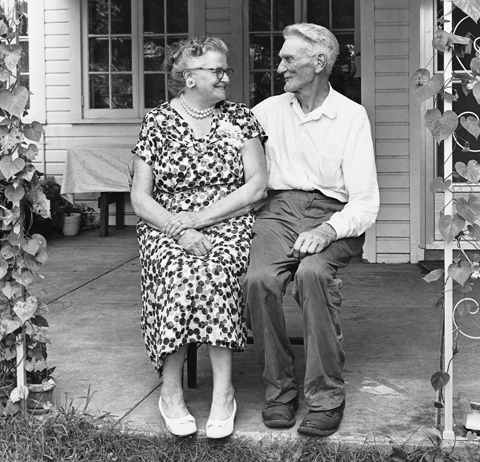
So in each of these cases, when we have these wonderful meetings that bring us so much joy, at that point we like very much to forget that that joy is impermanent. Yet, everything we know and everything we’ve seen teaches us and leads us to believe that everything is impermanent.  We have seen that even in the case of romantic relationships that result in marriage. Should that marriage go really well, then ultimately the bond will be separated through death.  And we know that in the case of parents and child, no matter how close the parent and child are when they are younger, the relationship will evolve and change. In some cases the relationship becomes very distant, unfortunately.  In other cases where that does not occur, then even when the relationship between parent and child stays loving and has mutual concern in it, still eventually one will leave the other.  There will be the separation of death.  The separation of death always happens. Even within that experience of togetherness, there is so much change that you can literally say that two people who married in their twenties are not the same people that are together in their sixties and seventies.  They look completely different. There are worlds of difference between a twenty-five year old and a sixty year old.  There is a vast amount of experiential living and maturity that has occurred. That person at twenty is quite different when they reach sixty, very different.

I remember being in my twenties, and where I was and where I wasn’t.  And I know that I am not the same as I was.  I know that many of my understandings, beliefs, habits, even values have matured and changed.  So it is impossible to think that we will remain in the same comfortable, stagnant condition for the rest of our lives, let alone the fact that we are all separated by death.

Copyright © Jetsunma Ahkon Lhamo.  All rights reserved

The Beginning

images

The Beginning

I am Love,

I pour myself out

on the waters…

And the Earth.

Over time and space

I pour, I am,

never ending.

I encompass all

unto Myself.

I am pregnant with

Creation.

I penetrate all.

I am fulfilled…

Love.

I am Light.

The Light of the One…

Of the All.

Radiant, life-giving,

I am…

To BE.

I declare my Self

In all things

And it is so.

I find my Self

in Creation

and bear my Self

forth

triumphant!

And all is perfect

because I am.

Light.

I am Spirit.

I am the song and the

Breath

of the Infinite.

The sound and essence

of the most subtle

One.

I bring to you your birthright

on silent, soaring

wings.

Behold, I come quickly.

Look within.

I am here.

I speak to you,

from deep within you.

And now you hear me.

You let me heal you.

You let me radiate from you

You let me claim you as

My own.

Let us make a pact,

You, who I am.

To know our oneness.

To renounce duality.

To know only Truth.

For I speak to you

Even as you call

To Me.

“Awaken… Awaken…

This is the beginning.”


© Jetsunma Ahkön Lhamo

Prayer to His Holiness Karma Kuchen

From a series of tweets by Jetsunma Ahkon Lhamo while at Palyul Ling Retreat Center in Upstate New York:

To the victorious Guru Karma Kuchen I pray – for the sake of beings in these degenerate times, ascend the Lion Throne of Palyul fully endowed with every strength and virtue! May we who long for your blessing be satisfied!

In previous times you came to us as Karma Tashi to clear our ignorance, our attachment to ordinary confused appearance!

You again sat on the glorious Palyul throne to grant us the awakening to Primordial Buddha nature as the great display Karma Gyurmed, the dance of suchness, as it is!

Then you returned as Karma Tegchog Nyingpo, also known as Tsawei Lama by the peerless Guru, the Third Drubwang Pema Norbu Rinpoche.

You now have come again as Karma Kuchen, pure and stainless. Kye ho! Such are the many miracles of your display for the sake of beings. Now please abide steadfast upon the Lotus Throne of my heart. Rise this very moment, clear all obstacles to mighty Palyul, banish the enemies of the Heart Essence Nectar given to us by the second Buddha Padmasambava through the child Terton Migure Dorje. Restore us all to original purity, clear recognition and perfect virtue!

May Palyul remain as the great unbroken refuge it is in the world now. Please establish the work of your predecessors and that of our Guru. Protect with mighty vigor the insurmountable accomplishment of our Guru Kyabje Pema Norbu, may nothing be wasted, and may all beings benefit!  Live long! Strengthen the Throne of Palyul and remain in perfect health! Show your holy face as we hunger and thirst; and we need you now more than ever, in these darkening times we need your light, the sun of Palyul, Guru within my heart, grant your blessings!

Copyright © Jetsunma Ahkon Lhamo.  All rights reserved

The First Jetsunma Ahkön Lhamo

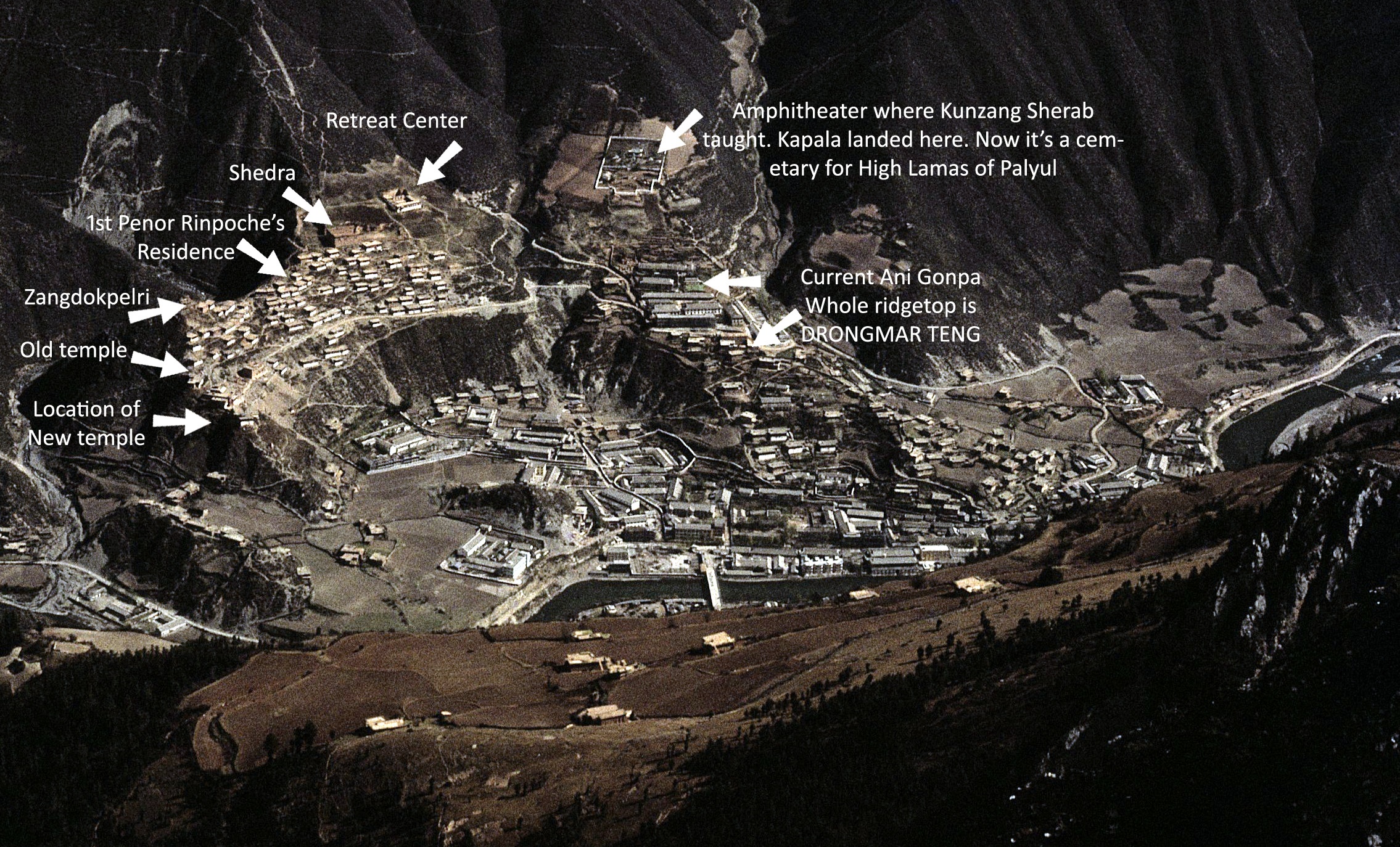
Jetsunma Ahkham Lhamo was an emanation in human form of Arya Tara, the holy mother of all the Buddhas. She was born in the province of Do Kham, in Ah Chog Drolhey village in the Bubor Mountains of the Palyul region of Tibet. This place has all ten positive auspicious signs present. Her father, Dorje, came from the highly revered family heritage of Mutshaga, and her mother was a wisdom Dakini named Gurutso. She was born around the later part of the eleventh Rabjung (according to the Tibetan Calendar), which corresponds to the later half of the seventeenth Century A.D. She was the youngest sister of Rigzin Kunzang Sherab.

She started her education with reading and writing at an early age, and she learned without much effort. Together with Rigzin Kunzang Sherab, she received many teachings from Terton Migyur Dorje and Khedrup Karma Chagmed, who was the emanation of (Lotsawa) Chogro Lhuyi Gyaltsen, as well as teachings from many other scholars and accomplished masters. With them, she perfected her study and practice of both Sutras and Tantras beyond any doubt.  She entered with perseverance into single-pointed practice at various undisclosed places, and many meditational deities appeared to her and gave instructions to her. Through her practice she purified all illusory phenomena into primordial non-conceptual pure awareness, and became a ruler of the realm of Kuntuzangpo.

She lived on the mountain ridge towards the east of Palyul Namgyal Changchub Chöling (Palyul Monastery) and unceasingly turned the wheel of Dharma to a large community of Ani disciples, gradually turning that place into an expansive Ani Gonpa. Thus the location was called JOGONGDONG (nunnery on the ridge) and because of the huge numbers of nuns with red robes, that whole area has been called DRONGMAR TENG (red knoll village) ever since that time. In short, through turning both wheels of Dharma – both teaching and practicing – Jetsunma trained numerous students, not only as Buddhist scholars but many of them became highly realized practitioners.

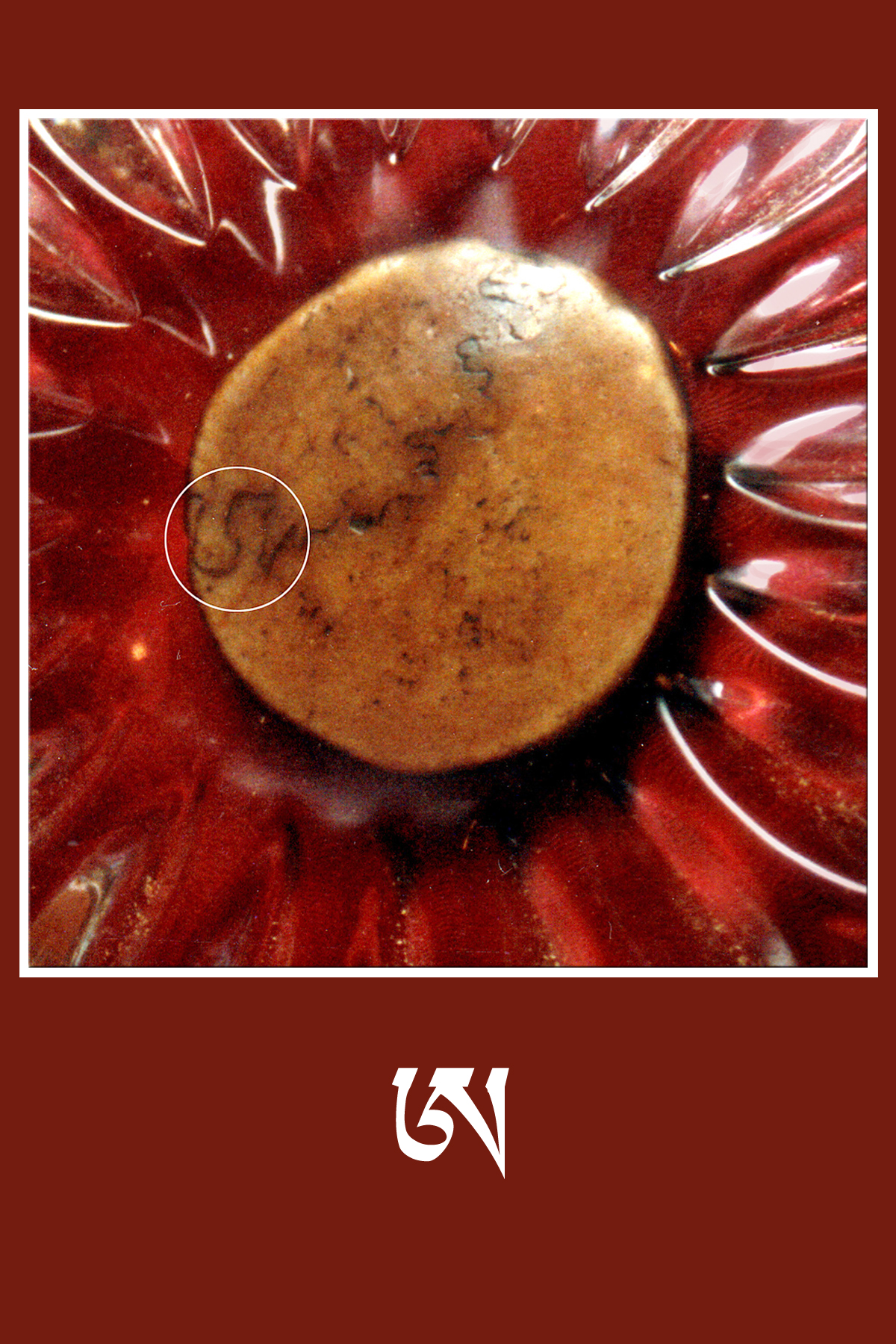
The “AH” on the skull relic

When she saw that her activities to benefit the doctrine and her students had reached the limits of this lifetime, she passed into the peaceful Dharmata. While her holy body was being cremated, her skull flew over and landed on top of the throne of Rigzin Kunzang Sherab in the place where he used to give Dharma teachings. Since that time, that place has been used as a sacred cemetery and to this day, all the revered Lamas of Palyul Monastery have been cremated there.

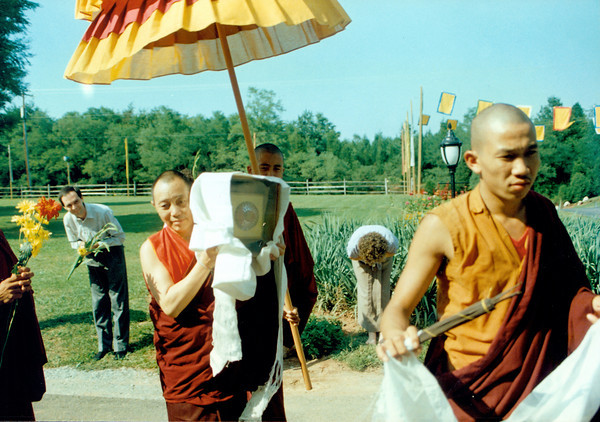
Additionally, her skull has been used as THOEYAB during all major accomplishment ceremonies in Palyul Monastery to invoke the blessings even up to the present day. I heard there is an awakened reincarnation of her who has been born in America.

Ven. Gyaltrul Rinpoche carries the Kapala


Excerpted from Palyul Namgyal Changchub Chöling Ge Denrap, a history of the Palyul Lineage, written by Mupo, a contemporary Tibetan scholar and historian. Originally published in China, May 19, 2002, Seventeenth Rabjung Iron Horse Year. Reprinted in Taiwan. [Ed note: The first Jetsunma Ahkön Lhamo has sometimes been referred to as Genyenma Ahkön Lhamo]


WP2Social Auto Publish Powered By : XYZScripts.com