Altruism: From “Compassion in Tibetan Buddhism”

The following is respectfully quoted from “Compassion in Tibetan Buddhismby Tsong-ka-pa

If the intention to overcome the process of cyclic existence is not conjoined with altruism, one will attain only freedom from suffering, not the Buddhahood that is a perfection of one’s own and others’ welfare. Therefore, the altruistic aspiration, called the mind of enlightenment (bodhicitta) is most important.

Within Buddhism, those of the Hearer and the Solitary Realizer Vehicles cultivate the paths of a being of middling capacity – the thought to leave cyclic existence, together with the view of emptiness. Thereby they attain liberation, but due to not cultivating the altruistic mind of enligthenment, they cannot attain Buddhahood. The mind of enlightenment, in general, is of two types, conventional and ultimate, and the conventional is again divided into aspirational and the practical.

The aspirational mind of enlightenment is the wish to attain Buddhahood in order to help all sentient beings; it marks the beginning of a Bodhisattva’s accumulation of meritorious power in conjunction with wisdom and continues until Buddhahood, having twenty-one forms called ‘earth-like’, ‘gold-like’, and so forth, which are instances of its increasing in strength as one progresses. The practical mind of enlightenment occurs when, having taken the Bodhisattva vow, one actually practises the six perfections of giving, ethics, patience, effort, concentration, and wisdom. The ultimate mind of enlightenment is a wisdom consciousness in meditative equipoise directly cognizing emptiness attained at the time of the Mahayana path of seeing.

To become a Bodhisattva one must cultivate the conventional mind of enlightenment, specifically in aspirational form. As was explained before, it involves seven steps in the system transmitted from Buddha to Maitreya to Asangha:

  1. recognition of all sentient beings as mothers
  2. becoming mindful of their kindness
  3. intending to repay their kindness
  4. love
  5. compassion
  6. unusual attitude
  7. altruistic mind generation

Having practiced equanimity and reflected on the plight of cyclic existence in the two previous meditations, one is prepared for the first step, recognizing all persons as mothers.

This meditation is to visualize individually every sentient being that one has known, beginning with recent friends, then passing to neutral persons, and then to enemies, identifying each as having been one’s mother. One should meditate until everyone, from bugs on up, is understood as having been one’s mother. Since this is the door to generating the mind of enlightenment, its benefit has no boundary or measure as will become apparent in meditation.

The next step is to cultivate mindfulness of the mothers’ kindness, first with respect to friends, then neutral persons, and then enemies. The essence of the practice is to become aware that even if persons are now enemies, neutral, or friends, they have in the past been as kind as one’s own mother of this life.

What is the kindness of a mother? First of all, one enters her womb while she copulates with a mate. At that time one’s mind has entered into the soft substance of the father’s semen and the mother’s blood. During the second week the fetus becomes a little hard, like yoghurt; in the third week, it becomes roundish, and during the succeeding weeks bumps appear that develop into limbs – head, arms, and legs. Then, while one’s body grows by stages over many weeks, one undergoes indescribable discomfort due to the way the mother lies, eats, and so forth, and she also suffers great physical and mental discomfort as one’s body forms. Still, she considers the child more important than even her own body; fearing that her child might be harmed, she makes great effort at proper diet, habits of sleep, and activity.

When about to be reborn, the baby turns around inside the womb and begins to emerge, causing the mother such pain that she almost swoons. Though finally her vagina is torn, her body harmed, and she has undergone great suffering, she does not throw one away like faeces, but cherishes and takes care of her child. Her kindness is greater than the endearment she has for her own life.

One should also reflect on the delightful ways a mother holds a baby to her flesh, giving her milk. She must provide everything; she cannot tell the baby to do this or that; she must attentively do everything herself. Except for having the shape of a human, the child is like a helpless bug. She teaches it each word one by one, how to eat, sleep, put on clothes, urinate, and defecate. If one’s mother had not taught these, one would still be like a bug. Even when a cat gives to a kitten, one can directly see that the cat undergoes great hardship to take care of the kitten until it is able to go on its own.

Just as one’s present mother extended great kindness, so those who now are enemies were mothers in former lives and extended the same kindness, and in later lifetimes they will again protect one with kindness. If it were necessary to become angry when it is determined that someone is an enemy, then since one’s present parents and dearest friends were enemies in a former lifetime and will be in the future, it would be necessary to hate them. But if one’s mother became incensed and attacked oneself, would it be right to become angry and beat her, or would one try to calm her and restore her mind to its usual state? In the same way, an enemy is one’s own best friend who has lost control and, without independence, is attacking oneself. He is not at fault; he is not attacking under his own power. He has helped before and will help again. When one was inside his womb, how much suffering he underwent! After one was born, how many difficulties he had to bear!

The thought is:

Each and every being, upon taking birth in cyclic existence over t beginningless continuum of lives, has protected me with kindness, just like my mother in this lifetime, and will do so again in the future. Their kindness is immeasurable.

When, having considered friends, neutral persons, and enemies, one is clearly mindful of their kindness, one should cultivate the third step, developing in the intent to repay their kindness:

I will engage in the means to cause all to have happiness and to be free from suffering. Just as they helped me in the past, now I must help them.

One should alternate analytical meditation – analyzing the reasons for repaying the kindness of others – and stabilizing meditation – fixing on the meaning understood – finally gaining a measure of the kindness of each and every being throughout space and developing a sense of the need to respond.

Sources of Major Tantric Scriptures

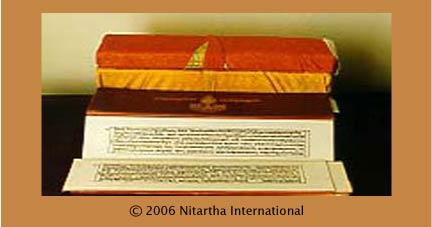
The following is respectfully quoted from “The Practice of Dzogchen” by Longchen Rabjam translated by Tulku Thondup:

Sources of the Major Tantric Scriptures

According to the history of the tantric scriptures, most of the tantras of the New Translation School of Tibet—such as Guhyasamaja and Kalachakra and the tantras belonging to the division of Outer Tantras—were expounded by Sakyamuni Buddha. But the tantras of the three Inner Tantras of the Old Translation School did not originate with Sakyamuni Buddha.

The original tantras of Mahayoga and Anuyoga first appeared in the human realm when they were received by a group of five Buddhist adepts called the Five Excellent Beings (Dam Pa’I Rigs-Cham Dra-Ma lNga) from Vajrapani Buddha in a pure vision on Mt. Malaya [Sripada, Srilanka?] twenty-five years after Mahaparinirvana, the passing away of Sakyamuni Buddha. They were then transmitted to King Jha (Dza) of the Oddiyana kingdom by Trimed Tragpa (Dri-Med Grags-Pa, Vimalakirti) of the Lcchavi tribe, who was one of the Five Excellent Beings.

In Mahayoga, in addition to tantras there is another category of scriptures known as the sadhanas [propitiations]. The following eight categories of scriptures of the sadhana section of Mahayoga were received in two ways, in canonical (bKa’-Ma) form and discovered treasure (gTer-Ma) form.

a)    The following scriptures were received by different masters by means of canonical transmission, which means transmission from person to person: Vajraheruka (or Yang-Dag) scriptures received by Humkara, Yamantaka by Manjusrimitra, Hyagriva  by Nagarjuna, Vajramrta (bDud-rTsi ‘Khyil-Ba) by Vimalamitra, and Vajrakilaya by Prabhahasti and Padmasambhava.

b)    Discovered Treasure Sadhanas: The following scriptures were concealed and entrusted by Dakini Lekyi Wangmo (Las-Kyi dBang-Mo) to the following masters, and those scriptures are known as the discovered treasure Sadhanas: Sriheruka (Ch’e-mCh’og) scriptures entrusted to Vimalamitra, Vajraheruka to Humkara, Yamaraja to Manjusrimritra, Hyagriva to Nagarjuna, Vajrakilaya to Padmasambhava, Mamo (Ma-Mo) to Dhanasamskrta, Chod-tod (mCh’od-bsTod) to Rombhuguhya, and Trag-ngag (Drag-s Ngags) to Santigarbha. She also entrusted the Desheg Dupa (bDe-gShegs ‘Dus-Pa) to Padmasambhava. Those masters transmitted the teachings to their disciples and most of them are in practice today.

The original tantras of Atiyoga were received in pure vision by Garab Dorje (dGa’-Rab rDo-rJe, S. Prahevajra), the first human master of Atiyoga, directly from Vajrasattva, a Buddha in Sambhogakaya form. He transmitted them to Manjushrimitra. The teachings of Atiyoga were brought to us through various lineages and are known in Tibetan as Dzogpa Chenpo, the Great Perfection, which is the subject of this book.

Some Major Tantric Scriptures of the Three Inner Tantras

The scriptures of Inner Tantras which have survived are preserved as the collections of Nyingma Gyud-bum (rNying-Ma rGyud-‘Bum) in twenty six volumes. There are different ways of classifying the tantras, and I have indicated the sources on which I relied to make the following lists.

The Tantras of Mahayoga

Mahayoga scriptures were brought to Tibet by Indian scholars and Tibetan translators including Guru Padmasambhava, Vimalamitra, Santigarbha, Jnanagarbha, Vairocana, Namkha’I Nyingpo (Nam-mKha’I Nying-Po), and Sangye Yeshey (Sang-rGyas Ye-Shes). In Mahayoga there are two major sections of scriptures, the eighteen tantras and the sadhanas. According to Gyurmed Tshewang Chogdrub, who says the list is based on the writings of Terchen Gyurmed Dorje (1646-1714), the major tantras of Mahayoga are as follows:

1)    Tantra Section:

a)    The Root of all the Mahayoga Tantras, the tantras of Guhyagarbhamayajala-tantra entitled: Dorje Sempa Gyuthrul Trawa Tsawa’I Gyud Sangwa Nyingpo (rDo-rJe Sems-dPa’ rGyu-‘Phrul Drva-Ba rTsa-Ba’I rGyud gSang-Ba sNying-Po)

b)    The Explanatory Tantras:

Five Major Tantras:

i)      Tantra of Body: Sangye Nyamjor (Sang-rGyas mNyam-sByor)

ii)     Tantra of Mind: Sangwa Dupa (gSang-Ba ‘Dus-Pa)

iii)    Tantra of Virtues: Palchog Tangpo (dPal-mCho’g Dang-Po)

iv)   Tantra of Action: Karma Male (Karma Ma-Le)


Five Tantras of Sadhana:

i)      Heruka Rolpa (Heruka Rol-Ba, missing)

ii)     Tachog Rolpa (rTa-mCh’og Rol-Ba)

iii)    Nyingje Rolpa (sNying-rje Rol-Ba)

iv)   Dudtsi Rolpa (bDud-rTsi Rol-Ba)

v)    Phurba Chunyi (Phur-Pa bChu-gNyis)

Five Tantras of Actions:

i)      Lanchen Rab-bog (Glang-Ch’en Rab-‘Bog)

ii)     Riwo Tsegpa (Ri-Bo brTsegs-Pa)

iii)    Yeshey Ngamlog (Ye-Shes rNgam-Glog)

iv)   Tamtshig Kodpa (Dam-Tshig bKod-Pa)

v)    Tingdzin Tsechig (Ting-‘Dzin rTse-gChig)

(The last four tantras are common to Anuyoga)


Two Supplementary Tantras:

i)      According to PKD bb/3: Namnang Gyuthrul Trawa (rNam-sNang sGyu-‘Phrul Drva-Ba).

ii)     Thabkyi Zhagpa (Thabs-Kyi Zhags-Pa)

2)    Sadhana [Ppropitiation] Section:

The scriptures of Sadhanas of Eight Great Mandalas of Deities (sGrub-Pa bKa’-brGyad) of which there are two kinds, the Canonical (bKa’-Ma) and Discovered Treasure (gTer-Ma) scriptures. The Eight Great Mandalas of Deities are: (a) Yamantanka of Body, (b) Hayagriva of Speech, (c) Vajraheruka (Yang-Dag) of Mind, (d) Dudtsi Chechog (bDud-rTsi Che’-mCh’og) of Virtues, (3) Vajrakilaya of Action, (f) Mamo Bod-Tong (Ma-Mo rBod-gTong), (g) Jigten Chod-tod (‘Jigs-rTen mCh’od-bsTod) and (h) Modpa Trag-ngag (dMod-Pa Drag-sNgags).


The Tantras of Anuyoga

The Anuyoga tantras were brought to Tibet by Vimalamitra, Vairocana and especially by Nubchen Sangye Yeshey (gNub-Ch’en Sangs-rGyas Ye-Shes). According to Gyurmed Tsewang Chogdrub, among the Anuyoga tantra are:


1)    Four Root Tantras:

a)    Kundu Rigpa’I Do (Kun-‘Dus Rig-Pa’I mDo)

b)    Sangye Thamched Gongpa Dupa (Sangs-rGyas Tham-Chad dGongs-Pa ‘Dus-Pa)

c)    Yeshey Ngamlog (Ye-Shes rNgam-Glog)

d)    Turthrod Khuchug Rolpa (Dur-Khrod Khu-Byug Rol-Ba)

2)    Six Branch Tantras:

a)    Kunto Zangpo Chewa Rangla Nepa’i Gyud (Kun-Tu bZang-Po Ch’e-Ba Rang-La gNgas-Pa’I rGyud)

b)    Wangkur Gyalpo (dBang-bsKur rGyal-Po)

c)    Tingdzin Chog (Ting-‘DZin mCh’og)

d)    Kabjor Dunpa (sKabs-sByor bDun-Pa)

e)    Tsonpa Donden (brTson-Pa Don-lDan)

f)     Tamshig Kodpa (Dam-Tshig bKod-Pa)

3)    Twelve Rare Tantras:

a)    Zhiwa Lhagyud (Zhi-Ba Lha-rGyud)

b)    Chonyid Zhiwa’i Lhagyud (Ch’os-Nyid Zhi-Ba’I Lha-rGyud)

c)    Throwo’I Lhagyud Chenmo (Khro-Bo’I Lha-rGyud Ch’en-Mo)

d)    Throwo’I Lhagyud Kyi Togpa Chenpo (Khro-Bo’I Lha-rGyud Kyi rTogs-Pa Ch’en-Po)

e)    Thugje Chenpo’i Torgyud (Thugs-rJe Ch’en-Po’i gTor-rGyud)

f)     Naljor Nangpa’i Tsog-gyud Chenpo (rNal-‘Byor Nang-Pa’i Tshogs-rGyud Ch’en-Po)

g)    Palbar Khroma (dPal-‘Bar Khros-Ma)

h)    Rakta Markyi Gyud (Rakta dMar-Gyi rGyud)

i)      Melha Zhiwar Kyurpa Barwa’i Gyud (Me-Lha Zhi-Bar Kyur-Pa ‘Bar-Ba’i rGyud)

j)      Throwo’i Jinseg (Khro-Ba’i sByin-bSreg)

k)    Hungdzed Chenpo (Hung-mDzad Ch’en-Po)

l)      Dasang Chenpo (Zla-gSang Ch’en-Po)


The Tantras of Atiyoga

Atiyoga has three divisions of tantras: They are Semde, Longde, and Mengagde.

1. In Semde (Sems-sDe) there are Twenty-one Major Tantras which were brought to Tibet by Vimalamitra and Vairocana. According to Longchen Rabjam they are:

A) The Five Earlier Translated Tantras, translated by Vairocana:

a)    Rigpa’i Khuchug (Rig-Pa’i Khu-Byug)

b)    Tsalchen Trugpa (rTsal-Ch’en Drug-Pa)

c)    Khyungchen Dingwa (Khyung-Ch’en lDing-Ba)

d)    Dola Serzhun (rDo-La gSer-Zhun)

e)    Minubpa’i Gyaltshen Namkhache (Mi-Nub-Pa’i rGyal-mTshan Nam-mKha’-Ch’e)

B)  The Thirteen Later Translated Tantras, translated Tantras, translated by Vimalamitra,         Nyag Jnanakumara and Yudra Nyingpo (gYu-sGra sNying-Po):

a)    Tsemo Chung-gyal (rTse-Mo Byung-rGyal)

b)    Namkha’i Gyalpo (Nam-mKha’i rGyal-Po)

c)    Dewa Thrulkod (bDe-Ba ‘Phrul-bKod)

d)    Dzogpa Chinching (rDzogs-Pa sPyi-Ch’ings)

e)    Changchub Semtig (Byang-Ch’ub Sems-Tig)

f)     Dewa Rabjam (bDe-Ba Rab-‘Byams)

g)    Sog-gi Khorlo (Srog-Gi ‘Khor—Lo)

h)    Thigle Trugpa (Thig-Le Drug-Pa)

i)      Dzogpa Chichod (rDzogs-Pa sPhi-sPyod)

j)      Yidzhin Norbu (Yid-bZhin Nor-bu)

k)    Kundu Rigpa (Kun-‘Dus Rig-Pa)

l)      Jetsun Tampa (rJe-bTsun Dam-Pa)

m)  Gompa Tontrub (sGom-Pa Don-Grub)

C)   Three Outher Major Tantras:

a)    The cycle of Kunched Gyalpo (Kun-Byed rGyal-Po)

b)    The Medchung (rMad-Byung)

c)    The Thirteen Sutras of Semde

2. The tantras of Longde (Klong-sDe) were brought to Tibet by Vimalamitra and Vairocana. According to Gyurmed Tsewang Chogdrub, some of the major tantras of Longde are:

a)    Longchen Rabjam Gyalpo (Klong-Ch’en Rab-‘Byams rGyal-Po)

b)    Kunto Zangpo Namkhache (Kun-Tu bZang-Po Nam-mKha’-Che)

c)    Rigpa Rangtsal Sharwa (Rig-Pa Rang-rTsal Shar-Ba)

d)    Dam-ngag Natshog Khorlo (gDams-Ngag sNa-Tshogs ‘Khor-Lo)

e)    Phaglam Kodpa (‘Phags-Lam bKod-Pa)

f)     Dorje Sempa Namkha’i Thatang Nyampa (rDo-rJe Sems-dPa Nam-mKha’i mTha’-Dang mNyam-Pa)

g)    Yeshey Sangwa Dronma (Ye-Shes gSang-Ba sGron-Ma)

h)    Rinpoche Khorlo (Rin-Po-Ch’e ‘Khor-Lo)

i)      Yeshey Sangwa (Ye-Shes gSang-Ba)

j)      Yeshey Dzogpa (Ye-Shes rDzogs-Pa)

k)    Changchub Kyi Sems Kunla Jugpa Namtag Tonpa (Byang-Ch’ub Kyi Sems Kun-La “Jug-Pa rNam-Dag sTon-Pa)

l)      Changchub Kyi Sem Dorje Odthro (Byang-Ch’ub Kyi Sems rDo-rJe A’od-‘Thro)

3.  The Tantras of Mengagde (Man-Ngag-sDe) were brought to Tibet mainly by Pandita Vimalamitra and Guru Padmasambhava. Some of the major tantras of Mengagde, which belong to Yangsang (Yang-gSang) orNyingthig (sNying-Thig) subdivision, according to Gyurmed Tshewang Chotrub and Pema Ledreltsal are:

  1. The Seventeen Tantras (rGyud-bChu-bDun):

a)    Dzogpa Rangchug (rDzogs-Pa Rang-Byung)

b)    Yige Medpa (Yi-Ge Med-Pa)

c)    Rigpa Rangshar (Rig-Pa Rang-Shar)

d)    Rigpa Rangtrol (Rig-Pa Rang-Grol)

e)    Rinpoche Pungwa/Pudpa (Rin-Po-Che’ sPung BalsPud-Pai)

f)     Kudung Barwa (sKu-gDung ‘Bar-Ba)

g)    Dra Thalgyur (sGra Thal-‘Gyur)

h)    Trashey Dzeyden (bKra-Shis mDzes-lDan)

i)      Dorje Sempa Nying-gi Melong (rDo-rJe Sems-dPa’ sNying-Gi Me-Long)

j)      Kuntu Zangpo Thugkyi Melong (Kun-Tu bZang-Po Thugs-Kyi Me-Long)

k)    Ngotrod Trepa (Ngo-sProd sTras-Pa)

l)      Mutig Rinpoche’I Threngwa (Mu-Tig Rin-Po-Ch’e’I Phreng-Ba)

m)  Kuntu Zangpo Longtrub (Kun-Tu bZang-Po Klong-Drug)

n)    Dronma Barwa (sGron-Ma ‘Bar-Ba)

o)    Nyida Khajor (Nyi-Zla Kha-sByor)

p)    Seng-ge Tsaldzog (Seng-Ge rTsal-rDzogs)

q)    Norbu Trakod (Nor-Bu Phra-bKod)


  1. Two Other Major Tantras:

a)    Ekatsati Nagmo Throma (Ekajati Nag-Mo Khros-Ma)

b)    Longsal Barma (Klong-gSal ‘Bar-Ma)


There are two other important categories of scriptures in the Yangsang sub-section of Mengagde, known as Instructional (Man-Ngag) category of teachings. They are as follows. According to Pema Ledrel Tsal the first is the Nyingthig teachings which contain the essential instructions of the Seventeen Tantras and Throma Tantra It was brought to Tibet by Vimalamitra and became known as Vima Nyingthig. The second is the Nyingthig teachings which mainly contain the essential instructions of Longsal Barwa Tantra. It was brought to Tibet by Guru Padasambhava and became known as Khadro (mKha’-‘Gro) Nyingthig.

Longchen Rabjam wrote a volume of commentarial and supplemental texts on Vima Nyingthig known as Vima Yangtig (Vima Yang-Tig) and one volume on Khadro Nyingthig known as Khadro Yangtig (mKha’-Gro Yang-Tig). He also wrote a volume on both Nyingthigs known as Lama Yangtig (Bla-Ma Yang Tig) or Yangtig Yidzin Norbu (Yang-Tig Yid-bZhin Nor-Bu). These two root scriptures and two commentarial texts are known as Nyingthig Yazhi (sNying-Thig Yab-Zhi), the Four Volumes of Nyingthig. They are some of the most important texts and writings on Nyingthig.


Relying on the Lineage and the Guru: Full Length Video Teaching

The following is a full length video teaching by Jetsunma Ahkon Lhamo offered at Kunzang Palyul Choling:

Relationship with the Guru is the “rocketship of Vajrayana”. These teachers appear for only one reason – us. So, we can rely utterly on their blessing.

© copyright Jetsunma Ahkon Norbu Lhamo All rights reserved.

We the People

The following is from a series of tweets by Jetsunma Ahkon Lhamo:

Tons of people partying now, paying crazy prices for the Superbowl.
The poor and hungry are still hungry. The homeless have no homes.

I feel ashamed. So much money to entertain the “haves.” While the poor weep, we mindlessly party. Chips? Pizza? Not food groups. Hunger needs real food.

Does USA still have a heart? I can’t tell. But I see the eyes of the poor, hungry, cold and they haunt me. Where is the love?

It is hard to celebrate America’s games while so many are in dire need. Are we celebrating the great divide? Some get seats, others not! When did American values get turned upside down? Wait. I remember. Not worth blaming. Only worth fixing.

Anyway, I once wrote songs about the truth.

So we feed and clothe the poor and sing our songs, desperately praying for relief. For their sake –  we the people.

© copyright Jetsunma Ahkon Norbu Lhamo All rights reserved.

Heart Nectar of the Saints: His Holiness Dudjom Rinpoche

The following is respectfully taken from “The Lamp of Liberation: A Collection of of Prayers, Advice and Aspirations

Heart Nectar of the Saints: A Prayer of Aspiration That Condenses the Essence of the Oral Teachings:

by His Holiness Dudjom Rinpoche Jigdral Yeshe Dorje
Sole unfailing and unchanging Refuge, Lord of the Mandala,
Most precious and kind Root Guru, hold me with compassion
When I squander the freedoms and endowments,
Ignoring death, providing only for this life.

The fleeting human life, like a dream,
If it’s happy that’s all right, if it’s unhappy that’s all right.
Without concern for happiness or sorrow,
May I constantly practice the Supreme Teaching.

This mortal existence, like a candle in the wind,
If it’s long that’s all right, if it’s short that’s all right.
Without intensifying the tight grip of the ego,
May I constantly practice the Supreme Teaching.

These intellectual judgements, like the lure of a mirage,
If they’re suitable that’s all right, if they’re not that’s all right.
Discarding, like hay, whatever carries the eight worldly concerns,
May I constantly practice the Supreme Teaching.

This entourage, like of flock of birds in a tree,
If it’s assembled that’s all right, if it’s scattered that’s all right.
Without letting others lead me by the nose,
May I constantly practice the Supreme Teaching.

This illusory body, like a hundred year old house,
If it survives that’s all right, if it collapses that’s all right.
Without becoming obsessed by food, clothes and medicine,
May I constantly practice the Supreme Teaching.

This religious position, like a child’s game,
If it’s kept up that’s all right, if it’s dropped that’s all right.
Without deceiving myself with numerous diversions,
May I constantly practice the Supreme Teaching.

These gods and demons, like reflections in a mirror,
If they’re helpful that’s all right, if they’re harmful that’s all right.
Without perceiving my own hallucinations as enemies,
May I constantly practice the Supreme Teaching.

This delusive talk, like a trackless echo,
If it’s pleasing that’s all right, if it’s unpleasant that’s all right.
Taking the Three Jewels and my own mind as witness,
May I constantly practice the Supreme Teaching.

That which is useless at the time of need, like the antlers of a deer,
If it’s known that’s all right, if it’s unknown that’s all right.
Without simply relying on various sciences,
May I constantly practice the Supreme Teaching.

These religious possessions, like virulent poisons,
If they come that’s all right, if they don’t that’s all right.
Without devoting my life to sinful, unwholesome means of survival,
May I constantly practice the Supreme Teaching.

This form of greatness, like dogshit wrapped in brocade,
If it’s obtained that’s all right, if it’s not that’s all right.
Having smelled the rot of my own head,
May I constantly practice the Supreme Teaching.

These relationships, like gatherings on a market day,
If they’re loving that’s all right, if they’re spiteful that’s all right.
Cutting the ties of passionate attachment from deep within the heart,
May I constantly practice the Supreme Teaching.

This material wealth, like what’s found in a dream,
If it’s acquired that’s all right, if it’s not that’s all right.
Without deceiving others by flattery and assent,
May I constantly practice the Supreme Teaching.

This rank, like a little bird perch on top of a tree,
If it’s high that’s all right, if it’s low that’s all right.
Without aspiring to that which actually brings sorrow,
May I constantly practice the Supreme Teaching.

This black magic, like a sharpened weapon,
If it’s successful that’s all right, if it’s not that’s all right.
Without buying the blade that will cut off my life,
May I constantly practice the Supreme Teaching.

These recitations, like parrot’s six syllables,
If they’re repeated that’s all right, if they’re not that’s all right.
Without counting numbers of the various practices,
May I constantly practice the Supreme Teaching.

Mere religious discourse, like a mountain cascade,
If it’s eloquent that’s all right, if it’s not that’s all right.
Without thinking of this glibness as Dharma,
May I constantly practice the Supreme Teaching.

The mind quick to judge, like a pig’s snout,
If it’s sharp that’s all right, if it’s dull that’s all right.
Without uselessly digging up the rubble of anger attachment,
May I constantly practice the Supreme Teaching.

The yogi’s experience, like a stream in summer,
If it expands that’s all right, if it recedes that’s all right.
Without chasing rainbows like a child,
May I constantly practice the Supreme Teaching.

These pure visions, like rain on a mountain top,
If they happen that’s all right, if they don’t that’s all right.
Without giving credence to illusory experiences,
May I constantly practice the Supreme Teaching.

The freedoms and endownments, like a wish-fulfilling gem,
If I do not obtain them, there is not way to accomplish Dharma.
When I have them in hand, without letting them spoil,
May I constantly practice the Supreme Teaching.

This glorious Guru, light on the path of liberation,
If I do not meet him, there is no way to realize the true nature.
When I know the way to go, without jumping into the precipice,
May I constantly practice the Supreme Teaching.

The holy Dharma, like a medicine that cures sickness,
If I have not heard it, there is no way to decide what to give and what to take up.
Distinguishing the beneficial from the harmful, without swallowing the poison,
May I constantly practice the Supreme Teaching.

The alternation of happiness and suffering, the changing of summer and winter,
If I do not recognize it, there is no way to develop renunciation.
Being certain I will suffer in turn,
May I constantly practice the Supreme Teaching.

This immersion in Samsara, like a stone in deep water,
If I do not get out of it now, I will not be free of it later.
Holding on to the lifeline of the compassionate Three Jewels,
May I constantly practice the Supreme Teaching.

The qualities of liberation, like an island of jewels,
If I am unaware of them, there is no way to develop diligence.
Seeing the unending benefits to be gained,
May I constantly practice the Supreme Teaching.

The life stories of the great saints, like the essence of nectar,
If I am unacquainted with them, there is no way to awaken faith.
When I recognize the real gains and losses,
May I constantly practice the Supreme Teaching.

The aspiration towards enlightenment, like a fertile field,
If I do not cultivate it, there is no way to attain Buddhahood.
Without becoming indifferent to the accomplishment of the great goal,
May I constantly practice the Supreme Teaching.

These thoughts of mine, like a monkey’s antics,
If I do not tame them, there is no way to eliminate my afflictive emotions.
Without falling into all kinds of crazy mimicry,
May I constantly practice the Supreme Teaching.

This attachment to ego, like an inherent shadow,
If I do not give it up, there is no way to reach a peaceful place.
When I recognize the enemy, without befriending it,
May I constantly practice the Supreme Teaching.

The five poisons, like embers glowing in the ash,
If I do not extinguish them, I cannot abide in the mind’s self-nature.
Without breeding venomous baby snakes in my bed,
May I constantly practice the Supreme Teaching.

This temperament of mine, like the stiff hide of a butter-bag,
If I do not soften it, the Dharma and my mind will never blend.
Without indulging the child that is born from my self,
May I constantly practice the Supreme Teaching.

These ingrained bad habits, like the course of a river,
If I do not eliminate them, I cannot part from the profane.
Without delivering weapons into the hands of the enemy,
May I constantly practice the Supreme Teaching.

These distractions, like the ceaseless rippling of water,
If I do not reject them, there is no way to become steadfast.
When I have the freedom of choice, without devoting myself to Samsara,
May I constantly practice the Supreme Teaching.

The Guru’s blessing, like the warming of earth and water,
If I do not receive it, there is no way to recognize my own true nature.
When I step on the short path, without turning in circles,
May I constantly practice the Supreme Teaching.

The solitary place, like a summer valley of medicine plants,
If I do not dwell there, there is no way for the good qualities to grow.
When I stay in the mountains, without wandering off to dark cities,
May I constantly practice the Supreme Teaching.

This desire for comfort, like a greedy ghost lodged at the hearth,
If I do not part from it, painful efforts will never cease.
Without making, as to a god, offerings to a hungry demon,
May I constantly practice the Supreme Teaching.

This alert mindfulness, like the key to a fortress,
If it is not relied upon, the movements of delusion will never stop.
At the time the thief arrives, without leaving the latch unfastened,
May I constantly practice the Supreme Teaching.

The true nature, like unchanging space,
If I do not realize it, the ground of the view will not be established.
Without chaining myself in iron fetters,
May I constantly practice the Supreme Teaching.

This awareness, like a stainless crystal,
If I do not see it, the clinging and effort of meditation cannot dissolve.
When I have this inseparable companion, without searching for another,
May I constantly practice the Supreme Teaching.

The natural mind, like an old friend,
If I do not recognize it, all my activities will be deluded.
Without fumbling around with my eyes closed,
May I constantly practice the Supreme Teaching.

In short, if I do not abandon the concerns of this life,
There is no way to apply the teachings for the benefit of the next life,
Having resolved to be kind to myself,
May whatever I do become the Supreme Teaching.

To doubt the Guru’s instructions that accord with the Dharma,
To feel bitterness toward the deity when bad karma emerges,
To discontinue the sadhana and so forth when adverse circumstances arise,
May such obstacles not occur as accomplishment approaches.

All this doing has no more meaning than walking around a desert,
All these efforts make my character rigid.
All this thinking just reinforces my delusions,
What worldly beings consider to be Dharma is the cause of binding myself.
All this exertion produces no result,
All these ideas bring not a single actualization,
All the numerous wants will never be fulfilled,
Abandoning activities, may I be able to meditate on the oral instructions.
If you think you want to do it, take the Victorious One’s words as witness,
If you think you can really do it, blend your mind with Dharma,
If you think you will practice, follow the example of the past saints.
You spoiled ones, is there any other way?
Taking a humble position, rich with the treasure of contentment,
Free from the binds of eight worldly concerns, firm and strong-hearted in practice,
Receiving the Guru’s blessing, realization becomes equal to space.
May we inherit the Kingdom of Kuntuzangpo.

Thus having united the meaning of the diamond words of the past saints, I have written this as my own prayer.

Jigdral Yeshe Dorje


Only You Can Awaken Bodhicitta Within: Full Length Video Teaching

The following is a full length video teaching offered by Jetsunma Ahkon Lhamo in Sedona Arizona:

Shown 9/20/09. Given just after the 9/11 tragedy, Jetsunma encourages us to look within and reinvigorate our practice within. She also explains the imbalance at this time between the male and female. As women are defiled, so Tara is defiled and it’s up to us to uphold her.

Copyright © Jetsunma Ahkon Lhamo.  All rights reserved


The Mind as Your Guru Part 1 of 3: Full Length Video Teaching

The following is a full length video teaching offered by Jetsunma Ahkon Lhamo at Kunzang Palyul Choling:

In order to practice Spiritual Fidelity – being true to your own nature you need to understand what that nature is. Also, understand what it isn’t. This involves studying the faults of cyclic existence, so we can avoid those faults and stay directly focused on enlightenment to benefit all beings.

Copyright © Jetsunma Ahkon Lhamo.  All rights reserved

Prayer to Take Rebirth in Dewachen (Realm of Great Bliss)

The following prayer is from the Great Perfection Buddha in the Palm of the Hand: The Lama’s Oral Instructions Upon the Recitation and Visualization of the Preliminary Practices of Ngondro revealed by Terton Migyur Dorje

If the following prayer is recited daily with faith, it will assure an auspicious rebirth:

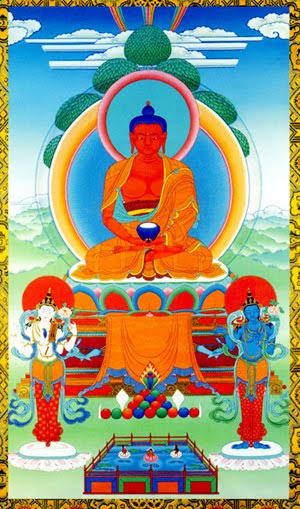
EH MA HO The wondrous Buddha Amitabha and

The Lord Avalokiteshvara to your right and

The Bodhisattva of power, Vajrapani, to your left,

Surrounded by a boundless retinue of Buddhas and Bodhisattvas,

Into the wondrous, immeasurably blissful

Pure Realm of Great Bliss (Dewachen),

May I, at the moment that I must transfer from this life,

Without any other births intervening,

Be reborn, to behold the face of Amitabha,

And through the force of this prayer I am making,

May the Buddhas and Bodhisattvas of the ten directions

Grant blessings to accomplish this prayer without interruption.

TA DYA THA PENTSA DRI YA AH WA BHO DHA NI SWAHA

Thus through this generation and completion stage meditation and mantra recitation, and

Whatever virtue I have and will accumulate in the three times,

May I enjoy a long life, without illness, and an increase of understanding and realization.

When the time comes to transfer from this life, by taking rebirth in the Realm of Great Bliss,

And seeing the precious face of Dharmakaya Buddha, Amitabha,

I shall obtain the ten stages, and from all the pure realms of the ten directions,

May I send forth manifestations to guide beings without exception!


Realize Your Natural State: Full Length Video Teaching

The following is a full length video teaching offered by Jetsunma Ahkon Lhamo:

Developing concepts based on the teachings of the Buddha is a good first step. But then one must apply the antidotes to purify perception to really realize the natural state of luminosity and compassion. Don’t mistake the concept for the actuality.

Copyright © Jetsunma Ahkon Lhamo.  All rights reserved

WP2Social Auto Publish Powered By : XYZScripts.com