Cause & Effect – It’s the Law

An excerpt from a teaching by Jetsunma Ahkon Lhamo from the Vow of Love series

The Buddha says that all sentient beings are suffering and that enlightenment is the cessation of suffering. But we forget that enlightenment is the cessation of suffering. As a Buddhist you say, “Oh, yes, I’ve learned that. I practice the Four Thoughts that Turn the Mind. Enlightenment is the cessation of suffering. I have that memorized.” Oh, really? I must ask you then, why do you still practice the technology of suffering? Because until you achieve supreme realization, you are still practicing the technology of suffering. You realize this, and yet you continually create the circumstances that make you suffer. Here is why we do that: we have forgotten the other infallible law, the law of the certainty of cause and effect.

We have a problem. We are locked in to our own limited perspectives. We are in finite bodies, therefore our minds perceive in a finite way, a way that is natural for a finite reality to be perceived. Within this context, we can see that certain cause and effect relationships are absolutely unchangeable, that they always happen, that they can’t be messed with. We can see that if we pick something up and then drop it, it will fall.

Now, you may say that cause and effect doesn’t always work. There is magic, there is prayer, there are miracles. Okay then, pick something up, anything, and drop it, and stop it from falling. Let me see you do it. Who can do it? If you can do it, then I am going to buy your story and the class is over. Until we can figure out how to do that, it is certain if something is dropped, it will fall. It is also certain if you stick your hand in fire for long enough, your flesh will burn. It is certain if you never eat you will starve. It is certain if you catch a disease you will be sick. These things we understand.

It is also certain that everybody gets old. But the strange thing about us is, while we are still young enough to have a little twinkle in our eye, we will continue to convince ourselves that we will never get old. What we do is unbelievable. I have done it myself, so I know. Each year we buy something new, a little wrinkle remover, a little under-eye cover-up, and each year we still convince ourselves that nothing has changed. Then eventually, none of that stuff works. Then we have two choices: we can either face the facts or consider surgery. Whatever we do, we are putting off the inevitable.

© Jetsunma Ahkön Lhamo
Use Your Awareness

An excerpt from a teaching by Jetsunma Ahkon Lhamo from the Vow of Love series

It is useful to really look around at sentient beings and see they are suffering. It is also useful to look at yourself. This is not meant to make you depressed or sad. It is meant to give you what it takes to go to the next step, which is to try to determine for yourself the way to remove the causes of suffering.

Even though there are times when hunger is not comfortable, when you would rather not think about it, there are also times when hunger is useful in that it keeps you alive. In the same way, while it may be uncomfortable for you to think that all sentient beings are suffering, it is actually quite useful for you to realize that. It is this realization that will give you the foundation and the ability to turn your mind in such a way that you have to seek out the causes of suffering, and how you can remove them from your mind.

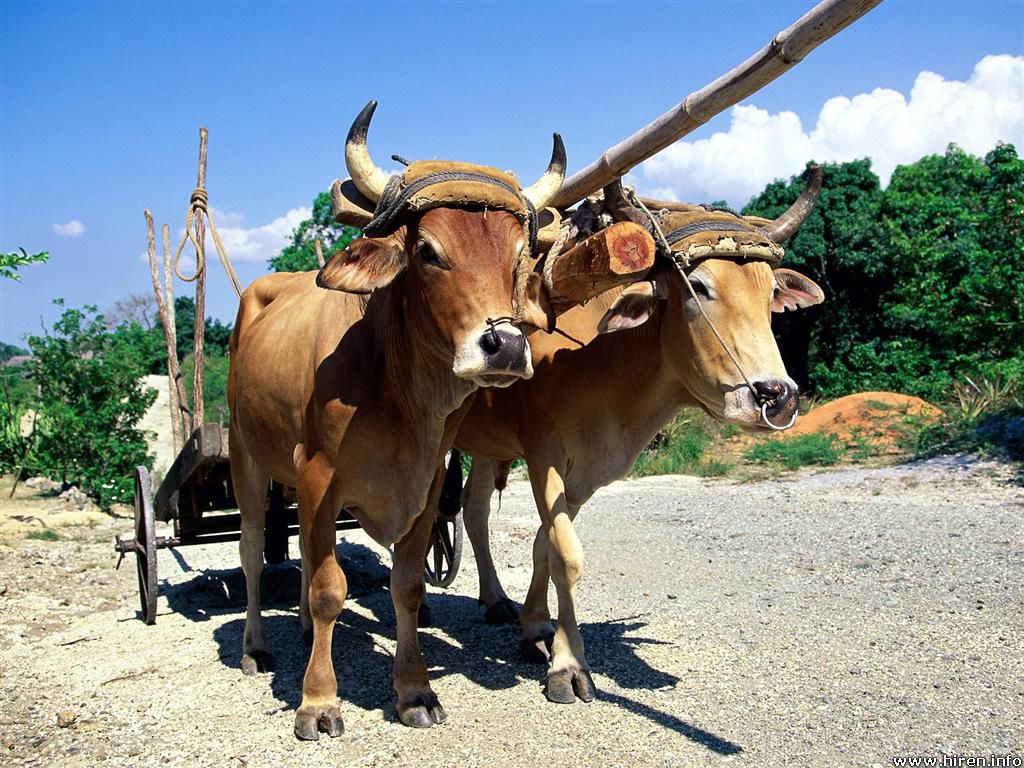
It is not useful in any long-term way to try to convince yourself, by putting a band-aid on an ulcer, that everything is okay, because you still have to face the same things that you’ve always had to face. Nothing has changed. You still have to face old age, sickness and death. Neither does it help you to be helpful to other sentient beings. Look at the animal realm. Go to India and see how the oxen are beaten and tied up in order to be worked. They are worked all of their lives. That is suffering. Look at all the different ways that other creatures suffer just out of ignorance, because they have no way to help themselves.

Once you have determined suffering does exist, there is no need to dwell on it in a morbid way. Rather, you should think, “This is how it is. Now I have to realize that there is, in fact, a cure, there is a way to deal with this.” It is not useful to dwell on suffering without also accepting the antidote. In other words, if you just think about hunger all the time, and you don’t eat, that is stupid. When hunger is no longer useful to you, it is simply suffering. You should use your awareness of suffering to prod you to seek and practice the antidote to suffering. Use your awareness; it is your tool.

© Jetsunma Ahkön Lhamo

Hard as Horn

An excerpt from a teaching by Jetsunma Ahkon Lhamo from the Vow of Love series

There is an expression in one of our prayers, that one’s mind becomes ‘hard as horn.’ The minute I first read that particular phrase, it touched me deeply. Every time I have thought about it, it has meant more and more to me. One’s mind becomes hard as horn because of the discrimination, the conceptualization that is involved with the idea of ego, because of the pride and arrogance that arise from our belief in self-nature as being inherently real. We have established in our minds all of the clothing, the dogma, the discrimination of this idea of self as being real. These things become rigid in our minds, and our minds are no longer gentle.

The moment you decide in some subconscious way you have an ego, that you are a self, you have to start gathering the constructs of self-identity around you. You have to determine where self ends and other begins. In order to do that your mind has to be filled with conceptualization. In order to be a self you have to survive as a self.  In order to maintain this conceptualization that makes survival possible, your mind has to become rigid. So if I say to you that your mind is rigid, you shouldn’t think I have insulted you. I am talking about a condition all sentient beings have, and it is a condition that is the cause of a great deal of suffering.

© Jetsunma Ahkön Lhamo

Animal Rescue and Practice

Toffee, mother of the litter
Toffee, Mother of the Litter of Rescued Puppies

Hello to one and all from Barnesville MD. Our Rescue family arrived early this morning. Oh, boy- Mama is emaciated, don’t know how she fed

Some pups are kind of plump, others not. There are 9 of them, thinking not all fed equally. We will feed a slurry of formula + canned food.

All 9 Rescued Puppies

We use an excellent food, EVO which has no grains, like their ancestral diet. It does have meat, veggies, and fruit.

Some of the pups can lap food, some prefer to walk through it. LOL. Funny, the skinnier ones don’t lap well. Toffee is a good Mom

So we go into the weekend part of the retreat completely exhausted. And the back’s out again. “Way to think it through,” Smartypants.

But what to do? The little ones would all have been exterminated by now. I guess they pile them in a box and gas them. Regrets? NONE!

I know method and practice ARE the way. So I am a “cushion Buddhist”. But I am not the kind that ignores the obvious suffering of others.

In truth, I don’t know that many Buddhists who practice all day retreat-style in the west. In fact we do have time to help sentient beings.

I hope you will all pray for this little family who still live by the power of LOVE.

One Little Girl in the Litter
One Little Girl

The Antidote

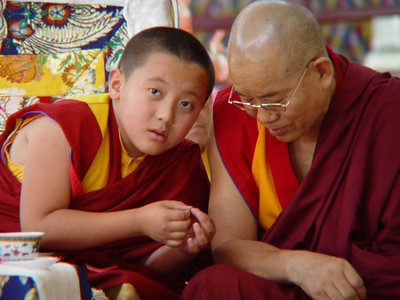
Ogyen Tendzin Jigme Lhundrup, with his teacher. He is considered to be the reincarnation of H.H. Dilgo Khyentse Rinpoche.

An excerpt from a teaching by Jetsunma Ahkon Lhamo from the Vow of Love series

The precepts that the Buddha laid down are real and workable for everyone. You don’t have to be a Buddhist to hold to these precepts. One of these is the realization that all sentient beings want to be happy, yet don’t have the skills or knowledge to achieve happiness. Another is the realization that because of our ineptness at capturing that happiness we make ourselves sad. In fact, the Buddha teaches us that all sentient beings are suffering because we don’t know how to attain happiness.

You don’t have to be a Buddhist to notice this is true. You don’t have to be a Buddhist to look around you, if you are willing to look with courageous eyes, and see that this is so, and you don’t have to be a Buddhist to use the antidote. That antidote is purity of conduct. It is purity in practice, whatever your practice might be. The antidote is the realization of compassion, which should be the core of one’s life. Of course, the Buddha’s teaching is more involved than this, but still one does not have to be a Buddhist to hold to these teachings. They are universal.

If you have been studying Buddhism for some time, you may think you have already learned the Buddha’s basic teachings that all sentient beings are suffering, that there is an antidote to suffering, that all sentient beings are trying to be happy, and that one needs to hold a compassionate viewpoint. But this is not true. You still need to hear these things.

No matter how long I teach, and no matter whom I teach, whether they are brand new to anything metaphysical, or whether they’ve gone on 20-year retreats, I will always address first and foremost the root reasons why one should practice. These basic beliefs are the foundational viewpoint that will encourage you to keep practicing, and, most especially, to keep practicing the idea of compassion.

There is never a time on your path when this is no longer necessary. In fact, the further you go on whatever path you choose – and specifically on the Buddhist path – you will meet up with challenges. You will invariably meet obstacles that make you feel tired and unwilling to go on. You will feel the pressures of living in the material world, especially living here in the West where we are so busy. It is a stretch to be a person committed to a spiritual path, whether it is the Buddhist path or not. It is a stretch because most of us have to earn a living and raise our families, and do all those things that are so time consuming. It is easy to fall back and say, “I’ll wait until later. I will wait until I’m older and more settled, or less busy.”

It is good to hear the Buddha’s foundational teachings. You shouldn’t think that if you’ve been a long-time Dharma student you are beyond all this. If you think that, then I have to tell you from my heart that you have a problem. I don’t think that, and I don’t know of any teacher who thinks that. Every teacher I have ever spoken to has told me to teach compassion first. Teach first the foundational teachings, and keep on that throughout your whole involvement with the Buddhist path.

© Jetsunma Ahkön Lhamo

Kindness is Universal

An excerpt from a teaching by Jetsunma Ahkon Lhamo from the Vow of Love series

To truly understand the mind of compassion is to understand suffering. To be willing to cultivate aspirational compassion and act in accordance with those aspirations, so that you fully intend to liberate your mind from the causes of suffering and fully intend to return in whatever form necessary in order to benefit beings.  In so doing, you’re on your way. Whether you call yourself a Buddhist or not, kindness is a universal term. No one’s got a corner on it. Compassion is not a word that the Buddha invented.

I am a Buddhist because I found this religion is the most useful way to benefit beings. This is my own determination. If you also determine this for yourself, then continue to do what you’re doing. Perhaps you’re heading towards studying Buddhism, or perhaps you are already studying it. But if you don’t want to become a Buddhist, that doesn’t let you off the hook! You still have to live a life of compassion.  No matter what path you’re following, compassion is the only way to realization. No matter whom you’re listening to, hatred, greed and ignorance are the causes for suffering. There is universality about all this. Whether you call yourself Buddhist or not, you still have a job to do. I suggest doing it by first cultivating the firm foundation of fervent aspiration to be of ultimate benefit, and by having the courage to look at the content and meaning of suffering and determining how best to overcome it.

© Jetsunma Ahkön Lhamo

The Power of Choice


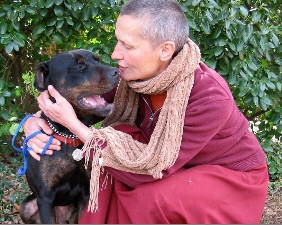
Ani Kunzang with Rosie from Taras Babies Animal Rescue

From a series of tweets by @ahkonlhamo:

I am now a #Vegan, but how can I rejoice when animals are still slaughtered and tortured for their flesh and skin every day?

I #rescue animals, but how can I be happy when dogs, puppies, cats and others are killed every day because they are inconvenient?

I wonder if we can ever overcome the hatred, callousness, lack of empathy, bigotry that have become so common, and invisible?

We treat the poor, those that disagree with us, animals, different ethnicity, or religion with no respect or dignity. And ACT pious.

If we are so callous, unloving, mean-spirited and cruel- what god do we serve besides the god of ego and habitual tendency? We are blind!

One should never preach without compassion for all. Or pontificate from ego or hate. It does no good and is a disservice to the world.

It’s not for me to tell people how to eat or how to live. But it IS for me to beg that all beings be loved and cherished, given dignity.

We can commit to adding love, joy, compassion and healing to the world every day. That’s a good day. A bad day is when we hurt thru hate.

We have the extraordinary capacity for choice, mindfulness, and LOVE. To use them is mastery of life! To ignore is to wallow in ignorance.

Please, for the sake of all sentient beings, choose well! #stopthehate #bringthelove #feedthepoor

Follow ahkonlhamo on Twitter

Tough Love

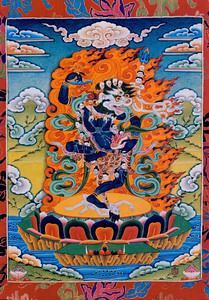
Singdolma

An excerpt from a teaching by Jetsunma Ahkon Lhamo from the Vow of Love series

Now, when we talk about practical compassion, it actually occurs on two levels. There’s a universal level, in the sense you care so much for all sentient beings that your goal is to do whatever is necessary to eliminate suffering for them all. But does that mean that if you see a hungry child you shouldn’t feed him? Or does that mean you shouldn’t be kind in an ordinary, human way? Ordinary compassion, ordinary human kindness is very important. But in understanding the Buddha’s teaching, it shouldn’t be the only thing you do. You have to live an ordinary, virtuous life, but you have to live an extraordinary life as well. The activity of kindness and compassion should have both a universal and an ordinary level.

On the other hand, I don’t believe in ‘idiot compassion.’  Have you ever heard of idiot compassion?  It is when you look at people who are needy and you see them going through their stuff, and you try to be so kind to them and give them what they need, or what they say they need. You actually don’t help them because you increase their dependency. You increase their willingness to tell you how much they need. You’re just helping them along; you’re playing with them. So I don’t believe in idiot compassion because it doesn’t help them. I believe that sometimes, real compassion has to be harsh.

In Buddhism, you see as many wrathful deities as you do peaceful deities. Why is that? Is it because the Buddha is half mean and half nice? I don’t think so. It’s because sometimes compassionate activity has to be a little wrathful. Sometimes it has to be a little aggressive. It depends. If you really are pure and your determination is to really be of benefit, and not just to be a nice guy, after training yourself in this way, you’ll know what to do. You won’t get hooked on idiot compassion. Everybody likes ‘feel-good’ stuff, but that doesn’t always help. You should, however, be a human being of virtue. You should be kind. You should be honest.

© Jetsunma Ahkön Lhamo

With Every Breath

Ven. Gyaltrul Rinpoche

An excerpt from a teaching by Jetsunma Ahkon Lhamo from the Vow of Love series

Everything that you do should have meaning. It’s important that your life be understood as a vehicle for practice. It’s the only thing that is meaningful: to make this life, which is so rich in opportunity, a vehicle by which you can come to benefit beings. This is the development of aspirational Bodhicitta. Every time you do something good, use that opportunity to dedicate it to the liberation of all beings. If you pat a little child on the head and it makes them smile, that’s a good thing. So you must think, “I dedicate the virtue of this action to the liberation and salvation of all sentient beings.” If you give money to somebody, pray, “I dedicate the virtue of this act to the liberation and salvation of all sentient beings.” You should continue like that in everything that you do. Make up your own prayer. You don’t have to use mine. Dedicate everything that you do so that it might go on, and grow, and be of use to benefit beings. Wean yourself from empty activity, activity that is useless and meaningless. Wean yourself from the need for ‘feel-good’ junk. Learn how to live a life in which your only concern is to liberate beings from the causes of suffering, because doing this is the only thing you can really feel good about. You aspire constantly through these prayers. You really train yourself to do this, and it should never stop.

After you are stable on the path of aspirational compassion, you have to think about concrete or practical compassion. You don’t forget aspirational compassion, saying, “Oh, I did that for a little while when I was a younger practitioner.” You should never stop. Never. I will never stop, and you should never stop. That’s not baby stuff. That’s the real stuff. Then you expand this to include practical compassion.

First you have to decide that the Buddha was right. You look at the Buddha’s teachings and you say, “If he’s right, then I have to think of some practical way to eliminate hatred, greed and ignorance from the world and from the mindstreams of myself and all sentient beings.”

Based on that you begin, and your practice should be deep and true. If you choose to be a Buddhist, the path is laid out, and the path is secure. It goes all the way to supreme realization. If you choose not to be a Buddhist, you still have to find a way to live a life of practical compassion, based on the goal of rooting hatred, greed and ignorance out of the mindstreams of yourself and all sentient beings. You should think that reciting many prayers on a regular basis for others could be of use. You should think activities that cause you to realize the emptiness of self-nature and therefore eliminate desire from your own mindstream would be of benefit. And that, finally, free of desire, when you are truly awake, as the Buddha said, you can go on to benefit others. You should be determined to liberate your own mind, and you should pray every day that you will return in whatever form necessary in order to liberate the minds of all sentient beings.

© Jetsunma Ahkön Lhamo

Remembering His Holiness Penor Rinpoche and Palyul

His Holiness Penor Rinopoche

It has been a year since HH Kyabje Penor Rinpoche’s Parinirvana, and we will be remembering Him while praying for His return.

Most Palyul centers worldwide will be gathering at the same times for Puja, Ceremony, etc. HHPR is so widely, deeply revered and cherished.

It would be my great joy and wish that every accomplishment in Palyul brought by HHPR be left exactly as it is, waiting for His return.

Sadly, that may not come to pass. Even though every blessing we all enjoy came from HHPR’s own vision, heart and precious hands.

Many things are being changed around. It will not be the same if it is not as HHPR envisioned. But Palyul is ancient, strong and powerful.

The Sacred visions of the Peerless Master Tulkus of Palyul will re-assert itself. Like a river too mighty to be thwarted it will remain.

I have learned well since the Parinirvana the strength and consummate skill of my Root Guru, what He had to deal with. I am awed by Him.

I remember so many times hearing “if you follow HHPR’s instructions perfectly all will be perfect”. In my mind that has not changed.

Therefore with sadness and joy I await His Incarnation, when all I have and have worked for for over 20yrs I will place in His Beloved hands

May I always be reborn in His Entourage, life after life, for the sake of all sentient beings. May all be Liberated by this Great Buddha!

WP2Social Auto Publish Powered By : XYZScripts.com