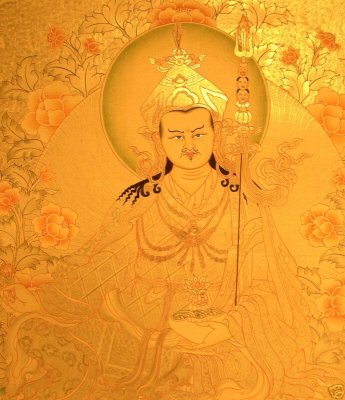
Patience: from “The Way of the Bodhisattva” by Shantideva

The following is respectfully quoted from “The Way of the Bodhisattva” by Shantideva:

27.
That which is referred to as the Primordial Substance,
That which has been labeled as the Self
Do not come into being thinking
“That is how I will arise.”

28.
That which is not manifest is not yet there,
So what could want to come to be?
And permanently drawn toward its object,
It can never cease from being so.

29.
Indeed! This Self if permanent,
Is certainly impassible like space itself.
And should it meet with other factors,
How should they affect it since it is unchanging?

30.
If, when things occur, it stays unchanged and as as before,
What influence has action had on it?
They say that this affects the Self,
But what connection could there be between them.

31.
All things, then, depend on something else;
On this depends the fact that none are independent.
Knowing this, we will not be annoyed at objects
That resemble magical appearances.

32.
“Resistance,” you may say, “is out of place,
For what will be opposed by whom?”
The stream of suffering is cut through by patience;
There’s nothing inappropriate in wanting that!

33.
Thus, when enemies or friends
Are seen to act improperly,
Be calm and call to mind
That everything arises from conditions.

34.
If things occurred to living beings
Following their wishes and intentions,
How could sorrow ever come to them–
For there is no one who desires to suffer!

35.
Yet carelessly, all unaware,
They tear themselves on thorns and briars;
And ardent in pursuit of wives and goods,
They starve themselves of nourishment.

36.
Some hang themselves up or leap into the void,
Or eat bad food or swallow deadly poison,
Or by their evil conduct
Bring destruction on themselves.

37.
For when affliction seizes them,
They kill themselves, the selves they love so much.
So how could they not be the cause
Of pain and suffering for others?

38.
And when, as victims of defilement,
Beings even cause their own destruction,
Even if compassion does not rise in us,
We can at least refrain from being angry.

39.
If those who are like wanton children
Are by nature prone to injure others,
What point is there in being angry–
Like resenting fire for its heat?

40.
And if their faults are fleeting and contingent,
If living beings are by nature wholesome,
It’s likewise senseless to resent them–
As well be angry at the sky for having clouds!

41.
Although indeed it is the stick that hurts me,
I am angry at the one who wields it, striking me.
But he is driven and impelled by anger–
So it is his wrath I should resent.

42.
I it was who in the past
Did harm to beings such as these.
And so, when others do me mischief,
It is only just that they should injure me.

43.
Their weapons and my body–
Both are causes of my suffering!
They their weapons drew, while I held out my body.
Who then is more worthy of my anger?

44.
This human form is like a running sore;
Merely touched, it cannot stand the pain!
I’m the one who clings to it with blind attachment;
Whom should I resent when pain occurs?

45.
We who are like senseless children
Shrink from suffering, but love its causes.
We hurt ourselves; our pain is self-inflicted!
Why should others be the object of our anger?


Taking Responsibility for Our Path

The following is an excerpt from a teaching by Jetsunma Ahkon Lhamo called “Neurotic Interaction to Guru Yoga” 

Today we are going to continue the process of looking at two main and fundamental foundational teachings associated with the Buddhadharma. We have examined and re-examined the Bodhicitta, which is one of the main foundational attitudes and practices and accomplishments that one should gather on the path, and now we are moving towards the Guru Yoga.  There are many areas in which these two subjects connect, and one has to develop the foundational thoughts, as I’ve indicated many times before, the thoughts that turn the mind towards Dharma. Also one has to develop the thoughts that make one understand the condition of sentient beings and the failings of samsara, or the sufferings of samsara.  If one were to understand these in a logical and realistic way, and go through the effort of contemplating them so that a real understanding is arrived at, and take responsibility for that, then it’s easy, or at least easier, to move into a deeper practice of the Guru Yoga, a deeper understanding of Bodhicitta, the twofold accomplishment of wisdom and knowledge.  These things are much more easily arrived at when one studies the foundational teachings. So try to remember that.  No matter what stage you’re at in practicing the path, one has to reorient oneself all the time.  It’s similar to, let’s say, you’re forty years old and you’ve had the experience of living for forty years so you have certain things about living that you’re comfortable with, that you’re certain about.  You know by this time the sun is most likely going to rise and set.

We find that if we are to continue to keep ourselves spiritually on the mark to where we feel satisfied about our spiritual practice, we find that periodically we have to reorient ourselves, and for some of us it might take different forms.  Many of us have realized by now that we need a certain amount of time spent alone in contemplation.  Many of us realize now that we need to reorient ourselves with nature—that one should align oneself with the cycles of life, the cycles of night and day, the cycles of the seasons, the natural directions and natural occurrences that occur in our world—and that is useful and good too.

When it comes to Dharma this is certainly the case, but the need here is more specific.  Yes, you may find that you do need a certain amount of time alone.  I think really that all people do. That you do need a certain amount of time out in nature and you do need a certain amount of meditation time and so forth and so on. But beyond that, particularly and specifically with Dharma, one needs to reorient oneself on the path by discovering and rediscovering again the faults of cyclic existence—the thoughts that turn the mind, the linking cause and effect conditions that we find in samsara.  Turning the mind—this is something that one needs to accomplish on a regular basis. There never is a time when you are actually finished with that.

So this is something that I speak about constantly. I know that you feel that you’ve already heard this.  I agree that you may have already had it meet with your ears, but the hearing part, well that’s a different story.  We don’t know if that’s actually happened yet or not, because the level of personal responsibility that I’m talking about is absolutely essential.

Copyright © Jetsunma Ahkon Norbu Lhamo.  All rights reserved

Words of Honor: Advice from HH Penor Rinpoche

hhpr1-bmp

The following is an excerpt from a teaching by Kyabje His Holiness Penor Rinpoche offered at Palyul Ling Retreat:

When I was in Tibet I studied all this Dharma with my teacher, Khenpo Nuden. He was a great Dzogchen master. We received the transmission on the four volume text called Duba Do, which he has composed. There were five of us receiving this Dharma. We all tried to maintain the disciplines of being very humble and respectful, and not disturbing the lama’s mind.

We also had another Khenpo with us. This Khenpo always had coughing fits. He was always coughing. To announce the start of class each morning, a gong would ring. But one morning nobody rang the gong. We went to the lama’s place anyway, and asked, “Why was there no gong?”  The lama was really angry and told us that there was no need to ring the gong. I went to him, and said, “It is time now. May I ring the gong?”   He said, “No.”  Then I asked, “Are you sick or something?”  And he said, “No, I’m not sick.”  Then I asked, “Did you have a disturbing dream?”  He said, “No.”  After asking a few questions, he said, “You guys are not really respecting me.”  Then I said, “We all do respect you. We are just trying to maintain good discipline.”  Then the lama said, “Well, you know Khenpo clears his throat a lot, coughing up stuff.”  What to do?  He had an illness. It was natural, but we told him not to be too loud. We made a commitment to maintain discipline, and then later the lama started the teaching. No one dared to cough loudly in front of the lama. Talking to each other or making noise or getting up and down in front of the lama never happened when we visited the lama. One should be careful when visiting the lama. There is a whole book that gives lessons on how to relate with the master.

Disturbing the lama’s mind a little bit obscures one’s path and bhumis. Once one actualizes these stages of realization and the path, then one can do whatever one wants to do. Until achieving the ultimate fruition, the Buddhahood, enlightenment, until then we must relate to and rely on a master. One should respect and follow, and through that one can receive the blessing. Then there is benefit. Even with millions of dollars, there is no way to buy the Dharma teaching  through which one can attain complete enlightenment. Because if there is even a tiny breakage of samaya, then it obscures one’s own power or realization. The life force of the Dharma is the words of honor, the samaya. Even though you guys are very good, it is still good to understand how these things should be done.


Waking Up from a Dream

An excerpt from a teaching called How to Pray by Being by Jetsunma Ahkon Lhamo

Sometimes when we dream, we know that we’re supposed to change something in the dream.  If we learn how to work in our dream state, through practices like dream yoga, we can actually wake up during the dream or hold the line between waking and dreaming and know exactly where we are.

There are many things that can be accomplished in dreams. That’s because the dream state is a bardo that’s not much different from our waking state. If we can train ourselves to wake up from a dream, why is it that we can’t train ourselves to wake up from our dualistic reality?  The reason is that we have experienced dreaming and something else—waking—so we can wake ourselves from a dream. We know where we are going. But we can’t wake ourselves up from this dream of our life because we don’t know what to awaken to. Yet it’s a dream just the same.

© copyright Jetsunma Ahkon Lhamo All rights reserved

The Power of a Bodhisattva

An excerpt from a teaching called How to Pray by Being by Jetsunma Ahkon Lhamo

I once asked His Holiness Penor Rinpoche, “What is a bodhisattva? What is a Buddha?” And he said, “It’s like this. Ordinary practitioner can practice their whole life and accomplish something. Perhaps they will accomplish a very auspicious rebirth or the chance to achieve a higher level of realization in their next life. But when bodhisattvas practice, even if they don’t sit down, even if they simply make a wish, (for example “I wish a temple would grow up here. I wish sentient beings would find a way to the path. I wish sentient beings would be happy on the path and revel in the strength of the path. I wish sentient beings would receive the connection of this blessing that absolves and dissipates suffering.”), the world is benefited beyond measure. That thing will be done because there is no separation between the lamas of the lineage and that bodhisattva.”

How can great bodhisattvas command that a thing be done? It comes from being fully mixed with the nectar of the bodhicitta, being fully aware that their nature is the bodhicitta. That is the power of the bodhisattvas and the Buddhas.  That’s why they can do miraculous things. When we think about His Holiness Penor Rinpoche, he just had a few monks but he built his tremendous monastery. He had nothing, and he became the king of the Nyingmapa, the king of Dharma. There is no one that surpassed His Holiness. Think about that.

© copyright Jetsunma Ahkon Lhamo All Rights Reserved

Self-absorption Leads to Unhappiness

An excerpt from a teaching called How to Pray by Being by Jetsunma Ahkon Lhamo

The Buddhist path is not a selfish trip. It’s not a self-absorbed trip. In fact, as Buddhist practitioners, we strive to become less and less self-absorbed. Being self-absorbed is the exact opposite of prayer–180 degrees away from it.  But most of us, unfortunately, have the habit of self-absorption, and so we spend most of our lives holding a prayer that is based on samsara. That has no good result. Without exception, self-absorbed people are the unhappiest people on the face of this earth, whether they have money or they don’t. Whether they have a home and a car or they don’t. Whether they live in a simple thatched hut or they live in a mansion, the people that are self absorbed and locked up in their own inner phenomena are the unhappiest people on the face of this earth.

The tragedy is that in our culture we are taught to think more about ourselves than about others. We are taught that if we buy cars and other stuff and maybe line up a few parties and relationships and line up a few fun retreats, we will be happy. That is simply not the case. Happiness never comes from self-absorption. It comes from being concerned about the welfare of other sentient beings.

© Jetsunma Ahkon Lhamo

The Guru’s Three-Part Empowerment

The most important part of the practice of Guru Yoga is when we receive the threefold empowerment from the guru. We receive the white light from the Guru’s head to our head to purify our body. We receive the red light from the Guru’s throat to our throat to purify and empower our speech. We receive the blue light from the Guru’s heart to our heart to purify and empower our mind. We should be receiving these empowerments 24 hours a day. Every time our mind has a little space, we should train ourselves to remember to receive the nectar of the Guru’s blessing. Instead, we walk around saying, “I’m lonely. I need my space. I need to go out and do stuff. I need to spend some money.” And we whine and carry on in samsara. And yet every minute this amazing phenomenal connection is available.

We should develop the habit of constantly keeping that connection. Whenever we have a moment, we should recite the Seven Line Prayer and ask for the guru’s blessing. And then we have it –boom, boom, boom—because when we ask, it is always given. There is never a time that when we ask, that it is not given. It may happen that we can’t receive the blessing sometimes. But we just keep trying. It’s simply our habit, and habits can change.

This is prayer without ceasing. This is constant prayer. This is a personal version of what we’re trying to do here at KPC by having our 24-hour prayer vigil, with someone practicing all the time. It is developing a constant awareness of our non-duality with the guru.

As we practice, the experience deepens. When we do our sit-down practice, the empowerments become easier to receive. We will find that we can go deeper and deeper and deeper. Then when we receive that three-part empowerment, our mind will be mixed with the guru and all the blessings will be present.  But be careful: Pride will stop the blessing.

So we wire up. We take refuge and are anchored in our confidence. We know, “This is my guru; I am unshaken.  This is the method; I am unbroken.  This is the result that I am going toward.” We maintain that connection constantly. Any time we have a moment, we recall our root guru appearing as Guru Rinpoche and receive the empowerments, mixing our mind with the guru’s mind. That’s the way to awaken to non-duality. That’s the way to awaken to our nature. When we mix our mind with the guru’s, we are deeply empowered with the bodhicitta. We can hear the calls of the suffering ones. They will fill our ears.

When we take this empowerment and we mix our mind with the nectar of the Three Precious Jewels, then we can pray. We can see ourselves as the same as the guru in nature, not in a prideful sense. Having received the blessing of the guru and of all the masters of the lineage, we are now able to pray.  We can ease the suffering of sentient beings.  Why?  Because we have the merit of our lineage. Now we can take within us the suffering of sentient beings because we can handle it. We have the power of the vajra masters.  That is our joy, our bliss, our ecstasy. We are never separate from them.

So prayer comes when we are in a state of awakening–when the bodhicitta that is the nectar of the guru’s mind is mixed inseparably with our own mind. Then we can pray: we can speak with the authority of the bodhicitta, in the way of the bodhicitta.

Do you hear the sense of potency I am trying to describe?  It is a sense of being fully mixed with the nectar of bodhicitta, fully aware that our nature is the bodhicitta. It is the bodhicitta that benefits sentient beings. When we are aware that we are the bodhicitta, it is this that we send to others. That is the power of the bodhisattvas and the Buddhas.

When we are that bodhicitta, we can awaken the bodhicitta in others just by looking at them. I know from experience that when His Holiness Penor Rinpoche looked at my heart, my heart was his and it opened. He recognized the bodhicitta in me, and I practiced to mix my mind with his. And therefore it was done. And that’s the potency of prayer. Now I can pray.

There is no room for pride in prayer—just simple gratitude for receiving the blessing of the guru in a humble way, with confidence in that blessing. Because of that blessing, we can pray. Now we have the bodhicitta; now we are the bodhicitta. And that is the potency and power upon which we rely.

The Buddhadharma is with us every minute. It’s a path, a way of life. And it is the true method to achieve the precious awakening. When we know that other beings are suffering so terribly, and we have found this jewel and it is in our hands and this nectar is given freely, I ask you: Why not learn to pray?

© Jetsunma Ahkon Lhamo

Experiencing Bodhicitta through the Guru Yoga

An excerpt from a teaching called How to Pray by Being by Jetsunma Ahkon Lhamo

We must practice guru yoga. Without guru yoga, we will never learn to pray properly. Guru yoga is the nest in which our prayers are developed. In guru yoga we see the lama as the embodiment of all the fields of refuge—all of the excellent, extraordinary displays of Buddha nature that did not arise in samsara, that are pure and untainted.

The lama is our boat across the ocean of suffering. A proper lama, from an unbroken lineage who is free of suffering and delusion and motivated by compassion, has made that trip before and knows how to get across. If we practice the Dharma correctly, we will see that lama in a way we’ve never seen anyone else before. We can then approach the lama like a child, without judgment. We can ask kindly and without fear, “Will you help me?”

Now, of course, judgments will rise up in our mind because that is our habitual tendency. But that then becomes our battleground. That is where we take a stand and draw the line. Once we’ve put our trust in the lama, we say, “I know that you have been taught by the great lamas that have been taught by the great lamas that have been taught by the great lamas, and all of them in an unbroken lineage have achieved enlightenment.” We realize that the lama is the door to liberation, and we do whatever it takes to walk through that door—whether it’s getting down on our knees, challenging our habitual tendencies or changing.

We have to be willing to change. Dharma cuts like a knife. It’s supposed to; it’s doing a big job. And we have a lot of work to do because most of our life we’ve spent chanting the mantra of samsara, the mantra of self-absorption. So we look to the teacher. We look to the Buddha. We look to the Dharma. We look to the Sangha. We look with determination, strength and courage or vajra pride.

Vajra pride, the courage to say, “I’m going through the door of liberation,” does not come from the ego. It is not ordinary pride. Instead it is steadfastness and determination to change utterly and completely. Do you know what prayer is?  Prayer is this (makes a cutting motion and rips open her chest). That’s prayer.

Through the practice of Guru Yoga, we become absolutely non-dual with the guru. That is the wish and the hope. That is also the method and the way. We mix our mindstream with the guru like mixing milk with water. And they can mix perfectly and constantly.

We practice the ngundro Guru Yoga and we practice the Shower of Blessings, and that’s a wonderful place to start, but how many minutes do we miss? How much time do we miss playing around in ordinary puddles—ordinary reality—when the ocean of wisdom is within reach?

The lama is not a separate person who we only get to see every now and then. When we see the lama, we are looking at the Nirmanakaya form of the Buddha. Guru Rinpoche himself said, “I will be there in the form of your root guru.  When you call out to me, I will be there.”

© Jetsunma Ahkon Lhamo

Vigilance: From “The Way of the Bodhisattva” by Shantideva

The following is respectfully quoted from “The Way of the Bodhisattva” by Shantideva as translated by the Padmakara Translation Group and published by Shambhala:

Vigilance

1.
Those who wish to keep a rule of life
Must guard their minds in perfect self-possession.
Without this guard upon the mind,
No discipline can ever be maintained.

2.
Wandering where it will, the elephant of the mind,
Will bring us down to pains of deepest hell.
No worldly beast, however wild,
Could bring upon us such calamities.

3.
If, with mindfulness’ rope,
The elephant of the mind is tethered all around,
Our fears will come to nothing,
Every virtue drop into our hands.

4.
Tigers, lions, elephants, and bears,
Snakes and every hostile beast,
Those who guard the prisoners in hell,
All ghosts and ghouls and every evil phantom,

5. By simple binding of this mind alone,
All these things are likewise bound.
By simple taming of this mind alone,
All these things are likewise tamed.

6.
For all anxiety and fear,
All sufferings in boundless measure,
Their source and wellspring is the mind itself,
Thus the Truthful One has said.

7.
The hellish whips to torture living beings–
Who has made them and to what intent?
Who has forged this burning iron ground;
Whence have all these demon women sprung?

8.
All are but the offspring of the sinful mind,
Thus the Mighty One has said.
Thus throughout the triple world
There is no greater bane than mind itself.

9.
If transcendent giving is
To dissipate the poverty of beings,
In what way, since the poor are always with us,
Have former buddhas practiced perfect generosity?

10.
The true intention to bestow on every being
All possessions–and fruits of such a gift;
By such, the teachings say, is generosity perfected.
And this, as we may see, is but the mind itself.

11.
Where, indeed, could beings, fishes, and the rest
Be placed, to shield them from suffering?
Deciding to refrain from harming them
Is said to be the perfection of morality.

12.
The hostile multitudes are vast as space–
What chance is there that all should be subdued?
Let but this angry mind be overthrown
And every foe is then and there destroyed.

13.
To cover all the earth with sheets of hide–
Where could such amounts of skin be found?
But simply wrap some leather round your feet,
And it’s as if the whole earth had been covered!

14.
Likewise, we can never take
And turn aside the outer course of things.
But only seize and discipline the mind itself,
And what is there remaining to be curbed?

15.
A clear intent can fructify
And bring us birth in lofty Brahma’s realm.
The acts of body and of speech are less–
They do not generate a like result.

16.
Recitations and austerities,
Long though they may prove to be,
If practiced with distracted mind,
Are futile, so the Knower of the Truth has said.

17.
All who fail to know and penetrate
This secret of the mind, the Dharma’s peak,
Although they wish for joy and sorrow’s end,
Will wander uselessly in misery.

18.
This is so, and therefore I will seize
This mind of mine and guard it well.
What use to me so many harsh austerities?
But let me only discipline and guard my mind!

19.
When in wild, unruly crowds
We move with care to shield our broken limbs,
Likewise when we live in evil company,
Our wounded minds we should not fail to guard.

20.
For if I carefully protect my wounds
Because I fear the hurt of cuts and bruises,
Why should I not guard my wounded mind,
For fear of being crushed beneath the cliffs of hell?

21.
If this is how I act and live,
Then even in the midst of evil folk,
Or even with fair women, all is well.
My diligent observance of the vows will not decline.

22.
Let my property and honor all grow less,
And likewise all my health and livelihood,
And even other virtues–all can go!
But never will I disregard my mind.

23.
All you who would protect your minds,
Maintain awareness and your mental vigilance.
Guard them both, at the cost of life and limb–
Thus I join my hands, beseeching you.

24.
Those disabled by ill health
Are helpless, powerless to act.
The mind, when likewise cramped by ignorance,
Is impotent and cannot do its work.

25.
And those who have no mental vigilance,
Though they may hear the teachings, ponder them or meditate,
With minds like water seeping from a leaking jug,
Their learning will not settle in their memories.

26.
Many have devotion, perseverance,
Are learned also and endowed with faith,
But through the fault of lacking mental vigilance,
Will not escape the stain of sin and downfall.

27.
Lack of vigilance is like a their
Who slinks behind when mindfulness abates,
And all the merit we have gathered in
He steals, and down we go to lower realms.

28.
Defilements are a band of robbers
Waiting for their chance to bring us injury.
They steal our virtue, when their moment comes,
And batter out the life of happy destinies.

29.
Therefore, from the gateway of awareness
Mindfulness shall not have leave to stray.
And if it wanders, it shall be recalled,
By thoughts of anguish in the lower worlds.

30.
In those endowed with fortune and devotion,
Mindfulness is cultivated easily–
Through fear, and by the counsels of their abbots,
And staying ever in their teacher’s company.

31.
The buddhas and bodhisattvas both
Possess unclouded vision, seeing everything:
Everything lies open to their gaze,
And likewise I am always in their presence.

32.
One who has such thoughts as these
Will gain devotion and a sense of fear and shame.
For such a one, the memory of Buddha
Rises frequently before the mind.

33.
When mindfulness is stationed as a sentinel,
A guard upon the threshold of the mind,
Mental scrutiny is likewise present,
Returning when forgotten or dispersed.

34.
If at the outset, when I check my mind,
I find some fault or insufficiency,
I’ll stay unmoving, like a log,
In self-possession and determination.

35.
I shall never, vacantly,
Allow my gaze to wander about,
But rather with a focused mind
Will always go with eyes cast down.

36.
But that I might relax my gaze,
I’ll sometimes raise my eyes and look around.
And if some person stands in my sight,
I’ll greet him with a friendly word of welcome.

37.
And yet, to spy the dangers on the road,
I’ll scrutinize the four directions one by one.
And when I stop to rest, I’ll turn my head
And look behind me, back along my path.

38.
And so, I’ll spy the land, in front, behind,
To see if I should go or else return.
And thus in every situation,
I shall know my needs and act accordingly.

39.
Deciding on a given course,
Determining the actions of my body,
From time to time I’ll verify
My body’s actions, by repeated scrutiny.

40.
This mind of mine, a wild and rampant elephant,
I’ll tether that sturdy post: reflection on the Teaching.
And I shall narrowly stand guard
That it might never slip its bonds and flee.

41.
Those who strive to master concentration
Should never for an instant be distracted.
They should constantly investigate themselves,
Examining the movements of their minds.

42.
In fearful situations, times of celebration,
One may desist, when self-survey becomes impossible.
For it is taught that in the times of generosity,
The rules of discipline must be suspended.

43.
When something has been planned and started on,
Attention should not drift to other things.
With thoughts fixed on the chosen target,
That and that alone should be pursued.

44.
Behaving in this way, all tasks were performed,
And nothing is achieved by doing otherwise.
Afflictions, the reverse of vigilance,
Can never multiply if this is how you act.

45.
And if by chance you must take part
In lengthy conversations worthlessly,
Or if you come upon sensational events,
Then cast aside delight and taste for them.

46.
If you find you’re grubbing in the soil,
Or pulling up the grass or tracing idle patterns on the ground,
Remembering the teachings of the Blissful One,
In fear, restrain yourself at once.

47.
When you feel the wish to walk about,
Or even to express yourself in speech,
First examine what is in your mind.
For they will act correctly who have stable minds.

48.
When the urge arises in the mind
To feelings of desire or wrathful hate,
Do not act! Be silent, do not speak!
And like a log of wood be sure to stay.

49.
When the mind is wild with mockery
And filled with pride and haughty arrogance,
And when you want to show the hidden faults of others,
To bring up old dissensions or to act deceitfully,

50.
And when you want to fish for praise,
Or criticize and spoil another’s name,
Or use harsh language, sparring for a fight,
It’s then that like a log you should remain.

51.
And when you yearn for wealth, attention, fame,
A circle of admirers serving you,
And when you look for honors, recognition–
It’s then that like a log you should remain.

52.
And when you want to do another down
And cultivate advantage for yourself,
And when the wish to gossip comes to you,
It’s then that like a log you should remain.

53.
Impatience, indolence, faint heartedness,
And likewise haughty speech and insolence,
Attachment to your side–when these arise,
It’s then that like a log you should remain.

54.
Examine thus yourself from every side.
Note harmful thoughts and every futile striving.
Thus it is that heroes in the bodhisattva path
Apply the remedies to keep a steady mind.

55.
With perfect and unyielding faith,
With steadfastness, respect, and courtesy,
With modesty and conscientiousness,
Work calmly for the happiness of others.

56.
Let us not be downcast by the warring wants
Of childish persons quarreling.
Their thoughts are bred from conflict and emotion.
Let us understand and treat them lovingly.

57.
When doing virtuous acts, beyond reproach,
To help ourselves, or for the sake of others,
Let us always bear in mind the thought
That we are self-less, like an apparition.

58.
This supreme treasure of a human life,
So long awaited, now at last attained!
Reflecting always thus, maintain your mind
As steady as Sumeru, king of mountains.

59.
When vultures with their love of flesh
Are tugging at this body all around,
Small will be the joy you get from it, O mind!
Why are you so besotted with it now?

60.
Why, O mind, do you protect this body,
Claiming it as though it were yourself?
You and it are each a separate entity,
How ever can it be of use to you?

61.
Why not cling, O foolish mind, to something clean,
A figure carved in wood, or some such thing?
Why do you protect and guard
An unclean engine for the making of impurity?

62.
First, with mind’s imagination,
Shed the covering of skin,
And with the blade of wisdom, strip
The flesh from bony frame.

63.
And when you have divided all the bones,
And searched right down amid the very marrow,
You should look and ask the question:
Where is “thingness” to be found?

64.
If, persisting in the search,
You find no underlying object,
Why still cherish–and with such desire–
The fleshy form you now possess?

65.
Its filth you cannot eat, O mind:
Its blood likewise is not for you to drink;
Its innards, too, unsuitable to suck–
This body, what then will you make of it?

66.
As second best, it may indeed be kept
As food to feed the vulture and the fox.
The value of this human form
Lies only in the way that it is used.

67.
Whatever you may do to guard and keep it,
What will you do when
The Lord of Death, the ruthless, unrelenting,
Steals and throws it to the birds and dogs?

68.
Slaves unsuitable for work
Are not rewarded with supplies and clothing.
This body, though you pamper it, will leave you–
Why exhaust yourself with such great labor?

69.
So pay this body due remuneration,
But then be sure to make it work for you.
But do not lavish everything
On what will not bring perfect benefit.

70.
Regard your body as a vessel,
A simple boat for going here and there.
Make of it a wish-fulfilling gem
To bring about the benefit of beings.

71.
Thus with free, untrammeled mind,
Put on an ever-smiling countenance.
Rid yourself of scowling, wrathful frowns,
And be a true and honest friend to all.

72.
Do not, acting inconsiderately,
Move furniture and chairs so noisily around.
Likewise do not open doors with violence.
Take pleasure in the practice of humility.

73.
Herons, cats, and burglars
Go silently and carefully;
This is how they gain what they intend.
And one who practices this path behaves likewise.

74.
When useful admonitions come unasked
To those with skill in counseling their fellows,
Let them welcome them with humble gratitude,
And always strive to learn from everyone.

75.
Praise all who speak the truth,
And say, “Your words are excellent.”
And when you notice others acting well,
Encourage them in terms of warm approval.

76.
Extol them even in their absence;
When they’re praised by others, do the same.
But when the qualities they praise are yours,
Appreciate their skill in knowing qualities.

77.
The goal of every act is happiness itself,
Though, even with great wealth, it’s rarely found.
So take your pleasure in the qualities of others.
Let them be a heartfelt joy to you.

78.
By acting thus, in this life you’ll lose nothing;
In future lives, great bliss will come to you.
The sin of envy brings not joy but pain,
And in the future, dreadful suffering.

79.
Speak with honest words, coherently,
With candor, in a clear, harmonious voice.
Abandon partiality, rejection, and attraction,
And speak with moderation, gently.

80.
And catching sight of others, think
That it will be through them
That you will come to buddhahood.
So look on them with open, loving hearts.

81.
Always fired by highest aspiration,
Laboring to implement the antidotes,
You will gather virtues in the fields
Of qualities, of benefits, of sorrow.

82.
Acting thus with faith and understanding,
You will always undertake good works.
And in whatever actions you perform,
You’ll not be calculating, with your eye on others.

83.
The six perfections, giving and the rest,
Progress in sequence, growing in importance.
The great should never be supplanted by the less,
And it is others’ good that is the highest goal.

84.
Therefore understand this well
And always labor for the benefit of beings.
The far-seeking masters of compassion
Permit, to this end, that which is proscribed.

85.
Eat only what is needful;
Share with those who have embraced discipline.
To those, defenseless, fallen into evil states,
Give all except the three robes of religion.

86.
The body, apt to practice sacred teaching,
Should not be harmed in trivial pursuits.
It this advice is kept, the wishes of all beings
Will swiftly and completely be attained.

87.
They should not give up their bodies
Whose compassion is not pure and perfect.
But let them, in this world and those to come,
Subject their bodies to the service of the supreme goal.

88.
Do not teach to those without respect,
To those who like the sick wear cloths around their heads,
To those who proudly carry weapons, staffs or parasols,
And those who keep their hats upon their heads.

89.
Do not teach the vast and deep to those
Upon the lower paths, nor, as a monk,
To women unescorted. Teach with equal honor
Low and high according to their path.

90.
Those suited to the teachings vast and deep,
Should not be introduced to lesser paths.
But basic practice you should not forsake,
Confused by talk of sūtras nd of mantras.

91.
Your spittle and your toothbrushes,
When thrown away, should be concealed.
And it is wrong to foul with urine
Public thoroughfares and water springs.

92.
When eating do not gobble noisily,
Nor stuff and cram your gaping mouth.
And do not sit with legs outstretched,
Nor rudely rub your hands together.

93.
Do not sit upon a horse, on beds or seats,
With women of another house, alone.
All that you have seen, or have been told,
To be offensive–this you should avoid.

94.
Not rudely pointing with your finger,
But rather with a reverent gesture showing,
With the whole right hand outstretched–
This is how to indicate the road.

95.
Do not wave your arms with uncouth gestures.
With gentle sounds and finger snaps
Express yourself with modesty–
For acting otherwise is impolite excess.

96.
Lie down to sleep with posture and direction
Of the Buddha when he passed into nirvāna.
And first, with clear resolve,
Decide that you’ll be swift to rise again.

97.
The bodhisattva’s acts
Are boundless, as the teachings ay,
And all these practices that cleanse the mind
Embrace–until success has been attained.

98.
Reciting thrice, by day, by night,
The Sūtra in Three Sections,
Relying on the buddhas and the bodhisattvas,
Purify the rest of your transgressions.

99.
And therefore in whatever time or place,
For your own good and for the good of others,
Be diligent to implement
The teachings given for that situation.

100.
There is indeed no virtue
That the buddha’s offspring should not learn.
To one with mastery therein,
There is no action destitute of merit.

101.
Directly, then, or indirectly,
All you do must be for others’s sake.
And solely for their welfare dedicate
Your actions for the gaining of enlightenment.

102.
Never, at the cost of life or limb,
Forsake your virtuous friend, your teacher,
Learned in the meaning of Mahāyāna,
Supreme in practice of the bodhisattva path.

103.
For thus you must depend upon your guru,
And you will find described in Shrī Sambhava’s life,
And elsewhere in the teachings of the Buddha:
These be sure to study, reading the sūtras.

104.
The training you will find described
Within the sūtras. Therefore read and study them.
The Sūtra of the Essence of the Sky–
This is the text that should be studied first.

105.
The Digest of All Disciples
Contains a detailed and extensive explanation
Of all that must be practiced come what may.
So this is something you should read repeatedly.

106.
From time to time, for the sake of brevity,
Consult the Digest of the Sūtras.
And those two works pursue with diligence.
The noble Nāgārjuna has composed.

107.
Whatever in these works is not proscribed
Be sure to undertake and implement.
And what you see there, perfectly fulfill,
and so safeguard the minds of worldly beings.

108.
To keep a guard again and yet again
Upon the state of actions of our thoughts and deeds–
This and only this defines
The nature and the sense of mental watchfulness.

109.
But all this must be acted out in truth,
For what is to be gained by mouthing syllables?
What invalid was ever helped
By merely reading in the doctor’s treatises?

 

WP2Social Auto Publish Powered By : XYZScripts.com