About Wisdom

An excerpt from a teaching called Compassion, Love, & Wisdom by Jetsunma Ahkon Lhamo

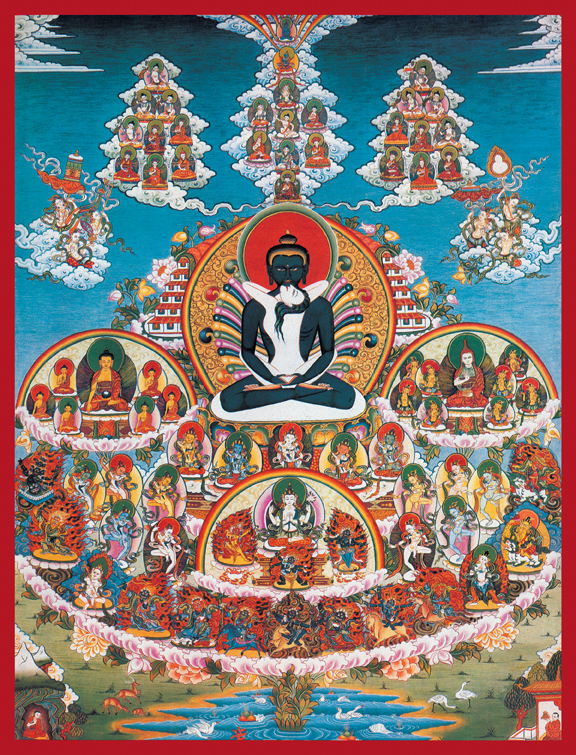
We are going to talk about something that is very core to the Buddha’s teaching and that you will hear about again and again as you continue to practice on the Buddha’s path. This subject is compassion. It is about love and the primordial wisdom state or true nature, and how these things relate and come together in a meaningful way.  We think wisdom is a thing that can be accumulated in the same way that we accumulate clothing or jewelry or cars, and we think that the way to accomplish wisdom is to keep on learning more and more.  We think wisdom is a series of facts or items that we can learn and list. But wisdom is something quite different in Buddhist philosophy.

Wisdom is less like something that you can accumulate; it is more like the realization of what is pure and natural, what underlies the phenomena that we create and the conceptual proliferation that is the mindstream we experience.  Wisdom is the realization of the emptiness of self-nature and the emptiness of all phenomena. Thus the popular idea that we as Westerners have of accumulating wisdom is incorrect, according to the Buddha’s view.  We tend to think we will continue in a progressive way, always increasing our knowledge, always increasing our wisdom and always increasing our ability.  According to the Buddha that is not correct.  In fact the opposite is actually true.

In a sense you could say that true wisdom is the less and less you know if you think of knowing as based on some concept or idea.  The less ideation that one experiences the closer one is to the primordial wisdom state, the closer one is to the relaxation of one’s mind. That is wisdom.  We think we will necessarily become wiser as we grow older, or that we will necessarily become more knowledgeable as we gain more education.  That is not necessarily the case according to the Buddha.  The things we accumulate as we grow older aren’t wisdom at all, they are ideas.  They are conclusions; they are conceptualizations, such as the idea that as you grew older you learned to be more optimistic.  Whatever your idea is, whether it is concrete or abstract, so long as it is conceptualization, so long as it is ideation, so long as it is experienced as a concept that one forms and seems to contain itself, it is not the traditional view of wisdom.  That is considered knowledge and knowledge is something you can learn.  Even on the Buddha’s path there is tremendous value in accomplishing the scholastic knowing of the Buddha’s teaching. That kind of knowledge is important and it is one of the components of wisdom, especially if that knowledge is used to accomplish the realization of the primordial wisdom state. For example, let’s say you learn all of the philosophy of the Buddha’s path and then you learn the technology, learn how to accomplish sadhana practice and how to do puja. You learn how to practice Tsalung and you go on to all of the most profound teachings that Vajrayana Buddhism has to offer. If you learn all about those different things and you are very skilled at them, and you go on to practice them, then the knowledge that you gained becomes part of the process of gaining wisdom or of realizing the natural state. You use the skills you have accumulated through gaining knowledge in order to accomplish wisdom.  The difference is necessary to understand.

On the Mahayana path the accumulation of knowledge and the realization of the primordial wisdom state, or the realization of the natural state, are components that are interdependent. It is unlikely that you will simply be able to sit down knowing nothing about meditation and accomplish the realization of the primordial wisdom state.  It is essential to get from the teacher what is necessary – the skills. It is necessary to get from the Buddha the milk, the nurturing of his direction and his teaching so that we can accomplish the Dharma. But true wisdom is understood not as something that one can collect, but as the realization of the natural state. That is the goal of the Buddha’s teaching.

© Jetsunma Ahkön Lhamo

Developing Spiritual Discrimination

An excerpt from the Mindfulness workshop given by Jetsunma Ahkon Lhamo in 1999

One of the things that is very unique about the Buddhadharma is that it is not a “Sunday-go-to-meeting” religion.  It’s not the kind of religion where you go on Sunday and Christmas and Easter, or whatever your particular holiday happens to be, and the rest of the year you’re just where you are.  Buddhism is different in that it is a path.  In a way, it is a nonreligious religion.  You have to think of it as a path that one walks consistently, faithfully, and deeply.  There is relatively little benefit from practicing Dharma in a superficial way.  Learning one or two mantras and walking around saying some prayers but not really training the mind in a deep and profound sense of the View will be a lot less effective. Also, our tendency is to become dry, and not remain moist on the path.  The heart dries up.  If there is no profound investment in establishing the View and establishing mindfulness, the result will be greatly weakened, greatly crippled.

Mindfulness is one of those subjects that one can take to the depths of one’s practice and its many aspects display themselves in different kinds of practice.  Before I talk about the first aspect of mindfulness, let me address some difficulties we have as Westerners, particularly. Because of the very nature of our culture, there are so many different things to do, and we are inundated with philosophies and religions, both old and new.  We are inundated with different kinds of experiences that people call “spiritual.”  The reason I’m so mindful of this is because I lived in Sedona, Arizona, and Sedona is known for that.  People mistake any kind of experience that feels deep as a “spiritual” experience, not able to discriminate between something that feels spiritual and something that is an actual commitment and movement on one’s path.  There really is a difference between a mantra and a backrub!  There really is a difference between the various experiences that people have that they call spiritual and an actual path that one practices consistently with the intention of benefiting beings.  This lack of spiritual discrimination is the greatest problem that we have in the West.  You can see how it is symbolically, even to go the grocery store.  If you send your child to the grocery store to buy bread, you’ll have to specify what kind of bread, what brand of bread, because on the shelf are a million different kinds of bread.  Other cultures might be a little bit different than that, especially third world cultures.  There, when you go to buy bread, you buy the bread they have, and that’s pretty much it.  Bread is bread.  In the same way, their faith is their faith.  It’s not something that one tastes and tries and then tries something else.  That discrimination is sort of built into the culture.  We don’t have that, so our need to practice discrimination is much stronger.  We have a tremendous need for that.

Discrimination is best practiced through changing one’s habitual tendency.  On the path of Buddhadharma, if you really step back from it and look at the different categories of practice, you’ll notice that, basically, the Buddhadharma is about applying the actual, exact antidote to the subtle and gross forms of suffering that we endure.  The Buddha has taught us that we suffer mostly from desire and that suffering is ongoing and that it is all-pervasive.  But we also notice that that desire takes many forms, so there are practices in the Buddhadharma that are meant to specifically pacify pride and ego and that ego-clinging self-cherishing.  There are practices in the Dharma that are meant to apply the exact antidote to a lack of generosity, to selfishness and greediness and just wanting, wanting, wanting — that kind of suffering.  There are practices in the Buddhadharma that are meant to help us shake ourselves out of the kind of slothful mental attitude that so many of us have which is a kind of sleepwalking that we do through the days and years of our lives.  This is actually a quality of mind and in Buddhism it’s labeled ignorance.  Ignorance is not lack of education in Buddhism; it’s lack of wisdom.   For that reactive or  slothful mind, where the mind doesn’t stop and evaluate and use its energy to determine whatever direction it’s going in, in the Buddhadharma there are antidotes to that as well.

In fact, when you study the Buddhadharma, you really have to think about the Buddha as being like a doctor and samsara as being like the sickness and the Dharma as the nurse that feeds the medicine to you all the time.  So in this spiritual discrimination, it isn’t a theoretical, vague idea.  This ideal of mindfulness, of discrimination, actually needs to be practiced in a very exacting way, for the very reason that we are in a culture that goes in exactly the opposite direction.  We are in a culture that does not teach discrimination, really, in any form, particularly about spiritual issues.

How can we practice spiritual discrimination?  How can we formulate that by which we can begin to grow the ability to distinguish?  How can we learn to discriminate between what is truly of the mind of the Buddhas and what is ordinary and simply arising from the phenomena of samsara? What is the method by which we can actually establish the View?  In the Buddhadharma, we are always looking to apply an exact antidote.  You have to think about samsara as being like a poison and that there is an exact formula that is the antidote to that poison.  In trying to develop discrimination and mindfulness, it is best to hold ourselves to a kind of ritual or task that is evident and visible.  One of the strongest antidotes to being stuck on the idea of self-nature as being inherently real, (which is really quite different from enlightenment) and for lack of spiritual discrimination – not being able to tell, in a spiritual sense, the difference between a diamond and a piece of cut glass — is called Guru Yoga.

Guru Yoga on the Vajrayana path is extraordinarily important.  It is not important because the Guru needs it nor because it’s even pleasant or fun for the Guru.  It is not for any ridiculous or stupid reason like that.  The reason that we practice Guru Yoga is because our minds, when they are samsaric and therefore fully engaged in the cycle of birth and death, are a little bit deadened, sort of flat-line.  Just the energy or pulse of engaging in a relationship between oneself, which appears separate, and other, constantly creates a feedback loop that makes for a kind of dullness and stupor.  This non-recognition of phenomena as actually being a display of our own mindstreams keeps the mind deadened to the View.  In that state, it is so like us to take a spiritual minister or presenter of some kind and, because they have tremendous charisma and slick words, because they have a real routine going, we would put them in high regard and think, “Oh, this must be the Word of God,” or  “This must be the Word of Spirit.”  There is the inability to discriminate between that and a very deep practitioner, a silent bodhisattva (one who has not been publicly recognized).  If a silent bodhisattva were to walk into the room, we wouldn’t sense that.  We wouldn’t know what that was because there’s no display, no show.  One of the methods that we use is this throne on which I sit, and it is not because I like it.  Actually, it’s kind of uncomfortable.  This throne is not here because it’s pretty, and it’s not here for any superficial reason.  The Lama sits higher in order to indicate to the student the difference between this speech and the speech we hear every day.  So in your mind, in the student’s mind, the throne is high, and it’s a reminder for you.  This is a clear indication that in our lives we need some kind of ritual or some kind of visible habitual pattern that we engage in, in order to develop true spiritual discrimination.

© Jetsunma Ahkön Lhamo

Request to Remain Firm

The following is a prayer from the Nam Chö Daily Practice Book from Palyul Ling International:

As the single source of benefit and bliss,
May the doctrine remain in this world indefinitely and
May those of supreme birth who uphold the precious doctrine,
Live long firm lives like banners of victory!
May the lives of the glorious spiritual teachers be firm and
May all sentient beings, who are equal in number to space, be well and happy.
Through myself and all others, accumulating merit and cleansing obscurations,
May we quickly be placed on the stage of Buddhahood.
I pray that the spiritual teachers may enjoy excellent health.
I pray for their supreme long life as well.
I pray that their enlightened activities may spread forth and expand.
Grant blessings to never be separated from my spiritual teachers.
May myself and limitless beings without exception,
By the root of this very virtue,
Completely cleanse the karmic negativities and obscurations of all lifetimes,
And be liberated in the expanse of the profound Dharma treasury.

The Emanation of Primordial Wisdom

The following is a teaching given live by Jetsunma Ahkon Lhamo at Kunzang Palyul Choling in Poolesville, Maryland on May 22, 2016


Jetsunma Ahkon Lhamo gives a pith teaching on how Primordial Wisdom displays to us. She concludes with stories about the bear that’s tearing up the fence.

© Jetsunma Ahkön Lhamo All Rights Reserved

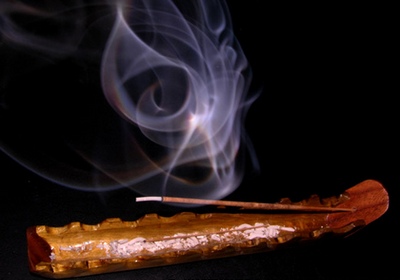
Incense Offering

The following is a prayer from the Namchö Daily Practice Book from Palyul Ling International:

TSUL TRIM DRI DEN PÖ CHOG DAM PA DI
This pure supreme incense, which bears the scent of pure moral self-discipline,

TING DZIN NGAG DANG CHAG JYAI JYIN LAB KYI
By the blessings of mantra, mudra and samadhi

SANG GYÉ SHING DU PÖ DRI NGED DANG WA
Is offered to the realms of the Buddhas. May this fragrant incense

GYAL WA GYA TSÖI TSOG NAM NYE GYUR CHIG
Completely please and satisfy the ocean-like assembly of Buddhas!

NAMA SARWA TATHAGATA BENZA DUPE PRATITSA PUDZA MEGHA SAMUDRA SA PHA RA NA SAMAYE AH HUNG

Prayer: The Gurus of the Six Realms

The following is a prayer from “The Great Perfection Buddha in the Palm of the Hand: The Lama’s Oral Instructions Upon the Recitation and Visualization of the Preliminary Practice of Ngondro” as revealed by Vidydhara Terton Migyur Dorje

The syllable GURU is the Guru in the hell realms, Guru Nampar-nön.

Reddish-black in color, he holds a vajra and a scorpion,

Protecting all beings in hell from the suffering of heat and cold.

The syllable PED is the Guru in the hungry spirit realm, Guru Nam-nang-ched.

Maroon in color, he holds a vajra and an iron phurba,

Protecting all hungry spirits from the suffering of hunger and thirst.

The syllable MA is the Guru in the animal realm, Guru Seng-ha-ten,

Blue-black in color, he holds a damaru and bell,

Protecting all animals from the suffering of inferior persecution,

The syllable SID is the Guru in the human realm, Guru Pema Jung.

White and red in color, he holds a skull and a vajra,

Protecting all humans from the suffering of birth, old age, sickness and death.

The syllable DHI is the Guru in the jealous gods realm, Guru Nam-par-gyal.

The color of smoke, he holds a Khatvanga and skull,

Protecting all jealous gods from the suffering of competitive warfare.

The syllable HUNG is the Guru in the god realm, Guru Sid-thub-dzin.

Yellow-white in color, he holds a vajra and bell,

Protecting all gods from the suffering of falling to the lower realms.

These six Gurus protect beings from the suffering of the six realms.

(Here one may repeat the Vajra Guru Mantra as many times as possible)

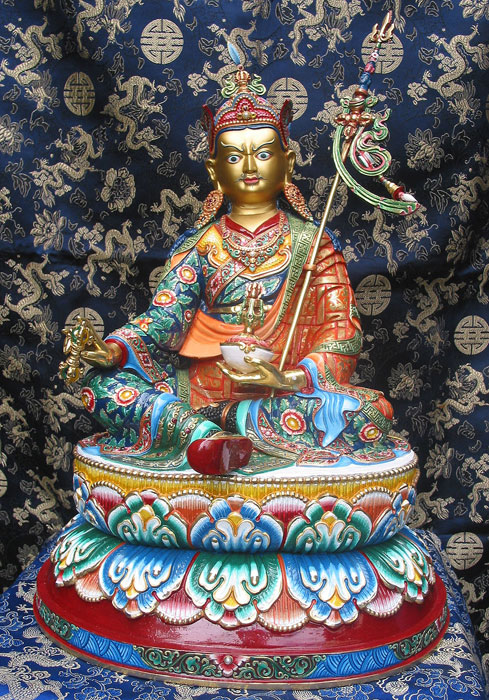
OM AH HUNG BENZAR GURU PEMA SIDDHI HUNG


Prayer to Manjushri

Prayer To Manjushri

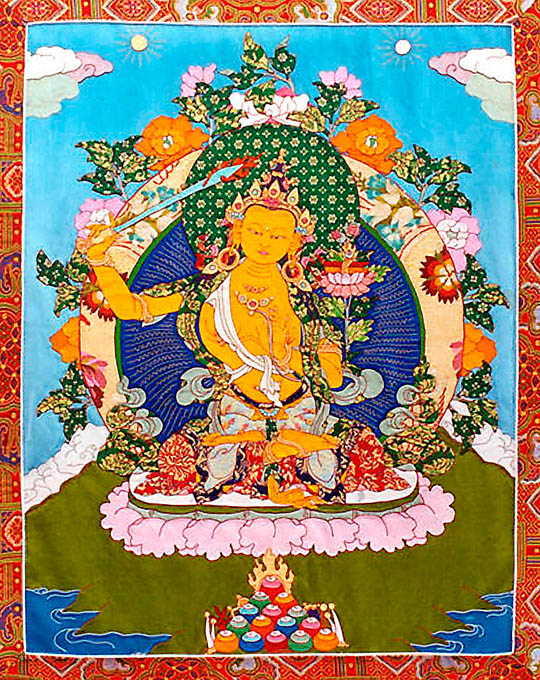
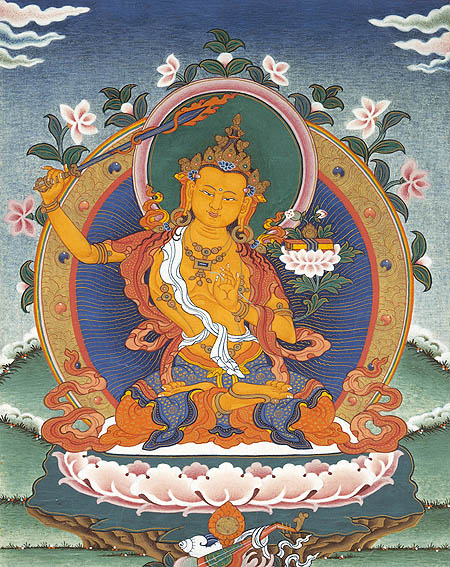
Obeisance to my Guru and Protector, Manjushri,

Who holds to his heart a scriptural text symbolic of his seeing all things as they are,

Whose intelligence shines forth as the sun, unclouded by delusions or traces of ignorance,

Who teaches in sixty ways with the loving compassion of a father for his only son,

All creatures caught in the prison of samsara, confused in the darkness of their ignorance, overwhelmed by their suffering.

You, whose dragon thunder-like proclamation of Dharma, arouses us from the stupor of delusions

And frees us from the iron chains of our karma, who wields the Sword of Wisdom

Hewing down suffering wherever its sprouts appear, clearing away the darkness of ignorance.

You whose princely body is adorned with the 112 marks of a Buddha, who has completed the stages achieving the highest perfection of a Bodhisattva, who has been pure from the beginning.

OM AH RA PA TSA NA DHI
(Repeat the mantra many times through. The last time:
DHI DHI DHI DHI DHI…..SOHA)

I bow down to you, O Manjushri. With the brilliance of your wisdom, O Compassionate One,

Illuminate the darkness enclosing my mind.

Enlighten my intelligence and wisdom so that I may gain insight

Into Buddha’s words and the texts that explain them.

You are Alive

An excerpt from Marrying Spiritual Life with Western Culture by Jetsunma Ahkon Lhamo

If you have a real relationship with your own nature and you really understood the wisdom and the beauty of the Buddha’s teaching and didn’t see it as his teaching, but as a wisdom that appeared in the world here.  You could see it as your teaching, as a wisdom that you could connect with.

Actually, we Westerners have a similar problem to what Black Americans have approaching Christianity.  Black Americans pray to white Jesus.  It’s not to say that their faith is small.  I don’t know whether they have a problem with it or not, but it must be odd.  What does it look like seeing a white face on an altar when you’re a black person?  Go home and look at all those Asian faces on your altar?  They don’ t look like us.  What to do about it?  How do you take refuge?  How do you connect?  It’s not about those pictures.  It’s not about those faces.  It’s about you!  And it connects inside.

It isn’t about the shape of those eyes.  It’s about what those eyes see.  So you have to have that completely personal relationship where you look beyond that which is slanted or colored or this way or that way.  It’s got to be a deeply personal relationship.  To do that you must connect deeper than you’ve ever been before.  We love to just skate over the surface of our experience of life.  We’re even addicted to the highs and lows.

You can’t really understand why and how to take refuge by learning a set of equations or laws or rules.  These can only function as guidelines.  It’s really up to us to be powerful and strong and noble and knowing and awake on our path.  Virtue cannot be collected.  It has to be experienced, tasted, understood.  Its nature must be understood.

This is not the news we want to hear.  We want an easy religion.  We think, “Just tell us the ten things we have to do so that we’re not uncomfortable about dying.” I’m not saying those ten things are bad they’re good, they’re wonderful, but where does it lead you?  Aren’t you still the same scared little kid who was so neurotic because you are compressed with rules and society and with being told you can’t feel things?  And now we’re going to do this with our religion too.  Ten more times.

What if, instead of being a girdle that makes us out of touch just trying so hard to be good, we experienced our path – our method – in a wisdom way, in a connected way, in an in-touch way?  From that fertilization that happens when you really understand an idea and it causes you to go, “Ah, hah, therefore…” from that point of view it’s like a plant or a tree coming up inside you and growing.  It bears fruit.  It is a joyful thing, and you can see the fruit of your life.  Most of us are so unhappy and so neurotic because we cannot see the fruit of our life and we do not understand its value.  We have not tasted it.  This direct relationship one can taste.

It needs to be like that in order for us to really take refuge and not be lost, little kids scared of dying, just trying to do the right thing be good boys and good girls with a new set of rules – because maybe if we just had a new set of rules, maybe then we’d be good.

Instead of that, what if we were dynamically in love, inspired, breathing in and out on our path?  The path can, in that way, be a companion, a joyfulness, a child of yours, a creation, a painting, something beautiful you’ve done with your life.  You can’t make a beautiful painting by number.  You have to make a beautiful painting from your heart.

So ask yourself, where are you?  If you find that deadness inside of you, don’t blame your path, don’t blame your teacher, don’t blame your society, and don’t blame the Buddha.  Instead, go within and find what is true and meaningful to you.  Work the sums.  Reason it out.  Lord Buddha himself said, “Forget blind faith.”  He said, “Reason it out.”  The path should make sense.  It should be logical and meaningful to you, not to me.   What’s it going to mean to you if it’s meaningful to me?  It has to be logical and meaningful to you.  This is what the Buddha said.  It would really help you to try that out for yourself, living in a society where we are separate from some fundamental life rhythms and where we are trained to think that things are happening outside of us.

We’re in a world filled with terrorism and racial abuse, religious abuse, all kinds of conflict, and yet we think racial intolerance for instance, is happening out there.  We read about it in the paper.  No, racial intolerance is happening in here.  That’s where it’s happening.

It’s like that with everything on this path.  You cannot let it happen out there.  It’s your responsibility, your empowerment, your life.  Waiting for someone to tell you how to live it is not going to fly.  When you walk on a spiritual path that you know, that you have examined, that you have given rise to understanding, you draw forth your natural innate wisdom.  That fills your heart with a sense of truth because you understand it – not because someone else does.  That’s the way to do it, and that’s what the Buddha recommended.  In fact, he said, “I’ve given you the path.  Now work out your own salvation.”

That wasn’t just a flip thing.  When people hear that they go, “It’s such a cool thing that he said that!  He must have had a great sense of humor.”  He meant it!  The path is there, but you’ve got to work it out.  That’s how you walk on the path.  Otherwise you’re walking alongside the path.  Then you’re a friend of Dharma, an admirer of Dharma, but not a practitioner – even if you wear the robes.

So handle the dead zone.  Empower yourself.  There is no reason why you can’t.  Don’t live your life by “bash-to-fit, paint-to-match.”  Don’t do that.  You are alive.  In every sense, your nature is the most vibrant force in the universe, the only force in the universe.  It is all there is.  To play this game of duality where you stand outside your own most intimate experience and like a sheep get led through your life, that is not the way to go.

Many of you came to this path from another path because you felt dead there.  But remember this:  Wherever you go, there you are.  You brought the deadness with you.  So handle it.

I hope that you really, really take this teaching to heart because it’s really an important thing.  If I had one gift that I could give you all, it would be to stay alive in your path, to have your spiritual life be like a precious jewel inside of you, living, something to warm you by.  If life took everything else away from you, which it will eventually, this is the thing that cannot be taken.  Thank you very much.

Copyright © 1996 Jetsunma Ahkon Lhamo.  All rights reserved

Ten Virtuous Activities

An excerpt from a teaching called How Buddhists Think by Jetsunma Ahkon Lhamo

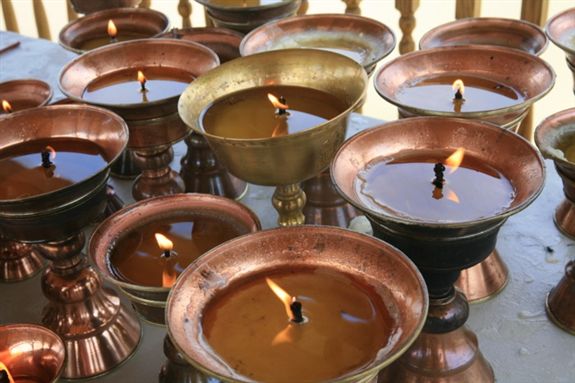
You should think of the Buddha’s teaching as a philosophy that you can follow according to your capability.  You don’t need to look or act a certain way.  Basically, what you’re learning is cause and effect.  You learn that there are ten virtuous activities that bring about Realization, if they are done frequently and consistently.  These are:  1.) Composition––the creation of prayers or stories which increase others’ faith.  2.) Offering––even a simple butterlamp, offered daily to the Buddha, the Dharma, and the Sangha creates causes for Buddhahood at some future time.  3.) Generosity and kindness to others, even at the expense of your own comfort; you are one, and they are many.  4.) Attentiveness to the teachings––sometimes difficult when you want to go outside or fall asleep.  5.) Recitation––of prayers, practices, and mantras.  6.) Memorization––of the teachings and instructions for practice.  7.) Teaching––appropriate to do only when we are ready.  8.) Praying.  9.) Contemplation––of the teachings you receive.  10.) Meditation.

First we receive training about how to perform these activities; then we practice them the best we can.  Some people will spend a whole week contemplating the teaching I’m now giving; others won’t think about it until they come back for another teaching.  But they come back!  And there is virtue in that.

The ball is in your court.  Your progress will depend on how hard you work, how well you take hold of your mind, how much you demand of yourself, how courageous and honest you are, and how much true generosity you develop.  Accordingly, you will pacify the obstacles that keep you from achieving the Awakening to your own primordial Wisdom Nature.

Until you do this, you will wander helplessly in the six realms of cyclic existence.  It would take weeks to give a thorough traditional teaching on these realms, but the purpose here is only to explain how Buddhists think.


© Jetsunma Ahkön Lhamo

To download the complete teaching, click here and scroll down to How Buddhists Think

The Foundation of Dharma

The following is an excerpt from a teaching by Jetsunma Ahkon Lhamo called “Commitment to the Path”

Today I would like to begin to lay the foundation by which we will practice. Even for those of us that have been practicing for some time, if we lose the foundation or if the foundation, like in the analogy of a house, becomes weak or compromised in any way, it’s not long, then, before the house will topple or the house will lean or become unstable.  It’s like that with our practice.  If certain fundamental thoughts are not stable in such a way as to hold up the rest of our practice and support us on the path, then eventually our path, our practice, will decay, decline in some way.

Although practice, like life itself, is often cyclic, sometimes we feel we are in a position to do more practice and other times we are in a position to do less practice.  Still in all, we have to make sure that we’re able to make slow and steady progress. The reason I say slow and steady progress is because oftentimes new students will trip themselves up by trying to go too fast without the depth of understanding.  It’s exactly like building your house on sand.  It’s exactly like that.  We want to go into the neater stuff; we want to go into the cooler stuff.  We want to learn the stuff that makes us look exotic when we practice, but none of us will really be practicing in truth if we don’t have certain foundational ideas and if we don’t constantly review them over time and constantly make them part of our contemplative life.

Of course those thoughts are engineered to turn the mind toward Dharma.  In order to turn the mind toward Dharma, we have to have our eyes opened.  We can’t be lightweights; we can’t be bliss ninnies.  We just can’t say, “Oh, it’s so cool to practice Dharma.  Let’s go on.”  We have to understand why we are practicing Dharma, because Dharma is a path and a lifestyle and a method that one has to use throughout the course of one’s life.  We have to be consistent.  We have to be persistent.  It can’t be the kind of faith that you have only on Sunday mornings or only on liturgical holidays.  It’s a walking-through-your-life kind of thing, and it requires you to make enormous changes. Behavior and ideas that may have been acceptable before will gradually become unacceptable – not in a way that you should be filled with guilt or shame.  It’s not like that.  It’s more like when you really understand the Buddhadharma and you understand what samsaric existence is, and what the display of one’s nature is, it will become more natural to practice the bodhicitta and to give rise to compassion, to caring for all sentient beings.

In order to proceed effectively on this path that challenges us every moment of every day, we have to remain focused, remain mindful in ways we never thought we could or we’d ever have to.  And the reason why again is that Dharma does not simply come from magical thinking.  It does not come from the stars.  It does not just descend upon us on some lucky day for no apparent reason.  Dharma is the awareness of cause and effect relationships.

Now for me, that’s why Dharma makes so much sense.  I know when I first introduced some of the ideas of Dharma to my students, they were, you might say, a little resistant.  They would think things like “You mean, like path?  Like you have to do something every day?  Like you have to change the way you think and the way you act?  I mean, couldn’t we just like get salvation?”  And that’s the idea.  We’ve been raised with the idea that religion is like a condiment on the plate of life.  You know, something to sweeten it up with or salt it up with.  A little oregano on the pasta.

But in fact, we find out that we have to learn something different.  Dharma becomes our heart.  Dharma becomes enthroned on the mind and heart.  And the reason why is that Dharma has to accomplish something that is very breathtaking.  Dharma has to accomplish something that is enormous, that seems almost inconceivable.  It has to take our perception of ordinary samsaric cyclic existence, which is a state of delusion, a state of non-recognition, and it has to transform our capacity to be able to recognize our own innate nature.  Yet, everything about us is geared to function in duality.  Two eyes, two nostrils.  All of our senses are extensions of our ego, so they always work to function in duality.  So how can this thing happen?  We ask ourselves, what in the world, what kind of experience, what kind of event could turn us around to where our perception could become so clear that we could be like the Buddha, awake to our primordial wisdom nature.

Well, what is it that Dharma is supposed to do, exactly, and how does it do it?  The idea is to have a path on Dharma that is exacting and is a method that takes you to a to b to c to d, and also is flexible.  You can go from a to d to m to t.  Dharma is suitable for all sentient beings, because there is some element of Dharma that is compatible with one’s own karma.  So it’s not a general here’s-the-true-label for everybody.  There are teachings that the Buddha gives that are incontrovertible.  They will never change.  They are about the nature of samsaric existence.  Yet the path is individualized.  For instance, I really like to practice Guru Yoga.  That’s my thing.  That’s what I do.  And somebody else might really like to practice Vajrakilaya.  Ultimately it’s the same practice.  One is a peaceful practice, one is a wrathful practice. One is based on deepening the connection with the root guru.  The other is also based on that, and is also based on very actively manifesting one’s compassion.

© Jetsunma Ahkön Lhamo All Rights Reserved


WP2Social Auto Publish Powered By : XYZScripts.com