What Can You Do?

An excerpt from a teaching on Compassion by Jetsunma Ahkon Lhamo

There are many Dharma practitioners who practice for many years, go on retreat, and even take ordination. Then at some point, some karmic switch flips in their minds and suddenly they’re finished with Dharma! They don’t want to do Dharma anymore. They’re on to something else. We may think that’s strange, but it has happened, especially to Westerners. It’s not uncommon for a Westerner to practice Dharma sincerely and then flip tracks, and go back into a very ordinary kind of life. That need not happen to you. But it could. You should face that possibility.

The antidote for that event is to cultivate compassion in your mind every day. If you move along the path of Buddhadharma and become overworked by it, thinking, “I just can’t practice that many hours a day. I cannot do this activity that propagates the Dharma anymore. It’s just too much.” If you become dry inside, if you think you just can’t go on, there’s only one way that that could happen to you. You have forgotten the suffering of others.

You must cultivate the memory that even in this visible world where beings can be seen, there is suffering that you cannot comprehend. You must think that there are children being abused everywhere, that there is starvation and poverty. You must think about the terrible diseases that afflict the body, speech and mind. You must think about the horrible things that come along with suffering, and the depth of suffering that exists, even in the realms that you can witness. If you think about that everyday, more about that than you do about yourself, you will not fall off the path of Dharma. When you become weak, when you waiver, that is when you forget. That is when you think the path is all about you. It’s when you forget that you are practicing for their sake, and that you are practicing also to liberate your mind so that you can be of benefit to others.

A non-Buddhist practitioner might say, “I’ve got another idea. Why don’t I do what I know how to do best. I’ll go out and make some money, and then I’ll feed everybody. I can do that.”

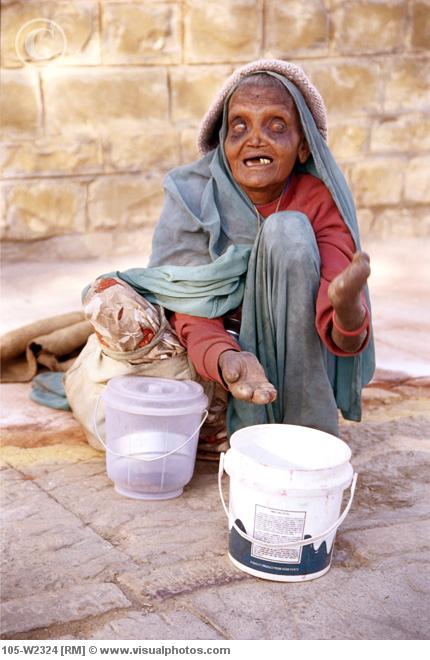
I’ll tell you a story about when I went to India. In our innocence, we thought, “Let’s go see Bombay; this is really going to be great.” So we got in a taxi and we went through the streets of Bombay thinking that we were going to see the India on the postcards. What I saw were streets so filled with sickness – leprosy, deformity, unbelievable poverty – that I couldn’t see anything else. I know there were beautiful buildings. I know there was beautiful scenery, but I couldn’t see those things.

Every time the taxi stopped, people with only part of a limb and open sores of leprosy would stick their arms in the car and beg.  Mothers would hold up their babies that they had done something to, saying, “Help us, help us.” So I started passing out dollar bills to everyone. I soon realized I was in deep trouble as I only had a limited amount of money, but that didn’t stop me.

I was traumatized by this. I was crying to the depth of my heart, because I had known that suffering existed, but I was used to my brand of suffering. I had never seen anything like this. I continued to pass out dollar bills, and finally the taxi driver stopped. He turned around and said, “Lady, don’t do this anymore. What is one dollar going to do for these people? Maybe they’ll eat today. What will you do for them tomorrow? And if you give out one dollar to everyone you see, there are so many people like them in India, you couldn’t help them all.” His saying that shocked me; he was right. Even if I could manage to become wealthy, I couldn’t feed the world. And hunger is only one kind of suffering. How can you help the other kinds of suffering? This kind of ordinary compassion ultimately does no good.

Why are those people suffering in India, and why were you born here in the West where things are relatively comfortable? Why are there animals and why are there humans? Why are there other realms of existence? Why is there so much suffering in one place, and much less suffering in another place? It is because of karma. That is the reason for all of this. Yet there is a cure for negative karma, which is the kind of karma that causes suffering. Ultimately, it is the only cure that will work. That cure is the eradication of hatred, greed and ignorance from the mindstreams of sentient beings. And the root of hatred, greed and ignorance is desire.

This doesn’t mean if we see starving people we shouldn’t feed them, that we should immediately teach them the Dharma. That, of course, won’t work. We have to be skillful. If people are hungry, we feed them first, and then we teach them. But your job now is to do neither. You might not have money, and you might not have the ability to teach just yet. But you can do something. You can practice Dharma in such a way that you, yourself, become free of hatred, greed and ignorance. You can practice so that you can liberate your mind from cyclic existence for one reason and one reason only: that after liberating your mind, you can emanate in a form that will continue to benefit beings. You can liberate your mind from desire to such a degree that you have only one hope, and that hope is that you will be born again and again in a form that will bring this antidote to other suffering beings. That’s what you can do.

Copyright © Jetsunma Ahkon Lhamo.  All rights reserved
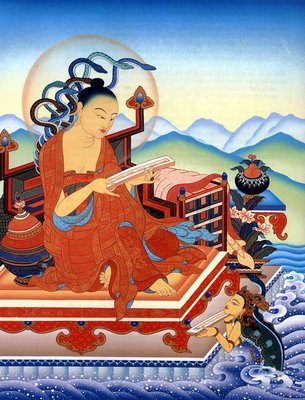
The Treasure of Bodhicitta: What Does Enter the Bardo

The following is an excerpt from a teaching by Jetsunma Ahkon Lhamo called “Your Treasure is Heart”

The vow of refuge—taking refuge in the Buddha, the Dharma and the Sangha—is a vow that one must renew every lifetime, but the power of the Bodhisattva Vow is so strong that the power and potency of that vow lives from lifetime to lifetime.  If you have taken that vow, you have that vow from now until you cross through the door of liberation into nirvana.  And you must pray every day that you will be guided, in this life and in every future life, to meet with the means by which you will be able to practice this great compassion.

Now everything about your life must seem different.  The prejudices you had before, about different peoples and different races and different religions and so forth, how can they make sense now?  You had ideas about how this person is better than that person because of the class that they’re in, or how one person is superior because of their superior intellect.  Having tasted one moment of Bodhicitta you realize that a superior intellect is a fools’ toy in a fools’ world, unless it can be used to bring about that pure absorption.  Everything changes, and slowly, slowly so do you.  So even if you are that person who begins practicing the Bodhisattvas’ path by saying “I dedicate myself to the liberation and salvation of all sentient beings” (dull, bored and quick) that’s not going to last for long.  Accept yourself the way you are.  If that’s where you’re starting, start there.  It’s a simple truth.  Just do it, and don’t make such a big deal about it.  That’s a good mantra.  Om don’t make a big deal hung phet.  Just don’t make a big deal about it.  Just start where you are.  Gradually over time this will stop and you’ll begin to feel that catch in your throat, that movement, that change that begins to happen.

Of course, there are different ways of beginning practice, different places that each one of you start at, but the rules fundamentally are the same.  They are the same.  One requires mental discipline in order to truly practice the Bodhicitta.   Practice the contemplations.  Practice daily mindfulness, and then, in the practice of the repetition of the vow of the Bodhicitta, begin to remain absorbed in this idea, in the reality of the Bodhicitta.  Remain absorbed in the stability of mind that one experiences when one is not busy manipulating and grasping.  This is real progress on the path, real progress, much more so than talking the dharma talk and walking the dharma walk and doing the dharma routine.  Developing a good heart at last.  This is real result, and it is lasting.

You won’t be able to take your dharma talk and your dharma rap and your dharma scene and your dharma clothes and your dharma deadly do-rights, or anything that you have accomplished in this lifetime, into the next rebirth.  You will not be able to take any of that into the bardo. But a good heart and vajra compassion? Yes, you’ll take that into the next life. And it is one of the main causes for the conditions of your next rebirth.  This is valuable.  This is your treasure, this heart of the Bodhisattva.  It is the first step to a truly happy life.

Copyright © Jetsunma Ahkon Lhamo.  All rights reserved
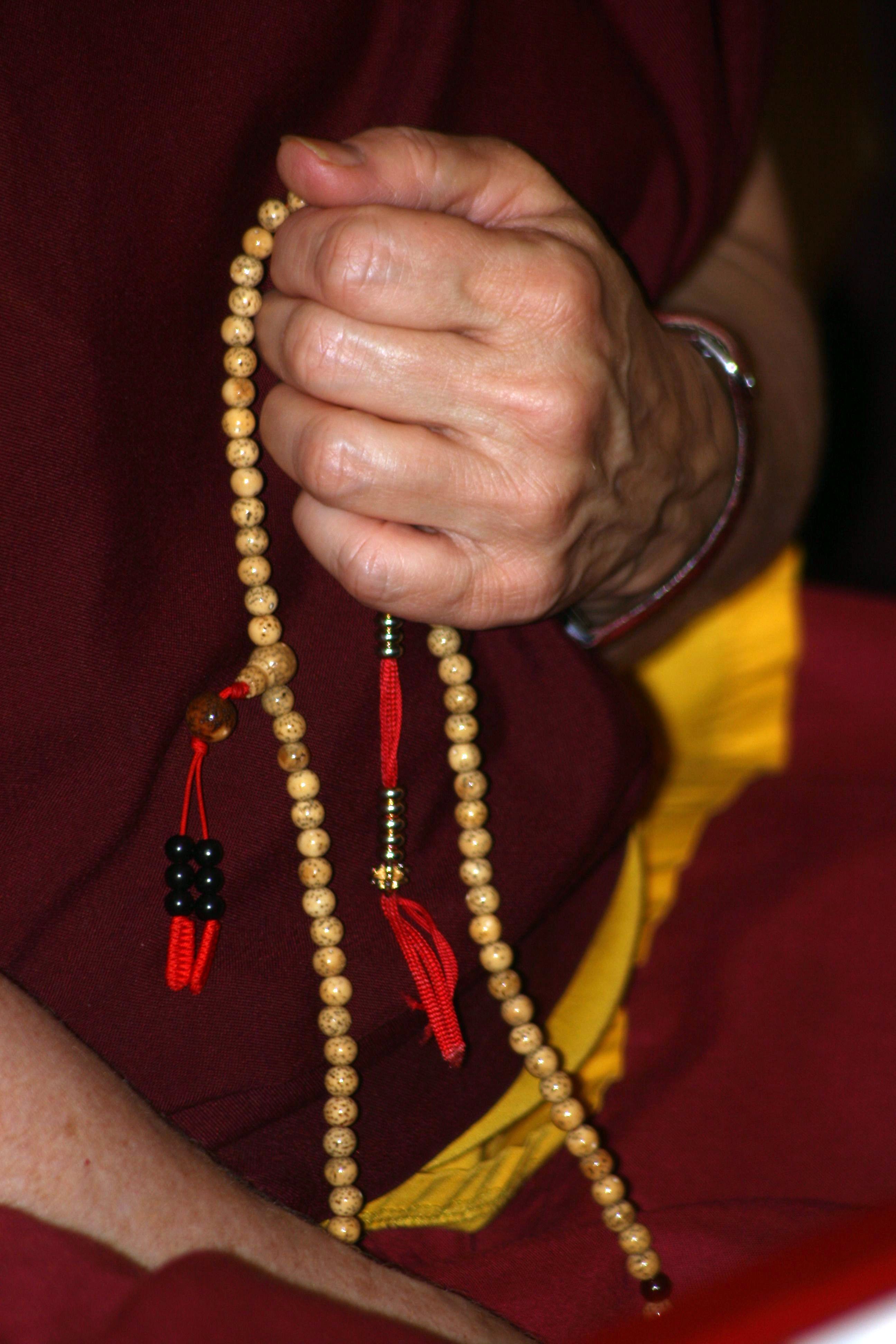
For Their Sake

The following is an excerpt from a teaching by Jetsunma Ahkon Lhamo called “Your Treasure is Heart”

There is nothing about you that inherently goes towards non-lovingness or lack of concern for others. You are actually the Bodhichitta in your essence, but it is your habitual tendency, karmic cause and effect relationships that bring about habitual tendency, and the weight of that karma that weighs down on one side. Now we’re looking to balance the scales and this kind of meditation changes your habitual tendency so that you find the next time you want to take that Bodhisattva Vow in the context of your practice, magically you’re feeling different. It’s not really an emotional thing, but somewhere inside you sense, you feel, that something has changed. Number one, you have the good feeling of really having invested a great deal of your time in this discipline of meditation for the sake of others. And number two, most importantly, your habitual tendency is starting to change. So next time you say “I dedicate myself to the liberation and salvation of all sentient beings,” you’ll find that as you say that, there’s a catch in your voice and your heart, almost like, “Oh, is it real? Do I feel it? Yes, it’s there.” You’ll know that it’s beginning to take hold in your heart. And when you really feel that deeply, you’ll begin to feel the benefit and happiness associated with this practice.

Now don’t get off on that and get lost in “Oh I’m so happy! Now I’m a great Bodhisattva! Now I can look like a saint! Take out a pint of blood, I’m looking too robust!” Don’t get lost in the concept. Only continue,, continue with the practice for the sake of sentient beings. Do not get lost in the circus. Remember, make it always about them. Ultimately you will come to understand, in maturity in your practice, that your own enlightenment and the enlightenment of others is nondual and equal in weight. Equal in weight. And here’s the real reason why. Even though there are so many more other sentient beings than you or I who are wandering in samsara, one can only bring about temporary or relative benefit as a human being. One cannot bring about extraordinary or ultimate benefit until one actually achieves realization. It is for that reason we are so dedicated to bringing about our own liberation for their sake.

Copyright © Jetsunma Ahkon Lhamo.  All rights reserved

The Wedding Cake: Stages of the Path

The following is from a series of tweets by Jetsunma Ahkon Lhamo:

Yesterday a new student asked the following question, “What is the difference between Mahayana and Vajrayana?” She had studied for six years from books. This question can take years to answer! So I apologize for giving the quick cereal box top version.

There are three main levels of Lord Buddha’s teachings. They can be thought of as a “wedding cake” shape, if you will.

The first Level was the first teaching, Theravadin. It is based square on the Vinaya structure, relates to purity and no-harm. It is the basis for all further turning of the “Wheel of Dharma.”

The next layer of the cake would be Mahayana, or “Great Vehicle” and is associated with the Bodhisattva vow, along with refuge in the Three Jewels, Buddha, Dharma, and Sangha. Now, in the Vinaya, to purify, one gender must not touch opposite sex, handle money, has many laws. In Mahayana, the same laws apply but are modified by the Bodhisattva vow. In that vow one cultivates Bodhicitta, compassion. So a monk could theoretically touch a woman to give aid, medicine, food, comfort, support. And as Bodhisattvas in training, vow to liberate and care for all sentient beings. Through ordinary and ultimate kindness. In Mahayana we dedicate all our merit, practice, efforts to all beings, thinking of them as our own kind mothers in all lives. And we help all we can.

Vajrayana is like the top level if the wedding cake. It is a very profound and mystical level. And within that there are preliminary, generation stage, and lastly completion stage practice. Preliminary is Ngundro, generation is of the three Roots of practice: Lama, yidam, and khandro with protectors. The completion stages are Tsa-lung, Togyal and Trek Chod. These are the practices that can deliver Liberation in one lifetime.

Now here is the thing. These wedding cake layers cannot be separated, or the whole thing falls down. Theravadin, Mahayana and Vajrayana are totally and completely inseparable. If not the case, there is no stability in the practice. One sustains the other and is it’s very foundation! It’s support. So the Vinaya supports and gives rise to, through purification, the Mahayana Bodhisattva level, with additional vows. The top layer is totally depending on the other layers and they cannot be separated. Vajrayana requires the practice of giving rise to Bodhicitta because the yidams, the Three Roots, are the very display of Bodhicitta in the world! They are not ordinary and come from the play, the dance of the Buddha nature in phenomena. Each and every yidam or meditational deity is not separate from Bodhicitta, never could be, or it could not be a display of the Buddha.

We must learn to accept the feast of the whole cake as it is. We cannot pick the easy part, the one we like best to feel smart. We cannot change the cake. We can change the flavor, the color, to suit our culture, but not the layer cake!

And what is at the top? The union, Yab/Yum. Wisdom and compassion; emptiness and method. Or empty primordial nature couples with display/samaya in that union, we are liberated! EH MA HO!

OM AH HUNG BENZAR GURU PEDMA SIDDHI HUNG!

Copyright © Jetsunma Ahkon Lhamo.  All rights reserved

It’s About Them…

The following is an excerpt from a teaching by Jetsunma Ahkon Lhamo called “Your Treasure is Heart”

So where do you start?  Exactly where you are.  Remember that different people have different experiences.  If you’re not sure about that, ask other people.  No one knows what another person’s experience has actually been.  No one knows how karmic patterns develop into the tapestry that they become.  As people engage on the path of the Bodhisattva, each and every one will look a little different.  It’s not for you to judge.  It’s only for you to begin.

When some people begin to engage in the Bodhisattva meditations, although they’re saying, “I dedicate myself to the liberation and salvation of all sentient beings,” they’re thinking, “I don’t feel like it today. I’m not happy about it, but I know it’s the right thing to do. So I’ll work on it” Another person will say, without thinking about it at all, “Oh, yes, right now I dedicate myself to the liberation and salvation of all sentient beings!!!!”  Both are equally ridiculous!  Why make a judgment about either one?  You can see that’s just the first step. So whatever it looks like, let it be that.

Eventually in maturity there is not so much concern for appearances, not so much concern for how it should be. There is mostly concern for others.  Now there’s a new trick.  Rather than being concerned about appearances, we are mostly concerned for others.  When we were judging ourselves and others for not looking perfect as a Bodhisattva, that’s the part we left out, wasn’t it?   It isn’t about how we look. It’s about them.  It’s about others.

Copyright © Jetsunma Ahkon Lhamo.  All rights reserved
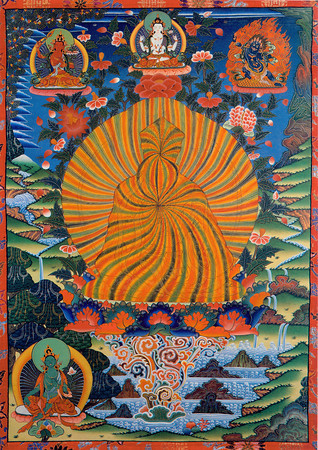
A True Path

An excerpt from a teaching called How Buddhists Think by Jetsunma Ahkon Lhamo

In America, as in few other countries, you can find a multitude of ways to be “a spiritual person.”  When Tibetan Lamas first came to this country, they were appalled.  They were saddened to see there are so many ways to think that you are being spiritual, that you are adopting a spiritual path.  The Lamas saw this as the unfortunate, unbearable, bad karma of the American people.

Doesn’t that sound odd?  Many of us might say: “No! It’s just the opposite!  We can do anything we want, we can be spiritual in this place or that.  We can choose to be traditionally spiritual or non-traditionally spiritual.  This is the land of opportunity.”

But as the Lamas understand it, much of what is assumed to be spirituality was started less than 50 years ago.  Essentially this means we don’t know if it can produce Enlightenment.  Many Americans are diligently trying to cross the ocean of suffering in a boat that has never made it across a lake.

Even in the older religions in America, you can be confused about what goals to pursue.  Some leaders of Christan churches admit that the original teachings Jesus gave are not found in the Bible.  Many teachings have been lost, portions may have been deleted, and the true meaning may have been clouded over by layers of translations.  Many of today’s Christian practitioners have no idea that they could become immersed in a mysticism that will actually change their perception.  Very few understand that they could practice in a way that leads to Realization.

Lamas who came to this country understood that it would be difficult for Americans to be open to the Buddha’s teachings.  So many things in America seem more flashy, seem to promise a great deal more.  New Age ideas include promises of instant healing and even opportunities to talk to Masters from the Great Beyond.  But has anything like that produced Enlightenment yet?  Have we seen the signs?

Buddhist Lamas who came to America had seen miraculous signs.  For instance, both my root gurus had seen Lamas fly through the air.  A close student of one of my root gurus had seen him lift off the ground and hover for some time.  Many of the Lamas had seen the miraculous appearance of the rainbow body after a Dharma practitioner died.

Not long ago, when a Buddhist Lama died, his body was cremated in a fire so hot that his very bones turned into a crispy substance, with a texture somewhere between ashes and potato chips.  Yet his heart remained uncooked, raw!

Many Lamas, I among them, have relics of Lamas who died, relics that are “pearls” produced automatically by their bodies.  When kept in a dark, quiet place, these pearls continue to reproduce themselves.  Lamas I know have told of stupas with empowerments so strong that on one side would come a sweet nectar; on the other, a sour nectar.  The flow was continual, and would never dry up.  This has been happening for hundreds of years. There has been no explanation for it.

When a Buddhist speaks of “a True Path,” this is not meant as: “My religion is better than yours.”  It is not intended to be haughty or prideful.  Rather, we want to be on a path that has repeatedly produced results, and can be expected to do so in the future.

That is how I view the Buddha’s teachings.  They did not come from any ordinary intellectual process or experience, or from a compilation of other people’s views.  They arose from the mind of Enlightenment.

Some people call themselves “enlightened,” and when I hear this, I cease to believe them.  The Buddha simply said, “I am awake.”  He never made himself out to be a god; he never said he was different from anyone else.  He simply said, “I’ve given you the Path.  Now work out your own salvation.”

© Jetsunma Ahkön Lhamo

To download the complete teaching, click here and scroll down to How Buddhists Think


Blinded to Our Own Nature

An excerpt from a teaching called How Buddhists Think by Jetsunma Ahkon Lhamo


Until we attain Enlightment, we are blinded to our own Nature, fixated on the belief in self-nature as inherently real.  We walk through an experiential field that is based on this false supposition, and all desire and compulsion arise from it.  We experience death and rebirth in an endless cycle.  We may feel relatively stable now, but soon we will die and be reborn.  You may think, “Great!  It’s an endless adventure.  It goes on and on.”  Well, here’s the problem: you don’t know where you’re going next.

When you die, you go through what we call the Bardo or intermediate state, in which you experience the content of your mind in an externalized form––almost as if flashed on a screen in front of you.  If you have much hatred and anger in your mind, you will see what looks like demons.  If you have much virtue and loving kindness in your mind, you will have what seems to you a very beautiful and seductive experience.

Hidden beneath that kind of event is the truer experience which occurs to everyone as the elements that bind us dissolve and the consciouness becomes more fluid.  What we experience at that time is our own Nature; however, if we are deluded and fixated, we won’t experience it as such.  We won’t recognize the Buddhas and Bodhisattvas, though we are in their presence.

But if, in the Bardo, your mindstream is free enough to experience the vision of these Buddhas and Bodhisattvas as inseparable from your own mind, it will be overwhelming.  The intense connection will be as strong as that of a child and its mother.  You will run into the arms of Enlightenment!  If you have accomplished the causes I’ve just described, that very experience is possible in the after-death state.

© Jetsunma Ahkön Lhamo

To download the complete teaching, click here and scroll down to How Buddhists Think

Bodhicitta in the World

The following is an excerpt from a teaching by Jetsunma Ahkon Lhamo given at Palyul Ling Retreat 2012:

They say that I am a Dakini.  I’m not so sure but they say I am.  The Dakini has to do with the activity of the Buddhas.  And so that being the case, I feel it is my responsibility to try to bring some benefit in the activity way.  So I try to feed everybody – animals, people, and the birds outside my house.  Everybody knows that we spend a lot of money on feeding people and feeding beings.  And it is a happy thing to do.  It makes us all happy.  So many beings are fed.  And they are having what they need because of the kindness of His Holiness Penor Rinpoche, and what he taught me.  The precious bodhicitta, the nectar of kindness that is inherent in the dharma.  This is what I was taught, what I learned, and its what I practice.

We have a prison program also.  We like to forget people who have done something wrong and just throw them away, but we have a program where we can go and teach prisoners some dharma, because these men will die in prison.  And they will have no way to get any kind of help or straighten themselves out for a proper or good rebirth.  They don’t know how to die well.  They have no teachings on Phowa.  It makes us sad, and so that being so said, we’re able to go out and do these things.  And it is why KPC is always broke.  We don’t have any money because we spend it on the needs of sentient beings, and I am very happy about that.  That makes it worth it to me.

In our food program there are many people who don’t know how to cook the kind of food that we provide for them, because they are poor people and they are used to cheap food.  And so we have been trying to teach them how to cook lentils, and beans, and rice and things that are very nourishing.  We try to teach them how to make protein, and how to eat well so that they feel better.  This is a totally new thing for them.  They don’t know how to be healthy, and their children don’t know how to be healthy.  Many of them eat too much sugar and too much candy and they are unwell.  And so we are teaching them.  We are involved enough in the community to teach them how to cook, how to prepare food and what food is nourishing, and what is not.  These are great pleasurable things that we do.  Not that they are so great, but they are great pleasure.  To see people become nourished.  To see people learn some dharma, whether they understand it or not.  To even understand, Om Mani Pedme Hum.  To even repeat Om Mani Pedme Hung is so much better than anything else they could receive in the ordinary world.  Very simple things like that can make the world of difference, as you know.

Copyright © Jetsunma Ahkon Norbu Lhamo All rights reserved

Thinking in Full Equations

The following is an excerpt from a teaching by Jetsunma Ahkon Lhamo called “Your Treasure is Heart”

It is very important to understand why we practice the Bodhichitta.  First, we must examine the Buddha’s four noble truths:  All sentient beings are suffering; they are suffering due to desire; there is a cessation of suffering; and the method for the cessation of suffering is presented in the eight-fold path, or as in our tradition, condensed into the path of wisdom and compassion.  So we engage in the method for those reasons.  Do you see the logic in that?  All sentient beings are suffering.  They are suffering from desire.  However, there is an end to suffering, and this is the method.   Characteristic of the Buddha’s teachings. it is logical, because in the Buddhadharma we’re not asked to do anything on blind faith.  We’re asked to think it through. Once it seems reasonable, logical and true to us, then we are able to practice because that kind of logical activity is appealing. It seems realistic, and it makes sense to us.

So then the next thing we have to do is examine the thoughts that turn the mind toward Dharma. These thoughts that turn the mind toward Dharma are contemplations. They are interesting, thought-provoking, profound and deep sets of concepts and ideas, that help us to examine the six realms of cyclic existence and all their faults.  It is extremely important that we examine them closely so that we can see that cyclic existence is a bit like a drug. We can therefore feel for ourselves how narcotic cyclic existence actually is.  We begin to understand that cause and effect is absolutely true in every way within our lives.  Literally every experience that we have, or have ever had, has been brought about by a cause that we ourselves created.

Actually, cause and effect relationships arise interdependently.  They arise, not separately, but as one. Arising interdependently means that if we have created a cause, then just as surely as anything can be sure, we will live through the effect.  Trust me on this.  The effect can be modified. It can be delayed. It can be subdued. It can be dealt with effectively through certain kinds of practice, but we will still realize the effect of any cause that we have produced.  If you really examine that particular teaching you will learn that virtuous activity, for instance, brings about happiness and good results. Non-virtuous activity, no matter how it looks at first, always brings about unhappiness and suffering.  For example, if you stole a car, at first you might have a great time riding around in it, but eventually that event would ruin your life. If not this life, then surely in the future, it would bring about suffering and unhappiness for you, but you wouldn’t know that. Unless you have the training that cause and effect relationships are actually related, you won’t make the connection

Another thing that we learn on the Buddhist path by practicing this is the great skill of thinking in full equations.  Do you know that most of the suffering in our life is because we cannot think in full equations?  We think like chickens, “Over here this is happening, I’ll do this.  Over there that is happening, I’ll do that.”  It’s as disconnected as “whatever” to us.  We just don’t get it.  But the Buddhadharma teaches us to think in full equations.

So now we’re thinking in full equations and we’re turning our minds toward Dharma. This is a necessary step because we have to realize cause and effect relationships in order to really give rise to the Bodhichitta.

Copyright © Jetsunma Ahkon Lhamo.  All rights reserved
You Can Be Exactly Who You Are

The following is an excerpt from a teaching by Jetsunma Ahkon Lhamo called “Your Treasure is Heart”

As westerners, we want to make Bodhichitta about feeling: “Feelings, nothing more than feelings…” You know that song?  I wish they’d never written it, because somehow it’s gotten into our consciousness as Americans. We’re singing this tune and believing it, hook, line and sinker.

Here’s a magic golden key: Once we realize that giving rise to the Bodhicitta is not about a feeling,we can be more tolerant with ourselves, more comfortable on the path. We can still consider ourselves practitioners of the Bodhichitta if we’re in a bad mood.  Do Bodhisattvas ever get PMS?  Yes, they do. I can tell you that for a fact.  Do Bodhisattvas ever wake up feeling like they got off on the wrong side of the bed and they are not going to be happy? And they are determined not to be happy?  Yes, they do.  Do Bodhisattvas ever get sick to death of everything?  Yes, they do.  Do Bodhisattvas ever wish that everybody in samsara were o.k. and they could just ride off into the sunset and do exactly what they want?  Oh Lordy, yes they do!  Bodhisattvas feel all of those ways, but they have that practice, that knowledge and that determination.

Once you let go of the idea that compassion is about a certain feeling or appearance or some ridiculous verbiage about love and light, then maybe you can be comfortable on your path.  Maybe you can still be a Bodhisattva when you have PMS—because you don’t get time off for that I’m afraid to tell you.  Sentient beings are still suffering, whether you have PMS or not.  So you become a mature practitioner.  Human frailties are human frailties and we all have them.  We’re walking around in human bodies with arms and legs and we feel the way we feel.  But what has that got to do with the needs of sentient beings?  Our determination, therefore, through really studying and practicing in this way (link to yesterday’s teaching), should remain firm and strong.

I have my really bad moments. Yet I have to say that every time I have a bad moment when I just don’t feel like it, I learn to respect and understand the condition of sentient beings.  If you didn’t have those feelings once in a while, you wouldn’t even know what you were up against, would you?  It’s almost like that’s part of who you are.  So be comfortable with that and don’t let it influence how you engage on the path.  If anything, let it make you even more determined.  It’s o.k. to be exactly who you are and be a Bodhisattva.

Copyright © Jetsunma Ahkon Lhamo.  All rights reserved
WP2Social Auto Publish Powered By : XYZScripts.com