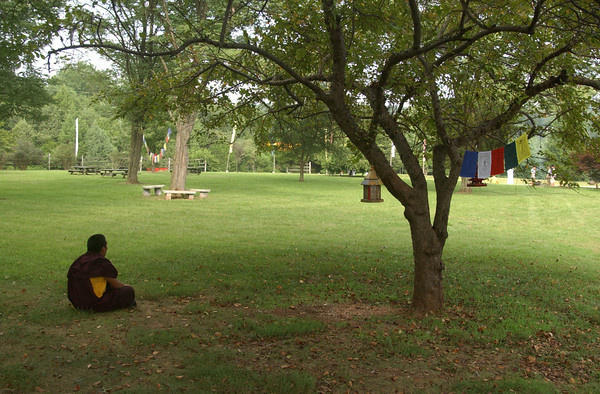
Cause and Effect and the Antidote to Unhappiness

The following is an excerpt from a teaching by Jetsunma Ahkon Lhamo called “The Lama Never Leaves”

Lord Buddha’s teachings are always reasonable and logical.  He teaches us that, for instance, if we are lonely and unhappy, we should look to find the causes of that.  He teaches us that causes are never outside.  They seem to be, but they are never outside because actually we are living with our own karmic habitual tendencies and propensities.  So if we are lonely and unhappy, we should look to the deeper causes.  The deeper causes may be that in the past, whether in this lifetime or in some previous lifetime, we allowed the others around us to be unsupported and lonely and unhappy.  Or perhaps we committed some profound non-virtue with our minds and so now, in our mind, we have the habit or the result of loneliness and unhappiness.  Perhaps in the past, we caused someone mental suffering or mental affliction, and so now in the present, we find ourselves feeling that same mental affliction. But we can only remember since the time of our birth, or somewhat after that, and we don’t know what the cause was really.  It’s hard to see.  We have to go by the Buddha’s teachings because Lord Buddha is that state of enlightenment which has the wisdom to see causes and results.  So we are taught if we have certain results within our life, such as unhappiness and loneliness, we should look for deep causes If we can’t find some reason in this lifetime for our loneliness and unhappiness, that is to say, that we ourselves have not brought about similar loneliness and unhappiness to others, then we should think that probably the cause has been in the deep past.  So we must assume that in the past, we have caused some unhappiness to others.

Now, here we are on the path, and we are told to apply the antidote. I shouldn’t leave that part out.  And the antidote, of course, would be to do one’s best to uphold the Bodhisattva Vow and to benefit others as strongly and as purposefully as we possibly can.  Of course, as monks and nuns, we will do that within the context of Dharma activities. As lay people, hopefully, we will do that within the context of Dharma activities as well. Yet we also have many opportunities in our lives to be of benefit to others in ordinary but very special ways. Some of us are doctors or nurses or counselors or those who help others.  So there are human ways to help others and there are extraordinary Dharma ways to help others, and we should apply that antidote.

One thing that not only I have noticed but practically every pop-psychologist that has arms to write a book with nowadays will tell you is that in doing for others, one becomes happy.  Self-absorption and ego cherishing, only thinking about what you want and what you don’t have, leads to further unhappiness and selfishness.  So it’s doing for others that actually brings up the spirit, and I personally know that this is true.  I know that this is true.

Copyright © Jetsunma Ahkon Norbu Lhamo All rights reserved
 

Mind Creates Form: Khenpo Tenzin Norgay

The following is an excerpt from a teaching by Khenpo Tenzin Norgay given at Kunzang Palyul Choling called “The Six Paramitas”

We are always concerned about our mind.  We have the body, speech and mind, and according to our Buddhist teachings, we say that our mind is more powerful than our body and speech.  It is the main controller.  Once we have our mind controlled, then our body becomes naturally controlled, and then our speech is also perfected.  So that’s why, instead of making our body perfect, what we are doing is making our mind perfect.

The mind is given more importance in our teachings.  According to our teachings, our mind can create a physical object, not the other way around—a physical object creating our mind.  So this is one of the main teachings. If we are able to understand that, then the law of karma, or incarnation, can be better understood.

So here, when we say our mind can create physical objects or all these projections—it is in the Abhidharma teachings—we are talking about how we have three realms of existence: the formless realm, the form realm and the desire realm.  Even in the Sutrayana teachings, when talking about, the formation of these three realms or cyclic existence, like when earth or some physical formation is there, it’s saying that it starts from below and then goes upward—having this sphere and space and the sphere of water and all gradually stacking upward.  Then when talking about the formation of the beings abiding there, the inhabitants, it’s talking about stepping downward.  First we can say we have this formless realm where there is only consciousness.  The person born in the formless realm is, in one way of saying,  less distracted and has a great degree of meditation but without Vipassana or Right View.  If we don’t have Right View, then when our meditational power becomes exhausted, we can be born in the form realm.  In the form realm, our teachings say, there is no physical body of flesh and bones, but not exactly the rainbow-like body. So there is sort of like a physical body there which is not really made of flesh and bones. But it’s saying because of our attachment to the physical form, there is some solid form of physical appearances in the form realm.  When this becomes stronger, we call it the desire realm.  So that’s where we are, in this desire realm.  And here, our desire to objects is stronger, so we have this flesh and bones and this brain.

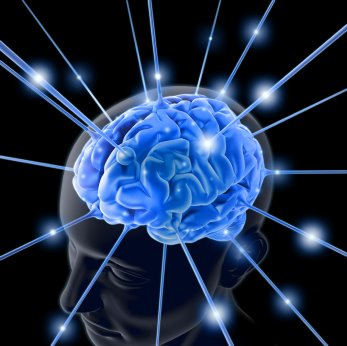
What I’m trying to say is our mind can exist freely without relying upon the chemicals in our brain.  If it were just a chemical process, then once the brain died, everything would be dead.  So it seems this is not our teaching.  Our teaching is that our mind creates the brain, not the brain creates our mind.


Non-Duality

The following is an excerpt from a teaching by Jetsunma Ahkon Lhamo called “Tools to Deepen in Your Practice”

We think that bodhichitta is something that we must practice, and yes, in order to build proper habitual tendency, that’s what we should do.  That is the basis and foundation for the next level of practice.  But this level of practice requires going beyond simple human kindness, or even extraordinary kindness where we practice from life to death, you know, in order to practice medicine or give out food, or make some phenomenal contribution.

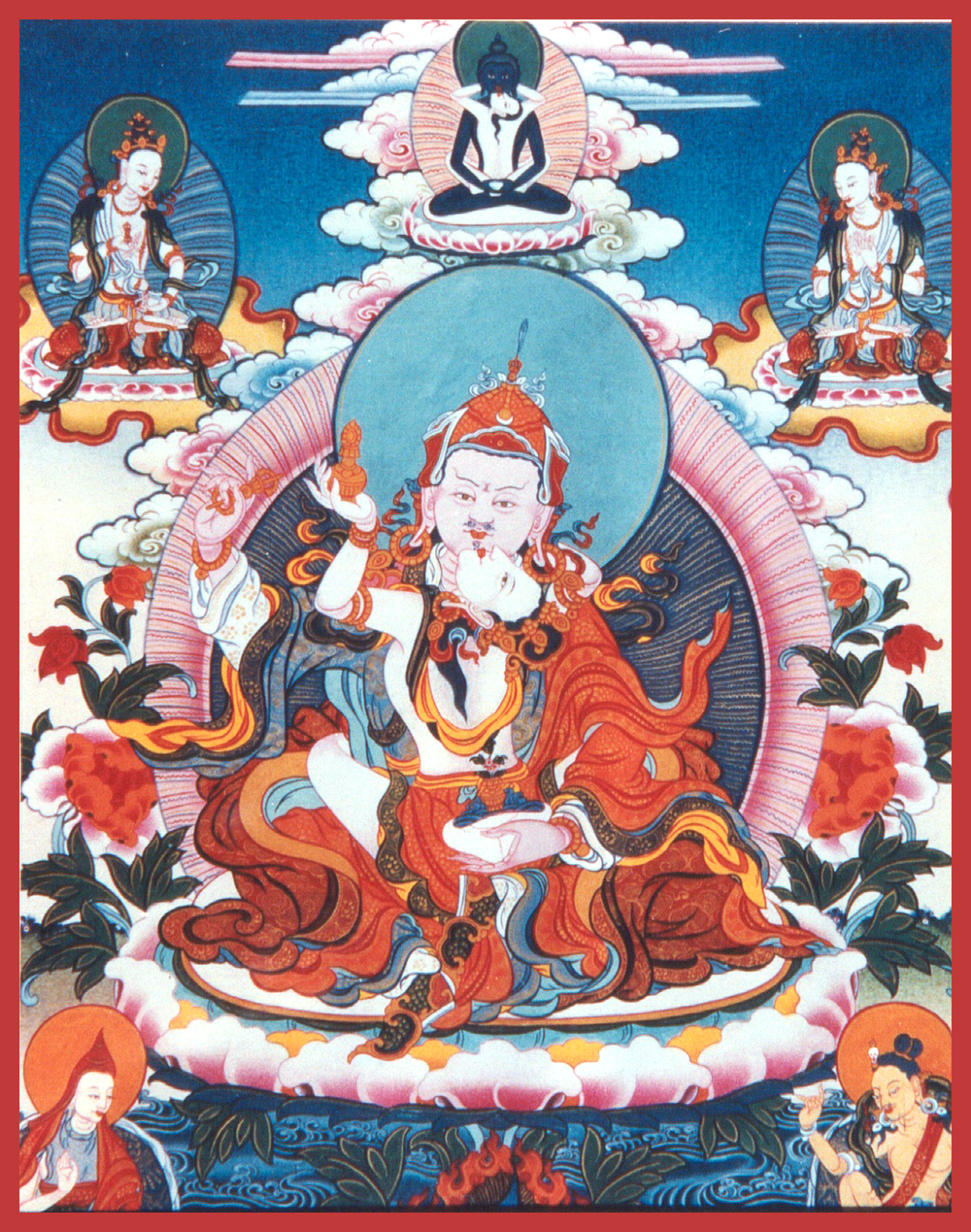
But here in the Vajrayana path, we must understand that you cannot create the bodhichitta.  You cannot establish it, nor can you tear it down or destroy it.  All you can do is deny that you are that; and you can do that from now ‘til kingdom come, whenever that is.  But you cannot deny the understanding that when we seethe fundamental picture we see again and again and again in Vajrayana of the Lama and Consort in union, this is emptiness and method, emptiness and compassioninseparable, functional as one.  We can take them apart to discuss or to understand them, but in truth the bodhichitta cannot be separated from emptiness.  And the true awakening to the bodhichitta comes from the fundamental view of understanding the emptiness of all nature.

In Vajrayana, we are asked to accomplish many things.  One thing we are asked to accomplish is, of course, the realization of emptiness, the understanding of emptiness.  We are asked to understand the arising of compassion as being consistent with the understanding of emptiness.  What we can’t do is change that or build it or control it, or anything.  By simply letting go of the idea of duality, the display of truth must surely arise, and that display is the bodhichitta.

 Copyright © Jetsunma Ahkon Norbu Lhamo All rights reserved
Proper Conduct: Understanding the Source of Happiness

The following is an excerpt from a teaching by Jetsunma Ahkon Lhamo called “The Lama Never Leaves”

Whenever we are on the path and we have a spiritual friend in the form of a teacher, whether it is on the earlier path of Theravadin Buddhism or whether we have a spiritual guru who is from the Vajrayana point of view, a very profound friend who one can expect will mingle with our lives and hopefully mingle with our mindstreams, and give us the appropriate information in order to practice the path, there is one set of instructions that is almost always given in one way or another.  And so I’d like to give these instructions.  They are about gathering and accomplishing “merit”…or meritorious activity.

Here in our society, we are taught in a materialistic way.  We are taught that of course if we get education we will make money.  If we make money, we will get things.  If we get things, we will be happy and we can pass those things on to our children who hopefully will be happy also.  And that’s the idea that we have in this society about material things.

Very rarely do our parents teach us about profitable conduct.  We’re taught about how to live profitably.  Hopefully, if we had good parenting, they taught us about how to keep a bank account and all of those passages of adulthood that we learn about.  But nowadays, it has become much less popular, unfortunately, for parents to teach us profitable conduct; in other words, how to act, how to present oneself, how to hold oneself, what deeds to act upon and so forth, that will bring us happiness and joy.  We in fact, in growing up, we are not really taught that acting in a certain way will bring us happiness or joy; or making offerings in a certain way, or certain kinds of conduct.  Generally what happens is the child imitates the parent.  Many times the parent, like any other samsaric being, is neurotic and we see them acting neurotically in their relationships, and we see that it’s like a roll of the dice.  According to how we act, half the time it produces happiness, and half the time it doesn’t.  And sometimes when we’re in a real spiral…that means the downward kind…we can experience a great deal of neuroses and our children will watch that habitual patterning and they will pattern themselves after it.  It’s natural.  It’s hard-wired in children to do that.  And of course in this day and age, it seems like we have lost touch with what it is that actually creates happiness.  We are so confused in our minds…we’re in such turmoil…we’re always grasping and grabbing and trying and often we’re working very hard at it.  It’s not that we’re lazy.  We don’t just lay around all day.  We’re often working very hard at things that ultimately produce no good result.  Pursuing endless distractions, the Buddhas have called it.

And so, we turn to the people of authority in our lives and we look to them for guidance.  Well, we look to the government and the government says, “Let’s cut down on social services, screw the poor people, we’ll go to war!”  So maybe that’s not so good.

So then we look at our parents…and let’s see, parent’s are on maybe second or third marriage, and they’re very much trying to be happy but they don’t know how to be happy and the parents are in as much turmoil as perhaps the child is.

And then the child turns to the teachers and even religious figures.  And if the religious figure is not enlightened, often times they are lead down horrible paths; perhaps even abusive paths where they are taught some strict dogma that has no relationship to anything really; or in the worst case scenario, they are used and abused by a religious figure of authority.

So where do we actually go to understand what it is the Buddha taught about cause and result…because this is where the Buddha really shone…showed his immense wisdom, his immense capacity.  …Is that not only Shakyamuni Buddha, himself, but every teacher and lama that has studied his teachings, followed his ways and accomplished.  And all the teachers yet to come that revealed Terma, including Guru Rinpoche and those that were Treasure Revealers later on, each in their own way, taught us Proper Conduct.

Proper Conduct is actually part of our Ngondro practice in which we learn to turn the mind toward Dharma.  And that doesn’t mean…what do you call it when somebody…a person that sings the rap of a certain company and…public relations, right.  It’s not like that.  Our teachers actually indicate to us how we should live and actually that’s one of the signs of the Buddha is that the Buddha comes to the earth and shows us how to live because we are living in confusion.  We have not been taught of cause and effect.  And this is one thing that Lord Buddha really taught about was cause and result.  And he said that, if spiritual thinking isn’t reasonable and logical, that is, if one cannot think it through first before one decides to really open the heart in faith, then we should think again.

Copyright © Jetsunma Ahkon Norbu Lhamo All rights reserved

Love For All Beings

[Adapted from an oral commentary given by His Holiness Penor Rinpoche in conjunction with a ceremony wherein he bestowed the bodhisattva vow upon a gathering of disciples at Namdroling in Bozeman, Montana, November 1999. —Ed.]

Think about all living beings that at some time or another, throughout the course of innumerable past lifetimes, have been your own kind father or mother. Consider how a mother will do anything for her child—even give her own life, without hesitation. Consider how all living beings have been that kind to you at some time in the past—not just once, but countless times, in countless different circumstances and situations over the course of countless lifetimes since beginningless time. Consider also that to not think carefully about repaying kindness, and thereby to go through your life without the intention to truly benefit parent sentient beings, and so to actually ignore them, is truly shameless.

Many people in the West may think, “Wait a minute! My parents were not very kind to me. In fact, we are not even close, and I don’t even like them, so why should I feel that I need to repay their kindness now?” If that is what you think, then take a moment to think about how you acquired your body. Is it not due to the kindness of your parents that you have your precious human body? From the time your consciousness entered the union of your father’s seed and your mother’s egg, your mother carried you in her own body. Her body nurtured you as you grew within it. Then with pain and difficulty she gave birth to you. Her kindness did not just stop there: for many years she cared for you and lovingly fed, cleaned, clothed, and wiped you; she provided shelter and cared for you when you were sick, and then she protected you and looked out for you constantly. If you think you don’t need to repay the kindness of your parents, just remind yourself of those events, which you were the recipient of time and time again.

If that still does not change your attitude, so that you still do not understand the kindness your parents showed you, then think about your body, the gift of your body, which is who you are; your parents gave you that. Because your parents showed you the great kindness of giving you your body, your precious life, here you are. Sure you had the causes for your precious human rebirth, but without parents you wouldn’t have your body. And you didn’t have your body, you wouldn’t be able to receive these vows.

In our present state of ignorance, we have an inability to recognize that all beings have been our parents in the past, and we certainly don’t know what the particular situations and circumstances of those lifetimes were. Nonetheless, it is certain that we have had countless sentient beings as our parents over and over again in countless past lives. The truth is, at the present time we just do not recognize that.

Imagine you are on the bank of a river with your mother and suddenly she falls in and is being carried away by the rushing water. There you stand on the bank, watching that happened. What would you do? Would you do something to try to save her, such as throw out a rope? Or would you turn your back and walk away rather than risk your own life? Would you be concerned for her, or would your concern be only for yourself? The intention of the hearers and solitary realizers can be likened to this latter case, while the intention of the Mahayana practitioners can be likened to the former. While it is important to develop attraction toward peace, you should never for any reason, be attracted to the quiescence of the hearers and solitary realizers.

From “THE PATH of the Bodhisattva: A Collection of the Thirty-Seven Practices of a Bodhisattva and Related Prayers” with a commentary by Kyabje Pema Norbu Rinpoche on the Prayer for Excellent Conduct

Compiled under the direction of Venerable Gyatrul Rinpoche Vimala Publishing 2008

Taking Bodhicitta Home

The following is an excerpt from a teaching by Jetsunma Ahkon Lhamo offered at Palyul Ling Retreat 2012:

We have to remember that kindness is the way, and bodhicitta is the most powerful thing in the world.  If you are afraid because someone has wronged you or harmed you in some way (and I’ve had that experience), I’ve also found out that bodhicitta solves the problem.  Bodhicitta ends the problem.  If someone harms you and you instead give bodhicitta, some kindness, then the problem is over.  His Holiness himself with his own mouth told me there is nothing more powerful in the entire world than the great bodhicitta, nothing more powerful.

Whatever practice you do, meditate on compassion.  Meditate on the suffering of sentient beings.  Come to understand what it is that they go through.   They will never have what you have because the karma is not there.  But you could help by offering the bodhicitta and offering yourself to the three precious jewels for their sake.  Keep this phrase in your mind.  If you are uncomfortable and your knees hurt or anything like that, remember, “For their sake. For their sake, my children.”  Please hold that in your heart and hold that in your mind, even though these are just very simple words and nothing to take home or be so proud of. Still I want to tell you that if you don’t have the bodhicitta, you have nothing.

You are so needed in a world that is hungry for love.  But if you forget that, then your practice again becomes dry and dull, and you may forget.  Dharma is like a wedding cake.  The bottom of the cake is the support.  Without support, everything falls down.  And bodhicitta is the support.

I know your hips hurt and your knees hurt and your eyes are tired.  I know what it is like with retreats and the long times that you sit in that one certain position.  I can’t even do it anymore because my knees have gotten so bad.  I inherited that from my father, His Holiness Penor Rinpoche.  That’s all I am going to burden you with tonight.  I feel that you have spent a long day working very hard,  and you should have your rest; but I wanted to tell you this one small thing.  Don’t forget love.  Don’t decide what it has to be.  Don’t forget the bodhicitta that is so needed, like food and water.  Look and see what you can do to help others on ordinary levels too. You can’t practice when you are hungry.  Try to help all beings in any way that you can.  If you find yourself unable to keep going in your practice, stop.  Go back to the beginning.  Do the bodhicitta all over again, and then move on.  You will be refreshed.  Your heart will be moved.

That is all I am going to share tonight.  I thought that it might be helpful in your practice, especially in the middle when it’s just getting really hard.  Take care of yourself.  Take care of your hearts.  Give yourself the food you need to go on through practicing kindness.  Be kind to yourself as well.  I am thrilled to have this opportunity to be with you, even though I have nothing much to say.  Thank you for coming.

Copyright © Jetsunma Ahkon Norbu Lhamo All rights reserved

The Seduction of the Five Senses

The following is an excerpt from a teaching by Jetsunma Ahkon Lhamo called “Tools to Deepen Your Practice”

All the practices, no matter what they look like or sound like or seem like, are heading in that direction of gradually awakening more and more to the awareness of the sphere of truth.  Wisdom is then the accomplishment of a state of such non-attachment that one realizes the emptiness of phenomena by simply [Jetsunma effortlessly and blissfully breathes out, her eyes and body completely relaxing].  I don’t know how else to describe it except to just show you that posture.  Just…[Jetsunma once again breathes out as noted above].

Because the same as your touch is bliss.  The same as your smell is bliss.  The same as your tongue is bliss.  How does it happen then that we’re so darned uncomfortable?  How does it happen then, according to the Buddha’s teachings, that so many sentient beings are revolving so helplessly in samsara, so lost, so unable to understand how to understand, or how to awaken, or even how to live virtuously so that in the future they’ll be happy?  How does this all happen?

Lord Buddha said it during the course of his actual physical life, when he said, “All suffering arises from desire.”  So while you can say that the fundamental space of the five lights is the same as the five primordial Dakinis, they are activity not separate from the Buddha nature.  And yet these five senses hold on to us. Well we think they do, although we did create them.  But with their grasping nature, they cause us, because we have the strong habitual tendency,  to constantly react and constantly react and act really neurotically because we don’t understand.  To be neurotic is to not understand the situation and to act inappropriately repetitively.  That’s pretty much us.  We do not understand the emptiness of self-nature and so we constantly act differently.

So, these five primordial Dakinis that are your senses and that someday you will awaken to are now—because we are clinging, because we have not renounced, because we believe in phenomena and we believe in the solidity of everything, and because we are really revolving in dualism—we would have to consider them like five nasty whores.  Because they trick us.  They seduce us.  They say to us, “Come and play with me and I will give you anything.”   And when’s the last time you got anything from a skanky whore. (laughter)  [Jetsunma: I did not say that!”]  Our five senses actually keep us in a constant state of inflammation, because while we’re grasping to the solidity of phenomena, we’re constantly reacting.  While we’re constantly reacting, we’re constantly acting neurotically, out of accordance with the nature of reality.  And so we’re being tricked, seduced.

The senses have many tricks. As front runners for our consciousness of duality, they like to trick us by building us up. You know, we can see and hear things that make us feel very proud and make us feel as though we are worthy of praise. You know, we can arrange phenomena any way we want.  That’s the amazing thing about it.  And it can become very seductive.  We can absolutely crap out on our practice and yet with our five senses, we can manage to create in our consciousness of duality a scenario in which we’re looking pretty good.  We can wear the right clothes and have the right beads, and you know we can look pretty good.  And so that’s the deceptive nature of the five senses.

How difficult it is to understand that that which helps us negotiate around is actually the very nature of bliss.  How to understand that the opposite side of the very clinging that we do so tightly that prevents us from awakening to the primordial wisdom state,  is liberation?  Well, that’s wisdom and that is the kind of wisdom that we strive for as we practice.

Copyright © Jetsunma Ahkon Norbu Lhamo All rights reserved
 

What Are Your Senses Telling You?

The following is an excerpt from a teaching by Jetsunma Ahkon Lhamo called “Tools to Deepen in Your Practice”

When you see, you react with acceptance or rejection.  You have an acceptance or rejection or even a neutrality, which would be a combination of both or a decision not to do either; but there is that first knee-jerk reaction.  It’s the same with all of our senses.  We react to what we sense.  The senses are really to keep us pacified in the belief that our lives are inherently real, that we are sitting on solid, that we are solid, we live in solid and everything’s ok.  And that’s what the senses are meant to do.  They are meant to grasp on in a way, and hold on to the time and space grid so that we can feel as though we are safe.  Because we don’t like that idea of emptiness. That’s just troublesome.

So when a Tantric practitioner sits down to meditate, he has to take the senses and open them up.  How can you do that?  Can you visualize it?  Well, you really have to go quietly in your practice and find out for yourself.  It’s very difficult for any teacher to tell you exactly how to let go of the senses or to let go of the attraction of the senses.  Yes, we can give you pointers.  But it comes down to the point really when you have to sit and you have to know your own mind.  When we know our mind, we know how to deal with it.  And it’s like feeling our way around.  Oh, we know we shouldn’t go there because there’s an object; and we know we should go there because it’s ok.  We’re kind of feeling around.

So when a Tantric practitioner meditates on emptiness, he doesn’t build emptiness.  He doesn’t make emptiness.  He doesn’t cling onto emptiness which is somewhere else and bring it here.  Instead, what the practitioner does is to simply allow the grasping to solid phenomena and solid self-nature to be appeased.  One relaxes.  One awakens to emptiness!

How does one awaken to emptiness?  Well of course, the first time you sit down and try this, you’re not going to awaken to emptiness fully because that would be like becoming practically enlightened in a very swift time, like very swift.  And so, you can’t expect that.  You must be patient with yourself and expect that this will take some work, that it will take some time.

When one relaxes the grasping, the difference is . . . Ok.  If you take a crystal and sunlight comes through the crystal and is reflected and refracted and you see a rainbow, the rainbow is the same nature as the light that came through the crystal.  In a way, what you’re going to do, is if you’re seeing a red ray and a purple ray and a blue ray or whatever color you’re seeing from this crystal, you’re going to, with intention, go to the heart of that color, as though you were peeling away the colorness of it.  Almost reversing it.  Putting it back through the crystal and understanding its source.  Like that.

I know.  That’s a little chewy.  So you have to chew on that for a little bit.  But it is very much like that.  To be a Tantric practitioner, in fact, you must have assumed the nature of emptiness.  And in one’s practice, that is what you do.  You assume the nature of emptiness.  So, you are relaxing the senses and the grasping knowing that. You don’t visualize emptiness because when you allow the relaxing and the grasping to go, emptiness is what is.  It spontaneously arises.  And even that’s a joke.  Because here I am telling you “it” spontaneously arises.  And of course, that’s not possible.  Because once it’s “it”, then it isn’t empty.  And yet I say to you that this is the trick of it. When we take that precious minute before we generate the deity to really allow the senses to unlock, to stop contriving, to cease to evaluate, to stop giving you the food that you use to react, to simply let go, the more deeply we go into our practice.  And your assumption there—and that should be your first assumption—is that separate from this grasping, there is the nature of emptiness.  That, in fact, if we can pacify this grasping, then the empty nature is visible or knowable in some way.

Copyright © Jetsunma Ahkon Norbu Lhamo All rights reserved
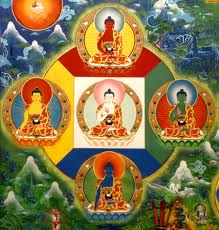
 

The Sphere of Truth

The following is an excerpt from a teaching by Jetsunma Ahkon Lhamo called “Tools to Deepen in Your Practice”

When it comes to gathering wisdom and to understanding the difference between wisdom and knowledge, knowledge would be all the facts that you absorb from your text or from reading or from your teacher or from tapes that you might have heardthat allow you to accomplish that ‘letting go of the senses.’  The actual opening the senses and relaxing them is like a hand. If my hand is like this, it’s around something; the shape is defined.  And here in your meditation on emptiness, it’s more like this (Jetsunma relaxes the hand grip) and the hand is open.  And while the hand is open, if it were possible to truly do this in a profound way, it would be like it says in the Guru Yoga generation stage in the Shower of Blessings: ”His great bliss flashes in the fundamental space of the five lights.” That’s it.

If you could really read and understand that line, that would be so good.  “His great bliss flashes in the fundamental space of the five lights.”  Well, what are the five lights?  They are the senses.  While we are considering them solid, we can name them and describe them.  But it says here, “…the fundamental space of the five lights”. So the senses become ‘fundamental space’.  The trick is that when we are not grasping and reacting, the natural state of bliss arises.  And so here they’re talking about Guru Rinpoche, and they’re saying, “His great bliss flashes in the fundamental space of the five lights”.  Such renunciation of the grasping of phenomena is implied in that line.  Such renunciation.  Such accomplishment.  And true understanding of what the five senses are.  Because like the light coming through the crystal, they all arise from the fundamental bliss that is our uncontrived primordial nature.  That’s an amazing line.  And of course, by going deeply into your practice, one would want to read again and again the different words that you are reciting in Tibetan in English, so that you can really understand what it is that you are doing.

So for a Tantric practitioner, it’s all about practicing the awareness of the fundamental sphere of truth that we habitually perceive as phenomena.

Copyright © Jetsunma Ahkon Norbu Lhamo All rights reserved

Understanding the Senses

The following is an excerpt from a teaching by Jetsunma Ahkon Lhamo called “Tools to Deepen Your Practice”

In order to practice Vajrayana, for instance, there has to be some certain capacity that the student has, or some previous karma that now comes forward and comes to bear, or Vajrayana simply would not work. Indeed, for certain kinds of students because they practice very superficially, Vajrayana , would be like just reading Sutra—just reading it, reading it, reading it, reading it. You may glean some information, but you will never accomplish any wisdom that way.

So when we first come to Vajrayana, we are expected not only to read, to learn how to pronounce, to accomplish the tune; but we also have to learn how to visualize. We also have to learn how to allow the five senses to dissolve into the sphere of truth, which is emptiness,  and that means letting go of perception.  And that’s the first step towards meditating on emptiness, or rather as we do in Vajrayana, dissolving or realizing the essence of all nature to be empty and then arising from that empty nature as the deity or as a wisdom being.  This is basically the meat and bones of Vajrayana, that generation of the wisdom being by first dissolving into emptiness.

If a person who is studying Theravada Buddhism (that’s the early stages of Buddhism that Lord Buddha taught when he was actually physically alive),  practices like that, they are letting the mind relax. They are using some kind of method like allowing the mind to rest on the breath, to simply breathe, to simply be like that.  But ideally, when a Vajrayana practitioner prepares to really generate the deity and they’ve done their taking refuge and all the steps that precede:the promising, the Bodhisattva promise and all the prayers:and they actually get to the part where there is the dissolution or the original view of emptiness, they are not, at that point, relaxing the mind.  Because if we’re simply relaxing the mind at that point, we are technically practicing Theravada Buddhism.  It’s a little different.

It’s ok to start that way, but again, we’re talking about going more deeply into our practice.  So when a Tantric practitioner meditates on emptiness in order to pave the way for the rrising of the deity, what you really do at that time is to open up the senses in the sense that the senses are grasping things.  They see “this” or “this”.  I hear “that”.  I smell “something”.  So the senses are grasping things. The senses are actually the children of the original conscious assumption of nature being essentially real, or of phenomena being essentially real.  And so the senses arise from that assumption.  It’s a chicken or egg thing.  It’s opposite what you would think.  The senses arise from the assumption of consciousness as being inherently real.  And so the senses’ job is to grasp!

Copyright © Jetsunma Ahkon Norbu Lhamo All rights reserved
WP2Social Auto Publish Powered By : XYZScripts.com