Commitment

maitreya2

The following is an excerpt from a teaching by Jetsunma Ahkon Lhamo called “Love Now, Dzogchen Later”

If you can’t be bothered to join and give some help, some support through having given rise to the bodhicitta, and having habituated oneself towards understanding the nature of samsara, which is also your responsibility, and habituating oneself towards deeply understanding the suffering of all sentient beings, which is also your responsibility, then there’s not much hope for good practice, no matter what practice you do. You can’t get away from it, no matter how wonderful you are. Compassion is in the mix. And there’s not much time. None of us knows how long we will live. It is not appropriate to say I’m going to wait, wait, wait, wait, wait until I get my stuff ironed out, and then, THEN I’ll try the bodhicitta. You’ll never get the chance. Believe me, my friend. I’ve seen it time and time again. You will never have the opportunity.

When you accept the path of the Dharma, and you commit yourself to the idea of liberation, at that point, you have to accept what has actually been taught. You can’t pick and choose what you want. You can’t make up your own little gig and call it Buddhism. Because all of the Buddhist teachings, every one, from the simplest level in the Deer Park when Lord Buddha was actually alive to this very day and whatever terma revelations may even be realized in this time, the heart beat, the essence, the blood and spirit and truth of Dharma is the bodhicitta, the great compassion. That is the way.

If you think you can simply muster up great pride in your accomplishment by keeping your ordinary qualities—pride, self-absorption, slothfulness—and yet somehow do a very high practice, and magically give rise to the perfect awakening, it won’t be so. Time and time again, we have been taught that the way of the Buddha Dharma is the way of the bodhicitta. So it is easy to say, ‘I graduated last year. I’m going to graduate this year, too.’  It is easy to say, ‘Well, I didn’t do this, and I didn’t do this, and I didn’t accomplish a bhum [one hundred thousand repetitions] of this, and I didn’t accomplish a million of that, but I’m practicing Dzogchen.’ That’s very easy to do. But it behooves us to go back and see what we’ve missed.

You are not too advanced to love. You are not too advanced to get off your duff and help somebody. You are not too sanctified to look at other beings on this planet and say, ‘I know that you are wandering in samsara. I know that we are basically human and that we share many of the same sufferings, and I find that unbearable. I wish to help.’  You are not too holy to care that there is war, that there is hunger, that there is suffering. And shame on you if all you do to honor Guru Rinpoche’s teachings is to sit on your little cushion and have it be all. Yeah, you can dedicate your practice. That’s right. You can also help. It wouldn’t kill you. Do you see what I’m saying?

It’s good to go all the way. It’s very good to get these precious inconceivable teachings, but since you are not in that perfect situation where you will be constantly reminded except by maybe me… And how much do you listen to me?  Unless you are in that perfect situation, it is up to you to make up the difference. This is the karma of our times. And you find yourself here at 18400 River Road. You can’t skip anything. You should accomplish your Ngӧndro. You should finish it even if you’re working on Togyal. You should accomplish your Ngӧndro. And that means finishing it, not just saying, ‘I did a lot of it so I accomplished it.’  And you should accomplish your Three Roots. And most especially you should give rise to the precious bodhicitta.

Read the lives of the saints. Read what they went through in order to give rise to compassion. And that in any case, in every case, no real progress was ever made unless there was compassion, unless there was bodhicitta.

Copyright © Jetsunma Ahkon Norbu Lhamo All rights reserved



Warrior of Virtue

eowyn_warrior-1

The following is an excerpt from a teaching by Jetsunma Ahkon Lhamo called “Art of Dispelling Anger”

For myself, I have that commitment. I made it a long time ago. There’s no backing out now. Every time I try, my commitments are made. It’s a done deal. I’ve always known that. My aspiration is to leave the footprint of bodhicitta every time I incarnate, to leave it so it is undeniable , and to help others so that they can leave that same footprint. And I don’t intend for that to ever stop until all sentient beings are free. Now why is that?  It is because I am such a great kid? I am  such a doll? Iam such a wonderful person?  That may all be true, but that’s not why. It’s because I cannot be truly free without you. There are many gurus of different kinds who are self-realizers. They realize mastery of self. But that is not our gig here. That is not what we do in Buddhism. At least not Vajrayana. We don’t do that in Vajrayana. In Vajrayana, our goal is to understand and give rise to the primordial nature in display, which is the great bodhicitta. End of story. And so I will not abandon you. I cannot abandon you, because you are me and I am you and I cannot be free without you.

That’s the understanding we should all aspire to. In our selfishness and our self absorption, we forget and we commit this abomination of even fighting with each other when if we could only truly look in each other’s eyes, if we could truly see,… We are the same, we are the same, we are the same taste. And so, this is why we need to break our habitual tendencies, train ourselves thoroughly, look at ourselves honestly and most of all, if any of you are in that childbearing age, anyone who is listening, please, raise your children right. Raise your children right. Teach them responsibility for what they do. The ‘I help with the household chores’ is one thing. Teach them to clean up their own messes. Teach them that pencils were made with erasers for reasons—so that we can correct ourselves. We can erase our mistakes and correct them and make better. Teach them ethics. Teach them the ethics of liberation.

The reason why we have so much difficulty teaching people proper values and how to stick with the beginning stages of the Buddhadharma, which is about virtue and conduct, the reason why that is so hard is that most of weren’t raised up. We were kind of dragged up. You know? We weren’t raised up with thoughtfulness and regard and respect. Many of us were just kind of fed and watered and whatever. When you raise a child, you must teach the child to be a good citizen in the world and to leave the world better than they found it.

So that’s my hope for you and that’s my hope for anybody’s children and that’s my hope for all sentient beings. Just think if we could really just get that message across. Forget the big practices and the bells. Just think. The most fundamental of the Buddhist teachings allows one to be whatever faith they wish, but teaches us how to live with good qualities.

So take up your sword, take up your shield and beat the crap out of your bad qualities, lest I have to do it for you. That wasn’t a threat. I am a nice person.

Copyright © Jetsunma Ahkon Norbu Lhamo All rights reserved
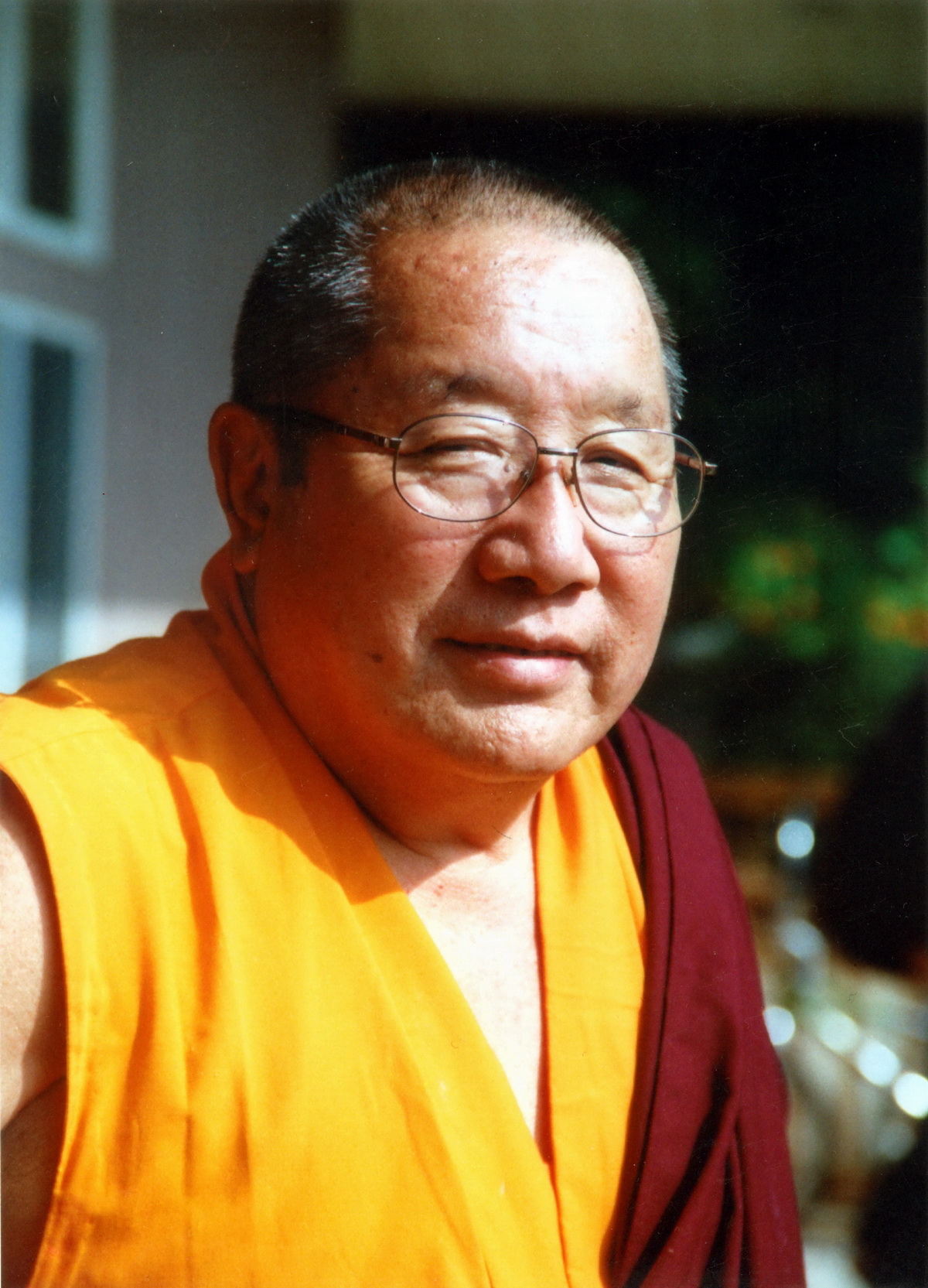
 

Without Bodhicitta, There Is No Path: from His Holiness Penor Rinpoche

The following is an excerpt from a teaching by His Holiness Penor Rinpoche on Mediation, reprinted with permission from Palyul Ling International:

Many of you are interested and have asked, “Please give us the Dzogchen teachings.” But even I myself don’t know what is Dzogchen and I don’t have anything to teach you!

Anyway, as I explained to you earlier, if one practices the Bodhicitta, that kind of pure intention to really benefit all other sentient beings, and then the samatha meditation practices to establish one’s mind in full concentration, then of course there will be the Great Perfection (“Dzogchen”) meditations.

But if one cannot cultivate the Bodhicitta within one’s mind, the path to Enlightenment is already broken. Without Bodhicitta, there is no real path. Bodhicitta is that which is without any partiality. The pure intention of Bodhicitta, the thought to benefit all sentient beings without any exception, can be understood by realizing that in one or another lifetime, each being has been one’s parent. If we understand this and think of how dearly they have taken care of us, then we will feel grateful to all the parently beings and we can generate Bodhicitta to all of them.

This present body of ours is here because of our parents. If we did not have parents, there is no possibility that we could have these bodies. And if we don’t have this physical body, then we cannot accomplish any kind of worldly or Dharma activity. So our mothers are indeed very kind and we should be grateful.

Of course, there are many kinds of parent-child relationships in this world, but we should remember that whether or not we are close to our parents is based on our own desires and our own thoughts. Beyond that sort of thing, the main meaning here is that without our parents, we could not have this body, and because of this we should understand and be grateful for their kindness. So first one really concentrates on generating Bodhicitta based on one’s gratefulness to this life’s mother, and from that one can extend this Bodhicitta to all sentient beings equally.

So the most important points are to have faith and devotion in the Dharma, then meditating and contemplating on Bodhicitta and compassion. Then one can apply these into practice through the meditations on emptiness.

In the Dharma practice one should not think, “Oh, I am doing all this practice for the benefit of this lama or for these Buddhas.” Never think in this way. The Dharma practice is for yourself. Each and every one of you as individuals has to liberate yourself from Samsara. You are attaining Enlightenment for yourself. You are attaining Buddhahood for yourself. By your practice, your lama is not going to attain Enlightenment nor is Buddha going to attain Enlightenment! Buddha has already achieved Buddhahood! And if you cannot attend to Dharma practice in the proper way, then it is yourself who will fall down into the three lower realms. It is not the lama or the Buddha who will fall into the lower realms!

So, though it is important to think spiritually of one’s own benefit and how one can attain Enlightenment, still the achievement of that kind of liberation is by the path of benefiting all other sentient beings. Without that kind of Bodhicitta one cannot attain complete Enlightenment.

The Bodhicitta we can generate right now, however vast, is beneficial. In the future, when one attains Enlightenment, according to the vastness of that Bodhicitta, that many sentient beings can benefit and liberate themselves from the sufferings of Samsara. Right now we cannot really perceive all that fruition, but if we continue to practice, then in the future we will realize it as a direct perception.

Compassion as Antidote

????????????????????????????????????????

The following is an excerpt from a teaching by Jetsunma Ahkon Lhamo called “The Habit of Bodhicitta”

There’s a funny thing about the human mind that we don’t realize. Do you know how in your mind you think you’re concentrating on a million things at once? Some of you can chew gum, watch TV, listen to the radio and write in a book at the same time. I’ve seen people do this. It’s amazing. I have a son, oh, my god, you can’t believe this son. It looks like he can watch TV, listen to the radio, talk and really carry on a conversation, dance while he’s talking, and if he knew how to fry an egg, he could probably do that at the same time. I mean, talk about a Mongolian juggler. Each of us feels likewe can do so many things at one time; but what we don’t realize about the human mind is that’s not true. It can only do one thing at a time. But what happens is that we do these things in such rapid succession, that if we think about ten things at once, it feels like what is actually happening is that we are thinking about this, switch to this, switch to this, switch to this, very quickly; and our minds actually become inflamed and agitated with the switching from one picture to the other. That’s why it becomes valuable and precious to meditate on bodhicitta and to practice bodhicitta. Because while you are practicing bodhicitta, putting your mind in this pile, while you are doing that, no matter how simplistic it is, even if it’s just opening the door for somebody, while you’re doing that, you aren’t doing the other thing. And the great thing about the human continuum is that if you aren’t continuing it, it doesn’t continue.

The funny thing about continuum is that it loses its definition, its essence, if it’s not being continued. So we are taught to practice kindness and to begin where we can and to increase it moment by moment. Because while you are doing that, you can’t be doing the other. But believe me, when you are not doing that, you are doing the other. You are doing the other. So the bodhicitta becomes now not a great mystical attribute that we all hope we are going to get, it becomes a remedy. It becomes a method. It becomes an antidote. And you should see compassion as an antidote. There is no excuse, none, for you not to start right now. And you can’t get into what is kind of like the diet syndrome with bodhicitta. I don’t know how many of you have actually been on a diet, but if you’re on a diet, you’re like this: You go through, ok, a thousand calories a day. So you’re making your little chart and you’re eating your boiled egg or whatever it is, celery and ice or, whatever horrible thing they are making you eat. And then at one point during the day, you just can’t stand it and you go back to the old habit and think, ‘Ok, I’ve eaten celery all day, now I’m going to eat a piece of chocolate cake.’ What happens in our minds is that we think, ‘Now I’m off my diet. And it doesn’t matter.’ Well, you can’t have that kind of diet mentality with your bodhicitta. For instance, if you practice bodhicitta for a good period of time and suddenly you blow it, not only blow it, blow it big time, you know, I mean, big time, you really blow it, then you think, ‘I’m not a compassionate person. I’m not good, I’m bad. It’s gone for today. I’ll try maybe next week sometime. I’m hopeless. I’m helpless. I’ve blown my bodhicitta diet.’ You begin to form all these exaggerated conclusions based on what has just happened.

If you could approach yourself in a relaxed way, moment by moment, and you did practice bodhicitta for a certain period of time, then when you really, really blow it, there would be no inner tension to prevent you from simply going back to the bodhicitta. What you’ve done is expressed both of your habits, your new one, which is difficult, and your old one, which is easy and you can fall into it any time you don’t practice your new one. It doesn’t mean anything. It only means that you’re expressing both habits and at every given moment you have a choice. You can practice bodhicitta the very next moment right after you’ve blown it. And you should, because the best way to prevent blowing it again is to climb right back on that horse and make restitution. That’s the best way, to get right back on it. If you don’t’ do that, you carry a tremendous burden as a spiritual person, the burden of hypocrisy. You feel like a hypocrite. You feel like you’ve really messed up. You have this idea that you’ve been kind and then this monster in you comes out and then you’re faking it again. You can’t think like that. You can’t think in terms of good and bad, high or low. Think in terms of habitual tendency. Give yourself a break. You have both. Accept it now. Accept it now. And this way, no matter what happens, you’re not going to have to think something vile about yourself. And you have the freedom to make a choice at any moment.

My recommendation is that should you begin to practice bodhicitta and find it extremely difficult, do not form conclusions about it. Only continue. The only conclusion you should form really is the one that I’m giving you: That’s my habit. I understand that about myself. I accept. And I accept that I can change it, little by little. And it’s hard. It’s all right if it’s hard. One day at a time, you know?

Copyright © Jetsunma Ahkon Norbu Lhamo All rights reserved

 

The Middle Way: From a Commentary on the Bodhisattva Vow by HH Penor Rinpoche

hh_mg_1875-S

The following is adapted from an oral commentary given by His Holiness in conjunction with a ceremony wherein he bestowed the bodhisattva vow upon a gathering of disciples at Namdroling in Bozeman, Montana, November 1999:

This leads to the third stage concerning the aspect of adjusting one’s intention [which is the first of four aspects of the preliminaries to the ritual for receiving the vow]: transcending the two extremes of samsara and enlightenment by vowing to maintain the middle way. The practice of the enlightened mind, bodhicitta, involves two levels, the aspirational and the practical. Maybe you’re thinking, “If we reject the suffering of the three realms of existence and avoid attraction to the quiescence of the hearers and solitary realizers, what is there for us to obtain?” What we are to obtain is the state of bodhisattvahood, which is dependent on bodhicitta cultivated for the sake of self and others. It is only bodhicitta that leads beings from the suffering of existence to the state of fully enlightened buddhahood. We must avoid the two extremes: the quiescence of ordinary nirvana and the endless cycle of samsara. It is only through cultivating bodhicitta that we can truly follow the middle way.

Through cultivating bodhicitta you will purify all nonvirtue accumulated in the past, present, and future, and compassion and all noble qualities, including the ability to meditate in samadhi, will blossom in your mind. As you dedicate yourself to the welfare of others, the [strength of your] vow will increase to the point where are you are truly able to help sentient beings as limitless as space. You will be able to bring limitless beings to enlightenment, until the ocean of existence is emptied. The Buddha taught that without the cultivation of the precious bodhicitta, there is no chance to achieve the state of fully enlightened buddhahood. Therefore, for the purpose of all other living beings, with great enthusiastic joy you should give rise to the precious bodhicitta and engage in the actual practice.

Cultivating Compassion – A “How To”

WM-04-079-M

The following is an excerpt from a teaching by Jetsunma Ahkon Lhamo called “The Foundation of Bodhicitta”

Now it sounds like I’m making a sales pitch. “You too can do this.”  Well in a sense, I am. But what I’m really trying to do is to open your eyes to the potential here. Please don’t let me express this in such a way as to indicate to you that it is easy. All you have to do is practice a little Dharma and bingo you have got it. The kind of offering that I’m talking about, the kind of bodhicitta, the kind of generosity that I’m talking about takes a life time and more of absolute and total commitment to practice,. of actually practicing sincerely for the benefit of sentient beings; but only under that  condition can you offer the ultimate gift—the gift of enlightenment. In cyclic existence, there is no end to suffering. The only end to suffering is one exits cyclic existence; and one only exits the cycle of death and rebirth upon achieving enlightenment. How can you help others to achieve enlightenment?  Well, you can’t until you yourself have achieved some enlightenment.

In the meantime, you can help build stupas; you can make tsa tsas; you can sponsor enlightened activity; you can support your temple. You can do all of those things. You can practice, and you can dedicate the virtue of your practice to the liberation and salvation of all sentient beings. That is a very significant gift. That is a very significant act of bodhicitta. But ultimately the true benefit comes when you yourself have achieved realization in order to benefit sentient beings; and that you are able to return in such a form that you can provide the path and provide the method. You can provide the impetus. You can provide the empowerment and the fertilization that is necessary in order to ripen each and every sentient being’s buddha seed so that it can bring forth the flower of enlightenment.

It is not a selfish goal. It is not an immediate end to the suffering of sentient beings so you might fall into the trap of thinking, ‘Well what is the kindest thing to do? Practice to beat the band or work in a soup kitchen.’ Now we are taught that working in a soup kitchen would be the most compassionate thing to do, but actually it is two different kinds of compassion, you see. Working in a soup kitchen would be temporary compassion, temporary bodhicitta. Working to achieve realization would be ultimate bodhicitta. Two different kinds. The Buddha teaches us don’t waste your time. Spend the main bulk of your time on the ultimate bodhicitta.

Copyright © Jetsunma Ahkon Norbu Lhamo All rights reserved
 

Bit by Bit: Cultivating Compassion

kindness

The following is an excerpt from a teaching by Jetsunma Ahkon Lhamo called “The Habit of Bodhicitta”

We have been revolving in cyclic existence for literally aeons and all during that time, in some form or another, we have conceived the idea of self-nature. Our habit, then, is to hold the idea of self-nature as being very, very solid and very, very real. Our habit, absolutely from the get-go, is to distinguish between self and other. Our habit is to react toward other with hope and fear. Our habit is to think in that relative sense and that comparative sense.  There is no compassion in any of that, and it’s not going to happen.

In order to truly develop compassion, we have to first get the idea and really take to heart the idea that the only thing blocking us from giving rise to the great bodhicitta, or great compassionate activity, is our habitual tendency. So no matter what we feel, if we have the stupid idea that we are good or bad (or whatever our ideas are about life if you have them), set them aside for a moment, and address the singularly important fact that you simply don’t have the habit of truly empathizing and having compassion for the condition of other sentient beings in any consistent and real sense. It’s a question of habit and not a question of good or bad. Are you able to feel compassion?  Many students have come to me and said, ‘Well, I love the idea of compassion. I think it’s wonderful. I hope you are good at it. I hope you continue to teach it to others. But I just don’t really feel compassion for other people.  So I don’t think I can be a Mahayana Buddhist.’ And, really, I cannot count on all of your fingers how many times it has happened to me that a person has said, ‘I love it, but it won’t work for me. I just don’t have any compassion.’

You can’t hide out in that any longer. That’s not a valid excuse, because the fact of the matter is that we are all in the same condition. No one here truly has the habit of compassion. Well, we have a little. Every now and then a jigger of compassion gets mixed into the cocktail of life. (Pretty cute, huh?)  But in truth, we have very little. If we had a great deal of compassion, our whole lives would be given over to benefiting others. There would never be another choice. There would never be another choice. Everything that we do would come out as benefit to others. It would be like magic. You wouldn’t even have to think about it if you had really given rise to the bodhicitta and broken the habit of self-absorption. There would never be another option.

But that’s not the case for sentient beings. We are all in the same condition. So what we have to do is stop waiting to feel compassion, because you are always going to paint yourself into a corner with that one. You are never going to be satisfied with what you are feeling. Until enlightenment, we are never going to be satisfied with anything. So you can’t hide out in that excuse. You simply have to develop a new habit. Sometimes when you are developing that new habit, it can look like this: OK, it doesn’t so much matter what I want here. There are other people that want things in this room, and I’m going to give it up. It can look like that at first. That doesn’t mean that you’re not doing a good job; and it doesn’t mean that you are wrong. It doesn’t mean that you’re bad, and it doesn’t mean that you are a martyr either. It doesn’t mean that you are making an extremely valiant effort and should be rewarded. It doesn’t mean anything. It only means that you are developing a new habit, bit by bit.

Copyright © Jetsunma Ahkon Norbu Lhamo All rights reserved
Good or Bad?

good-and-evil

The following is an excerpt from a teaching by Jetsunma Ahkon Lhamo called “The Habit of Bodhicitta”

The problem there is not that you’re a good person or a bad person. Good or bad has nothing to do with this. And you should not do the next step, which is what everyone does, to evaluate themselves accordingly. Here’s what you have to get. We are all sentient beings and we are all exactly in the same position. If you think of yourself as better or holier than someone else, believe me when I tell you, you’re going to suffer because of it. And the reason why is because if that’s true, then someone else is going to better or holier than you. That is the truth. So that is not a game that you should play.

You should realize the absolute sameness of the condition of all sentient beings. It is not a question of good or bad. It is a question of habit. Period. End of sentence. Do you hear that? That is so important. Because in hearing that, you have a key that you didn’t have before. If you think that you are either good or bad, there is no way out of that. If you accept that idea, you are going to find reasons why you are good or bad. And believe me, if you are operating in the good or bad realm, you are going to come out bad, because there is always going to be something better than you. So if you are playing that game, you are going to lose. There is no way to win there. You’ll find reasons for why you are bad. You’ll find reasons in your childhood; your parents will give you reasons; your uncles will give you reasons; people around you will give you reasons. And your badness will continue in your mind.

So we have to work very hard to shift the emphasis from the idea of good or bad, better or worse, into the position of examining habit patterns or habitual tendencies. We already have habitual tendencies. We just have to examine them.

Copyright © Jetsunma Ahkon Norbu Lhamo All rights reserved

 

I Am Awake

Buddha Shakyamuni

The following is an excerpt from a teaching by Jetsunma Ahkon Lhamo called “The Foundation of Bodhicitta”

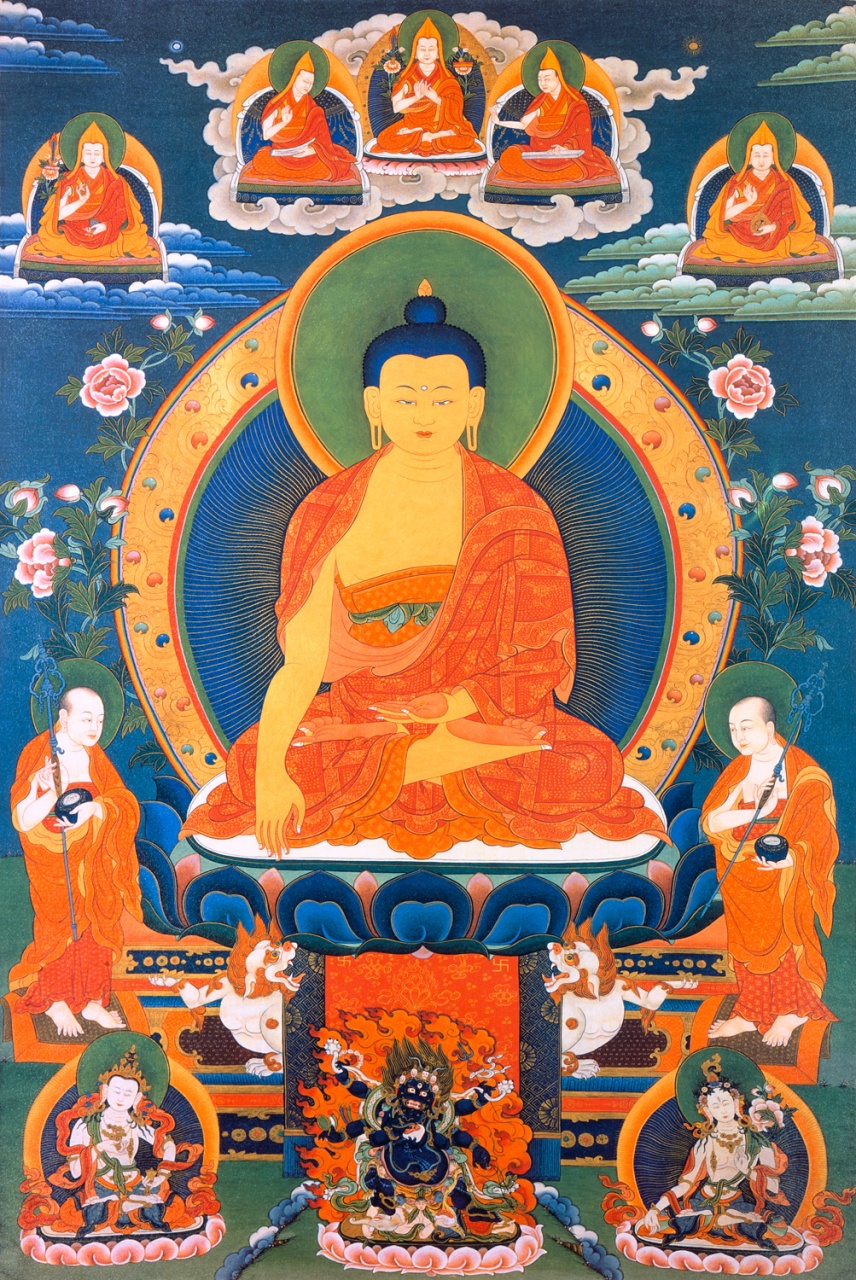
The Buddha simply displayed enlightened activity and he gave teachings on enlightened activity. It has not been the custom of those who have truly obtained realization or those who have obtained a high level of realization (perhaps not complete realization but a high level of realization), and certainly has not been the custom of any of the Lamas in my lineage, to speak of themselves in that regard. It has only been their custom to give of themselves unceasingly and to strive constantly to do better.  To strive constantly to give more and more and more. They do not speak of themselves in that way. So compassion has many different facets; but the way that Bodhicitta should be understood in the world is that it should be understood as a display of the primordial wisdom nature. But again we are not able to display that nature because we are not acquainted to it. The difference between ourselves and the enlightened Buddha is that the Buddha only described himself as, “I am awake.” He said, “I am awake.”  Students asked him, “What is it about you? Are you a king?Are you a master? Are you an enlightened one? Are you a great being? What are you? ”  He only said, “I am awake.” That is all. Awake to that nature, awake to that nature that is inherent in each one of us. And being awake to that nature absolutely ensures that effortless enlightened activity will be shown. That activity will always lead to enlightenment. The Buddha’s teaching has lead to enlightenment in students many, many uncountable times—full visible enlightenment with all the signs. And so that activity must be understood as the very essence of compassion. Any activity that leads to enlightenment is the essence of compassion.

Copyright © Jetsunma Ahkon Norbu Lhamo All rights reserved

Introduction to Compassion

[wallcoo.com]_EL108

The following is an excerpt from a teaching by Jetsunma Ahkon Lhamo called “The Foundation of Compassion”

The teaching for today about compassion has to have a certain foundation laid to it in order for us to understand how compassion is viewed in Buddhism. I am going to combine some traditional teachings and some non-traditional ways of presenting them, which is actually my forte. You will find that a lot around here.

In order to begin to give you some of the teachings, I have to give you a couple of definitions. Actually here in this temple, I have been using the term compassion and that is actually a poor translation of some of the terms that are actually used. One term that is actually used in association with the teaching of compassion is called Bodhicitta. Roughly that means compassion; but it actually has superficial, deeper and very profound levels of meaning. You will find that that is true in everything in Buddhism. There is outer, inner and secret meaning to just about everything. Sometimes I have sat through teachings with my teachers where I have heard the outer, inner and secret meaning and it seemed to me that I understood the secret meaning instantly—it didn’t seem to be a big secret to me—but the outer meaning was confusing. So I don’t know how they figure all this stuff.  In Buddhism there seems to be an outer, inner, and secret about everything, particularly in the Vajrayana point of view. Suffice it to say that Bodhicitta on the external level would be the practice of compassion, which means that one would thoroughly understand the faults of cyclic existence, that is to say the cycle of death and rebirth. One would thoroughly understand its confusion and its difficulties, and what the faults actually are, what the problems of cyclic existence are. One would understand what the cessation of such problems would actually result in; one would understand how these problems could cease, and one would understand what relief from that kind of suffering would be. One would engage in compassionate activity.

On a deeper level, the Bodhicitta nature is actually considered to be our nature. It is considered that our nature is a non-dual union of emptiness and compassionate activity; that that is our true nature.  We are not able to express that nature now simply because we have not obtained realization. But when the Buddha appears or when the Buddha’s teaching appears in the world and is conveyed or conferred in a way that does not deviate from the original purpose and power, then that is called a display of the Bodhicitta.  It is considered that the activity of the Buddha in the world and actually the appearance of the Buddha in the world is emptiness and enlightened activity displayed in a non-dual way, particularly enlightened activity. If one were to have obtained Buddhahood, from that point on one would automatically display enlightened activity constantly. Everything that one would do would be enlightened activity no matter how it seemed. I think I talked a little bit about it for those who attended last week.  For instance, different Bodhisattvas or Lamas that have obtained some realization might display different kinds of activities. There are many different examples of Lamas, for instance, that appear in robes and are really toeing the mark, straight and narrow. It is very, very clear cut that they are displaying the Buddha’s virtuous teachings. And yet there are other highly realized Lamas and Bodhisattvas who appear in the world and their activity seems crazy to us. Seems crazy to us. We don’t understand it. They don’t appear like pure Lamas and teachers.  They coined one phrase in some of the teaching called ‘crazy yoga activity’ where the Lama would appear in such a way as to be odd, almost crazy, looking like they even have mental disturbance, acting very strangely. Guru Rinpoche himself was known to do some very odd things like boink people over the head and kill them and bring about their realization. There is one story of a Lama that I heard of who actually lived not too long ago.  It looked like he did something really horrible. He picked up a rock and threw it at some kind of mouse or a rat, or something like that, and killed it. One of his students said, “Why did you do that? You killed. The Buddha tells us not to kill.” “You have no faith.” He snapped his fingers and the thing came back to life. So it was a display of compassion; it was a display geared toward creating devotion in the students. Those are extreme stories, but there are many simpler stories of Lamas appearing in the world in such a way that through their compassion students can actually relate to them better, can actually hear them better, can feel connected to them in a much better way. So that is one example. But according to the Buddha’s teaching the bottom line of that is when enlightened activity appears in the world, that enlightened activity will be effortless. Meaning that it will naturally occur; and it occurs directly from the mind of enlightenment as a result of the mind of enlightenment. There won’t be any contrivance about it; the thing will be what it is.

One of the teachers that has come and taught here used the expression “the ball is going to roll”. It is going to roll no matter what you do. It is simply its nature to roll. That is the way it is. Depending on the grade of the land, depending on the way things are laid out that is the direction that the ball will roll in. How fast the ball will roll depends on where it is sitting, but the ball’s nature is to roll. You can’t stop that; you can’t change that about the ball. So it is kind of like that with the Buddha’s appearance in the world. When songs are sung to praise the Buddhas and Bodhisattvas, their activity is described as what I have spoken of just now as being effortless and spontaneous. Now it doesn’t mean that the Buddha didn’t go through some effort to travel from town to town to appear in different places to teach people as he taught people. It is not to say that Guru Rinpoche didn’t try, didn’t put any effort into his life. It is not like that. In that sense, effortless means that the activity is spontaneous, that at no time does the Buddha or any of the Bodhisattvas who have obtained that level of realization ever say, “I wonder what would look kind right now?  Let me try to do the right thing.  Let me see if I can figure out according to this phenomena here how two and two might add up to four. Let me see if I can figure this out. Hmmm. Maybe if I did this that student would react in this way.”  It is not like that. In that way, the activity is effortless and spontaneous. It comes as a result, not of logical thought, which would be an indication of a very superficial or relative view, but it comes as a result of natural and spontaneous activity that must result from enlightenment. The seed of enlightenment then produces the fruit of this enlightened activity. .

Now we have to be careful how we use that. Unfortunately students that have studied this concept and studied Dharma activity over a long period of time think that they are displaying enlightened activity, think that they are displaying effortless activity. That is an unfortunate thing because the moment that you think in that way and that you consider in that way and that you puff yourself up in that way, that is not enlightened activity.  That is not it all. The moment that you describe yourself as having that kind of enlightened activity you have puffed yourself up and you have strengthened your ego and that is no longer enlightened activity. You are off the mark. There are actually Gurus that are present in this world now that have very good intentions. They have part of the idea, but they do not have the capacity to fully express themselves in terms of enlightened activity. They have not yet produced enlightenment in their students and they are in a situation where their activity is partial. They speak of themselves very highly, as being enlightened, as being a certain way, and it only indicates their attachment to self-nature. So you have to be careful with how you use it and you have to be very careful how you hear it from other teachers.

Copyright © Jetsunma Ahkon Norbu Lhamo All rights reserved
 

WP2Social Auto Publish Powered By : XYZScripts.com