Bodhicitta in the World

The following is an excerpt from a teaching by Jetsunma Ahkon Lhamo given at Palyul Ling Retreat 2012:

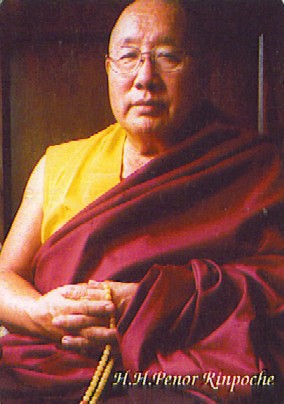
They say that I am a Dakini.  I’m not so sure but they say I am.  The Dakini has to do with the activity of the Buddhas.  And so that being the case, I feel it is my responsibility to try to bring some benefit in the activity way.  So I try to feed everybody – animals, people, and the birds outside my house.  Everybody knows that we spend a lot of money on feeding people and feeding beings.  And it is a happy thing to do.  It makes us all happy.  So many beings are fed.  And they are having what they need because of the kindness of His Holiness Penor Rinpoche, and what he taught me.  The precious bodhicitta, the nectar of kindness that is inherent in the dharma.  This is what I was taught, what I learned, and its what I practice.

We have a prison program also.  We like to forget people who have done something wrong and just throw them away, but we have a program where we can go and teach prisoners some dharma, because these men will die in prison.  And they will have no way to get any kind of help or straighten themselves out for a proper or good rebirth.  They don’t know how to die well.  They have no teachings on Phowa.  It makes us sad, and so that being so said, we’re able to go out and do these things.  And it is why KPC is always broke.  We don’t have any money because we spend it on the needs of sentient beings, and I am very happy about that.  That makes it worth it to me.

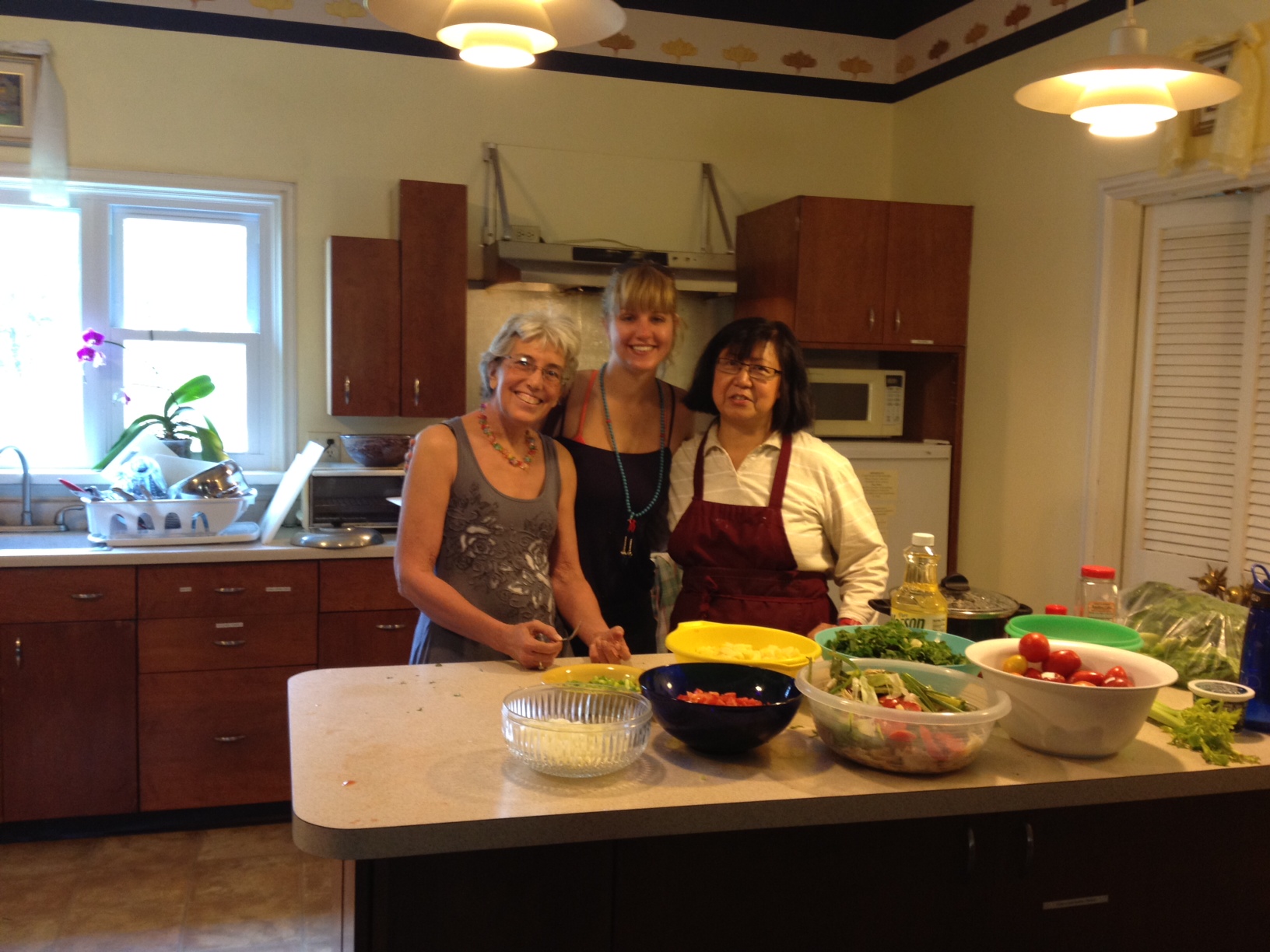
In our food program there are many people who don’t know how to cook the kind of food that we provide for them, because they are poor people and they are used to cheap food.  And so we have been trying to teach them how to cook lentils, and beans, and rice and things that are very nourishing.  We try to teach them how to make protein, and how to eat well so that they feel better.  This is a totally new thing for them.  They don’t know how to be healthy, and their children don’t know how to be healthy.  Many of them eat too much sugar and too much candy and they are unwell.  And so we are teaching them.  We are involved enough in the community to teach them how to cook, how to prepare food and what food is nourishing, and what is not.  These are great pleasurable things that we do.  Not that they are so great, but they are great pleasure.  To see people become nourished.  To see people learn some dharma, whether they understand it or not.  To even understand, Om Mani Pedme Hum.  To even repeat Om Mani Pedme Hung is so much better than anything else they could receive in the ordinary world.  Very simple things like that can make the world of difference, as you know.

Copyright © Jetsunma Ahkon Norbu Lhamo All rights reserved

Thinking in Full Equations

The following is an excerpt from a teaching by Jetsunma Ahkon Lhamo called “Your Treasure is Heart”

It is very important to understand why we practice the Bodhichitta.  First, we must examine the Buddha’s four noble truths:  All sentient beings are suffering; they are suffering due to desire; there is a cessation of suffering; and the method for the cessation of suffering is presented in the eight-fold path, or as in our tradition, condensed into the path of wisdom and compassion.  So we engage in the method for those reasons.  Do you see the logic in that?  All sentient beings are suffering.  They are suffering from desire.  However, there is an end to suffering, and this is the method.   Characteristic of the Buddha’s teachings. it is logical, because in the Buddhadharma we’re not asked to do anything on blind faith.  We’re asked to think it through. Once it seems reasonable, logical and true to us, then we are able to practice because that kind of logical activity is appealing. It seems realistic, and it makes sense to us.

So then the next thing we have to do is examine the thoughts that turn the mind toward Dharma. These thoughts that turn the mind toward Dharma are contemplations. They are interesting, thought-provoking, profound and deep sets of concepts and ideas, that help us to examine the six realms of cyclic existence and all their faults.  It is extremely important that we examine them closely so that we can see that cyclic existence is a bit like a drug. We can therefore feel for ourselves how narcotic cyclic existence actually is.  We begin to understand that cause and effect is absolutely true in every way within our lives.  Literally every experience that we have, or have ever had, has been brought about by a cause that we ourselves created.

Actually, cause and effect relationships arise interdependently.  They arise, not separately, but as one. Arising interdependently means that if we have created a cause, then just as surely as anything can be sure, we will live through the effect.  Trust me on this.  The effect can be modified. It can be delayed. It can be subdued. It can be dealt with effectively through certain kinds of practice, but we will still realize the effect of any cause that we have produced.  If you really examine that particular teaching you will learn that virtuous activity, for instance, brings about happiness and good results. Non-virtuous activity, no matter how it looks at first, always brings about unhappiness and suffering.  For example, if you stole a car, at first you might have a great time riding around in it, but eventually that event would ruin your life. If not this life, then surely in the future, it would bring about suffering and unhappiness for you, but you wouldn’t know that. Unless you have the training that cause and effect relationships are actually related, you won’t make the connection

Another thing that we learn on the Buddhist path by practicing this is the great skill of thinking in full equations.  Do you know that most of the suffering in our life is because we cannot think in full equations?  We think like chickens, “Over here this is happening, I’ll do this.  Over there that is happening, I’ll do that.”  It’s as disconnected as “whatever” to us.  We just don’t get it.  But the Buddhadharma teaches us to think in full equations.

So now we’re thinking in full equations and we’re turning our minds toward Dharma. This is a necessary step because we have to realize cause and effect relationships in order to really give rise to the Bodhichitta.

Copyright © Jetsunma Ahkon Lhamo.  All rights reserved

The Beginning of Awakening

An excerpt from the Mindfulness workshop given by Jetsunma Ahkon Lhamo in 1999

One of the practices that we are taught as Buddhists is that always, always, Guru Rinpoche should be above the crown of our heads.  We should be mindful that Guru Rinpoche is always there, seated on his lotus throne.  Upon going to sleep, we should visualize that Guru Rinpoche becomes like light or liquid and then pours into the top chakra and through the central channel, and remains in the heart throughout the night.  We fall asleep with Guru Rinpoche in the heart.  This kind of mindfulness is the best part of practice.  No matter what else I do, even if I don’t sit down and practice formally, I practice like that all the time.  That’s the backbone that I rely on.

When I talk to any of my students, the way that I practice View is that, as a Lama, I consider that the students are higher than me.  (You should never do that!  But I can do that.)  I consider that the students are higher than me because there are many of them and I am only one and our nature is the same.  It’s a little bit like the posture of Jesus washing the feet of the disciples. There is an element of sacrifice, there is an element of viewing the propagation of Dharma and the display of Bodhicitta to be all there is, the highest.  There is nothing else higher.  So I practice in such a way that the students are higher.  I hold them in high regard.  They are more precious to me than the other stuff that I do. I hold the students much higher than I hold myself.

It is the student’s job to practice that discrimination constantly.  One thing that we should do is consider that every event, every moment, every hour, every day, every breath has as its core nature Guru Rinpoche, the blessing of Guru Rinpoche, the appearance of Guru Rinpoche.  How does one practice that?  It is the kind of thing that you have to grow into.  You can’t just think all of a sudden, “Well, I’m never going to think about anything else.  I’m just going to think about Guru Rinpoche from now on, and therefore that’ll be real easy.  He’ll just always be on my mind.” That would make you crazy, wouldn’t it?  Trying to force that little monkey in a cage to do what you want? You don’t have to do it that way.

We start by creating habitual patterns that include body, speech and mind.  We want to include these three elements.  One way to practice this kind of mindfulness is to have an altar in your home.  If you don’t have an altar in your bedroom, perhaps you can have a picture by your bedside of Guru Rinpoche or your Root Teacher, maybe both. That’s a good visualization. Then, when you first wake up in the morning, the first thing you do — even before you go to the bathroom, even before the coffee — the first thing you do is look at that picture and reorient yourself: that this day the Guru is above the crown of my head.  This hour, this day, right now, the Guru is above the crown of my head and you make three prostrations.  You have it in your mind that this day is therefore sacred and then you dedicate the sacredness of this day to the liberation and salvation of all sentient beings. No one can take that away from you no matter what happens during the day.  If you get hit by a car and both your legs come off, they still can’t take that away from you.  Even if you were to lose your life, the sacredness could not be taken away from you.

Any time you go into a specific event, whether it’s ordinary or whether it’s a spiritual event, hold the picture of Guru Rinpoche or the Root Guru in your mind, reestablish the picture above the top of your head, and know that this experience begins and ends with the Guru.  If you’re going to the grocery store to buy food for your children or your family, this is an excellent thing to do. Gradually, over time, even in ordinary experiences that had no flavor, that seemed to have no connection between this ordinary activity and spirituality, you will begin to establish more of a View and begin to see every experience as spiritual.  Whatever job you have, whatever activities you engage in, look for the Guru there.  If you look, you’ll find him.  If you don’t look, you’ll never find him.

With that kind of discrimination and Guru Yoga, I find that the amazing opportunities and blessings come through the most ordinary experiences.  To the degree that I see all phenomena as the mandala of the Guru, and I hold to be in union with the Guru constantly, then ordinary people, like gas station attendants, will say things that will blow your head off.  That has happened to me, where I’ve been in that frame of mind, looking for the Guru and constantly mindful, and then pull into a gas station, and the gas station attendant says something that just rocks your world.  And it’s about something weird, like renunciation or karma or something like that, and you say to yourself,  “I’m listening, OK!”  That happens.  That doesn’t make the gas station attendant your Guru.  You see the difference, don’t you?  But it does mean that you are beginning to discriminate that nature.  You’re beginning to awaken to that nature.  It’s just a little thread, but it’s something.  It is the beginning of awakening to that.

Somehow we have to think of incorporating this distinction of what is extraordinary into our lives.  It has to be an effort that we actually provide for and make substantial, that we actually create in our lives.  This opportunity to practice like that will never simply come to you.  You may simply meet your Guru, but that’s because you practiced in your last life.  That’s because you practiced before, that’s because you earned it, but once you meet the Guru, once you are on the path, this practice of Guru Yoga becomes your responsibility.  To the degree that you really address it in a very profound, deep and heartfelt way, to that degree, it will benefit and it will awaken the mind.

© Jetsunma Ahkön Lhamo
True Nature

The following is an excerpt from a teaching by Jetsunma Ahkon Lhamo called “Your Treasure is Heart”

Bodhichitta is, in fact, our nature, as much our nature as Buddhahood.  We are, in our nature, this fundamentally compassionate reality.  Buddhahood itself has no other capability, other than that of Bodhichitta.  Yet it has within itself all potential, unborn, and yet spontaneously complete.  This is the great mystery.  It cannot be understood in language.  Our language betrays us in this way.  Even as I speak these words there is probably a little voice in some of your heads that’s saying, “That’s not possible. How can that be so?  I haven’t seen it.  I haven’t smelled it.  I haven’t touched it.” And that’s true, because the five senses are extensions of our ego and they are meant to interpret and measure our egocentric experience about which we already have pre-constructed beliefs.

But Buddhahood has nothing to do with that.  Buddhahood is simply the “primordial wisdom ground of being.”  It contains all potency, all potential. It is unborn yet spontaneously complete.  How can one understand that?  Certainly not with the intellect.  Eventually, as one moves forward in one’s practice, one comes to understand experientially.  And the Bodhichitta is like that too.  Within the Bodhichitta is every potential.  The Bodhichitta is inseparable from Buddhahood in the same way as the sun’s rays are inseparable from the sun.  It is the same essence, the same nature.  So within the Bodhichitta that is also our nature, there is all potency, all potential and the Bodhichitta as well. While it is spontaneously accomplished and fully complete, it is as yet unborn.

At first when we begin to understand what Bodhichitta actually is, and put it into our practice, there is a kind of distance and a kind of confusion that naturally occurs.  This occurs because we ourselves have not had that experience yet.  We have not tasted our nature. We have not tasted what it’s like when the mind remains absorbed and stable in that nature. Yet this is how the Bodhichitta naturally arises.  If somehow you could magically remain absorbed in the fully awakened state the way the Buddha is, every activity that you would engage in, every interaction with any sentient being that you would have, would naturally be completely in accordance with the Bodhichitta.  So the teachings that we have from the path of Dharma, from the Buddha himself, tell us that, in fact, if (now this is the big if) one has attained enlightenment, if one has attained this precious awakening, then all of one’s activities from that time forward are naturally that of the Bodhichitta, no matter what they look like.

Copyright © Jetsunma Ahkon Lhamo.  All rights reserved

What Is Bodhicitta?

The following is an excerpt from a teaching by Jetsunma Ahkon Lhamo called “Your Treasure is Heart”

Bodhicitta is the one subject that is taught from the first moment that one enters onto the path until the last moment before one really engages in completion stage practice. It is a primary and necessary fundamental foundational meditation, an absorption that one should remain in from the first moment upon hearing the Dharma to the last moment before one actually enters into nirvana.  There should never be a moment when the the idea of Bodhicitta is not part of your life and part of your heart.

So what is Bodhicitta?  Bodhicitta means the “great awakening,” and it has to do with the awakening mind.  The Bodhisattva, one who is engaged in the practice of Bodhicitta, is one who is an awakening being. The Bodhisattvas take a vow by which they do not actually go into Buddhahood.  They move further and further along what are called the bhumis, or steps, further and further into this precious state of awakening. Upon taking the Bodhisattva Vow, remaining fully absorbed in that vow, and beginning to accomplish that vow, one then begins to enter the first bhumi which is a very major step, a very major accomplishment. Then from the first bhumi one goes to the second, third, fourth, fifth, and so on, and at the tenth bhumi one is then able to step very easily into full Buddhahood.  However, the Bodhisattva who is on the tenth bhumi holds back and does not take that final step in order to remain in the world for the sake of sentient beings: appearing in a form that is of benefit to sentient beings, and being able to teach and guide them.

So we are practicing and studying this Bodhicitta which is so precious and so important.  Many of the religions in the world have the idea of compassion.  That idea of compassion is stated in various ways, but in the Buddhadharma, it is not only one of the teachings, it is considered to be one of the two main legs of the path of the Buddhadharma.  There is the wisdom and the Bodhicitta, wisdom and compassion.  So these are the two legs of the path. It is considered that if one cannot accomplish compassion, if one cannot accomplish the Bodhicitta, then whatever else one is doing on the path amounts to very little.  Bodhicitta is the cornerstone, the key. It is the essence of development. The Bodhicitta  is the practice of compassion, when it is seen in a relative environment, such as this earth, filled with materialistic view and material phenomena.  In this world of duality and relativity, when we think of Bodhicitta, we think of it as a practice in order to attain.  But actually in truth, Bodhicitta is the very display or essence, the nature of the ground of our being.

Buddha is not just a historical man that lived a long time ago.  Buddhas are not just the little statues, some of them fat little guys and some of them fancy guys.  Buddha is our nature and can be considered the primordial ground of being.  It is that essence, suchness, which is very difficult to describe.  In fact, once one describes the nature of Buddhahood, then one has actually left the nature of Buddhahood.  It cannot be described in such a way that one remains stable in the view of Buddhahood because once conceptualization and discrimination actually occur, then the meaning of Buddhahood is changed.  So, ultimately, Buddhahood can only be understood in one’s meditation practice.

The closest we can come is to describe Buddhahood as being the fundamental ground of being.  It is neither empty nor full. It is both and it is neither.  It is neither silent nor filled with sound.  It is both and it is neither.  It is neither form nor formless. It is both, and yet neither.  Buddhahood is that ultimate mystery that cannot be described in terminology that we understand because our terminology requires duality. It requires us to separate ourselves from that which we describe as though we were an audience.  It requires us to discriminate and conceptualize.  Discrimination and conceptualization are not in accordance with a true view of Buddhahood, because when one realizes and gives rise to that precious awakened state called Buddhahood, one cannot detect any separation.  One cannot determine definition.  One cannot judge where one thing ends and another thing begins. If we were to view from the fully awakened state that the Buddha was in when he described himself as being awake, we would not be able to determine where one being ended and another being began.  That whole concept would be lost in the state of Buddhahood.

We think of Bodhicitta as the practice of compassion that we should attain to. We only have that idea because we are in a fundamentally deluded state, in a separated state, believing that self and other are in fact separate, believing that relative view and the view of Buddhahood are somehow separate.  So that’s how we view Bodhicitta, as some thing that we do, some thing that we practice, but in fact the Bodhicitta is the very breath, or first movement or display or dance of the Buddha nature.  If the Buddha nature is like the sun, radiant in every conceivable way, then the Bodhicitta can be considered like the rays of the sun.  The rays of the sun cannot occur without the sun in the same way that Bodhicitta cannot occur without Buddhahood.  In the same way, the sun does not occur without its rays; therefore Buddhahood does not occur without Bodhicitta.  These two are inseparable.  They cannot be determined as separate in any way, shape, manner or form other than through the dialogue of confusion, which is how we talk—language based on separation and delusion.

Copyright © Jetsunma Ahkon Lhamo.  All rights reserved

True Refuge

The Buddha is the Master who reveals the true Refuge, and the Sangha is like a true friend on the path to Enlightenment. The actual refuge is the Dharma, because it is the Dharma that will free us and pacify suffering. The absence of or freedom from delusion is cessation. If we do not apply the antidote to our faults and delusions they continue to arise. But after the remedy, if the delusion is totally uprooted, it will never rise again. That state, free from delusion and the stains of the mind is a cessation. Bottom line- anything we wish to abandon like suffering and its causes, can be eliminated by applying the opposite forces. The final cessation is called Nirvana, or Liberation.

The Buddhas, fully enlightened ones are inconceivable, as is the Dharma, their teaching. The Sangha is also inconceivable so if you develop inconceivable faith there is no doubt the result will be inconceivable. It is said in our scriptures that if the benefit of sincerely taking refuge in the Three Jewels could be measured in relative, physical terms, the entire Universe would not be able to contain its value just as a great ocean cannot be measured in a tea cup.

Having learned the value and benefit we should rejoice in the opportunity to make offerings to and take Refuge in the Three Precious Jewels of Liberation. Here in this way we will be able to alleviate the influences of our negative actions as well as karmic obstructions. All these can and will be eliminated, and we all will be counted as sublime beings, which will surely please the Buddhas, Bodhisattvas, and our own kind Gurus and Lineage Masters!

It is this we should focus on, not the ego or our pridefulness for results. The consequences of karma are definite. Negative actions bring suffering, always. And positive actions bring happiness and freedom, always even a small action can bring a large consequence; so mindfulness is required. And the ability to examine ourselves honestly is essential to all spiritual progress!

To all spiritual progress!

OM MANI PEDME HUNG!

OM AH MI DEWA HRI!

Copyright © Jetsunma Ahkon Lhamo.  All rights reserved

Where There Is Love

248172496_Nhwk9-S

From a series of tweets from Jetsunma Ahkon Lhamo, December 2009

I’ve recently had the great joy of seeing Dharma students return after time away. I rejoice and welcome you home with open arms and heart!

No bridge is burned, no river damned, no journey wasted, no song unsung where there is LOVE.

No obstacles, no taint, no bitterness, no blame, no darkness where there is faith.

No sorrow, no crime, no endings, no loss, no grief, no separation when one is awake.

No fear, no hate, no confusion, no winning, no losing, no past, no future, no contrivance where there is Wisdom.

No going, no coming, no abandonment, no holding, no resentment, no attachment, no loss with Bodhicitta.

©  Jetsunma Ahkön Lhamo

Aspirational Bodhicitta

[Adapted from an oral commentary given by His Holiness Penor Rinpoche in conjunction with a ceremony wherein he bestowed the bodhisattva vow upon a gathering of disciples at Namdroling in Bozeman, Montana, November 1999. —Ed.]

Cultivation of aspirational bodhicitta involves three aspirations, four dark dharmas to reject, and four white dharmas to accept. The three aspirations are to establish all sentient beings in the resultant state of buddhahood, to train in the methods of the higher grounds and paths, and to fulfill the needs and hopes of all parent sentient beings. The four dark dharmas to reject are to trick or deceive the spiritual guide, to deceive the patron, to disparage any Mahayana practitioner, and to deceive other sentient beings. The four white dharmas to accept are to never be deceitful, even at the cost of your life; to acknowledge the noble qualities of the bodhisattvas and praise them; to sincerely train in the bodhisattva way of life by abandoning all deceitful acts; and to have the intention to guide all beings—regardless of status, caste, creed, race, or any distinction—to the path of Mahayana practice. If you are training in these four white dharmas, the four dark dharmas will automatically be eliminated.

From “THE PATH of the Bodhisattva: A Collection of the Thirty-Seven Practices of a Bodhisattva and Related Prayers” with a commentary by Kyabje Pema Norbu Rinpoche on the Prayer for Excellent Conduct

Bodhicitta – Inexhaustible Virtue

[Adapted from an oral commentary given by His Holiness Penor Rinpoche in conjunction with a ceremony wherein he bestowed the bodhisattva vow upon a gathering of disciples at Namdroling in Bozeman, Montana, November 1999. —Ed.]

With bodhicitta, nonvirtues are naturally purified. An analogy commonly used to describe that is one about traveling to a dangerous place. If you have some able companions (strong, heroic individuals) on your journey, they can help you if you encounter danger. Similarly, if you have bodhicitta, that will save you from the dangers of the passions that would otherwise harm you and cause you to lose your way.

If you cultivate bodhicitta, that alone will have the power to eliminate heaps of nonvirtue in your mind. The force and power of your cultivation will eliminate the nonvirtue you have amassed in this and all past lifetimes.

With bodhicitta, whatever virtue you accumulate becomes inexhaustible. Such virtue is different from virtue that is devoid of bodhicitta: virtue devoid of bodhicitta will ripen once, and then it will be over; virtue coupled with bodhicitta will ripen and increase as part of the great oceanlike enlightened mind, which is not exhausted until all beings reach the state of buddhahood.

From “THE PATH of the Bodhisattva: A Collection of the Thirty-Seven Practices of a Bodhisattva and Related Prayers” with a commentary by Kyabje Pema Norbu Rinpoche on the Prayer for Excellent Conduct

Why Enlightenment Matters

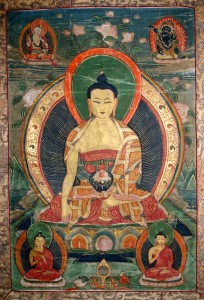
Shakyamuni Buddha

After practicing Aspirational Bodhicitta, you will move into Practical Bodhicitta. Practical Bodhicitta is where one actually attempts and begins actually to develop the technology or method by which the cessation of suffering can be brought about.

Again, back to the foundational teachings of the Buddha: The Buddha teaches us that the sufferings that we see and think we understand the causes for are only symptomatic of a deeper suffering; and that deeper suffering is actually the faults of cyclic existence. These are the real sufferings: Impermanence; the fact that cyclic existence has nothing inherent within it that leads to the end of suffering. These things are the faults of cyclic existence.

Having understood the faults of cyclic existence, we must then think what the Buddha has told us: Only enlightenment brings about the cessation of suffering. And to carry that further, only an enlightened being, and ultimately a supremely realized being, can truly bring about the end of suffering. So you have to consider Practical Bodhicitta in more than one way. You must actually consider that you wish to accomplish whatever means will bring about the cessation of suffering for all sentient beings: whatever practices will bring about the end of suffering; whatever methods. You have to employ these methods; but you must also think that your own enlightenment then becomes significant. Even if you are thinking only of sentient beings—and that is the proper motivation—even if you are thinking only of motherly sentient beings and their suffering and not thinking of your own suffering so much, if you have come to that profound level of Aspiration Bodhicitta because of entering into the phase of Practical Bodhicitta and the need for you to accomplish enlightenment in order to lead other beings to enlightenment, then one’s own enlightenment becomes significant. And that is the real reason why one’s own enlightenment becomes significant. Yes, it’s true that each of us wishes to be free of suffering. But from the point of view of Bodhicitta, the proper motivation for practice then is the cessation of suffering for all sentient beings.

An excerpt from a teaching by Jetsunma Ahkon Lhamo called “Bodhicitta”

Copyright © Jetsunma Ahkon Lhamo.  All rights reserved

WP2Social Auto Publish Powered By : XYZScripts.com