Ph’owa: Precious Opportunity at Moment of Death

An excerpt from a teaching called Awakening from Non-Recognition by Jetsunma Ahkon Lhamo

I would like to talk about a practice that we do in order to prepare for the time of death. This practice is called P’howa. In P’howa, we practice clearing the central channel, opening up the psychic apertures that block us, coming into a state of awareness of what the death experience is. In P’howa we practice ejecting or sending the consciousness through the central channel so that at the time of death we can die consciously—that is to say, not simply have the experience of death overtake us the way life has overtaken us, but rather die intelligently, participating in the transference of consciousness from ignorance to bliss.

In the practice of P’howa we are taught that at the time of death when the outer breath ceases, there is a period of time between that and when the inner or more subtle breath ceases. That time varies according to the conditions surrounding the death, the condition of the person’s mind stream, the karma of the person and his or her habitual tendencies. There are many different factors. But when death actually occurs and all of the breath ceases, both the outer breath that is very visible and measurable and the inner subtle psychic wind, at that moment there are three very important events that happen. It’s critical that as Buddhists we understand this, think about this intelligently, prepare for it and make choices.

The first event is the disengagement of the white Bodhicitta or male spiritual essence that we inherit from our fathers. We perceive this to be seminal substance but it is actually the white Bodhicitta in its mystical form. That white Bodhicitta disengages and drops from the top of the head to the heart area of the central channel. When that happens, there is a corresponding vision as we enter into the bardo state called the white vision. That white vision has two aspects and there are two results. We prepare for that in P’howa.

The second event that happens is the disengagement of the red Bodhicitta or female spiritual essence, which is the mother’s contribution. At the time of death that red Bodhicitta disengages and rises up the central channel to the heart.  At that time we have the corresponding vision, which is called the red vision. That red vision has two aspects and two results. Again, you will learn about that when we study P’howa.

The event that I want to discuss is the third event, which occurs when these two substances, this red and white Bodhicitta, meet in the central channel. When that happens, there is the clear or black vision. That particular vision is extremely important because, while everything in the bardo depends upon our capability to move from a state of non-recognition into a state of recognition, the most glorious opportune time for this movement into recognition is when the worldly life-bearing constituents dissolve and we are in that state that I’m describing. Every method that we practice in Vajrayana is geared toward providing that kind of recognition both in the waking state and at the time when the red and white Bodhicitta meet.

That state is a very fortuitous state. To the excellent practitioner who understands the point of the path and who has practiced and achieved some accomplishment, that moment is a tremendous opportunity. The excellent practitioner will look forward to that moment more than to any other event in his or her life because that moment holds the strongest potential for recognition. A mediocre practitioner will say, “Well, you know, it sounds good to me, but I don’t know, I’d rather vacation in the Bahamas!” or something like that. The mediocre practitioner will have some fear about it, which will be more or less according to their level of competency, and will question whether or not that state of recognition could possibly occur at that moment. For the non-practitioner, that state is a complete unknown.

Now, why does this moment hold such a tremendous opportunity for the practitioner, and why is it a completely different experience for the non-practitioner? Non-practitioners are basically in the same position in that state as they were in their lives when they lived in an ongoing, confused and deluded state of non-recognition, thinking that I am this thing that is contained right here in this box of flesh and you are out there totally separate from me, and there is no connection. That state of non-recognition is the mind of duality. It is the mind that separates self from other. It is the mind that experiences acceptance or rejection, hope or fear, and hope and fear mixed up at the same time. There are many different ways to determine what our consciousness is like in the state of non-recognition. Simply look at what your mind is doing right now.

If we were awake as the Buddha is awake, we would understand that duality is not even logical. Coming from the perspective of enlightenment, of realization, of awakening, we would understand that is not realistic at all. It cannot be. So this state of non-recognition is the state in which we seemingly remain in a certain solid condition where everything other than our perception of self-nature seems to be projected outward and seems to be happening to us. We think life happens to us. We seem to be both victim and oppressor, and we seem to experience both the result and the condition of both. According to where we are at that particular moment in our lives, we will think ourselves to be either the victim or the oppressor.

Now, according to the Buddha’s teaching, nothing is happening other than the primordial wisdom nature that is the ground-of-being along with its display, which is very much like the relationship between the sun and its rays. The dance, the movement, the display of the primordial wisdom nature is as much a part of that nature as the sun’s rays are a part of the sun. Yet we experience things in an extremely deluded way. Everything seems to be separated, categorized, dualistic, and so we are lost in a state of non-recognition, not able to understand who or what we are or how things actually occur.

In P’howa, when the red and white Bodhicitta come together, the subtle material constituents, which bind us to our experience into this physical reality, into a time and space grid or a sense of continuum, naturally dissipate. When the body is ceasing its activity, that which we have called “I,” which seems to have existed since time out of mind, we do not perceive to disappear into nothing. We perceive that sense of “I” continues and remains, mostly due to ego-clinging and desire, through the idea of self-nature as being inherently real. However, at the time of death, again when this red and white Bodhicitta come together, there is this brief period of time when all of these constituents dissolve. This is almost like the space or pause between an inhalation and exhalation. Unfortunately, our language is a deluded way to communicate this information because it is not made to convey enlightenment. It’s made to convey only delusion. Please forgive me for that. So there is a moment when the constituents dissolve, when there is this pause where nothing new arises. Even though we are still lost in the state of believing in self-nature as being inherently real, some sort of subtle reassembly has not occurred just yet. The constituents have simply dissolved and there is a moment of pause.

Once the constituents disengage, most people (99.9% of sentient beings) who have not had the opportunity, or for whatever reason did not practice to some level of accomplishment, will not be able to recognize that the components that cause us to engage in the automatic projection of our karma and mind streams into external experience have momentarily ceased. To the ordinary practitioner at that time, consciousness simply faints or goes into what is very much like a sleeping state. That is the experience of dying. It seems as though something ends. There is no recognition of the primordial ground of being that is our nature and that is momentarily revealed at that time, revealed just as clearly as it can ever be.

Now here again listen to the language of delusion, “clear as it can ever be.” If we could conceptualize that nature as an “it,” we’d probably be able to see it at that time. But the constituents have dissolved, and we are simply seeing the naked reality, the naked face of the ground-of-being that is our nature. As non-accomplishers, as those who are still not awake, we do not recognize that moment. It appears to us that it is simply over. It is ended. We have had a certain white vision and there is a feeling of moving through a tunnel and all that stuff they write about in books. A lot of it is correct, but they don’t tell you about the part that happens after that, which is the red vision, and then the experience of dying. As we arise from the state of unconsciousness, our habitual tendency to conceive of self-nature as being inherently reasserts itself. When we’re talking of a habitual tendency, we’re not talking about 75 or 80 years, we’re talking about time-out-of-mind, inconceivable time, time that you cannot name, count or measure. So naturally a habitual tendency simply asserts itself. Then we continue to go through the bardo, again projecting consciousness outward, but it’s a very different experience without the rules and regulations associated with physical life.

What happens to accomplished Bodhisattvas or perhaps even to very good practitioners at that precious moment when all of the constituents dissolve? They recognize the clear, uncontrived, natural, conditionless face that is our nature, that state which is literally free of any and all conditions and therefore cannot be described, which is fundamentally complete and yet without beginning or end. That state is free of discrimination, free of any kind of determining factor, free of time and space as we know it, free of anything that we can name as distinction or condition.

At that moment that state is revealed, and for the practitioner, it is as precious, so close as to be beyond your breath, beyond your blood, beyond your marrow as you understand as a physical being. That state, then, when the constituents all dissolve, is suddenly tasted, understood, recognized—recognized in the same way that a child will recognize its mother and the mother will recognize its child. “Recognized” is the only word that really works.

Those of you who have been parents, particularly women I think, have this kind of experience more frequently. It’s not to say that men don’t have this experience, but women who have birthed a child have a mind bend to see something that was inside of them and now it’s outside of them and they know it. There’s this thing that happens. It’s there in the same way that a child begins to move toward its first cognition, the first thing to which it reacts. You can see this in newborn infants. They will start to look for the sound of their mother’s voice and even be comforted by being held close to the mother’s chest because they recognize the mother’s heartbeat.

This deep, intimate recognition doesn’t even touch the recognition that happens to the qualified practitioner or Bodhisattva when the constituents dissolve and they are free to see their true face. That nature that is revealed at that moment, simply because nothing else is going on, is more intimate than the experience that I have just described. Again, those of you who have borne children and know what I am talking about can really relate, and others of you can relate in your own deep, inmost experience, perhaps remembering from your own childhood.

The revelation of that arising is so intimate and so profound. It is that revelation that we look to accomplish, that we try to understand, that’s the game plan here. At the time of death when the constituents dissolve, we wish to arise from the darkness not filled with desire and habitual tendency continuing through the bardo and through samsara like a bee in a jar like we always do. Instead, we wish to arise in the state of recognition that is the same as what the Buddha described when he said “I am awake.” This is a state that brings us to awakening. That is what awake is: that recognition.

So for the excellent practitioner the hope is that at that moment we will recognize that which is not separate. What is the thing that we recognize at that time? It’s not a thing. It’s no thing, nothing. It is no thing, and yet it is that which is the ground essence that is our nature, the ground-of-being. Isn’t “the ground-of-being” a provocative phrase? We’re not talking about some external divine reality that we have to go toward. We’re not going toward the lake, you know. That’s not what we’re doing here. It is the recognition of that nature that is the ground-of-being, that ground-of-being that is our nature. In that state, indistinguishable, one cannot determine the appearance of phenomena or the appearance of self-nature, or the difference between. One cannot see differences. That recognition is of our true state, our true nature, which is that which is free of such distinction.

© Jetsunma Ahkon Lhamo

Unending Vow

From a series of tweets by Jetsunma Ahkon Lhamo on October 26, 2010

My friends are trying to lift my spirits and I feel so grateful for that. Really, I don’t know how I’d manage without your kindness!

I have also received great support from my other teachers, and Palyul Lamas for which I weep with joy. Thank you Khenpo, and His Eminence Gyaltrul Rinpoche and all the others. I love Palyul with my Body, Speech and Mind.

Kyabje His Holiness Penor Rinpoche instilled such love and respect for his hard work to keep Palyul alive and flourishing. I loved his style.

Every Lama has their own style, whether or not they are Tulkus. Just like people!  Some are tough love types. Some are tender and quiet. Some are warriors and some are peaceful. This is throughout Vajrayana. Amazing how the Guru displays just what is needed, if they have wisdom and compassion. A self-cherishing talker could not do that.

I am an American woman. Many find that intolerable. Or don’t like my style. That is OK by me. What I find deplorable is gossip among the Sangha against the Three Precious Jewels. I feel it is lethal to Dharma and to the faith of the students. This is a new land for Dharma.

When Padmasambhava went to Tibet he had to constantly battle the local demons. I was told by BOTH my root Gurus it would be so for me, that I took vows to continue Guru Rinpoche’s work in this new barbaric land. And so it has been and continues to be.

Whenever I complain Gyaltrul Rinpoche says, “You asked for it right to the face of Guru Rinpoche.  You asked to help the worst of the worst,” and so it is. When I complain, forgive me, I do get tired!

But I mean to love you.

I mean to liberate from the suffering of samsara.

I mean to bring benefit until samsara is empty.

May I be the last to be free of suffering.

For your sake.

For their sake.

May I be food, water, and shelter for every being.

And love. May I be love.

Again, I pray and prostrate with prayer to His FACE!

For their sake – my children.

© Jetsunma Ahkon Lhamo

The Time to Practice Phowa is Now

AS-x-21 Charlie Grant-M

The following is an excerpt from a teaching by Jetsunma Ahkon Lhamo offered during a Phowa retreat:

I would like to explain one question that I think is necessary to clear up at this point, because if it isn’t cleared up, you will assume you know more than your spiritual mentor. You will assume that you know how things will go at the time of your death, and you will not follow through with your practice. Many people look at their books and they think, “Well, here’s a pretty thick book and here’s a kind of thin book. I have no idea whether, at the time of my death, I will have time to open my practice.” Well, you’re right, you don’t have any idea whether at the time of your death you will have time to open your practice. Now do you really think that wasn’t thought of? I mean, c’mon guys, lighten up. Remedial Dharma 101. This has been thought of. Really. Lots of people have died. We pretty much got it down. So worry not. Now here’s what actually has to happen. This book [thick] and this book [thin] are not for the time of your death; they are for now. They must be practiced now. There’s a really good chance that at the time of your death you will not be able to pick the books up in time. And you may drop them. And you may not have enough breath to finish. Really. This has all been thought of. Don’t worry. These books are for now.

Copyright © Jetsunma Ahkon Norbu Lhamo All rights reserved

Vajrasattva in the Bardo

Vajrasattva-single

The following is an excerpt from a teaching by Jetsunma Ahkon Lhamo offered during a Phowa retreat:

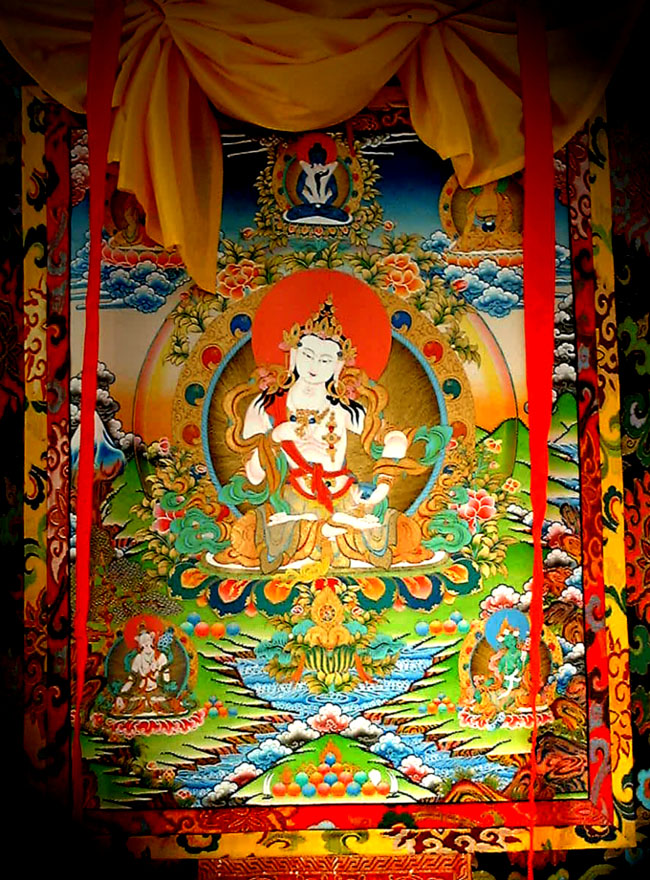
On the second day, here they’re saying Vajrasattva Buddha appears. This is Vajrasattva, the very same one that you are practicing in your Ngöndro. Think how ready you will be for him! The minute he shows up you’re going to go, “Yes! I know who you are!” In this case, Vajrasattva Buddha is also associated with Akshobya Buddha, but he will appear as Vajrasattva Buddha on the second day with white light. And again, the white light will be unnaturally brilliant, according to what we have understood, dazzling, frightening in its dazzling light; and at the same time a softer, easier on the eyes (even though there are no eyes, we have that kind of perception in the bardo at that point), black light, the softer black light of the hell world, will manifest. Now listen to how tricky this is. We are faced with an unnaturally white, unnaturally bright, scary light, or a softer, black light that, because we have felt hatred more than we have felt Vajrasattva, we are more familiar with. It will not be so frightening to us. It will be softer, and it will seem to be seductive, more so than the white light. So what we have to do is to be sure and avoid that black light, because that black light results in rebirth in one of the hell realms.

Copyright © Jetsunma Ahkon Norbu Lhamo All rights reserved

My Three Rules

An excerpt from a teaching called Dharma and the Western Mind by Jetsunma Ahkon Lhamo

As Westerners practicing the Dharma, we have a hard job ahead of us.  If we want to accomplish Dharma, and make Dharma stable, if we want to be fully instated in our practice, and if we want to be successful, we are doing so in a culture that is not really sympathetic to it. It is hard.  It is really hard.  We are doing so under circumstances in which we have to work, we have to eat and where nobody is going to pay us to pray. It is not going to be easy.  We have to stabilize ourselves with that pure intention to love and to do that we have to do three things.

These are my three rules of etiquette for newly starting practitioners and also for old ones.  First of all, give yourself a break, there are things on this path that you will not understand and you should not fall into the trap of saying, “This can’t be right, or this isn’t right.”  Give yourself a break, take time to let it fall into the slot that your Western mind is, just give it time to settle in. These concepts are very logical, they all make sense, they all work, and they are given to us by a fully enlightened mind which makes me think that they are worth more than a lot of other things that I have heard.  And they work.  It is a workable path.  If there is something that confuses you just say, “Okay I will just give myself some time about this. If I am not comfortable with the idea about being empty of self-nature let me first find out what that means before I decide that this is not good and once I find out I can make a better decision.”  So give yourself a break.

The next thing is to do the best that you can.  Don’t try to slide into Dharma, and don’t think that you can slide by.  Do the best that you can.  Cultivate that loving every day.  Don’t ever fall into the trap of thinking that you are too old, or too experienced, or too educated to learn the simple lessons that Buddha gives us that are associated with loving.  Do not think that you are too far advanced that you can no longer be taught compassion.  Don’t ever think that and please don’t think that you have come too far to learn and re-learn renunciation of ordinary things, because no one ever comes that far until we have reached supreme enlightenment. So do the best that you can.

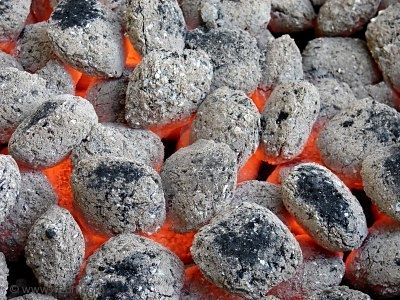
The third thing is to take it slow and take it easy.  Try not to burn like paper – hot and fast.  Try not to burn like pinewood.  Try to burn like good aged oak or maybe even coal – slow and hot and stable.  The way that you build the stability on this path, as a Westerner, is by cultivating that slow, hot fire of loving.  Keep it going.  You don’t have to do anything crazy but you have to do something steady and stable.

Remember you have to practice this path till the end of your life so that you can fully accomplish it and so that you can truly be of benefit to sentient beings.  It is going to take some juice so please try to burn like good oak or coal, slow and hot.  Just think of yourself as a vehicle.  Think of yourself as a bowl, turned up, clean, pure, with no cracks, not turned over, and no poison of judgment or delusion at the bottom of it. Your mind is like a bowl.  Let yourself receive teachings in a very pure and uncontrived way.  In this way you will understand Dharma better.

Look for a good teacher and when you find that teacher you should take time to examine that teacher.  What is the teacher’s motivation? Can this teacher really offer me the path? Is this teacher really teaching the path that leads me to supreme enlightenment? You should examine these things and in a stable way, slow and easy, begin to accomplish Dharma.

In this way there is no doubt that you will achieve supreme realization.  There is no doubt that you will in this life and in all future lives be of some benefit to sentient beings.  Ultimately you will be of ultimate benefit to sentient beings, there is no doubt.

Keeping these things in your heart I hope that you will be cultivating that stability.  Do that and remember what a glorious and wonderful opportunity you have.  Please don’t waste this life.  It is so precious.

©  Jetsunma Ahkön Lhamo

The Bardo of the Moment of Death

process of dying

The following is an excerpt from a teaching by Jetsunma Ahkon Lhamo offered during a Phowa retreat:

Now, let’s look at the bardo of the moment of death. Our body is made up of four elements: They are the earth element, the water element, the fire element, and the air element. At the moment of death, and what death actually is from a metaphysical point of view, these elements begin to disengage. Here they are knit, you see, into a fabric. They are knit into what you think of as yourself.

I will explain. Flesh, the bones, and the solid constituents belong to the earth element. They are considered the manifestations of the earth element, and you can see that these are part of your body system. Blood, phlegm—which we have more of in the wintertime, isn’t that true—blood, phlegm and bodily fluids belong to the water element, and you know you have those, especially in the morning. Body temperature, metabolism, the raising of your body temperature to be warm, belongs to the fire element,. And you know that that is within your body, you can tell that you are warm. And respiration belongs to the air element.

What happens at the time of the death is that these elements begin to dissolve in their interconnectedness. They dissolve into their natural state, and their natural state, of course, separate and apart from our deluded perceptions, is the same as one’s own nature. It is the Buddha. In their natural state they are none other than the Buddha. Yet we experience them as fire, earth, air, water. We are taught in our practice to recognize them, because they will appear, even in the bardo state, disguised as the goddesses of fire, earth, air and water. And we still won’t recognize them. We still won’t recognize them. We won’t recognize anything in the bardo state unless we prepare for it and think ahead. But in fact, in their very nature, although we are afraid of them and afraid of the very feelings that we are feeling, when these elements begin to dissolve, still in all, these are also the Buddha. And even recognizing these elements in their nature is one step toward the path of liberation. So do not be afraid.

At the moment of death, the elements are absorbed into each other giving rise to a twin series of phenomena, both internal and external. I love the way this lama [Bokar Rinpoche] has put this, and so I’m going to utilize this and then I will elaborate. These are the conditions that indicate the actual moment of death, the passing into the bardo of death. First, the earth element is absorbed into the water element. How that is experienced externally is that the limbs can no longer be moved. And how that is experienced internally is that the mind begins to see things like mirages. That is the earth element absorbing into the water element. Then, the next stage is that the water element is absorbed into the fire element. Externally, that experience will be of the mouth and the tongue becoming quite dry. (I must be dying because I’m dry all year; it’s one of the signs. My limbs are moving, though! I’m really glad about that!) So externally, the mouth and tongue become dry, and internally we perceive smoke that passes us or rises up before us. You should take note of this. These are the experiences that you must rehearse seeing, because you will see them. Know them, rehearse them, prepare for them, expect them, and recognize them in their nature when you do. Do not be afraid, there’s nothing to fear. So we perceive smoke that passes us or rises up.

Next, the fire element is absorbed into the air element. Externally, heat leaves the limbs, moving from the extremities toward the center of the body. This is seen in a hospital environment when people die. They do actually have that progressive coolness that comes from the extremities into the center of the body. Internally, we will be seeing an array of sparks. An array of sparks. And then finally, the air element is absorbed into the individual consciousness. There’s a footnote here, and I’ll sum it up. Here, when he says ‘consciousness,’ he wants us to know that he’s referring to the consciousness that operated in a dual mode—grasping an object that is separated from a subject. That kind of mind of duality. So he’s talking about consciousness in the familiar way that we use it now. So finally the air element is absorbed into the individual consciousness. The external breath actually ceases. Internally, what we will see is something like the flames of flickering butter lamps. Flickers. Flickers. That will be the air element actually absorbing into our own consciousness.

Now here are some additional bits of information that I would like to add as a way of recognition. Here are some other signs that actually occur. This sign is associated with the earth element. The first dissolution is the earth element absorbing into the water element. a During this wave of dissolution of the elements, one of the experiences that we will feel— and we will all feel this—is the feeling of falling. A lack of safety. There is a feeling of falling. It depends on how the person is. If a person is semiconscious or unconscious they may actually feel themselves falling down a tube, or even falling across a tube. But there is a feeling of falling. For many people, and I would say the majority of people would feel this way, there is actually a feeling of the body falling and not being safe. You can help a person who is dying by placing pillows around them to make them feel as safe as possible and creating a nest, womb-like nest, even under the knees, even under the armpits, even under the arms, around the body, so that until the very last moment of their perceptual capacity they will still be able to feel nested, as though they are safe. Then when the other feelings are obviously beginning to occur you can begin to explain to the person. You can say things soothingly like, “Pay no attention to the feeling of falling. You are safe. You are not falling. You are with me.” That kind of thing. You can talk and it will help them.

The person who has had time to prepare will recognize the feel of falling and will be able to interpret it differently as perhaps a feeling of going, which does not have to have the fear of falling associated with it. You wonder if that feeling is actually going to come to you. Okay, have you ever fallen asleep and jumped? It’s the very same thing. There is the subtle dissolution of the elements as one enters into the dream bardo. That is similar to the death, but not as gross and heavy and final. So there’s the feeling of falling, and sometimes the person who is dying will do that a little bit. That is how you can tell that that is actually occurring.

When they talk about the mouth and tongue becoming dry, I’ve also heard that sometimes the person, right before death, will actually void what is in their body, or right at the time of death will actually void what’s in their body.  That is also an indication that this has begun to take place—that the water element is now absorbing into the fire element. And so you will see signs like that. Here, even in enlightened death—we’re talking about Kalu Rinpoche’s death—he needed to, he wished, he had the intention, the feeling, to get up and void himself, and prepare himself in that way. But that is an indication that the elements are already beginning to dissolve.

And of course, the feeling of cold, the feeling of the heat leaving the limbs. It is absolutely beneficial to the person as they are dying that you keep them as warm as possible, because their comfort during that transition time is very important. It will influence the way their mind accepts the experience. So keep them warm to the best of your ability. If before the death cycle actually occurs you could do something like what they would do in the old days, put a warm brick at their feet, put something warm at their hands, comforting, this is the time when you want to help the person keep their mind as comforted and relaxed as possible. So you do everything you can to help those feelings not to be so scary. And these are things that you can tell the ones around you to help you prepare for death, should you be the one experiencing this transition.

Finally, the air element is absorbed into the individual consciousness, as we spoke of, and that’s when the breathing stops. Now when the external breathing stops that does not mean that death has actually occurred, even though medically that’s what they look for. They look for the cessation of the breath. There’s actually a period of time during which, again, depending on the practice or the understanding or the inclination or the habitual tendency of each individual person, experience continues. When the outer breath stops, already visions have begun to arise, already images have begun to happen.  There are lights, there are colors. There are things occurring that are unusual.  There are visual things coming up. But the time in which we are actually considered dead, really dead, is after the external breath has stopped. And the other period of time, that is a very essential and crucial period of time, also passes. And that is the time between the stopping of the outer breath and the stopping of the inner winds. We have within us the air element. Its most gross display is our breath. Yet there’s more to it than that, because within us are psychic winds and channels that are not see-able by fleshy eyes.  Yet they still exist.

These psychic winds and channels have much to do with the condition of our minds. That is to say, if our minds are disturbed and neurotic and needy and always upset, that kind of mind, the winds that move within the psychic channels of that mind will be erratic. Like ‘puh, puh, puh, puh, puh,’ rather than ‘whoooooooooooo,’ kind of like that. They will be erratic.  The wind channels, the channels within, will be soiled and dirty, and sometimes misshapen and kinked. And so the inner experience then will be different for that kind of person than it is for a person who, say, has practiced and has kept their mind very kind and happy. The calmer and happy mind will have the inner winds moving through the psychic channels more calmly and serenely. Then when they stop, it will be a more calm and serene kind of experience. Also, that small moment of experience when only the inner winds are still operational and the outer breath has already ceased will be much different as well. That inner experience will be much different. So by all means, do not think that it’s goofy to try to keep yourself up and happy and peaceful and in a good mood. That’s not goofy, that’s great. That’s what you should do. It really is beneficial to you.  It really produces health, and you will live longer. You will definitely live longer if you can keep yourself up and happy and in good humor, peaceful in your mind. You will live longer.

At the end, there is a period of time between when the outer breath stops and the inner winds also cease. That, for the practitioner, is the most important period of time. The practitioner who has practiced Phowa will be very busy right then. The person who is helping the dying one through that particular period must know this: Once the outer breath has ceased, do not touch the body except at the very top of the head, right here  [the crown]. This is so important. Please, try to understand how important this is. I cannot emphasize it enough. Make arrangements for yourself; make arrangements for your loved ones. Write it down so that nobody screws it up. This is important, and here’s the reason why: Just as it is possible for each of us to go to any of those six realms of cyclic existence during the bardo of becoming, there is also an apparent method or exit point by which we go into those six realms. For the lowest hell realms, it is through the anus. That is literally how we go into those lowest realms. For  the secondary low realms, it is through the genital channels. The consciousness will actually leave the body through those channels, and that will absolutely write in stone and dictate the next experience. One can leave through the nostrils; one can leave through the mouth; one can leave through the ears. One can leave in many different ways. But the way to leave in order to achieve rebirth in the pureland is to leave correctly through the central channel out the top of the head. And we will get into how to do that. We will teach you how to do that. And we will prepare you for that, so that the channel is nice and clean and it’s easy to get out.

If you’re with somebody who’s dying, and if you touch them… A lot of times loved ones will make the mistake of holding a hand or patting a person on the thigh. What happens is that—the outer breath is already stopped, you see—inside, their cognition is very loose and fluid, very loose and fluid, and influenced by everything. That’s why you want to have their pillows nice. If you are a practitioner, if it’s possible, it’s best to be sitting up in the meditative posture, propped up with pillows if you can’t quite manage it. It’s best to be in that position because it is the best position for a peaceful mind. It is absolutely the best position for a peaceful mind. If a person around you makes the mistake of touching the wrong part of your body when you’re in that highly suggestive and fluid state, the person dying may leave through the wrong exit, literally. Just that little condition can be very troublesome. And so, do not draw the person’s attention to any place else other than the very top of their head right there. In fact, if you can, as the person’s outer breath ceases and their inner breath is still going, you may take a little bit of the hair right there [top of head] and tug. Internally, the person’s attention will go up that way and their consciousness will follow. Even if they’ve done no practice, it will help. Or you can rub, or you can tap. Again, set it up so that someone will help you with this when the time comes. Or so that you can help others when the time comes. That point is a very important point.

The things that are happening to us we’ll have to learn a little bit later. I’m sorry about that. I really need to get all of this out. We have too much to do this week, but this is fascinating stuff. You’ll be interested in this.

After the outer breath has ceased and the inner winds are beginning to die down and are now in the process of cessation, these are the inner images that will be experienced by all of us. How we experience them may vary, but if you learn to recognize them in this form you will recognize them in any form that is particular to your characteristic form of perception. So there will be variations in your own individual experience, but again, practicing and hearing this teaching, you will understand. You will get the lay of the land, and you will be ready.

Copyright © Jetsunma Ahkon Norbu Lhamo All rights reserved


Removing the Blinders

Turn-the-lights-on

The following is an excerpt from a teaching by Jetsunma Ahkon Lhamo called “Why P’howa?”

One thing that happens as we are turning the mind toward Dharma is we literally begin to examine the condition of cyclic existence,  We come to understand that we are not the only ones that are wandering in cyclic existence. All sentient beings that we see of all types, not only counting those that are human but also animal sentient beings and sentient beings that live in other realms, these too are wandering aimlessly and are suffering.  So we begin to develop a sense of empathy through examination.

Now some people might think “Gee, what a downer!  Why would you want to examine the suffering of others?  Better to close one’s eyes and think happy thoughts.”  There is a time and place for closing one’s eyes and thinking happy thoughts.  There is a time for joy and a time for happiness. And the kind of joy and happiness that is healthful and that increases our ability to attain liberation and to have happiness is the kind of joy that is not the same as suppression of information.  It is the kind of joy that is not the same as closing one’s eyes and being blind to cause and effect relationships.  It is an all-pervasive natural kind of joy that is in harmony with our true nature, and is the very display of our nature.  That joy promotes health and well-being, promotes longevity; and it is born of moral and ethical and compassionate conduct.

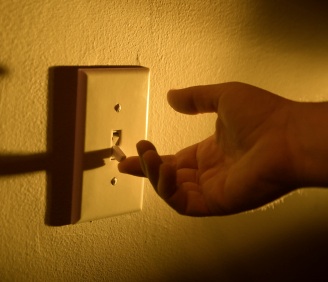
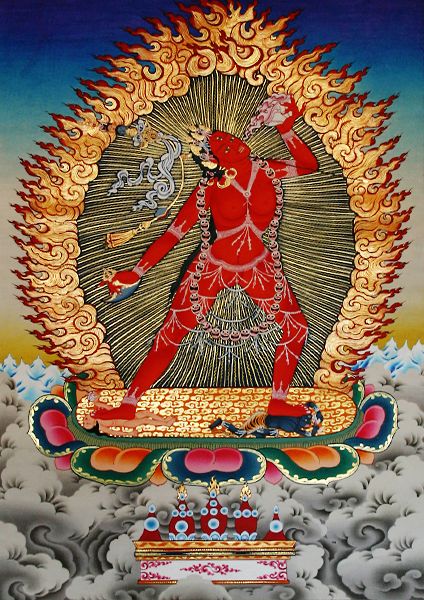
The kind of joy that we are giving ourselves when we try to fake it, literally fake it through our lives, ignoring all the bad news and just playing the way children play in the sandbox, picking and choosing what we want to think about and what we want to see, that is a joy that is an artificial recipe.  It is a joy that exists in the same world with suppression, ignorance and lack of information. That joy is not healthy for us because it does not promote longevity, it does not promote happiness.  It is literally like this: Let’s say we were to take all the chairs that are in this room and distribute them throughout the room in a haphazard way and then pile in a few more pieces of furniture, and  wait til it’s pitch-black midnight. Turn off all the lights, close all the curtains until it’s absolutely pitch dark in this room.  Then try to negotiate going through this room.  Would you like to negotiate going through this room, just trying to feel your way through with all of its furniture upturned and barricaded and brought up in your way and that sort of thing?  Would you like to go through the room, getting from this door to that door? And let’s imagine that door is the ultimate door, the one we need to get out of.  We must get out of that door for whatever reason.  Would you like to go from this door to that door with the lights off or with the lights on?

I don’t know about you, but I’m a sensible, practical kind of girl and if I have to make a journey, I want to know the facts.  I want to go with the lights on.  I want to turn the lights on so that I can walk around the furniture, go under it, step over it, do whatever it takes to negotiate this scary passage through samsara. It makes no sense to close the eyes and not take in information and pretend, suppress the facts in order to go from one place to another, because you will surely fail.  You will surely hurt yourself and have a very painful journey in the process.

So for this reason we must examine cyclic existence. We must examine the condition of sentient beings, and we must examine our own condition in order to truly turn our minds toward Dharma.  Once we have seen the faults of cyclic existence and seen the good results of understanding, of growing in understanding, and the joyfulness of virtuous and moral and ethical conduct and compassion, we will develop the habit of wanting to know, of opening the mind, of having the mind be very much like a bowl, a very pure thing in which nectar can be poured.  We will crave information.  We will crave practice.  We will literally crave turning on the light so that we can understand.  If we do not crave now, if we wish to remain in ignorance and darkness because it is easier or because we like being drunk, it is simply because it is our habit to do so and that does not excuse us from the need to change.

Develop a new habit.  You can see that that young person who partied down and worshipped the porcelain god every weekend morning, literally is watching their well-being go down. We on the outside can see that that needs to change, but that person, in the flux of their own ignorance, cannot see that that needs to change.  So I am pointing these things out to you so that you can make new and acceptable decisions in your lifetime so that you can actually turn your mind toward Dharma.

Copyright © Jetsunma Ahkon Norbu Lhamo All rights reserved
 

Love For All Beings

[Adapted from an oral commentary given by His Holiness Penor Rinpoche in conjunction with a ceremony wherein he bestowed the bodhisattva vow upon a gathering of disciples at Namdroling in Bozeman, Montana, November 1999. —Ed.]

Think about all living beings that at some time or another, throughout the course of innumerable past lifetimes, have been your own kind father or mother. Consider how a mother will do anything for her child—even give her own life, without hesitation. Consider how all living beings have been that kind to you at some time in the past—not just once, but countless times, in countless different circumstances and situations over the course of countless lifetimes since beginningless time. Consider also that to not think carefully about repaying kindness, and thereby to go through your life without the intention to truly benefit parent sentient beings, and so to actually ignore them, is truly shameless.

Many people in the West may think, “Wait a minute! My parents were not very kind to me. In fact, we are not even close, and I don’t even like them, so why should I feel that I need to repay their kindness now?” If that is what you think, then take a moment to think about how you acquired your body. Is it not due to the kindness of your parents that you have your precious human body? From the time your consciousness entered the union of your father’s seed and your mother’s egg, your mother carried you in her own body. Her body nurtured you as you grew within it. Then with pain and difficulty she gave birth to you. Her kindness did not just stop there: for many years she cared for you and lovingly fed, cleaned, clothed, and wiped you; she provided shelter and cared for you when you were sick, and then she protected you and looked out for you constantly. If you think you don’t need to repay the kindness of your parents, just remind yourself of those events, which you were the recipient of time and time again.

If that still does not change your attitude, so that you still do not understand the kindness your parents showed you, then think about your body, the gift of your body, which is who you are; your parents gave you that. Because your parents showed you the great kindness of giving you your body, your precious life, here you are. Sure you had the causes for your precious human rebirth, but without parents you wouldn’t have your body. And you didn’t have your body, you wouldn’t be able to receive these vows.

In our present state of ignorance, we have an inability to recognize that all beings have been our parents in the past, and we certainly don’t know what the particular situations and circumstances of those lifetimes were. Nonetheless, it is certain that we have had countless sentient beings as our parents over and over again in countless past lives. The truth is, at the present time we just do not recognize that.

Imagine you are on the bank of a river with your mother and suddenly she falls in and is being carried away by the rushing water. There you stand on the bank, watching that happened. What would you do? Would you do something to try to save her, such as throw out a rope? Or would you turn your back and walk away rather than risk your own life? Would you be concerned for her, or would your concern be only for yourself? The intention of the hearers and solitary realizers can be likened to this latter case, while the intention of the Mahayana practitioners can be likened to the former. While it is important to develop attraction toward peace, you should never for any reason, be attracted to the quiescence of the hearers and solitary realizers.

From “THE PATH of the Bodhisattva: A Collection of the Thirty-Seven Practices of a Bodhisattva and Related Prayers” with a commentary by Kyabje Pema Norbu Rinpoche on the Prayer for Excellent Conduct

Compiled under the direction of Venerable Gyatrul Rinpoche Vimala Publishing 2008

WP2Social Auto Publish Powered By : XYZScripts.com