Prayer for the swift rebirth of His Holiness Penor Rinpoche

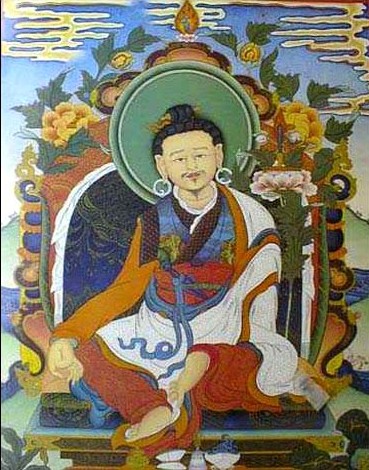
His Holiness Pedma Norbu Rinpoche
His Holiness Pema Norbu Rinpoche

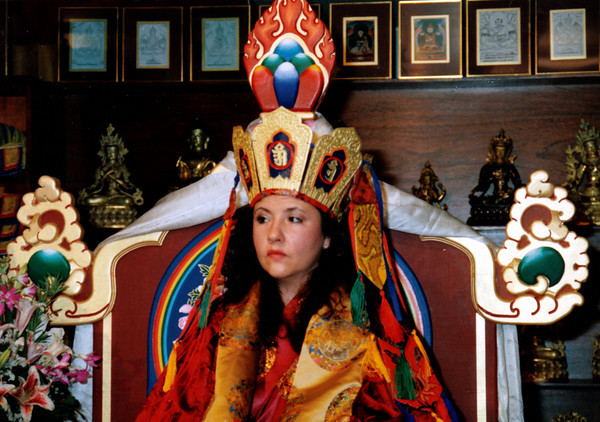
I dream of the day my Guru will be reborn and found. I long for it. This Precious Incarnation is sorely missed–every day.

I have my Palyul Lineage and all our AMAZING throneholders. But HHPenor Rinpoche is my root Guru, enthroned upon the Lotus in my heart.

HHPR is present always! Through my humanness I long to see His Precious Face- hear His voice, the fragrance of His holy breath! Ah, tears…

I must satisfy my heart with His many teachings, prayers, and mixing my mind with His. Like milk with water, inseparable! The way…

I have never seen such compassion in anyone else but HHPR. He was a living Buddha, peerless. He made Palyul what it is today!

His Holiness Penor Rinpoche

To His Holiness Penor Rinpoche, Tsawei Lama I pray– O great treasure of Love and Blessing, Supreme Wisdom Holder! Return for the sake of all sentient beings!

Come, lead us out of confusion into Pristine Awareness as only a true Buddha can! I await the Bliss of Your return!

Show us the way to attain Supreme Enlightenment as you have always done! Return to us! There is such suffering!

Show us how to awaken from this deep, narcotic trance- to the Pristine Primordial Nature, free of contrivance! E MA HO!

Beloved Guru, may I always, in every future time be reborn in Your Entourage and serve you and all beings with body, speech and mind.

Nirvana Is Beyond Concepts: by Dzongsar Khyentse Rinpoche

The following is respectfully quoted from “What Makes You Not a Buddhist” by Dzongsar Jamyang Khyentse Rinpoche:

Nirvana Is Beyond Concepts

According to Buddhists, before this life in which he attained enlightenment, Siddhartha lived countless lives as birds, monkeys, elephants, kings, queens, and many as a bodhisattva, a being whose sole aim is to overcome ignorance in order to benefit all beings. But it was in his lifetime as the Indian prince Siddhartha that he at long last defeated Mara beneath the bodhi tree and finally reached the other shore, the other side of samsara. This state is referred to as “nirvana.” Having reached nirvana, he gave his first sermon in Sarnath, near Varanasi, and continued to teach throughout northern India for the rest of his long life. His students were monks and nuns, kings and warlords, courtesans and merchants. Many members of his family became denunciates, including his wife, Yashodhara, and is son, Rahula. He was venerated as a supreme human by many people from all over India and beyond. But he did not become immortal. After a long life of teaching, he passed away in a place called Kushingagar. At that moment he went even beyond nirvana to a state that is called “parinirvana.”

Biography of His Holiness Pema Norbu Rinpoche

The following is respectfully quoted from “How to Follow a Spiritual Master” as translated by the Ngagyur Nyingma Institute:

H. H. Pema Norbu Rinpoche, an emanation of Pundit Vimalamitra, was born in the twelfth Tibetan month of Water Monkey Year 1932 at Powo in Kham, Eastern Tibet. His father’s name was Sonam Gyurme and his mother Zom Kyid. At the time of his birth, sweet scented flowers miraculously bloomed in his village where no flowers usually appear in the cold and dry winter month. He was recognized as the Third Drubwang Penor Rinpoche through the prophecy of the Thupten Choekyi Dorje, the fifth Dzogchen Rinpoche.

In the upper region of sacred Powo,
At the foot of a majestic hill,
Surrounded by beautiful trees and lakes,
With large rivers flowing from the south,
To a couple bearing names, Sonam and Kyid,
A noble child will be born in the Water Monkey Year,
Possessing great qualities, he will benefit the doctrine and beings.
I the fifth Dzogchen prophesy this.

Khenpo Ngagchung, a prominent Dzogchen adept of the time, foreseeing the exceptional destiny of the new incarnation, gave him the refuge vow and empowerment of Manjushri, a sacred statue and composed a long life prayer used by thousands of his followers around the globe today. Penor Rinpoche was brought when he was five to the Palyul Monastery, the seat of his previous incarnations and was enthroned by Thupten Choekyi Dawa and Karma Thegchog Nyingpo as the incarnation of the Second Drubwang Penor Rinpoche and was the eleventh throne holder of the Palyul tradition.

Palyul Namgyal Jangchub Choeling, one of the six great Nyingma Monasteries, was established under the patronage of Lachen Jampa Phuntsog, the King of Dege and Trichen Sangye Tenpa in 1665.

Rigzin Kunsang Sherab, a prominent Dzogchen master and Terton prophesied by Guru Rinpoche became the first head of the monastery. He was a close disciple of Mahasiddha Karma Chagme and Terton Migyur Dorje, who discovered the Namcho Cycle. Both through the influence of his masters and his own inspiration, the monastery grew rapidly into one of the largest in Tibet. In the following centuries, Palyul often referred to as “the Glorious Palyul of the East”, became the famous center of ardent learning and practice under the guidance of successive throne holders. Hundreds and thousands of monks attained the rainbow body or other spiritual accomplishments from there. Penor Rinpoche was to oversee this large monastery comprising more than four hundred branch monasteries and over three hundred thousand monks and nuns.

Penor Rinpoche spent his early youth in Palyul and Dago, studying and receiving teachings from many masters including Karma Thegchog Nyingpo (the Tenth Throne holder) who prepared him to become the eleventh throne holder. When, as a small child, he was playing with a precious Vajra, he accidentally dropped it, breaking it into pieces. Fearing that his teacher would reprimand him, he quickly glued it back together with his own saliva, making the Vajra stronger than ever. On another occasion, he accidentally dropped a fragile ritual bell on the stone floor. Everybody present assumed that the bell had broken, and yet when Rinpoche picked it up, the bell was as whole and the ring more melodious.

One day when Rinpoche was a small boy, and old man who insisted that Rinpoche practice phowa on him approached him. Rinpoche innocently complied with the old man’s request. To his dismay, he realized that he had actually killed the old man. He immediately practiced again to revive the corpse that lay before him. To Rinpoche’s utter relief, the old man came back to life and said, “For heaven’s sake, why did you call me back? I was already in the pure land of Lord Amitabha.”

Another incident illustrating Rinpoche’s extraordinary power at a tender age occurred when he left his footprints permanently etched in a stone. This incident among others testifies to the karmic continuity of Rinpoche’s former practices. Penor Rinpoche also used to make intricately woven knots in a blessing cord using only his tongue.

Among his numerous masters, Penor Rinpoche benefited immensely from a very warm and close relationship he enjoyed with his master Thupten Choekyi Dawa. At the age of thirteen, he received novice ordination from him, at twenty-one full ordinations and a vast number of teachings including essential instructions and empowerments from the Nyingma tradition. Despite his old age and poor eyesight, his master said, “If I am not able to give the entire teachings, instructions and empowerments to Penor Rinpoche, then I would not have lived my life.”

Penor Rinpoche then underwent a long-term retreat with Thupten Choekyi Dawa at Darthang. Beginning from preliminary practices to the most profound esoteric teachings of Dzogchen, he stressed every practice until naked truth was revealed to him. His Holiness Dilgo Khyentse once said,

Penor Rinpoche is a saint who has transcended the boundary of samayas”.
Khenpo Jigme Phuntsog repeatedly applauded him as an enlightened Buddha in flesh and blood.

During an accomplishment ceremony (Drubchen), many monks saw a rainbow appear around the mandala and amrita boiled in the skull cup. While conducting the accomplishment ceremony of Magon, the ritual cake of Dakinis was seen shaking vigorously. One day while receiving Kangyur transmissions, Penor Rinpoche had a recollection of Lord Buddha seated at the bank of a river giving profound teachings to him and thousands of others.

According to Khenpo Ngagchung, Penor Rinpoche is also a manifestation of Vajrapani. Rinpoche’s recollection clearly indicates that he had sat at the feet of the Enlightened One in a previous lifetime in the form of Vajrapani.

It was a dream of every Tibetan to make a pilgrimage to Lhasa, especially to see the famous Jowo. In 1956, at the age of twenty-four, Penor Rinpoche with a large entourage began to travel to Central Tibet. There they visited numerous monasteries, ancient temples and sacred places, which revealed the sanctity and glory of Tibet’s past. He also visited His Holiness the Dalai Lama at his winter palace, the Potala and received a long life empowerment. Lhasa Monlam Chenmo was in progress and he offered tea and money to the entire assembly of monks. By then the situation in Lhasa was very tense. With a heavy heart, Penor Rinpoche returned to his monastery in Palyul.

Foreseeing the irreversibility of the Chinese occupation and the threat this would pose to the very existence of the Buddha dharma, Penor Rinpoche and three hundred others fled together to the North Eastern Frontier of India. Only thirty people reached India. Many died at the hands of the Chinese. The journey was a long and a dangerous one. Bullets would fall at Penor Rinpoche’s feet sending clouds of dust. Hand grenades would fall at his feet and when he had moved to a safer distance, they would explode. To survive, people with him would kill animals for food. Penor Rinpoche could not see innocent animals being butchered. Therefore he use to walk ahead and drive away those possible victims. He reached Pema Koe in the Indian state of Arunachal Pradesh with his group and in 1961, moved to South India in Mysore with approximately six hundred people.

The purpose of Rinpoche’s escape from Tibet was to keep the flame of Buddha dharma alive so that beings would not plunge into the darkness and gloom of ignorance. Keeping this in mind, Penor Rinpoche re-established the great Palyul Monastery, Thegchog Namdrol Shedrup Dargyeling in Bylakuppe, Mysore. Rinpoche had at his disposal only a paltry sum of three hundred rupees to rebuild his entire life and that of his monastery. Rinpoche had, however, insurmountable hidden resources – his enormous courage and determination.

People around him did not see the vision that he had and therefore insisted he reduce the size of his planned monastery. At that time, there were only a handful of monks. When later monks by the hundreds crammed into the monastery and found no place to sit, one can only wonder at the foresight that Penor Rinpoche had three decades ago. Few masters of Penor Rinpoche’s status would have undergone the hardships that he went through. In the hot scorching sun, he would carry bricks and sands and would work the cement, his hand bleeding and full of sores. Lack of water and motor roads made the construction even more difficult. Penor Rinpoche had to fetch water from the river that runs by the side of the monastery.

At times during the working day, he and his monks did not mind mixing dirty river water with tsampa. In the early days of settlement, he lived in a tent making Tibetan tea with cheap cooking oil, as he had no butter, and drinking out of a tin can. Rinpoche even cut his zen to share it with another lama. An old woman found him one day digging sewage alone in a deep trench for one of his monks staying in retreat.

One day a man arrived at the site where Rinpoche was working with the group of monks under the sun, he briskly walked up to Rinpoche and said, “I have come a long way to see Rinpoche. May I see him?” “Oh! Sure, why not?” replied Rinpoche. He then took his visitor to his humble room and asked, “Yes, what can I do for you?” The man was both surprised and embarassed. He never expected Rinpoche to be so earthy and accessible. His idea of Penor Rinpoche was different, a well dressed monk on a high luxurious throne. But Rinpoche appeared as a true gem lying on the common soil upon which he himself toiled.

Year after year, Penor Rinpoche with inexhaustible energy and commitment, trudged steadily along the path of progress, undeterred by the numerous obstacles and hardships. The energy that Penor Rinpoche invested was not spent in vain and has borne him abundant fruits. Today Namdroling monastery in Bylakuppe, with over four thousand monks and nuns can bost of being the largest Nyingma monastery in the world. Penor Rinpoche established the Ngagyur Nyingma Institute in 1978 unable to bear the sight of priceless Nyingma doctrine at stake. The NNI, which is now a renowned center for advanced Buddhist education and research studies, has become a special pride for Penor Rinpoche.

Namdroling monastery also hosts a retreat center where several dozen undergo intensive three-year retreats. Penor Rinpoche personally instructs them on the Dzogchen Longchen Nyingthig cycle and Namcho Cycle of Terton Migyur Dorje. Every three years, a large group of Vajracharyas comes out of the retreat. Each year, Rinpoche also gives instructions on Ngondro, Tsalung, and Dzogchen during a month long retreat undertaken by a large number of monks, nuns and lay people. Studies are always coupled with practice and therefore Penor Rinpoche’s monastery is an ideal place for both intensive study and practice. That was Penor Rinpoche’s dream and that is what he still emphasizes today.

Over eight hundred small monks go to the primary school where they are taught basic reading and writing both in Tibetan and English. They also learn basic monastic duties and primary Buddhist teachings. Senior students from the institute teach these young monks. In 1993, Penor Rinpoche also founded Tsogyal Shedrubling Nunnery where over five hundred nuns study and practice and a home for the elderly where thirty people live and practice. These elders can be seen with their prayer wheels and malas, either sitting under the trees or circumambulating the sixteen large stupas that Penor Rinpoche built and dedicated to world peace.

The compassion of Rinpoche also extends to the local Indian people too. He has constructed many roads and bridges to benefit people. The money that he receives in the form of donations is always spent on worthy causes, such as the above named projects. While both in India and Tibet, Penor Rinpoche is also famous for making timely rain when the seasonal rainfall does not fall. The local Indians have nick named him, “The Rain Lama”.

Penor Rinpoche has given the entire Rinchen Terzoed Empowerments six times and the Nyingthig and Namcho Cycles several times more. He was the first Tibetan Master to give Rinchen Terzoed in the West. Rinpoche is looked upon by so many as having an infinite variety of skills and capacities. To his followers, especially to his beloved monks, he is more than a father, doctor, psychiatrist, therapist, healer, and teacher.

Being a peerless full-fledged monk himself, Penor Rinpoche has given ordination to thousands of monks and nuns. Apart from the teachings and empowerments he dispenses, he provides solutions to various human problems. Day in and day out, he selflessly works for the benefit of the living and dying or dead. The marvelous activities of His Holiness are expanding exponentially. During his four return visits to Tibet since 1959, he renovated the mother Palyul Monastery and its numerous branch monasteries. He further established new dharma centers in the Himalayan region as well as Hong Kong, Taiwan, Singapore, Malaysia, and the Philippines. There are also centers in the USA and Europe. Rinpoche travels tirelessly throughout India, the Himalayas, South East Asia and the West bestowing teachings and empowerments to his countless disciples.

The representatives of the Nyingma Buddhists around the world unanimously appointed Rinpoche in 1993 during the Nyingma Monlam Chenmo under the Bodhi Tree at Bodh Gaya. He assumed responsibility and title formerly held by His Holiness Dudjom Rinpoche and Dilgo Khyentse Rinpoche.

His recent visible achievements are too numerous to list fully, not to mention the full spectrum of his hidden activities for the benefit of beings, may it be his countless disciples or all sentient beings.

The below mentioned are some of his main achievements. He established among other an imposing, beautifully decorated New Temple in Bylakuppe, able to accommodate several thousand  monks and nuns. The sheer majesty of this building as well as the enormous size of the three statues of the Lord Buddha, Guru Rinpoche and Buddha Amitayus, covered in gold leaf, the extensive collection of thangkas masterpiece gracing every wall, the ornate wooden carvings have prompted the numerous Indian visitors to name it the Golden Temple. However, Rinpoche insists in saying that he has not build any golden temple yet, a feat he is currently achieving with the new project of building Sando Pari — Guru Rinpoche’s Paradise — on the site of the first temple recently brought down. The current “Golden Temple” was inaugurated amidst sumptuous celebrations and many auspicious ceremonies in the presence of His Holiness the Dalai Lama and thousands of monks, nuns and invited guests on September 23rd 1999.

In New York State, in a beautiful quiet environment of the Catskills, Rinpoche founded the seat of his work in the USA, a retreat center complete with all facilities, a fully decorated Temple with statues and religious paintings where he bestows annually the whole retreat cycle of the Palyul tradition to his disciples coming from America, Europse and other Asian countries. There are rooms and outdoor accommodations for retreatants. There are also numerous students who have now offered centers to Rinpoche throughout the whole of the North American continent as well as Canada, which Rinpoche visits every year and where he bestows Teachings, Empowerments and advice to his rapidly growing number of followers.

In Mysore, he is also currently completing the building of a large hospital equipped with the latest facilities to serve the needs of a rapidly expanding community of monks, nuns, children and local people. Rinpoche finds every year extraordinary resources to provide absolutely all that is needed to accommodate, feed, cloth, educate and guide in the purest spiritual tradition all his followers and buildings are springing forth in a near uninterrupted stream to keep up with the expansion of his activities. Surrounded by over seventy tulkus whom he has recognized and enthroned, he dispenses generously whatever is needed, and well beyond to all his followers, ordained and lay people alike, upholding the purest vinaya tradition as a great unassuming Enlightened Bodhisattva.

From Student to Teacher: Pure Offering

The following was submitted by a student of Jetsunma Ahkon Lhamo, Kunzang Drolma:

From Student  to Teacher

His Holiness Pema Norbu Rinpoche

I dream of the day my Guru will be reborn and found. I long for it. This Precious Incarnation is sorely missed–every day.

I have my Palyul Lineage and all our AMAZING throneholders. But His Holiness Penor Rinpoche is my root Guru, enthroned upon the Lotus in my heart.

His Holines Penor Rinpoche is present always! Through my humanness I long to see His Precious Face- hear His voice, the fragrance of His holy breath! Ah, tears…

I must satisfy my heart with His many teachings, prayers, and mixing my mind with His. Like milk with water, inseparable! The way…

I have never seen such compassion in anyone else but His Holiness Penor Rinpoche. He was a living Buddha, peerless. He made Palyul what it is today!

~ Jetsunma Ahkon Lhamo


The relationship between Teacher and Student is the foundation of Tibetan Buddhism. Devotion is the method of awakening to the true nature of compassionate wisdom or Bodhicitta, and through which the Teacher’s pure blessings pass to the Student. The Student is in a posture of offering, of holding nothing back, with the certainty that their pure Teacher will not, can never, abandon them, but will work ceaselessly for the benefit of the Student and all beings.

Jetsunma Ahkon Lhamo has never wavered in her devotion to her Root Guru, His Holiness Penor Rinpoche, who passed from this life in 2009. Her public expression of her love of, devotion to and yearning for His Holiness is a display of humble reverence for the most holy being who appeared in her life. Holiness recognized Jetsunma as the reincarnation of the first Ahkon Lhamo, who – along with her brother Kunzang Sherab – founded the Palyul Lineage in the Nyingma School. In so doing, Holiness firmly established the presence of Palyul in the West and acknowledged the purity of Jetsunma’s presence in the world. On one occasion, as Jetsunma was prostrating to welcome Holiness to the Sates, he responded. “It is I who should be prostrating to you.” Such was his reverence for Jetsunma.

Jetsunma never ceased to make offerings to Holiness during his most recent lifetime, including a song she wrote and recorded for him, titled, Father. Holiness in turn never ceased to support and respect all of Jetsunma’s activities, even in the face of overt criticism and hostility from Westerners who questioned Jetsunma’s authenticity. At least twice, during Palyul Summer Retreat, Holiness spoke from  the throne about Jetsunma and her purity as a Tulku or reincarnate Lama, and her absolute commitment to ending the suffering of all beings.

It is no surprise that Jetsunma’s generosity and gratitude to her Root Teacher did not end with his passing from this life, as evidenced by her heartfelt prayer to him. For she and Holiness remain inseparable in her heart. It is from this pure posture that Jetsunma has offered the entire holdings of Kunzang Palyul Choling, the Buddhist Temple of which she is Spiritual Director, to the Labrang of His Holiness’ Yangsi.

Labrang  refers to the offerings held on behalf of His Holiness Penor Rinpoche until his Yangsi, or reincarnation, is recognized. His Holiness Karma Kuchen Rinpoche, current Throne-holder of Palyul, will hold the Labrang on behalf of the Yangsi until his reappearance and recognition. Jetsunma is making a pure and uninhibited offering of her activities and her purpose in this lifetime, in the form of the KPC Mandala, because she can hold nothing back from her Root Guru. It is this posture that proves her purity of heart and devotion, and teaches all of us that Vajrayana is not an intellectual concept; it is an expression of love, commitment, yearning, joy, devotion and certainty there is nothing of true value in this ordinary world, other than the constant presence in one’s heart and mind of the blessings of one’s Root Guru. 

To His Holiness Penor Rinpoche, Tsawei Lama I pray 

O great treasure of Love and Blessing, Supreme Wisdom Holder! Return for the sake of all sentient beings!

Come, lead us out of confusion into Pristine Awareness as only a true Buddha can! I await the Bliss of Your return!

Show us the way to attain Supreme Enlightenment as you have always done! Return to us! There is such suffering!

Show us how to awaken from this deep, narcotic trance- to the Pristine Primordial Nature, free of contrivance! E MA HO!

Beloved Guru, may I always, in every future time be reborn in Your Entourage and serve you and all beings with body, speech and mind.

~ Jetsunma Ahkon Lhamo


Precious Human Rebirth: a Teaching by His Holiness Penor Rinpoche


[Adapted from an oral commentary given by His Holiness Penor Rinpoche in conjunction with a ceremony wherein he bestowed the bodhisattva vow upon a gathering of disciples at Namdroling in Bozeman, Montana, November 1999. —Ed.]

Let us begin by considering limitless space. Then consider that just as space is limitless, so too are parent sentient beings.

Since beginningless time, every sentient being has been our own parent in a past lifetime, and every sentient being from each of those lifetimes only showed us inconceivably great kindness. We must recognize that. We must also recognize that we have obtained that which is so difficult to obtain: the precious human rebirth—and that we have met with the doctrine that is so difficult to meet: the doctrine of Lord Buddha. Recognizing these things, we must understand that the best way we can repay the kindness of all parent sentient beings is by placing every one of them in the state of fully enlightened Buddhahood. Therefore, (all of you here) please cultivate this aspiration. Having arrived at this critical juncture, you can now make your choice between samsara and enlightenment.

Now that you have obtained this precious human existence, you must extract its essence in order to make it meaningful. What makes this life meaningful is engaging with the spiritual path rather than just pursuing worldly activities for this life only, such as activities to increase wealth and material endowments or [activities to achieve] fame and personal gain. What makes this precious human existence meaningful is striving to realize the nature of this life.

This precious human existence is extremely rare. The following analogy illustrates just how rare it is: Imagine that upon the surface of a vast ocean floats a yoke tossed continuously by wind and waves. Within that ocean swims a blind tortoise that surfaces for air once every hundred years. Of course, it is possible for the tortoise to emerge with its head [passing] through the yoke that bobs on the surface, but the chances that this will occur are extremely rare. Obtaining this precious human birth is just as rare as the tortoise surfacing for air one time in a hundred years with its head [passing] through the bobbing yoke. Surely this [surfacing] is possible, but it is so difficult and unlikely that it is next to impossible. Obtaining the precious human birth is likewise difficult.

If you use your precious human body just to accumulate an abundance of negativity, then you will certainly fall to the lower realms. If you accumulate the nonvirtue to fall to the hell realm, for example, you could remain there for the equivalent of hundreds of thousands of years, for incalculable periods, where you would experience inconceivable suffering. Eventually your karma there would be exhausted, and you would make it out to the peripheral hells; from there you would eventually make it to the deprived spirit realm and then eventually to the animal realm. In all these lower realms you would experience nothing but suffering; furthermore, you would accumulate only nonvirtue, because not even the thought of virtue exists in these realms. That is why if you fall to the lower realms of existence, you will remain there indefinitely, circling from hell to animal to the deprived spirit realm and so on, endlessly. Very few [beings] actually have the good fortune to leave the three lower realms. Considering this, you will appreciate just why it is so difficult and rare to obtain human rebirth.

From “THE PATH of the Bodhisattva: A Collection of the Thirty-Seven Practices of a Bodhisattva and Related Prayers” with a commentary by Kyabje Pema Norbu Rinpoche on the Prayer for Excellent Conduct

Compiled under the direction of Venerable Gyatrul Rinpoche Vimala Publishing 2008

Vajrayana

The following is an excerpt from a teaching by Jetsunma Ahkon Lhamo called “Tools to Deepen in Your Practice”

When we are in love with our own minds—which is a lonely way to go, I have to tell you—when you are in love with your own mind, you can’t believe that you’re supposed to substitute anything for that stuff in your head, because it’s so phenomenal. It’s so impressive.  It’s amazing what you can do with neuroses!  I mean. . . Unbelievable!  When you really believe in phenomena, like a child you can build it like blocks and do anything.  But that accumulation of knowledge is practically worthless on the Vajrayana path when it comes to actual accomplishment.  Sure you need to learn a lot in order to get to the point where you are practicing, and so we do have to accumulate some knowledge. But when you really want to accomplish, it’s wisdom that you must accomplish.  And that wisdom is pure perception, the view—letting go of ego-clinging, opening up the grasping of the five senses, allowing oneself to view the emptiness of space.

What about the other leg or the other eye of Vajrayana which I said was compassion or method?  When we practice early on in Buddhism, like when Lord Buddha taught, he taught that we should do no harm, that we should never harm any being. That was one primary level of vow taking that we should all take.  Now, in Vajrayana, there is less emphasis on pure stark teachings like that, and more emphasis on something maybe a little bit more complicated.  How can I put it?

It’s like this.  In Theravada Buddhism, when you are accomplishing Dharma, what you are doing is purifying the mind and allowing the mind to relax.  Ok.  That’s a necessary step, a necessary stage.  And part of that is to do no harm, to awaken to the realization that all sentient beings are equal in their nature and that they all strive to be happy, while not knowing how to be happy.  For that reason, we should have compassion for them. We shouldn’t harm them because we know that each one has the Buddha seed.

In Vajrayana, that is already assumed.  Everything in Vajrayana is built on the layers underneath it.  Like Vajrayana is built on Mahayana, Mahayana is built on Theravada Buddhism.  And they all become a little more fancy, explained, and mystical as they ascend.

In Vajrayana Buddhism, for instance, we can expect that there will be practices in which there are wrathful deities.  And we can expect in Vajrayana Buddhism, when you ask your teacher a question, you’ll get a frank answer.  Now in Theravada Buddhism, there is not the same binding to the Guru.  Your teacher is more like a companion on the path.  A teaching monk, let’s say, can point and say, “This this,” “Accomplish this,” “Do that,” “Do that,” “Do that,”and guide you, and have encouraging words for you along the path.  Whereas in Vajrayana, for the same reason that we accomplish wrathful practice, we sometimes have wrathful teachers.  And we think to ourselves, “How can that be?  I thought Buddhism was the peaceful religion?  I thought you guys didn’t fight?”  Well, we don’t.  That’s not what is happening here.

In Vajrayana Buddhism, the assumption is of the emptiness of all nature and the emptiness of dualistic existence. Therefore, I cannot find where I end and you begin.  Who are you that you are different than I am?  It’s not possible.  Simply because of the clothing that you put on?  The face you put on?  Simply because of the ideas that you have about self-nature being inherently real?  Should I accept that?  No.  And therefore, in Vajrayana, we have very active kinds of practices.  We have Vajrakilaya, who’s like a pointy phurba on the bottom. You generate Vajrakilaya when you want to remove obstacles.  And Vajrakilaya can look very fierce.  In one visualization, in his two hands, he’s holding a phurba, a pointed knife, just like himself, and he’s rolling it around and he’s looking really wrathful. And he’s got all his wrathful clothes on. He’s got sometimes tiger skins and elephant skins and human skins and you think, “Whoa, what is that?  I don’t know about this religion?”  And that’s because originally, like in the early stages of Buddhism, in Theravada Buddhism, you want to relax the mind, purify the mind, do no harm and your accomplishment is more self-oriented.

Now in Mahayana and particularly in Vajrayana, we already assume that all phenomena is empty of self-nature.  We already assume the truth of the unsurpassed primordial view.  We already assume that all beings are essentially the same “taste” in their nature.  We assume that.  And yet, we cannot assume that there is no phenomenal reality because we seem to find ourselves in it.  And you can’t go into a state of denial about it because we could prove you wrong.  I could just stick a pin in your foot and boy, that’d show you.  You’d get it real, real fast!

So we find ourselves here in Vajrayana. We are aware of this amazing reality that is the fundamental sphere of truth. At least somehow we are aware of it, somewhere, a little bit,ok, just a tiny bit, the sphere of truth. Yet at the same time, we find ourselves in phenomenal reality.  We see the sufferings of the physical dimension, particularly the human dimension which are old age, sickness and death. We see all these things.  And so while we understand on some level the emptiness of phenomenal nature, we have not yet accomplished enough to be able to hold the sphere of truth so smoothly that there are never obstacles.  So in that case, we practice the wrathful deities. The wrathful deities are active in phenomena and yet we assume their nature to be the same as the Buddhas, the same as our Root Teacher; and eventually, let’s say if one were to accomplish Vajrakilaya as his or her root deity, eventually, we would understand our nature as Vajrakilaya.

In fact, when we say that the Buddha is awakening, the Dharma is the method, enlightenment is the result, we can also say that the Dakinis are the activity of the Buddhas, and the Protectors and Wrathful Deities are the active expansion of the nature and of realization. We’re practicing all of these deities; and they’re all arising from emptiness and they all dissolve into emptiness. What we’re actually doing is engaging facets of our own nature.

Copyright © Jetsunma Ahkon Norbu Lhamo All rights reserved

Compassionate Blessings: A Dialog

The following is from a twitter dialog between Jetsunma Ahkon Lhamo and one of her followers:

Stupas cost about $150K -200K to build including the required Stupa Master. It boggles that people with that kind of money don’t support Stupa building for peace, to pacify suffering, sickness and old age, delay death, pacify war and hunger, and balance the planet. That’s why we should build Stupas.

(Jetsunma asks follower how he is doing.)

Follower: Happy as a clam and fit as a fiddle, lovely one. Your pretty little self?

Jetsunma: Not too shabby even though I had a hopeful ring appraised to build a Stupa. It was a total flat out fake. Gotta fund raise. Fund raising is kind of embarrassing, but its for an excellent reason. We’ll figure it out. Stupas are worth it. If there was anything else worth it I’d give it up in a heartbeat.

Follower: Well, it could be argued that raising the funds for those in need takes precedent, which is, to an extent true.

Jetsunma: I have built Stupas already, over 30, want to build them anywhere there is suffering and hardship or war.

Follower: Good for you, angel. I’m not suggesting you shouldn’t. I spend part of my time raising money to keep a 13th century building up.

Jetsunma: To me and mine this is the best way to give to all, blessings bring result. What kind of blessing? For example, a tumor dissolves, and no money for medical costs. It’s a “vibrational” blessing, sphere of truth. Love. Like a Buddha.

Follower: What about the poor and needy? If only life where black and white, eh?

Jetsunma: And you are right. Its not black or white: compassion. And we do a food bank, animal rescue, we work for the benefit of all. Here’s a teaching offered by a Master Stupa builder on the blessings they bring https://www.tibetanbuddhistaltar.org/the-merit-of-stupa-building/. Thing is you can argue and such but this is what I do, charity and benefit are my reason for being.

Copyright © Jetsunma Ahkon Norbu Lhamo All rights reserved


Follower: 


WP2Social Auto Publish Powered By : XYZScripts.com