The following is a video adaptation of a modern Jataka Tale prepared by students at the request of Jetsunma Ahkon Lhamo:
 Jetsunma Ahkon Lhamo
Precious Human Rebirth: a Teaching by His Holiness Penor Rinpoche
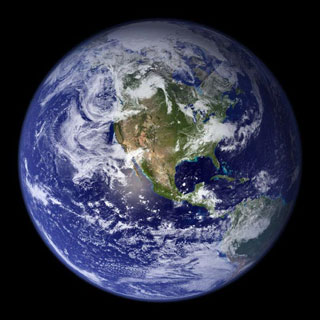
[Adapted from an oral commentary given by His Holiness Penor Rinpoche in conjunction with a ceremony wherein he bestowed the bodhisattva vow upon a gathering of disciples at Namdroling in Bozeman, Montana, November 1999. —Ed.]
Let us begin by considering limitless space. Then consider that just as space is limitless, so too are parent sentient beings.
Since beginningless time, every sentient being has been our own parent in a past lifetime, and every sentient being from each of those lifetimes only showed us inconceivably great kindness. We must recognize that. We must also recognize that we have obtained that which is so difficult to obtain: the precious human rebirth—and that we have met with the doctrine that is so difficult to meet: the doctrine of Lord Buddha. Recognizing these things, we must understand that the best way we can repay the kindness of all parent sentient beings is by placing every one of them in the state of fully enlightened Buddhahood. Therefore, (all of you here) please cultivate this aspiration. Having arrived at this critical juncture, you can now make your choice between samsara and enlightenment.
Now that you have obtained this precious human existence, you must extract its essence in order to make it meaningful. What makes this life meaningful is engaging with the spiritual path rather than just pursuing worldly activities for this life only, such as activities to increase wealth and material endowments or [activities to achieve] fame and personal gain. What makes this precious human existence meaningful is striving to realize the nature of this life.
This precious human existence is extremely rare. The following analogy illustrates just how rare it is: Imagine that upon the surface of a vast ocean floats a yoke tossed continuously by wind and waves. Within that ocean swims a blind tortoise that surfaces for air once every hundred years. Of course, it is possible for the tortoise to emerge with its head [passing] through the yoke that bobs on the surface, but the chances that this will occur are extremely rare. Obtaining this precious human birth is just as rare as the tortoise surfacing for air one time in a hundred years with its head [passing] through the bobbing yoke. Surely this [surfacing] is possible, but it is so difficult and unlikely that it is next to impossible. Obtaining the precious human birth is likewise difficult.
If you use your precious human body just to accumulate an abundance of negativity, then you will certainly fall to the lower realms. If you accumulate the nonvirtue to fall to the hell realm, for example, you could remain there for the equivalent of hundreds of thousands of years, for incalculable periods, where you would experience inconceivable suffering. Eventually your karma there would be exhausted, and you would make it out to the peripheral hells; from there you would eventually make it to the deprived spirit realm and then eventually to the animal realm. In all these lower realms you would experience nothing but suffering; furthermore, you would accumulate only nonvirtue, because not even the thought of virtue exists in these realms. That is why if you fall to the lower realms of existence, you will remain there indefinitely, circling from hell to animal to the deprived spirit realm and so on, endlessly. Very few [beings] actually have the good fortune to leave the three lower realms. Considering this, you will appreciate just why it is so difficult and rare to obtain human rebirth.
From “THE PATH of the Bodhisattva: A Collection of the Thirty-Seven Practices of a Bodhisattva and Related Prayers” with a commentary by Kyabje Pema Norbu Rinpoche on the Prayer for Excellent Conduct
Compiled under the direction of Venerable Gyatrul Rinpoche Vimala Publishing 2008
Vajrayana
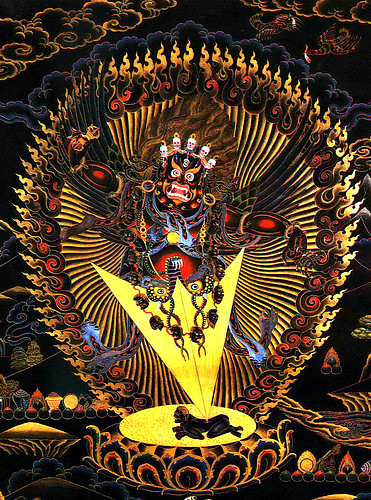
The following is an excerpt from a teaching by Jetsunma Ahkon Lhamo called “Tools to Deepen in Your Practice”
When we are in love with our own minds—which is a lonely way to go, I have to tell you—when you are in love with your own mind, you can’t believe that you’re supposed to substitute anything for that stuff in your head, because it’s so phenomenal. It’s so impressive. It’s amazing what you can do with neuroses! I mean. . . Unbelievable! When you really believe in phenomena, like a child you can build it like blocks and do anything. But that accumulation of knowledge is practically worthless on the Vajrayana path when it comes to actual accomplishment. Sure you need to learn a lot in order to get to the point where you are practicing, and so we do have to accumulate some knowledge. But when you really want to accomplish, it’s wisdom that you must accomplish. And that wisdom is pure perception, the view—letting go of ego-clinging, opening up the grasping of the five senses, allowing oneself to view the emptiness of space.
What about the other leg or the other eye of Vajrayana which I said was compassion or method? When we practice early on in Buddhism, like when Lord Buddha taught, he taught that we should do no harm, that we should never harm any being. That was one primary level of vow taking that we should all take. Now, in Vajrayana, there is less emphasis on pure stark teachings like that, and more emphasis on something maybe a little bit more complicated. How can I put it?
It’s like this. In Theravada Buddhism, when you are accomplishing Dharma, what you are doing is purifying the mind and allowing the mind to relax. Ok. That’s a necessary step, a necessary stage. And part of that is to do no harm, to awaken to the realization that all sentient beings are equal in their nature and that they all strive to be happy, while not knowing how to be happy. For that reason, we should have compassion for them. We shouldn’t harm them because we know that each one has the Buddha seed.
In Vajrayana, that is already assumed. Everything in Vajrayana is built on the layers underneath it. Like Vajrayana is built on Mahayana, Mahayana is built on Theravada Buddhism. And they all become a little more fancy, explained, and mystical as they ascend.
In Vajrayana Buddhism, for instance, we can expect that there will be practices in which there are wrathful deities. And we can expect in Vajrayana Buddhism, when you ask your teacher a question, you’ll get a frank answer. Now in Theravada Buddhism, there is not the same binding to the Guru. Your teacher is more like a companion on the path. A teaching monk, let’s say, can point and say, “This this,” “Accomplish this,” “Do that,” “Do that,” “Do that,”and guide you, and have encouraging words for you along the path. Whereas in Vajrayana, for the same reason that we accomplish wrathful practice, we sometimes have wrathful teachers. And we think to ourselves, “How can that be? I thought Buddhism was the peaceful religion? I thought you guys didn’t fight?” Well, we don’t. That’s not what is happening here.
In Vajrayana Buddhism, the assumption is of the emptiness of all nature and the emptiness of dualistic existence. Therefore, I cannot find where I end and you begin. Who are you that you are different than I am? It’s not possible. Simply because of the clothing that you put on? The face you put on? Simply because of the ideas that you have about self-nature being inherently real? Should I accept that? No. And therefore, in Vajrayana, we have very active kinds of practices. We have Vajrakilaya, who’s like a pointy phurba on the bottom. You generate Vajrakilaya when you want to remove obstacles. And Vajrakilaya can look very fierce. In one visualization, in his two hands, he’s holding a phurba, a pointed knife, just like himself, and he’s rolling it around and he’s looking really wrathful. And he’s got all his wrathful clothes on. He’s got sometimes tiger skins and elephant skins and human skins and you think, “Whoa, what is that? I don’t know about this religion?” And that’s because originally, like in the early stages of Buddhism, in Theravada Buddhism, you want to relax the mind, purify the mind, do no harm and your accomplishment is more self-oriented.
Now in Mahayana and particularly in Vajrayana, we already assume that all phenomena is empty of self-nature. We already assume the truth of the unsurpassed primordial view. We already assume that all beings are essentially the same “taste” in their nature. We assume that. And yet, we cannot assume that there is no phenomenal reality because we seem to find ourselves in it. And you can’t go into a state of denial about it because we could prove you wrong. I could just stick a pin in your foot and boy, that’d show you. You’d get it real, real fast!
So we find ourselves here in Vajrayana. We are aware of this amazing reality that is the fundamental sphere of truth. At least somehow we are aware of it, somewhere, a little bit,ok, just a tiny bit, the sphere of truth. Yet at the same time, we find ourselves in phenomenal reality. We see the sufferings of the physical dimension, particularly the human dimension which are old age, sickness and death. We see all these things. And so while we understand on some level the emptiness of phenomenal nature, we have not yet accomplished enough to be able to hold the sphere of truth so smoothly that there are never obstacles. So in that case, we practice the wrathful deities. The wrathful deities are active in phenomena and yet we assume their nature to be the same as the Buddhas, the same as our Root Teacher; and eventually, let’s say if one were to accomplish Vajrakilaya as his or her root deity, eventually, we would understand our nature as Vajrakilaya.
In fact, when we say that the Buddha is awakening, the Dharma is the method, enlightenment is the result, we can also say that the Dakinis are the activity of the Buddhas, and the Protectors and Wrathful Deities are the active expansion of the nature and of realization. We’re practicing all of these deities; and they’re all arising from emptiness and they all dissolve into emptiness. What we’re actually doing is engaging facets of our own nature.
Copyright © Jetsunma Ahkon Norbu Lhamo All rights reserved
Types of Stupas: VIDEO teaching by Tulku Sang Ngag Rinpoche
The following is a full length video teaching by Tulku Sang Ngag Rinpoche on the different types of Stupas offered at Kunzang Palyul Choling:
Power of the Stupa: VIDEO teaching by Tulku Sang Ngag Rinpoche
The following is a full length video teaching offered by Stupa Master Tulku Sang Ngag Rinpoche at Kunzang Palyul Choling:
Compassionate Blessings: A Dialog
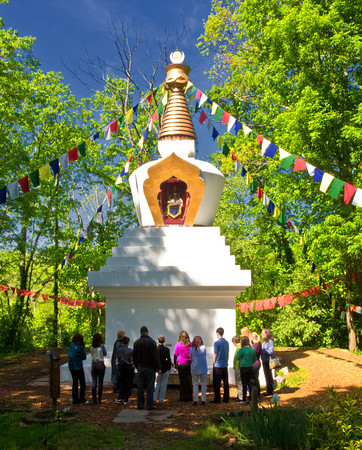
The following is from a twitter dialog between Jetsunma Ahkon Lhamo and one of her followers:
Stupas cost about $150K -200K to build including the required Stupa Master. It boggles that people with that kind of money don’t support Stupa building for peace, to pacify suffering, sickness and old age, delay death, pacify war and hunger, and balance the planet. That’s why we should build Stupas.
(Jetsunma asks follower how he is doing.)
Follower: Happy as a clam and fit as a fiddle, lovely one. Your pretty little self?
Jetsunma: Not too shabby even though I had a hopeful ring appraised to build a Stupa. It was a total flat out fake. Gotta fund raise. Fund raising is kind of embarrassing, but its for an excellent reason. We’ll figure it out. Stupas are worth it. If there was anything else worth it I’d give it up in a heartbeat.
Follower: Well, it could be argued that raising the funds for those in need takes precedent, which is, to an extent true.
Jetsunma: I have built Stupas already, over 30, want to build them anywhere there is suffering and hardship or war.
Follower: Good for you, angel. I’m not suggesting you shouldn’t. I spend part of my time raising money to keep a 13th century building up.
Jetsunma: To me and mine this is the best way to give to all, blessings bring result. What kind of blessing? For example, a tumor dissolves, and no money for medical costs. It’s a “vibrational” blessing, sphere of truth. Love. Like a Buddha.
Follower: What about the poor and needy? If only life where black and white, eh?
Jetsunma: And you are right. Its not black or white: compassion. And we do a food bank, animal rescue, we work for the benefit of all. Here’s a teaching offered by a Master Stupa builder on the blessings they bring https://www.tibetanbuddhistaltar.org/the-merit-of-stupa-building/. Thing is you can argue and such but this is what I do, charity and benefit are my reason for being.
Copyright © Jetsunma Ahkon Norbu Lhamo All rights reserved
Follower:
Precious Jewels
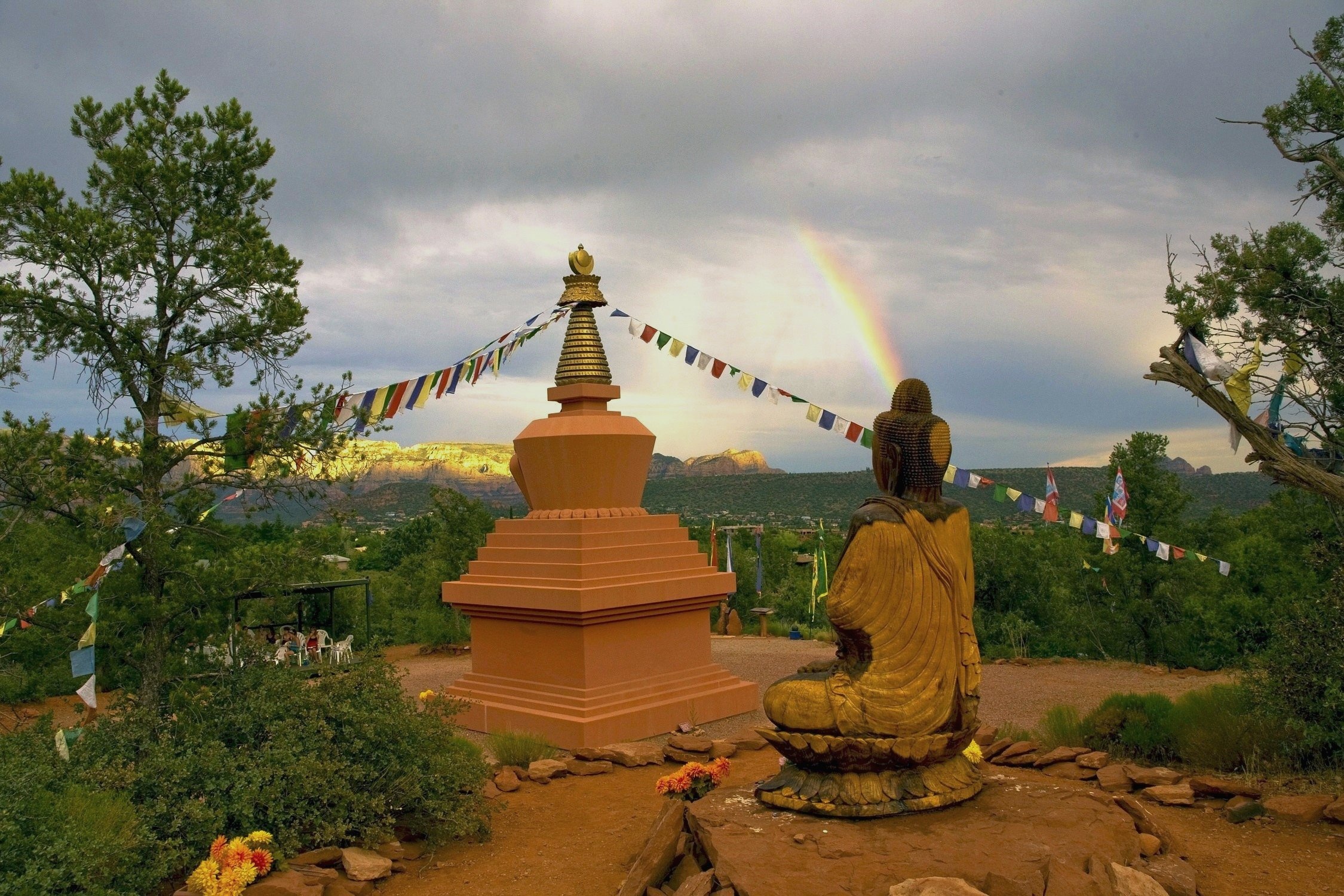
The following is from a series of tweets by Jetsunma Ahkon Lhamo:
If someone gave you a very expensive piece of old jewelry what would you do with it? I’d build another stupa. A gift to the earth and all beings.
Why wear something so valuable when it can benefit beings? It will bless everything and anyone for atleast 100 miles in all directions. Of course we can raise money. But if this ring is real, I wish to pay for it all myself. I pray it is real so I have the privilege to help beings.
When the time comes we will ask for volunteers and I hope many will use this tremendous opportunity to gather merit and clear non-virtue.
Copyright © Jetsunma Ahkon Norbu Lhamo All rights reserved
Heart Son of Palyul: His Holiness Karma Kuchen Rinpoche
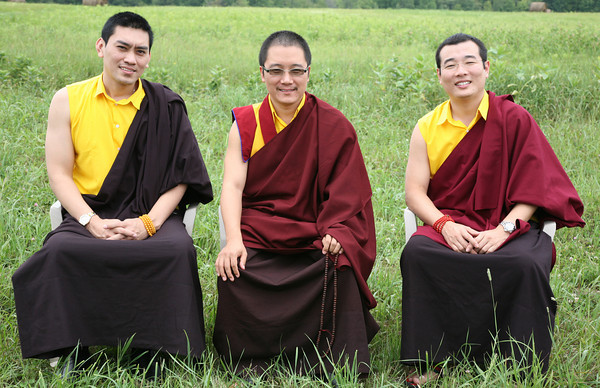
The following is from a series of tweets by Jetsunma Ahkon Lhamo:
Shortly before Kyabje His Holiness Penor Rinpoche had His Parinirvana, He watched me watching His Holiness Karma Kuchen Rinpoche. His Holiness gave me a deep look and said “He is better than me. ”
It must be true. Tsawei Lama said it. The more I read and pray I know it’s true. I cannot explain the gifts I’ve been given.
His Holiness Karma Kuchen Rinpoche is the inheritor, and the two other heart sons are supports. His Eminence MugsangRinpoche is for America.
OM AH HUNG BENZAR GURU PEDMA SIDDHI HUNG!
Copyright © Jetsunma Ahkon Norbu Lhamo All rights reserved
Renunciation: Poem by Dilgo Khyentse Rinpoche
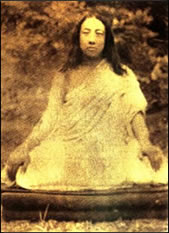
The following is respectfully quoted from “Journey to Enlightenment” by Dilgo Khyentse Rinpoche:
Though you perfected the qualities of the three kayas,
In order to liberate beings of the impure realms
You manifested as a supreme renunciate;
Lord Pema Vijaya, I miss you from the depth of my heart.
The feeling that this precious support, a free and blessed human body,
Will be lost to the enemy, the bandit Lord of Death,
Overwhelms my mind with anguish,
Like a frightened little bird falling to the ground.
The abyss of the lower realms is hard to fathom, and
This present comfort and happiness in the higher realms
Is like a rainbow in the sky that’s about to vanish;
Remember the spreading, dense rain clouds of wrongdoing!
A delightful palace may be magnificent,
But it can’t guard against fear of the Lord of Death!
All food and drink may taste delicious,
But they might become the cause of drinking melted copper!
No matter how much I cherish this body covered in soft clothes,
It’s uncertain when it will start to smell like a rotten corpse,
A handsome, youthful body may gladden my heart, but
When the eyes dissolve into the skull, it’s useless.
My shiny jewelry may be a charming object,
But it can’t seduce the wrathful grimacing Lord of Death;
Though my fame may pervade the whole country,
It won’t help me when body and mind separate!
Though prestige and power may frighten everyone,
They won’t protect me when going alone;
A powerful rank and status may be impressive,
But it’s impossible to avoid the Lord of Death’s court of law!
Large crowds of people are the cause of likes and dislikes;
By the time I go to the bardo I’ll be alone.
Remaining far away from the affairs of this life,
I’ll stay alone in a secluded, rocky shelter!
Living like a wounded deer,
My heart’s desire is to watch the snow of mind within;
All past siddhas stayed in remote rocky mountains too,
Capturing the kingdom of experience and realization.
Remembering the life story of Milarepa,
When I’m hungry I’ll eat the food of samadhi,
When I’m cold I’ll wear cloth of mystic inner heat;
In the company of birds and wild animals,
I’m going to cloudy, mist-shrouded mountains!
In a cave that’s not altered by people,
Nourished by leaves that need no cultivation,
Drinking the clear and cool water from rocks,
My heart’s wish is to just be with mountain birds.
In the cool shade of excellent trees,
In a relaxed and carefree state of mind,
With the cool shelter of a fresh breeze, my health will be good;
All by myself, my activities will be in accord with the Dharma!
On the summit of high rock in the immense sky,
Developing strength in realization of aware emptiness within,
When rays of the smiling sun and moon above reach my heart,
I enter the inner space of the six lamps of space and awareness.
Sometimes clouds and mist appear,
Thunder and red lightening flash like a playful dance,
Roaring wind swirls around black clouds,
Reflecting the sounds, lights, and rays in the threatening bardo.
In the pure meadow, around gently moving water,
My companions, young wild sheep, play and climb the rocks;
Sweetly singing, shiny blackbirds develop strength in flying,
And white vultures circle around at leisure.
Except for the mother dakinis that gather here,
Wicked people never pass by;
The vast expanse of a blue lake full to the brim
Indicates the four modes of freely resting awareness within.
The company of small swans,
Sweetly singing and training their wings,
Reminds me of practicing the different types of loving-kindness;
In my estate of this empty valley,
Relying on the pure, cool water from snow mountains,
I’m going to capture the kingdom of experience and realization!
I decided that from now on I don’t need anything;
The countless joys and sorrows of this life,
Whatever I experienced in the past, are like drawing on water.
Except for accumulating habitual tendencies for samsara’s depth,
Look at this present body to see if there was any benefit or not!
With hope and fear of making a living for the future,
Life runs out with a stock of karmic activity;
The very moment one is captured by the foe, Yama’s rope,
Reflect on whether it is any use when you exhale your final breath!
Though I am naive and immature,
As my father, the Dharma lord Lama Gyaltsap,
Let his blessings enter my heart, I conceived the urge to escape
And see activities for this life as confusion.
Unable to bear that all-consuming thought, the urge to escape,
I wrote it down as it slipped from my mouth;
Though thoughts in an ordinary person’s mind are impermanent,
Bless me to be free of adversity and obstacles.
With the root of all Dharma, renunciation,
Steadfast like an engraved rock,
May I become like the protector Pema Vijaya,
The master of nonaction, yogi of the sky!
The Power of Stupas 2: Tulku Sang Ngag Rinpoche (VIDEO)
The following teaching by Tulku Sang Ngag Rinpoche was recorded live at Kunzang Palyul Choling in Maryland: