Astrology for 4/4/2017

4/4/2017 Tuesday by Norma

An early morning surprise occurs that gets you moving faster than you’d like, but this is favorable considering the excellent financial opportunities available today. Opportunities are at hand that have been absent for some time, take them. Surprising news from afar is favorable and religious or educational matters are highlighted. Planning a trip? The time is right to consider travel, either physical or mental. Go somewhere, take a course, it’s time to learn something new! Eric Anderson said, “It is by introducing ourselves to great literature, drama, music and to the excitement of great science that we open to the possibilities that lie within the human spirit.” As the day progresses a happy encounter lights up your life.

Astrology for 4/3/2017

4/3/2017 Monday by Norma

An excellent financial opportunity appears today and you must move promptly to take advantage of it: dawdle and the door will close. Omar Ibn Al-Halif said, “Four things come not back: the spoken word, the spent arrow, the past, the neglected opportunity.” Venus, still reminiscing about the past, has become sentimental, wishful and inclined to sadness. Use the feeling to empathize with others instead of playing the victim yourself. This is an excellent day to spend time with close friends or family and to prepare food, do home renovations and consider real estate ventures. Two conflicting impulses are dominant: the urge to run around busily and the urge to sit around snacking. Eating is the better choice today!

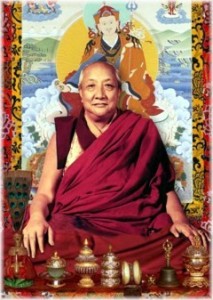
A Brief Biography of Dilgo Khyentse Rinpoche: Tulku Thondup

Dilgo_Khyentse_LH_med

The following is respectfully quoted from “The Collected Works of Dilgo Khyentse Rinpoche” published by Shambhala Publications

A Brief Biography of Dilgo Khyentse Rinpoche by Tulku Thondup:

Kyabje Dilgo Khyentse Rinpoche Tashi Paljor (1910-1991) was one of the few great lineage holders, writer, teachers, and transmiters of teachings and powers of Nyingma tantras in general and Longchen Nyingthig in particular who reached numerous disciples in Tibet, India, Nepal, Bhutan and the West.

He is also known as Gyurme Thekchok Tenpe Gyaltsen, Jigme Khyentse Özer, and Rabsel Dawa.

He was born on the thirteenth of the fourth month of the Iron Dog year of the fifteenth Rabjung (1910) in the family of Dilgo, a minister (nyerchen) of the king of Dege in the Nyö clan in Dan Valley. His father was Tashi Tsering. It was the very day that the great master Mipham Namgyal and his disciples were performing the feast ceremony at the completion of his one-and-a-half month teaching on his Commentary on Kalachakra at Dilgo. Mipham immediately gave pills of Sarasvati, the female Buddha of wisdom, with the sacred letters DHIH and HRIH to the baby to eat even before tasting his mother’s milk. About a month after the birth, Mipham gave empowerments for purification and longevity and named him Tashi Paljor. Since then until Mipham died at the beginning of 1912, Khyentse was given blessed substances continuously.

When he was only four months old, Ngor Pönlop Loter Wangpo recognized him as the tulku of Khyentse Wangpo. At the time of the death of Mipham, Shechen Gyaltsap Pema Namgyal (1871-1926) saw him and asked the family to give him to Shechen.

At the age of six, he was accidentally burned badly in a fire and was seriously ill for about six months, which caused him to take ordination as a novice.

When he was fifteen, Gyaltsap recognized him as a tulku of Khyentse Wangpo, enthroned him at Shechen Monastery, and named him Gyurme Thekchok Tenpe Gyaltsen. He also gave him numerous transmissions, including those of Dam-ngagk Dzö and Nyingthig Yabzhi. From Khenpo Pema Losal of Dzogchen he received transmission of Longchen Nyingthig. From Adzom Drukpa, he received teachings on Longchen Nyingthig Ngöndro.

With Khenpo Zhephen Chökyi Nangwa (Zhen-ga) of Dzogchen, Khenpo Thubten Chöpel (Thupga) of Changma hermitage, Dza Mura Asanga, Abhidharma, Yönten Dzö, the commentaries of Guhyagarbha-mayajala-tantra, and many others. Khenpo Thugpa recognized him as the tulku of Önpo Tenzin Norbu (Tenli).

Then from Khyentse Chökyi Lodrö he received the transmission of Sakya, Kagyu, Geluk and Nyingma teachings, including Rinchen Terdzö, Nyingthig Yahzhi, Longchen Nyingthig, and Lama Gongdu. From Khenpo Tendzin Dargye of Shechen he received transmission of the nine volumes of Jigme Lingpa. From Shechen Kongtrul (1901-1959) he received transmissions of the thirteen volumes of Minling cycle. He received teachings of all the Buddhist traditions of Tibet from over seventy teachers. Among them, Shechen Gyaltsap and Khyentse Chökyi Lodrö were his principle teachers.

Starting from the age of eighteen, for twelve years he stayed in solitary places and practiced various teachings, including Three-Root Sadhanas of Minling Terchen and Lonchen Nyingthig.

Throughout his life he dedicated himself to giving teachings and transmissions to all, whoever came to receive them. He wrote that by the age of sixty-four, he had given empowerments of Nyingthig Yabzhi and Longchen Nyingthig over tend times. From the age of forty till eighty-two he gave discourses on Chokchu Münsel, the commentary on Guhyagarbha by Longchen Rabjam at least once a year, and gave extensive commentaries on Jigme Lingpa’s Yönten Dzö. Among countless other teachings, he gave five times the transmission of the Rinchen Terdzö, four times those of the Nyingma Kama, and thrice that of Dam-ngak Dzö,  and twice that of Kanjur.

Rinpoche and his consort, Khandro Lhamo, had two daughters. His daughter Chime’s son is the seventh Shechen Rabjam.

At the invitation of the royal family of Bhutan, he spent years in Bhutan teaching and transmitting the teachings.

Since the early 1960’s, he single handedly maintained and propagated the unique nonsectarian tradition of Khyentses, and tirelessly with the continuity of a stream he spread the teachings by traveling, teaching, practicing, and building monuments without any pause, for the sake of Dharma and people.

In 1980 he built Shechen Dargye Ling Monastery (a name he took from his monastery in Tibet) at Bodhnath in Nepal, an elaborate complex with over two hundred monk-students. In 1988 he established a shedra at the new monastery, where monks are studying scholarly texts.

Starting in 1975, he visited many countries in the West many times and taught various levels of teachings and transmissions. Also he established Tekchok Ösal Chöling, a Dharma center in France. He visited Tibet three times from exile to teach and to help in rebuilding the monasteries and the faith in his homeland.

He conferred on the fourteenth Dalai Lama many empowerments and teachings on the commentaries of Guhyagarbha and Yönten Dzö and oral teachings of Dzogpa Chenpo combined with teachings on Yeshe Lama.

He discovered many teachings and sadhanas as terma and wrote many scholarly texts and commentaries on various subjects, totaling twenty-three volumes. Among his writings on Longchen Nyingthig are a commentary on Palchen Düpa and Wangki Chokdrik.

At the age of eighty-one, at three A.M. on the twentieth of the eighth month of the Iron Sheep year (September 28, 1991, his enlightened mind merged in to the ultimate openness at a hospital in Thimbu, the capital of Bhutan. Since then, his monastery in Nepal has been presided over by his Dharma heir and grandson, Rabjam Rinpoche, Gyurme Chökyi Senge.

He was one of the greatest learned and accomplished masters of Tibet of our age. He was tall and giant. When he was among other masters, he stood like a mountain in the midst of hills or shone as the moon among stars, not because of his physical prominence, but because of the breadth of his scholarship and depth of his saintliness. When he gave teachings, it was like the flow of a river, with hardly any pause. If strangers heard his lectures, their first impression might be that he was reading a beautiful text from memory, as the words of his talks were poetry, his grammar was perfect, and the meaning was profound.

Another most astonishing feature was his memory. He remembered not only scholarly and liturgical texts and details about his teachers and friends, but also those people whom he had seen only once years earlier.

His kindness was boundless, and there was room for everybody. Whenever I had an audience, he gave me the feeling that there was a place for me reserved in his vast mind. If you watched carefully, you got the feeling that he was always in the meditative or realized wisdom of openness and reaching out to people with the power of compassion, love, and directness, without any alteration.

He practically held the transmissions of all the Buddhist teachings of Tibet, but was constantly searching for additional transmissions, no matter how minor they might be. He had a huge library collection, but never stopped looking for even a page of rare writing. He was also immensely loyal.

In his last trip from Bhutan to Kalimpong, instead of flying he insisted on making the arduous journey by car in order to see an old disciple of his on the way. While that effort might have exhausted the last drops of his physical strength, it would have been his joy and fulfillment, an act of compassion.

Urgyen Tenzin Jigme Lhundrup (b.1993), the grandson of Tulku Urgyen Rinpoche (1919-1996) and the son of Kela Chokling Rinpoche and Dechen Paldron of Terdhe, has been enthroned as the reincarnation of Dilgo Khyentse Rinpoche.

Kyabje Dilgo Khyentse Rinpoche was one of the great Lamas who recognized Ahkon Lhamo Rinpoche

Astrology for 4/2/2017

4/2/2017 Sunday by Norma

You’re still talking but nobody’s listening today. Relax and read a book or take a leisurely walk or drive. If you speak and no one replies, consider the hearing capability of your audience and proceed differently or wait for a better time. The ability to take in and process information is under duress, making it nearly impossible to deliver your message. Postpone important announcements and try again later. Ralph Waldo Emerson said,”Adopt the pace of nature, her secret is patience.” This is a great day to shop, explain past joys and prepare an excellent dinner with exotic ingredients, the longer it takes to cook, the better.

Looking Beyond the Self

universe_wallpaper_2-normal

In order to practice effectively, we have to give rise to the great Bodhicitta.  We have to see the needs of sentient beings—what their situation is, what their condition is. For that reason I’m going to talk, first of all, about the six realms of cyclic existence.  These are the different types of reality that one may experience during the bardo or passage of living.  We are beginning then with the passage, or bardo, of living.  Bardo is not actually a time period.  You can’t say that bardo is a period from Thursday to Thursday, or from the 24th to the 3rd of the month.  Bardo is not a marking time or a markable time.  It is perceived that way because of our delusion.  We will see the bardo of the passage through our lives as being, oh, let’s say 75 years.  We can see this as a passage. From the point of realization, this is a movement, a display, a passage, a color.  It is something other than the way we experience it.  We experience it as the date that we were born and the date that we die, and time in between.  But, in fact, what we are actually experiencing is not a length of time, but rather we are experiencing the bardo, or passage, of living.

According to the teachings on the bardo or passage, of living, we’re not the only ones here.  What a big surprise!  Now everybody is thinking “Oh great!  She’s going to tell us about flying saucers!”  I wish.  I wish!  I’m still waiting for them to come pick me up.  I don’t know if any of that stuff is true.  I’m definitely into Star Trek and I hope to heck it’s true. It seems logical to me that it’s true, there being so many planets out there, but I don’t know that for sure.  What we’re going to talk about today is the honest-to-goodness. This is what the Buddha has taught us about the realms of cyclic existence.

According to the Buddha’s teaching, the amount of those sentient beings who can achieve rebirth as a human being is so small that it would be like the amount of particles of dust  on our thumbnail, compared to those sentient beings that are not human beings.  That would be comparable to the particles of dust on the earth.  Are you perceiving the vast amount of difference?  So we have to think of ourselves as the smallest group really. There are other sentient beings who are revolving in cyclic existence. But in what way?  This is what we want to know. There are so many of them!  What are their sufferings?  What are their conditions?  How can we help them? Should we consider them?  What are they to us?  These are the thoughts that will help us to understand our condition and the condition of sentient beings.

According to the Buddha’s teaching, there are actually 3,000 myriads of universes.  Three thousand myriads of universes.  That is a way of saying uncountable reality.  Uncountable, unmentionable, unthinkable display, so much display as to be inconceivable to the kind of mind that we have that likes to count beings, or likes to count numbers.  There are that many wandering in cyclic existence. And according to the Buddha, there are basically six realms of cyclic existence. I will talk about these six realms of cyclic existence briefly so that each one of us can understand the condition of cyclic existence and the results of our own actions, because none of these beings in cyclic existence have ended up where they are, including us, through anything other than by the results of our own action.  You are here listening to Dharma teaching because somewhere in the past you have been exemplary, exemplary.  Oh naturally the room gets quiet!  They want to hear about this!  Don’t you love it! Every time. This is so predictable.

All right, let me tell you how wonderful you are. In order to have received the teachings that may ultimately result in your liberation in one lifetime… I mean, you talk about grains of dust on a thumbnail. That would be equal to grains of dust on the head of a pin!  That is how rare this opportunity is. You must have done some extraordinary things in your past in order to be able to hear this teaching.  You must have been kind to sentient beings.  You must have helped other sentient beings or supported them as they sought truth, just as you are being supported in your search for truth.  You must have been helpful.  You must have been seeking.  You must have been looking for a better way.  You must have had some devotion.  You must have had some faith, and more.  It would take extraordinary kindness, extraordinary virtue, to come to this point.

Now within this point, there are some people in this room, and you can see that they are sleepy. They can’t listen very well, and they sort of miss most things.  Well, why is that?  That is not because of what they had for breakfast, really, unless of course you had a candy bar for breakfast in which case, go back to sleep!  It is not because of their hearing.  It is not because they speak a different language.  It is not because of any of the things that you might think are contributing factors.  If the person is too dulled out to be able to hear the teaching, it is because while they have the extraordinary merit and virtue to be able to hear the teaching, they don’t have quite enough to be able to absorb it deeply.  It’s a little bit like if you could imagine a bug crawling on the arm of a great lama, or crawling on the arm of the Buddha.  I mean, that’s a pretty good position to be in!  If you’re a bug, that’s where you want to be!  Crawling on the arm of the Buddha.  Certainly if I were a bug, that’s where I would want to be. In the Buddha’s armpit or, you know, someplace safe.  But still, the Buddha could be giving the most extraordinary teachings.  The bug won’t hear it.  The bug won’t accept it and the bug certainly won’t like it.  The bug just wants to be the bug on the Buddha’s arm.  It doesn’t even know it’s on the Buddha’s arm, really.  It just wants to be comfortable. You see?  So you may wish to be comfortable.  You may wish to take a nap.  You may think about the things that you’re used to thinking about.  You may wish to keep the same exact attitude that you’ve always had, so this way you don’t have to change.  Even though that all seems very logical to you, actually that’s because you don’t quite have enough merit to absorb the teachings deeply.  Everything is due to cause and effect.

Copyright © Jetsunma Ahkon Norbu Lhamo All rights reserved

Astrology for 4/1/2017

4/1/2017 Saturday by Norma

Call, text or email your friends and check in with them today. Statements are made, facts are exchanged and the news is on everyone’s mind. This is a great day to read or write something, to go for a walk or a drive, to be out and about. A sense of renewed energy makes activity fun. Parties, book clubs, and get-togethers with friends to discuss matters are successful. Winston Churchill said, “The empires of the future are the empires of the mind.” What you discuss today can appear in your life tomorrow, so think carefully, an idea can catch fire and inspire the world. Ask, do not order, people to do things for you. A polite request is successful, a rude one has unfortunate consequences. Manners matter today.

Removing the Blinders

Turn-the-lights-on

The following is an excerpt from a teaching by Jetsunma Ahkon Lhamo called “Why P’howa?”

One thing that happens as we are turning the mind toward Dharma is we literally begin to examine the condition of cyclic existence,  We come to understand that we are not the only ones that are wandering in cyclic existence. All sentient beings that we see of all types, not only counting those that are human but also animal sentient beings and sentient beings that live in other realms, these too are wandering aimlessly and are suffering.  So we begin to develop a sense of empathy through examination.

Now some people might think “Gee, what a downer!  Why would you want to examine the suffering of others?  Better to close one’s eyes and think happy thoughts.”  There is a time and place for closing one’s eyes and thinking happy thoughts.  There is a time for joy and a time for happiness. And the kind of joy and happiness that is healthful and that increases our ability to attain liberation and to have happiness is the kind of joy that is not the same as suppression of information.  It is the kind of joy that is not the same as closing one’s eyes and being blind to cause and effect relationships.  It is an all-pervasive natural kind of joy that is in harmony with our true nature, and is the very display of our nature.  That joy promotes health and well-being, promotes longevity; and it is born of moral and ethical and compassionate conduct.

The kind of joy that we are giving ourselves when we try to fake it, literally fake it through our lives, ignoring all the bad news and just playing the way children play in the sandbox, picking and choosing what we want to think about and what we want to see, that is a joy that is an artificial recipe.  It is a joy that exists in the same world with suppression, ignorance and lack of information. That joy is not healthy for us because it does not promote longevity, it does not promote happiness.  It is literally like this: Let’s say we were to take all the chairs that are in this room and distribute them throughout the room in a haphazard way and then pile in a few more pieces of furniture, and  wait til it’s pitch-black midnight. Turn off all the lights, close all the curtains until it’s absolutely pitch dark in this room.  Then try to negotiate going through this room.  Would you like to negotiate going through this room, just trying to feel your way through with all of its furniture upturned and barricaded and brought up in your way and that sort of thing?  Would you like to go through the room, getting from this door to that door? And let’s imagine that door is the ultimate door, the one we need to get out of.  We must get out of that door for whatever reason.  Would you like to go from this door to that door with the lights off or with the lights on?

I don’t know about you, but I’m a sensible, practical kind of girl and if I have to make a journey, I want to know the facts.  I want to go with the lights on.  I want to turn the lights on so that I can walk around the furniture, go under it, step over it, do whatever it takes to negotiate this scary passage through samsara. It makes no sense to close the eyes and not take in information and pretend, suppress the facts in order to go from one place to another, because you will surely fail.  You will surely hurt yourself and have a very painful journey in the process.

So for this reason we must examine cyclic existence. We must examine the condition of sentient beings, and we must examine our own condition in order to truly turn our minds toward Dharma.  Once we have seen the faults of cyclic existence and seen the good results of understanding, of growing in understanding, and the joyfulness of virtuous and moral and ethical conduct and compassion, we will develop the habit of wanting to know, of opening the mind, of having the mind be very much like a bowl, a very pure thing in which nectar can be poured.  We will crave information.  We will crave practice.  We will literally crave turning on the light so that we can understand.  If we do not crave now, if we wish to remain in ignorance and darkness because it is easier or because we like being drunk, it is simply because it is our habit to do so and that does not excuse us from the need to change.

Develop a new habit.  You can see that that young person who partied down and worshipped the porcelain god every weekend morning, literally is watching their well-being go down. We on the outside can see that that needs to change, but that person, in the flux of their own ignorance, cannot see that that needs to change.  So I am pointing these things out to you so that you can make new and acceptable decisions in your lifetime so that you can actually turn your mind toward Dharma.

Copyright © Jetsunma Ahkon Norbu Lhamo All rights reserved


Astrology for 3/31/2017

3/31/2017 Friday by Norma

You have one more chance to yell slogans and plead your cause today. Speak your mind early as finances and business will require your attention later. During the course of the day things settle down and mental activity becomes more stable and less inflamed. Looking for a raise? Try this afternoon or tomorrow, ask earlier and you’ll hear multiple reasons why it’s not in the cards. Someone who is
unavailable will appear in time so be patient. John Milton said, “They also serve who only stand and wait.” An early purchase is a stroke of luck, partnership is excellent and an agreement or resolution of a long standing dispute is at hand. All you have to do is wait.

Cultivating Compassion

A-man-with-a-hangover-007

The following is an excerpt from a teaching by Jetsunma Ahkon Lhamo called “Why P’howa?”

It is not foreign to our nature, and it is also not separate from the goal that we wish to achieve by practicing in this way, for us to give rise to the great Bodhicitta, or the great compassion.  The way that that is done on the Buddhist path is to consider that our own goals and the goals of sentient beings are indistinguishable, that they are nondual.  That is to say that our goal to practice in order to achieve liberation, is inseparable from the goal of sentient beings.  They also have the goal of practicing in order to achieve liberation.  Not all of them know it, in the same way that some of you don’t know it either.  You may think you know it, or you may know that you don’t know it, but many of you are still at the party, not growing out of the party, not grown up and looking back and saying “Oh, that won’t do me much good.”

You remember that situation that you found yourself in as you were growing up?  When you were a young person you had a few knockdown drag out parties, didn’t you?  I mean the kind where, at some point in your life, you probably got drunk.  Nobody makes a sound, like “Drunk?  What is that?”  At some point in your life you probably were out of control, just party down, not thinking straight, doing things that were compulsive and obsessive and not appropriate and not healthy for you, not good for your well-being—unthinking, deluded things.  This is something that we have all experienced, but particularly in the case of when we were younger, we would party hearty. And if you think about it, if any of you have done that, and I’m sure that one or two of you have, you may remember that once you’ve partied hearty, there was a period of regret afterwards, and that was primarily the next day.  Of course the, how shall I say, the cure for that is, of course, prostrations to the porcelain god; and with all of that, one comes to understand that one is literally destroying oneself, that there is no hope for happiness from doing that to oneself.  After doing that repeatedly, we tend to grow up after a while.  We tend to be unwilling to put ourselves through that kind of stuff again.

So that happens to us spiritually too. We go through the same compulsive obsessive behavior with no good result. And at some point, either through our own good fortune, through our own gathering together of merit which causes literally a kind of smarts arising in the mind, or through the instruction of our teacher, we can begin to realize that what we are doing makes no sense.  It simply makes no sense.  It is destructive.  It is painful, and it is not pleasant.  So that is the stage in which we find ourselves turning our mind towards Dharma.

What we have to realize in order to give rise to the compassion, to the great Bodhicitta, is that this is true of all of us, not just you.  If you have come to this realization, that it’s time to turn the mind towards Dharma, then what of those who have not yet come to that realization?  They are still putting themselves through that.  They are still acting in a destructive way that disintegrates their spiritual strength.  They are acting in such a way that literally brings them suffering.  What of them?  Perhaps you have heard the good word, but what of them?  Who will help them?  And so we develop a sense of compassion.

Copyright © Jetsunma Ahkon Norbu Lhamo All rights reserved

Astrology for 3/30/2017

3/30/2017 Thursday by Norma

Women, children and domestic issues take the lead today and they outperform vigorous activity and assertive talk, which is loud but ineffectual. Financial matters are important and you must listen to your common sense, not the person yelling slogans and making demands. Finances are volatile and it’s time to watch your money. Joseph Addison said, “There is nothing more requisite in business than dispatch.” Count your change and mind the store today. A diplomat knocks at a door that will not open, and persuasive arguments or pleas go unheard so redirect your energy toward successful ventures: reconciling past loves, shopping, and medical treatments.

WP2Social Auto Publish Powered By : XYZScripts.com