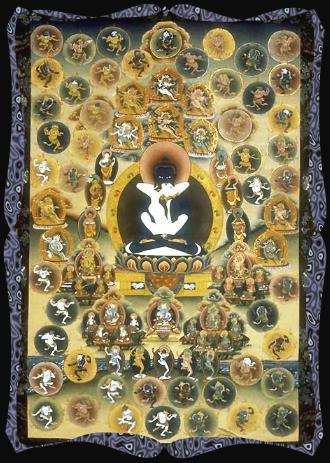
The Bardos

Bardo_Thangka-dfd2c

The following is an excerpt from a teaching by Jetsunma Ahkon Lhamo offered during a Phowa retreat:

In the general sense, it is said that there are six bardos. There is the bardo of living, which is the bardo of birth to death. Bokar Rinpoche says, “…the bardo of birth to death, which ceases as soon as the first signs of the agony of death start.” And I have also heard that once one knows that one is dying, once one catches the disease that will ultimately cause the death, then you are in a different bardo, actually, than the bardo of living—although technically it still is part of the bardo of living. It is called the bardo of preparation, or the bardo before death. There is a passage of time that precedes the time of death once you have caught or have experienced the problem that will end your life. But this lama says, “…when the first signs of the agony of death start.”

There is the bardo of the dream state, which is delineated by the moment we fall asleep and the moment we wake up. So each time we sleep and dream, that is a bardo, and there is a beginning and an end. There is a passage within that; and there are cause and effect relationships that are begun and also ripen within that bardo.

There is the bardo of meditative concentration. I’ve also heard it called the bardo of meditation, and the bardo of concentration. And that lasts from the beginning to the  end of a meditation or concentration. Meditation in Dharma, or concentration such as vipassana practice, or shamata practice, simply silent meditation is so profoundly different from our normal waking consciousness that it deserves its own name. It is a different passage. It has a beginning time and an end time. It has its own causes and results that occur within the context of that passage according to how one conducts oneself during that passage. How do you meditate? Do you meditate really putting yourself into it? Do you meditate in a haphazard way? These kinds of things. So that is a bardo.

There is the bardo of the moment of death, and here he says, “…which commences when the death process begins and which lasts until actual death.” And there it’s more clear, because in truth, if you have already caught the disease that will ultimately cause your death, then in that case you have already literally begun the process of death. Another way to look at it is the moment you stop growing, once you start aging, you have also begun the process of death, you see. That’s true. Once the body stops growing and begins to go on the downside of that (which mine has definitely started to do, I can tell), there is another bardo involved in that. While technically still part of the bardo of living, it is the bardo of the moment of death as well. It is a contributing factor to that. More succinctly and more clearly, it is generally said that the bardo of the moment of death begins when the death process has actually begun.

There is the bardo of Dharmata, which starts when death occurs and lasts until the deities appear in the postmortem state. That will be explained in detail later on. We will talk about the moment of the perception of the white luminosity, the moment of the perception of the red luminosity, the moment of the perception of the clear or black luminosity. The bardo of Dharmata that we are talking about here actually begins during the moment of the recognition or the perception or the appearance of the black or clear luminosity. That is when the external breath has ceased and the internal wind has just begun to cease, is just now ceasing. At that moment, that is the bardo of Dharmata. The elements have already begun to dissolve. In some cases they are dissolved, and in other cases they are continuing to dissolve, but they are at that critical point where there is a final dissolution. At that point one will see the nature of the Dharmata. However, an inexperienced practitioner will not recognize it, and they will go through what in death is thought of as a fainting or dark period. Everyone who is not experienced in meditation will experience that, because they do not recognize the face of the Dharmata, or that light which is clear but may appear as black. So this particular passage, the bardo of Dharmata, then starts when the outer breath has ceased. The inner wind still continues to some degree, from that point on, until the moment when the deities appear. And we will talk about when the deities appear.

After the bardo of Dharmata, and this is considering that one has not yet liberated one’s self from the bardo, the next bardo is the bardo of becoming, which starts when the previous bardo ceases..That’s the bardo that ceases when the deities appear and ends when we are born. Now the bardo of becoming absolutely indicates that once you have reached it, you will be reborn in cyclic existence. There is no help for it. You will be reborn in cyclic existence. But even during that time you can create the causes of liberation that will cause you to be reborn in a different way than what you are now—a more realized, more enlightened way. it is particularly possible during the bardo of becoming to absolutely ensure that your next life will be associated with Dharma, will lead directly toward liberation, will be correct in bringing you to the Path, and will be without flaw in that regard.

So these are generally the six bardos. But remember that there’s not only six. There can be, depending on how you view things, uncountable bardos, because bardos are passages. And it is the delusion that we are passing through something that makes the bardo seem like a limited space and a limited time. But in fact, it is simply movement and display. The lama here puts it in this way, “The essence of the mind of all beings is called the essence of awakening. From this point of view, which is that of ultimate truth, there is no bardo. We know nothing of the ultimate nature of the mind, and that is why all sorts of illusory manifestations occur in the relative mode. Among these there are the six bardos that cause much suffering. Buddhist teachings intend to dispel such erroneous experiences and their resultant sufferings.” So what we are looking at here is that from the relative point of view and in the deluded state, this is what appears and this is what we must deal with. In the same way that you’re here, you’re alive, and you have to cope with that. In the same way, these are the experiences. These are what we have to deal with. Yet, from the point of view of realization, there is no such thing because there is no subjective and objective. It is only our delusion that causes us to see in this way. And so, characteristic of having that delusion and being trapped in that delusion, we actually have to study the delusion and learn about the delusion so that we can negotiate through the delusion into awakening. And that is how we have to view these time periods, these bardo movements.

He says also, and I think this is an important point to bring out: “The six bardos are not six domains existing independently within ourselves.” And, of course, that is how we think, isn’t it? ‘When will I get to that bardo over there?’ That’s how we think because of our delusion. “They are related to our mind, which lives in a state of delusion” at this point. He doesn’t say ‘at this point.’ I’m adding that. “The six bardos manifest out of our mind. It is our mind that has the experience, and it is our mind that recognizes their false nature. And eventually it will be our mind that liberates us from the very products of the mind.”

Copyright © Jetsunma Ahkon Norbu Lhamo All rights reserved
Astrology for 4/16/2017

4/16/2017 Sunday by Norma

Poor little Venus can’t catch a break! It seems your deepest feelings are being trampled and nobody’s on your side. Wait it out. A correction is in the works and it’s time to change your ways if you’re at fault. Are you the one holding someone accountable? Be direct, fair and willing to move on if the party changes. Roberto Assagioli said, “Without forgiveness life is governed by an endless cycle of resentment and retaliation.” A conversation can clear the air today. Be sure to cover every aspect of the situation, leaving nothing open to misinterpretation. A palpable excitement is in the air and past mistakes are being rectified at the speed of light. Partnership is great, men and women are in harmony and a mess is being cleaned up.

What is a Bardo?

800px-Thanksgiving_Dinner_Alc2

The following is an excerpt from a teaching by Jetsunma Ahkon Lhamo offered during a Phowa retreat:

Having given rise to these ideas and begun to think about the other realms in the six realms of cyclic existence, let’s talk about death.

Now, first of all, there are a couple of points that I want to bring out, and these points could not be brought out better than the way they are brought out in a particular book. For any of you who are interested, this is an excellent book to read. It’s called Death and the Art of Dying in Tibetan Buddhism, by Bokar Rinpoche. The reason why I especially like this is that it is actually not taken from any one text. It is taken from a grouping of teachings that this lama gives in a very conversational way; and like I’ve told you, I think that Westerners really understand conversational teachings better. That’s my perception anyway. I do feel that that happens. He gives these teachings in a very conversational way, and he gives them often in question and answer form; and that seems to be very useful for students The way that he gives these teachings  is very approachable and very clear,. So I would like to use a little bit of the way that he approaches some ideas, so that you can get them a little bit better.

We have talked about the six realms of cyclic existence. Now we are going to be talking about the six bardos. You should understand, first of all, what  bardo isWe start with the bardo of living. The bardo of living starts at the time of birth and ends with the time of death, or just before the time of death. We think of that as the bardo of living. So the way that our minds think, we think, “Let’s see, October twelfth, nineteen forty-nine, that’s when my bardo of living started. And when is it going to end? We don’t know that yet. So I have a date here, and someday we’ll have a date here.” You see? And that’s what we think. We think bardo goes from October twelfth, nineteen forty-nine, to whenever that is.

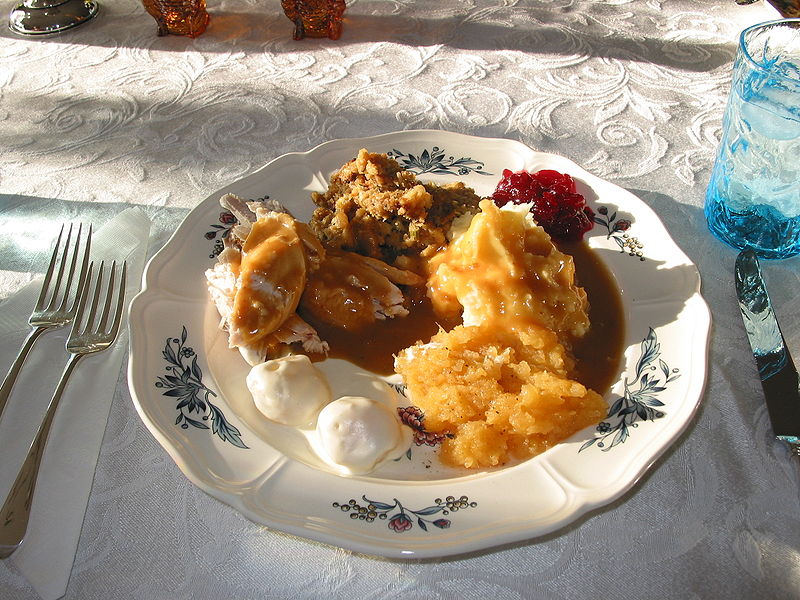
Now another lama would laugh with me as to how silly it is to think that way. Since we as sentient beings don’t have that kind of teaching, we don’t know how funny that is; but that’s pretty funny because it’s a very confused and superficial and erroneous way to think of the bardo. The bardo is not actually a period of time that starts with this and ends with that. The bardo is passage. It is passage and the way that passage appears to us. Bardo is a way of describing movement or passage. It is a way of displaying display, in a sense, or a way of seeing the display of display. Generally it is said that there are many different kinds of bardos, because there are as many bardos as there are individual experiences. If you think about it, you could, literally, sit down to a meal and call that the bardo of dining. Absolutely. There would be nothing wrong with doing that; that is the bardo of dining. It does have a beginning moment, and there are causes and results within the bardo of dining. What you eat will affect your body. What is that? “An instant on the lips, forever on the hips,” that kind of thing. So there is a cause and result even within that small bardo. But that’s a bardo. The bardo of sitting in class. The bardo of entering into class. You incur causes and results while in class due to the force of your listening—how you listen, what you think when you listen, what your intentions are. You are creating cause and effect relationships that begin and end within a certain passage. That is a bardo.

Copyright © Jetsunma Ahkon Norbu Lhamo All rights reserved
Astrology for 4/15/2017

4/15/2017 Saturday by Norma

Venus goes direct today and happiness is once again in forward gear. Spend time evaluating your situation with a realistic eye and take whatever steps are necessary to correct problems. Take time to consider your important relationships in the process, don’t throw out the baby with the bath water. You can buy success today, so open your wallet and sidestep hurt feelings. Men are stable and willing to work for a successful outcome. Marcus Aurelius said, “Nothing happens to anybody which he is not fitted by nature to bear.” A generous person opens a door that you’d overlooked and kindness brings more good results than harshness.

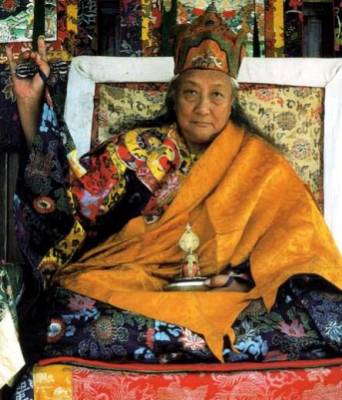
The General Preliminaries: by His Holiness Dilgo Khyentse Rinpoche

Dilgo-Photo

The following is respectfully quoted from “The Excellent Path to Enlightenment” by His Holiness Dilgo Khyenste Rinpoche:

The main source of progress on the path is devotion, so begin each session by visualizing in the sky before you, or above your head, your root teacher in the form of Guru Padmasambhava, resplendent with wisdom and smiling compassionately, seated in the midst of a mass of rainbow light. Then with fervent devotion say three times, “Lama Kyeno!” — “Guru, you know everything! I am in your hands!”–and ask him to bless you so that you achieve complete realization of the profound path this very life. Rays of light emanate from the Guru, removing the veil of ignorance and filling you with blessings.

Then reflect on the six topics that make up the outer or general part of these preliminaries. First, reflect upon the rarity of human existence; this will turn your mind towards the Dharma. Second, contemplate death and impermanence; this will make you realize how urgent it is to practice the Dharma, and will spur you to endeavor. Next, reflect on the third topic, the law of karma, of cause and effect, actions and their results, so that you understand clearly how this law works. After that, reflection on the fourth topic will help you recognize that the deluded condition of samsara is never without suffering. With the fifth, you should recognize that through receiving and practicing the teachings you can free yourself from samsara and ultimately reach the unsurpassable level of omniscience, or enlightenment. Finally, you should recognize that in order to achieve that level you have to rely on the blessings and instructions of a spiritual leader.

1. THE RARITY AND PRECIOUSNESS OF A HUMAN BIRTH

Ask yourself how many of the billions of inhabitants of this planet realize how rare it is to have been born a human being. How many of those who realize this think of using this chance to practice the Dharma? How many of these actually start to practice? How many of those who start continue to practice? How many of those who continue attain ultimate realization? The number of those who attain ultimate realization is like the number of stars you can see at daybreak compared to the number you can see on a clear night.

There are various kinds of human existence. Some are wasted in ordinary pursuits and some are used to progress towards enlightenment. Human birth can only be called precious when one is free to practice the Dharma and has met all the favorable conditions for doing so. So to have the opportunity to practice the Dharma we need to be free from the eight unfavorable conditions. These are: to be born in the hells, the realm of the pretas or hungry ghosts, the animal kingdom, among barbarians, among the long-lived gods or among those with erroneous views, or in a dark age where the Buddha has not appeared, or as someone who is mentally deficient and incapable of understanding the Dharma. But simply to be free from these is not enough. We also need ten favorable conditions, five that depend upon ourselves and five that depend upon others.

The five intrinsic conditions arising from our own situation are: to be born a human being, to be in a place where we can find the Dharma, to have all our faculties, not to live and act in a completely negative way, and to have faith in those worthy of faith.

We need to be born a human being, as this is the only state of existence in which there is enough suffering to give us an acute desire to be free from samsara, yet not so much suffering that we no longer have the opportunity to free ourselves through the practice of Dharma.

We need to be born in what is called a “central land,” meaning a place where the Buddha’s teachings exist. Otherwise, we have no chance of encountering these teachings and progressing along the path.

We need all our faculties so that we can study, reflect on, and practice the Dharma. If we were blind, for instance, we might not be able to read the teachings; if we were deaf, we would not be able to hear them.

We need to lead our lives in a positive way. If our lives are dominated by negative actions–if, for example, we are hunters or thieves, or spend our lives fighting wars–that naturally leads in the opposite direction from the positive conditions needed for Dharma.

We need to have faith and confidence in those who can guide us along the path to enlightenment, namely the Three Jewels and a spiritual teacher.

The five external conditions that depend upon others are: a Buddha must have appeared in the kalpa or aeon in which we are living; the Buddha must have taught the Dharma; the teachings must still be present; they must be practiced; and we must have a spiritual teacher to guide us.

Al this constitutes a human birth endowed with all the freedoms and favorable conditions for practicing the Dharma. That is what we call a precious human birth. Why is it precious? Because by using this human birth, enlightenment can be achieved in this very lifetime. All the great accomplished beings of the past were born ordinary beings, but, by entering the door of Dharma, following a realized teacher, and devoting their whole lives to practicing the instructions they received, they were able to display the enlightened activities of great Bodhisattvas.

If we examine the six realms of samsara one by one, we can see that, except in the human realm, the obstacles to Dharma practice are too strong. In the inferior realms such as the hells, suffering is so intense that it is impossible for the mind to contemplate and practice the teachings. In the celestial realms, where beings can fly through the sky, feed on ambrosia and enjoy all sorts of pleasures, the conditions might seem more favorable. But because the beings there are so enticed and distracted by these things, and their suffering is so minimal, they never get tired of samsara and therefore never think of practicing the Dharma. So if we do not use the precious opportunity of a human existence, we cannot but go downwards, like a stone rolling down a hill.

Astrology for 4/14/2017

4/14/2017 Friday by Norma

A change has occurred and unsaid things have been said. A new sense of freedom is in the air and a different direction is possible. The entire environment is in flux: the wheel is turning and you won’t know the outcome for several days or weeks. All you know is that the old situation is gone. Dorothy said, “Toto, I’ve got a feeling we’re not in Kansas anymore.” A current dust-up or mix-up will settle down within three days but the big picture takes longer to manage. What’s good now? A renewed sense of opportunity, expanding parameters, the breakdown of an unworkable pattern and shopping! It’s a great time to manage money and someone you love is waiting for you.

Navigating Samsara – The Vows

TK-268_OccupyPrayerAtKPC-10-L

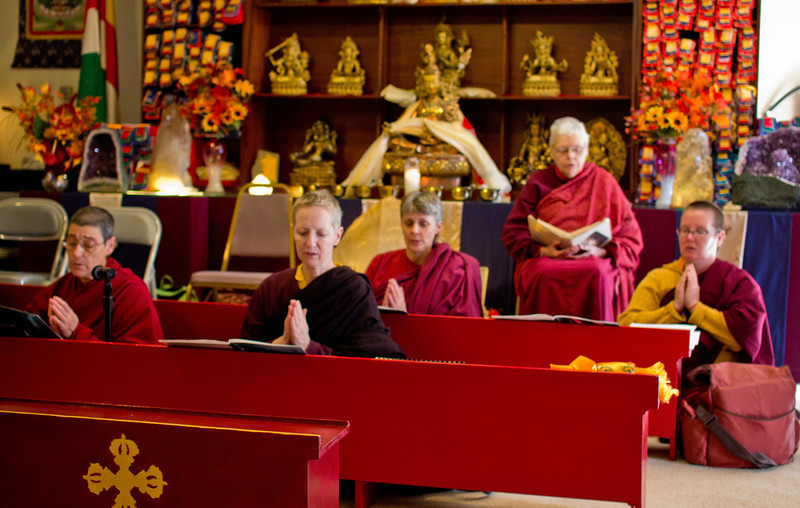
The following is an excerpt from a teaching by Jetsunma Ahkon Lhamp called “The Habit of Bodhicitta”

As Buddhists, I would like you to think about what your directive is. I want to ask first those who are in robes. I want to actually ask them and give you the answer, but I’m going to pretend that I’m asking them, because I’m desperately afraid that they might not know.
Your primary directive is to follow the Vinaya. Vinaya is a set of cause- and effect-oriented rules, basically, a format that those in robes should follow, and the Vinaya becomes the heart practice of your life. You should, of course, receive teachings on the Vinaya, which you have. You gradually begin to understand the Vinaya. It is your responsibility to study the Vinaya; it is your responsibility to go after information about the Vinaya, because that’s your code. The Vinaya has a great many items that we should practice and look at. In particular, as robed persons, as monks and nuns, there are certain rules that seem very strict, but that you must follow. For instance, I don’t know if the lay people are aware of this or not, one of the rules in the Vinaya is that at a certain level of ordination, monks and nuns should not touch members of the opposite sex. Yet, here in Kunzang Palyul Chöling, one sees monks and nuns shaking hands, hugging, handing things to each other. Are we breaking the Vinaya here? Are we doing that?

We have a slightly different perspective. The Vinaya has not changed. Not in any way. What has been will always be. These are the Buddha’s words. But in Vajrayana, we have a slightly different perspective. If we have the idea in our minds, according to the Vinaya, that we should not touch members of the opposite sex in order to keep our celibacy really pure, that we should keep it very pure, yet we find ourselves [ touching] each other, how does that actually work out? If I, for instance, were a nun, let’s say, and I were to see a man that was very hungry or in need of some sort of medical help… Perhaps he fell down and he needed help getting up. Do you think I would hesitate for one moment to help that person or to give them some food? Or if I saw that a person needed the connection of a hug, needed the connection of some comfort; needed a greeting in order to feel accepted and welcome, do you think I would hesitate for one moment to give that sort of sustenance? Even if the Vinaya says not. That’s because the highest ordination that I feel as a Mahayana and Vajrayana practitioner is that of compassion. And in our tradition, compassion and love supersede everything. So the Vinaya is kept, but it is kept differently.

The way that these monks and nuns should be keeping the Vinaya is that, for instance, as a nun, whenever one sees a man, you should think of pure view about the man: You should think of the man as what we call a yidam or meditational deity. You should think that in that man’s pure form, he is the very Buddha. One should think like that. One should recognize the innate Buddha nature in each and every one; and one should think that each and every one holds that nature and that nature is actually present. We accomplish our practice by thinking of each man as the meditational deity. Those of you who are monks would think of the woman as being the goddess or the enlightened female deity, the primordial wisdom dakini. And in that way, upon touching a man or a woman, one is never actually touching a man or a woman. One is only approaching the meditational deity or the goddess. One still keeps one’s inner commitments, yet the highest commitment is that of compassionate pure view.

Of course, you can’t bend that irresponsibly, in fact you can’t bend it at all. None of you can take marital partners; none of you can engage in any kind of ordinary relationship in that way. But in order to uphold the highest ordination of compassion and the highest practice of pure view, you can engage in those kinds of activities that enhance that view.

Now for lay people, we don’t have the same strict approach. As lay people, though, we should never, never think that we can do more than them. We should never think like that. Because if we are thinking like that, quite frankly, that is a pretty schlocky practice. That’s just not going to cut it. We should never think that, ‘Oh, because I’m a lay person, my conduct can be very loose, I can do whatever I want.’ As Buddhists you have to actually move into the posture of being a Buddhist practitioner. You have also in common with these monks and nuns the highest ordination, and that is the high ordination of the practice of bodhichitta, or compassion. If you were to hold in your mind the idea that everything you do comes from the perspective of caring, of love, of kindness for others, then you’re still holding your vows. The trap that we fall into, though, as lay practitioners, is the idea that because we are lay practitioners, we can basically get away with murder. Actually, the Vajrayana point of view is very much geared and directed toward lay practitioners. Lay practitioners have a great distance that they can go and a great breadth and depth of practice that they can practice. They don’t have the strict guidance rules to the degree that the ordained people have, but in a sense, they have even more responsibility, because not having those strict rules, they must find a way to practice purely. And as lay practitioners, that’s our job: to seek out and really try to get for ourselves a way to practice purely. We may not understand how and we have to search it out. It isn’t enough to remain passive in our practice, to think that, ‘Well, eventually I’ll get the answer, and it will be clear to me, and in the meantime, I’ll just kind of scoot along.’ That would not be holding a proper view, that would not be holding our practice as a precious jewel, and that would not be doing a good job.

As a lay practitioner, we also have the responsibility of seeking out the absolute best way that we can hold our most precious inner vow, that of bodhichitta, or compassion, and we should aggressively seek out ways to do that. In order to seek out ways to do that, we must first examine how it is that we are in the condition that we are in. The Buddha teaches us that the primary directive, or motivating force, the reason for all of our suffering, is self cherishing, ego cherishing. Sometimes it looks like some of us have a lot more ego cherishing than others. Sometimes it looks as though some people are able to do a lot for others, and to be real kind and other people are only thinking about their own needs. But in the truest sense, that’s just a very superficial appearance. In fact, we are all exactly the same in that we are all in a samsaric condition, stuck on ego cherishing, stuck on the belief in the inherent reality of self nature, and therefore, suffering due to desire, hope and fear, not able to actually witness or see or relax into our own primordial wisdom nature.

Copyright © Jetsunma Ahkon Norbu Lhamo All rights reserved
Astrology for 4/13/2017

4/13/2017 Thursday by Norma

Robust activity energizes a lethargic situation and everything to do with electronics, technology, machines and gadgets is electrifying. This is not a good day to to start things that haven’t been pre-planned, but it’s a great day to finally launch a long awaited project. Love is in the air, exercise is great and a business project hums along nicely. Today it is better to circle a matter carefully rather than charging directly toward it. Direct action, taking the shortest route to something, doesn’t work. Vaclav Havel said, “Life is its own journey, presupposes its own change and movement.” What’s good today? Behind-the-scenes strategic planning, emotional reassurance from someone you thought didn’t care, sidestepping a dispute, and physical healing.

The Realm of the Gods

The God Realm

The following is an excerpt from a teaching by Jetsunma Ahkon Lhamo offered during a Phowa retreat:

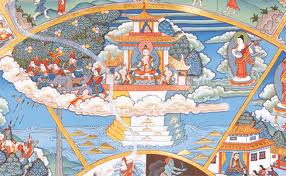
The last of the realms, the highest of the realms, is the one that’s like Club Med. Lots of people say that they want to try this, at least for a little while. I do, certainly. I would like to try this for a little while. I was thinking maybe a couple of weeks, you know, a couple of weeks in the god realm. This place is great. This place is really super. This is the superior realm. In order to be born in the god realm you have to have a lot of merit, but a particular kind of merit. It’s a kind of merit that is not necessarily coupled with wisdom. That is to say, you’ve done a lot of nice things, probably spread out over a long period of time. Or you might have done a few nice things, really nice things, that were just aimed right, like, let’s say, you gave life. Oh, here’s one: Think of the Buddha’s mother.  She gave life to a Buddha, but she herself had not attained realization, so she was born in the god realm. She had accumulated a great deal of merit and virtue. So those that are born in the god realm have accumulated a great deal, a tremendous amount, an inconceivable amount, of merit and virtue, but not necessarily coupled with wisdom.

Their experience is beautiful, just beautiful. Breathtaking, in fact. The gods and goddesses of the god realm, of that particular god realm, are beautiful to the degree that if one of them were to walk amongst us now, it would be blinding. We simply could not perceive the sum total of their beauty. It would be out of the realm of possibility with our eyes. Our eyes are of flesh and not made to take in that much beauty. The colors in the god realm are brilliant. Breathtaking. Not like here. Their reds, their blues, their greens are inconceivable to us. Inconceivable to us. Brilliant. Fabulous. In fact, all of the things that exist within the god realm have these kind of interconnected qualities. To only see one of the jewel-like colors of the god realm will instantly cause healing through sight. That’s how perfect they are. Healing through sight only upon seeing a color.

The gods and goddesses themselves are breathtakingly beautiful, I mean to the point where they are just unbelievable, even to each other; and they are adorned with gorgeous colors and beautiful things. Not only that, they also have the quality of extraordinary perfumed scent. Not like our kind of perfume, the kind you buy, phssst, phssst, phssst, phssst, not that kind, alcohol based. Not Esteé Lauder. It’s much better than that. Their scent is the scent of virtue and merit. And so, the fragrance that comes from their bodies…  It is said that upon simply smelling one of their bodies, one would receive healing, based on scent. Healing from scent. Their smells are like nothing we can imagine. If we could smell one of them, first of all our noses would not be able to take in all of the scent, and our brains would not be able to process it all. But what we could smell would be so fantastical to us that it would be shocking, like nothing we’ve ever smelled, you see. Furthermore, the level of joy in their minds… Now think about this: What if you were so darn gorgeous that people could hardly look at you? Just think about that. And you smelled so darned good that people just couldn’t get enough of it ?Not only that, but you don’t change. You’re always gorgeous. You don’t have bad hair days in that realm. You don’t have acne in that realm. Nothing changes. You don’t ageuntil the very moment of transition into death. Doesn’t that sound like a great place to go?

Let me tell you a couple of other factors about the god realm. You see how here I have my lemon water and I have my ever-popular coffee? Remember, in the hungry ghost realm I told you that this appearance to a hungry ghost, even though it’s the same thing, it is the same nature, same stuff, to a hungry ghost would appear like a glass of pus, or something horrible. And to a human it would appear like water. You’d say, “Well, that’s what it is. That’s ‘cause we can really perceive.” No, this is Buddha, so we perceive it as water—water to nourish our bodies. However, what would a god or goddess perceive this as? This would be to a god or goddess delicious beyond anything we could conceive of. Furthermore, it would be the nectar or elixir of life. One sip is healing upon taste. Healing upon taste. One taste of this liquid in the god realm will heal every single ill, if there were ills in the god realm. And it’s because of the condition of their minds.  Remember, our perception is because of the condition of our minds, not because the object has changed. So everything they eat… And music! There’s music in the god realm that’s nothing like the music you hear here. Not even the best music, not even the finest, most uplifting classical music, nothing like what we have here. The music in the god realm is, again, healing upon hearing, but nothing we can imagine. Celestial. Words don’t explain. So doesn’t that sound like a great place to go? Wouldn’t you love to go there? I definitely feel like we ought to have at least two-week passes. Something, if we knew we could get back in pretty good shape.

Let’s talk about the drawback of the god realm and why you don’t actually want to go to the god realm. Because in the god realm they are so filled with pleasure they can’t practice. If you were to say to a person, “You should practice your Dharma because even your life in the god realm will end.  It will, and wait until I tell you how. Your life in the god realm will end.” They wouldn’t be able to hear. They’re so deluded and intoxicated with the product of their virtue that they can’t hear those words and they don’t compute them. They can’t take them in. In the same way that we couldn’t take them in when we were younger and not feeling as though our lives were forfeit, when we believed we were going to live forever, and couldn’t hear about how you have to prepare for death. But much more so. They can’t even compute it; they can’t take it in. It ain’t happenin’ for them. Plus they don’t have the space in their minds to even consider practice. They can’t even stop experiencing pleasure long enough to say Om Mani Padme Hung, which would liberate them from that delusion. They can’t do it; they simply cannot do it.

Now what happens to the hungry ghosts? What is their lifetime? Their lifetimes are very, very long. It’s the same at the high end and the low end of cyclic existence. Generally speaking, their rebirth in the hell realms and hungry ghost realms are quite long. Our lifetime would be like a day in a year of their life. It would be very, very long. It’s different with each of the different realms, but it’s quite long. The same for the god realm. For the god realms, lifetimes can be as much as an eon. Nobody’s real sure how much an eon is. People keep asking me; I don’t know. Tibetans have one idea, westerners have another idea. It’s a long time. Trust me on this. So the gods and goddesses can live in that realm for eons. Eons. There are many stories of the different gods and goddesses that have lifespans of two kalpas, or two thousand years. There are many stories like that. And then, upon their death, another one takes their place in the very same form, and none of us realize that gods and goddesses are in fact dying and being reborn. We think they live forever.

Here’s how it works. Once again, it takes a tremendous amount of virtue and meritto be reborn in that god realm. So what happens is during the course of their lives they are burning that merit and virtue up, much like an eight cylinder car going up hill. Remember what those guys were like? You burn a lot of gas. And so they are literally burning merit, because their lives are so pleasurable. They’re spending it like money. Just buying everything, you see. If you were spending your money on a poorer life, or spending your merit on a poorer life there wouldn’t be so much expended, but they’re spending their merit on this extremely pleasurable life. And there is a continual outpouring of one’s merit, or using up of one’s merit.

So what literally happens is that at the end of this span, when one’s merit and virtue is completely exhausted, then suddenly the gods and goddesses begin to wake up from their pleasure experiences, as though waking up from an erotic dream, or an extremely pleasurable dream. And suddenly you find yourself in your own bed and you’re wondering what’s going on here. That kind of thing. The gods and goddesses have the same experience: Suddenly they are shaken and they look around and they see. And at that time they are not only able to see all of the god realms, which they do have the power to do, but they are also able to see down toward the other five realms. And then, when they have already used up everything they’ve got, they finally see that they have used up all their virtue and merit, and that they are about to fall into the lower realms. The only time that they are able to see that is right at the time of death. And it’s because their using up all of their virtue and merit gives them that moment, that pause, that removal from the drunkenness of pleasure, to where they can see.

Suddenly all the other gods and goddesses move away from the one who is having that experience. Here’s why. Suddenly they are not so beautiful. Their beauty begins to decay in the same way our beauty begins to decay as we age. Their beauty begins to decay and their smell begins to change. We don’t notice, but here, as physical beings, we carry the scent of death with us always. We do. We carry with us that scent, because our bodies are in process; and there’s always some part of our body that is living and dying in cycles. That is not true of the god realm. What happens is suddenly at that moment when the merit is used up, the smell of death can be detected. And all of the other gods and goddesses who do not have the capacity to register that distress because they’re still drunk with the pleasure realm move away. They simply can’t see you anymore. And not only does the poor sentient being realize what they are about to experience but they also realize that they are also utterly and completely alone, and that is a grave and great suffering for them. They are abandoned. And then they do fall. At that time they have no virtue and merit left to cash in, because they’ve used it up in the god realms, and their experience for a period of time after that is quite negative.

So this is why we do not wish to be reborn in the god realms. Even though it would be great to take a vacation there—I’m ready, we could go right now—still, you do not want to be reborn there. And it is better to think in a realistic way. If you were to think, “Oh, I would like to have a vacation right now, I would like to go to the beach,” but you knew for sure that going to the beach would end your opportunity, or would cause you to suffer greatly later on, you would be smarter to choose not to go to the beach, even though you want to go. So it’s like that. The only realm worth aspiring to is the realm of human rebirth, because it is only uniquely in human rebirth that we can practice Dharma. And it is only uniquely in the human rebirth that we can aspire to and look forward to being able to benefit sentient beings.

These, in a nutshell, are the sufferings of cyclic existence. Now this teaching that I have given you is brief and concise, and it fits in the category of Ngöndro or preliminary teachings: preparation for the mind, or turning the mind toward Dharma. It is not directly connected with Phowa, even though we are speaking about life and death and the experiences therein. At this moment we are speaking of the bardo of life, and this is the experience of the bardo of life as experienced by the many different kinds of sentient beings that are revolving in cyclic existence. Having understood their suffering, can you feel compassion for them?

Copyright © Jetsunma Ahkon Norbu Lhamo All rights reserved
Astrology for 4/12/2017

4/12/2017 Wednesday by Norma

Saturn and Venus continue to stare each other down, generating a slow-motion sense of deflation like a leaking tire or balloon. If you feel that your joie de vivre has vanished you’re right, Saturn is spoiling the party; yours and everyone else’s. Nobody is getting what they want, which is a sad consolation. Use this time to make amends for behavior that brought pain to others. Dive right in. (“Remember the time I stood you up at the altar, laughed when you did a belly flop in the pool, stole your social security check and pretended it was mine? I am sorry.”) What’s good today? Emotional intelligence that knows more than your brain, good investments, a chance to help someone out of a jam and good-natured smiling at everyone, knowing we’re all in the same boat.

WP2Social Auto Publish Powered By : XYZScripts.com