The Missing Link

The following is an excerpt from a teaching by Jetsunma Ahkon Lhamo called “Marrying a Spiritual Life with Western Culture”

What is the missing link?  What causes us to shunt ourselves off in that direction and create a scenario whereby we either don’t relate deeply to our path or it cannot nourish us, or we find ourselves feeling dead inside? How does that happen? One of the things that you have to remember—and it’s really important to think about—is that it is more and more prevalent in modern society to not see some of the natural currents of life. This is particularly true in our country with our level of technology and all the civilizing factors that have come together to make us what we are.

For instance, here we are so technologically advanced and removed from certain natural occurrences that we rarely have the opportunity to see the beginning of life carried all the way through to the end of life. Unless we ourselves have had a baby and daddy went into the birth-giving room and mommy had a mirror—unless we do that—birth to us is a mystery. We do not see what birth looks like. We have pictures of it. We may have seen a movie, but the direct sensual experience of seeing, hearing, touching, tasting and smelling, we have not experienced. Even those of us who are parents are somehow absent from this experience because many people do not have a real direct experience of their own birth-giving. They go to sleep during it or they’re drugged or something like that.

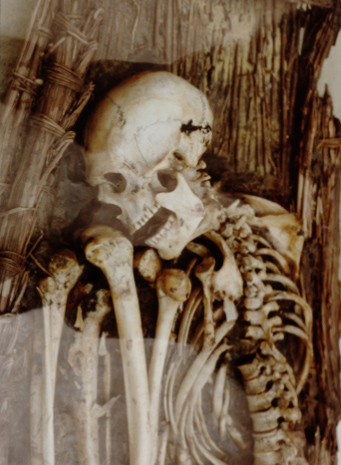
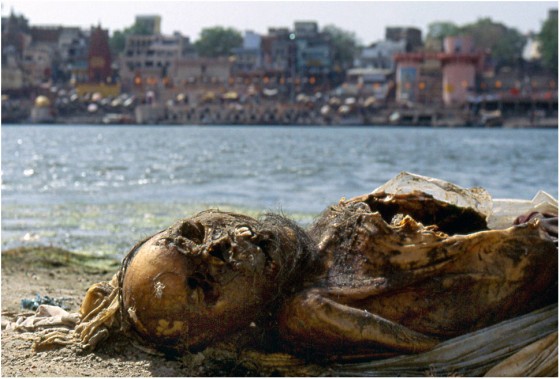
Neither do we have an experience of dying. When we die, we will have that experience; but until then, it’s hidden from us. We have no way to prepare ourselves for the reality of death in our society. We have no way to understand what is gained and what is lost during a life.  Watching someone die is an interesting experience because you can see that everything material is left behind. You have a sense, once that consciousness has left the body, has moved on, that there is a really distinct difference between what the body is like at the door of death—even if it was unconscious—and what it’s like after consciousness has actually left. It’s quite different. Any of us who have seen loved ones immediately after their death will know this. You know that there is nothing in there, unless you’re completely out to lunch, which I also have seen! But you can see that something essential has left and that everything material has been left behind. It’s such an eye-opener, particularly if the person who has died is not very old.  Perhaps they were still at the point in their life where they took a great deal of pride in their body or thought of themselves as being very vital. You might remember different things about the person. You might remember that the person didn’t like their figure, felt that they were too fat. Maybe you know that during the person’s life they obsessed about this. They felt really bad about being fat and they tried to do things about it without success. Then you see that person die. When the consciousness leaves, you realize that everything they struggled with doesn’t matter. Whether that body was fat or skinny, it didn’t go with them.

An understanding of how superficial such a struggle is occurs when you naturally see the rhythms of life and death. Do you see what I’m saying? There is a natural understanding that no one else can teach you. You have to see it yourself.

To understand what we are, it’s also good to see a number of babies being born. Babies are different when they are born. Hospital nurses who care for babies right after they’re born can tell you this for sure.  Babies are not blank slates.  Some babies are very aggressive and very active, and you can tell that they have tiny, little, confrontational personalities already. They’re just that way.  And then other babies are just wide-eyed and open. They’re like little jelly fish. My two sons have always been polar opposites—from the first moment they were born.  A mother who has had more than one child can tell you that’s how it is.

Many of us are completely separated from these natural events, yet they teach us very profound things about how to approach spirituality. Even the story about the Buddha indicates this. At first the Buddha was prevented by his father from seeing the suffering of old age, sickness and death. After having witnessed these sufferings, he found the strength to go on in his path because of compassion, because of the deeply felt recognition that occurred to him on some subtle level.  That’s a metaphor for the problem of our society. What a display Lord Buddha gave us when he showed us that, because on several different levels we are prevented from seeing suffering by our society.

We take dead bodies away and put make-up on them. (Can you believe  that? I want all my make-up on my body before I die. I do not want someone to put it on after I’m dead.  All of you can remember this? That is not the time for a face lift.) On an internal level, because of these subtle messages that we get, we do not come in contact easily with any real internal processes. We avoid them in the same way we are taught to avoid them externally. We’re told, “Don’t go there, it’s not safe. Just don’t go there!”

We are told not to approach things in a really intimate way.  Now in the story about Lord Buddha’s life, when he saw the suffering, it bothered him, hurt him, upset him, scared him and shocked him, and he had to—oh my—go through transformation, that “T” word that scares us so much.  Transformation is related to change, the other word that really scares us.  So, yes, he had to go through all of that, but what was the result?  The result was he became deeply empowered and was able to make some very difficult choices.

He decided not to live an ordinary life in which he was extremely happy. He was a prince with all the blessings. He loved his family. He had a beautiful and devoted wife, and they were very close, very intimate.  He had a beautiful newborn child and was not a distant or absent or unconnected parent. He loved his greater family as well, his father and mother—the king and queen. But for the first time he saw the suffering of old age, sickness and death, and it moved him to his core and enabled him to make choices that are very difficult. He came to the point of deep knowing within himself, that if he wanted to really love his wife and his baby, he had to find the way to liberation for their sake. The phrase “for their sake” became real to him.  It’s not real to us.
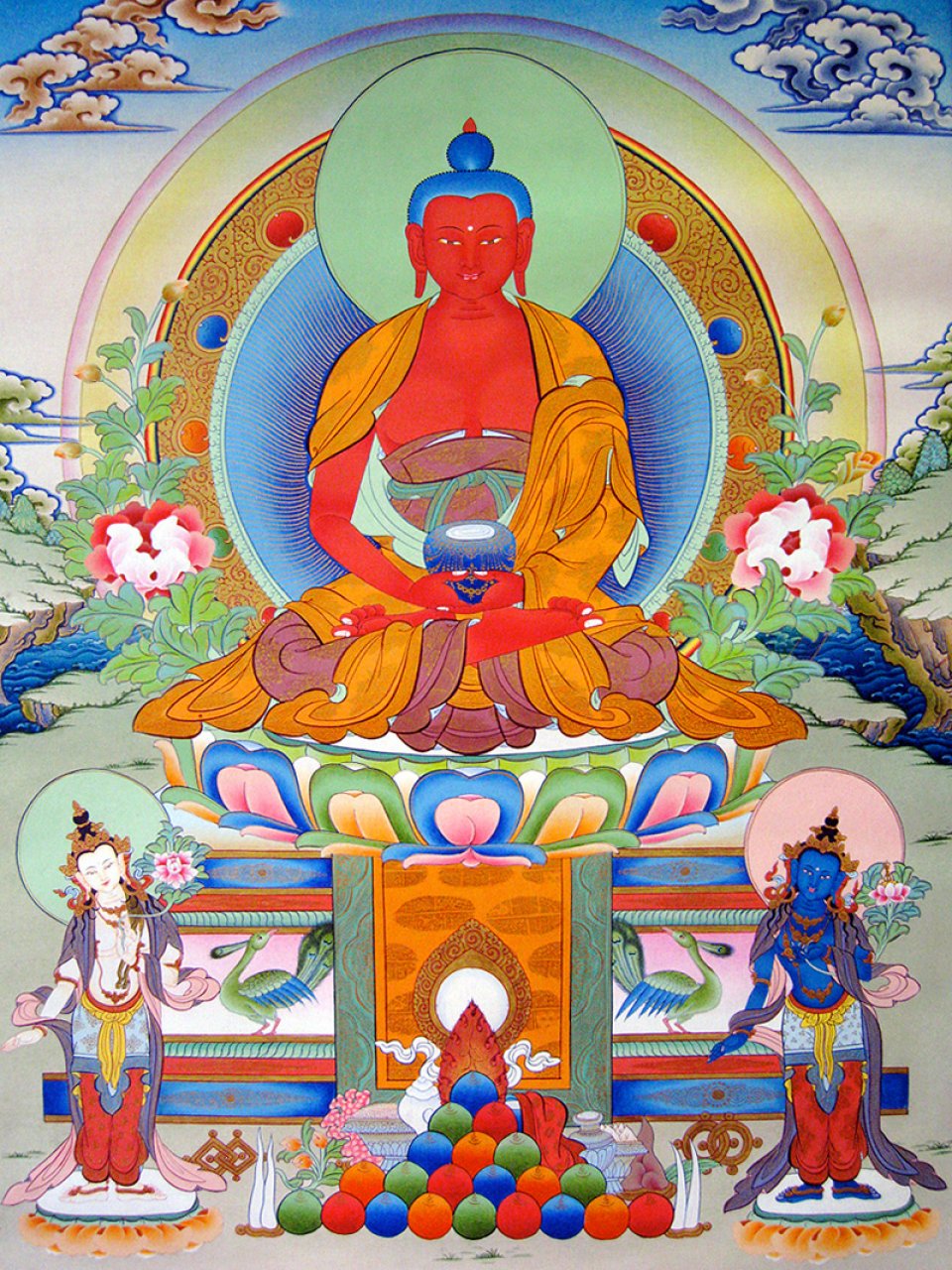
 

Cultivating Courage on the Path: Advice from His Holiness Penor Rinpoche


The following is an excerpt from a teaching by His Holiness Penor Rinpoche on Mediation, reprinted here with permission from Palyul Ling International:

The Bodhicitta we can generate right now, however vast, is beneficial. In the future, when one attains Enlightenment, according to the vastness of that Bodhicitta, that many sentient beings can benefit and liberate themselves from the sufferings of Samsara. Right now we cannot really perceive all that fruition, but if we continue to practice, then in the future we will realize it as a direct perception.
Buddha Amitabha, for example, ultimately achieved that kind of result from his generation of Bodhicitta and his accumulation over many countless years of practices of commitments and aspiration prayers. So even as the Amitabha Buddha achieved Enlightenment over a long time based on aspiration prayers and the commitment to benefit all sentient beings, so we as practitioners must constantly apply the practice of the six perfections to benefit all other beings.

The Buddha Amitabha did not just do these aspiration prayers once or twice, or make this kind of commitment just one or two times. It was over many aeons that he practiced these aspirations and commitments, such that whoever hears the Amitabha’s name and does supplication prayers to Amitabha, they will instantly be born in his pure land. If one has single-pointed devotion to Amitabha Buddha and one carries through all of these supplication prayers, then even oneself as an ordinary person with an afflicted mind can be reborn in his pure land. It is all because of Amitabha Buddha’s special aspiration prayers. So although there are countless Buddhafields, the Amitabha Buddha’s pure land is very special because of these reasons.

We all could also achieve that kind of completion when we attain Enlightenment if we continue on the path and carry through our practices, generating Bodhicitta in as vast a way as possible. So we should not lose courage, thinking, “Oh, I cannot do it. I could never attain that kind of Enlightenment.” It is not good to lose one’s courage like that. Think instead that all these past Enlightened Beings, all the Buddhas and Bodhisattvas, they also attained Enlightenment and ultimate realization by beginning the same as us, standard beings, and if they could attain Enlightenment, we can also attain that same kind of realization.

So today, though there is much that has been taught, if one can just try to keep in one’s mind to have one hundred percent devotion to Buddha, Dharma and Sangha, and if one will train one’s mind by generating Bodhicitta and carry though the practices, then one can definitely have this kind of fruition. We can all do aspiration prayers, that in the future we can all attain Enlightenment within one mandala through these Great Perfection (“Dzogchen”) meditations. Just as in the past such great Great Perfection (“Dzogchen”) realized masters like Garab Dorje and Shri Singha and so forth attained Enlightenment through these Great Perfection (“Dzogchen”) practices, similarly we can also have that aspiration prayer to attain Enlightenment.

For a short Amitabha Practice by Jetsunma Ahkon Lhamo click here.

Descend With the View While Ascending With the Conduct: from Dakini Teachings

The following is an excerpt from Dakini Teachings: A Collection of Padmasambava’s Advice to the Dakini Yeshe Tsogyal 

Master Padma said: Some people call themselves tantric practitioners and engage in crude behavior, but that is not the actions of a tantrika.
Mahayana means to cherish all sentient beings with impartial compassion.
It will not suffice to claim oneself a trantric practitioner and then refrain from adopting what is virtuous and not avoiding or shunning evil deeds. It is essential for all tantric practitioners to cultivate great compassion in their being.
Without giving rise to compassion in your being you will turn into a non-Buddhist with wrong views, even though you may claim to be a practitioner of Secret Mantra.
Master Padma said: Secret Mantra is Mahayana.  Mahayana means to benefit others.
In order to benefit others you must attain the three kayas of fruition. In order to attain the three kayas you must gather the two accumulations. In order to gather the two accumulations you must train in bodhicitta. You must practice the paths of development and completion as a unity.
In any case, a trantrika who lacks bodhicitta is totally unsuited and does not practice Mahayana.
Master Padma said: Secret Mantra and the philosophical vehicle (Mantrayana) are spoken of as two, but ultimately are one. If you lack the view or the conduct you will stray into be a shravaka. So descend with the view while ascending with the conduct. It is most essential to practice these two as a unity. This is my oral instruction.
SAMAYA

All Sentient Beings

An excerpt from a teaching by Jetsunma Ahkon Lhamo from the Vow of Love series

One of the most important and central thoughts in Buddhist philosophy is the idea of compassion. The Buddha taught that we must cultivate our lives as a vehicle to be of benefit to all sentient beings.  It’s good that you’re a good mother, and it’s good that you’re a good friend, but we can’t limit ourselves to a small, familiar circle. We have to go on and on increasing our compassionate activity, our influence and our determination until we attain a level of kindness or compassion that supersedes what we believe is reasonable. We can’t stop even with our nation. We can’t think that we only want to help Americans. Nor can we stop with our world. We can’t think that we only want to help humans and animals, which are the ones that we can see. We have to think, according to the Buddha, that we wish to be of benefit to all sentient beings.

A sentient being is one who has sensory feeling or the development of that kind of discriminating consciousness. According to the Buddha’s teachings, there are six realms of cyclic existence, and there are sentient beings in all of these realms. The human realm and the animal realm are visible to us. This is living proof that at least some of the Buddha’s teaching is right. We see human beings and we see animals; therefore, we know that they exist. But according to the Buddha’s teaching, there are also non-physical beings and different kinds of beings that must be considered if we are to truly develop the mind of compassion.

Limiting ourselves to an identity such as,”I am a woman,” or “I am a man,” or “I am an American,” or “I am a Russian,” or even “I am a citizen of planet earth,” is not the way of the Buddha. Instead, we should think that on every particle we can see, and all those that we cannot see, and in every inch of space, there are millions and millions of sentient beings. And space goes on forever. If we intend to develop the mind of kindness, it must extend to all sentient beings equal to the limits of space.  Space has no limits and there are limitless beings, seen and unseen.  Therefore, we must extend the mind of compassion to beings far beyond those we can conceive of with our brains. That is an awesome thought. How can we really do that? We think that must be impossible. How can we be directly concerned with somebody we can’t see? How can we really care about something that might be infinitesimally small, like bacteria? Or a sentient being that may be as large as a galaxy? How can we seriously consider we must be kind to all sentient beings in that way?

Copyright © Jetsunma Ahkon Lhamo.  All rights reserved

The Foundation of Benefiting Beings

Excerpt from a teaching by Jetsunma Ahkon Lhamo from the Vow of Love series

To truly understand the mind of compassion is to understand suffering. To be willing to cultivate aspirational compassion and act in accordance with those aspirations, so that you fully intend to liberate your mind from the causes of suffering and fully intend to return in whatever form necessary in order to benefit beings.  In so doing, you’re on your way. Whether you call yourself a Buddhist or not, kindness is a universal term. No one’s got a corner on it. Compassion is not a word that the Buddha invented.

I am a Buddhist because I found this religion is the most useful way to benefit beings. This is my own determination. If you also determine this for yourself, then continue to do what you’re doing. Perhaps you’re heading towards studying Buddhism, or perhaps you are already studying it. But if you don’t want to become a Buddhist, that doesn’t let you off the hook! You still have to live a life of compassion.  No matter what path you’re following, compassion is the only way to realization. No matter whom you’re listening to, hatred, greed and ignorance are the causes for suffering. There is universality about all this. Whether you call yourself Buddhist or not, you still have a job to do. I suggest doing it by first cultivating the firm foundation of fervent aspiration to be of ultimate benefit, and by having the courage to look at the content and meaning of suffering and determining how best to overcome it.

Copyright © Jetsunma Ahkon Lhamo.  All rights reserved

How Will You Live Your Life?

The following is from a series of tweets by Jetsunma Ahkon Lhamo:

You live in human form because you now have the merit to do so. When the merit is exhausted you will die. All is impermanent. Therefore while we live, this Precious Human Rebirth must be honored as the perfect vehicle for awakening it is. Accomplish your Dharma while your mental capacity is clear and strong. This is the time to Practice Dharma! While younger, before age fades aptitude.

Please do all you can to make the world a better place. Try to satisfy the needs of all sentient beings. Feed the hungry. Clothe the poor. Share your worldly goods. Save animals from suffering. Shelter the homeless. Ease the suffering and fear of the dying. Accomplish the Phowa for yourself and others. “Do” for others what they cannot do for themselves. While doing so, please respect their dignity. Please allow other folk their own faith without meanness and disrespect. We have faith. And we try to live it.

Copyright © Jetsunma Ahkon Lhamo.  All rights reserved

Be Honest

Excerpt from a teaching by Jetsunma Ahkon Lhamo from the Vow of Love series

Now, when we talk about practical compassion, it actually occurs on two levels. There’s a universal level, in the sense you care so much for all sentient beings that your goal is to do whatever is necessary to eliminate suffering for them all. But does that mean that if you see a hungry child you shouldn’t feed him? Or does that mean you shouldn’t be kind in an ordinary, human way? Ordinary compassion, ordinary human kindness is very important. But in understanding the Buddha’s teaching, it shouldn’t be the only thing you do. You have to live an ordinary, virtuous life, but you have to live an extraordinary life as well. The activity of kindness and compassion should have both a universal and an ordinary level.

On the other hand, I don’t believe in ‘idiot compassion.’  Have you ever heard of idiot compassion?  It is when you look at people who are needy and you see them going through their stuff, and you try to be so kind to them and give them what they need, or what they say they need. You actually don’t help them because you increase their dependency. You increase their willingness to tell you how much they need. You’re just helping them along; you’re playing with them. So I don’t believe in idiot compassion because it doesn’t help them. I believe that sometimes, real compassion has to be harsh.

In Buddhism, you see as many wrathful deities as you do peaceful deities. Why is that? Is it because the Buddha is half mean and half nice? I don’t think so. It’s because sometimes compassionate activity has to be a little wrathful. Sometimes it has to be a little aggressive. It depends. If you really are pure and your determination is to really be of benefit, and not just to be a nice guy, after training yourself in this way, you’ll know what to do. You won’t get hooked on idiot compassion. Everybody likes ‘feel-good’ stuff, but that doesn’t always help. You should, however, be a human being of virtue. You should be kind. You should be honest.

Copyright © Jetsunma Ahkon Lhamo.  All rights reserved

Compassion: The Root Commitment – How Will It Look for You?

Excerpt from a teaching by Jetsunma Ahkon Lhamo from the Vow of Love series

What form will your compassion take? Making compassion your root commitment to sentient beings must take some form. How can you begin to do that? First, I recommend again that you be courageous enough to study the nature of suffering: how it has evolved, what it means, where it exists. See for yourself. Go through a logical thought process. What will bring about the end of suffering? If I did this and this and this and this, will suffering really end? What can the possible results be? Allow yourself to really go through an examination of suffering. Come to your own understanding of suffering so that you can decide what your next action must be. Allow yourself to think, “Well, if I did this good thing for somebody, or if I fed the world and got everybody out of poverty, what would the result be?” Follow this line of reasoning to its logical end, and see if there’s any specific action that you could take that would truly end suffering completely.

Then, think of the Buddha’s logic and try to understand what that might mean. What if what the Buddha says is true? What if hatred, greed and ignorance are the root causes for suffering? What if you could completely remove the seeds of suffering from the fabric of reality? What if it were possible, through the extensive practices given by the Buddha, to accomplish that for yourself first, and then reincarnate in a form by which you could benefit others by offering that same method again and again? Might that be a solution? It’s a slow one, but it’s a big universe. Is it possible that might work? According to the Buddha’s teaching, when you take a vow as a Bodhisattva, you vow to liberate your own mind from hatred, greed and ignorance. You vow to liberate your mind from the very idea of self-nature as being truly valid. You agree to liberate yourself from any form of desire, and you do that specifically so that you can return again and again, in whatever form necessary, in order to be of benefit to sentient beings. You agree to propagate the Dharma. It doesn’t mean that you become a born-again evangelist. It means that you reincarnate and allow yourself to return in whatever form necessary in order to bring teachings to beings that will finally help them out of the sea of delusion that comes from the belief in self.

You should contemplate this and think, “Is this solution really useful?” You have a couple of different options at that point. If you decide that the Buddha’s teaching is valid and useful, you can begin to develop aspirational compassion. Right now, if I were to say to you, “Do you want to help people? Do you want to help the world?” You’d say, “Yeah, I’m on! Look at what I’ve done. I’ve done a lot!” But I tell you, until we reach supreme enlightenment – and I’m talking about bona fide, rainbow-body, walk-on-the-water, supreme enlightenment – we must continue courageously to develop the mind of compassion in every moment. Until we can liberate the minds of others just through a breath, just through a glance, just through a moment of being with them, just through a prayer, we have not truly attained the liberating mind of compassion.

We must continue with this effort throughout all of our lives. Even though we may have the idea of compassion, we must develop aspirational compassion. We must aspire to be anything that would bring true and lasting benefit to beings. We must offer ourselves and our minds again and again and again. I think of one prayer of a Western Bodhisattva that touched me very much as a child, “Lord, make me an instrument of Thy peace.” That’s the kind of thought that we as Westerners must have within our minds. As we begin to become more comfortable with Eastern terminology, then we can think, “Let me be born in whatever form necessary, under any conditions in order that beings should not suffer. If there is the need for food, let me return as food. If there is the need for drink, let me return as drink. If there is a need for a teacher, let me return as the teacher. If there is a need for shade, let me return as the tree. If there is the need for love, let me return as arms.” You must continue to develop this idea in such a selfless way that it doesn’t matter to you in what form you can give this love.

Your job would be to liberate your mind to such an extent that you achieve realization through strenuous activity. Yes, the Dharma is difficult. Any path that promises to lead to enlightenment has to be difficult because it’s a long way from here. Let’s face it, any path that leads to bona fide, no-kidding, walk-on-the-water, rainbow-body enlightenment – I’m not talking about a psychological “a ha!,” I’m talking about the real juice – must be very involved, very profound.

So your first thought must be, “Let me then liberate my mind to such an extent that I achieve some realization, and then I wish to return in whatever form is necessary. May I be able to emanate in many bodies. May these emanations fill the earth, and, if necessary, one-on-one, through those emanations, let suffering be ended. Or if it can be done in some other way, I don’t care. It has no meaning to me. Only that suffering should end. What is important is that all sentient beings should themselves achieve liberation and go on to benefit others as well, until there are no more, until all six realms of cyclic existence are free and empty.”

When you get up in the morning, think, “As I rise from this bed, may all sentient beings rise from the state of ignorance and may they be liberated until there is no more suffering.” When you brush your teeth, think, “As I brush my teeth, may the suffering of all sentient beings be washed away.” When you take your shower, think, “As I take this shower, may all sentient beings be showered with a pure and virtuous path by which they themselves can be liberated.” When you walk through your door, think, “May all sentient beings walk through the door of liberation.”

Copyright © Jetsunma Ahkon Lhamo.  All rights reserved

The Root of Suffering

Excerpt from a teaching by Jetsunma Ahkon Lhamo from the Vow of Love series

In order to cure the symptom of suffering you might decide to manipulate the circumstances, or the environment. If you see people who are hungry, you give them food. If you decide you want to feed them for the rest of their lives so that they are never hungry, then you have to feed them three times a day, every day, for the rest of their lives, or teach them how to feed themselves. What are you going to do when they get sick? They will get sick. What are you going to do when they get old? They will get old. What are you going to do when they get lonely? What are you going to do when all the different kinds of discomfort pop up? What does it matter if you help a few people? What about the other 5.9 billion on the planet? What about the animals? Where will you start? What will you do, if your intention is merely to manipulate the environment so that the discomfort that you see is finished? Even if you have worked every moment selflessly and have given away all your money, and then have gotten money from other people to help, doing everything that you could to make these things happen, you wouldn’t put a dent in it, not even the tiniest dent. Why? Because you are trying to manipulate something that is very superficial.

This apparent reality that we are viewing isn’t that deep. It’s nothing. It’s a ghost. It’s a puff-ball. We can’t move it, because wherever we move it, it will appear somewhere else. We cannot manipulate our environment. We cannot manipulate phenomena and achieve any real lasting success. We can achieve temporary success. We can have the satisfaction of seeing someone fed who has been hungry, and that person can feel the satisfaction of a meal. If we fed people on a grand scale, it might be a grand satisfaction. But it is not permanent, it is not a solution, and the reason, according to the Buddha’s teaching, is that hunger and poverty and loneliness are not the causes of suffering. They are the results or the symptoms of something else. According to the Buddha’s teaching, the root causes of suffering are hatred, greed and ignorance.

We might take issue with that statement. Say we think about a hungry Indian child, or a hungry American child, or a hungry Ethiopian child. Sure, all of them probably do hate because they’re hungry; and they probably are ignorant because they’ve never gone to school; and they probably are greedy. Boy, if you handed one a biscuit, he’d just grab it and run because he’s so hungry. But we have to probe more deeply. We are only looking at a set of symptoms. According to the Buddha’s teaching there is an underlying cause that makes phenomena appear as it does in any given situation, and that cause is karmic. The Buddha’s teaching is that all phenomena arises from a cause, and that everything that is seen, felt, and heard is actually the emanation or the result of one’s own mind. The mind itself produces all visible phenomena. I hope you can really hear that. To change suffering as it appears in the world can never be permanent. It can never do much good. What has to be done is to change the karmic background or cause and effect scenario of one’s own mind. In doing so, you can hopefully come to a place where you can also be of benefit to others.

Copyright © Jetsunma Ahkon Lhamo.  All rights reserved

It Really Works: Creating the Causes for Happiness

The following is an excerpt from a teaching by Jetsunma Ahkon Lhamo called “Your Treasure is Heart”

We are really happiest when we are completely surrendering—letting that love, that concern for the welfare of others, that Bodhichitta—be the captain of our ship, instead of that nasty little manipulative self-serving ego that’s running around trying to control everything and making everybody, including ourselves, crazy.  We will find that the level of neuroses in our lives begins to go down. And we will find that, lo and behold, just like the Buddha taught, we have really begun to create the causes for happiness.  It really works.

There are changes that you’ll go through, changes that I go through constantly, even still.  You may find that happiness does not take the form you thought it was going to take, but let me tell you something.  I’m forty-six years old.  If you have come anywhere near my aged self and haven’t figured out that life is not going to do what you thought it was going to do anyway, then you have been asleep at the wheel!  Why not make it work for you? Because nothing is going to take the form you thought it was going to, no matter what you do.  Most particularly, if you spend your time trying to control and manipulate others, and if you live a life completely concerned with ego-cherishing, then life really won’t deliver.  But hey, figuring that out is all part of growing up.  We see that.  Your five-year plans, your ten-year plans, forget it.  I guess about some aspects of your life you can do that, but you will find that as the Bodhichitta begins to truly manifest in your life, it requires true surrender. And your life will not take the form that you thought it was going to, because this Bodhichitta cannot be controlled.  It is not a toy for you to make only you happy.  It is the display of that nature that is our ground of being and to which we are all equally entitled and ultimately responsible for.  As you begin to taste that nectar, you realize that in all the world, sentient beings are suffering. And in worlds and worlds that we cannot see, sentient beings are suffering; and that we have in our hands, like a precious jewel or a golden key, the means by which some understanding or some help can come to them. So let us now commit our lives and remain absorbed in that kindness, and transform this present life and every future life into a vehicle by which the end of suffering will be brought about and all sentient beings will be liberated.

So this is the teaching, and this is our wish. And I hope from the depth of my heart that each one of you will consider it very carefully and then make the choice for transformation.  We hate that word.  Transformation is a scary key word.  We sort of like it in theory—it sounds so dynamic and powerful. But when, let’s say for instance astrologically, someone says to you, “Well, you know you’re about to go through a major transformation,” we are terrified.  Quick, batten down the hatches.  Don’t let anything change.  But, if you live long enough, you’ll find out that life is going to transform you one way or the other.  You will go through transformations.  You will go through things.  So go through that which will benefit you and all sentient beings.

Do not leave this continent of precious jewels empty handed.  When you go into your next life, I hope from the depth of my heart that you have somehow managed to take the nectar from this life and truly internalize it, and enter into your next life nurtured by the power of Bodhichitta.

Copyright © Jetsunma Ahkon Lhamo.  All rights reserved

WP2Social Auto Publish Powered By : XYZScripts.com