Kunzang Palyul Choling has maintained a 24 hour Prayer Vigil since 1985. In this video Jetsunma describes how engaging in the Prayer Vigil is a way to stand up against the suffering in the world today. Making that commitment and dedicating the effort to bringing an end to war, or peace to beings, is a powerful way to practice the Dharma. She talks about how every visiting Lama, including His Holiness Penor Rinpoche, all comment how precious and rare this vigil is, that it happens nowhere else. Jetsunma talks about how it is part of integrating traditional Dharma Practice into our American, modern lives.
 Jetsunma Ahkon Lhamo
Calling the Lama From Afar
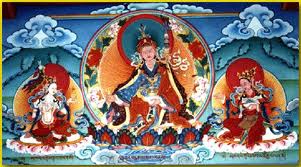
The following is an excerpt from a teaching by Jetsunma Ahkon Lhamo called “Experiencing the Hook of Compassion”
In our tradition, in preliminary practice, we practice this “Calling the Lama from Afar,” and it’s a haunting practice. It will bring tears to one’s eyes if one practices it with a full heart and really does one’s best. When that begins to happen, there is a change in the student. There is truly a change. Often that is when the lama, the teacher, first begins to notice the student. That is when the lama takes an awareness of the student. That is when the student comes into the lama’s mind and the lama comes into the student’s mind. That is when this tremendous bridge, this perfect bridge, is formed that is everything, really everything, on the Path. Without it there is only dressing up in Dharma clothing like a peacock, you know. There is nothing without that. So that is necessary.
Copyright © Jetsunma Ahkon Norbu Lhamo All rights reserved
Meeting with the Vajrayana Path: His Holiness Khenpo Jigme Phuntsok
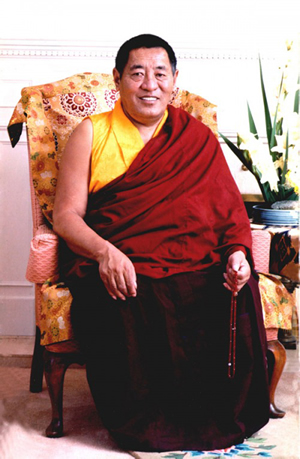
The following is an excerpt from a public talk given by His Holiness Khenpo Jigme Phuntsok:
This vehicle of secret mantra, Vajrayana, is the principal vehicle of Buddhism that is practiced in Tibet, and now we find it spreading throughout America and other countries. There are many Dharma centers that have been established in America, primarily by Tibetan lamas who are upholders of the Vajrayana tradition. This means that many of the American disciples are now becoming practitioners and upholders of this tradition. In fact, throughout this world, Vajrayana Buddhism is already firmly established in some 32 countries.
Within the secret mantra vehicle, the ultimate, absolute pinnacle, the enlightened mind of all the Buddhas and Bodhisattvas condensed into one essence, the heart blood of all the Dakinis, is the quintessential path known as the Clear Light Great Perfection, or Ati Yoga. This Doctrine of the Great Perfection is dependent upon the receiving of what is termed pointing out instructions or pith essential instructions which can be passed from teacher to disciple in the form of just a word or two. In fact, if everything is auspicious according to the way that the Clear Light Great Perfection is actually transmitted, it is taught that if those essential instructions are given in the evening, by sunrise one will be enlightened. If they are given at sunrise, by evening one will be enlightened. So this is considered to be the most expedient path to liberation.
To meet with the Clear Light Great Perfection is something that is so precious and rare that it is taught that just to hear the words of the Dzogchen teaching, the teachings on the level of Ati Yoga, closes the door to rebirth in the three lower realms and puts one safely and directly on the path to liberation as a Buddha. So it is a Dharma that has the power to liberate just by contact, just by sight, just by recollection. Even to recall the words of the Dzogchen teachings is something that is so precious and profound that it is likened to having a wish-fulfilling jewel in the palms of your hands. It is not a Dharma that is filled with elaborations and complexities that takes a lot of time to accomplish or establish. It is a Dharma that, if it meets with the right individual or the perfect aspirant, is something that is easy to practice and that can be applied to every aspect of life in a very simple way producing very direct results. However, this Dharma, this Doctrine, must only fall into the hands of those disciples who have the karmic affinity for it which is something that must be established due to karmic connections. Otherwise it is a Dharma that is meant to be kept secret or to be guarded from any other type of situation.
When we think about Tibet and how the Dharma came into Tibet originally, it was due to the kindness of the great Orgyen Rinpoche, Guru Padmasambhava, and Vimalamitra. In fact, there have never been two teachers of the likes of these two who have ever come since then. They are so great and profound. Guru Rinpoche and Vimalamitra only gave the Dzogchen teachings to their closest heart disciples and only after a tremendous kind of karmic affinity had been established. It is not something that is just given in any other circumstances. In Tibet there exists to the present day the eight great chariots of traditions and teachings of practice which are very sublime and extraordinary. However, amongst them it is only in the tradition of the secret Nyingmapa that these Dzogchen teachings are found, and they are unequalled by any other.
Now I have a personal feeling about this, and I mentioned it a little bit in San Francisco. Since I’ve come to America I have seen that there is a very strong connection here for the Dzogchen teachings. I have also had an opportunity while I’ve been in the United States to give Dharma teachings on different subjects, but I find when I teach on the subject of Dzogchen, which is the Tibetan term for this Clear Light Great Perfection, this Ati Yoga category, that I find that people become much more enthusiastic and the faith wells up inside of them in a different kind of way. I liken this to the situation in this country at this time where the country itself is very powerful and there is much material prosperity, but also everyone is extremely busy and people don’t have too much of a chance to practice elaborate forms of religious or spiritual instructions. So in noticing all of these coincidences coming together, I truly have seen that Americans have a strong connection with the Dzogchen doctrine and that this is probably the most important doctrine to propagate here at this time. Therefore I have a very strong hope that each and every one of you will have an opportunity to meet with the Dzogchen doctrine and put it into practice in your lives.
If you practice the Dzogchen in this life alone, you will immediately receive the benefits of good health and mental contentment. That’s why you can use someone like Gyaltrul Rinpoche as an example. Even though he’s old now, much older than most of you, he’s still very happy. His mind is filled with content and his body is still healthy too. This is because of the point I just brought out. I think it also might be true for Ahkön Lhamo as well.
Friends and Enemies: Excerpt from “The Heart of Compassion…” commentary by Dilgo Khyentse Rinpoche
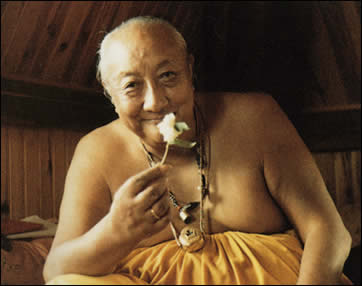
The following is an excerpt from “The Heart of Compassion: Thirty Seven Verses on the Practice of a Bodhisattva”:
On a practical level, however, the mere fact that you feel compassion
for them is of no use whatsoever to all those beings. So, what can you
do to actually help them? You now have a human existence with all its
freedoms and advantages, and especially the immense fortune of having
encountered and started to practice the supreme Dharma. You have met
an authentic spiritual teacher and are in the process of receiving
teachings that will enable you to reach buddhahood in a single
lifetime. To make full use of this precious opportunity, you must not
only listen to the teachings but also put them into practice. That way
your feelings of compassion can be put to work, to the point that you
will eventually be able to bring all living beings to enlightenment.
As things are at present, however strongly you may want to help
others, you are a beginner and lack the capacity to do anything much
for them. The first step you need to take toward being really useful
to others, therefore, is to perfect yourself, by training and
transforming your mind.
The way you are now, your mind is powerfully influenced by the
clinging attachment you have to friends, relatives, and anyone who
brings you satisfaction, and by your hostile feelings toward whoever
seems to go against your wishes and toward all those who prevent you
from acquiring wealth, comfort, and pleasure and whom you therefore
regard with aversion as enemies. ln your delusion, you do whatever you
can to benefit yourself and those you like, and try to overcome and
eliminate all those you consider enemies with such aversion that you
can hardly bear even to hear their names. Over countless lifetimes you
have been dragged into samsara, this vicious ocean of existence, and
carried away by these strong currents of attachment and aversion.
Attachment and aversion are the very cause of samsara, the very reason
for our endless wandering in the circle of existence.
Consider carefully what you mean by friends and enemies. When you look
into it, it is obvious that there are no such things as permanent.
enduring friends or enemies. Those you think of as friends have not
always been so. Indeed, they may well have been your enemies in the
past, or they could become your enemies in the future. There is
nothing certain about it. Why should you be so compulsively attached
to particular people? Are not all your relationships temporary? In the
end, whatever may happen during your life, the time will come for you
to die. Then you will have no choice but to part from everyone,
regardless of whether you feel attachment or aversion for them. But
everything you have done in your lifetime, all those actions motivated
by attachment and aversion, will have created within you a force that
will then propel you to the next life, in which you will experience
their result.
So, if you want to travel the path to buddhahood, give up attachment
to friends and relatives, and hatred for enemies. Regard all beings
with impartial equanimity. If people now seem to be either friends or
enemies, it is just the result of past connections and actions. To
ascribe any solid reality to those feelings of attachment and
aversion, arising as they do from mistaken and confused perceptions,
is just delusion. It is like mistaking a rope, lying in your path in
the twilight, for a snake-you might feel afraid, but that does not
mean your fear has any real basis. The rope never was a snake.
The Foundation of Devotion
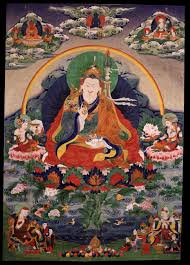
The following is an excerpt from a teaching by Jetsunma Ahkon Lhamo called “Experiencing The Hook of Compassion”
Now I’m going to dive into the adult portion of our teaching, but you might have gotten something out of the children’s portion even though we’re adults, and some of us are even past 38. It looks like maybe some of us might be, and we’ve already learned some bad habits. Don’t we still move through whole passages in our lives when we just forget that we can be of benefit? We just move through and live in a way that’s relatively meaningless. We simply move through time, marking time by births, deaths, and anniversaries and summer reruns, and all kinds of things that are really pretty insignificant. We too can take hold of our lives and really become firm-, really practice accordingly.
So in the Buddhist tradition, particularly in Vajrayana, there is a kind of practice that is called devotional practice, and devotional practice has many components. But one particularly meaningful and important component is that one develops a relationship of pure devotion with one’s guru, with one’s teacher. In the Vajrayana tradition, the teacher is considered to be like the door of liberation because, even though there has been a Buddha on the earth and there has been the Buddhist teaching, even though the teaching is written in the books, even though there are many ways in which you can approach the Buddhadharma, it’s really, according to Vajrayana tradition, just about impossible to enter into the Path, into the meat of the Path, into the thick of the Path without the blessing of the teacher.
The lama is considered to be the blessing that is inherent in the Path. The lama is necessary for empowerment; the lama is necessary for transmission; the lama is necessary for teaching; the lama is necessary to make a bridge. Almost like the lama is the nurse that administers the medicine. The doctor might prescribe, the doctor might be considered the Buddha; but the lama is considered to be the nurse that actually administers the medicine while we ourselves may be too weak or too unaware to be able to hold onto the medicine or take it into our own mouths without some help. In Vajrayana tradition, from the very most preliminary practice to the very most superior practice, there is a devotional aspect to every practice that is done; and that is considered to be the vehicle or the means by which the blessing is actually transmitted.
In preliminary practice, there is actually a section of devotional yoga, guru yoga. This is something that is widespread not only in our particular tradition, but is widespread across all the traditions in Vajrayana Buddhism— the tradition of calling the lama, beseeching the lama, of invoking the lama’s blessing. Now in our particular Ngöndro, we have a beautiful passage, a beautiful song of invocation, called “Calling the Lama from Afar.” It has a very haunting melody and it’s done with one’s heart. Actually the recommendation is that one should do it until tears arise in one’s eyes. One should do that in order to soften the ego, in order to soften the mind and to make the mind like a bowl that is turned up, not turned over, hard, you know, and unable to receive any blessing; but a bowl that is turned up that doesn’t have any poison or dirt in the bottom of it, that’s kept purely; so that when the nectar comes in, it won’t be mixed with the poison or dirt. And it isn’t cracked, cracked through the distraction that we all feel when we can’t really keep our minds on any kind of devotional practice and our minds wander too much. That kind of bowl could not hold the blessing, could not hold the nectar. And, of course, if our minds are hard and filled with anger and hatred, and that anger surfaces, the bowl is turned over and the nectar simply runs off so there is no blessing to be had. We might fool ourselves thinking that we have a blessing, but in fact, no blessing has been received.
So we practice this devotional yoga; we practice it very sincerely. The benefit of this practice is immeasurable in that it softens the mind. It’s almost like planting a field of grain, you know? One has to plow the field; then one has to harrow it or disc it, turn it over. One has to soften it and rake it and work the soil so that it’s capable of receiving the seed. Otherwise if the soil were not ready, and the seed were thrown out, it would just bounce, like on a hard surface. It would not do much good. Any of you who have planted things know the truth of that. So devotional yoga is a cultivator. It’s considered to make one ready. Without devotional yoga, there is no possibility, really, of the blessing being fully received.
The devotional yoga is meant to benefit the student. It never benefits the teacher. If the teacher needs devotional yoga, the teacher is inadequate and impure; the teacher is without value. So the devotional yoga is purely for the benefit of the student. The teacher is not pleased by the devotional yoga. The teacher is pleased by the movement and the softening and the gentling and the change that occurs within the student, and that‘s because the teacher wishes to benefit the student. It isn’t because the teacher requires any kind of devotional yoga, or any kind of notice, really, at all.
Copyright © Jetsunma Ahkon Norbu Lhamo All rights reserved
Heart Advice from His Holiness Penor Rinpoche: Watching the Mind
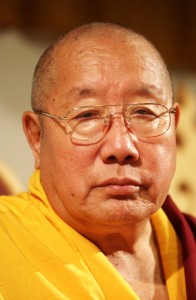
The following is a Heart Teaching offered by His Holiness Penor Rinpoche at Palyul Ling Retreat in 2003 – lightly edited for posting on this blog:
Carry through the Guru Yoga practice with your body, speech, and mind in proper position and without having any conceptual thoughts. Place your hands in the meditative position and concentrate on the practice. If you start conceptualizing, it causes lots of negative problems. Always try to cut through past, present and future thoughts, and then try to abide in the nature.
Even if one’s physical body is in a meditative position, if one’s mind goes on creating thoughts and conceptualizing, then there is no benefit, because the mind is more important than the physical body.
In the past there were two lamas known as Drupa Sangye Khenpa and Drupa Kunley. Drupa Kunley normally traveled around all over the place. One day Drupa Sangye Khenpa told Drupa Kunley that he shouldn’t wander everywhere and that they both should try to do some retreat and settle down. They both carried on their retreat individually. Then Drupa Sangye Khenpa thought that after completing the retreat he would go to the city to beg for food. He had a horse to ride horse, but at that time based on one’s rank people would put a red feather on the horse, but Drupa Sangye Khenpa didn’t have one. So Drupa Sangye Khenpa thought, “I should go to the city and get that feather.” Meanwhile Drupa Kunley was in retreat, and somehow read Drupa Sangye Khenpa’s mind, so he went to see Drupa Sangye Khenpa. When Drupa Sangye Khenpa saw Drupa Kunley, he said, “Actually we haven’t completed our retreat. Why are you coming here?” Then Drupa Kunley told Drupa Sangye Khenpa, “Well, you are going to the city to get that horse feather, so I thought the retreat was over.“ It is in that way that if one’s mind starts giving rise to thoughts, it has its own activity.
Of course these lamas are bodhisattvas who have realization, and don’t give rise to any afflictive emotions. We are not equal to them, but still don’t let your mind wander. Externally we look the same, like human beings, but their enlightened mind is not the same as ours. Whatever thoughts we give rise to or verbalize or any action we take, are bound by afflictive emotions and have all kinds of grasping and clinging. We mostly have impure thoughts. It is very difficult to have even 1% pure perception.
Even when we carry through the generation stage of the deity, during the practice all kinds of thoughts arise. Even when we try to do some meditation, during the actual meditation itself, still thoughts constantly arise. That it is how our mind is.
The moment any thoughts arise, they naturally will be in the form of attachment or aversion. Even in our day-to-day lives, it is important to try not to give rise to many thoughts and to try to sit and have control over one’s mind. In the future when one carries through practices like Shamatha Meditation or Mahamudra or Dzogchen, one will need to have a single-pointed mind. If one’s mind is constantly giving rise to thought then it doesn’t really help.
In our normal worldly life we think of material wealth, our jobs, work and so forth. Our senses are more external, but when we are trying to apply our spiritual practices, then it is important to turn one’s mind inward, to examine one’s own mind to see what it is doing and how it is following the practice.
The Wedding Cake

The following is an excerpt from a teaching by Jetsunma Ahkon Lhamo called “This Time is Radical”
I think of Dharma as a wedding cake with three different levels, and everyone is welcome to partake of this cake. Only some people will get to go into three-year retreat, way up at the top: three-year Dzogchen retreat, and then maybe onto seven-year retreat, and then maybe onto end-of-life retreat. Hopefully some of you will have that opportunity. And don’t waste a minute if you do. If you have that opportunity, then that’s where you are, and the cake is yours.
The next level are people who may never get to practice that deeply in retreat and may never get to three-year or seven-year retreat or whatever, but they practice every day of their lives. They learn their Phowa, and they learn their generation practice, and they do a little Dzogchen practice; and they are hooked up, because they will have an auspicious rebirth. They are making ready for their next life.
Then at the lower level… It isn’t lower in the sense of up and down. It’s bigger, if you think of how wedding cakes are. That level is every human’s level. Every human can come and have a taste of mantra, of Dharma. How do I make a cake big enough for everybody to have a bite? We’re going to sing it. We’ll just make it big and make it happen.
I’m really looking forward to that. I have lots of hopes and dreams. Eventually when we’ve accomplished certain things that we want to accomplish with our music, which is to get the mantra out into the world, then we want to hit the road. Hitting the road means bringing mantra, chanting and drumming to all people. And so any of you who wish to join us on that, it’s time for you to practice.
You shouldn’t be thinking, ‘Well, I only want to practice this way, and not that way.’ Well, you’re not exactly thinking in Dharma terms at all if you’re like that. You should have your mind open, relaxed, joyful, following in the footsteps of your teacher in the best way that you can. So I’m asking for you at this time to keep your heart open, keep your eyes open. Try to be mindful. Try to really see patterns around you. Try to notice Dharma and what it is to you, and how you can help others. Don’t do anything by rote now. Get back into the deep end again. Don’t just say a little mantra and then walk around like you own the place. Don’t do that. Get deeper in your practice, as deep as you can. For those of you who are giving rise to the Bodhicitta, when I say these words are inspired, say, ‘Sign me up. Send me. I’ll go. I’ll sing some. I’ll bring some drums. I’ll do cartwheels if that’s going to teach Dharma.’ You could go in a certain direction and have it written on you. We’ll think of something.
I’m trying to be upbeat about this, but this is a time of great change. This year and next year are going to be stupendous in terms of change that we experience as individuals and as a temple. Not frightening change, good change; but get-your-act-together kind of change. Get ready to help beings. Get ready to minister. Those of you who are wearing robes, you’re supposed to be ministering to others in the best way you can, whatever that means. If that only means open-hearted connection, good-heartedness like the Dalai Lama wrote. if that’s all we can do, that’s great! Let’s do that here. We can do more than that because we have training. We have lots of training and we’ve got method. With method and a solid heart, we will hold back the dark for as long as possible.
Copyright © Jetsunma Ahkon Norbu Lhamo All rights reserved
Hold Fast to What You Know Is True
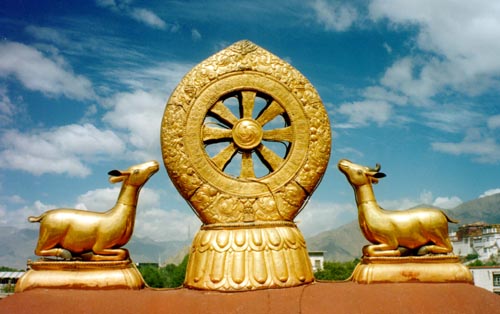
The following is an excerpt from a teaching called “This Time Is Radical”
Some of you know that we were born together at this time because something tremendous was going to unfold. And those of you who remember those teachings from long ago that I haven’t spoken about for a long time, we’re still on. The game is still rolling. It’s time to get your waders on and jump in. You people with the robes, you are my heart’s love. You are my heart’s love. If we lose one of you, it is unbearable. To have more of you come forward and say, ‘Take me. Sign me up,’ it’s beautiful. And I look forward to the day when we can show the world what Buddhist compassion is all about. Any of you with me on that? Sometimes I don’t know because they just look at me, and then I get scared.
I will try to speak to people in the way they understand. This is going to be a very intense time, a very beautiful time, but I’m not afraid. I get a little freaked out every now and then, but I’m not afraid. And I can say that in my very lowest possible voice, “I’m not afraid.” So let’s go. It’s time to practice hard. It’s time to keep your vows. It’s time to stay straight on the path. It’s time to move through the door of liberation. Do not lose your focus now because it is possible. It’s possible. This is a very wiggly time as karma goes. Hold fast to what you know is true, and live your truth. Walk it every day. And that truth is Dharma.
Copyright © Jetsunma Ahkon Norbu Lhamo All rights reserved
Four Contemplations That Turn the Mind to Dharma #Palyul
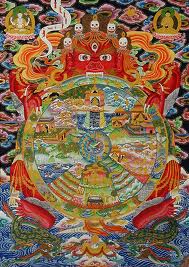
The following is a prayer from the Nam Chö Ngondro Practice Book:
Homage
I prostrate to the glorious Samantabhadra.
Vajra Verses
This precious human rebirth is extremely difficult to obtain.
All things born are impermanent and must die.
Perseverance in the practice of virtuous Dharma is cause for becoming a Buddha.
Whatever negativity is produced will cause one to wander in the six realms.
Hungry spirits suffer from hunger and thirst; animals from stupidity;
Hell beings from heat and cold; humans from birth, old age, sickness and death;
Demigods from warefare; and even gods (Devas) have their suffering.
Passion for Compassion
The following is an excerpt from a teaching by Jetsunma Ahkon Lhamo called “This Time Is Radical”
Why is it more practice now? Because it is needed; because there is so much suffering. And this is your opportunity in this very lifetime, not only to enter onto the path of Dharma and practice, but to give rise to the great Bodhicitta. Bodhicitta is not just a word. It is awakening. It is awakening to the nature that is the primordial wisdom Buddha nature, and that nature is not different from Bodhicitta. They are the same, the same light, the same essence. They cannot be separated. Anytime we practice Bodhicitta and offer simple kindness, and simple mindfulness to the people around us in order to be kind, this is a great work. I’ve been screaming about this for years, but now it’s so much more important than ever because there is so little of this nectar of kindness in the world. This very country used to have altruistic ideals, and now it’s all run by companies. It’s crazy.
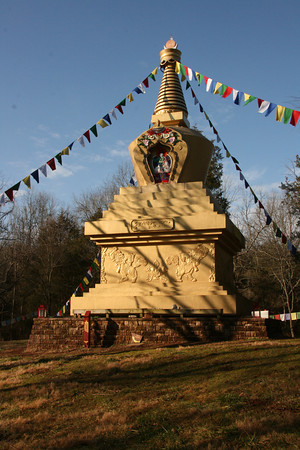
And so while the darkness is coming to us thicker and thicker all the time, and the holy places in the world… When you think about what is happening for instance in Nepal in Katmandu: Stupas and relics and important Buddhist monuments are being threatened. And so where will the Dharma be safe?
I know where. Right here. Right there [pointing at her heart]. That’s where the Dharma is going to be safe. And for every stupa that someone knocks down, I will build another one. That’s the way I feel about that. And in this time of darkness when more and more people hate, and more and more people that have karma to practice the path even leave the path because their delusion has grown so thick, in this time we have to get our shoulder against the darkness and push. Now I know that’s not very Zen, but we’re not practicing Zen here. We’re practicing rough, tough Buddhism from Brooklyn. And what I’m telling you is that we do need to hold the darkness at bay, and each one of us has the capacity to help with that. When we practice and we generate the deity, there is the deity and you should have confidence with that. When we practice and make offerings, there is great merit accumulated.
Here in this place, we’ve set it up. There is every opportunity to gather merit, and to offer that merit to end the suffering of sentient beings. It is set up so well here. We have stupas. We can offer gold paint every year. We can offer circumambulation. Nowhere else in America is there so much of this. We have to get behind this, and we have to be impassioned.
Copyright © Jetsunma Ahkon Norbu Lhamo All rights reserved