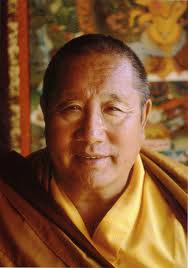
Motivated by Kindness

Feeding_the_Hungry-DeNum_09_-_3

The following is an excerpt from a teaching by Jetsunma Ahkon Lhamo called “Faults of Cyclic Existence”

We have been brought up to understand that we are the most powerful country in the world. And we are, of course, the most enlightened people in the world; and we are, of course, the most advanced people in the world; and we are, of course, because we have Estee Lauder, the most beautiful people in the world. We are brought up with all these different beliefs. And whether we swallow them consciously or not, subconsciously they are in there somewhere rattling around, and we have this faith in our way of life. One thing that we can do is to think of ourselves as able to help others. One thing that is very popular in our society is the idea that it is a beneficial thing and a good thing and a virtuous thing and a fulfilling thing to help others. We are always looking for fulfillment.  So the idea of compassion is a way to move ourselves into a foundation for meditation and practice. In my own experience (and I don’t claim to be such an experienced teacher), but in my own experience I have found that if I go to a new place that has never heard about the Buddha’s teaching, or if I go to a place that has heard a little bit and wants to hear more, or even if I have gone to students that have studied Buddhism for some time, if I want to touch them or refresh them so that they can continue in a determined way in their practice, or have them open up to the potential of practice and be stabilized to the extent that they can begin to practice earnestly, I can always rely on the idea of compassion to do that.

Westerners are excited by the idea that they might be able to benefit others. They are aware to some extent that the rest of the world is suffering. We don’t like to think about it, but to some extent we are aware that poverty exists, and hunger and sickness. I have found that Westerners are kind people. We are kind people. We want very much to end suffering; we very much want to help others. And there are many people who will practice if they really understand that this meditation will help them bring about the end of suffering for other people, will help them be a helper to others. They will practice for that reason. But strangely they will not practice to end their own suffering. They will continue to try to manipulate the circumstances in their life, or change things around, or try this or try that; but they will not really develop a firm foundation of practice because they themselves are suffering. They are not sufficiently motivated by their own suffering. It is a strangeness in our culture. It is not found in other cultures. But we will practice to benefit others.

This group, the core group of people who have been practicing in this temple for some time, came together because the people of earth were suffering, and the group wished to maintain a 24-hour a day prayer vigil. That is a dynamic of this organization. It came about so quickly and in such a stable way because the people here were greatly moved by the suffering of sentient beings. They knew that this kind of practice—the practice that brings about the end of desire and brings about supreme enlightenment—is ultimately the way to bring about the end of all suffering. For this reason, this family, or group of people, actually came together to practice.

Copyright © Jetsunma Ahkon Norbu Lhamo All rights reserved

Preliminary Practice

guru_padmasambhava3

The following is an excerpt from a teaching by Jetsunma Ahkon Lhamo called “Faults of Cyclic Existence”

I am grateful to those who go through the Sunday prayers without having the foggiest idea what they mean. I commend you completely with all my heart and soul, if I had one. (That is a joke. You see according to the Buddhist philosophy there is no such thing as a soul.)  It is considered that there are three objects of refuge: the Buddha, the Dharma, and the Sangha. The Buddha, of course, is the enlightened mind. The Dharma is the speech or teaching of the Buddha, the path of the Buddha; and the Sangha is considered to be the religious or spiritual community that propagates the Dharma, that brings about a way for us to practice. And these being our objects of refuge, we consider that all of the teaching and all of the opportunity that we have to practice actually comes from the Buddha, the Dharma, and the Sangha. So we feel that before beginning any practice it is good to make offerings. And when reciting these prayers, once you understand what the prayers are about, you can visualize certain offerings.

It is considered that it is good to request the Buddha to turn the wheel of the Dharma, or to continue to offer the path of the Dharma. It is a combination of offering and request, honoring and praising. It is our custom to do these things before we actually begin to accomplish a practice or hear a teaching. Some of the meanings of the prayers are pretty evident when you read them. Yet, you must understand that almost everything that exists on the Vajrayana path seems to exist on three levels of meaning. I am not sure why it happened that way. I think that it is just a propensity for secrecy, or drama, or something wonderful like that. It appeals to me very much.

At any rate, I think that what is addressed here are different levels of understanding. There is a preliminary level of understanding in which one first approaches the path and, almost like walking into a room, you need to figure out where the door is, how to turn the handle. We have to turn on the light; we have to figure out where the table is so that we don’t bump into it. It’s that kind of thing. We have to look at the bones of it, or the structure of it, and the inner and secret levels of meaning. One actually develops a capability for understanding as practice begins. Almost never, at least traditionally, are deeper, very mystical teachings given right at the onset of engaging in Dharma practice because it is considered that the mind needs to be deepened and gentled. At the point when that process begins through the use of preliminary practice, then additional teachings, intermediate teachings, and then ultimately the deepest teachings are givenThere are some lamas that deviate from that for their own reasons. But it is considered, from the traditional point of view, that you can give the deepest teachings to someone, but if their minds are not prepared for it they will not really accomplish the deepest teachings until they go through a period of preliminary practice and preparation. And I, for one, feel very strongly that that is the case.

Copyright © Jetsunma Ahkon Norbu Lhamo All rights reserved


Commitment

maitreya2

The following is an excerpt from a teaching by Jetsunma Ahkon Lhamo called “Love Now, Dzogchen Later”

If you can’t be bothered to join and give some help, some support through having given rise to the bodhicitta, and having habituated oneself towards understanding the nature of samsara, which is also your responsibility, and habituating oneself towards deeply understanding the suffering of all sentient beings, which is also your responsibility, then there’s not much hope for good practice, no matter what practice you do. You can’t get away from it, no matter how wonderful you are. Compassion is in the mix. And there’s not much time. None of us knows how long we will live. It is not appropriate to say I’m going to wait, wait, wait, wait, wait until I get my stuff ironed out, and then, THEN I’ll try the bodhicitta. You’ll never get the chance. Believe me, my friend. I’ve seen it time and time again. You will never have the opportunity.

When you accept the path of the Dharma, and you commit yourself to the idea of liberation, at that point, you have to accept what has actually been taught. You can’t pick and choose what you want. You can’t make up your own little gig and call it Buddhism. Because all of the Buddhist teachings, every one, from the simplest level in the Deer Park when Lord Buddha was actually alive to this very day and whatever terma revelations may even be realized in this time, the heart beat, the essence, the blood and spirit and truth of Dharma is the bodhicitta, the great compassion. That is the way.

If you think you can simply muster up great pride in your accomplishment by keeping your ordinary qualities—pride, self-absorption, slothfulness—and yet somehow do a very high practice, and magically give rise to the perfect awakening, it won’t be so. Time and time again, we have been taught that the way of the Buddha Dharma is the way of the bodhicitta. So it is easy to say, ‘I graduated last year. I’m going to graduate this year, too.’  It is easy to say, ‘Well, I didn’t do this, and I didn’t do this, and I didn’t accomplish a bhum [one hundred thousand repetitions] of this, and I didn’t accomplish a million of that, but I’m practicing Dzogchen.’ That’s very easy to do. But it behooves us to go back and see what we’ve missed.

You are not too advanced to love. You are not too advanced to get off your duff and help somebody. You are not too sanctified to look at other beings on this planet and say, ‘I know that you are wandering in samsara. I know that we are basically human and that we share many of the same sufferings, and I find that unbearable. I wish to help.’  You are not too holy to care that there is war, that there is hunger, that there is suffering. And shame on you if all you do to honor Guru Rinpoche’s teachings is to sit on your little cushion and have it be all. Yeah, you can dedicate your practice. That’s right. You can also help. It wouldn’t kill you. Do you see what I’m saying?

It’s good to go all the way. It’s very good to get these precious inconceivable teachings, but since you are not in that perfect situation where you will be constantly reminded except by maybe me… And how much do you listen to me?  Unless you are in that perfect situation, it is up to you to make up the difference. This is the karma of our times. And you find yourself here at 18400 River Road. You can’t skip anything. You should accomplish your Ngӧndro. You should finish it even if you’re working on Togyal. You should accomplish your Ngӧndro. And that means finishing it, not just saying, ‘I did a lot of it so I accomplished it.’  And you should accomplish your Three Roots. And most especially you should give rise to the precious bodhicitta.

Read the lives of the saints. Read what they went through in order to give rise to compassion. And that in any case, in every case, no real progress was ever made unless there was compassion, unless there was bodhicitta.

Copyright © Jetsunma Ahkon Norbu Lhamo All rights reserved


Essential Motivation

HisHolinessPenorRinpoche

The following is an excerpt from a teaching by Jetsunma Ahkon Lhamo called “Love Now, Dzogchen Later”

Ngondro purifies the five senses to such a degree that many of the gross defilements.  The ones that you meet up in your life where you are happily going along the road of life and you get punched in the face by karma.  Those obstacles.  You know.  They purify some of that and they keep that sort of thing from happening or they make it happen more benignly pacified is the idea.  And then accumulation of the Three Roots stabilizes the mind.  Begins to ripen the mind.  At that time we are trying to accomplish the Vajra confidence of the deities, their very pure qualities.  Their ability to establish virtue.  Their ability to accomplish view.  All of these things are accomplished through this recitation.  But nowadays, we don’t even have to do that.  We go to Tsa Lung.  And we don’t even have to finish Tsa Lung.  Then we can go to Trekchod, and then we can go to Togyal.  I think that is right.  We don’t really have to graduate.  And you have to ask yourself at this point.  What has changed?  Did His Holiness change?

I think of His Holiness like the Copper Mountain.  Our perception of the Copper Colored Mountain may change.  It may be connected to our own capability but does the Copper Colored Mountain ever change?  No.  It is absolutely empty of self-nature and yet spontaneously accomplished.    Figure that one out.  So, there is no fault here.  The fault is not with His Holiness.  His Holiness made a decision based on the times and I understand his decision.  It is not for me to agree or disagree, but I absolutely understand what his method is.  But the thing that I want to express to you is that it puts the responsibility on us.  To accomplish when we are not with His Holiness what we have to accomplish in order to make what he is teaching us next worthwhile.

One of the worst things that I have seen happen, that is a terrible result, and indeed it is not unusual in the sense that it is different from the way the world is acting now.  But still I have to say that it is not a good result and that is that most people on the path blow right by giving rise to the Bodhicitta.  Giving rise to the great compassion, to the way that actually is the very essence of awakening.  The Bodhicitta.  Now, His Holiness always teaches about Bodhicitta.  He never denies an opportunity.  Never abandons an opportunity.  He teaches about the Bodhicitta every time.  Like for instance when he starts to give a teaching or he starts to do a practice, often he will remind us to establish our motivation and the Khenpos will always say that we must establish our motivation or that we must understand that we are hearing this teaching not just to hang out here or that we are doing some practice not just because we are bored or for some other self-oriented reason.  But the only valid, righteous and appropriate motivation to accomplish Dharma is for the liberation and salvation of all sentient beings.  So, we can repeat that back. We’ve heard this so many times.  And we can say if I say to you, “Why are you doing this practice?”  You’ll say, “Oh, liberation and salvation of all sentient beings.”  We’ve heard this so many times that we can parrot it back.  Sort of like a Malaccan Cockatoo or an African Gray.  But have we really given rise to the Bodhicitta?  Have we really accomplished it?  Have we worked really clean?  Thank you!  Somebody said no.  I appreciate that.  You know?  Have we worked cleanly and purely with our motivation?  Do we tutor ourselves on our motivation everyday, every moment?   And when we have choices to make, do we reestablish the motivation so that we can make the correct choices by saying, “Thus for the sake of sentient beings, I will open this altar, close this altar, pray, circumambulate, do my practice, study some Dharma.  Benefit sentient beings in some way.  Feed the hungry.  Heal the sick.  Walk a dog.“ Anything!  Anything.  Do we remind ourselves that that is our reason for taking our next breath?  That other than giving rise to compassion, giving rise to the mind of Bodhicitta which by the way, is the pure awakened state, our primordial wisdom nature, that that is the reason for anything that we do.  And should remain so.  And if we do not have the proper karma to be born in a monastery amongst many learned monks and nuns and many learned Khenpos, and lamas and Rinpoches, then we must accept that as our karma.  And shouldn’t leave ourselves to say, “Oh those poor guys.  They have to work for years trying to accomplish some Dharma and all they get is a couple of maroon colored sheets and a rug.  And you know, they just stay there in the Monastery.  And gee, I get to hang out here in America with cars, and TVs, and you know, stuff.  I have a great house.  And I can buy another car if I want.  And you know there are so many things that I can do do do.  And have have have  have.  And yet I get some Dzogchen.  Whoopee!  I must be the most fabulous person in the world. “

Unfortunately, our response to being given this great blessing is a little more like the whoopee part than it is the honest internal watchfulness that makes us ask ourselves, “Have I given rise to the Bodhicitta?  Have I accomplished good qualities?”  I mean when you practice the root deities, the Three Roots you accumulate so many repetitions of the mantra and you put so much energy into visualizing their different hand held implements and even their posture, which means something.  The handheld implement and the posture are the very display of the deities’ excellent qualities and activities.  So, we practice many repetitions of the mantra of the root deity.  And we think now we have accomplished the qualities of the root deity.  What are the qualities of the root qualities of the root deity?  We study the hand implements.  We study the posture, and we begin to inhabit those qualities.  We begin to display those qualities.  We accept those qualities.  We habituate towards those qualities and even one of the qualities that we habituate toward is Vajra pride.

Vajra pride which is different from American pride.  American pride is the bullshit that knocks you off the path.  Vajra pride is the confidence in the method.  Confidence in the method through meditating on Shunyata and giving rise to the deity.  And so there is the confidence.  Not having practiced mantra like that.  Not having gone through those different accomplishments, we instead have given rise to ordinary pride.  And ordinary pride is stupid pride.  It tells us to argue with the elder sangha members, lamas, and Khenpos, thinking that we know better, or to make up our own religion.  Or to just do it the way we want to, or to just self cherish.  To meditate on self-cherishing, ego cherishing, which is giving rise to the ordinary pride and back to that ordinary cycle.  But when we accomplish the deity, something different rises up.  And then when we move on to the other levels, we move on with Vajra confidence and unshakeable Bodhicitta – compassion.

Now, when that foundation is properly laid, and we have properly practiced Bodhicitta, and we have properly accumulated mantra and we have purified our senses through the Ngondro, then when we are introduced to Dzogchen.  The mind is matured.  The blessing of the lama, particularly if we have accomplished purely the accumulation of Vajra Guru mantra within the context of Guru Yoga in Ngondro.  And what is it, 1.5 million of those?  Or 1.2, I forget.  Huh?  1.2?  Thank you.  She knows but did you do it?  Oh see!  Yeah.  So, after you accomplish that many Vajra Guru mantras in the context of Guru Yoga, you have changed.  Your capability is different.

Copyright © Jetsunma Ahkon Norbu Lhamo All rights reserved

We Were Born to Do This

Offering Prayers

The following is a message recorded on June 1, 2013 as a message from Jetsunma Ahkon Lhamo to her students (audio file below):

This really has been the hardest time of our lives as a sangha, because we don’t know what the future is going to be.  We don’t know whether we will stay together.

A sangha is a precious thing.  It has to stay together.  It’s like a family.  When it is broken something precious is lost.  It is tragic.

I just want to speak to my sangha, because right now we don’t have a building that we can use the way we normally would, but I want to remind you that we still have the land.  So, don’t abandon it.  We are coming back online pretty darn soon.  Not soon tomorrow, not even soon next year, but soon.  And it will be progressively better and better and better.  So don’t give up.  I haven’t.  I would live in a tent if I had to, as long as I had a fence for my dogs.

I just want to say that we have to make this the best effort of our lives.  We cannot say, “Oh I pay this much every month, and so I shouldn’t have to pay any more.”  Or I pay this much every year, or whatever.  You can’t say that and think that’s enough.  It’s not.  Not right now.  That was enough before, and we counted on you.  If you didn’t help us in the way that we’d agreed on way back in the past, then we wouldn’t have anything.

This was a group of people that stuck together for a long time; learned to love each other.  Then of course because they are sentient beings, they learned to argue with each other.  And as usual, we don’t even realize that we are doing it.

I hope to get your attention.  I have had a hard time getting your attention lately.  It is like trying to herd cats.  And of course we all know that is impossible, because cats are cats.  Could you not be a cat for a while, and learn how to work for the larger group, for the group of sentient beings that we are and the group of sentient beings that we serve? To work for all sentient beings ultimately.  If we could just get back there, everything would come back.  It is cause and effect.

We have been too selfish.  I have broken it up the best I could by just giving everything away.  Have you noticed?  Many of you don’t even know.  I hope you will pay attention.  I hope you will wake up.

I am glad that people are having weddings and family things. I’m glad for all of you.  I don’t have any of those things in my life at this point, but I am glad for all of you.

At this part of my life I feel like I have got to keep moving forward or it’s all on me.  The truth of the matter is that no one person can do it, and it’s not all on me.  So you have to help me figure this out.  I am actually working hard every day.  Not just sitting here trying to think it out.  But talking to people who might be able to help us.  So help me.  I have helped you over the years.  Why can’t you help me?  Amen.

I hope you hear me.  We were made to do this.  I hope you hear me.  We were born to do this, and it is hard, but I hope you hear me.

You can hear the message here: Messsage From Jetsunna

Copyright © Jetsunma Ahkon Norbu Lhamo All rights reserved
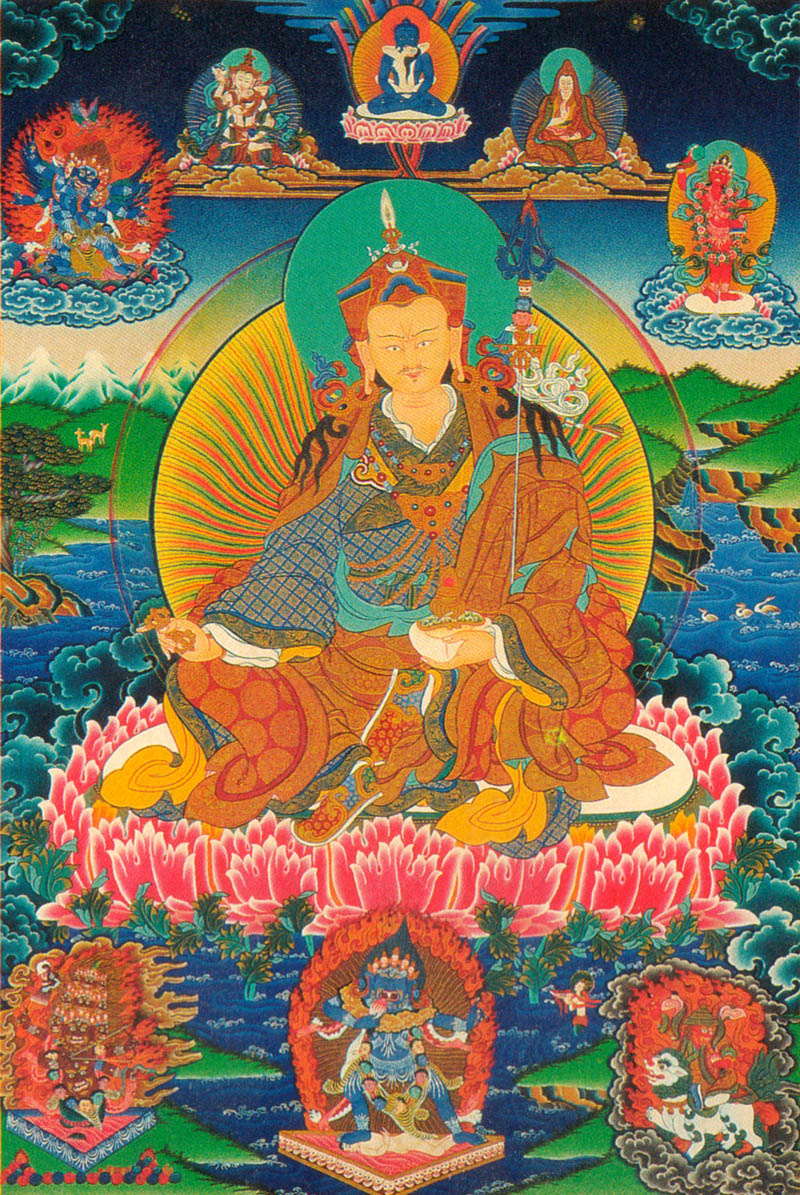
The Tether of Bodhicitta

StupaFoundation

The following is an excerpt from a teaching by Jetsunma Ahkon Lhamo called “Love Now, Dzogchen Later”

I have the great pleasure of watching the aviary building being built from my deck. How carefully these skilled workers laid the foundation. How carefully they smoothed the ground. How carefully they measured, so exacting, so perfectly, looking through instruments and laying strings and then putting in wood to mark the way, and then, you know, stage by stage, one bit of strength after the other. How skillfully, and now the walls are coming up. And these are very heavy walls made of concrete, but they are all built up to the top, and I think to myself, ‘If that firm foundation had not been built, since that land slopes right there and it is screaming wet all the time, guess what?  That little building would just slide right off the edge; but not the way it’s built.’

And we find ourselves in the same position. I regret to tell you that I have seen time and time again students who have taken the Dzogchen teaching but have not accomplished Vajra qualities. They have not given rise to the bodhicitta. They may have put on the garb of renunciates, but they are not renunciates. They have not renounced the grasping of samsara. They have not stabilized their mind. So it’s like they are traveling the great ship of Dharma and even though the ship itself is fairly stable, it is on an ocean and it is going to rock and roll a little bit, you know?  And it is like you’re the practitioner on roller skates who’s not holding on on top of a sheet of ice on the boat. It’s not going to work. You’re going to go overboard. And they do. They get thrown off. Whereas if we had taken time to practice properly with depth, not so superficially, taking responsibility for the accomplishment that you know in your heart has always been required of a proper disciple… And it’s not like it’s news to you. I’ve been yapping about this for years. So, in that case, maybe you would be more seaworthy. You’d have your sea legs. I’m pretty sure of it. You would be hanging onto a rail. You’d be properly equipped to travel this ship of Dharma to the other shore. And that would be like the seed of Dzogchen being planted in a field that is rich and fertile and moist.

So having given rise to the Bodhicitta, we would be different than we are. How would we be different?  Would we look funny?  I don’t know.  We look funny now sometimes. I look funny. You should see me in the morning. That’s all silly stuff. How would you be different?  I think better. To accomplish excellent qualities, to establish virtue in the mind stream, to give rise to the Bodhicitta?  A lot better.

So the point is that you find yourself in a particular situation where you can go to New York every summer, and you can study, and you can sit down and practice for the rest of the year. But we do not find ourselves in the perfect situation where we are in a monastic environment constantly where the reality of Dharma is constantly reflected to us, where the method of Dharma is constantly reminded to us. where the way is constantly pointed out, and where our limited capabilities, you know, are constantly guided. It would be like a child growing up without the advice of a parent. It is not very effective. And the reason why I’m telling you this is not so you can go, ‘Oh bummer! Here I’ve had Dzogchen and now I find out it’s not happening,’ or something.  That’s not what I’m saying. I hope you understand that. Dzogchen is the very nectar of Dharma. It is the distilled substance that is empty of substance-ness. It is awakening. It is the way to move towards realization. It is the way to give rise to one’s best capabilities. It is the way to accomplish the Buddha nature. But like any other method, if you do not accomplish the steps that lead to strengthen that method, you’ve missed out.

Lineage in the West

WM-99-22 JAL VGR HHPR kapala-M

The following is an excerpt from a teaching by Jetsunma Ahkon Lhamo called “Love Now, Dzogchen Later”

Well, today I’d actually like to tell you a story. And I think it is seasonal in one way in that this time of year we generally think about what we want or what we want to give or how, or maybe family relationships and what needs to improve in our lives. And a lot of times at the end of the year during this holiday season and at the beginning of the next upcoming year, we kind of reassess ourselves;. reassess our lives, and kind of take stock. And I would like to tell you this story to help you take stock a little bit, and to give you some motivation, you know, some perspective. Because I think that if you come to this temple and you practice, you may not necessarily understand or know what’s going on in the greater Dharma community. Some people travel around but some people don’t. Some people stay here down on the farm with me. And so you might need to be exposed to some context in the Dharma community.

When I first met His Holiness Penor Rinpoche, that was quite a while ago, almost twenty years. I met him the first time that he came to the United States. And one of the reasons actually that he came to the United States, besides being invited, was that he heard that there was this American woman over there and he heard stories about me. And he knew in his mind that this was someone that he had been looking for for a long time. I came to find out later on that when he was a very young monk the first time he held the kapala, or the skull cup, of the first Ahkön Lhamo, it was before the Chinese invasion, and so it was whole, in one piece.  First time he held that cup, he said, “Oh.”  He made prayers:  “If there is any way I can find this dakini in this lifetime, I would like to do that.” He set his goal that way. And so of course with a mind such as his, when the goal is set, the deed is done. When he heard my name, and heard something about me, he knew immediately. But of course he didn’t tell me immediately. All I knew was that this lama was coming to my house. He’d never been to America before, and I really did not know what a lama actually was. I thought, “Guy sitting on rug. Guy wearing sheet.” I really didn’t know. I mean I had a great deal of respect for Buddhist thought and it was coming to my mind naturally. In fact, I was teaching meditation that I later found out to be based on Mahayana Buddhism. So, it was pretty interesting that this all came about so naturally. But then when he came to the house, we didn’t know protocol. We didn’t know respect. We didn’t know nothing. I knew how to barbeque, that’s what I knew. And so we had a barbecue and we moved my two sons to another room, and put Penor Rinpoche and Lobsang in the same room; and Lobsang’s like, “Oh God!  Save me!  Don’t you have another room?”  “Well, why? Is it crowded in there?”  “But you don’t understand.”

But you know, they were very nice. And then they asked for some tea. So, I thought, “These are Buddhists. They want to be calm.”  What did I know? So, I made chamomile tea, and I gave the teapot to Lobsang to give to His Holiness on a tray nicely set up. and His Holiness sent back a message, “What is that?  Bugs floating on top?”  You know how the little flowers float? “No.”  “Don’t you have some other kind of tea?”  “We have regular tea.”  “Oh yeah, we want regular tea.”  I thought, you know, Buddhists like to be peaceful. I thought.

And then the worst, the worst. He was so gracious and so kind. He never put himself up in any way or, you know, was anything less than the most humble of monks. I mean he never indicated that he was such a spectacular lama. And besides I didn’t even understand what the term meant—high lama, you know, lineage holder. I mean, I could understand the English words, but I didn’t have any way to put them all together. So, we had this barbeque and I served him a plate of hotdogs. And you know just the old America food, which he was pretty interested in actually. He sort of liked it. You know, he ate it. But then I remember plopping down right next to him and saying, “So, what’s Tibet really like?” or something like that, you know. You know him now. He’s such a righteous, orthodox, holy kind a guy. Can you imagine?  Can you imagine this Injee twit comes and plops down next to him and says, “So, how’s it going?”

I was used to Southern hospitality. So, I made another big meal (and I was a pretty good cook back then) and had some friends bring some stuff too. We sat him at the head of the table and said to His Holiness, “Please, help yourself to everything we have.”  He gets served. I didn’t know that. And so Lobsang’s going,… Lobsang was a lot younger then. “No, I’ll do it, I’ll do it.”  Well, that was back in the day and the reason why I’m telling you this funny story is because things have changed so much since then.

Copyright © Jetsunma Ahkon Norbu Lhamo All rights reserved
 

Warrior of Virtue

eowyn_warrior-1

The following is an excerpt from a teaching by Jetsunma Ahkon Lhamo called “Art of Dispelling Anger”

For myself, I have that commitment. I made it a long time ago. There’s no backing out now. Every time I try, my commitments are made. It’s a done deal. I’ve always known that. My aspiration is to leave the footprint of bodhicitta every time I incarnate, to leave it so it is undeniable , and to help others so that they can leave that same footprint. And I don’t intend for that to ever stop until all sentient beings are free. Now why is that?  It is because I am such a great kid? I am  such a doll? Iam such a wonderful person?  That may all be true, but that’s not why. It’s because I cannot be truly free without you. There are many gurus of different kinds who are self-realizers. They realize mastery of self. But that is not our gig here. That is not what we do in Buddhism. At least not Vajrayana. We don’t do that in Vajrayana. In Vajrayana, our goal is to understand and give rise to the primordial nature in display, which is the great bodhicitta. End of story. And so I will not abandon you. I cannot abandon you, because you are me and I am you and I cannot be free without you.

That’s the understanding we should all aspire to. In our selfishness and our self absorption, we forget and we commit this abomination of even fighting with each other when if we could only truly look in each other’s eyes, if we could truly see,… We are the same, we are the same, we are the same taste. And so, this is why we need to break our habitual tendencies, train ourselves thoroughly, look at ourselves honestly and most of all, if any of you are in that childbearing age, anyone who is listening, please, raise your children right. Raise your children right. Teach them responsibility for what they do. The ‘I help with the household chores’ is one thing. Teach them to clean up their own messes. Teach them that pencils were made with erasers for reasons—so that we can correct ourselves. We can erase our mistakes and correct them and make better. Teach them ethics. Teach them the ethics of liberation.

The reason why we have so much difficulty teaching people proper values and how to stick with the beginning stages of the Buddhadharma, which is about virtue and conduct, the reason why that is so hard is that most of weren’t raised up. We were kind of dragged up. You know? We weren’t raised up with thoughtfulness and regard and respect. Many of us were just kind of fed and watered and whatever. When you raise a child, you must teach the child to be a good citizen in the world and to leave the world better than they found it.

So that’s my hope for you and that’s my hope for anybody’s children and that’s my hope for all sentient beings. Just think if we could really just get that message across. Forget the big practices and the bells. Just think. The most fundamental of the Buddhist teachings allows one to be whatever faith they wish, but teaches us how to live with good qualities.

So take up your sword, take up your shield and beat the crap out of your bad qualities, lest I have to do it for you. That wasn’t a threat. I am a nice person.

Copyright © Jetsunma Ahkon Norbu Lhamo All rights reserved
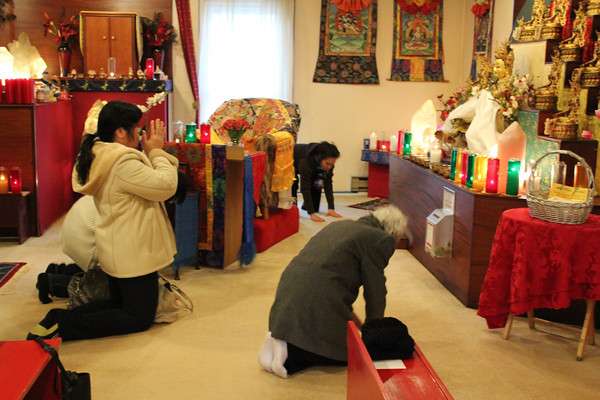
 

Habitual Tendency

anger

The following is an excerpt from a teaching by Jetsunma Ahkon Lhamo called “Art of Dispelling Anger”

If you have the habit of gossip, go through the method. Fix it. Understand that if you allow that hatred in any form to continue, you will get more and more unhappy as you age. The people who are youthful and beautiful when they are elderly are the people who kept something alive, even if they aren’t Buddhist. I’ve met people like that. A duty, a responsibility, an ethical responsibility they feel to be kind. Maybe they don’t understand extraordinary kindness, but they are kind. An ethical responsibility to not put shit in the pool of earth. Some people just seem to have that karma to understand that even without the Buddhadharma. I respect that so much.

And that’s true of all of us, too. As we get older, we get the wrinkles. and this is crazy, the wrinkles, and this is crazy, the wrinkles, and this is crazy, the wrinkles. It’s a symbol, if you think about. It’s a symbol of how much deeper the lines of our habitual tendencies get over time. Do you see what I am saying?  Our habitual tendency is in our posture; it’s in our face. We screw up our faces when we are doing our habits, and all of this aging stuff is phenomena—our phenomenal habitual existence becoming more solid and more real and more heavy in samsara as we get older. That’s unfortunately how most people age. They get stiffer. They get harder. They get querulous, frightened to death, frightened of death. And for many people, it’s an ugly, humiliating time.

I don’t want that for you. But it’s going to happen if you don’t take yourself in hand and say, ‘Let’s walk through this.’ Really look to benefiting yourself. Instead of being steeped in habitual hatred, conquer that monster. It’s a bubble; it’s a dream; it’s not a solid thing. There’s no elephant in this room, not really. We have to practice away from that.  Start simple. If you can’t find anything good about a person, first of all, that’s your fault right there.  If you can’t find anything good about the person, make it your business to find something. If it’s just you like the way they tie their shoes, work from there. If that is where you are starting from, if that is what you have to do, forgive yourself and move on from that point. But start. If you can go a little further and understand through practicing and contemplating, and through the method that we teach here, that all sentient beings wish to be happy and in their nature they are the very Lord, and that there is an end to the suffering and that is liberation. With understanding, we can then give rise to the bodhicitta and compassion.

Copyright © Jetsunma Ahkon Norbu Lhamo All rights reserved

The Seed and the Fruit

fruit

The following is an excerpt from a teaching by Jetsunma Ahkon Lhamo called “Art of Dispelling Anger”

The fruit of potential and method is the awakening.  But in Buddhism we see all three as the same and it is taught that all three are the same. And in truth, there is no realization without understanding the sameness of these three,. It is easy to think that we are evolving in a step by step way; and it is easy to think that we’re on the ladder. See, I am up here and somebody else is down there and some of the people are over here. And we get into that view, and that’s not what the Buddha taught. The Buddha did not teach that someone is higher and someone is lower. The Buddha taught that we should recognize the appearance of the Buddha nature in the world as our root gurus. The root guru gives us the method, and therefore we have the result. But nobody is better than anybody else. That is a different religion or a different idea, or something else. I don’t know what that is, but we don’t have that here.

Ridding ourselves of hatred is based on that kind of thinking, that kind of view.  Really understanding the Buddha’s teaching that there is the foundation, the method and the fruition, and that is the path. Succinct, boom, right here. This is it. And we understand that, again, according to the Buddha’s teachings we are all suffering. We are all in the same place. Here we are. Even the people that are not in this room, we are in samsara together. They want to be happy like you do.  You struggle for happiness, don’t you? Come on, don’t you?  Every day. Every day. And we do it sometimes rightly or wrongly. It’s a mixed bag because we lack understanding. But the method is to recognize that all beings wish to be happy. If there are three people sitting in front of you, and two or three of them are unhappy, you come out of yourself and try to help. Efforts like that are what move us along on the path. Not just doing the fancy practices and knowing the fancy words.

Of course, we do not achieve realization by deeds alone. That is a long and difficult path. We have the Dzogchen path, which is so remarkable. It not only gives us method and the opportunity to give rise to the bodhicitta, but we also are given the wisdom to understand the empty nature of phenomena. Through that method we can understand that in samsara we are in a bit of a bubble, or an echo chamber. It’s kind of like that. Unfortunately, it’s also the nature of samsara to be somewhat blinded to that. Again, we are still asleep. It’s like a dream. It has a dream-like quality. You know how in dreams crazy things happen? And it’s OK. It makes sense somehow. Like you could be somewhere and then you are somewhere else, and it makes sense. But that dream-like quality exists right here and right now. We literally do not understand that when we gossip about a fellow vajra brother or sister, or any sentient being of any quality, or put them down, at the same time, we create that energy, that cause. Somewhere in samsara, the result is also being born. Right then. Something will change because of that hatred. Now we often don’t see it immediately, but it comes back to us; and the way it comes back to us is according to our conceptual belief. We believe in relative phenomena being solid as it is until we become practitioners, hopefully. So when somebody sends a negative energy at us, like their anger, we think, ‘Oh, it’s coming from them. Everybody hates me.’ But in fact, what has happened is that you have sent out hatred. It echoes back and it will come through somebody else’s mouth. Do you know why it’s nobody else’s fault?. Because there is nobody else. Bingo. There is nobody else. And how you can sit there and say you are practicing trekchod and togyal and you don’t know that yet, I can’t figure out.

We must take responsibility for our experiences. How will we ever awaken if we don’t understand the unhappiness that comes to us is of our own making? It may have been in the past, the past in some past life. It may have been recent. I see you guys creating the causes of suffering all of the time. And so, get back to the basics. Follow the Buddha’s teachings. To antidote hatred,… And I know, hatred is my big one today, OK? We’ll do greed and ignorance some other time and the other ones as well. To antidote hatred, the antidote has to be very strong, because hatred is such a strong energy that it brings about war in places where there is a lot of emotional, egocentric agitation that has hatred as part of it. Any time there is emotional, egocentric agitation, there will be hatred. Places like that often have a lot of earth movement and strange weather and that sort of thing. And war.  Who would have guessed it?.

And so, we have to understand that we want to awaken, but we don’t want to take responsibility. We want to awaken, but we don’t want to stop dreaming. We want to awaken, but we don’t want to go through that effort of bringing ourselves into truer awareness, something that is more profound and deeper and more real than our own simple habitual tendencies.

Copyright © Jetsunma Ahkon Norbu Lhamo All rights reserved
WP2Social Auto Publish Powered By : XYZScripts.com