Drakmar Tulku on Termas

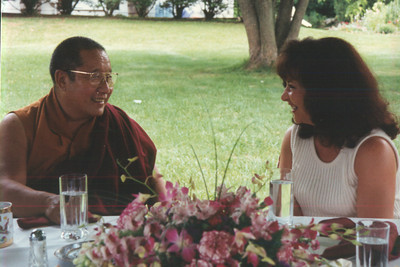
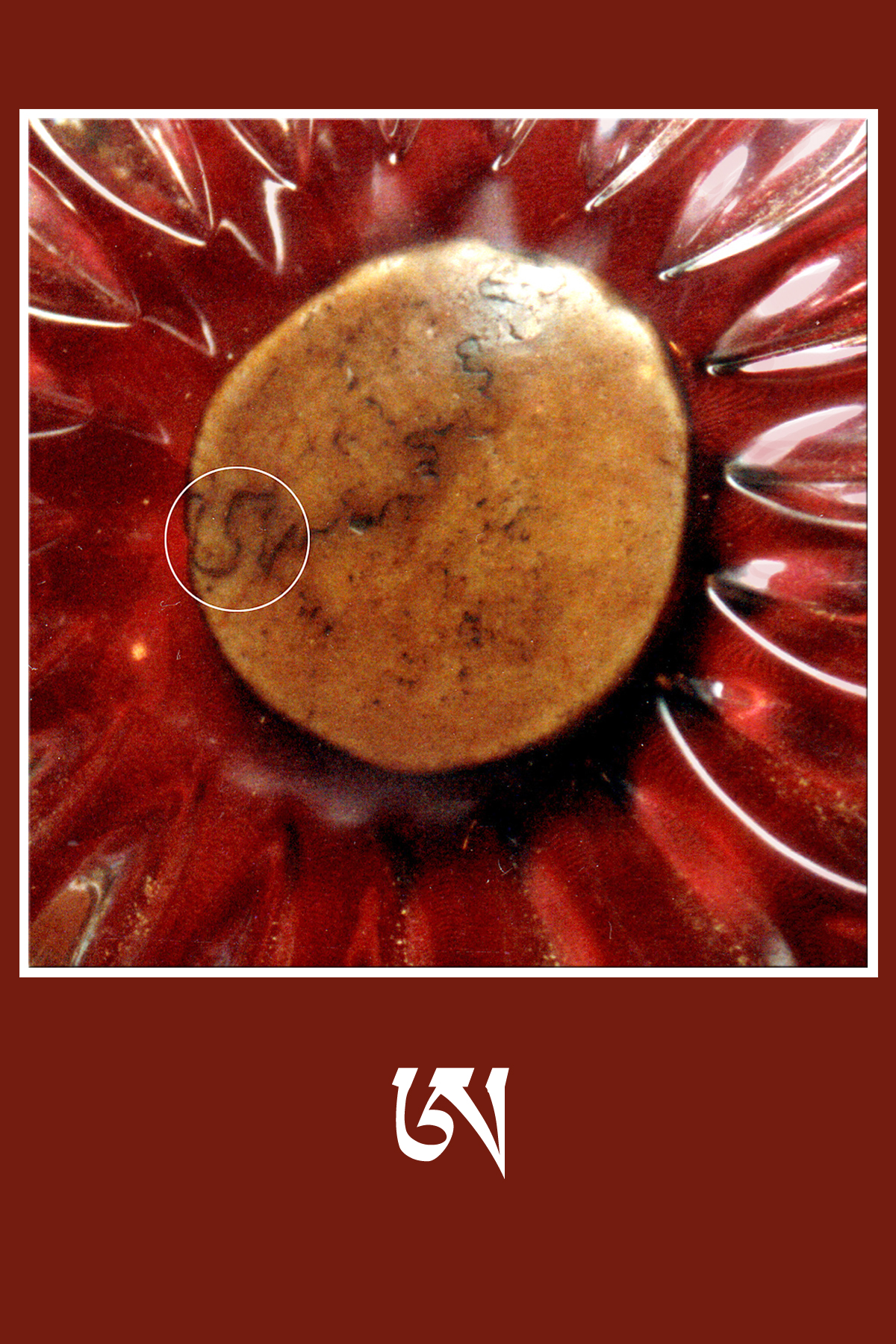
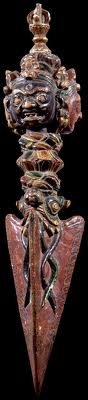
On April 11th, 2014 Drakmar Tulku visited Jetsunma Ahon Lhamo in Dakini Valley, a retreat land in Arizona. While there Jetsunma showed him a naturally occurring Phurba she had found in a rock formation. This is the teaching Grudrag Khentrul Rinpoche offered to the students that were gathered there.

© Jetsunma Ahkön Lhamo


Commitment to the Dharma Path

The following is a full length video teaching by Jetsunma Ahkon Lhamo offered at Kunzang Palyul Choling:


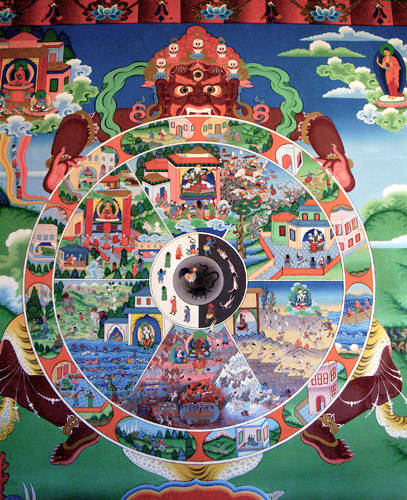
In an upbeat manner, Jetsunma describes the faults of cyclic existence and how to make the most of the path that Dharma offers to end that suffering.

Copyright © Jetsunma Ahkon Norbu Lhamo.  All rights reserved


Vairocana

Vairocana

The following is an excerpt from a teaching by Jetsunma Ahkon Lhamo offered during a Phowa retreat:

On the first day, it is Vairochana Buddha that will appear. He either manifests in the form of a Buddha, according to our beliefs, should we have the capacity to recognize, or he will manifest in the form of dazzling blue lights and geometric shapes. These dazzling blue lights are just that—they are dazzling. They are unlike anything we have ever seen on the physical level. They will knock you for a loop. Literally knock you for a loop. It will be unlike anything you have ever seen. The ultimate light show, friends. And it will be different than you have ever seen it. So one needs to practice in order to be able to recognize the nature that is Vairochana Buddha.

At the same time that this almost violent, dazzling, ultra-dazzling blue light will appear, another softer white light will appear. The softer and white light will be more welcoming, but this softer white light corresponds to the world of the gods. Do not follow. Go to that light which is dazzling, perhaps more unfamiliar, perhaps more frightening. Call out to the Buddha. Try not to take the easiest way out, but ask yourself, require yourself to recognize the Buddha. If the person seeing this has no idea of what is happening, the sheer brightness of the light of the Buddha is somehow terrifying. If they haven’t practiced, you see, they are unused to it, so it is terrifying; and one will be more inclined to follow the light of the worlds of the gods, as it is soft and pleasing. So beware of that.

Here are the two correct attitudes, according to this lama, that are very helpful to adopt in order to face the situation. The first one consists of becoming conscious that the blinding blue light manifests the presence of Vairochana Buddha. So we pray every day from now until the time of our death, and especially around the time of our death, that he will dispel the suffering and phenomena of the bardo. And particularly when we see him, when we see this very bright blue light or when we recognize that the Buddha is present, we pray to him and ask him to dispel the delusion and make the way clear for us. The second method requires more profound knowledge than the first one. The first one, you only have to have heard; literally, you now have enough to do that. You have heard, and through the force of your caring about this hearing and wanting to internalize it, it is that force that will make you remember that you have heard that Vairochana will appear at this time. Now you know that. You are expecting to be in the bardo; you are expecting to see light that you are uncomfortable with. You are expecting to see things you do not recognize or feel familiar with, and you will know not to be afraid. That’s the first way, you see.

The second way requires more knowledge than the first way, and it involves recognizing that the light which appears that is Vairochana has no external existence separate from oneself. That it is the manifestation of one of the five Buddhas present within our own mind. And he says here that, “Their manifested aspects are externally expressed, but in truth their light has no intrinsic external existence.” This blue is actually the luminosity of our own minds; yet we cannot recognize it because we have not become familiar with our own minds. And so the second method, in order to get through this particular aspect of the bardo, is to recognize that this has no inherent existence outside of ourselves. That this is, in fact, a display of our own inherent Buddha nature, and in that way, to become familiar with it and non-dual. Remaining fully aware that the light and the mind are one will free us from the suffering of the bardo. On the other hand, if we are enticed by the white light of the god realm, we will be seduced to be reborn as a long life god—the god that lives a long time and smells good and looks good, feels good, but then eventually, pffft., A bad end to that vacation. So we do not wish to be reborn in the god realm. Do not go for instant gratification in this case. Trust me on this one.

Copyright © Jetsunma Ahkon Norbu Lhamo All rights reserved

 

The Causes of This Present State

BULLY,SCHOOLYARD BULLY,BULLIES

There are some cause and effect relationships that we become acquainted with.  Especially if, as I’m sure all of you are, you are engaged in watchfulness in your life. And really wanting to progress spiritually in some way, your capacity for learning is that much greater. We may learn that if we’re really kind and loving to others, we get better result. We may learn that if we’re generous, people are generous to us. We may learn that if we’re really hateful and arrogant, we never really get anything good out of that. We may learn some lessons like that. And if that’s the case, those are all precious and valuable lessons to learn.

However, there are lots of things that we don’t learn. The reason why is that, for one thing, we really don’t fully understand how it is that we came into this life under the conditions that we have. We don’t understand how it was that we were born to the families that we were born to, or how it was that we arrived in the condition that we arrived in. How it is that we arrived at our genetic structure? How it is that we arrived with certain mental, physical and emotional propensities? Certain habitual tendencies? Why is it that they have arisen so strongly within us? And it seems as though other people, even in the same family, do not have the same habitual tendencies. We don’t have a full and complete understanding. And the reason why is because we cannot really understand the conditions that have occurred previous to this lifetime. We don’t have an understanding of that. We cannot actually view the cause and effect relationships that brought us to this present state.

Another thing is that we don’t often understand the outcome of causes that we ourselves have begun during the course of this lifetime. For instance, we may be able to see very simple kinds of cause and effect realities. Like if you walk up and punch somebody in the nose who’s approximately the same size as you, there’s a real good chance he or she is going to punch back. And you might learn some cause and effect reality by trying that. But, on the other hand, you might not learn that if you sit there and instead of punching the person who is not your favorite person, you sit there and think hateful thoughts, thoughts of wishing to do harm, thoughts of condemnation and judgment. You may think that having those thoughts, just because you haven’t said them, just because you haven’t acted on them, just because you haven’t punched, is somehow ok. That having those thoughts is secret, that no one knows about them. And that it’s really all right to think like that because you won’t see it play itself out. And even if it does play itself out during the course of that lifetime, perhaps the person that you have these thoughts toward is at some time in the future, maybe even just a couple of weeks from that time, strongly hateful toward you. You may not understand the connection. You may not see what has happened. Certainly you will not see if that cause and effect relationship ripens in some future life because you won’t remember that you just got what you deserved. You won’t remember that you had the same thoughts about that person.

Copyright © Jetsunma Ahkon Lhamo.  All rights reserved

The Challenge of Limited Perception

47231230_21695c9faa_m

The following is an excerpt from a teaching by Jetsunma Ahkon Lhamo offered during a Phowa retreat:

Now you have to examine yourself, and you have to ask yourself: What are your habit patterns? If it has been your habit that you have not finished tasks, then you have to train yourself in a way that you have never trained yourself before. If it has been your habit that you have thought of yourself as inept, incompetent, not worthy, and a failure, and you think that probably you will begin this but you will not be able to finish it, you will not be able to succeed at it… You have the idea that you’re not going to go all the way with it, and you could feel yourself slip-sliding away… You could feel yourself kind of going in a direction that you mentally have the habit of going in, but one that is not productive to you and will absolutely lead to the end of this situation that you find yourself in. Then, of course, you will have to train yourself in a way that you have never trained yourself before. And the reason why is that, first of all, you must understand this: You can. That’s the first reason to do it. Because you have the habit pattern, that does not excuse you from changing the habit or from learning how to apply the antidote. Because things have been this way up until this time does not mean that you have no aptitude for training yourself with method. Through using method and through relying on the method and relying on the help from your spiritual friend or teacher, there’s no reason you cannot do that, even if you have never done that before.

Here’s why. When we deal with our own lives and our own self opinions, our own ideas about ourselves, our own habitual tendencies, our own ways that we function, and particularly our own ways in which we think about and perceive ourselves, there’s a certain degree of flexibility. There is very little about life that will come up and slap you in the head in such a way as to tell you exactly what you are doing wrong. Life will slap you in the head, no doubt about that, but it may happen ten years after you’re making the mistake that you’re making now. It could happen in the next life. You may never have the opportunity to make the connection as to what you did wrong, what happened, where you fell short, and why things didn’t pan out.

So life isn’t really a good teacher. We like to say that we learn from life. Life confuses us more than anything else. We don’t learn from life because many of the causes that we begin within our own lifespan in this lifetime won’t even ripen in this lifetime. When they do, consider yourself fortunate. If you conduct yourself in a way that is inappropriate—unkind, lacking in generosity, self-absorbed, hateful, or whatever—and you see the ripening of it within a short enough time to where you can recognize the connection, that is Guru Rinpoche’s blessing; and you should consider it Guru Rinpoche’s blessing. Really, you should immediately drop to your knees and do some prostrations, because that is luck. That is a blessing. But what usually happens is that the result of what we have done becomes hidden by years, and by all of the flip-flop, inside-out movements that we make during the course of our lives. There are so many options, so many ways that we can go, that we literally don’t have the kind of mind that can follow the threads through. See what I’m saying? We don’t have the kind of mind that can pull the thread and follow it from beginning to end, coupled by the fact that we have the additional problem that relatively, proportionately, very little of our non-virtuous causes will ripen during the course of this lifetime. Most of them will ripen in the bardo state after death, or in the next life, or the life after that. There are no guarantees. So it’s very difficult to learn.

Copyright © Jetsunma Ahkon Norbu Lhamo All rights reserved
Spiritual Challenges

The following is an excerpt from a teaching by Jetsunma Ahkon Lhamo called “The Bodhisattva Ideal”

A Bodhisattva attains a kind of maturity and happiness that is different perhaps from what other sentient beings attain.  Other sentient beings revolve in this kind of episodic, cyclic continuum of you’ve got this and now you react in this way, and then you lose it.  Now you have this and you react in this way, and then you lose it.  And we go up and down and up and down and ride this current of samsaric experiences in the same way that a little child simply plays with everything around them.  You know how,when little children are small enough, the world is their toy and they just want what they want, whatever attracts their eye.  They want that and they have it. They don’t understand what that wanting is or where it’s going to result.

As sentient beings that have not been matured into the Bodhicittta, we live the same way. But when we mature as spiritual beings, we begin, like spiritual adults, to see the impermanent quality of everything around us—the feeling this and feeling this and riding on this current of acquisitions and power and self-pleasing.  We realize that this kind of thing is kind of fruitless in the same way that as adults we grow up and we don’t want to play with blocks any more.  We don’t want to color anymore.  We don’t want to do those things.  We don’t want to explore the world and put everything in our mouths to see what it tastes like, and drop everything from our high chairs.  We don’t want to do that.  We move on to bigger and better things!

So as spiritual adults, we feel like we have something else that we need to do.  We have a plan.  We have goals.  We have a long-range view. That is the spiritual maturing process that each one of us must go through.  How do you go through that?    Again, this is something that I have been trying to stress.  A child will never grow up if conditions surrounding the child do not “grow them up!”  Why would a child grow up?  Why would you stop going to Toys ’R Us?  There are all kinds of fun things there.  If they are living in a bubble that does not challenge them in any way, a child will simply not grow up.   But children do grow up into adults and they do so because as they move through time, or as they believe they move through time, they meet with greater and greater challenges.  And each experience of meeting with a challenge matures that person into an adult. It is the sum total of their experience that is their actual adulthood.  It’s the same way with a spiritual being as they move into the path of practice.

Copyright © Jetsunma Ahkon Lhamo.  All rights reserved

Astrology

An important conversation happens today, and a trip is beneficial.  Home exerts the strongest pull for you but  good things are possible if you’re out and about! Poll people sympathetic to your venture and listen carefully to what they have to tell you.  New ideas and new inventions are possible. Margaret Mead said, “Never doubt that a small group of committed people can change things; indeed it’s the only thing that ever has.” Relatives are in touch, and your communication turns into something larger than you dreamed.  A man comes up with a brilliant strategy!  Go for it!  Colds and flu are in the air so be careful.

The daily astrology post affects everyone. Because individual charts vary, the circumstances outlined in the post will affect people differently. Some will feel this energy in the personal arena, some in finances, some with children or family, some in work and so forth. There are many departments of life. Look to see where the dynamic affects you!

Jetsunma’s Early Life: from “Reborn in the West” by Vicki Mackenzie

The following is respectfully quoted from “Reborn in the West” by Vicki Mackenzie

I was fortunate to see her. She had been engaged in a long retreat and was also suffering from the flu–yet she agreed to break her silence to talk with me. I was eager to hear this American dakini’s tale.

‘I’m really just a girl from Brooklyn,’ she began, eyes twinkling with humor. In fact there was little in her background to laugh about. She came from a poor family beset with problems. There was alcoholism, violence and abuse, which she was reluctant to say much about except that she was advised by the police to leave home when she was seventeen. ‘It was a very difficult situation, very difficult,’ she said quietly. ‘As soon as I was able to stand on my own two feet I left. But I did it all right. I managed pretty well,’ she added, wanting to make light of what was obviously a horrendous childhood.

“It was a very mixed religious household with quite a lot of tension surrounding belief. It’s a strange history. I didn’t know my father but my stepfather was Catholic. My mother’s parents were Austrian/Dutch Jews and when she married my stepfather, as she would not be Catholic, she decided that the Dutch Reform Church would be a good compromise between Judaism and Catholicism. She was what we called a ‘lox and begals’ Jew, a cultural Jew, who didn’t really know what was going on other than the food!” Jetsunma said with a deep, throaty laugh.

“I didn’t know my real father but my stepfather was Catholic.” There was a real battle in my house as to how the children should be raised. When my stepfather was winning I was Catholic, which meant I was baptized a Catholic and went to Catholic school where I was taught catechism and the rest. When my mother was winning, or when she could absolutely stand no more of the nuns, she would take me out of catechism and put me into the Dutch Reform Church.’

It seemed to me in the light of the what was to follow that her background, hard though it was, probably helped shape her destiny. The violence in her home must have honed her sensibilities to the suffering of the world, both mental and physical, while her Judaeo-Christian schooling would have given her a first-hand knowledge of the very roots of our Western civilization–an invaluable asset when teaching the principles of avery different belief. Jetsunma would know from personal experience the background of most of her audience.

She was a naturally spiritual child, she continued, with a reverence for Jesus which abides to this day. ‘I feel an enormous devotion for him. I think he is one of the greatest bodhisattvas of the world,’ she said. But she also had an inexplicable attraction to Buddha statues. ‘I use to buy them all the time and either give them to my mother or keep them for myself. I remember when I went through my hippy phase I had my room decorated in psychedelic Buddhist posters and had a Buddhist altar. I had an affinity to it. I liked the simplicity. I didn’t know anything about Buddhism, to tell you the truth, but there was something about it that felt normal.’ She also remembers having beatific visions at the age of ten on her top bunk. And she had prayers that were all her own.

In spite of her innate spirituality she found nothing in either churches or synagogues to attract her. ‘I didn’t like the way religion was practiced in our country,’ she said. ‘It seemed like a vapid experience. People did not seem to pick up any clues from it as to how to live their lives. I don’t ever remember, for instance, being told to care for all sentient beings. I was told to be a good girl, a nice girl, which boiled down to morality. We all knew what good and nice girls didn’t do!” she said.

‘Certainly in my family I noticed that those same parents who could go to church and do all the right things could come home and beat the stew out of their kids, in the same day! To my mind there was something desperately wrong with that–especially when I was the one getting the stew beaten out of me. For a while got really angry with “religion’ and rebelled against it.’

One thing is sure. In this very eclectic religious and radical background that shaped Jetsunma’s early life, there was absolutely no hint of the Tibetan Buddhism which was to emerge so brightly, of its own accord, later in her life. No secret influence, no teachings could be discerned that would explain the emergence of the pure Buddhist philosophy that was to spring automatically from her lips.


Official Announcement of Recognition of HH Penor Rinpoche’s Reincarnation

HHPR

The following is respectfully quoted from Palyul.org’s official announcement:

It is a matter of great joy and pleasure to inform all the disciples and well-wishes of His Holiness Penor Rinpoche residing around the globe that our beloved root guru has been reborn in Tibet. According to His Holiness Jadrel Rinpoche’s prophecy letter, Penor Rinpoche’s Yangsi (reincarnated being), was born near Leten Tramo Drag or Dung Lung Tramo Drag, the sacred place where the Nyingthing Yabshyi (The Four Cycles of Heart Essence Teachings) was revealed. Based upon this prophecy letter, combined with pure visions of Tulku Thubten Palzang Rinpoche, the Yangsi was authentically recognized.

On 31st July 2014, the auspicious day of the Buddha’s First Turning of the Wheel of Dharma, the 4th Day of the Sixth Tibetan month–2141 Royal Year–the Yangsi will be enthroned.

We request all our Dharma brothers and sisters to carry out the following prayers for the long life of the Yangsi and to overcome all the obstacles thereby ensuring the success of the enthronement ceremony.

1. Barche Lamsel (Prayer to Avert Obstacles on the Path)
2. Sampa Lhundrub (Prayer to Spontaneously Accomplish All Wishes)
3. Neten Chagchoe (Supplication Prayer and Offering to the Sixteen Elders)

We will inform later about additional prayers needed in times to come.

Thank you,
General Secretary
Namdroling Administration

Jetsunma Ahkon Norbu Lhamo would like her students to begin reciting the Sampa Lhundrup for the long life and removal of all obstacles to the Yangsi.

PDF Download of SAMPA LHUNDRUP 5x8k

WP2Social Auto Publish Powered By : XYZScripts.com