Growing Up Spiritually

The following is from a series of tweets by Jetsunma Ahkon Lhamo:

Every sentient being has suffering, and we should contemplate that. But not judge, as we cannot see through the fog of our own reaction.

We can use our own suffering as method. If one breaks a leg it is awful. But it gives more time to rest and Practice Dharma. There is no use in whining, blame, rumination, holding on to the idea that one has been wronged. It does no good, and it is just karma playing out. Events that affect us seem to come from outside. Seem to be caused by others. But every perception is our own mindstream, born of habit and the inability to understand and think in full equations. Such as “if this, then that” cause and effect. We also refuse to take responsibility and in that way we deny ourselves the ability to be strong, and to “grow up” spiritually and emotionally, to make progress. It is lost opportunity.

Copyright © Jetsunma Ahkon Lhamo.  All rights reserved


Choose Well

The following is from a series of tweets by Jetsunma Ahkon Lhamo:

I can understand how bad the economy is for all of us. Many people, even former good citizens are turning to money crimes, sadly. They don’t see any other way to get funds. So they turn to illegal means to survive. The really awful thing is how temporary that gain can be! Once the “deal with the devil” is made, one has lost their way, spiritually, as well as character, ethics, purity and samaya. Then when the money is gone, no more happy times remain. And one has lost everything, all virtue diminishes, and future poverty and suffering is assured.

Why is greed so difficult to overcome? Or the urge to gather power and be on top? Perhaps no true understanding of the law of karma? Some will even allow themselves to try to take what another has earned. Even to the point of destroying the victim. That is just the perfect method to destroy oneself. The fact is, most people dumb enough to commit crimes are actually made stupid by their own lust for gain and mostly get caught. Or their criminal friends turn on them. There is no honor among thieves, they cannot be trusted.

I’ve learned so much about this in my life alone. We should always remember that some people are very, very weak. And some people are very, very strong. It is almost impossible to tell the difference. Until the thief turns demonic. Then they are easily known. Remember this. And choose well!

Copyright © Jetsunma Ahkon Lhamo.  All rights reserved

Peerless Guru: His Holiness Penor Rinpoche

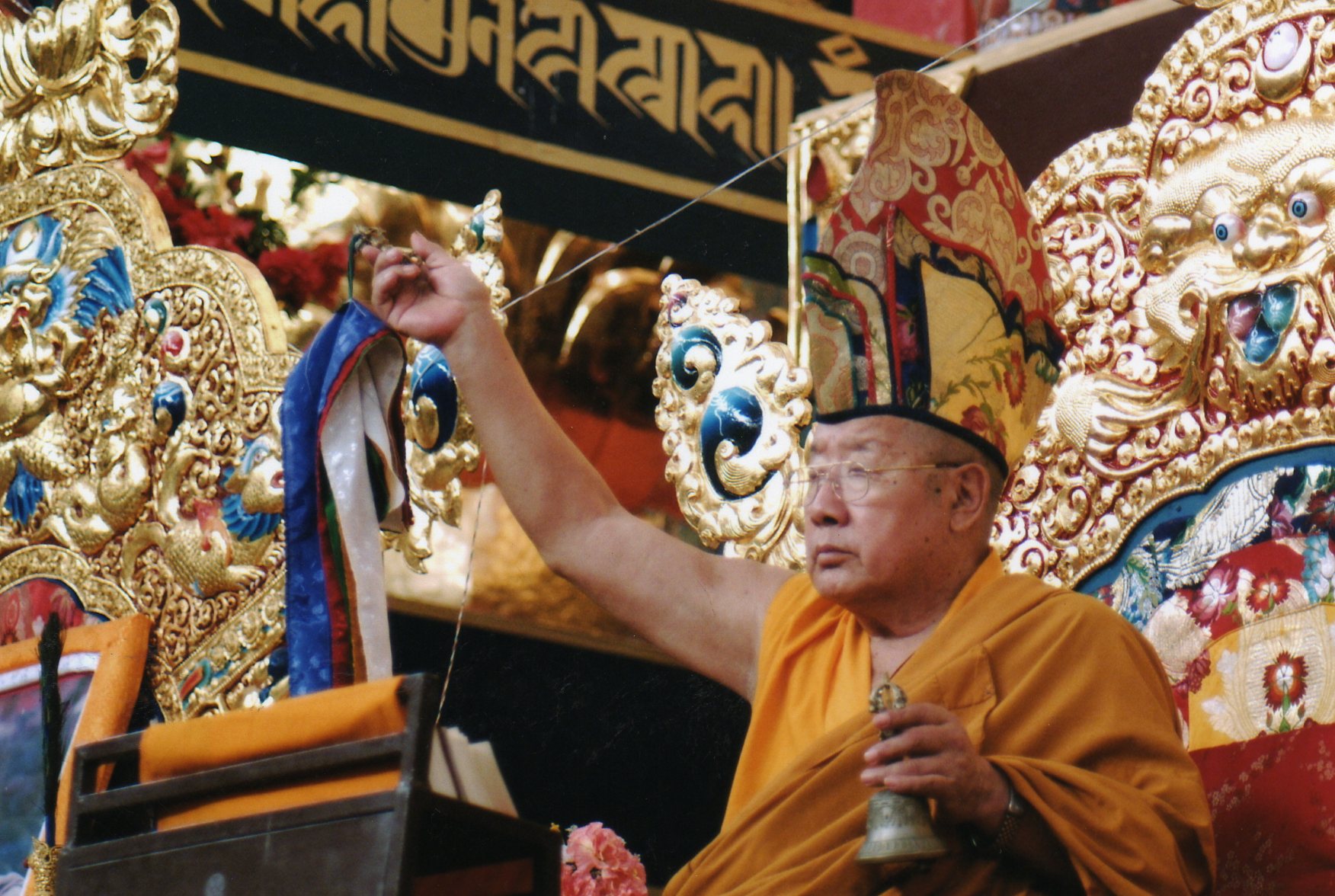
The following is from a series of tweets by Jetsunma Ahkon Lhamo: I wish there was no corruption in any religion. I wish there was no corruption in Buddhism. I wish there was no corruption in humans. When Tsawei Lama Third Drubwang His Holiness Penor Rinpoche was alive there was never any such thing. His Holiness always emphasized purity, honesty, bodhicitta. His Holiness Kyabje Penor Rinpoche ruled with care, and love. He was never in His life spoken of badly by anyone that mattered. All loved and revered him. His Holiness Penor Rinpoche kept his vows, outer, inner, and secret ones, all without stain. He began and built Palyul in India with his own hands! What Tulku, Khenchen, monk or nun could ever hope to accomplish the same? His Holiness Penor Rinpoche was peerless! Now we’ve lost Him. Who will keep Palyul pure? I can say this. No one should make money off Dharma. It should pay the bills, yes. KPC has no major donors, just many small ones. But we keep the doors open. Money goes to help sentient beings, like Garuda Aviary and Taras Babies or feeding the poor. Not lining pockets. Everyone, for the most part, wants money for themselves. Money is power. And it feels good until the Bardo, where all we will have is our selfishness without interruption! Everyone, except Kybje His Holiness Penor Rinpoche. He only wished to preserve the purity of Palyul and to empty samsara from its depths! May His Holiness Karma Kuchen rise up and do His work. And offering the precious jewel Mandala I beg and cry out for His Holiness Penor Rinpoche’s Yangsi to appear and return to us who mourn! Copyright © Jetsunma Ahkon Lhamo.  All rights reserved originally published Sept. 2, 2011

Where Are You on the Path?

The following is an excerpt from a teaching by Jetsunma Ahkon Lhamo called “Marrying a Spiritual Life and Western Culture”

I don’t know how many times I can present this same teaching. It’s about understanding that the ball is in our court. It’s about having a direct hands-on experience, not about being a good boy or girl. Aren’t you sick of that?  This moralizing stuff has got to go! Instead, have a direct understanding, a natural wisdom—your wisdom—that dry times cannot take away from you, that broken hearts cannot take away from you, that no one else can take away from you. Your wisdom. You don’t look to anyone else to get your wisdom. You’ve got it inside. You understand the path in a deep way. You are empowered.

I’m not talking about ritual empowerment. I’m talking about a deeper, truer kind of empowerment.  How wonderful if we can know that spiritual empowerment deeply within ourselves, to then go through the process of ritual empowerment according to the teaching and know what it’s about.  It’s not just a vase (or a bhumpa) being knocked on your head.  You could do that from now until your head and the bhumpa are both flat, and there would be no direct relationship. If it’s all academic and intellectual, then it’s the same as getting a Ph.D. anywhere in technical sciences or whatever. It’s not really a path. A path is a way you go. A path is not an object that you consume or collect or put in your crock pot and boil all day until it makes gravy at night.  A path is where you are. Where are you then?

What I’m talking about is carefully considering how to overcome the limitations of confinement of our kind of society, of our kind of culture;  how to go more deeply to have a more direct relationship with our own spiritual nature—a real mystical relationship with that nature. And I don’t mean just meditating on some sort of internal cartoon circus where you think you’re getting messages from the Pleiades or some baloney like that. If you had a real, direct relationship with your own nature and you really understood the wisdom and the beauty of the Buddha’s teaching and didn’t see it as his teaching, but as a wisdom that appeared in the world here, you could see it as your teaching, as a wisdom that you could connect with.

Actually, we Westerners have a similar problem to what Black Americans have approaching Christianity. Black Americans pray to white Jesus. It’s not to say that their faith is small. I don’t know whether they have a problem with it or not, but it must be odd.  What does it look like seeing a white face on an altar when you’re a black person? Go home and look at all those Asian faces on your altar. They don’t look like us. What to do about it? How do you take refuge? How do you connect? It’s not about those pictures. It’s not about those faces.  It’s about you!  And it connects inside.

It isn’t about the shape of those eyes. It’s about what those eyes see. So you have to have that completely personal relationship where you look beyond that which is slanted or colored or this way or that way. It’s got to be a deeply personal relationship. To do that you must connect deeper than you’ve ever been before. We love to just skate over the surface of our experience of life. We’re even addicted to the highs and lows.

You can’t really understand why and how to take refuge by learning a set of equations or laws or rules. These can only function as guidelines. It’s really up to us to be powerful and strong and noble and knowing and awake on our path. Virtue cannot be collected. It has to be experienced, tasted, understood. Its nature must be understood.

This is not the news we want to hear. We want an easy religion.  We think, “Just tell us the ten things we have to do so that we’re not uncomfortable about dying.” I’m not saying those ten things are bad; they’re good, they’re wonderful. But where does it lead you? Aren’t you still the same scared little kid who was so neurotic because you are compressed with rules and society and with being told you can’t feel things. And now we’re going to do this with our religion too. Ten more times.

What if, instead of being a girdle that makes us out of touch just trying so hard to be good, we experienced our path—our method—in a wisdom way, in a connected way, in an in-touch way?   From that fertilization that happens when you really understand an idea and it causes you to go, “Ah-hah, therefore…”, from that point of view it’s like a plant or a tree coming up inside of you and growing. It bears fruit. It is a joyful thing, and you can see the fruit of your life. Most of us are so unhappy and so neurotic because we cannot see the fruit of our life and we do not understand its value. We haven’t tasted it. This direct relationship one can taste. It needs to be like that in order for us to really take refuge and not be lost little kids scared of dying, just trying to do the right thing—be good boys and good girls with a new set of rules—because maybe if we just had a new set of rules, maybe then we’d be good.

Instead of that, what if we were dynamically in love, inspired, breathing in and out on our path? The path can, in that way, be a companion, a joyfulness, a child of yours, a creation, a painting, something beautiful you’ve done with your life. You can’t make a beautiful painting by number. You have to make a beautiful painting from your heart.

Copyright © Jetsunma Ahkon Lhamo.  All rights reserved

Victory of View

The following is from a series of tweets by Jetsunma Ahkon Lhamo:

I have been told many times that I worry. I must say I disagree. I do study things, try to puzzle cause and effect, try to glimpse behind the curtain. I love to notice patterns and find their meaning. I like to study abnormal psychology, love to hear about case studies, what makes people tick. I find reactions fascinating! I’ve learned that each bit of phenomena is amazing.

So you may see me with a knit brow…but this life has taught me squarely that it is a dream. One moment you feel mortally wounded, then with a little tweaking it isn’t so anymore. I’ve found if we step back and breathe we can avoid getting all tied up in stuff, and bound in neurosis, insanity. It’s choices.

Life is a whirling colorful, mesmerizing dance with lights, sound and distraction, like a circus. And like a circus it soon packs up and disappears, leaving only dust and tracks in dirt.

If we study life and think in sane full equations that add up, we can manage well. If we sink into reaction, rage, fear, despair, we will be ground into blood and guts and will always be a bee in a bottle. Round and round with no rhyme or reason or true purpose. And certainly with no accomplishment. Meditation, mantra, and prayer, all help soothe and deepen the mind, increases our view, relaxes our ego-clinging, helps us expand our thinking and being into something beautiful. Extraordinary! We can “be” to the degree that we can laugh with pure joy. Dance. Howl at the moon… cry, mourn and recover well. No, I don’t worry about life or death. I am into knowing, connecting, loving, laughing and recovery for all from trauma. I don’t take it so seriously. And I never worry anymore! I’d call that a victory of view!

OM TARE TUTTARE TURE SOHA!

Copyright © Jetsunma Ahkon Lhamo.  All rights reserved

Living the Practice: Learning to Change

The following is an excerpt from a teaching by Jetsunma Ahkon Lhamo called “Marrying a Spiritual Life with Western Culture”

Our job then is to get in, to make this faith more than a formalized external thing just like an exoskeleton. The only way to get in is by really understanding it, by really going through the process that empowers you, to see what the truth actually is. For instance, we’re told that cause and effect is for real. Cause and effect should be blatantly obvious to us by this time because most of us here are above five years old. But we don’t get it. Lord Buddha tells us that cause and effect really matter. If you engage in virtuous, loving, generous, kind acts, the results will be love, happiness, fulfillment, higher rebirth, all of these kinds of things. That seems pretty reasonable to me.

But if we don’t go through what it takes to truly understand this on a deep level, we end up approaching even this very visible piece of truth by saying, “Oh this is another thing I have to learn.”  I’ve seen my students do this—from my very oldest to the brand new ones. “From now on I’m going to do good things, because good things will get good results and I’m going to be happy.  Okay. Let’s see now. It’s 7 o’clock in the morning.  I will be out of bed by 7:15. Can I get a good thing done by 7:20?”  This is the way that we think. It’s by rote. A chicken can do this!  A parrot that can be taught to talk can learn these rules. But where is the heart of the parrot?

What if we could hear the Buddha’s teaching and say, “This is an amazing wisdom that has come into the world. The Buddha organizes this wisdom and says to us, ‘Virtuous actions produce excellent results.’”  What if we went through the process of really looking at this? What if we really tried to connect the dots? What if we looked at our own life experience? Yes, it’s hard to do. We know that. The reason it’s hard to do is that in order for you to examine what virtuous conduct looks like and how it relates to result, you have to determine what is virtuous conduct and what is non-virtuous conduct. In order to do that you have to face some terrible truths about yourself—for example, that you don’t always engage in virtuous conduct. The minute we get near that sucker we back off fast. Because isn’t religion supposed to make us feel better?  Well, yes, if it’s an opiate.  Well, yes, if it’s a drug—one of your many drugs.

Religion can be compared more to exercise. When we first start to exercise, especially nowadays, we join a club and  get an outfit. (I have some killer workout outfits, I want you to know.) We get an outfit and everything matches, the socks, the headband. Or else we jock out about it. Maybe everything doesn’t match, but it’s all cool.  And then we get in there, and we don’t work out or exercise because it feels good to lift vast amounts of weight over and over again. Not at first. In fact, at first there’s a lot of pain. You get on those machines, and the next thing you know you can’t move. So starting never feels good, but, afterwards—when you’re in shape and your body is tuned up and you’re strong—you feel great! It’s an organic thing. It benefits all your systems.  It comes up from inside of you. It changes everything about your life. It feels great. But initially, no. Most people stop with that initial stuff, don’t they? The minute it doesn’t feel good, that’s when they stop.


We do the same thing with religion. Can you see that?  We go into it with an outfit, and we do it until it’s a little uncomfortable, such as changing something about our lives or seeing something. Then we’re out of there, because we have the “don’t wannas.”  We don’t wanna; it doesn’t feel good.  We think, “I thought this was going to make me happy, and it really doesn’t.  It’s kind of depressing to think about reality.  I don’t want to.”

Now let’s look at a person who moves into making exercise part of their lives. You do it in a more directly related way. You learn something about it. You learn about the physiology of exercise. You learn that there are certain problems your body has that it doesn’t have when you exercise. Well, that’s one thing that will empower you to keep on going: You go for that goal of producing a certain result. Have you ever thought of that in your practice? Producing a certain result, instead of just putting in your time? There is a difference. With exercise we get to a certain point where we just begin to see—because we’re looking inside of ourselves and we’re looking in the mirror—that there is some result. The first time you see a result it can be a life-changing experience, if you work to integrate it into your life.

It’s just exactly like that with religion. Initially, you have to change. Change is not comfortable. We already know this. So initially you change and then after that you begin to connect the dots. You begin to see some cause and effect relationships. You begin to see that virtuous behavior actually does make you feel pretty good, and you explore that. You don’t take it for granted like a big dope. You work it out in your mind—work the numbers, work the equations. What feels good? Does it feel good to be in charge of your own internal progress?  I think so.  It doesn’t feel good to walk through life and just let life hit you like a truck. It feels good to walk through life in my practice, knowing in my heart that I am deeply empowered by this direct intimate relationship to spirituality. I know what kindness tastes like. I can see direct results from certain kinds of behavior patterns, behavior changes. I can see them directly in my mind. I feel comfortable with that. How is it that Tibetan monks have the same restrictions as our ordained and they are so much more comfortable with them? How is it that Tibetan lay people feel so much more comfortable with their lives? It’s because they have some kind of direct experience that makes it sensible and realistic and reasonable to conduct themselves in a certain way.

Copyright © Jetsunma Ahkon Lhamo.  All rights reserved

The Guru as the Path to Recognition

The following is an excerpt from a teaching by Jetsunma Ahkon Lhamo called “The Guru is Your Diamond”

How do we use the Guru Yoga as this rocketship?  How do we understand the way it is used?  Well, first of all, if we look at the Guru Yoga in our Ngöndro book, the prayers are achingly beautiful.  The tune, Lama Khyen No, that beautiful tune… You could almost hear it being sung on misty mountain tops.  There’s something about it that’s just so haunting.  And you get the idea when you’re doing this practice that it’s kind of geared that way.  It’s geared to bring tears to one’s eyes.  It’s geared to create an interdependent relationship that’s so intimate, it’s more than what we are accustomed to.  We wouldn’t take an ordinary relationship and sing Boyfriend Khyen No, (laughter) Girlfriend Khyen No. We wouldn’t do that.  And why?  Because there wouldn’t be any result.  You might as well twiddle your thumbs.  There just simply would be no benefit.

We are given this method and it should cause us some benefit.  Why?  Why is that?  Because we are opening the eyes of recognition.  What is it Lord Buddha said when he was asked how it was he was different?  He said, “I am awake”.  Awake in recognition.  We are opening the inner eyes of recognition to understand the difference between the precious connection with one’s Root Guru, the ultimate nature that we share, that we depend upon utterly, and what is ordinary. You know, the stuff we get lost in so easily.

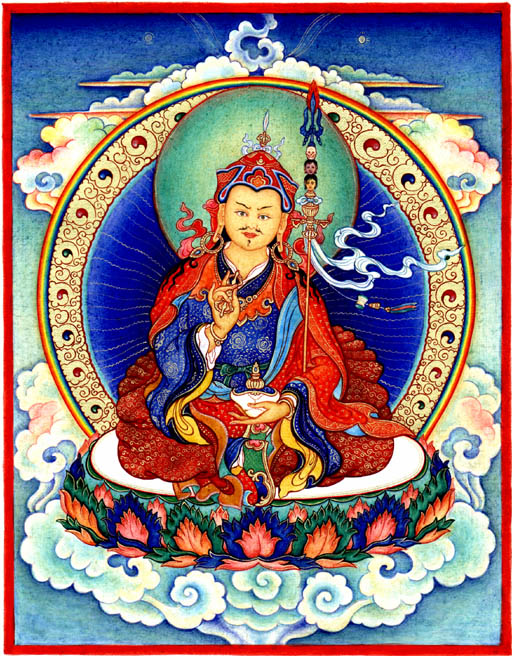
We have this single-pointedness that we can whip ourselves back to.  That’s how we use the Guru, when we get lost and wobbly and we’re kind of out in space… You know how we get—the noises in our head and everything. We get lost in that.  We can use the Guru as our centering back to the single-pointedness.  We think this is none other than Guru Rinpoche, the second emanation of Lord Buddha, himself.  This is the way.  This is that nature.  This is what is precious.

Copyright © Jetsunma Ahkon Norbu Lhamo All rights reserved

How to Cherish What is Precious

The following is respectfully quoted from a teaching by Jetsunma Ahkon Lhamo called “The Guru Is Your Diamond”

We should understand that if we feel that connection with the Guru, and that it is heartfelt, that is like a diamond that you should invest.  To hold onto it and to keep it stagnant is not the way.  One should not say, “I’ve got this connection, therefore I’m in like flint.”  One has to take that connection and build on it.  You have to use it for investment. You use that connection to create more virtue through learning the Buddha Dharma and practicing accordingly, through going to the teacher for guidance and advice, and then practicing that accordingly.

There’s no use going to the teacher for guidance and advice if you don’t practice accordingly.  Then you’re simply cashing in that diamond for nothing.  You’re throwing it out the window and it’s too precious to waste.  Instead again, you should invest in it, build on it.  That’s cash.  That’s money in the bank.  That’s the most precious thing you own in this lifetime, no matter how wealthy you are.

So you go to that teacher for guidance, for advice.  You allow that teacher, and ask for that teacher, to open and prepare your mind, and to deepen the mind and to mature the mind; and you depend on that teacher similarly to… Let’s say you had somehow a cash cow in the bank, you know a diamond or some fabulous thing that could be earning interest. In the same way that that diamond might be the nugget and maybe you’re living off the interest, you think like that about the teacher.   But you’re always making the moves and doing the things that never harm the principal and only increase the interest.  See what I’m saying.  I’m using a funny money analogy here, but it’s like that.

That diamond must be kept in a sacred place, enthroned upon the Lotus of one’s heart where it cannot be harmed.  And if you find that that diamond is somehow misplaced and it’s in your mouth and you’re talking about it in a non-virtuous way, get it back down there again.  Do your practice.  Recite The Seven Line Prayer.  Reestablish that connection.  Think that it lives in you, as it does.

Copyright © Jetsunma Ahkon Norbu Lhamo All rights reserved


That Kind of Love

The following is an excerpt from a teaching by Jetsunma Ahkon Lhamo called “The Guru Is Your Diamond”

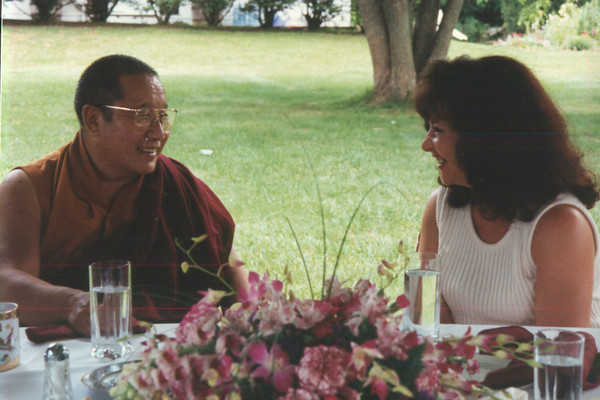
In Palyul, my teacher, His Holiness Penor Rinpoche…you all know him, is known as having rather wrathful moments.  I’ve met with a couple of them, and I still flinch.  But that’s ok, ‘cause it gets my attention.

Ultimately, we come to understand that there is no friend like one’s Guru, nobody in one’s life.  Nobody in our lives, even if they take care of you and feed you and clothe you until the time of your death, is so willing and so eager to look out for your welfare.  Our Root Gurus are more interested in our well-being than we can understand.  I personally can tell you that I had a difficult time with that.  I was an American.  I know that I had all this old karma with the Path.  I was recognized as this one and that one and the other one, and all that, but I was still a 38-year-old American.  (Yes, I was 38 when I met His Holiness.)  So, I was an old dog with old habits.  And I have to tell you that I didn’t understand that kind of love at first.  I mean I understood that I felt this commitment to my students even though I had not met with the Buddhist teachers yet.  I already had students and I understood the commitment to them, My teacher told me that apparently I was teaching Buddha Dharma and I didn’t know it because I hadn’t read any books on it.  But then, when I actually met him, and he became so intimately involved in my body, speech and mind, my whole life began to circumambulate my Guru.  I thought, “What is this? I’ve never seen love like this.  I’ve never seen anything like this.  That this Lama would come all the way across the world to find me?  That he came all the way from India and the first thing he said when he hit California was, “Take me to that woman in Maryland.”  And so, that’s how it happened.

I didn’t understand that every year he wanted to see me, and so I missed some years.  I didn’t understand how much he is invested in my well-being and the well-being of my students.  I didn’t understand when he built that place up in New York…  Now I understand that he built it for us.  Because I can teach you during the year what I have to give you—the ripening and the deepening—and then you can receive empowerment and take the next steps on the Path with His Holiness, my Root Teacher.  After we established this place here, he did that.  I didn’t understand that, bBut now I do.

I’ve never had that kind of love in this lifetime.  I don’t know anyone else that has either.  The kind of love that will… Let me explain to you.  When His Holiness was here last year, one of his particularly devoted and very close disciples passed on, Kunzang Lama.  His Holiness just abruptly left even though he knew he wouldn’t make it in time, just left.  For that one man.  And when he got there, the man, Kunzang, had left him a note.  The note said, “Guru, wherever you are, you are with me and I am with you.  Please do not grieve.”  Like that.  Can you imagine?  They were so close.  They came out of Tibet together.  They had that kind of devotion to each other.

Copyright © Jetsunma Ahkon Norbu Lhamo All rights reserved

Who Is the Guru

The following is an excerpt from a teaching by Jetsunma Ahkon Lhamo called “The Guru Is Your Diamond”

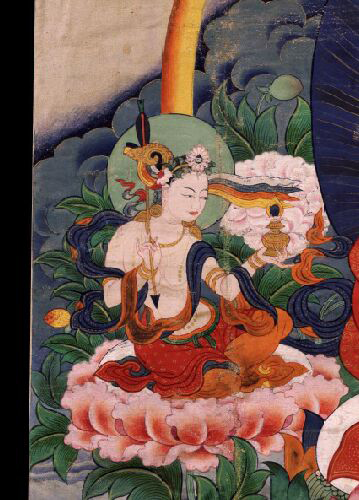
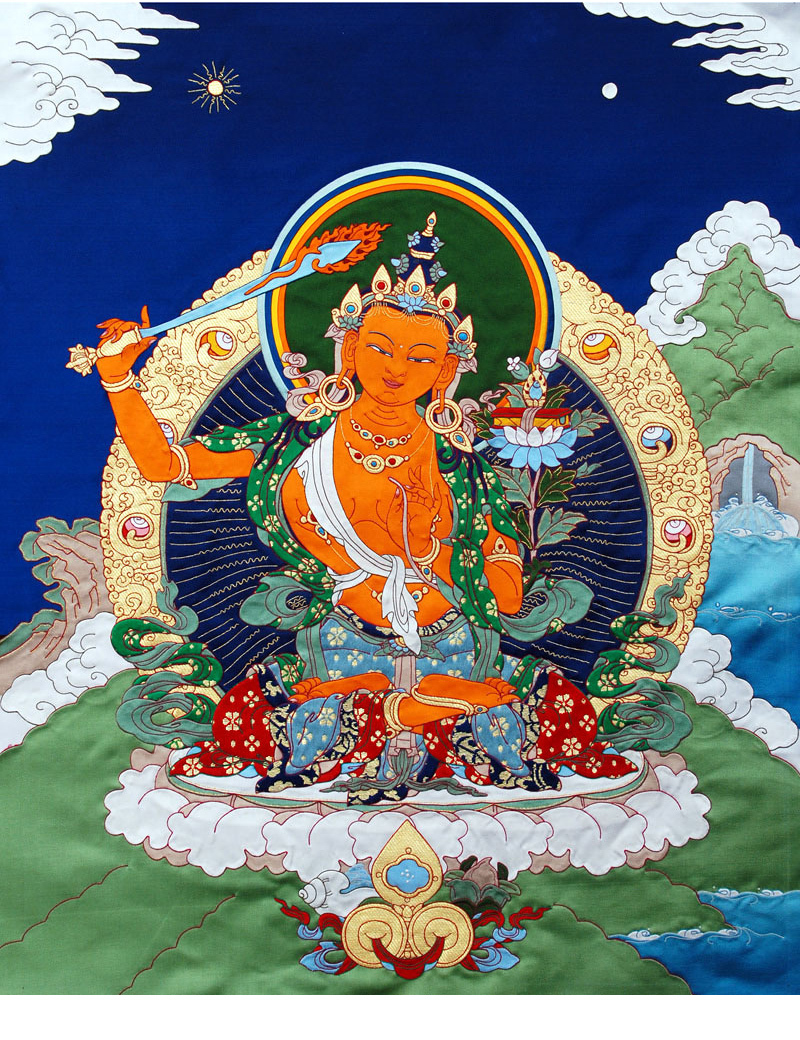
Many people, when they come to the Path, feel the connection with some particular deity.  I know of one person that felt a very strong connection to Manjushri with his great sword cutting through ignorance.  And yet that person did not practice proper Guru Yoga and understand that the nature that is Manjushri with the sword is the very nature that is our Root Guru, and that sword could be a word, a look, a piece of advice, some heart teaching—anything that cuts through the darkness of ignorance. Some of us can understand that and then others of us want to have our particular deity. You hear the pride in that, don’t you?  “I’m into Manjushri!  He’s the guy with the big sword.  What a guy!” And yet, every Buddha that we can visualize, all of the peaceful and wrathful deities that naturally appear in the bardo and are part of our own nature and can be recognized, each one of them, has the complete and perfect qualities of all the Buddhas.

It’s an amazing thing if you are attracted to some particular Buddha, like maybe Amitabha or Chenrezig or Tara. You might say, “Oh, I really love that deity.”  That’s good.  Cultivate that.  But do not miss the step that Guru Rinpoche gave to us when he said, “This nature, the nature of one’s teacher is unsurpassed by the Buddhas and Bodhisattvas of the ten directions.”  Why did he say that?  To create confusion so that everyone in all our different places could look at our own particular Root Guru and say, “That’s the best one!”   No.  That’s crazy.  That’s just more ordinary thinking.  But instead, by implication, we understand that what we must do is to recognize the intrinsic nature that appears as our Root Guru, the promise of Guru Rinpoche fulfilled.  And if Guru Rinpoche said this was going to work, well it’s going to work. So, Guru Yoga is like a rocketship.  We depend on the accomplishment, the qualities and the nature that appear as our own Root Guru.

Early on in the relationship with our Root Teacher, we should practice thoughtful discrimination.  That is to say, we should ask ourselves: Has this teacher really given rise to the Great Bodhichitta?  Do we see that Bodhichitta is present here?  Ok.  Check that box.  Got that one.  Do we see that this teacher has the capacity to ripen my mind?  Do I hear Dharma from this teacher?  Check that one. Is this teacher considered qualified by peers of her/his/their lineage?  Is this teacher properly recognized and considered properly an authority and a throne holder?  Does this teacher have good qualities? Does this teacher have the ability to communicate?  Let’s see. What else? Does this teacher have an unbroken chain that connects us to the source of the blessing, which is Guru Rinpoche?  You betcha!

We think through these things.  And if you decide this teacher is not for me, then there is no harm in saying, “I’ll keep looking.”  Maybe the connection is not quite right.  So that’s when you do your discriminating and your thinking.  But once you’ve decided—check boxes are all full, looks good to me and I have that feeling, I feel that connection, something is wiggling in my little heart chakra…After that point, you must put yourself on a diet, because after that point, there’s no more judgment.

Once we make the judgment and discrimination necessary and we have that undeniable sense that one has entered the Path and met one’s Root Guru, after that point, judgment should be put aside.  Then the ball is in your court.  Not that the teacher doesn’t have a responsibility.  I promise you, the teacher knows their responsibility, if they are worth their weight in salt. That teacher not only knows their responsibility but also knows their students;  and a good teacher will be willing to say to a student, “Keep looking.  Go see this Lama here or that Lama there.  See what you think.”  Once the teacher has accepted the student, and the student has accepted the teacher, then that bond becomes more intimate than any marriage, any mother and child relationship, any friendship.  It’s hard to understand that because we think, “Oh, teacher,  I only see you every so often, but I see my spouse and my children everyday. Therefore, it must be more intimate.”

However, I will tell you that in order for you to be here, to be accepted as my student and to accept me as well,for that karma to mesh in that particular way, we must have known each other many times, many times.  The relationship between student and teacher is not a relationship that ends in one lifetime.  If we take vows together, I am responsible for you always.  So long as you remain in the world and have not yet accomplished liberation, I must appear again in samsara in order to liberate you.  I must.  Even if there’s only one.  Just you.  Your teacher will return for you.  Under any conditions.

 Copyright © Jetsunma Ahkon Norbu Lhamo All rights reserved
WP2Social Auto Publish Powered By : XYZScripts.com