The Beginning

images

The Beginning

I am Love,

I pour myself out

on the waters…

And the Earth.

Over time and space

I pour, I am,

never ending.

I encompass all

unto Myself.

I am pregnant with

Creation.

I penetrate all.

I am fulfilled…

Love.

I am Light.

The Light of the One…

Of the All.

Radiant, life-giving,

I am…

To BE.

I declare my Self

In all things

And it is so.

I find my Self

in Creation

and bear my Self

forth

triumphant!

And all is perfect

because I am.

Light.

I am Spirit.

I am the song and the

Breath

of the Infinite.

The sound and essence

of the most subtle

One.

I bring to you your birthright

on silent, soaring

wings.

Behold, I come quickly.

Look within.

I am here.

I speak to you,

from deep within you.

And now you hear me.

You let me heal you.

You let me radiate from you

You let me claim you as

My own.

Let us make a pact,

You, who I am.

To know our oneness.

To renounce duality.

To know only Truth.

For I speak to you

Even as you call

To Me.

“Awaken… Awaken…

This is the beginning.”


© Jetsunma Ahkön Lhamo

Putting Out the Fire: Turning the Mind Towards Dharma by HH Penor Rinpoche

The following is an excerpt from a teaching given by His Holiness Penor Rinpoche at Kunzang Palyul Choling on Bodhicitta:

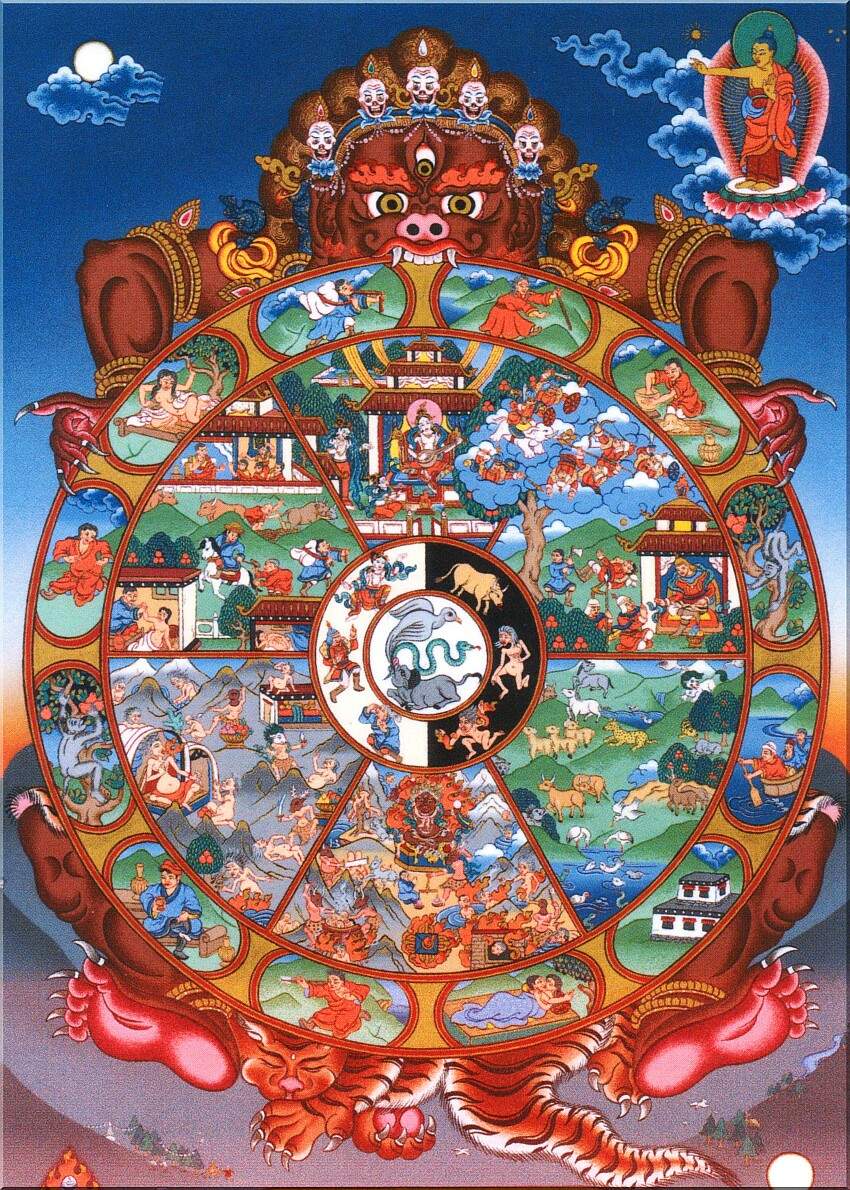
We start first with the special method that will turn one’s mind towards the Dharma.  In that method, we have to understand that wherever we are born in the world, in this universe, there will not be much happiness.  There is hot and cold suffering in the hell realms, and the hungry ghosts have the suffering of hunger and thirst.  The animals have the suffering of killing each other.  The human beings have a short lifespan, and within that short life, there is a lot of suffering.  Even those god beings in the god realms have a very good life there, but because of their carelessness, they are just spending and wasting their lives with happiness.  The sentient beings in this world have their own sufferings.  It is important, the Buddha said, for you to understand that wherever you are born, there is no happiness.  There is suffering.

When you understand that, then in order to remove the suffering, you need to have diligence to remove the suffering, like the diligence you do when your hair is burning, when your dress is burning.  During that time, you will put all your efforts toward removing the fire.  Similarly, once we have understood the suffering of samsara, of the world, then we have to really put some kind of diligence toward removing the suffering of samsara. Then if our hair is on fire and our dress is on fire, then we will not really remain peaceful.  We will definitely do something.  So, similarly, once we understand the suffering nature of samsara, we will not waste our time.


The Benefits of the Awakening Mind

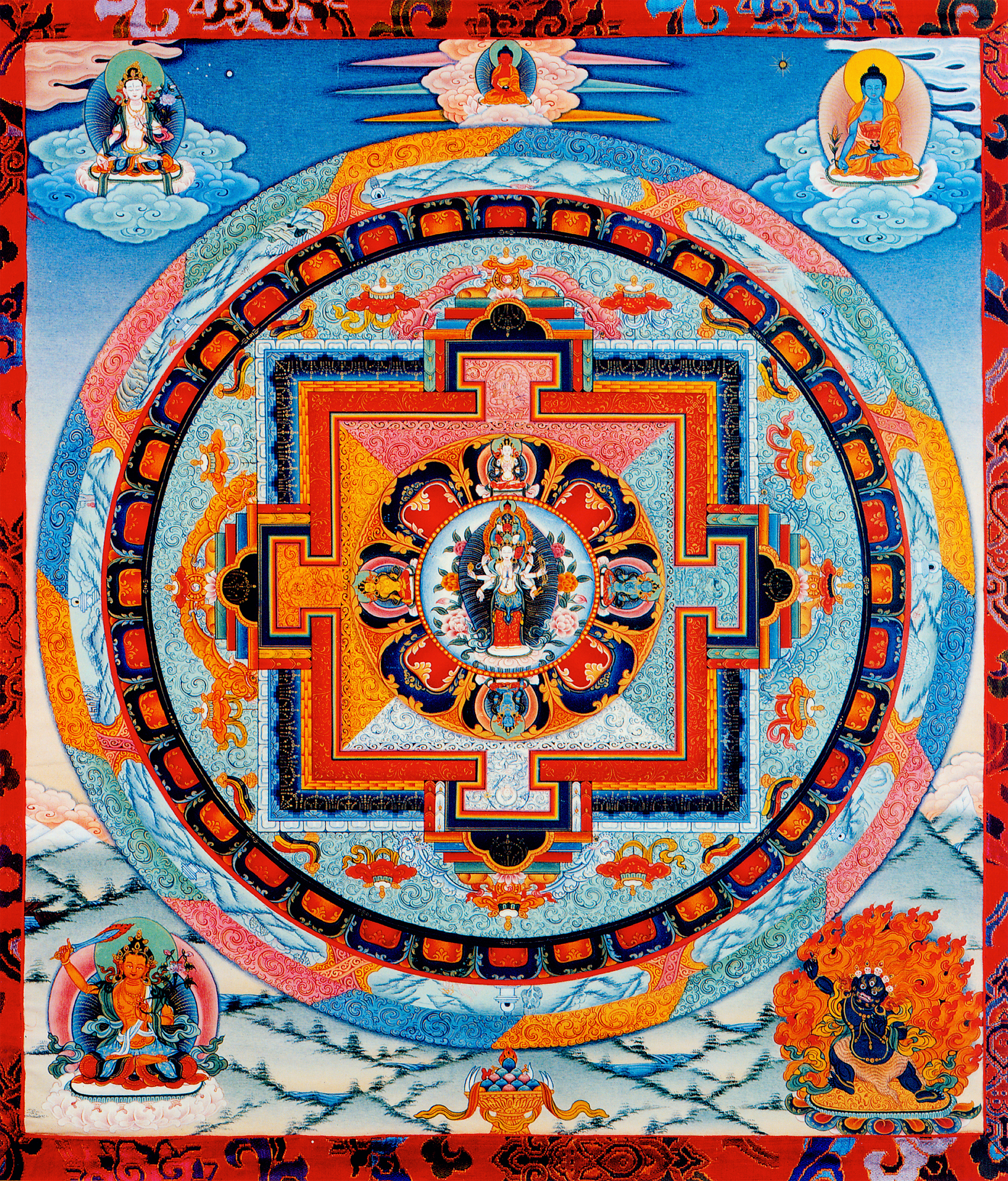
1000 Armed Chenrezig Mandala

Here is another excerpt from the first chapter of A Guide to the Bodhisattva’s Way of Life called “The Benefits of the Awakening Mind.”  May these words written by Shantideva inspire all who encounter them.

#26

How can I fathom the depths

Of the goodness of this jewel of the mind,

The panacea that relieves the world of pain

And is the source of all its joy?

#31

If whoever repays a kind deed

Is worthy of some praise,

Then what need to mention the Bodhisattvas

Who do good without it being asked of them?

#32

The world honors as virtuous

One who sometimes gives a little, plain food

Disrespectfully to a few beings,

Which satisfies them for only a half a day.

#33

What need be said then of one

Who eternally bestows the peerless bliss of the Sugatas

Upon limitless numbers of beings,

Thereby fulfilling all their hopes?

#34

The Buddha has said that whoever bears a harmful thought

Against a benefactor such as a Bodhisattva

Will remain in hell for as many aeons

As there were harmful thoughts.

#35

However, if a virtuous attitude should arise (in that regard),

Its fruits will multiply far more than that.

When Bodhisattvas greatly suffer they generate no negativity,

Instead their virtues naturally increase.

#36

I bow down to the body of those

In whom the sacred precious mind is born.

I seek refuge in that source of joy

Who brings happiness even to those who bring harm.

Prayer to His Holiness Karma Kuchen

From a series of tweets by Jetsunma Ahkon Lhamo while at Palyul Ling Retreat Center in Upstate New York:

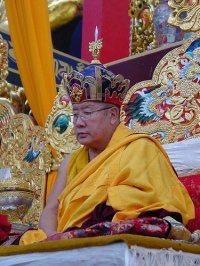
To the victorious Guru Karma Kuchen I pray – for the sake of beings in these degenerate times, ascend the Lion Throne of Palyul fully endowed with every strength and virtue! May we who long for your blessing be satisfied!

In previous times you came to us as Karma Tashi to clear our ignorance, our attachment to ordinary confused appearance!

You again sat on the glorious Palyul throne to grant us the awakening to Primordial Buddha nature as the great display Karma Gyurmed, the dance of suchness, as it is!

Then you returned as Karma Tegchog Nyingpo, also known as Tsawei Lama by the peerless Guru, the Third Drubwang Pema Norbu Rinpoche.

You now have come again as Karma Kuchen, pure and stainless. Kye ho! Such are the many miracles of your display for the sake of beings. Now please abide steadfast upon the Lotus Throne of my heart. Rise this very moment, clear all obstacles to mighty Palyul, banish the enemies of the Heart Essence Nectar given to us by the second Buddha Padmasambava through the child Terton Migure Dorje. Restore us all to original purity, clear recognition and perfect virtue!

May Palyul remain as the great unbroken refuge it is in the world now. Please establish the work of your predecessors and that of our Guru. Protect with mighty vigor the insurmountable accomplishment of our Guru Kyabje Pema Norbu, may nothing be wasted, and may all beings benefit!  Live long! Strengthen the Throne of Palyul and remain in perfect health! Show your holy face as we hunger and thirst; and we need you now more than ever, in these darkening times we need your light, the sun of Palyul, Guru within my heart, grant your blessings!

Copyright © Jetsunma Ahkon Lhamo.  All rights reserved


Working with Anger and Ingratitude: Commentary by His Holiness Dilgo Khyentse Rinpoche

The following is respectfully quoted from “Enlightened Courage” a commentary by His Holiness Dilgo Khyentse Rinpoche:

No evil is similar to anger,
No austerity to be compared to patience.

Never give way to anger, therefore. Be patient–and, moreover, be grateful to someone who humiliates you, as they give you a precious opportunity to strengthen your understanding and practice of bodhicitta. The great Jigme Lingpa said:

Ill treatment by opponents
Is a catalyst for meditation;
Insulting reproaches you don’t deserve
Spur your practice onward;
Those who do you harm are teachers
Challenging your attachment and aversion–
How could you ever repay their kindness?

Indeed, you are unlikely to make much spiritual progress if you lack the courage to face you own hidden faults. Any person or situation that helps you to see those faults, however uncomfortable and humiliating it may be, is doing you a great service. As Lord Atisha says,

The best spiritual friend is one who attacks your hidden faults.
The best instructions are the ones that hit your hidden faults.
The best incentives are enemies, obstacles, and sufferings of illness.

and the Kadampa master Shawopa used to warn his disciples as they came to see him, saying, “I only show people their hidden defects. If you can avoid getting annoyed, stay; but if not, go away!”

Of the eight ordinary concerns, therefore, even from the relative point of view there are many ways of eliminating the distinction between the good an bad, those you want to happen and those you do not. From the point of view of absolute truth, there is not the slightest difference between gain and loss, pleasure and pain, fame and disgrace, praise and disparagement. They are all equal, all empty by nature. As Shantideva says:

Thus, with things devoid of true existence,
What is there to gain, and what to lose?
Who is there to pay me court and honors,
And who is there to scorn and revile me?

Pain and pleasure–whence do they arise?
And what is there to give me joy and sorrow?

b. Using on the path the two things that are difficult to bear.
The two things that are difficult to bear are (i) being wronged in return for kindness and (ii) humiliation.

i. How to use on the path being wronged in return for kindness

16

Even if one I’ve lovingly cared for like my own child
Regards me as an enemy,
To love him even more,
As a mother loves a sick child, is the practice of a bodhisattva.

If you do something good for others, it is a mistake to expect anything in return, or to hope that people will admire you for being a bodhisattva. All such attitudes are a long way from the true motivation of bodhicitta. Not only should you expect nothing in return; you should not be disturbed in the slightest when people respond ungratefully. Someone for whom you have risked your very life may return your kindness with resentment, hatred, or harm. But just love him all the more. A mother with an only child is full of love for him no matter what he does. While she is suckling him, he may bite her nipple and badly wound it, but she will never get angry or love him any less. Whatever happens, she will continue to care for him as best she can.

Many people do not have the good fortune that you enjoy of having met a spiritual teacher, and thus cannot find their way out of delusion. They need your help and your compassion more than anyone else, no matter how badly they may behave. Always remember that people who harm you are simply the victims of their own emotions. Think how good it would be if they could be free of those emotions. When a thoughtless child wrongs a thoughtful adult, the adult will not feel resentment, but will try with great love to help the child improve.

To meet someone who really hurts you is to meet a rare and precious treasure. Hold that person in high esteem, and make full use of the opportunity to eradicate your defects and make progress on the path. If you cannot yet feel love and compassion for those who treat you badly, it is a sign that your mind has not been fully transformed and that you need to keep working on it with increased application.

A true bodhisattva never hopes for a reward. He responds to the needs of others spontaneously, out of his natural compassion. Cause and effect are unfailing, so his actions to benefit others are sure to bear fruit–but he never counts on it. He certainly never thinks that people are not showing enough gratitude, or that they ought to treat him better. But if someone who has done him harm later changes his behavior, is set on the path, and achieves liberation, that is something that will make a bodhisattva rejoice wholeheartedly and be totally satisfied.


True Virtue: A Twitter Teaching by Jetsunma Ahkon Lhamo

ordained-M

The following is from a series of tweets by Jetsunma Ahkon Lhamo on twitter:

What I look for in a monk or nun is renunciation, faith, kindness, willingness to help, deep and sincere love of the Three Precious Jewels. What I don’t like in a monk or nun is wearing robes for the sake of status, or to dominate others, to make yourself seem important.

If vows are broken there are ways to restore most of them but you must actually perform them according to your Teacher’s instruction. The need to boss people around is a very bad reason to take or restore robes. And not to brag that you are a good practitioner, that is bad. As an ordained Buddhist you must not use your robes to make money or to put yourself up as “the boss.” Monks and nuns must be humble and help.

Copyright © Jetsunma Ahkon Norbu Lhamo All rights reserved

The Excellence of Bodhichitta

The following is respectfully quoted from “The Way of the Bodhisattva” by Shantideva:

15.
Bodhichitta, the awakening mind,
In brief is said to have two aspects:
First, aspiring, bodhichitta in intention:
Then active bodhichitta, practical engagement.

16.
Wishing to depart and setting out upon the road,
This is how the difference is conceived.
The wise and learned thus should understand
This difference, which is ordered and progressive.

17.
Bodhichitta in intention bears rich fruit
For those still wandering in samsāra.
And yet a ceaseless stream of merit does not flow from it;
For this will rise alone from active bodhichitta.

18.
For when, with irreversible intent,
The mind embraces bodhichitta,
Willing to set free the endless multitude of beings,
At that instant, from that moment on,

19.
A great unremitting stream,
A strength of wholesome merit,
Even during sleep and inattention,
Rises equal to the vastness of the sky.

20.
This the Tathāgata,
In the sūtra Subāhu requested,
Said with reasoned demonstration,
Teaching those inclined to lesser paths.

21.
If with kindly generosity
One merely has the wish to soothe
The aching heads of other beings,
Such merit knows no bounds.

22.
No need to speak, then, of the wish
To drive away the endless pain
Of each and every living being,
Bringing them unbounded virtues.

23.
Could our fathers or our mothers
Every have so generous a wish?
Do the very gods, the rishis, even Brahma
Harbor such benevolence as this?

24.
For in the past they never,
Even in their dreams, conceived
Such profit even for themselves.
How could they have such aims for others’ sake?

25.
For beings do not wish their own true good,
So how could they intend such good for others’ sake?
This state of mind so precious and so rare
Arises truly wondrous, never seen before.

26.
The pain-dispelling draft,
This cause of joy for those who wander through the world–
This precious attitude, this jewel of mind,
How shall it be gauged or quantified?

27.
For if the simple thought to be of help to others
Exceeds in worth the worship of the buddhas,
What need is there to speak of actual deeds
That bring about the weal and benefit of beings?

28.
For beings long to free themselves from misery,
But misery itself they follow and pursue,
They long for joy, but in their ignorance
Destroy it, as they would a hated enemy.

29.
But those who fill with bliss
All beings destitute of joy,
Who cut all pain and suffering away
From those weighed down with misery,

30.
Who drive away the darkness of ignorance–
What virtue could be matched with theirs?
What friend could be compared to them?
What merit is there similar to this?

31.
If they who do some good, in thanks
For favors once received, are praised,
Why need we speak of bodhisattvas–
Those who freely benefit the world?

32.
Those who, scornfully with condescension,
Give just once, a single meal to others–
Feeding them for only half a day–
Are honored by the world as virtuous,

33.
What need is there to speak of those
Who constantly bestow on boundless multitudes
The peerless joy of blissful buddhahood,
The ultimate fulfillment of their hopes?

34.
And those who harbor evil in their minds
Against such lords of generosity, the Buddha’s heirs,
Will stay in hell, the Mighty One has said,
For ages equal to the moments of their malice.

35.
By contrast, good and virtuous thoughts
Will yield abundant fruits in greater measure.
Even in adversity, the bodhisattvas
Never bring forth evil–only an increasing stream of goodness.

36.
To them in whom this precious sacred mind
Is born–to them I bow!
I go for refuge in that source of happiness
That brings its very enemies to perfect bliss.


Four Thoughts That Turn the Mind

wheel of life 2

The following is an excerpt from “Buddha in the Palm of the Hand” Nam Chö Ngondro revealed by Terton Migyur Dorje:

PAL KUNTUZANGPO LA CHAG TSAL LO
I prostrate to the glorious Samantabhadra

DAL JOR DI NI SHIN TU NYED PAR KA
This precious human birth is extremely difficult to obtain.

CHI DANG CHI LA KYE KYANG MI TAG CHI
All things born are impermanent and must die

GE WA CHÖ LA BED NA SANGYE GYU
If one perseveres in virtuous Dharma, this is the cause for becoming Buddha.

DIG PA GANG CHE DE TA’I RIG DRUG KHYAM
Whatever negativity is produced will cause one to wander in the six realms.

YI DAG TRE KOM DÜD DRO LUN PO DANG
Hungry spirits suffer from hunger and thirst, animals from stupidity,

NYAL WA TSHA DRANG MIKYE GE NA CHI
Hell beings from heat and cold, humans from birth, old age, sickness and death,

LHA MIN THAB TSÖD LHA YI DUD NGAL YÖD
Jealous gods from warfare, and even gods (Devas) also have their own suffering.

The First Jetsunma Ahkön Lhamo

Jetsunma Ahkham Lhamo was an emanation in human form of Arya Tara, the holy mother of all the Buddhas. She was born in the province of Do Kham, in Ah Chog Drolhey village in the Bubor Mountains of the Palyul region of Tibet. This place has all ten positive auspicious signs present. Her father, Dorje, came from the highly revered family heritage of Mutshaga, and her mother was a wisdom Dakini named Gurutso. She was born around the later part of the eleventh Rabjung (according to the Tibetan Calendar), which corresponds to the later half of the seventeenth Century A.D. She was the youngest sister of Rigzin Kunzang Sherab.

She started her education with reading and writing at an early age, and she learned without much effort. Together with Rigzin Kunzang Sherab, she received many teachings from Terton Migyur Dorje and Khedrup Karma Chagmed, who was the emanation of (Lotsawa) Chogro Lhuyi Gyaltsen, as well as teachings from many other scholars and accomplished masters. With them, she perfected her study and practice of both Sutras and Tantras beyond any doubt.  She entered with perseverance into single-pointed practice at various undisclosed places, and many meditational deities appeared to her and gave instructions to her. Through her practice she purified all illusory phenomena into primordial non-conceptual pure awareness, and became a ruler of the realm of Kuntuzangpo.

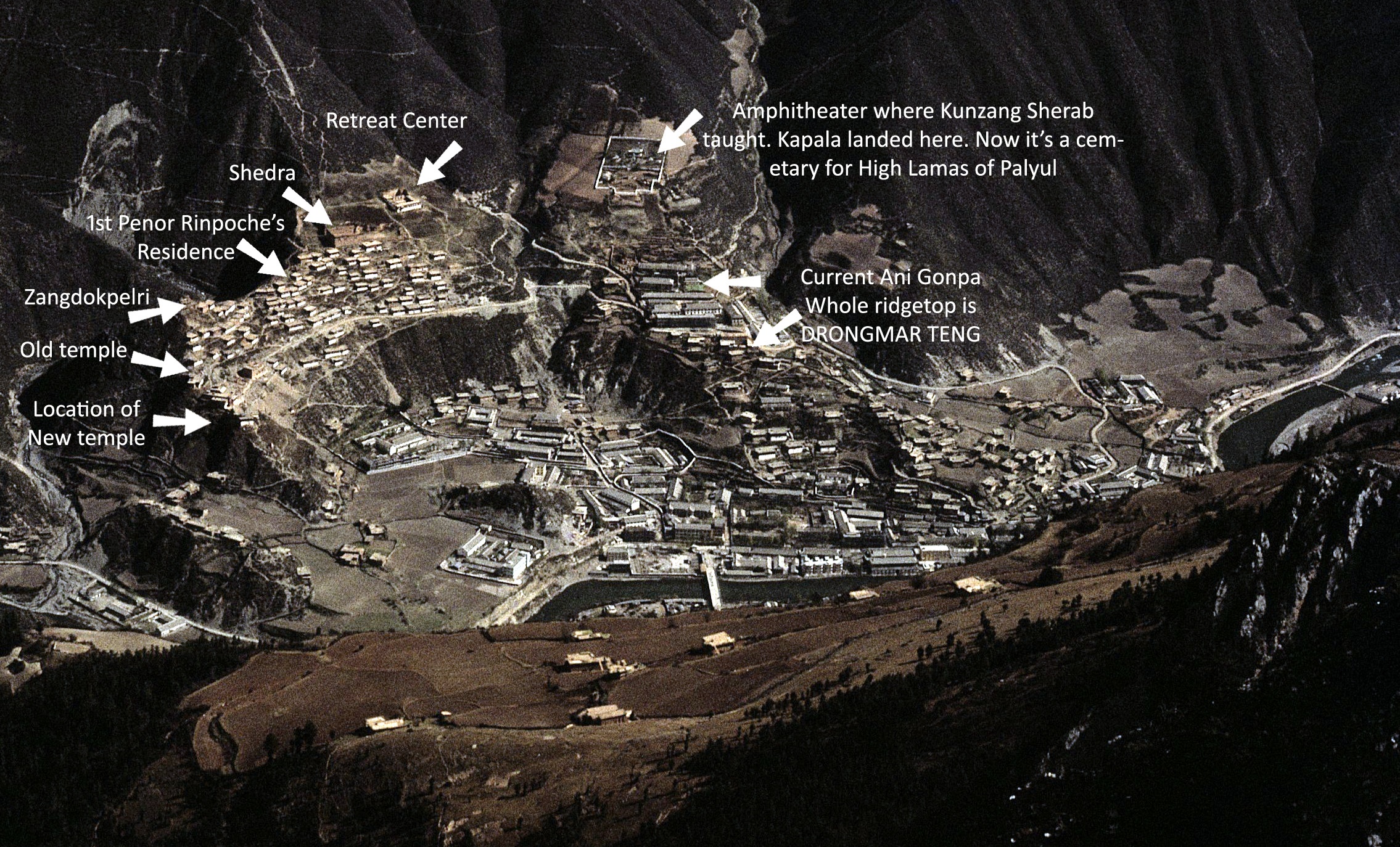
She lived on the mountain ridge towards the east of Palyul Namgyal Changchub Chöling (Palyul Monastery) and unceasingly turned the wheel of Dharma to a large community of Ani disciples, gradually turning that place into an expansive Ani Gonpa. Thus the location was called JOGONGDONG (nunnery on the ridge) and because of the huge numbers of nuns with red robes, that whole area has been called DRONGMAR TENG (red knoll village) ever since that time. In short, through turning both wheels of Dharma – both teaching and practicing – Jetsunma trained numerous students, not only as Buddhist scholars but many of them became highly realized practitioners.

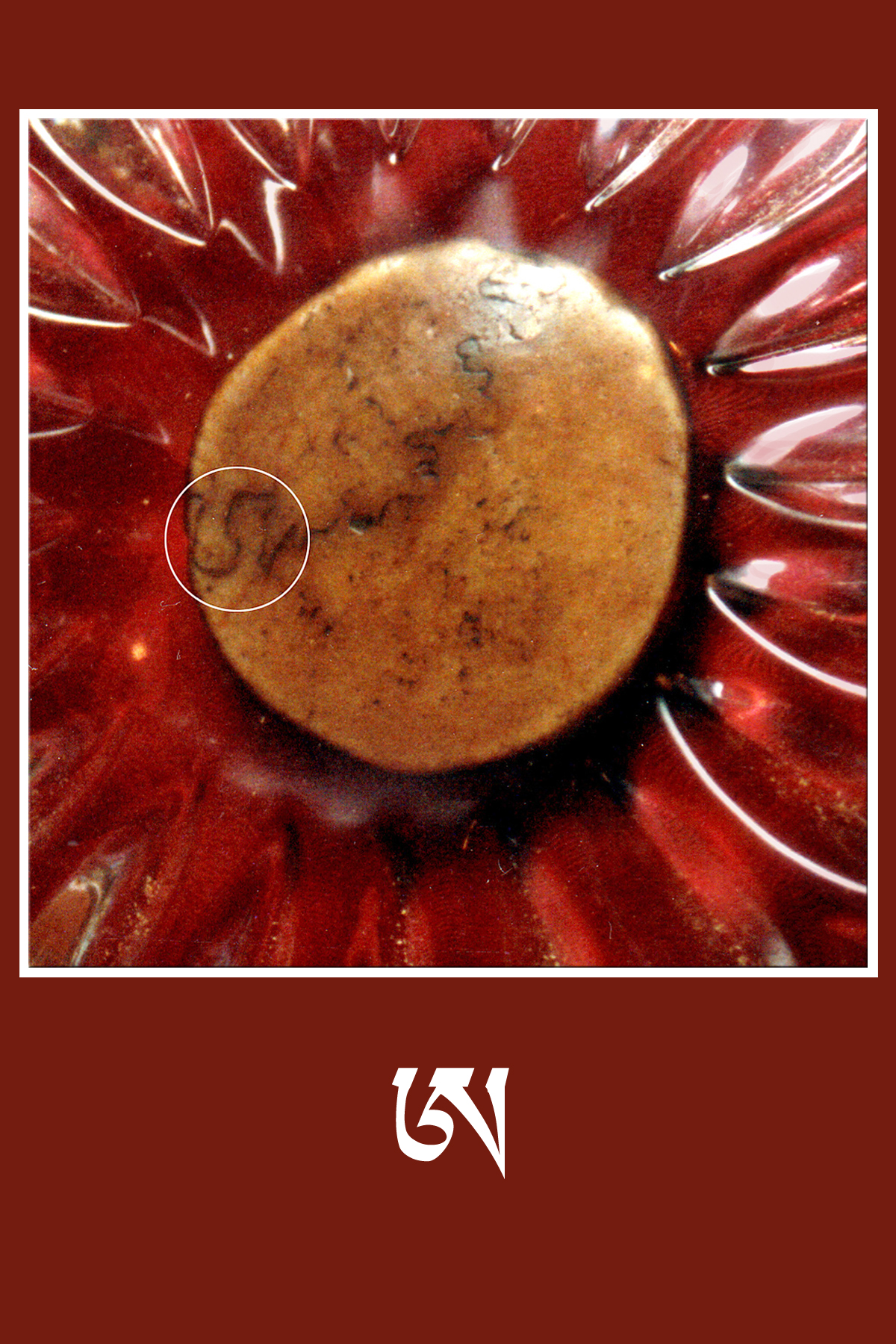
The “AH” on the skull relic

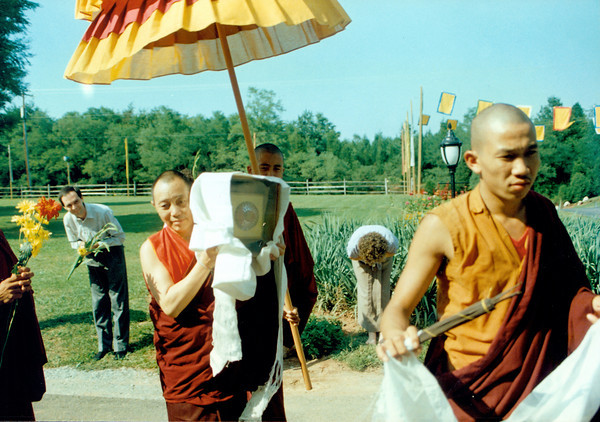
When she saw that her activities to benefit the doctrine and her students had reached the limits of this lifetime, she passed into the peaceful Dharmata. While her holy body was being cremated, her skull flew over and landed on top of the throne of Rigzin Kunzang Sherab in the place where he used to give Dharma teachings. Since that time, that place has been used as a sacred cemetery and to this day, all the revered Lamas of Palyul Monastery have been cremated there.

Additionally, her skull has been used as THOEYAB during all major accomplishment ceremonies in Palyul Monastery to invoke the blessings even up to the present day. I heard there is an awakened reincarnation of her who has been born in America.

Ven. Gyaltrul Rinpoche carries the Kapala


Excerpted from Palyul Namgyal Changchub Chöling Ge Denrap, a history of the Palyul Lineage, written by Mupo, a contemporary Tibetan scholar and historian. Originally published in China, May 19, 2002, Seventeenth Rabjung Iron Horse Year. Reprinted in Taiwan. [Ed note: The first Jetsunma Ahkön Lhamo has sometimes been referred to as Genyenma Ahkön Lhamo]


WP2Social Auto Publish Powered By : XYZScripts.com