The Path is Love

The following is an excerpt from a teaching by Jetsunma Ahkon Lhamo called “The Bodhisattva Ideal”

Is the Bodhisattva unafraid?   Heck no!  The Bodhisattva is afraid just like anyone else.  Why not?  Nobody wants to be challenged.  Nobody wants to have difficulty or obstacles.  Nobody wants to suffer.  The Bodhisattva is not less afraid than anyone else. But what is fear in the face of the needs of the many?  What is fear, knowing that what I might collect out of my fearfulness will ultimately lead to my unhappiness and disappointment?

I’ve been practicing the Bodhisattva Path for some time.  I am afraid of everything.  Everything frightens me.  I’m a jellyfish by nature.  But I don’t stop, because it doesn’t make any sense to stop.  Does the Bodhisattva no longer want anything or need anything?  No!  I want and need everything!  Anything you want to give me would be much appreciated!  But I do not concern myself with gathering such things.  I concern myself with the liberation and salvation of all sentient beings.  That’s what I concern myself with.

I’m not a perfect Bodhisattva, but there have been perfect Bodhisattvas. And I can tell you that with the understanding that the Bodhisattva naturally obtains through this kind of conduct: There is a natural kind of internal ease or lightness of being, a kind of quiescence that is a natural byproduct of that lack of emphasis on self-concern and increased emphasis on the well-being of all sentient beings, and the reasonableness of accumulating only those virtuous characteristics which can benefit in all future times.  There is a reasonableness about that and, as we emphasize that reasonable method, and do not emphasize ego-cherishing and ego-clinging, there is a natural lightness of being that occurs that, even while if someone punches us we will be punched and we will roll over, it isn’t so heavy because, as a Bodhisattva, although you may experience phenomenal reality in the same way that others do, there is not the suffering of suffering, which only actually occurs when one is filled with desire, just like the Buddha taught—filled with self-cherishing and ego-clinging, filled with hatred, greed and ignorance. The deep neurosis of acting inappropriately according to what you actually are, the suffering of suffering, comes from that.  It comes from acting like something that is death-oriented, that is contracted, that is separate and limited as opposed to acting as though you understood that you are that primordial wisdom nature, that ground of being, that Buddha nature, that state of innate wakefulness, that quiescent light.  That is the great Bodhicitta that is your nature.

If we could act in accordance with that, that deep neurosis that is characteristic of samsara, that suffering of suffering, could not exist in such a life.  So then, for such a one who practices in that way, all efforts become a benefit to sentient beings, no matter what they appear like.  Ultimately they will result in benefit.  This is the life of the Bodhisattva and this is the practice of the Bodhisattva, and this is what each one of us must attain to because I will tell you, no matter how good you are at sitting in the lotus position or how good you are at looking like a meditator or how many of the rules of meditation you know or how many of the books on spiritual practice you have read and can memorize, if you do not have the Bodhicitta, if you are not alive in love, you have no path.  If you do not consider others before you, you have no path, because the path is love.

Copyright © Jetsunma Ahkon Lhamo.  All rights reserved
Non-dual: The Middle Way

The following is an excerpt from a teaching by Jetsunma Ahkon Lhamo called “The Bodhisattva Ideal”

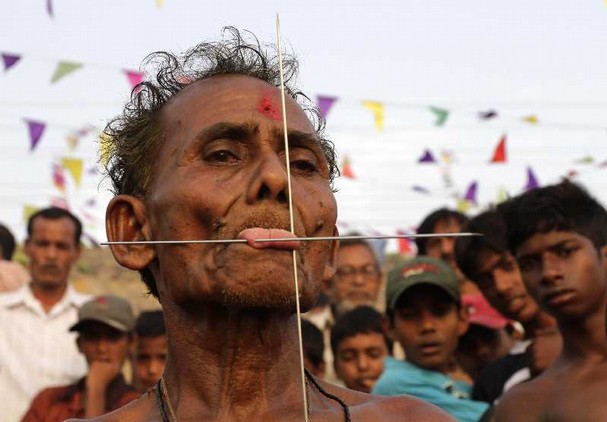
So the Bodhisattva thinks and meditates constantly on which things are worth putting effort into, and which things are not.  Now the Buddha also taught about the Middle Way.  When the Buddha realized the suffering of sentient beings, he tried at first the life of the ascetic. And he even tried to sit with those who engaged in the kind of meditation that was based on self-mutilation, a kind of meditation that was very strict and very severe.  He meditated with yogis who would mutilate their bodies in order to overcome pain and renounce the attraction of comfort.  So the Buddha tried that. These yogis did not eat or sleep comfortably.  They meditated constantly.  They remained in this one little grove and they ate very little.  They might live on bits of plants and even bits of mushroom that grow in the ground. If someone gave them something to eat, they might eat on that, but they had no determination about wanting a certain kind of food.  Whatever they found that day, that’s what they ate.  There was no dependence on comfort for their happiness and well-being.  So Lord Buddha practiced with them for a while and eventually he gave up on that method.

He gave up on that method because he saw that there is a kind of limitation to that focus, that that particular focus was sort of a dead-end street.  It can result even in a kind of poison, or a kind of pridefulness, where the yogi is more concerned with their strict discipline than they are with the liberation and salvation of all sentient beings. It becomes something of an obsession, you know. It becomes something of a medal of honor that one wears. So Lord Buddha found that kind of rigidity, that kind of narrow view, somewhat distasteful. And so Lord Buddha went on to the Middle Way.

Therefore, as a Bodhisattva we are not being asked to never have a moment of comfort.  No one is asking you to pierce your tongue or do any of those things those funny yogis did.  No one is asking you to sit on a bed of nails and sleep on a bed of nails.  No one is asking you to hang out in a grove and not have a house, not keep warm in the wintertime.  No one is saying that you have to wear the same robes until they rot off your body.  Lord Buddha does not teach that as a method.  Lord Buddha teaches instead that all sentient beings are suffering, that we are suffering due to desire, that there is an end to suffering, and that end to suffering can be practiced as the eightfold path which we, in our tradition, condense into the practice of wisdom, or the realization of emptiness, and compassion, or the Bodhicitta.  These are the two legs of the path, and this is the moderate Middle Way that Lord Buddha taught.

So as a Bodhisattva you are not being asked to never be happy.  One’s own happiness, both temporary and ultimate, and the happiness of others, becomes instead inseparable, nondual.  One would not honor oneself and cling to ego because that would be a nonsensical thing to do.  There is no good result from that.  The Bodhisattva realizes that.  The Bodhisattva, however, would not make oneself suffer purposely, or hurt oneself in some way, because there is really no point to that.  The point of practicing the path is the liberation and salvation of all sentient beings, and you are one of them.

Copyright © Jetsunma Ahkon Lhamo.  All rights reserved
Impermanence

The following is an excerpt from a teaching by Jetsunma Ahkon Lhamo called “The Bodhisattva Ideal”

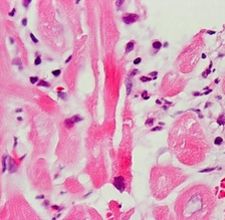
If you think about the food that we eat, you think, oh well, once you’ve eaten the food, it’s part of you and it’s nourishing.  You forgot the rest of the story.  Don’t you remember what happens to food after a few hours? Food changes. When you eat big chocolate cake… Or what would you like to eat?  Let’s see, what are we having today?  I would like to have chocolate mousse.  How about that?  So I’m going to eat my chocolate mousse and “yum yum yum” it’s so good. And you think, “Oh this chocolate mousse is really spectacular!  I don’t have to share it with anybody. There’s nobody in the room, and I can eat the whole mousse myself. Well, chocolate mousse!  I can eat the whole chocolate mousse myself and don’t have to share it with anybody.  Nobody is looking, I can even lick that [bowl]., You know, I can really enjoy this and I don’t have to give it away. And once I eat it, it is mine!  No one can demand it back.  Except that, after a few hours it seems to  exit the body.  And before it does, it creates some minor distresses on the way down.  That delicious experience with one’s food, even assuming the food was not chocolate mousse , but something nourishing from which you might receive benefit and energy,  ultimately is impermanent. Even the condition of taking in nourishment is impermanent because, after having taken in nourishment, then even the most delicious food results in waste.  And what is good in the food we use to make energy and the energy is expended.

So everything that we know and understand in our life experience is changing.  You are not the same person that you were seven years ago.  Everything about you has changed.  Literally the cells in your body have changed and been reborn with very few exceptions.  There are some cells in the human body that do not change that quickly, but the majority of cells change every seven years.  Quite remarkable! It’s really interesting to wonder, to ask ourselves, why is it then that we maintain physical scars from when you’re younger?  Isn’t that odd?  I mean, if we constantly create new cells and they are changed every seven years, what’s that [scar] doing there?  I fell on a piece of glass and wire when I was a little girl playing in a vacant lot and cut my arm right there.  Why is that still there?  I was a little girl when it happened.  I’ve changed many times over. It’s because we do not understand impermanence.

Copyright © Jetsunma Ahkon Lhamo.  All rights reserved

Beginning Spiritual Training

The following is respectfully quoted from “Reborn in the West” by Vicki Mackenzie:

‘There was no one to put me in touch with Buddhism. Not at all. The only thing that could have connected me, but didn’t, was that my mother took me to Coney Island and a palm-reader there told me I was an old Tibetan. That was all. I had no idea about Tibet. Not a clue. When I thought about Tibetans I thought of smelly old men on rugs!’

When she ran away from home on the advice of the police she headed for Florida, where she met a man, and married him. She had a baby and they moved on to an isolated farm in North Carolina. That was when Jetsunma’s spiritual story began. Finally away from the hubbub of city life and the distress of her own family situation, the greatness that was lying within her began to evolve. Without any particular emotion or even interest in her voice, she explained the extraordinary series of events that followed.

‘I started to have a series of dreams–I’ve had odd dreams all my life. And in these dreams I would be told what to do. A succession of very strange things happened.

‘Most of these dreams told me to look for a sign. The first involved meeting a an old woman, she was like a witch in a turreted castle. This woman placed a circle on my forehead and said, “This is who you are, now you have to commence.” Three days later a friend of mine asked me to go with her to this woman who did astrological charts, which interestingly are drawn in a circle. We thought it would be a bit of a lark, and so we went. This woman opened the door and, as surely as I’m sitting here, she was exactly the same as the woman in my dream. She had the same face and was wearing the same clothes. I remember breaking out in a sweat!

‘She was really old, but somehow I was very attracted to her. I remember looking at her and thinking she was beautiful. Anyway, she said she wanted to do my chart. After a while she came back and said, ‘My dear, I have nothing to say to you. Your whole life is laid out, you don’t need any advice from anybody.’ I think she was very skillful because she didn’t crystalize anything–she let it stay fluid.

‘Three days later I had another dream which showed me the farm where I was living, but there were extra cars outside the porch. A thunderstorm blew in, and the sky was unusually green. Well, three days after this dream–it all seemed to be happening in three-day-periods–I’d gone out shopping and come home with some friends in their cars and the thunderstorm happened. In the dream the voice had said, “When you see this, it is time to begin your meditation.”‘

To say Jetsunma was taken aback would be an understatement. She was just nineteen years old at the time, and wondered why these things were happening to a poor ‘girl from Brooklyn’. Furthermore, she had no knowledge of or training in meditation.

‘I went out to the front porch and looked at the scene to make sure it was exactly like my dream. It was. Then I went back into my bedroom and lay down! I knew that if I prayed for guidance I would get to learn how to meditate, as the dream had instructed. That was the start of my real spiritual training.” she said. It was to be highly individual and quite unorthodox.

‘The first thing I was “told” was that I had to make a very deep commitment that everything I did from here on would be a channel for blessings. So I use to do this meditation where I would say things almost as if I were chanting a mantra: “I commit myself to benefitting all beings, my life has no meaning other than the benefit of all beings.” Unbeknown to her at the time, she was uttering stock Tibetan Buddhist concepts in stock Tibetan Buddhist jargon. Every day she diligently continued feeling her way along her meditations.

‘The picture I had was of being a faucet–the water was in there, and I just had to turn the faucet on, kind of thing. I tried to align myself with the principle of broad-spectrum compassion.”

The Benefits of the Awakening Mind

Here is another excerpt from the first chapter of A Guide to the Bodhisattva’s Way of Life called “The Benefits of the Awakening Mind.”  May these words written by Shantideva inspire all who encounter them.

 #26

How can I fathom the depths

Of the goodness of this jewel of the mind,

The panacea that relieves the world of pain

And is the source of all its joy?


#31

If whoever repays a kind deed

Is worthy of some praise,

Then what need to mention the Bodhisattvas

Who do good without it being asked of them?


#32

The world honors as virtuous

One who sometimes gives a little, plain food

Disrespectfully to a few beings,

Which satisfies them for only a half a day.


#33

What need be said then of one

Who eternally bestows the peerless bliss of the Sugatas

Upon limitless numbers of beings,

Thereby fulfilling all their hopes?


#34

The Buddha has said that whoever bears a harmful thought

Against a benefactor such as a Bodhisattva

Will remain in hell for as many aeons

As there were harmful thoughts.


#35

However, if a virtuous attitude should arise (in that regard),

Its fruits will multiply far more than that.

When Bodhisattvas greatly suffer they generate no negativity,

Instead their virtues naturally increase.


#36

I bow down to the body of those

In whom the sacred precious mind is born.

I seek refuge in that source of joy

Who brings happiness even to those who bring harm.

Abandoning Love: The Fourth Root Downfall

The following is respectfully quoted from “Perfect Conduct” with commentary by Dudjom Rinpoche:

4.b.3(b.4) Abandoning love:

The fourth is wishing that any sentient being should be separated from happiness and losing heartfelt love for them.

To wish any sentient being should be separated from happiness and to stop feeling heartfelt love for them is the fourth root downfall. The object can be one sentient being or many. To wish for them to be separated from happiness and to meet with suffering or misfortune, thus forsaking them and giving up any love for them at all, constitutes this downfall.

A Great Opportunity

The following is an excerpt from a teaching by Jetsunma Ahkon Lhamo offered at Palyul Ling Retreat in New York 2012:

We have a great opportunity here.  When I come here, I don’t take advantage because I am shy and I don’t like to come out, but I still practice and I still do what I can to benefit sentient beings. For instance, I think about ordinary things, and I think about how I can bring benefit to people who have ordinary lives and ordinary situations. One thing that I did was to start a food bank, so that we can feed the people in our neighborhood and in our community who have nothing. It is not a rich area. Those who have nothing can have food. They can come and get food for their families. There is no expense or anything like that. We do ask that if you take something, then bring something. If you take some beans and bread and that sort of thing, bring something, even if it is just a tiny something to make that exchange, to make that connection. There are a lot of people in my community that are eating very well because of our efforts. And I don’t feel like that is separate from Dharma. There’s practical Dharma and there is ultimate Dharma, and I feel that both are essential. And all are supported by the great bodhicitta.

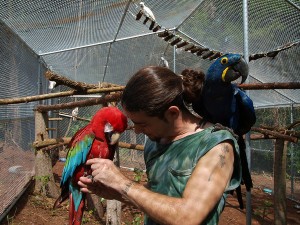
Another thing that we have done is to create an animal sanctuary for rare and exotic parrots. Before these parrots came to us, they were abused. Many of them lived all their lives in cages that were too small for them to spread their wings. Many of them had never seen the sky. Many of them were fed graham crackers, and stupid things like that, that they should never eat. There was so much cruelty in the exotic bird community, so we decided to see if we could do anything. And we did. And now my son runs that exotic bird sanctuary, and all the birds get to go outside. We have a huge area for them, and they can actually fly, which they never could do before. It’s beautiful to see.

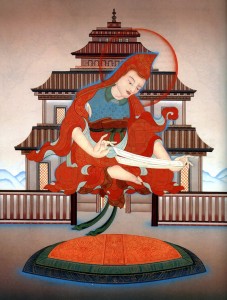
As you remember, His Holiness loved animals; he especially loved birds. In India he used to keep birds. When His Holiness saw the birds in the aviary, he was so happy about that. His Holiness saw them and loved them. He felt that that was Dharma in action. Activity Dharma.

Copyright © Jetsunma Ahkon Lhamo.  All rights reserved
His Holiness Penor Rinpoche: Compassion in Action

The following is an excerpt from a teaching given by Jetsunma Ahkon Lhamo at Palyul Ling Retreat in the summer of 2012:

I am very pleased by all the effort that you’ve put forth to make this place grow and shine as it has, keeping it going even in great adversity, for instance the passing of His Holiness Penor Rinpoche.  We all suffered and now we’re doing what we can to bring about the causes that he can return to us.

I remember back in the beginning when I first met His Holiness Penor Rinpoche.  It was on his first visit to the United States.  He wanted to see me.  Back in those days dharma was kind of confusing.  We didn’t understand each other when the lamas first came to America.  It took awhile for us to come to that point, where we really understood each other.  Mostly it was our lack of understanding as Westerners that made the problems.

You all have beautiful, nice, and condensed practice books.  I want to show you what we were working with.  We mostly had loose-leaf sheets of paper, pictures, and books stuck together.  [Shows an old practice binder]  There are things here that I don’t even recognize anymore.   We all made our own books.  We were all new and we did our very best.  I wanted to show you this because I thought, ‘What a mess.’  I thought you’d get a kick out of it.  Those were my first practice books.  And it was a long time ago.

Personal reflections on His Holiness Penor Rinpoche

I had the happiness of knowing His Holiness for a long time, and had many wonderful experiences with him.  I don’t mind sharing them with you if you’d like to hear some of them.  I’d like to tell you about one time when I was in India and we were traveling around looking for statues.  It was so unbearably hot.  We were staying in this hotel and it was about 104 degrees Fahrenheit or more.  His Holiness was used to heat but he made sure to put me in a hotel with an air conditioner, which I stuck to, and that was very nice.  While at the hotel, I met the woman who cleaned my room, and she told me about her husband.  He was sick, had cancer and was dying.  She said, “Would you come and give a blessing to my husband before he dies?”  And I said, “Oh, it’s worthless if I give him a blessing, but if His Holiness gives him a blessing, that’s something. That’s definitely worthwhile.”  And so she said, “Oh!  Would he do that?”  And I said, “I don’t know.  I’ll ask.”

They were Hindu.  When I asked His Holiness, he said, “I don’t think Hindus like Tibetans very much.  We eat meat.”  And I said, “With due respect, Holiness, I think in this case it doesn’t matter.  These people so want to see you.  They so want the blessing.  These people are going through misery.  They live in a tin box on top of the roof, and she has to raise children by herself.”  His Holiness was very wrathful with me.  He said, “I had to leave Tibet and come to America.  I watched my own people die.  And now I am supposed to think that this is important?”  He was very wrathful.  But I know what he was doing.  He was creating the merit, and clearing the obstacles for this event to happen.  But as you know, His Holiness was very kind.  So finally he stomped his foot and he said, “Ok.  I’ll go.”

We climbed up to the roof, and it was hellish really.  His Holiness’ knees were bad then too.  I was so sorry and embarrassed that I had put His Holiness through that, but then I was so happy for the people that would receive the blessing.

When he came to the door of the tin shack they were living in on top of the building, it must have been 115 degrees inside.  It was so horrible.  We said, “His Holiness is here to give the blessing.  And the woman got down on the floor, and put her head to his feet and then she prostrated again at his feet.  She couldn’t stop.  She just kept doing it.  It was heart breaking to see the devotion that she felt for someone who would not abandon her in this terrible time; who would provide comfort and some help.  And His Holiness did that.

He spoke to her in Hindi.  And he asked her, “What is the problem?  How long has he been sick?”  She could hardly speak.  They were both so grateful and happy to have his blessing, and that he would think of them, because they were lowly people according to the caste system in India.  They were lowly people and poor beyond belief.  They said that some days he didn’t even eat, because there was no food.  And so His Holiness was told the condition of this man, and you could see in his face that he had great compassion.  The man had cancer of the mouth.  You could see that something was terribly wrong, but he had no medicine.  The agony that he was experiencing was hard to understand.

Here’s the kicker.  His Holiness said, “Open your mouth.”  When he said this, I tried to peak, and what I saw in there was horrible.  His Holiness said, “Open your mouth wide.”  He started pounding out mantras. Nothing I recognized.  He really pounded out the mantras.  And as he did that, he was blowing, blowing, blowing in the man’s mouth.  Holiness pounded out more mantras, and blew in the man’s mouth.  He kept doing this for quite a long time.

The couple was so thankful.  They offered Holiness food and drink, which of course he didn’t take.  They offered him food and drink.  He was working his heart out for them.  As we were leaving, they were bowing and bowing, and bowing.  It was so beautiful.  When we got down towards the room, I said to him, “Holiness is he going to live now?”  And he said, “No, there’s no chance.  The merit is gone.  There’s no chance for him to live now,” he said, “But he will have no pain.”

Already the man’s mouth was chewed up with cancer, and yet His Holiness said he would have no pain, and I know that’s true, because I met the woman again on the next day of our travels.  She said he had no pain that day.  I was so happy that happened.  I was just thrilled.

I left the my room door open so I could see where His Holiness was, and he could see where I was, and when he went passed by room, I just went down to him and I said, “Holiness, I know that was difficult, but thank you.  On behalf of them, thank you so much.  I don’t know how to express my gratitude.”  And he said, “No, I thank you.”

I will never forget that story.  He was grateful that I had insisted that he take this opportunity to help them.  He saw the value of it.  He saw that these people were helped and that they were just regular, innocent people.  His Holiness helped them so much that to my knowledge the man never had pain.  The woman and I wrote back and forth for a little while after that, and she said that he never had pain.  To me that am the most moving story about His Holiness that I know.  And I find it impossible to have seen that and not understand that he was Buddha, that he is Buddha.  No one but a Buddha would or could do something like that.  I miss him so much.  I know that you do too.

Copyright © Jetsunma Ahkon Lhamo.  All rights reserved
 

WP2Social Auto Publish Powered By : XYZScripts.com