Confession and Remorse

avoiding buyers remorse

The following is an excerpt from a teaching by Jetsunma Ahkon Lhamo called “AA & Buddhism”

Now with alcohol or drugs, the nature of the beast is that you’re going to hit bottom. At some point, things are really going to fall apart. One of the additional problems with samsara is that we can be angry every day, we can be needy every day, we can be miserable beyond belief every day, but we may not bottom out until we die. And right before we die we look back at our lives and go, ‘Gee, you know I’ve been miserable and angry and needy just about every day here. And now I’m dying.’ What are you going to do about it then? You know, think about it. You’re going toes up into the bardo. And you’re going to be faced with the nature, with your mind, with your habitual tendencies.

So, the problem with samsara is even more acute. I think samsara is even more a drug than heroin. Even more a damaging substance, or damaging condition, than addiction to alcohol. And the reason why I think that is because in samsara, the way it plays out, even though things have fallen apart, even though we have bottomed out, even though we are utterly miserable, we often can’t see it because we’ve been taught that that’s simply the way it is. That’s simply the way it is.

So like an addict that changes bars in order to solve his unhappiness… And it happens, doesn’t it? You go from one kind of social scene to another kind of social scene thinking that it’ll help. Like that, we go from day to day trying to solve the problem of samsara by bending the elbow a little more. And that’s kind of how it goes. Now the situation that we find ourselves in is very similar to that. And in terms of being addicted to samsara, we have to really dismantle the delusion of samsara. We have to see the faults of it. Now, according to the Buddha’s teaching, there are certain pre-written faults of samsara that you can rely on; but I really recommend that you look very carefully at your own condition in a courageous way.

I don’t think that that can happen very easily on your own, because you’re going to miss some things, a lot of things. It is remarkable to me… For instance, let’s use a hypothetical situation that I ran into just recently. Let’s say you have a friend (and probably you’ve seen this), who has a habitual tendency of terribly destructive relationships. Do you know anybody like that? How about yourself? Terribly destructive relationships in which it never happens that your friend walks out of a relationship unscathed. They always come out of it damaged in some way. Terribly destructive relationships. It seems to be a big item here in samsara. It’s like a big seller. It’s right up there with T-shirts. Big seller. So we’re in  terribly, terribly addictive relationships. And then you see this person go into another terribly destructive relationship. The woman looks different. She smells different. She sounds different. How is it possible that she’s exactly the same as all the other ones he’s had? And you want to say to your friend, whap, whap, wham! ‘Don’t you see that you’re doing it again?’ And they don’t! They have not a clue, nary a clue. Now has that ever happened to you? Not a clue! Have you ever seen your friend do that? Have you ever seen yourself do that? It’s the same song again and again and again. So you may need to get with someone who’s a little bit more advanced at this than you are, or at least someone you can talk to, someone you can trust.

I actually recommend that for my students. I set up a system where they can do partnering with each other. And it’s a useful thing, because we can look at each other’s patterns; and we can look at where each other’s thinking has just sort of slid over a few very important facts. And we can point it out and really help each other to stay honest, because we don’t have the habit of honesty. We have the habit of patching things up and putting band-aids on them. That is our habit. We’re trying to slick by, Jack! And that’s what we’re doing. So what we need to do is to try to find a way to cut to the bone, and you may need a friend to do that with.

Now if any of you wish to engage, those of you who are my students, and those of you who are thinking of becoming students, to engage in such a practice of really dismantling your habitual tendencies, to really look at the faults of cyclic existence and to really get with that, I heartily suggest that you do so. And certainly any of you are welcome to call on any of my students, those who have been with me for some time and have some of those skills; and I’m sure they would be willing to help you. We’re set up to do that. We’re like that. And there’s nothing to be shy about. The one thing I have to tell you about this is that whatever you’ve done, I know these people, they’re worse. There’s not a rose amongst them. Although they’re looking pretty sweet these days. There’s not a rose amongst them, believe me. There’s not one amongst them that probably hasn’t done worse. So there’s nothing to be afraid of. The deal is, and here’s something that’s really important, in both Alcoholics Anonymous and in the Buddhadharma, confession and remorse are essential components.

Copyright © Jetsunma Ahkon Norbu Lhamo All rights reserved


A Higher Power

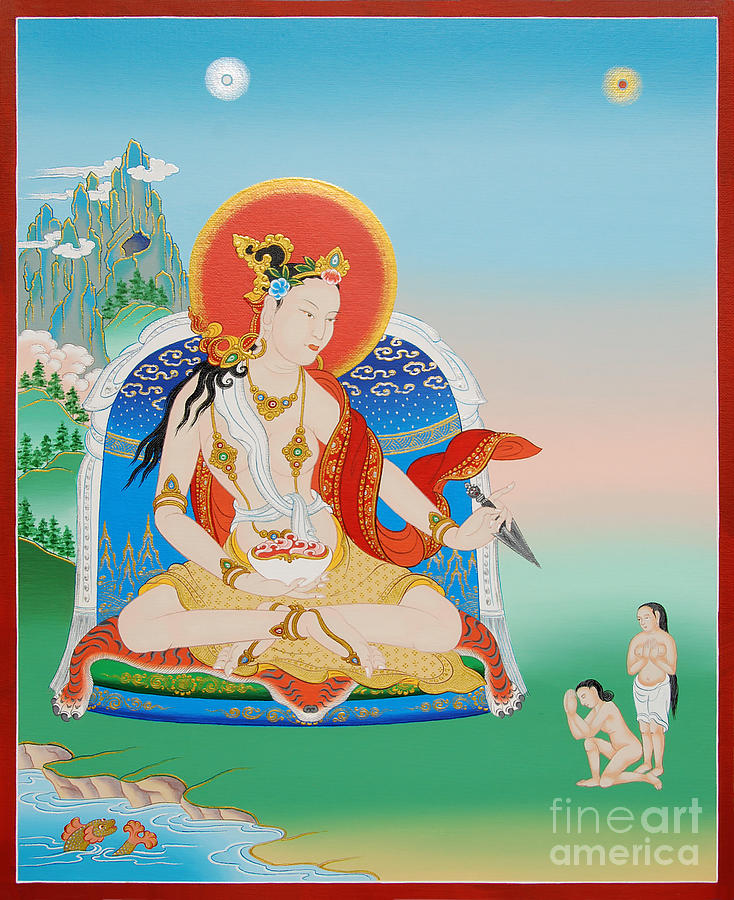
Guru Rinpoche

The following is an excerpt from a teaching by Jetsunma Ahkon Lhamo called “AA & Buddhism”

The next step, in both the Buddhadharma and in addiction, is to take refuge in a higher power. Now, in alcohol addiction, as I understand it, one takes refuge, in a sense, in one’s sponsor, who is no longer under the influence of the drug and who has been the same route, as the Buddha has done (although I don’t think most of them are Buddhas to tell you the truth), but as the Buddha has done, crossed the ocean of suffering in a boat that works. That’s the relationship. And that’s how we see our gurus. Basically it’s not a personality cult. They have crossed the ocean of suffering in a boat that works. It’s the same thing with your sponsor in alcoholism. They have crossed that ocean of suffering in a boat that works. So you take refuge in them, and you take refuge in the system, or the teaching. And that’s what you do. You also in Alcoholics Anonymous would take refuge in God, if you believed in God; or Jesus if you felt yourself to be a Christian; or again, if you’re a Buddhist, you would take refuge in the Buddha’s enlightened mind and in your guru. So it’s like that. And there, they are very, very similar.

And then the rebuilding starts to come from that. The recognition of the fault of cyclic existence, the fault of your addiction, the recognition of the horrible bottomed-out condition that we find ourselves in both applying to samsara and to the addiction; and the taking refuge and then day-by-day working it through in a very real, hands-on, cut-to-the-bone way. That’s really basically, and of course this is the cereal box-top version, but that is basically the Buddha’s teaching. The Buddha’s teaching is about giving you a workable model or a workable vehicle that you can work through and actually get from one place to another. It’s very real and it’s very not flaky or pie-in-the-sky. One of my biggest arguments with a lot of religious systems that I’ve seen is that there’s no way to make it work. There’s no applicable technology, and it’s too esoteric, too pie-in-the-sky. Now certainly in Buddhism, there is definitely esoteric philosophy. There is definitely the more profound view that one has. But the basis of the practice is, in fact, working through—applying the technology to solve the problem. And it is that: It is a model, a technology, that solves the problem.

The good news is that you can get somewhere with it. You can actually accomplish something that you may not have been able to accomplish before. Isn’t it scary that there are so many things in our lives that we can actually be caught up in and not be able to accomplish? And that has happened to us, hasn’t it? I mean, how many people amongst us,… Yourselves, think about yourselves. Have you been addicted to anger? That constant anger that accompanies us when we constantly have hostility, anger, hatred really. Do you have anger every day? Then you’re an anger addict. Have you ever decided you’re not going to be angry anymore? Have you tried that? Ha, ha, ha, ha, ha! Wasn’t that a funny day! So you’re an anger addict and you find yourself in the same position. And when your anger gets just ugly enough and you begin to see the playback from it, maybe, maybe, you’ll find yourself in a position where you can change something. What about your lust and grasping? Do you have lust and grasping every day? Then you’re a lust and grasping addict. That’s the truth! I didn’t make this up.  You’re a lust and grasping addict. Are you needy? Are you needy? Then you’re a needy addict! It’s not different. You have to think like that.

Copyright © Jetsunma Ahkon Norbu Lhamo All rights reserved


Facing Helplessness

Drunk_06

The following is an excerpt from a teaching by Jetsunma Ahkon Lhamo called “AA and Buddhism”

The idea that I’m trying to present is that you have to be at that place of total honesty. Now, in Alcoholics Anonymous, when you get to that place of total honesty, basically your life is broken down. In Buddhadharma, when you get to that place of total honesty, you take apart your life. You break it down yourself. Because if you wait for samsara to totally break you down… First of all, who wants to wait? It takes too long. It just takes too long. Plus you have been broken down before. According to the Buddha’s teaching, you have died and been reborn uncountable times under very unfortunate circumstances. And noodniks that we are, we still haven’t gotten it. We just can’t get a grip!

For some reason, the way that samsara is constructed, it’s very much like a narcotic. It’s like being under the influence of the drug, or under the influence of alcohol. While you’re really loaded, you really just don’t know your behind from a table. You just can’t find anything. You just can’t figure it out because the drug is in your system. The whole time we are revolving in samsara, in a sense, that drug is in our system, because we always view, don’t we, through the experience of continuum. And we always view with the assumption of self-nature being inherently real.  So we are fueled by this alcohol of the desire of continuum in a certain way to experience as ego. We can’t see clearly.

Now that happens to the alcoholic too. And so, one of the steps… And again I don’t know the program well enough to know which step is which or what comes first. I’m relying mostly on the Buddhadharma to tell me what to do. But once you have discerned the faults of cyclic existence… And you really have to spend some bone-crushing time on that one, and that is not your favorite part of the practice. I mean get this: It’s not the part you’re going to enjoy. And it isn’t the one where you can sit on a high mountain in the Himalayas with your hands just right and your feet in a lotus position and think of yourself as very holy while you’re doing it. You’re not going to get a lot of gratification at that point. Same with the alcoholic. When they decide that they are really bottomed out, that is not a gratifying time. I mean, am I right? That is the worst, most horrible time that one can possibly imagine. But in practice one has to do that also. And you feel a little bit like you’re going crazy because you have to dismantle everything you held to be sacred. You have to really look, and you’re helpless unless you do.

So the next step, as I understand it in the Buddhadharma, is to decide that in samsara (and this is one of the faults of samsara as it is one of the faults of drug addiction or alcohol abuse) we are in this condition, helpless to change. Now, boy we hate that, America! Man, this is the worst! Because in America we’re very democratic. We like to think that everybody’s got power. We can all vote so that makes us happy. Although I don’t know what good it’s actually doing us. But anyway, we feel in America that we are really, really, really democratic in our thinking. We want to really, really think that we have something very powerful. But, in fact, you have to get to the point where you can’t stop. You’re helpless. You’re helpless.

Copyright © Jetsunma Ahkon Norbu Lhamo All rights reserved


Compassion? Maybe Later?

Busy-people-problem-with-weight

The following is an excerpt from a teaching called “The Antidote to Suffering” by Jetsunma Ahkon Lhamo:

The basic beliefs are the foundational viewpoint that will encourage you to keep practicing, most especially the idea of compassion. I don’t think that there is ever a time on your path when this becomes no longer necessary. In fact I think that as you go on, further and further, on whatever path you choose, and specifically on the Buddhist path, you will meet with challenges that will cause you to want to get into your stuff. Invariably you will meet up with obstacles that will make you feel tired, unwilling to go on. You will feel the pressures that one feels living here in the material world, specifically living here in the West where we are so busy. Here it is really a push, a stretch to be a Buddhist and to be a person committed to a spiritual path, whether it is the Buddhist path or not. It is a stretch because most of us have to earn a living. Most of us have to raise our families. Most of us have to do all those things that are very time consuming.

So it is very easy to sort of fall back and say, ‘I will wait till later. I will wait till I’m older.’ I just turned 39. I can’t say that too much longer. But we do say that. We say, ‘I’ll wait till I am older, more settled. Or when things are less busy.’ And I find that here at 39, things are more busy than they ever were at any time ever, ever, ever. So I think that it is kind of fruitless to wait for that. Or you might say, ‘I’ll wait. I’ll just wait.’ You don’t even have any reason. You just say, ‘Later I’ll do this.’

So it is good to have these foundational teachings. It’s good to think in the ways that we are going to think in this class. And you shouldn’t think that because you’ve been a long-time Dharma student that you are beyond all this. If you think that, really, I tell you from my heart, you have a problem because I don’t think that. I don’t know of any teacher who thinks that. Every teacher that I have ever spoken to has said to me, ‘Teach first compassion. Teach first the foundational teachings and keep on that and on that throughout your whole involvement with the Buddhist path.’

So I feel that that is important. I feel that it is important to beginners and I feel that it is important to long-time Dharma students. So for that reason it is important for you to come. It is important for new people to come. It is important for us to come together in this common ground, and this common ground has to be based on commitment and recommitment. It is a very important aspect of what we have to do together.

Copyright © Jetsunma Ahkon Norbu Lhamo All rights reserved

What We All Have in Common

Shakyamuni Altar

The following is an excerpt from a teaching by Jetsunma Ahkon Lhamo called “The Antidote to Suffering”

The precepts that the Buddha lays down are precepts that are real and workable for everyone. You don’t have to be a Buddhist to hold to those precepts—the precepts of being compassionate and the realization that all sentient beings want to be happy, yet don’t have the skills or knowledge as to how to be happy. Because of that ineptness at capturing happiness, we often make ourselves stress out.In fact, the Buddha teaches us that all sentient beings are suffering because we don’t know how to attain happiness. You don’t have to be a Buddhist to notice that these things are true. You don’t have to be a Buddhist if you are willing to look with courageous eyes and see that these are so. Also, you don’t have to be a Buddhist to use the antidote.

The antidote is purity in conduct. The antidote is purity in practice, whatever your practice might be. The antidote is the realization of compassion. It certainly should be the core of one’s life. Of course, the Buddha’s teaching is more involved than that but still one doesn’t have to be a Buddhist to hold to those teachings. I think they are very universal. So the idea is to have these classes as a way for everyone to participate in what is happening here at KPC. For those of you who may not know, we also maintain a 24-hour prayer vigil here and have been doing that since 1985. There is never a moment in this place when there is not prayer being done. The prayer is specifically dedicated to the end of suffering in all its forms. Our original intention was to keep up this prayer vigil until none of us are here anymore or there is the end of suffering on this planet, the end of war on this planet specifically. Anyone can join in the vigil and you don’t have to be a Buddhist to join in. And if you understand that you have the capacity to apply the antidote to suffering and you can do that through sincere practice, through dedication, through compassion and through prayer, then there is no way for you to feel separate from what is happening here. So the original thought about this class would be to present some of the more foundational Buddhist teachings in a way that anyone could apply them and understand them.

The tricky thing about it is that we have both Buddhists and non-Buddhists here in this room. In a way it would seem tricky because if you have been studying here for some time and you’ve gone on to deeper teachings, specifically to the technology of Buddhism, you’ve gone on to the method. If you’ve gone on to the method, you tend to think that you no longer need to remind yourself why you are here in the first place. You tend to think that you have learned already the Buddha’s basic teaching that all sentient beings are suffering, that there is an antidote to suffering; already learned that all sentient beings are trying to be happy and that one needs to apply and to live a compassionate viewpoint. But that is not true. That is why you see several of the ordained Buddhist Sangha here and why it is good, even for a long time Buddhist practitioner, even one who has studied in really extensive ways, to come to a teaching like this.

I myself have decided very firmly that no matter how long I teach personally, and no matter whom I teach, whether the people whom I teach are brand new to anything metaphysical or whether they have gone on twenty year retreats, I will continue to teach the basics. I don’t know if anyone like that is going to show up here, but even if I had someone like that here in this class I would still always first and foremost speak of the root reasons why you should practice.

Copyright © Jetsunma Ahkon Norbu Lhamo All rights reserved

Avoiding the Path to Happiness

images

The following is an excerpt from a teaching by Jetsunma Ahkon Lhamo called “AA & Buddhism”

Now, many of us also are not very happy. We just don’t seem to be able to master happiness. We are filled with longing, filled sometimes with anguish of different kinds—you know, loneliness, unhappiness, anger. Anger seems to be our constant companion. Just can’t seem to shake it, you know. It comes back again, again and again. Loneliness comes back again and again and again. So we don’t feel that we are particularly happy. Even in this beautiful country and these beautiful places that we find ourselves sitting in, we still find that we are terribly unhappy. And then what to think about those who are in different places, different countries, different life forms that are miserably unhappy?

Happy or unhappy, we know that life is impermanent. We know that it is brought about by habitual tendency, which is scary. Have you looked at your habitual tendencies lately? Doesn’t that make you just a little squeamish? I mean if you think about it. So if life is brought about by habitual tendency, and cause and effect is definitely what’s happening here, we have to really sit down and study what we call in the Buddhadharma the faults of cyclic existence. Now it’s considered in Dharma teaching and in Buddhist thought that without thoroughly examining the faults of cyclic existence, honestly and courageously…  And I have to underline the word courageously because this is where most people fade out. So don’t! Have courage here! You have to examine yourself honestly and courageously the way an addict does. You have to see your habitual tendencies. You have to see your pride. You have to see your anger and hatred. You have to come to terms with your clinging and grasping. You must be able to look at it and recognize it in the same way an addict does. Because according to the Buddha’s teaching, until we do that we are going nowhere.

I’m telling you that this is true. I know it is because I have many well-meaning students come here to study. And when they come here to study their idea is well, you know, I’ve been the spiritual route, and I’ve even taught a few things. And I’ve done this and I’ve done that. And I’ve read Maha somebody and blah-blah who-who. And I’ve been through it all. And I’ve even sat at the feet of Big Chief Somebody-or-Other. And we all think that because of that, you know, we’re coming in here and we’re just listening to this lady in the yellow jacket, and ‘I’m just not that impressed.’ So, come on, I can read minds. Doesn’t it just scare you? Anyway, let’s say that happens.  There are students who come to just about every kind of spiritual gathering in that way, with that kind of arrogant posture, completely avoiding the issue that it would be useful, beneficial, and just logical, when you’re in any situation like that, to pick up a mirror and really, honestly look at yourself. Really, honestly look at yourself. That would be the normal thing to do, if you consider normal healthy. That would be the healthy thing to do. Maybe that’s not the normal thing to do, but it would be the healthy thing to do. It would be the right thing to do. But instead we seem to hold ourselves in a posture that makes everything that we’re all about kind of up there in an unreachable place. You can’t talk about it. You can’t think about it. You can’t argue with it. You just basically can’t do anything with it.

Copyright © Jetsunma Ahkon Norbu Lhamo All rights reserved


Rebirth?

baby

The following is an excerpt from a teaching by Jetsunma Ahkon Lhamo called “AA & Buddhism”

Now why am I worrying about this? Am I thinking that maybe most of you in this room are alcoholics? Yes! Yes, I am. But maybe you don’t drink. Let’s see how that works.

In samsara, we have the same condition. According to the Buddha’s teaching, we are actually taking rebirth again and again and again, unfortunately, not with the prevailing idea that one finds in new age metaphysical thought these days. Most new age metaphysical thought says that we choose our parents and we choose our circumstances and we’re all in a learning situation, and that sort of thing. The Buddha teaches us that, in fact, we experience rebirth due to ego clinging, due to desire. It isn’t like a conscious choice where somewhere up in heaven, wherever that might be, or wherever these little unborn creatures are, we look down, parting the clouds of course, and pick a couple of parents out of the 4.8 billion thinking: ‘Those would be nice,’ or, ‘I think I’d like to beat them up today,’ or whatever our particular situation, ‘I’d like to go hungry so I’ll choose those.’

The Buddha doesn’t indicate to us that that is the way it actually is. The Buddha indicates to us that we experience desire, and that desire is the cause of all suffering; and the suffering takes the form of experiencing rebirth under certain conditions. In effect, it is our addiction to samsara that causes us to be reborn under certain conditions. It is true that we tend to come to parents with whom we have a very strong karma, or previous cause and effect relationship. Vibrationally, the parents will be somewhat like us. Now before you all attack me with clubs and sticks, it’s true. I know that you have spent years and years blaming your parents for everything, and I hate to tell you it’s true. We are like our parents in some way.

Now, it’s true our parents might have beaten us to a bloody pulp, and maybe we don’t do that to our children. And our parents might have been judgers and blamers and things like that or cold people, and perhaps we work very hard not to be like that with our children. But if we are really honest and really look at ourselves, we will find ourselves somewhat, in some way, vibrationally like our parents. You cannot be born of a mother with whom you do not have a common vibration. It simply wouldn’t work. Metaphysically, you would dissolve in the womb. It would never happen in the first place. So there is a likeness there. And there is no point in blaming your parents for what happened to you. The best thing to do is to look at the condition and content of your own mind, and learn something that way.

Now, what has led us to be reborn as we are is a series of cause and effect relationships based on the assumption of self nature as being inherently real. With that assumption, automatically and at the same instance that assumption takes place, we distinguish self from other. In distinguishing self from other, we automatically react toward self, toward other, with attraction, repulsion, or neutrality. Now, neutrality sounds like the best way to go, of course. But in samsara, neutrality comes about after this goes on; which means to say you weigh out attraction, you weigh out repulsion, and somewhere in the middle of it, you’re just like eh, who cares. But it’s still part of the same coin. In a sense, attraction is one side of the coin. Repulsion is the opposite side of the coin. And neutrality may be the coin on its side, if you’ll think of that. But they are part of the same thing. They are reactive.

Since time out of mind, we have always been reacting with attraction, repulsion or neutrality due to attraction and repulsion. And it all has, as its root, one of the three poisons. And that poison is grasping or desire or greediness. Desire. We take rebirth due to ego-clinging. We experience continuum; and you can only experience continuum as a self because self is that which seems to move through linear time, and that is the experience of continuum. That’s what we have. We have that condition and it underlies everything, every internal subtle and gross process, every single one. It is that grasping that causes rebirth. Simply that.

Copyright © Jetsunma Ahkon Norbu Lhamo All rights reserved

Let’s Get Practical

christmasshopping

The following is an excerpt from a teaching by Jetsunma Ahkon Lhamo offered during a “Good Heart Retreat”

How can we possibly move in the direction of encouraging spiritual centers, churches, whatever, to take responsibility for the community around them without prejudice and without distinction? Let’s say, as Buddhists, we would be interested in the welfare of the Baptists in Poolesville, or the Catholics or the Jews, or anybody, or the people that don’t have religion. What kind of plan would it take? What would we have to implement to encourage that? What kind of power could you wield to get the attention of other spiritual organizations to ask them to join you in participating? Relatively speaking, we’re the new kids on the block. I mean who’s going to listen to us? If they were going to listen to anybody, they’d probably listen to the big religious names in this country, whatever they are. So why would they listen to us? Well, actually, I think about the worst thing that we could do is preach about it. I think that if we do that we’ll never be able to accomplish our goal. It seems to me that the best way to try something like that is quietly and humbly, and maybe even invisibly. Slowly, slowly, slowly. Simply finding ways to take care of your community.

I found out a couple of years ago that there was a family in Poolesville, just two people that one of my sons told me about, a mother and a son; and they had nothing to share with each other for Christmas. They were the kind of family where they have money for the electric bill and a certain amount for groceries, a certain amount for rent; and beyond that there is no discretionary income. So there was no way to save up for Christmas, which here is so abundant. You know, we’re not even Christians and we’re so abundant with Christmas. We love it. We think it’s a beautiful holiday, and we love the spirit of it, and we give each other gifts, and that sort of thing. But here were people who couldn’t even celebrate their own religious holiday, except in a spiritual way, I guess, for they had literally nothing to give one another. And so, actually, I’m not saying this to pin any medals on myself, but the reason why I’m telling you this is because it was easy for me to do. It was like no big deal. I had a bunch of stuff. One thing I’ve got a lot of is stuff. Stuff comes to me. I don’t know how stuff comes to me, but it comes to me a lot. Particularly, the little crystal candy dishes. For some reason, for years and years and years, my Sangha would give me crystal candy dishes. I have enough crystal candy dishes to supply an entire crystal store. So I have stuff, and I’m deeply appreciative of all the gifts that I get and I say thank you very much, put it away for somebody else, because someday I’m able to share some of that with others. It doesn’t mean you don’t get the merit. You all still get the merit, don’t worry. In fact, you get more merit.

So I put together a package of stuff for this family, and I was able to share some of the gifts that we had that we didn’t really need. And it just also so happens that this woman was the same size as I am, so I gave her a lot of clothes. So that was really great, and what happened was these people came and they spent some time with us. The karma’s not there for them to become Buddhist, but I was never expecting that. I don’t care. What I do care about was for them to be touched by a little bit of love and to look at our community and say, ‘Wow!’ Now that’s something, isn’t it? That’s something—to take care of a family in your community because they don’t have something and you do. That’s a powerful statement. You don’t have to talk about it. You certainly don’t have to preach about it. You simply have to do it.

Not all of us have a lot of stuff like me. You may not have that glorious karma that invites all those candy dishes or ducks into your house. I used to get ducks a lot, too. One of my teachers used to call me Duckie. So I got ducks you wouldn’t believe. All kinds of ducks. You may not be fortunate enough to have stuff like that, but supposing you knew how to get it. Supposing you had friends that had stuff. Or supposing you had connections with stuff. Or supposing you had an abundance of courage to where you could walk around to people that have more and say, ‘Would you share with the people that have less? Would you help us with this? We’d like you to know that your neighbor a few doors away is not having such an easy time. Would you help us with this?’ Just a simple request, yes or no. All they have to say is no if they don’t want to do it. What if we thought that way as a community? And what if we made no secret of the fact that we intend to take care of this piece of the world? You know, we could start a trend. It’s interesting to me that if you look at the media now and you look at films, you look at books, you look at what’s in the news, what’s noteworthy, Buddhism actually has become quite a fad. Who’d a thunk it! It’s become quite popular. The movie stars and the musicians are liking it now. You know what that means! We’re in.

What if this idea became a trend? It’s not so unthinkable that this could happen. Being not at all practical, being a little dumb about how things work in the world, I don’t see any reason why not. Don’t bust my bubble. I don’t want to hear that ‘no way to get there from here’ crap. What if our community could be a visible presence, like a visible good heart, that all could partake of? We’re talking about overcoming the poisons in our own mind-stream. We’re talking about demonstrating the Buddha’s teachings, the Buddha’s statement of the equality of all that lives, of the need for all beings to be happy, of their difficulty in attaining happiness. What would be so tragic about walking our talk? Why couldn’t we do this?

It seems to me that people of another faith might not be interested in giving to a Buddhist temple. Why should they? They’re doing their thing, and we’re doing our thing. Everybody’s so separate. Wouldn’t it be something if a number of community churches and temples could gather together and make some kind of non-profit organization through which funds could be funneled to mutually benefit and blanket the entire community without regard to race or religion? I don’t think it’s so impossible. The thing is there have already been studies that have shown us that in this country alone, there’s enough money to feed the world. Poverty doesn’t have to exist. We have the power now, immediately. What if the Buddhists in this country became available, really available to their community? And what if it started a trend? And what if it continued and grew?

I’d like to see that happen. And what I would like to do is to have some of you who are inclined to perhaps think of some different plans, ways to work stuff like this out. Let’s start toying with the idea. Let’s start playing with it a little bit, just to see what we can come up with. Let’s find ways that we can be available to our community without discrimination, and without ever requiring of anyone that they change their religion or anything like that. Let’s just think that as a spiritual people, as a spiritual community, the buck stops here. To me that is one of the most outrageous and gorgeous dreams that we could aspire to together. I think it’s really cool. If there’s any reason why it can’t be done, please don’t tell me, because I want to fly just like the bumblebee. I don’t want to hear it.

So let’s start tossing that idea around as a spiritual community. We have smart people here. How many of you are professional smart people in this group? Come on, don’t be shy. Okay, so you professional smart people, I’m kind of dumb. I don’t know anything very much. I don’t know too much about this world, so you’re going to have to find a way for dumb little old me to express this dream. You people who know about organizing stuff, which if any of you looked at my closets, you know I don’t know anything about it. You know about organizing stuff and you know about making foundations and you know about talking to other people, and you know about what kinds of formats we could use to spread this idea. So as part of your good heart effort on a communal level, why don’t we start thinking like this? Start pushing this idea around; start playing with it a little bit. Let’s build a big fantasy about this, and let’s do it. What could happen except we go broke? We’ve been broke for so long we wouldn’t even notice. Hey, I’ll sell my candy dishes. But I’m just dumb enough to not know why we can’t do this. And so I think that, as usual, I have the dumb, impractical, unrealistic idea and you get to make it happen.

Copyright © Jetsunma Ahkon Norbu Lhamo All rights reserved


Offering the Miraculous

PL-029-20 HHPR, JAL, Muksong-ed-M

The following is an excerpt from a teaching given by Jetsunma Ahkon Lhamo during a “Good Heart Retreat

There are some that may criticize the building of the Migyur Dorje stupa. I understand that it cost a couple of hundred thousand dollars. You might say, ‘Well, gee, if you’re going to spend a couple hundred thousand dollars, why don’t you feed the poor?’ Well, I feel like I am. I feel like that’s the point of the stupa. I begged and begged His Holiness for these relics and the ability to build the stupa because in this country there’s no place to go when you have no hope. There’s simply no place to go when all the doctors have told you they can’t help you. There’s no place to go when you’re at your last moments and maybe even the karma for this life has run out and you know that you haven’t really attended to your spiritual life. You know that you haven’t practiced very much. Or when your life is such that you got the ‘can’t fix-its’; don’t know how to put it back together again.

I know that in other places, in other lands, there are deeply inspiring religious pilgrimage places. I know that in Tibet almost all of the Tibetans, at one time or another, take some sort of major pilgrimage; and it’s a life changer. There are so many stories of pilgrimages turning out to be major healings. Where people will go to these holy places in which they have tremendous faith, where there are extraordinary relics there that are left by extraordinary Lamas, and healings take place that are miraculous.

I also knew that in this country there is AIDS which has been growing incrementally, cancer which is killing so many, and people constantly dying from all sorts of diseases that seem to be the afflictions of this day and time. There are so many diseases that we haven’t found any cures for, including simple mental unhappiness. Because of all this, I really wanted to offer this stupa to our community. What we have built here is, yes, at great expense, yes, at great effort; but also done with great joy. We have been able to gather together enough money, enough energy, and enough time to make this dream a reality. And now we have something here which over time, hopefully by word of mouth, hopefully by your good works and your good faith, the word will spread out that we have this amazing stupa here. Now anyone at any time, no matter what they have experienced as their spiritual path, if they’re ever down and out and without hope, can come here and make prayers. There is a potency to that pilgrimage. I’m hoping that it will become known that these same relics from Terton Migyur Dorje, these relics, of which there are pieces in different places of the world, not too many, but particularly in Tibet, have brought about amazing cures. I want people to know about this. I want them to come and feel better. To me, it’s like the ultimate soup kitchen, you know? You can offer this nourishment, this food, to your community.

So we went through the effort of building this thing, and thank you all for everything that you’ve done to make it possible—the work and the money, all of it—and now we have this tremendous gift to offer the community. To my way of thinking, this is one such group or community effort that we have made together in order to provide for and to nourish the community and make our hopes for the world more visible and more heard. That’s one way to do it. But I think at this point it’s time to move even beyond that.

Copyright © Jetsunma Ahkon Norbu Lhamo All rights reserved


WP2Social Auto Publish Powered By : XYZScripts.com