Unconditional Love

The following is an excerpt from a teaching by Jetsunma Ahkon Lhamo called “Keeping Heart Samaya”

When we consider the student’s relationship with the teacher on this path, we are talking about very high stakes.  We are not talking about a student-teacher relationship in order to get through a six week course.  We are not talking about a student-teacher relationship with which to graduate with so many credits from college.  We are talking about a student-teacher relationship wherein the end result is the ultimate fruit or jewel, the crown of cyclic existence, that is, the potential or capacity to enter into the door of liberation and be free of suffering at last.  These are enormous stakes.

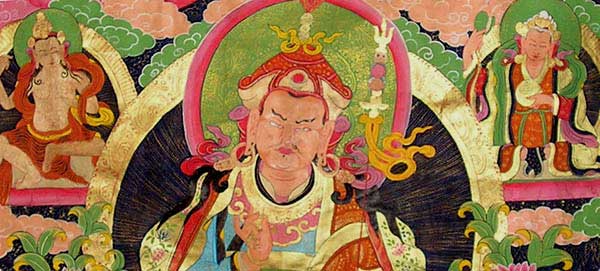
So both parties in the student-teacher relationship have to take that relationship very seriously, very seriously.  I know for a fact that the teachers regard the students with great seriousness.  Their love for the students is unconditional.  Once that student-teacher relationship has taken place, the teacher has become, for the student, Guru Rinpoche’s appearance in the world, Lord Buddha’s appearance in the world.  Once that happens, there is a love there or a bonding that cannot be undone by anything in the world.  There is nothing in the world that can take Lord Buddha’s blessing, Guru Rinpoche’s blessing out of your heart.  Nothing can do that.

Even if the students themselves were to act in a very inappropriate way, breaking the samaya bond, acting out of accordance with what the teacher has taught, even committing really negative actions like harming the teacher in some way, it is always the truth that if the student were to make restitution, were to turn their face towards Dharma again and truly wish to accomplish Dharma, and wish to separate themselves from their previous non-virtuous acts, the teacher would immediately respond to that.  There is no question.

As parents we do that with our children, don’t we?  Sometimes children will do pretty bad things, throw baseballs through windows, knock the cookie jars over, and really much worse things. So even though these acts may occur, the parent will always accept the child again.  The parent will not stop loving the child.  It may be true that there is a difficulty there, a burden, a strain, a suffering, but that is your child.  A good parent would never turn their face away from their child just because their child made a mistake.  Parents know that children are immature with very little discrimination.  They are learning, and it’s the parents’ job to teach them.  Exactly the same with the student and the teacher.

The teacher knows that students are sentient beings.  According to the Buddha’s teaching, all sentient beings are suffering.  They all wish to be happy, but they do not know how to make the causes of happiness occur.  They don’t understand cause-and-effect relationships.  So isn’t it to be expected that mistakes will be made?  Of course mistakes will be made. It’s only reasonable and logical.  So the teacher would never hold it against the student.  That relationship is like the Buddha’s compassion, all pervasive, beginningless, conditionless, without end.  That is the nature of that love.

So when we look to the student’s commitment, or samaya, to the teacher, we should look to see the same depth, the same bonding, the same beauty in that commitment as well.  And that commitment should be a joy on both parts.  Less the flavor of duty and responsibility than the flavor of love.  The love between the student and teacher is like the Buddha’s compassion.

Copyright © Jetsunma Ahkon Lhamo.  All rights reserved

Navigating the Darkness

The following is an excerpt from a teaching by Jetsunma Ahkon Lhamo called “Keeping Heart Samaya”

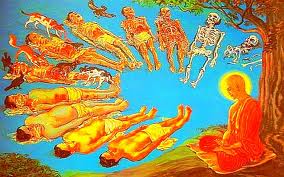
As sentient beings revolving in samsara, trying to go through life in the ordinary ways that sentient beings go through life, we are unable to see some of the conditions of samsara.  For instance, the Buddha teaches us that there are six realms of cyclic existence, six different realms, only one of which is human.  There are the hellish realms, the hungry ghost realms, the animal realms, the human realms, the jealous god realms, the long life god realms.

The Buddha teaches us about those different realms.  Well, I haven’t seen all of them, and most everybody I know hasn’t seen all of them, at least not that they can remember.  I know for sure there are animals. I know for sure there are humans. But how can any of us know about these other realms?  We have to rely, therefore, on the Buddha’s enlightened perception that is born from the profound realization that the Buddha accomplished and described when he said simply, “I am awake.  I am awake.”

So we rely on that perception, and from that perception the Buddha has taught us many things.  One of the things that Buddha has taught us is that all sentient beings are suffering.  Suffering is all pervasive, and – sorry to ruin your perfect day – you need to learn the reality of cyclic existence.  It is a little bit like needing to walk through a room full of furniture and obstacles and room dividers and shelves and sofas and rugs, and all kinds of things. Unfortunately because our vision is so obscured, it is as though that room were dark and the shades drawn and there were no lights on.

The Buddha teaches us that to learn about cyclic existence would be like turning the light on in that room.  If you are unaware of the condition of cyclic existence, it is kind of like trying to get through a room full of obstacles with no help, with no vision, no way to decide how to get through that room.  So you are going to stumble over things; you are going to fall over things.  There will be many, many hurtful and painful obstacles.  Instead, the Buddha recommends turn the lights on.  Be aware of the condition of cyclic existence.  Know what you are up against.  Strategize your path through life intelligently rather than living carelessly and haphazardly, stumbling over everything, having every obstacle that could take you down, in fact, take you down.

Many of us have experienced painful life situations that could have been prevented by the generation of some merit or kind acts that produce virtue within the mind stream.  So the Buddha teaches us to know carefully what samsara actually is.

Copyright © Jetsunma Ahkon Lhamo.  All rights reserved

The Karma of a Cup of Water

An excerpt from a teaching called Perception and Karma by Jetsunma Ahkon Lhamo, July 19, 1989

I’d like to illustrate some very basic teachings on the six realms of cyclic existence by looking at a cup of water.  In the human realm, this is a cup of water and it has lemon in it.  I know that it’s water because it smells like water.  It tastes like water with lemon.  I know what that tastes like.  I can tell the difference between tastes.  I know that water is good for me; I know that it will quench my thirst.  The reason why I’m having this experience is because of my karma.  In the animal realm, a dog would also experience that.   Let’s say a dog or some kind of lion or tiger or bear would experience that as water, also.  They wouldn’t know what the lemon was, they would think there was something funny in there, but they would experience it as water.  They don’t taste very much.  They know the water by smell.  They can’t taste the difference between city water and country water.  They might be able to smell a difference. But they know it to be water, and they instinctively drink it when they are thirsty.  They don’t think much about whether it will do this or that for them.  They don’t think about how much they need.  So their experience with water is similar, but different.

In the hungry ghost realm, beings are horribly thirsty and horribly hungry, and their mouths are very, very tiny, so they’re not able to take in food.  Someone from the hungry ghost realm would experience that as a cup of pus and would not be able to drink it because their experience is that it’s pus, it’s horrible and it isn’t drinkable, it isn’t water.  It smells foul and is foul.  It is not something you would drink.  So, they do not drink and they continue to be extremely  thirsty.  This is my cup of water, I know that it’s not pus but in the hungry ghost realm it would be experienced as pus and they would be terribly thirsty.

Why do they experience it that way?  Are they jinxed?  Did some magician go to the hungry ghost realm and transform all the water?  Is someone out to get them?  Had they just not looked in the right places? Should they keep on checking around? Should they think positive? What would happen if they could get it down?  Would it act like water?  No, it would act like pus, right?  Even if they could drink it, the water would act like pus to them.  No matter what they do, it remains pus and they remain thirsty.  That’s really disgusting, isn’t it?  Why does that happen?  It happens because of the karma of their mind.  Their perceptual experience that they have, the construction that they abide within has that reality or that quality because it is an emanation of their mind.  It is the karma of their mind.  It’s as real and as solid to them as the fact that this is water to me.

What about someone from the hell realm?  Depending on which hell realm it is, it would be either a cup of fire or a cup of ice.  Unfortunately, it would be a cup of fire if they were in the hot realms and it would be a cup of ice if they were in the cold realms. The difficulty is that if they held their nose and said, “I really think this is probably water.” They would drink fire and be burned. It’s very real, very real to them.  Why is that the case?  It is the case because that is the karma of their mind.

On the other hand, if this were experienced in the god realm, it would be experienced as a cup of elixir, the nectar of long life, or the elixir of infinite power, or the nectar of infinite beauty.  The gods would drink it and live a long time, anyway.  Nothing is forever in the god realm.  They would take it and it would be like an elixir that would put them into a state of absolute bliss for a while.

Well, I drank that water.  I drink lots of water, and so far, no bliss.  So it isn’t happening to me.  That’s because the gods have the karma of their minds and that’s how it works out for them.  Each one of these different beings that I have described arises from emptiness.  They are the same as emptiness; they are inseparable from emptiness.  Each cup in those different realms, no matter what was in it, arises from emptiness, it is the same as emptiness, it is inseparable from emptiness, and yet the experiences are totally different.  The experiences are different due to the karma of our minds.

Everything that you have ever experienced is completely relative, completely artificially constructed and totally experiential. Everything that you have experienced is like that, and yet what do we do?

Let’s think about the poor old guy in the hungry ghost realm with a cup of pus.  That’s really disgusting, isn’t it? Let’s say that he picks it up and he sees that it’s pus, and he puts it back down. Now what is the next thing he does?  He sits there and he feels really miserable.  He feels agonizingly miserable and thirsty.  Then he thinks, “Why does this happen to me?”  Then he thinks, “Everywhere I go, there’s this stuff.”  He thinks, “There’s no relief.”  He goes on and on and on and continues with the experience.  The experience does not stop when he decides not to drink it.  He continues with the experience.  He reacts to the experience.  The karma is that he experiences pus.  He’s in the hungry ghost realm and he’s experiencing phenomena as he experiences it, which is pretty disgusting, and he’s experiencing also this great longing for nourishment and help and respite from his suffering.

Then, after he doesn’t drink it, he continues with this process of saying, “Why doesn’t anybody love me and give me something to drink?  Why do I have to suffer this way?”  And then goes on with, “I’m so hungry, I’m so thirsty, I’m so ugly” and so on. What I have just described is an elaboration process that branches from the original karmic occurrence.  That elaboration is a very important factor and a very important thing for us to look at and understand.  It is the process of exaggeration.  Now, it sounds really far fetched to talk about this guy in the hungry ghost realm, but I use that example because it’s so solid, you can really understand how that might happen.

What about us?  Let’s use for example the experience that we have when we lose our job. We lose our job, and it’s not the first time we’ve lost our job.  The karma of that particular relationship that you had in order to have the job, ended. Maybe it just ran out because it was time.  Maybe it ended because you ended it but the karma of that particular relationship ran out.  What happens after you’re fired, though, is a process that continues and becomes more a part of you than the actual firing or even the job ever was.  That process is the process of exaggeration and elaboration.  You begin to elaborate on the process.

The first thing that happens is you begin to make an entire scenario about what really happened.  What really happened has a certain flavor.  You have perceived it in a certain way.  You have lost your job and you have the perception that your boss was kind about it, or your boss was mean about it, or it happened in this way, it happened at midday, it happened at night, it happened in the morning, it happened when it was a good time for you, it happened when it was a bad time for you, it happened before your car payment, it happened after your car payment.  You have your own kind of perception about it.

Spinning off from that, you have your determination, which is a more subtle process, about what the real story is. In other words, you’re always going to decide for yourself whether you should have been fired, whether that was righteous, whether you should be treated meanly or whether you should be treated nicely.  You’re always going to decide for yourself whether things happen as they do for good reasons, and then you’re going to make up a whole story about how it should have happened.  Probably you spend the next few days, weeks or months reworking the entire thing, and imagining what you might have said to your boss under different circumstances.  You have your own particular belief about how things should have happened.  From that you continue to elaborate and exaggerate situations, working it into the roots of your being, thinking ultimately, after you really work it down the pike, I’m a failure.  “Nobody loves me. My mother didn’t love me.  My father didn’t love me.  I’m destined to be poor and I am deeply flawed.” You know what you do.  I don’t have to tell you. You go into the entire scenario of all the different things that you feel are absolutely true.  So the experience doesn’t end with the cessation of a certain job opportunity, it continues with an elaboration process and that process is as real as the actual experience.  The exaggeration process usually is the one that sticks with you, longer that the experience itself, often longer than the job itself.  That is the experience that sticks with you.

Copyright © Jetsunma Ahkon Lhamo.  All rights reserved

Be Careful

An excerpt from a teaching called Perception and Karma by Jetsunma Ahkon Lhamo, July 19, 1989

The subject of perception – how perception relates to the nature of emptiness, how perception occurs, and the antidote to impure perception – is very difficult to understand.  In truth, it can’t really be taught effectively.  When it is taught, it is communicated in such a way that one has a taste of it.  However, in order to truly understand something about the perceptual process, that all phenomena, all experience, all feeling, as well as all sense of self, is merely an artificial construction and experiential phenomena, one must have something of an understanding of emptiness.

When you hear these kinds of teachings, you should know that at worst what you’re getting is no understanding whatsoever – like a bowl turned over where the water hits and it bounces off. On an intermediate level you may hear the teaching and have some intellectual or theoretical understanding.  Since we have not practiced on the most profound levels, the best that could happen under these conditions is that we will hear the teachings, have something of an understanding intellectually, and through one’s contemplation, develop a sense of insightfulness as to what this might mean.  The best thing that could happen is that in one’s practice one might have a moment of space or a moment in the generation process or perhaps in the dissolution process, where there might be a recognition of what I’m talking about, or a feeling that maybe you stood on the ground floor of that understanding and somehow you have a broader view of it, that you have ascended into a more profound level of understanding.

However from hearing these kinds of teachings, we do not understand the nature of emptiness.  We do not understand phenomena.  We do not get that the experience that we have of phenomena is that it is a perceptual process.  We do not stop relating to “thing” as thing, we do not stop relating to “self” as self.  You should not make the mistake that many practitioners have made, of thinking that hearing teachings like this, you have come to understand emptiness.   You should not, and this is the worst possible scenario, take these teachings and think that you have a profound understanding, and then act like you do. That’s the worst thing that you can do with the teaching.  There is nothing worse than that.  It is also the most common, unfortunately.

In acting as though you understand what these teachings are about, you might fall into the trap of reinforcing your sense of self, reinforcing the ego-clinging and ideation, as well as the clinging to phenomena as being real.  Ultimately, these ideas are phenomena, just as all things are phenomena.  When realization is attained, even the most profound teachings, even the deepest dharma is understood to be merely phenomena, and also empty.

You should be very careful. You should watch your mind and watch how you assimilate these teachings.  Be very, very watchful of yourself, and be certain that you literally understand that no understanding will come without sincere effort and contemplation.

The best way to increase one’s understanding of these kinds of teachings is to practice Guru Yoga.  When you practice Guru Yoga you increase your connection with Guru Rinpoche.  You increase your awareness of his teachings.  You begin to develop a sense of union and therefore the ability to receive the empowerment of his enlightened intention.  You are able then to hear teachings from your own teachers better.  All of the auspicious conditions that can occur will occur when you practice Guru Yoga.  If there’s any teaching being given out that is profound and worthwhile, then perhaps the best thing to do in order to increase your understanding is to practice Guru Yoga, and that includes the Seven-Line Prayer.  Practice in any way that will increase devotion.  Devotion is like a golden highway that connects your heart with Guru Rinpoche’s heart, your mind with Guru Rinpoche’s mind.  It allows his enlightened intention to bring forth empowerment, and that is the same with our own root teachers.  In practicing Guru Yoga, in practicing all practices that have anything to do with devotion, the connection with our root teachers is established. The connection is established and one realizes one’s root teacher to be inseparable from Guru Rinpoche, and therefore inseparable from the nature of emptiness itself.

These are some of the methods that you might use so that you can have a deeper understanding. I, also, wanted to give you some insight as to how not to hear these teachings and how not to accept these teachings.  This is of the utmost importance.

Copyright © Jetsunma Ahkon Lhamo.  All rights reserved

Commitment to the Dharma Path

The following is a full length video teaching by Jetsunma Ahkon Lhamo offered at Kunzang Palyul Choling:


In an upbeat manner, Jetsunma describes the faults of cyclic existence and how to make the most of the path that Dharma offers to end that suffering.

Copyright © Jetsunma Ahkon Norbu Lhamo.  All rights reserved


Spiritual Challenges

The following is an excerpt from a teaching by Jetsunma Ahkon Lhamo called “The Bodhisattva Ideal”

A Bodhisattva attains a kind of maturity and happiness that is different perhaps from what other sentient beings attain.  Other sentient beings revolve in this kind of episodic, cyclic continuum of you’ve got this and now you react in this way, and then you lose it.  Now you have this and you react in this way, and then you lose it.  And we go up and down and up and down and ride this current of samsaric experiences in the same way that a little child simply plays with everything around them.  You know how,when little children are small enough, the world is their toy and they just want what they want, whatever attracts their eye.  They want that and they have it. They don’t understand what that wanting is or where it’s going to result.

As sentient beings that have not been matured into the Bodhicittta, we live the same way. But when we mature as spiritual beings, we begin, like spiritual adults, to see the impermanent quality of everything around us—the feeling this and feeling this and riding on this current of acquisitions and power and self-pleasing.  We realize that this kind of thing is kind of fruitless in the same way that as adults we grow up and we don’t want to play with blocks any more.  We don’t want to color anymore.  We don’t want to do those things.  We don’t want to explore the world and put everything in our mouths to see what it tastes like, and drop everything from our high chairs.  We don’t want to do that.  We move on to bigger and better things!

So as spiritual adults, we feel like we have something else that we need to do.  We have a plan.  We have goals.  We have a long-range view. That is the spiritual maturing process that each one of us must go through.  How do you go through that?    Again, this is something that I have been trying to stress.  A child will never grow up if conditions surrounding the child do not “grow them up!”  Why would a child grow up?  Why would you stop going to Toys ’R Us?  There are all kinds of fun things there.  If they are living in a bubble that does not challenge them in any way, a child will simply not grow up.   But children do grow up into adults and they do so because as they move through time, or as they believe they move through time, they meet with greater and greater challenges.  And each experience of meeting with a challenge matures that person into an adult. It is the sum total of their experience that is their actual adulthood.  It’s the same way with a spiritual being as they move into the path of practice.

Copyright © Jetsunma Ahkon Lhamo.  All rights reserved

Prayer to the Peerless Guru

The following is from a series of tweets by Jetsunma Ahkon Lhamo on the first Guru Rinpoche Day of 2012:

Interesting isn’t it, how we tend to think only of ourselves, and not even realize it?

When His Holiness Penor Rinpoche passed to his Parinirvana I thought I’d never recover. But of course this happens, and we do. We must.

I knew there must be a transition for the Palyul Lineage and that although His Holiness Penor Rinpoche prepared us all, some instability may happen. It showed me how loved and powerful he was/is.

He rebuilt Palyul in India after crossing the Himalayas, starting with many and landing with so few – His Holiness Penor Rinpoche made mud bricks himself.

He was, and is, Palyul, as are his Heart Sons.

And now His Holiness Karma Kuchen Rinpoche is on the throne. Great confusion for a bit, and how it’s all right as rain.

What I never expected was how precious a jewel he was to the very fabric of reality – to many of us, the whole world, communal karma, the very universe, (cannot personally speak to the other three million myriads of universes.) The fabric of our lives changed tremendously.

We have a jewel on Palyul’s throne now. Yet the Dharmakaya Buddha who sat before is glorious, peerless, beyond measure. And I miss him so much! And always will. How precious to know he is always with us.

Lord of my life, please return to us swiftly! I’m calling you! Not like a lonely toddler, but with the force of love and the yearning of a small flower for the glory of the sun.

© Jetsunma Ahkön Lhamo All Rights Reserved


Mother Song and 7 Line Prayer

KW 176-x JAL with Atira-web

Mother Song & Seven Line Prayer

The following are the lyrics to The Mother’s Song, recorded by Jetsunma Ahkon Lhamo in 1992. You can listen to the recording by clicking the link above.

The Mother’s Song

This morning I woke up

With the sounds of suffering

Speaking their names

In my ear

Spoke of a time

When the Bodhisattvas

Could no longer appear

How can my heart bear the sorrow?

How can my eyes bear to see?

All of my babes lost and fearful

Having no means to be free.

No way to know of liberation

No way to cross samsara’s sea

How can I comfort the sick and dying?

How can I hold them within me?

If they are called, will they hear?

Will they see?

© Jetsunma Ahkon Lhamo, March 1992

The Seven Line Prayer: An Introduction

Guru Rinpoche

The following is an excerpt from a teaching by Jetsunma Ahkon Lhamo called “Experiencing the Hook of Compassion”

The Seven Line Prayer is so important. It is a magnificent prayer. It was not made up or composed by an ordinary person. It was miraculously manifested when primordial wisdom dakinis appeared literally from the sky to devout practitioners and told them, “This is how one calls the Guru. This is how one practices.”One will actually move toward enlightenment and can achieve enlightenment merely by reciting this prayer. Whenever a student asks me formally to be their teacher, I ask them to repeat this prayer many, many times. In fact I hope that each student will repeat it a hundred thousand times. Now that sounds like a piece of work, doesn’t it?  In fact, it is. But eventually you will learn to say the prayer so well that you can say it really quickly. You don’t have to say it slowly; you can say it very quickly and you can do a whole mala, that’s a whole prayer beads’ worth, in maybe ten, fifteen minutes. That’s pretty easy to do. That’s pretty easy to do. And then you can get to eight minutes. I don’t know what the world record is, but you can do it. You can, but you’re a blur. Your lips go “bluhbluhbluh..”.

Actually you can feel the wind on your nose.

This prayer actually occurs on three different levels. It has three different levels of meaning. The most profound level of meaning is so profound that the teachers do not give that level of meaning until you have accumulated three hundred thousand repetitions of that prayer. Isn’t that amazing?  This prayer has in it everything. It has refuge; it has bodhicitta. There is every kind, every element of practice within this prayer; but it’s in such a succinct form, that it’s just a prayer. It isn’t really a practice. You know, pujas in the Tibetan tradition take hours and hours and hours. There are all kinds of mudras that you do, and instruments that you play, and all kinds of amazing technologies that you apply. But this prayer, in a very succinct form, really has the seed of everything.

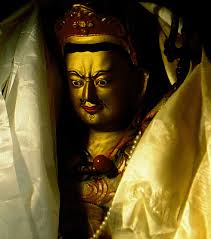
On the most external level, it is, according to the translation, an invocation to Guru Rinpoche, who is the actual emanation and display of Lord Buddha who brought Vajrayana to Tibet; and he is supremely realized. On a deeper level, there are so many different levels of meaning, layer upon layer of meaning. The syllables that are in this prayer are power syllables. They have some particular power due to the way in which they were given through miraculous means, and due to the vibrational quality that is associated with these syllables. As you sound the syllables, they actually purify the inner, psychic channels, winds and fluids, that in sentient beings are polluted and kinked and distorted and actually blocked. The sounding of these syllables begins the process of purifying them and unkinking them, and actually changing you in some profound way, some psychic way, that is really extraordinary, actually extraordinary. Plus in a hidden and symbolic secret way, all the elements of practice are in this prayer, including extraordinary devotion to one’s guru . As you begin to sound it with faith that this miracle will take place, the change begins to occur, even though you are not doing the full practice. So if you want to begin, learn how to say this practice. Learn how to say this prayer.

See the prayer and listen to Jetsunma recite it by clicking here

WP2Social Auto Publish Powered By : XYZScripts.com