The Brilliance of the Great Bodhicitta

An excerpt from a teaching called How to Pray by Being by Jetsunma Ahkon Lhamo

As we realize that others need our help, we begin to heed their calls. We begin to turn to what is real, what is profound—the brilliance of the great bodhicitta. The great bodhicitta is the first movement from the void—from the absolute, uncontrived, undifferentiated spontaneously complete emptiness. Bodhicitta is the arising of the Buddha nature in a gossamer-thin, seemingly phenomenal, form. Bodhicitta contains all potential. It is the big “yes.”  Separate from nothing, containing all potential and all accomplishment, the great bodhicitta is the first movement of the absolute. Bodhicitta is also called compassion. Compassion is our nature.

We have deprived ourselves of the deliciousness, the comfort and the happiness of compassion for so long that the bodhicitta seems like something we have to work on—like an outsider that we have to bring into our home.  How sad, because compassion is our nature. When we are self-absorbed, we are denying ourselves the nectar that is the first movement of our very nature. And so if the great bodhicitta is really the first appearance of any kind of phenomena, if it is the underlying reality of any phenomenon, then compassion is also our nature. In fact, compassion is the nature of the meanest little bug in the world. It is the nature of spiders and lions and tigers and bears—and everyone else too.

All sentient beings have that nature and yet they live in a state of sleeping. We, on the other hand, are practicing to be awake. We wonder, “How do I see the bodhicitta? How do I develop the unconstricted, uncontrived, non-dramatic, undecorated view?

© copyright Jetsunma Ahkon Lhamo all rights reserved

Getting Connected

An excerpt from a teaching called How to Pray by Being by Jetsunma Ahkon Lhamo

How do we pray?  How do we rely on the Buddha, the Dharma and the Sangha and the Lama who is the embodiment of all three?  First of all, we have to get connected. We have to get wired up. And the way we get wired up is to practice refuge.

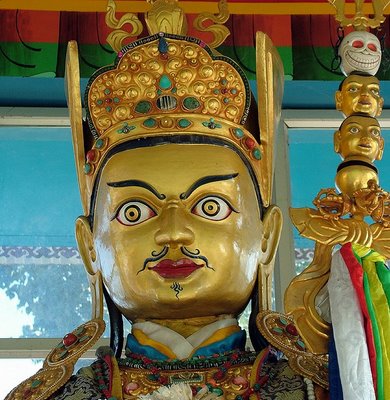
We have to view the Three Precious Jewels as though we were hanging over a giant abyss with crocodiles at the bottom, and the only rope to safety is held by the Three Precious Jewels. The rope is Guru Rinpoche—it is the Lama—and we hold on and start climbing. In other words, we sincerely take refuge, deeply in the most profound way that we can.

Most of the time we take refuge in ordinary things. We take refuge in our television programs, in our computer, in our social life or whatever it is that we like to do. We go to them to be happy. That’s 180 degrees away from prayer. Instead, we should realize that here we are asleep, living in a dream state, and that we must rely completely on the awakened ones and their teachings in order to wake up. We can’t rely on the teachings of someone who is also sleeping. That would be the blind leading the blind.

Lord Buddha was called the Perfect One because in every appearance and in everything that he did, he demonstrated that state of pure awakening and enlightenment. The Dharma, the method that we are using, has come from that awakened state.

© Jetsunma Ahkon Lhamo

How to Pray by Being

242305534_TmWni-S

A teaching by Jetsunma Ahkon Lhamo given in the wake of the Tsunami in 2004

In order to pray, first we have to understand that we are Uncontrived Primordial View – Suchness.  The Uncontrived Primordial View is every potential in its essential uncontrived form.  Our nature is that which is unborn, absolutely complete and perfect in every detail.  It isn’t made, it isn’t grown, and it can’t become stronger or weaker.  It is conditionless.  So we practice VIEW to allow the “boxes” of our mind to fall away so we can recognize that conditionless state and awaken to it, at last.  Our prayers have to be like this as well.

Because we haven’t really awakened to that conditionless state yet and we are unable to disentangle or to let the boxes down so that our view opens and we are in a state of recognition, then we should rely on the Three Precious Jewels of Refuge. Sincerely take Refuge deeply in the most profound way that you can. Rely completely and unwaveringly on the Three Precious Jewels and the Lama who embodies all three.

How do we do this? First we have to get connected – wired up.  The way we get wired up and connected is to practice Refuge.  Realize we are in this dream state and so we rely completely on the Awakened One.  Take Refuge Deeply.

In order to really pray we must let go of pride, our clinging to self.  The one that says, “Look at me, I’m praying.  Maybe if I recite this mantra, it will go over there to that person.” That’s not very awakened, is it?  Rather, this is dualistic.  The most important element in learning to pray is to let go of pride, the idea that I am a practitioner, I am praying, I am doing this, I must be good at it. Me, Me, I, I.

Our pridefulness and doubt are the two main obstacles to true prayer. Haughtiness and pride lead to anger.  Pride precedes anger because you think you are right.

With prideful thoughts, we are clinging to self-nature as being inherently real and we are always in a state of judgment.  If we are high, others are low.  Develop awareness that we are the same nature.  All of us are expressions of the infinite possibility of the Primordial Uncontrived Wisdom State…. Like white light going into a crystal and the colors are all broken up into different shades and beautiful reflections.

So instead of pridefulness when we get ready to pray, we should get down on our knees and pray and say:  “These are my brothers and sisters, some of them swept off the face of the earth by this giant wave, some of them are hungry, they’ve lost their families, many of them are in the bardo….”  So we think with that kind of compassion and consider the situation of other sentient beings rather than worrying so much about ourselves.  Simply consider their suffering.  Keep one’s ears open to their calls, to their suffering and to recognize that they are the same.  Not higher, not lower…. the same.  They are the same in their Nature.

Adopt the posture of a  “clear hearing” of the calls of sentient beings. “I hear you.  I am not separate from you”.  We have to hear the cries of sentient beings and then remember they are the same as us.   Have the posture of  “It is a privilege to honor that which you are”.

Untangle your pride.  Its like a constricting force on your heart.  It keeps you from opening up.  It keeps you separate.  It keeps you miserable and it affirms samsara every day. You are praying for suffering when you pray with pridefulness.  Lose the prideful stance and connect, wire-up to the Three Precious Jewels.  Pridefulness is the opposite of prayer.

“So, as we realize that others need our help and we begin to heed their call, we turn to what is real, what is profound.  From the Great Void…. from the absolute uncontrived undifferentiated spontaneously complete emptiness, is the brilliance of the Great Bodhicitta.  The Great Bodhicitta is the first movement, like the first word, the first movement.  It’s the arising of the Buddha Nature in a gossamer seemingly phenomenal form.  The Bodhicitta, the first movement of emptiness contains all potential…the Big YES.  Separate from nothing, containing all potential, containing all accomplishment…the Great Bodhicitta is the first movement of the Absolute, and that is also called Compassion.”

Compassion is your nature. You have deprived yourself of the deliciousness, the comfort and the happiness of true compassion, of the Bodhicitta for so long that the Bodhicitta seems to you like something you have to work on, like an outsider that you have to bring into your home.  How sad.  Because it is your nature.

How do we develop the unconstricted, uncontrived view?  First we practice Guru Yoga.  Guru Yoga is the nest in which prayers are developed.  In Guru Yoga we see the Lama as the embodiment of all the fields of refuge, all of the excellent extraordinary displays of Buddha nature that did not arise in samsara, that are pure and untainted.  Through your practice, you become absolutely non-dual with the Guru.  You mix your mind stream with the Guru like milk with water.

Train yourself to remember to receive the Three Light Empowerment of body, speech and mind 24 hours a day.  Receive the nectar, the blessing every minute of every day.  Receive this amazing phenomena of connection.  Develop the habit of constantly keeping that connection.  This is prayer without ceasing.  When we receive that empowerment, our mind is mixed with the Guru and the blessings are all-present.  Mix your mind with the Guru’s mind. Awaken to the non-duality. The Nature that is your Nature.

We have to be willing to change.  It takes getting down on our knees and challenging our habitual tendencies.  Dharma cuts like a knife.  It’s supposed to.  It’s doing a big job.  We have to do a lot of work because most of our life we spend chanting, “Om samsara Hung.” So we look to the teacher, we look to the Buddha, we look to the Dharma, and we look to the sangha with determination and strength.  It takes steadfast Vajra Courage.

Prayer is when you are in a state of awakening; when the Bodhicitta that is the nectar of the Guru’s mind is mixed with your own mind, and the nectar becomes inseparable.  That nectar is the Bodhicitta.  It is being fully aware that your nature is the Bodhicitta and it is the Bodhicitta that benefits sentient beings.  When you are aware that you are that, it is that that you send to others.  Being confident, not prideful, confident in that blessing; and therefore you can pray.  Now you have the Bodhicitta.  Now you ARE the Bodhicitta.  And that is the potency and power that you rely on.

It’s every minute.  It’s a path.  It’s a way of life.  And it is the true method to achieve the precious awakening.  When you know that other beings are suffering so terribly and we have found this “Jewel” and it is in our hands, and this nectar is given freely, then I ask you “Why not learn to pray?”

© Jetsunma Ahkön Lhamo

Relying on the Three Precious Jewels

An excerpt from a teaching called How to Pray by Being by Jetsunma Ahkon Lhamo

Truth be told, we haven’t really awakened to the conditionless state yet.  Maybe we’ve had a few experiences in our meditation, a little taste of emptiness if we really go deeply into our practice, but it’s only for a second.

For most of us, we are unable to let the boxes down so that our view opens and we are in a state of recognition. Because of that, we are taught that we should rely upon the Three Precious Jewels—the Buddha, the Dharma and the Sangha, and mostly especially the Lama, as the embodiment of all three.

In other words, when we see the lama, we are seeing the Nirmanakaya or body form of the Buddha—a projection of the Buddha nature in phenomena. The Nirmanakaya has appearance and characteristics, but these are gossamer thin. These are insubstantial, like dew on a hot morning. And so we rely on our teacher as the representation of the primordial wisdom nature.

We rely on the Buddha because the Buddha is the doctor who gives us teachings—tells us what is wrong with us and how to fix it.

We rely on the Dharma, which is the medicine—the tried-and-true method that practitioners have used for thousands of years to escape the suffering of samsara.

We rely on the Sangha who care for us, like a nursemaid, until we are awake. It’s as if we are in a coma, and there’s nobody to take care of us but these nurses. The nurses bring us the medicine. They support us. And so we love and respect the sangha.

© copyright Jetsunma Ahkon Lhamo all rights reserved

The Spiritual Teacher

GuruRinpoche3

The following is respectfully quoted from “The Great Perfection: Buddha in the Palm of the Hand” by Gyaltrul Rinpoche

The first root downfall is to disrespect one’s root guru or gurus. If we belittle or disrespect our spiritual teacher, our guru, then not only do we shut the door to liberation, but probably we will have a difficult time getting out of the lower realms.

What makes someone your guru, your spiritual teacher? To begin with, an empowerment. Once you have received an empowerment from a teacher, the teacher becomes the guru, the object that this first vow pertains to. When it comes to inner tantric empowerments this is especially so. If a person has been your teacher from childhood onward, has taught you dharma continuously, or has been an important catalyst for the development of your insight, or has given you teachings on the generation and completion stages, or has openly revealed to you the secret oral instructions on the great perfection atiyoga, this person can be considered your guru. This kind of teacher is said to be one who has been kind to you in three ways: by giving  you empowerment, by giving you teachings on generation and completion stage practice, and by giving you teachings on the great perfection. Whether the teacher has given you only one, two, or all three of these, if you disparage or belittle that teacher in any way the samaya is lost.

Now how is this done? For instance, if you feel that you are more learned than the teacher, and that you could have done it better. In the extreme case you would eliminate your teacher so that you could take his place. Or, with a mind of jealousy, anger, or attachment, any of the poisons, to speak badly about the teacher to others, to tease the teacher, to disrespect teacher from the door of your body (such as ignoring the teacher), to disturb the teacher, upset the teacher’s mind, or cause the teacher to be displeased–of all broken samaya this is the heaviest. Very difficult.

As it has been taught, as an antidote to these problems, and to avoid them, you must always see the spiritual teacher as a living buddha and the embodiment of all buddhas, in all situations.

The Importance of Consciousness

An excerpt from a teaching called How to Pray by Being by Jetsunma Ahkon Lhamo

Quantum physicists are beginning to understand that the universe is multidimensional. They are beginning to understand that because their math is not working, there must be something else out there that they can’t figure out. The reason why their calculations don’t work is because they leave out one of the components of reality—consciousness. Time, space and consciousness are inseparable. So scientists are mistakenly looking out with their telescopes for the birth of the universe.

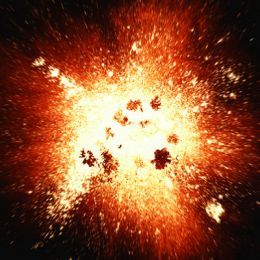
I’ve been asked, “How did this explosion of phenomena start?” I tell people, “Close your eyes. Let everything go. Dissolve into emptiness.” They do it. After a while I say, “Okay open your eyes.” Then I explain: “When you opened your eyes, that was the Big Bang. That was the moment. That was when movement started. That was it. It’s not out there.”

Phenomena appear in many different ways, in as many different ways as we can conceive, in as many different ways as we can move away from emptiness. The universe is an entanglement of intentions, dreams and potentials. Each one of us, every sentient being, experiences a separate and different phenomenon. Even though we are all in the same room, everyone here is experiencing a separate and different reality according to his or her individual karma.

The places that we can go in samsara are endless. They are infinite. As we conceive something, more phenomena are created. Lord Buddha taught about interdependent origination, that cause and effect arise simultaneously. They are linked. Even though we see the cause, we usually don’t see the result. That’s because we are still in a place where everything seems to be outside of us.

We pray like that, too.  We think, “I am praying to Guru Rinpoche, and he’s going to make everything better.” We think, “I’ll say some words or I’ll say some mantra and magically they will go there and sprinkle star dust on everybody.” We pray as though we are unconnected. We pray as though we are not in charge. We pray by rote like parrots. We repeat our prayers and hope for the best, as if prayer is a magic incantation. We don’t have any idea how there’s going to be any benefit.

In order to pray let’s understand that, first of all, we are all that is, suchness, the uncontrived primordial view. We are every potential in its essential uncontrived form. Our nature is that which is unborn and yet absolutely complete and perfect in every detail. It isn’t made. It isn’t grown. It can’t become stronger or weaker. It is conditionless. And so we practice view to allow the boxes in our mind to fall away so that we can recognize that conditionless state and awaken to it at last.  Our prayers have to be like that as well.

© Jetsunma Ahkon Lhamo

The Importance of Faith

Gyaltrul Rinpoche

The following is respectfully quoted from “Great Perfection: Buddha in the Palm of the Hand” commentary by Gyaltrul Rinpoche:

Faith cannot be forced in the disciple’s mind. You must understand the qualities of the objects of your faith; only then is there a ground for faith. Because these are difficult times, if a disciple has true, firm faith that isn’t wishy-washy but is based on a true wish to practice on the path, and if a teacher at least possesses impartial compassion, then these two make a suitable connection–the faithful disciple and the compassionate teacher–and it is appropriate to nurture that connection and practice on the path.

Obviously, these are not all of the qualities mentioned above, but it is very difficult if not impossible, in these degenerate times, for both lama and disciple to have all the qualifications and to come together at the same time. What is obvious and true for you now is what you call your “luck,” which is actually the force of good karma accumulated in the past; you only call it “luck” because you know nothing about it. It’s just an accumulation that you’ve unknowingly made.

Look at your present situation and compare yourself with millions of people in this and other countries who have no time for any kind of spiritual pursuit. This karma you have is really quite strong because it’s remarkably natural and easy for you–at least for these Nam Cho transmissions. Sofr these particular transmissions there’s a great amount of karma that we’re all a part of, and a great amount since the Nam Cho revelations are teachings of the ninth vehicle, the peak of the path, the atiyoga transmissions, you should rejoice in having this kind of natural, spontaneously arising karma to make these kinds of connections.

Padmasambhava said, “My dharma of the secret mantra is extremely dangerous, like taking a wish-fulfilling jewel off the head of a poisonous snake.” If you’re able to get the wish-fulfilling jewel it has the power to fulfill all your wishes. But you risk your life trying to get it. Padmasambhava gave this analogy for the path of secret mantra, and it pertains especially to the path of terma revelations. There is also the analogy of the snake in the bamboo shaft with only two directions to go: up or down. If you keep samaya and practice well, you go straight up and experience very swift results. If you don’t keep samaya and don’t practice, then just as good results are swift, so are negative ones.

To be a suitable disciple, the main quality you need is faith. It doesn’t matter which dharma you’re receiving–Kagyu, Nyingma, Sakya, Gelugpa; hinayana, mahayana–you don’t even need to be smart. You just need faith.

There Is No Self

An excerpt from a teaching called How to Pray By Being by Jetsunma Ahkon Lhamo

The Buddha taught that there is no self, that all that exists is primordial wisdom nature, with every potential, including the idea of self and the idea of phenomena rising out of emptiness. This potential is here. Although one of the ways that the primordial wisdom nature displays itself is in phenomena, we cling to phenomena as being inherently real. In fact, we cut our teeth on phenomena.

We have experienced phenomena since time out of mind, and so we are accustomed to the experience. It’s the only thing that makes us feel safe. Oddly enough, we spend all of our time contemplating the solidity of self nature, and we believe that self nature is inherently real. We identify with this body, thinking it’s us. We think that if we hold onto to self nature, we’ll be safe because we’ll be us. We think, “I’ll be staying here, you’ll be staying there, and we’ll continue in phenomena.”  But in fact, there is no difference between phenomena and emptiness. They are the same nature. They are the same essence. They are the same taste.

So while our habitual tendencies cause us to remain in this delusion of separation, still this nature exists—wholesome, absolutely complete and perfect, with no need for aggrandizement, with no need for construction. It is as it is. This is the nature that is our nature, and it is as much our experience, even now, as phenomena are, but it frightens us. So we cling to phenomena. Sadly enough, we become self-absorbed in that process. We think, “Oh this is me.  I’ve got to take care of myself. I’ve got to do what is right by me. I’ve got to have fun. I’ve got to have excitement. I’ve got to have pleasure.”  And that’s our experience—even though emptiness is at hand and we experience emptiness in our nature now. The Buddha nature that is our nature is complete. It doesn’t need any tinkering. Still, we cling to the idea of self. And of course, that’s the trouble that we’re in now.

© Jetsunma Ahkon Lhamo

Relying on the Three Precious Jewels

An excerpt from a teaching called How to Pray by Being by Jetsunma Ahkon Lhamo

Truth be told, we haven’t really awakened to the conditionless state yet.  Maybe we’ve had a few experiences in our meditation, a little taste of emptiness if we really go deeply into our practice, but it’s only for a second.

For most of us, we are unable to let the boxes down so that our view opens and we are in a state of recognition. Because of that, we are taught that we should rely upon the Three Precious Jewels—the Buddha, the Dharma and the Sangha, and mostly especially the Lama, as the embodiment of all three.

In other words, when we see the lama, we are seeing the Nirmanakaya or body form of the Buddha—a projection of the Buddha nature in phenomena. The Nirmanakaya has appearance and characteristics, but these are gossamer thin. These are insubstantial, like dew on a hot morning. And so we rely on our teacher as the representation of the primordial wisdom nature.

We rely on the Buddha because the Buddha is the doctor who gives us teachings—tells us what is wrong with us and how to fix it.

We rely on the Dharma, which is the medicine—the tried-and-true method that practitioners have used for thousands of years to escape the suffering of samsara.

We rely on the Sangha who care for us, like a nursemaid, until we are awake. It’s as if we are in a coma, and there’s nobody to take care of us but these nurses. The nurses bring us the medicine. They support us. And so we love and respect the sangha.

© Jetsunma Ahkon Lhamo

Letting Go of Pride

An excerpt from a teaching called How to Pray by Being by Jetsunma Ahkon Lhamo

In order to really pray we have to let go of our pride, of our clinging to self. We have to let go of our self-importance, of that part that says, “Look at me, I’m praying” or the one that says, “Maybe if I recite mantra, it will go over there to that person.”  That’s not awakened; that’s dualistic.  So pride is the main obstacle to our true prayer—pride and its twin, doubt.

There is a Christian teaching that explains why. Although I am not a Christian minister, I do very much value the teachings of Jesus and know that he was a great and realized bodhisattva.

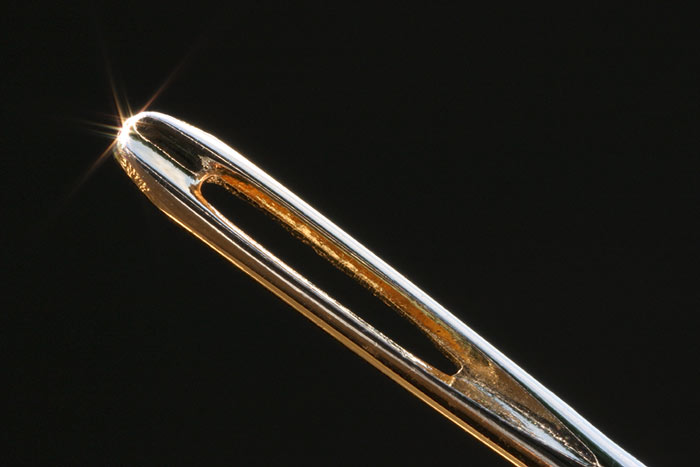
Jesus once gave a teaching in which he said, “It is easier for a camel to go through the eye of a needle than for a rich man to enter the kingdom of heaven.”  What did he mean?  In ancient Jerusalem there was one gate that went into the city (it was known as “the eye of a needle”), and that gate was very low and very small. In order for a camel to get through it, it had to get down on its knees and crawl. But a rich person is often too proud to kneel.  So that teaching explains that pride is the obstacle. Pride is the enemy.

When we have prideful thoughts, we are clinging to self-nature as being inherently real, and we are always in a state of judgment. If we are high, others are low. So the most important element in learning to pray is to let go of pride—the idea that I am a practitioner, that I am praying, that I am doing some good. Instead of that pride, we need to develop an awareness that everyone is the same in their nature. All of us are expressions of the infinite possibility of the primordial uncontrived wisdom state—like white light going into a crystal and breaking into different colors, into beautiful reflections. Do we cling to the colors and no longer look at the light? Do we only look at the display and not look at the foundation? No. What would be the benefit of that?

So when we get ready to pray, we should do like the camel did in Jerusalem: we should get down on our knees. Our inner posture should be a heartfelt awareness of our interconnectedness. We should pray, “Here are my brothers and sisters, some of them swept off the face of the earth (by a giant wave, an earthquake, a plane crash, an act of war or some other tragedy…). Some of them are hungry. Many of them have died. Many have lost their families and loved ones.” We think with that kind of compassion and consider the situation of other sentient beings rather than just worrying so much about ourselves.

We simply consider their suffering. We keep our ears open to their calls, and we recognize that we are the same as they—not higher, not lower, but the same in our nature. We all have the seed of awakening. There is no difference. The haughtiness that we have, the games that we play, all have to go.

Instead, we adopt a posture of clear hearing. We have to hear the cries of sentient beings and then remember that they are the same as us. We have to think, “I hear you.  I am not separate from you.”  And we remember the Three Precious Jewels. It could easily be that in our next life, we are in their position and they are in ours.

By untangling our pride, we realize that it is our privilege to benefit them. Pride is like a constricting force around our heart.  It keeps us from opening up. It keeps us separate. It keeps us miserable, and it affirms samsara every day. When we are prideful, we are praying for suffering. We are praying to continue in the land of lost ones.

So we are taught to drop that prideful stance and to connect and wire up to the Three Precious Jewels. We take refuge because we realize that in samsara there is only samsara no matter what it looks like or how dynamic it appears. Samsara will dance and seduce. Samsara will say, “Drink me.” Samsara will say, “Eat me.”  Samsara will say, “Come and play. Be free.”  Samsara is a seductress who will make us suffer even more than we thought possible.

© Jetsunma Ahkon Lhamo

WP2Social Auto Publish Powered By : XYZScripts.com