The Mixed Karma of the Human Realm

doubt

The following is an excerpt from a teaching by Jetsunma Ahkon Lhamo called “The Foundation of Bodhicitta”

Now we are getting to the egg yolk. Actually the optimum life is to be born as a human,. even more than the god realm. Interestingly the god realm seems to be more fun. Wouldn’t you rather have a nice cool glass of the elixir of life?. Or would you rather have a glass of water? Now I know the answer to that. You monks and nuns, it’s been a long time since you have had anything to drink. You would like a nice elixir of life, wouldn’t you?. So, it seems like you would want to born in the god realm. The interesting thing about the human realm is that it does have definite suffering, which you have seen (and I have explained what the suffering is). Plus it particularly has the suffering of old age, sickness, and death. They don’t mention taxes. Maybe they didn’t have them when the Buddha was here. You might escape taxes, but you will never escape death. Maybe that is why he didn’t mention it. Even though those sufferings are present in the human realm alone, there is the peculiar meshing of karma, the peculiar evolution of karma that comes together in a certain way that we can practice the Dharma. We can make a choice and practice compassion. We can practice meditation on emptiness. We can practice Dharma in such a way as to achieve realization. We have this kind of queer mixing, or spaciousness, in our mind. In some cases it is not spaciousness, but it is just that the karma is ripening in a certain way that we can practice.

The teaching says that we have time to practice. Time to practice means what? ? Time in our minds to practice, not time in the day to practice. Anyone can get so busy that you don’t have time in the day to practice; but if you can conceive of time to practice, you have time to practice. You can make time to practice. In the animal realm, there is no time to practice because they are too busy being ignorant and fearful. In the hell realm, there is no time to practice because they are too busy suffering horribly. You can’t practice, you can’t think about compassion, if someone is bonking you over the head. You can’t think about compassion, or burning up in a burning house. In the hungry ghost realm, there is no thought of practice because all you can think about is need—I need, I want, I want, I want. But in the human realm, one can consider practice. There is space to practice. In the god realm, one cannot practice very well either because you are too busy enjoying bliss. You are so filled with bliss all you have to do is drink water. Why would you want to practice? All you have to do is touch something and it feels like waves of bliss. Why would you want to practice? Why you would want to practice is that all of these six realms are impermanent, even the god realm. In the human realm, though, you can practice. We too have sufferings—old age, sickness and death.

What causes us to be born in the human realm? Two things: A lot of merit and virtue that we have accumulated in the past through eons and eons of cyclic existence happened to pull together in one big puddle and ripen in such a way as to produce a human rebirth. But there is also non-virtue that produces a human rebirth. If we had total virtue, if that was all that we had, we’d just wake up one day enlightened, I guess. But that is not what happened. We got reborn in the human realm. What is the non-virtue that accounts for a human rebirth?. The main non-virtue that produces human rebirth is doubt. Doubt. You don’t believe that, right? I knew that. See what I mean. The main suffering of the human rebirth results from doubt as well. And that is why it is possible for so many of us to have with the auspicious opportunity to meet with the Dharma, to meet with the human condition with which we can practice. And we don’t practice. We don’t. If you really believed, if you understood that these six realms of cyclic existence exist, if you understood about your death, if you understood the cause and effect relationships that bring about an auspicious rebirth, if you understood what it takes to produce enlightenment, that is what you would do. You’d practice. But you have doubt, and that is why you don’t do it.

Copyright © Jetsunma Ahkon Norbu Lhamo All rights reserved

The Long Life Gods – Is It the Good Life?

A3godsrealm

The following is an excerpt from a teaching by Jetsunma Ahkon Lhamo called “The Foundation of Bodhicitta”

Now there is the long life gods realm.  It is hard not to pray for rebirth in the long life god realm. First of all, it lasts a very long time, maybe two or three thousand years. Three thousand years of total bliss sounds like a nice vacation to me. That sounds better than three weeks at the beach in the summer, but I can’t figure out where to buy the ticket. There are problems with this realm, actually. There is a suffering to that realm and the suffering of that realm is that it is impermanent. In the realm itself, while it exists, there is no suffering. Water is like the elixir of life; it can cure all ills. Music when heard doesn’t sound like music to us. Music to us is either good or bad; we either like it or don’t like it. It helps, it hurts; it depends on what kind of music it is. If we are in the long life gods realm, one note can cure any ill, can result in bliss. Just one sound, one touch, brings about waves of bliss. I can’t think of a better word. Ecstasy!  Everything that happens is ecstasy.

The gods and goddesses are beautiful beyond compare. Take the most gorgeous person you can imagine in the physical realm. Think of the most gorgeous movie star or person that you have ever seen and think that in the god realm they would be dogs. They would look like fish mongers. People in the god realm would look at them and would go yeck, stinko—literally stinko—because in the god realm the fragrance that is given off of the body is like perfume coming from every pore,but sweet perfume. Estee Lauder would be nothing compared to this. It would be the perfume of virtue.

In order to be reborn in this gods realm, you have to have a lot of virtue stored up, but it is a particular kind of virtue. It is the kind of virtue where maybe you help others become rich, or help others to become full of food. You see what I am saying? It is virtue, but it is not associated with philosophical or religious ideals. It is just a different kind of more materialistic virtue. So this kind of virtue can result in this wonderful life in which you are so beautiful you just can’t believe it. There is not a flaw on your body. You never have b.o. Your b.o. will heal all sentient beings if they just catch one whiff of it. I don’t care what beautiful movie star you have imagined to be your person to compare them with, but they have b.o. sometimes. You may not believe this but everybody smells sometimes, but in the long life god realm everybody is perfect.

Everything that you see is color, not like color you see here. It looks very colorful in this room, right? You go outside and you see beautiful greens and you see beautiful blue sky. Color in the long life god realm is so gorgeous, you just look at it and you experience ecstasy. Wouldn’t you like to go there?  No, you wouldn’t because the problem is that when you are born in this long life god realm, it takes so much virtue , to be reborn there, accumulated virtue over eons and eons of cyclic existence, that when you are reborn there you begin to use up your virtue like an eight cylinder car going up a mountain. You use it up so fast. Admittedly, it is often a couple of thousand years, but in terms of cyclic existence, which is eons and eons of endless cyclic existence, that is a short time. And also while you are in the long life god realm, to a human it may seem like two thousand years, but to you it might seem like a short life time because there is so much pleasure that one’s whole experience of that pleasure becomes completely expanded. So in the same way a fun day goes by faster than a long and tedious day, it’s kind of like that, but so much greater than that.

So the long life god realm is very difficult in that at the end of that life, what happens to them is they begin to smell funny. That is how the other gods and goddesses know that their time is up. They don’t begin to age as we know aging, because aging is not one of the sufferings of that realm. They begin to lose some of their perfume. It’s not that they smell funny, it’s just that they lose some of their perfume. They have a little less of that gorgeousness, and the other gods and goddesses begin to move away because no one can bear the idea of bliss ending. . They don’t want to think about that. And the god or goddess that is experiencing the end of their time there calls out to them and says, “Please help me. Give me some of your virtue. Help me.”  And the others go, “No, I can’t, I can’t deal with the fact that I’m going to lose what I have now, so I’m going to move over here.”  What happens at that point is the karma is used up and so the rebirth in the god realm begins to decay and at some point ,because they even have the quality of clairvoyance, they are able to see the realms of cyclic existence and they are able to understand that they just finished up all of their virtue and the only place to go is down, real far down. That is the great and horrible suffering of the god realm.

This suffering is so intense because having used up all of their virtue now they have to begin from scratch. How horrible to think that you had accumulated so much virtue and could have achieved realization, but somehow missed the boat due to the kind of virtue that you have and due to the one quality that does produce rebirth as a long-life god. The one quality that does produce rebirth as a long-life god is pride. Have you seen people with lives like that?  Have you seen people who have beautiful families and beautiful homes and beautiful cars, and they are beautiful people. And it seems that everything is easy for them; and they hold themselves with a sense of pride as though they were different from the rest of us peasants. There is a lot of pridefulness about that. I even knew of a person who had a great body and didn’t have to work out; they had a gorgeous wife and didn’t have to be faithful to her in order to keep her; they had so many different things that you just want to say to them, “Why? I work like a dog.”  You look at that person and you just want to slap them upside the head because they don’t seem to produce any virtue. They are not virtuous at all. Things just ripened in such a way. They just say, “I can do what I want to because I am not going to catch hell from anybody.”  Well, that is the attitude and the mind state that would produce rebirth as a long life god—lots of virtue tied in with that kind of pridefulness.

Copyright © Jetsunma Ahkon Norbu Lhamo All rights reserved



The Animal Realm: Ignorance

oryx

The following is an excerpt from a teaching by Jetsunma Ahkon Lhamo called “The Foundation of Bodhicitta”

The next realm is the animal realm. Now we have a strange understanding of the animal realm. We think, ‘Now that won’t be so bad.’  I have actually had people say to me, “I wish I could be a dog in my next life so that people would pet me.”  And I go, “Oh, no. Please don’t say that because you are not going to be a dog. You are going to be a hungry ghost.”  Don’t do that. That kind of neediness, that kind of idea,… You don’t want to express that. Let’s understand the animal realm better.

It isn’t like our little puppies and our little kitties and our little birdies. It isn’t cute little fluffy stuff like that. You have to think about what the animal realm is really like. Animals are completely at the mercy of the higher life form of humans. They are completely at the mercy of one another. In animal realms, there is the predator and the victim. And even amongst those animals that do not engage in that kind of activity, they are victimized by their own stupidity. I think about the bullocks in India. They have to pull these huge carts. Their owners whip them all day long in order to make them pull these huge carts; and they decorate their horns and think of them as their objects. They are their objects; and really they are more valuable than their wives because the bullocks can make it possible to pull these large amounts of things that the owners need to pull in order to make their livings. So I think about that kind of suffering. I think about camels that are ridden across deserts, not ever being able to go where they want to go. I think of horses that are never permitted to do what they want to do, never permitted to live naturally. I think about even our own domestic pets that are at our mercy as to whether or not we remember to feed them, whether or not we remember to take them to the vet. It’s our decision whether or not we want them fixed. It’s a dog’s life. It is a terrible thing to be engaged in the animal realm, because in the animal realm the chief suffering is that of ignorance. An elephant, for instance, could easily escape from a man who was dominating it, you see, in order to make it work all its life; but the elephant is too stupid to know that. It is too stupid to understand that. The human has developed a method to demonstrate his mastery, and therefore the elephant, although it is ten times bigger than the human, thinks that it is a victim of the human. That kind of stupidity leads to terrible suffering.

Animals in the animal realm are constantly fearful. They are constantly fearful of being eaten. All of their instincts guard against being eaten. They are constantly fearful of being left without food. They are constantly fearful. There is no space in their minds other than the fear that they have; and that fear is the result of ignorance.

So, do we have any ignorance in our minds, do you think?  Now, I don’t mean ignorance like you didn’t go to college. Not like that kind of ignorance. But the ignorance that makes you say, “Where did the day go?”  That dullness that makes you go through a day and you get the impression that you rode or skimmed on the surface of that day. You just kind of skimmed, just kind of floated on it, and your mind didn’t dig in anywhere in particular too much. You sort of ran around in your head a little bit. And then maybe you spent another day where you kind of floated on the sensuality of that day. I ate, and I slept. I spent time with my family, and I spent time with my husband or wife. And put on some new clothes. I worked and it felt good to work; or maybe it didn’t feel so good to work, and it felt like this. That kind of dullness where you don’t say, “Yo, let’s look at the faults of cyclic existence and figure out what we can do to make this day count.”  That kind of dullness is the kind of dullness that will cause us to be reborn in the animal realm. That dullness and ignorance.

Copyright © Jetsunma Ahkon Norbu Lhamo All rights reserved

The Hungry Ghost Realm

glass of water

The following is an excerpt from a teaching by Jetsunma Ahkon Lhamo called “The Foundation of Bodhicitta”

The next of the lower realms is the realm of the hungry ghosts.  The hungry ghosts actually have a traditional appearance and they are described in this way, but again you must understand that this is us looking with eyes that are born having to distinguish between subjective and objective.  These are the eyes that are born in the realm of duality. So keep that in mind when their description is given.  The description is that of beings that have very, very, very tiny mouths—they are said to be about the size of a pin, just a tiny opening—and great big stomachs, and these stomachs are empty.  They are not able to take in the amounts of nourishment that they need.  This is the picture that we are given.  The reality of the realm of the hungry ghost is that they experience extreme need, extreme hunger, beyond what you feel when you have big Mac attack.  Way beyond that!  We are talking hunger like you have never felt.  It is a different color of hunger entirely.  Have you been real, real hungry?  Have you never been real, real hungry in your life?  I’ve been real, real hungry in my life.  I’ve been real, real hungry in my life, and I remember how that felt.  I remember being so hungry once that I could feel my blood sugar doing wacko things and I actually had the feeling of panic.  I was that hungry that you feel panicky because your body is just telling you, “I need food now!”

So you imagine that there is that kind of hunger, with that kind of panic and need, times more than you can ever imagine.  That would be the feeling of a hungry ghost.  It is extremely needful.  Now you say to yourself,  “Please! I worked out my whole life and for me to be reborn with a tiny little mouth and a big, big belly like that… That definitely is not going to happen to me.”  So you think that that’s not going to happen?  Well, you have to examine yourself from a different and more subtle point of view.  Let me ask you if you have ever gone through a period in your life when you were extremely needy.  “Oh no, not me.”  Right?  Extremely needy?  For women that happens at least once a month, right?  And for men I think it happens about every 48 hours.  Now they get needy in a different way, but it’s basically also, “Do you love me?”  We have within our mindstream the potential for tremendous neediness and graspiness.

O.K., this is a little bit less painful.  Have you known a person in your lifetime that was compulsively, neurotically, unsatisfiably needy?  Have you known a person like that?  Haven’t you had from that person the feeling that this hole is just too darn big to fill?  You feel like you’re throwing it in and throwing it in and throwing it in and trying to love and trying to give them something, and they’re still whining.  It never ends; and you spend the rest of your life doing this and nothing happens.  The hole never fills up.  Well, that is the kind of cause that results in a rebirth as a hungry ghost—a person whose habitual tendency is simply wrapped around self-absorption and what they need.  I need, I need, I need.  Can you gimme gimme gimme?  They see every other being in their life as a prop, a prop by which they can achieve satisfaction.  They use people as props in order to achieve satisfaction.  You know we’ve all gone through periods in our lives when we’ve done that, haven’t we?  Absolutely.  We have used other people for our own satisfaction.  Absolutely, and for many of us, we made careers out of it.  Right?  And maybe still, maybe still.  We have seen how people can wrap their whole lives around graspiness and neediness; and every time they meet with somebody it’s like you can hear the suction.  You can just hear it.  You feel like the blood is coming out of your pores.  And that’s the kind of person you instinctively stay away from because literally you can feel your energy being sucked into them.  Haven’t you felt that kind of thing?  You can feel the energy being sucked into them. And it’s true.  If you could see it with different eyes, your energy would be sucked into them.  That’s true.  That kind of cause, that kind of habitual tendency that the person might experience, or if it’s you, you might experience, would result in rebirth as a hungry ghost.  Particularly, also, it is the kind of person who is against and has no compatibility with compassion and generosity.the person who is chronically, without hesitation, selfish to the bone.

Now you may think, “Are there really people like that?”  Oh, ho ho, yes.  I remember once, I’ll tell you this briefly, this story..  In New York once I went to give a teaching, and I remember walking into the room and thinking, “Oh no.”  You know, a lama does develop the ability to sort of intuit who we’re talking to, and I remember walking into the room and going “NO-O-O!” because I could see that it was going to be very, very difficult. And sure enough, here we were in New York and I was talking about the most benign [subject]. I wasn’t talking about hell realms.  I would never be dumb enough to talk about hell realms in New York!  You guys want to hear that you have to come to Poolesville!  So anyway, I was talking about the most benign and charming—talk about white picket fence!—subject that you could possibly think of: kindness.  Talking about Bodhicitta.  I was talking about how, in the most fundamental way, kindness makes one feel.  Really, being kind to others makes one feel better.  I was talking about how developing the habit of kindness brings this result, just kindness.  I was talking about Bodhicitta being consistent with our own nature.  And I swear to you not one, but on different occasions, three women stood up and argued with me about the validity of kindness.  This one woman in particular said, “This is ridiculous.  Kindness has no place in my life. I mean you have to get what you want!  I don’t see the point of what you say.  This is whoosh.  Tell me something real!”  That is literally what happened.

I remember just feeling this compassion for them, for what can the result of that be?  What do you think their next experience is going to be like?  Do you think they’re going to fall into the lap of mother love?  Do you think that kindness is going to be just heaped on them in their next life?  I don’t think so.  I don’t see how that’s going to happen.  So these poor people are up against the wall, and they don’t even realize it. And in her haughtiness, she defended what was going to make her suffer horribly.  So you see there is that kind of thing operating in the minds of sentient beings.  There are some people that categorically refuse and reject the idea of kindness and benefitting others. In fact, it is not inconsistent with all of the world religions, that we should take equal responsibility with ourselves as with other sentient beings.

There are even types of teaching that the Buddha has taught that are meant for that kind of person who cannot appreciate compassion, who is not even set up to hear the word ‘compassion’.  The Hinayana point of view: yeah we’re taught to be kind to others, but not in an aggressive way.  We’re taught to do no harm.  That’s different from saving sentient beings from suffering.  So there are sentient beings that have no capacity for kindness or generosity, you see?  And so the result of that kind of mental state is to be reborn as a hungry ghost, experiencing only need.  Only being able to experience that which comes toward oneself, literally not having the chip, the computer chip, to be able to send out.  It would be like a computer that has no printer.  Everything happens internally, in a way.  Do you see what I’m saying?  Nothing goes out.  This person is not wired to send out anything; and that comes through having only the habitual tendency of self-absorption and selfishness. And the result is life as a hungry ghost.  In the hungry ghost realm, it isn’t that there is no food. It is that they are so weak because of the habitual tendency of their mind  has produced this weakness. Literally their arms and legs are like threads.  They cannot get over to where the food is.  They cannot get there.  The only thing big about them is their stomachs. And even if they could get there, their little mouths would not be able to take in enough.

Plus, it is said that even when they see food, if they can (we’re not talking about sea food here), even if they do see some food, they cannot get to the food. And if they somehow manage to get to the food, it then will turn to… Like this glass of water here.  I have the karma for this water to refresh me.  Water, little bit of lemon—pretty good.  If I were a hungry ghost in the hungry ghost realm, even if I were able to make it to that water (and I would feel the need for it very strongly), the water would be like a glass of pus or something, horrible and repulsive, literally, sewage or something horrible and repulsive.  It would turn to that before you reached it.  And that’s because of the habitual tendency of our mind.  How different from sewage is the need to only satisfy oneself and not care at all for the condition of other sentient beings?  To take from others and never give?  How different is that than sewage?  You see?

Commentary on the Bodhisattva Vow: Adjusting One’s Mind

birth

The following is adapted from an oral commentary given by His Holiness in conjunction with a ceremony wherein he bestowed the bodhisattva vow upon a gathering of disciples at Namdroling in Bozeman, Montana, November 1999:

First, [during the preliminaries] one adjusts one’s intention [in order] to be in harmony with the special feature of this instruction. There are three ways to do so, by developing repulsion or weariness toward the suffering of samsara, by developing an attraction to enlightenment, and by transcending the two extremes of samsara and enlightenment through vowing to maintain the middle way.

When considering the first step to adjust the mind, one cultivates repulsion and weariness towards samsara as antidotes for strong attraction to worldliness, to ordinary phenomena, to one’s own life, wealth, and endowments, and to one’s friends and loved ones. Through cultivating weariness toward the suffering of samsara, we learn about impermanence come to understand the impermanence of all worldly phenomena.

Of all worldly phenomena, whether great or small, nothing is permanent and nothing endures. Therefore, when you find yourself attracted to or attached to the happiness of existence, you must bring to mind the faults of existence. Consider that not even a single phenomenon is permanent, no matter how great, wonderful, or powerful it may seem. Consider especially how once that phenomenon [you associate with a happy existence] changes, you will experience nothing but suffering as the result. That way you can move your mind away from having strong attachment to impermanent phenomena and begin to change your habit of always following apparent phenomena based on [experiencing] temporary pleasure and attachment.

Think, for instance, about sentient beings that, due to anger and aggression, have accumulated the negative karma to fall to the hell realm. Those beings have accumulated tremendous negative karma that will keep them in the hell realm indefinitely. In that realm, unable to establish any positive causes at all, they will experience nothing but intense suffering. Think about the eight hot hells, the eight cold hells, as well as the peripheral hells surrounding them. Although it is inconceivable, think about the suffering that sentient beings in those hells must endure.

Then consider the deprived spirit realm. Think about the beings that accumulate an abundance of negative karma through the passions of avarice and strong desire. The result of such accumulation is rebirth as a deprived spirit. There are different categories of deprived spirits, such as outer and inner ones, but essentially they all endure inconceivable hunger and thirst that is insatiable. Furthermore, they never die from that; they just continue to suffer indefinitely, without ever being satisfied.

Next, consider the animal realm. Negative karma accumulated through the passion of delusion produces the result of an animal rebirth. Animals suffer from basic delusion and ignorance, mistreatment by humans, and being preyed upon by one another. From the largest to the smallest, those who are as large as mountains to those smaller than the tip of a needle, all suffer from basic stupidity and ignorance, so they are unable to escape and are unable to do much more than just endure the karma in that rebirth until it is eventually exhausted.

Then consider rebirth that is so difficult to obtain: that of a human being. Compared with the three lower realms of existence, human life seems very blissful; nevertheless, there is great suffering in the human realm. Human beings suffer from confinement in the womb and from the process of birth, illness, disease, and growing old and the decline in their faculties, until eventually they experience the suffering of death and leaving everything behind. Humans are subject to all kinds of indefinite circumstances and situations throughout the course of their life. Some die at birth, and some as adults. Some die alone and unwanted or in an untimely manner.

In addition to the four great rivers of suffering human beings experience–birth, old age, sickness and death–humans experience compounded suffering. For example, humans suffer mistreatment at the hands of their enemies, and they suffer when they lose their loved ones. In fact, they suffer from fear that precedes the actual events themselves. Humans also suffer from not getting what they want and from having to accept what is not desired, because then they have the fear of losing that. Against their will, humans endure all these unexpected consequences.

Many people think that after they die and leave this life they will easily return as a human being. Many believe they will just be able to return to a happy state of existence, such as the one they might now be accustomed to. That is a mistake. I can guarantee that unless you have the specific karma to do so, you will not take another birth as a human being. Without the karma that creates the causes for it, the result of human rebirth is impossible. Make no mistake about it.

Commentary on the Bodhisattva Vow: Aspects to Receiving the Vow

HHPRprofile

The following is adapted from an oral commentary given by His Holiness in conjunction with a ceremony wherein he bestowed the bodhisattva vow upon a gathering of disciples at Namdroling in Bozeman, Montana, November 1999:

In general, dharma consists of many divisions an distinctions of spiritual teachings, while at the same time the nature of all dharma is that it has the potential to liberate beings, both temporarily and ultimately, from the suffering of cyclic existence. The main cause or seed for that [liberation] is the cultivation of bodhicitta. Various traditions exist for the bodhisattva vow ritual and training. The lineage for these particular teachings, which was passed from Nargarjuna to Shantideva, is known as the tradition of the Middle Way as well as the lineage of the bodhisattvas.

There are four aspects related to receiving the bodhisattva vow: receiving the vow itself, ensuring the vow does not degenerate, repairing the vow if it is damaged, and methods for continuing to cultivate and maintain the vow.

The first aspect of receiving the vow itself has three aspects: the individual from whom one receives the vow, oneself as a qualified recipient, and the ritual for receiving the vow.

First, the individual from whom one receives the vow must have strong faith in the Mahayana vehicle and must be a true upholder of the vow. He or she must be someone within whom the vow abides and should also be someone who is very learned concerning the vehicles, particularly concerning bodhisattva training. Such a person must never abandon bodhicitta and must always keep the vows pure, even at the cost of his or her own life. That individual must also be a practitioner of the six paramitas of generosity, morality, patience, diligence, meditation, and prajna, and must never engage in any activity that contradicts them.

According to the tradition of Nagarjuna, the way to receive the vow for the first time is from a spiritual guide. Later, if an individual’s vows degenerate, and if a spiritual guide is then absent, the person can restore the vows in the presence of an image of the buddha. It is not necessary that they be restored in the presence of a spiritual guide.

The second aspect for receiving the vow itself concerns the individual who qualifies to receive it.

According to the tradition of Nagarjuna, all sentient beings who desire to receive the bodhisattva vow qualify to receive it. The only exception is types of gods in the formless realm, called gods devoid of recognition, which are gods that lack cognitive abilities. With this one exception, basically all sentient beings qualify to receive the vow. But those who qualify in particular are those who have supreme knowledge, which refers to those who know what the bodhisattva vow is and what the benefits of receiving and maintaining it are. Such individuals are particularly worthy recipients because they have profound compassion and are able to use that compassion to bring both temporal and ultimate benefit to other beings. In short, any individual who has an altruistic attitude and wishes to take the bodhisattva vow qualifies to receive it.

The ritual [which is the third aspect of receiving the vow itself] also has three parts: the preliminaries, the actual ritual, and the concluding dedication. The preliminaries have four parts: adjusting one’s own intention, supplicating the objects that confer the vow, taking the support of refuge, and practicing the method for accumulating merit.


Commentary on the Bodhisattva Vow by HH Penor Rinpoche

His Holiness Penor Rinpoche India

The following is adapted from an oral commentary given by His Holiness in conjunction with a ceremony wherein he bestowed the bodhisattva vow upon a gathering of disciples at Namdroling in Bozeman, Montana, November 1999:

Let us begin by considering limitless space. Then consider just as space is limitless, so too are parent sentient beings.

Since beginningless time, every sentient being has been our own parent in a past lifetime, and every sentient being from each of those lifetimes only showed us inconceivably great kindness. We must recognize that. We must also recognize that we have obtained that which is so difficult to obtain: the precious human rebirth–and that we have met with the doctrine that is so difficult to meet: the doctrine of Lord Buddha. Recognizing these things, we must understand that the best way we can repay the kindness of all parent sentient beings is by placing every one of them in a state of fully enlightened buddhahood. Therefore, (all of you here) please cultivate this aspiration. Having arrived at this critical juncture, you can now make your choice between samsara and enlightenment.

Now that you have obtained this precious human existence, you must extract its essence in order to make it meaningful. What makes this life meaningful is engaging with the spiritual path rather than just pursuing worldly activities for this life only, such as activities to increase wealth and material endowments or [activities to achieve] fame and personal gain. What makes this precious human existence meaningful is striving to realize the nature of this life.

This precious human existence is extremely rare. The following analogy illustrates just how rare it is: Imagine that upon the surface of a vast ocean floats yoke tossed continuously by wind and waves. Within that ocean swims a blind tortoise that surfaces for air once every hundred years. Of course, it is possible for the tortoise to emerge with its head [passing] through the yoke that bobs on the surface, but the chances that this will occur are extremely rare. Obtaining this precious human birth is just as rare as the tortoise surfacing for air one time in a hundred years with its head [passing] through the bobbing yoke. Surely this [surfacing] is possible, but it is so difficult and unlikely that it is next to impossible. Obtaining the precious human birth is likewise difficult.

If you use your precious human body just to accumulate an abundance of negativity, then you will certainly fall to the lower realms. If you accumulate the non virtue to fall to the hell realm, for example, you could remain there for the equivalent of hundreds of thousands of years, for incalculable periods, where you would experience inconceivable suffering. Eventually your karma there would be exhausted, and you would make it out to the peripheral hells; from there you would eventually make it to the deprived spirit realm and then eventually to the animal realm. In all these lower realms you would experience nothing but suffering; furthermore, you would accumulate only nonvirtue, because not even the thought of virtue exists in these realms. That is why if you fall to the lower realms of existence, you will remain there indefinitely, circling from hell to animal to the deprived spirit realm and so on, endlessly. Very few [beings] actually have the good fortune to leave the three lower realms. Considering this, you will appreciate just why it is so difficult and rare to obtain human rebirth.

What Creates a Hell Realm?

  1. Anger

The following is an excerpt from a teaching by Jetsunma Ahkon Lhamo called “The Foundation of Bodhicitta”

The realms of cyclic existence are depicted in . the Wheel of Life and Death.   The Buddha teaches us that there are six realms. Now one of the reasons that people like to become Buddhist and to get away from Christianity is they don’t like the idea of heaven and hell. Guess what?  Guess what?  But here in Buddhism we view it a little bit differently.

This is the hell realm. This is a noxious picture. I don’t want to describe it to you because you are new and you are delicate. But it is rough. It is rough. In Buddhist tradition, we are taught that there are hot hells and there are cold hells, and there are people-cutting-each- other-up hells; and there are horrible burning things and yucky terriblenesses. And if you look at this picture, you will see terriblenesses that you cannot believe. I don’t mean to make light of the hell realm. I personally have no intention of going there, that is why I am working very hard to create virtue. But anyway these hell realms are considered to be very difficult. In Christianity if you are not saved, you will go to hell, I think. I am not sure; I am not a very good Christian. I am not any kind of Christian actually, and so I don’t really know exactly what the teachings are. In Buddhism, this hell realm here is arrived at due to hatred and anger. Now think about that for a minute. Do you think that it is so inconceivable that one will experience a hellish rebirth? That’s what we consider in terms of rebirth—not that you go to hell forever but [that you will experience] a hellish rebirth. Is it so inconceivable that due to hatred and anger you will experience a hellish rebirth?

Think about the capacity to experience nightmares. Have any of you ever had a nightmare?   Where you were suffering horribly?  Did you ever dream where a monster was after you?  Did you ever dream where somebody really hurt you?   Maybe you even dreamed that you hurt somebody else. Most of the time we project, though, our own hatred and we dream that somebody is hurting us. Everyone has had nightmares, different kinds of nightmares—nightmares like monsters getting us and even getting stuck in a burning house, or nightmares of falling, or nightmares of not being able to get ourselves out of a situation. Have you ever had a nightmare where you were stuck and unable to run and you were suffering greatly because of that or even stuck in some horrible tight place? Something like that. People have described many different kinds of nightmares. When you are in that nightmare are you saying, “Heh, I am having a nightmare, no problem. I’m out of here. As soon as I wake up, I am going to have my cereal.”  No. You are thinking,” Aah!  Let me out!”  That is the same as a hell realm. The mind can produce a short event like that, of being stuck in a nightmare. The mind can produce amazing, elaborate nightmare scenarios.. For some reason, students love to tell me their dreams. It is just unbelievable what some of you dream. It’s just like you all should have cameras and movies. You would put a Friday the 13th to shame.

So if it is possible for the mind to create a scenario of a nightmare, then you must understand that it is possible for the mind to experience rebirth in a hell realm. It is the same thing. The same capacity is at work there. Psychologists say that nightmares are probably due to fear, probably due to anxiety, probably due to hostility. And Buddhists say that rebirth in a hell realm is due to the same thing basically; But we tend to think more that this kind of rebirth is produced due to hate and anger. The mind experiences its own hate and anger projected outward on a screen in the same way that your own anxiety is projected outward on a screen in your dream experience. So that is how it happens. Just as you have the capacity to have been reborn as a human, each one of us has the capacity to be reborn in a hellish realm while we have anger. So long as there is even one drop of anger in our minds that capacity is there. Anger is the seed of that unfortunate lower rebirth. That anger is the seed of that low rebirth. You don’t think you have anger?  Let someone back you into a corner, you come out fighting every time. Let someone put you down, let someone treat you in a way that you don’t think is right, let someone challenge your ideas, then anger comes up. So we all have it.

Copyright © Jetsunma Ahkon Norbu Lhamo All rights reserved


The Lord of Death

the_twelve_links_of_dependent_origination

The following is an excerpt from a teaching by Jetsunma Ahkon Lhamo called “The Foundation of Bodhicitta”

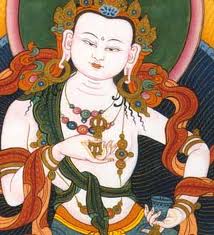
I am going to talk to you about some of the more traditional Buddhist teachings on the sufferings of cyclic existence. (She is using a pointer with the thangka of the Wheel of Life and Death.)  I am going to use the pointer here and show you this really horrible picture. This horrible picture is horrible because above the picture we have this beastly looking thing. When you see pictures of the temple, you see that all the pictures have white scarves around them, right? Pictures have white scarves because traditionally in Tibetan Buddhism one offers a white scarf as a greeting. So we are actually greeting the image in the picture. We are greeting it, honoring it, and making an offering; but you will never see a white scarf around this picture and that is because who wants to make a greeting to the Lord of Death. That is not your favorite friend, right? This is somebody that you want to avoid. But we can’t avoid it in cyclic existence. Cyclic existence means the cycle of death and rebirth; and death and rebirth constantly occur.

One of the faults of cyclic existence is that we have doubt. We do not believe that cyclic existence occurs in the way that it does because we cannot remember our previous death.  Therefore we cannot remember our birth. If somebody didn’t tell us for absolutely sure that we were born as a tiny baby, we might not actually understand that. It is something that we are taught and we were taught to understand that. We don’t actually remember our birth. We remember our childhood maybe from two years old on. Sometimes we have crib memories that are very, very vague, but we don’t remember really coming out of our mother’s body. So we don’t really know that for sure. Likewise we don’t really know that we are going to die for sure. Intellectually we do. We are told by our parents and teachers and everybody that we come in acquaintance with that would speak in that way that we are eventually going to die. And we look around and we see that everything that has lived will also die. So from that we deduce that we are going to die, but we don’t believe it.

If we believed it, we would act differently than we do. If we believed that we really only had about seventy-five years, we would make better use of those years than we have; don’t you think? Haven’t you ever lost whole days and said to yourself, “Where did this day go?”  Well, if you don’t know where it went, then it wasn’t put to good use. It sort of slid by you. Have you ever gotten the scary idea that you don’t know where the week went? Have you ever gotten the idea that you don’t know where the summer went? That happens to me all the time. Did you ever get the idea that you don’t know where the year went? Did you ever get to be forty-two years old and you don’t know where twenty-two years went? That happened to me recently. Did that happen to you? You know that one, huh?

Sadly I spoke to my mother a while back and I asked her, “How old are you now Mom?” We were talking about that and I said, “How does it feel to be sixty-five?”   And she said, “You know sometimes I look in the mirror and I see this old lady looking back at me and she said, “I don’t know how that happened to me.”  And she had a lost quality in her voice. She said “How did that happen to me? I feel like I should still be young. How did that happen to me?”  We all come to that point where we realize that we haven’t really taken hold of our lives. We haven’t really used them. Time passes so quickly. In fact we are taught that the cycle of death and rebirth passes like a waterfall down a mountain, but still we don’t believe in our death. We do not make use of our days, of our hours, of our minutes. We do not make use of our weeks. And how much use have we made of those twenty-two years? Yeah, we have made some gains, but twenty-two years worth? Seems like if you really worked hard and consistently, you could have done a lot better.

So you deduce from the way people act that they really do not understand that death is impending. And this is one of the Buddha’s teachings. The Buddha teaches us not to get depressed. The Buddha teaches us this so that we can use our time effectively because it is our nature to waste our time; and one of the faults of cyclic existence is ignorance in that regard. We do not use our time. We do not effectively overcome the ignorance of passing through this time so quickly and not being able to use it and not really understanding that this time will pass quickly. We do not seem to understand that.

We are reborn again and again and again and we have no memory of it, so we have no way to understand that these realms of cyclic existence actually exist. Not too many of us here have been to China or the Soviet Union, but we all know for certain that we would stake our lives on the fact that these places exist. Why? Because we have some pictures of them, and we have been told that they exist. Yet many of us will not believe that these six realms of cyclic existence actually exist. The Buddha has told us that they exist. The Buddha has told us that they exist. The Buddha is enlightened. The Buddha knows better than anything, but we would believe a dumb camera that only knows what to do when we push its button. That we would believe. That doesn’t make any sense to me either. Sometimes we act like we are a little retarded, you know?

Copyright © Jetsunma Ahkon Norbu Lhamo All rights reserved
The Truth of Suffering

grief

The following is an excerpt from a teaching by Jetsunma Ahkon Lhamo called “The Foundation of Bodhicitta”

Our next understanding must be what actually would be the end of suffering. What would the end of suffering look like?. Let’s say I was going to engage in enlightened activity. Let’s say that I could do that, had that potential. If I were going to alleviate the suffering of sentient beings, what would that look like? What form would that take?. In order to understand that, you really have to understand what escape from suffering is. In order to understand what escape from suffering is, you must understand what suffering is. What is this suffering?.

Now everybody has an idea of what suffering is. I don’t think I have to define suffering according to Webster’s dictionary. Each of us have had times in our lives when we have suffered. We have had loved ones leave us; relationships that we have loved have ended; even relationships that we don’t love have ended and brought us suffering. We have had changes in our lives that are very difficult: We have lost money; we have lost jobs; we have gained things and then have lost them. Things that we have loved have disappeared. All of these have been sufferings and if none of those things have happened to us, perhaps we might have had difficulties with our children. If none of those things have happened to us, still we will get sick. If we haven’t gotten sick yet, then definitely we will get old and we will die. These are the sufferings of cyclic existence. No one escapes cyclic existence without suffering. So it is considered that cyclic existence is pervaded with suffering. It is pervaded with suffering. It is not to say that there won’t be any happiness in cyclic existence, but the state of that happiness will be temporary because suffering is all pervasive,. and because everything is constantly changing.. So if you experience happiness,  that happiness will end because all things end. Everything is impermanent. If you experience the happiness of giving birth to a beloved child, that happiness will be temporary in that eventually that child will grow up. Eventually no matter how much you love that child, there will be difficulty with that child; and eventually either you or the child, eventually both, will die and so that relationship must end.

If you win the lottery, the happiness from that is also impermanent.  As you know, money can be spent; money can be squandered. And also for many people, money doesn’t bring happiness at all. I’d like to have a shot at it though,. anyway, just to see. I feel like you should test the Buddha’s teachings before you firmly commit. At any rate, you get my drift. If you buy a hot new car, and you think, “Oh good, I feel good now,” buzzing around in your nice new car, pretty soon that car is going to break down, and that car is going to feel like an old wife. Pretty soon it will have a clutch that needs repairing; and then you have to buy new tires and the steering isn’t so smooth. You know what happens. Everything changes. Cyclic existence is pervaded with suffering.

That is what you know about cyclic existence. I don’t have to tell you that; I don’t have to prove that to you. If you haven’t seen that for yourself by now, then I don’t know what to say to you. I feel that you must snap your fingers three times and maybe click your heels together and say, “There is no place like home.”  I think that you should wake up to the fact that this is not Kansas, and just kind of get with the picture and look at your life. If you don’t know that suffering exists, you had better check it out.

Copyright © Jetsunma Ahkon Norbu Lhamo All rights reserved
WP2Social Auto Publish Powered By : XYZScripts.com